

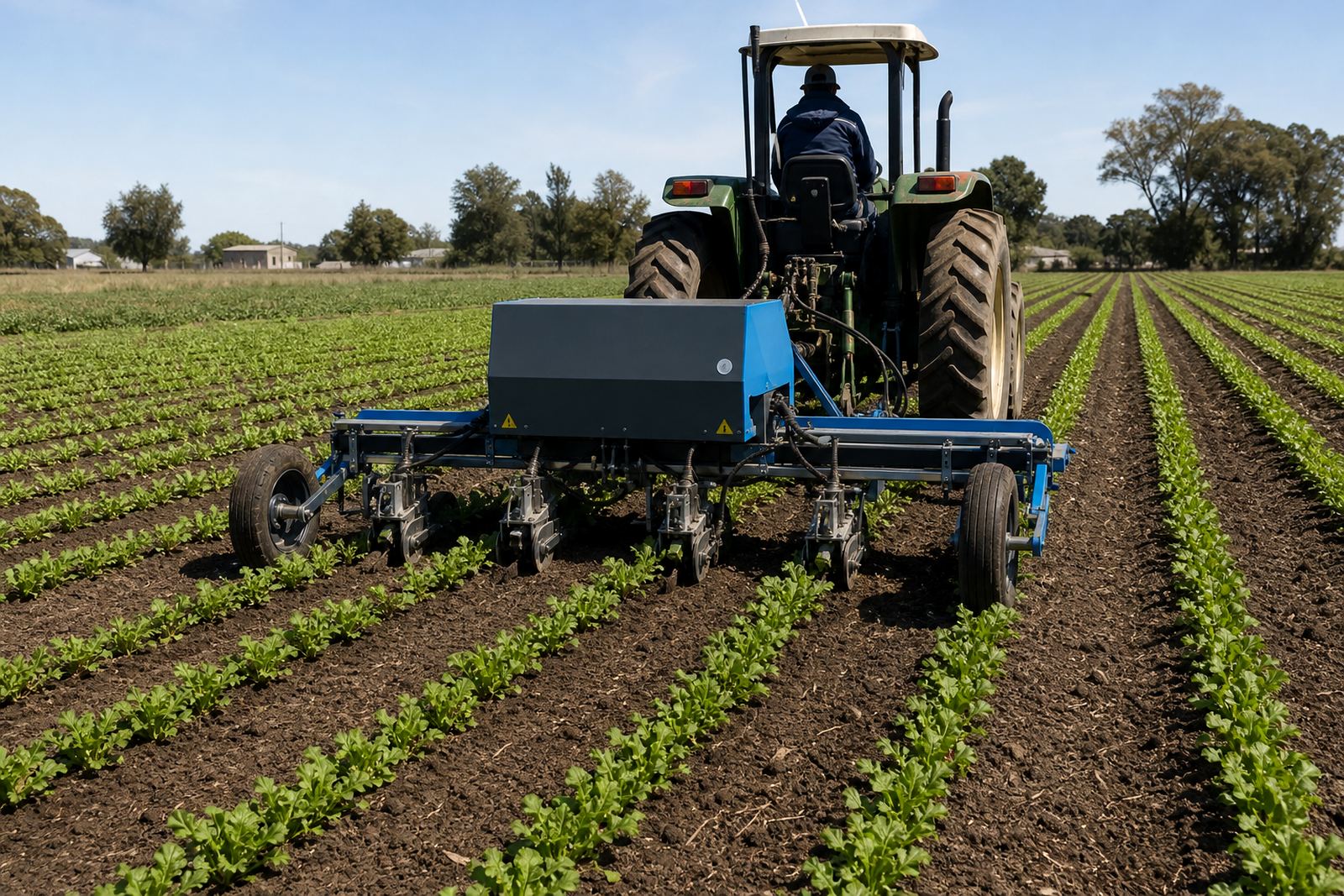
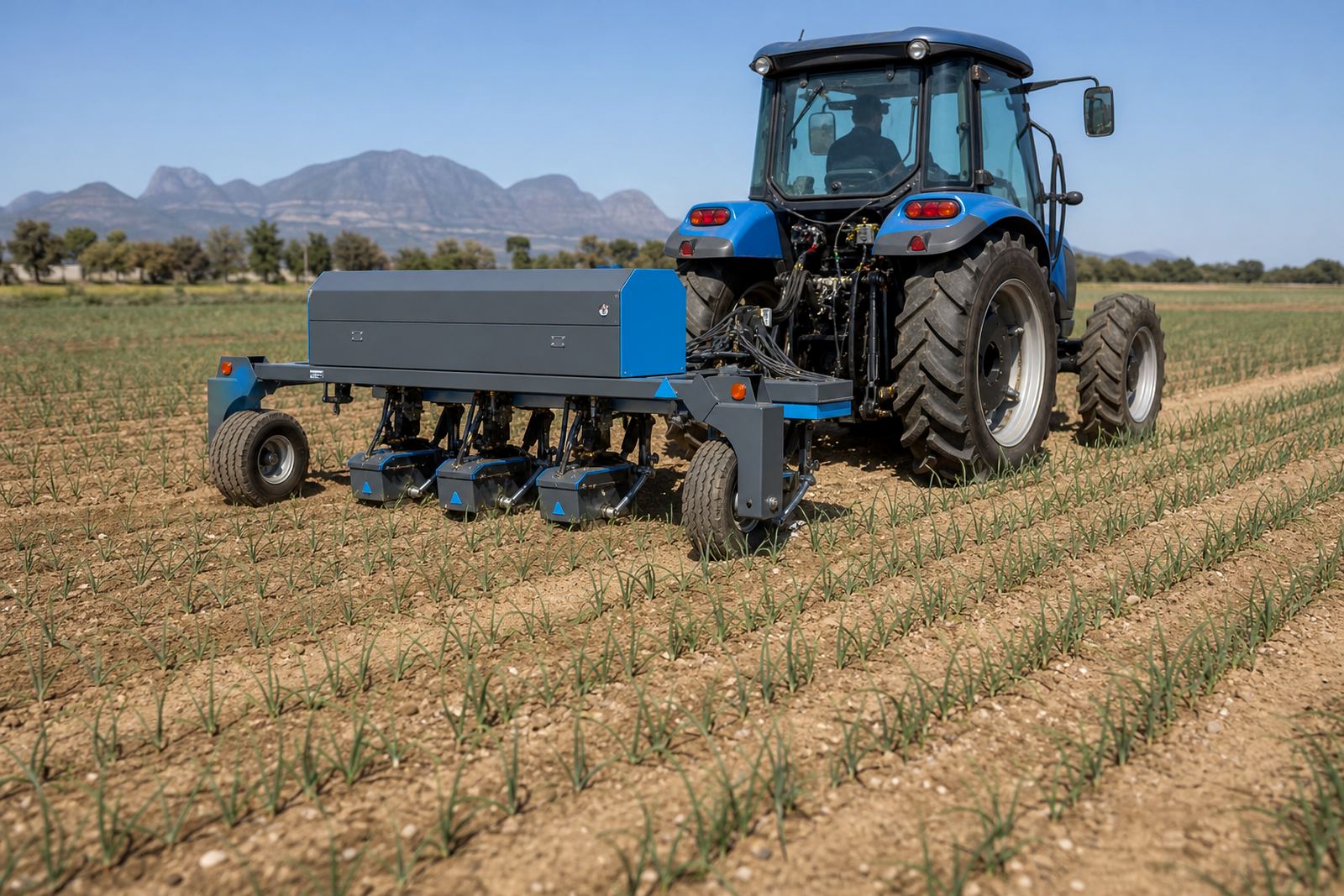
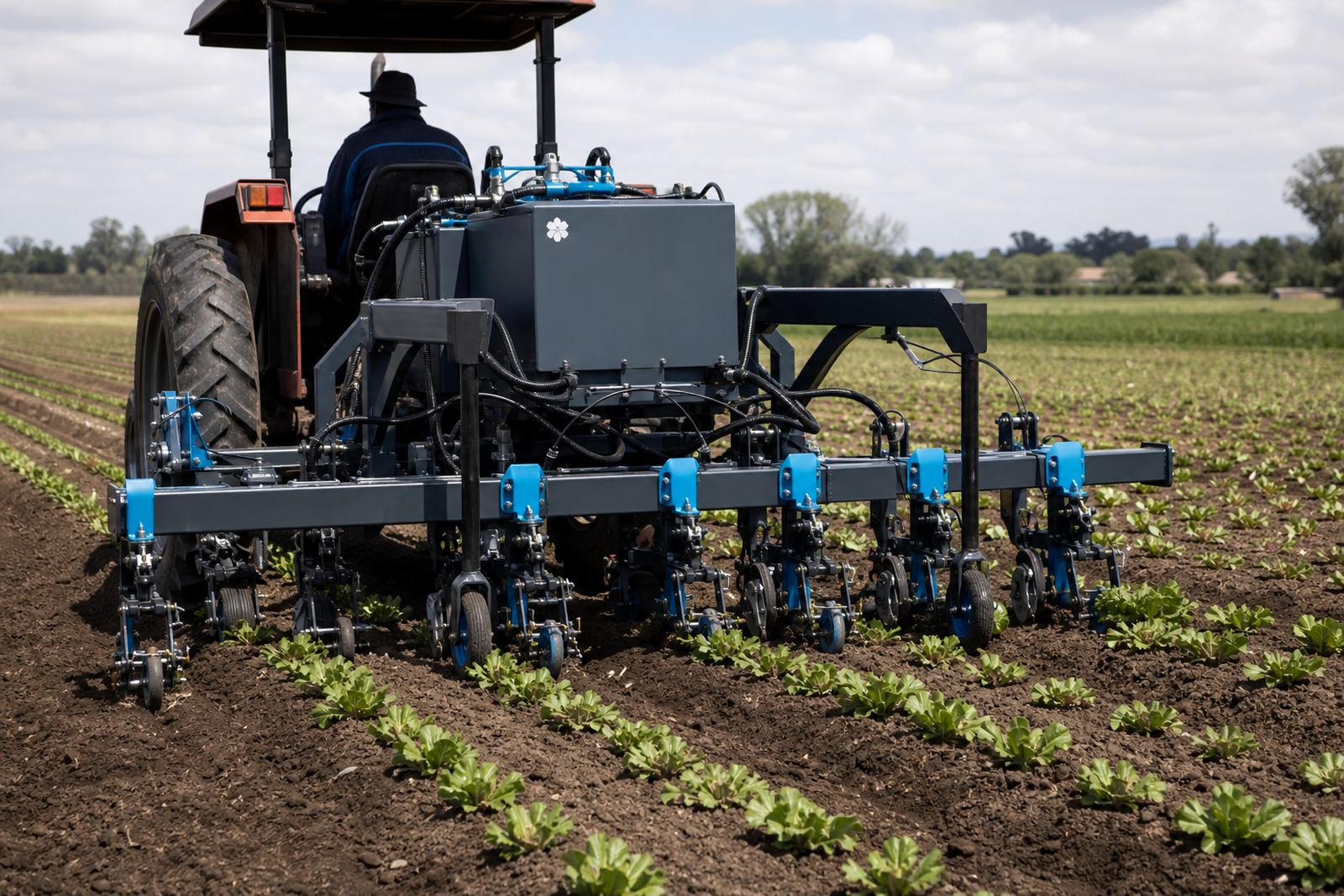
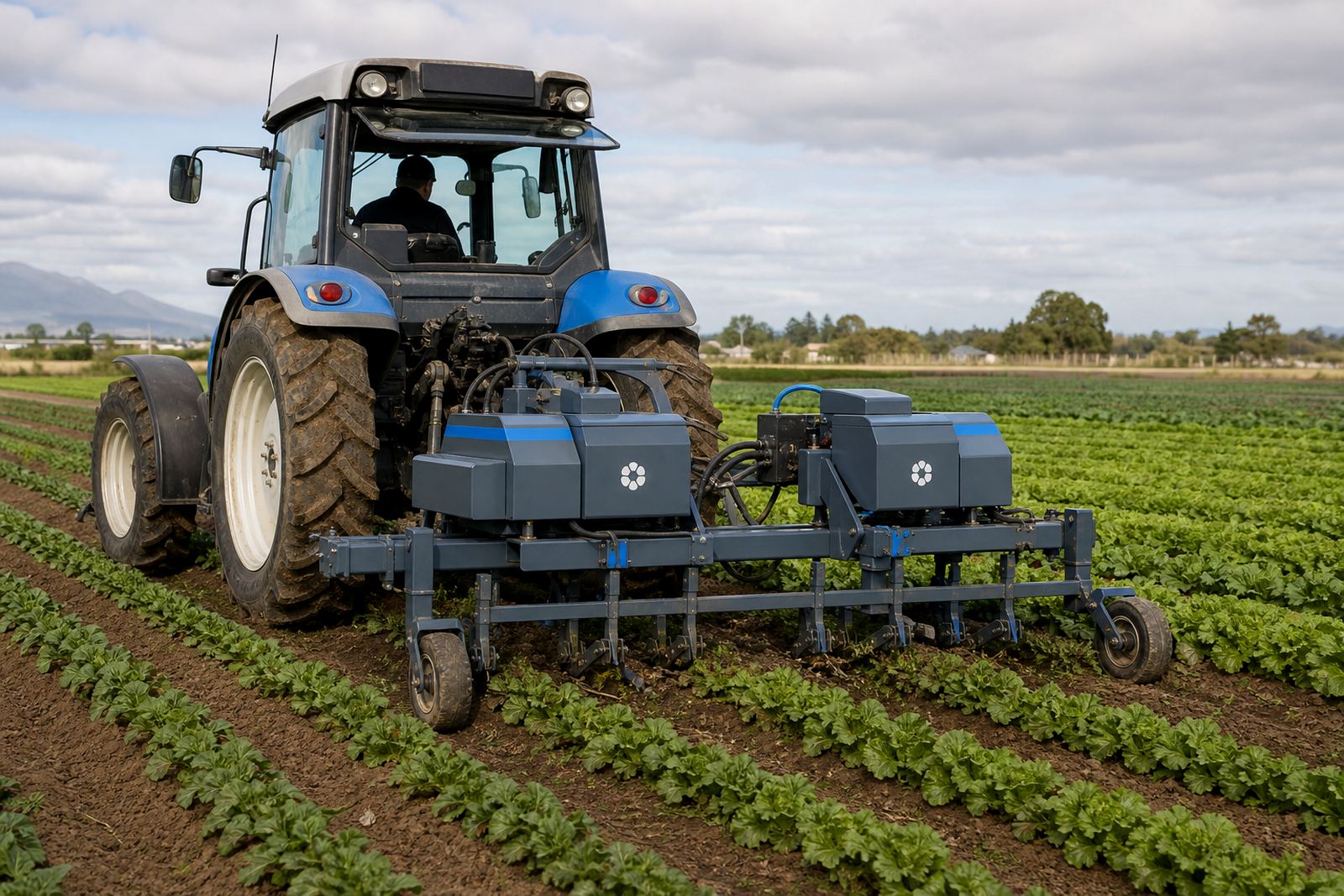
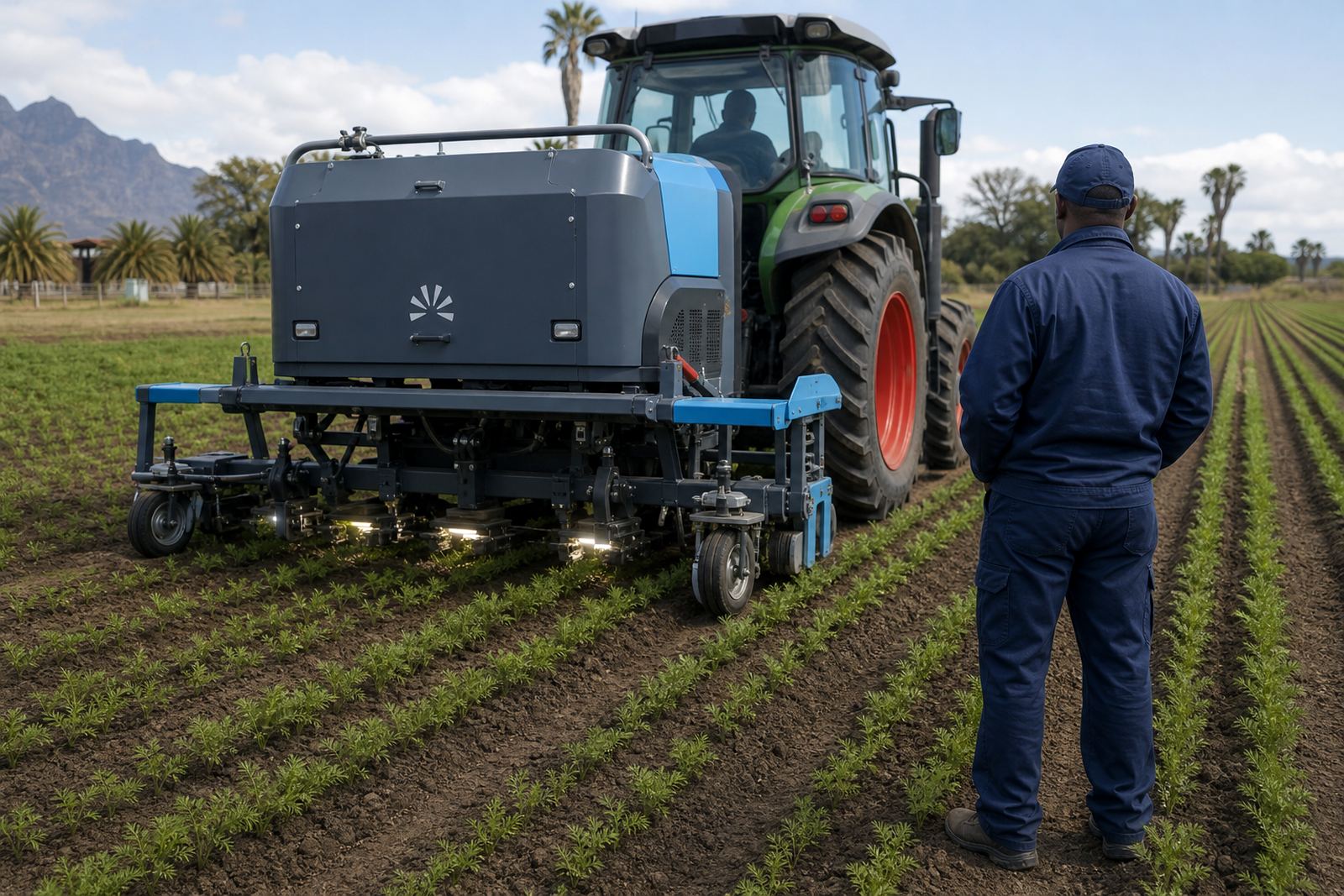
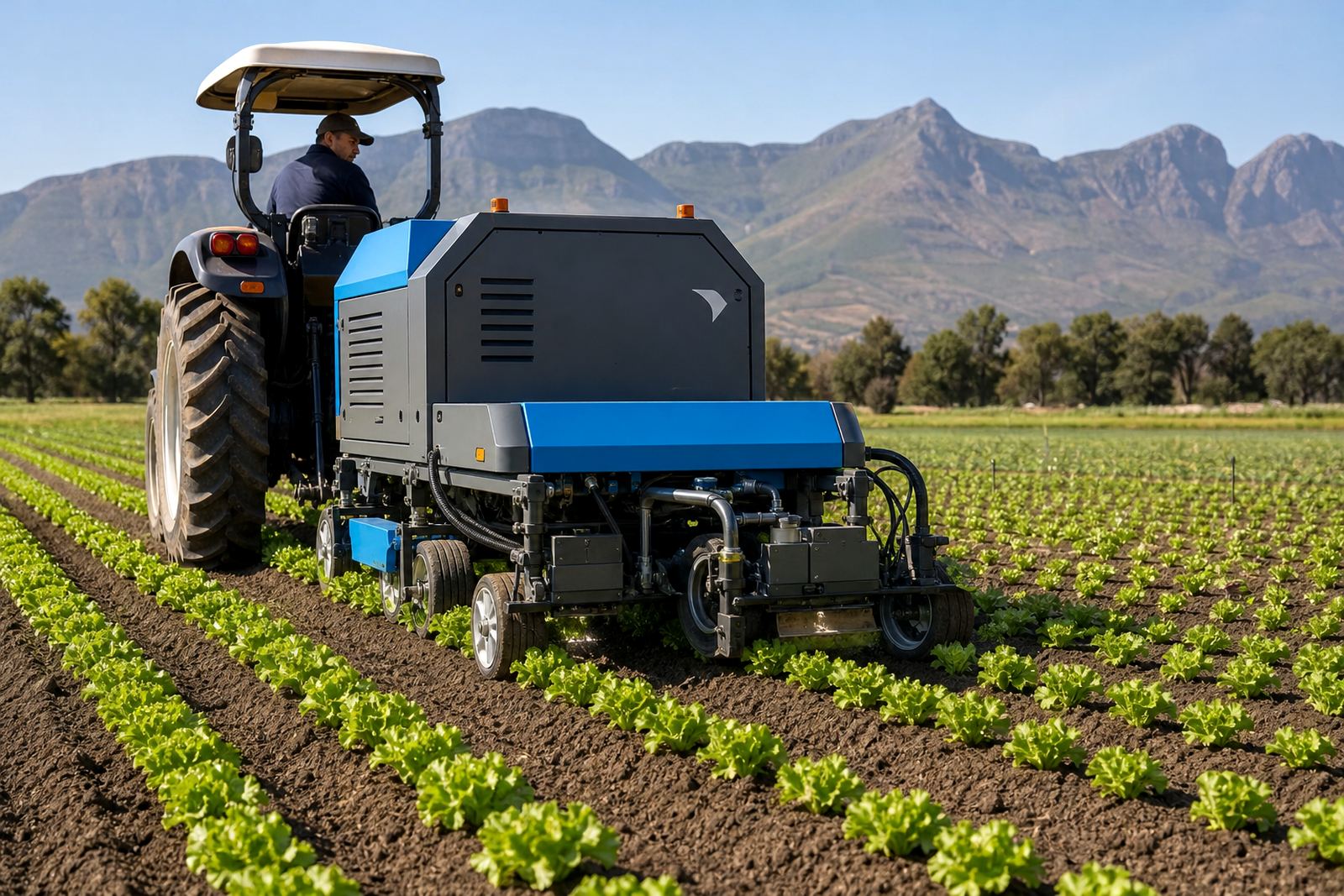
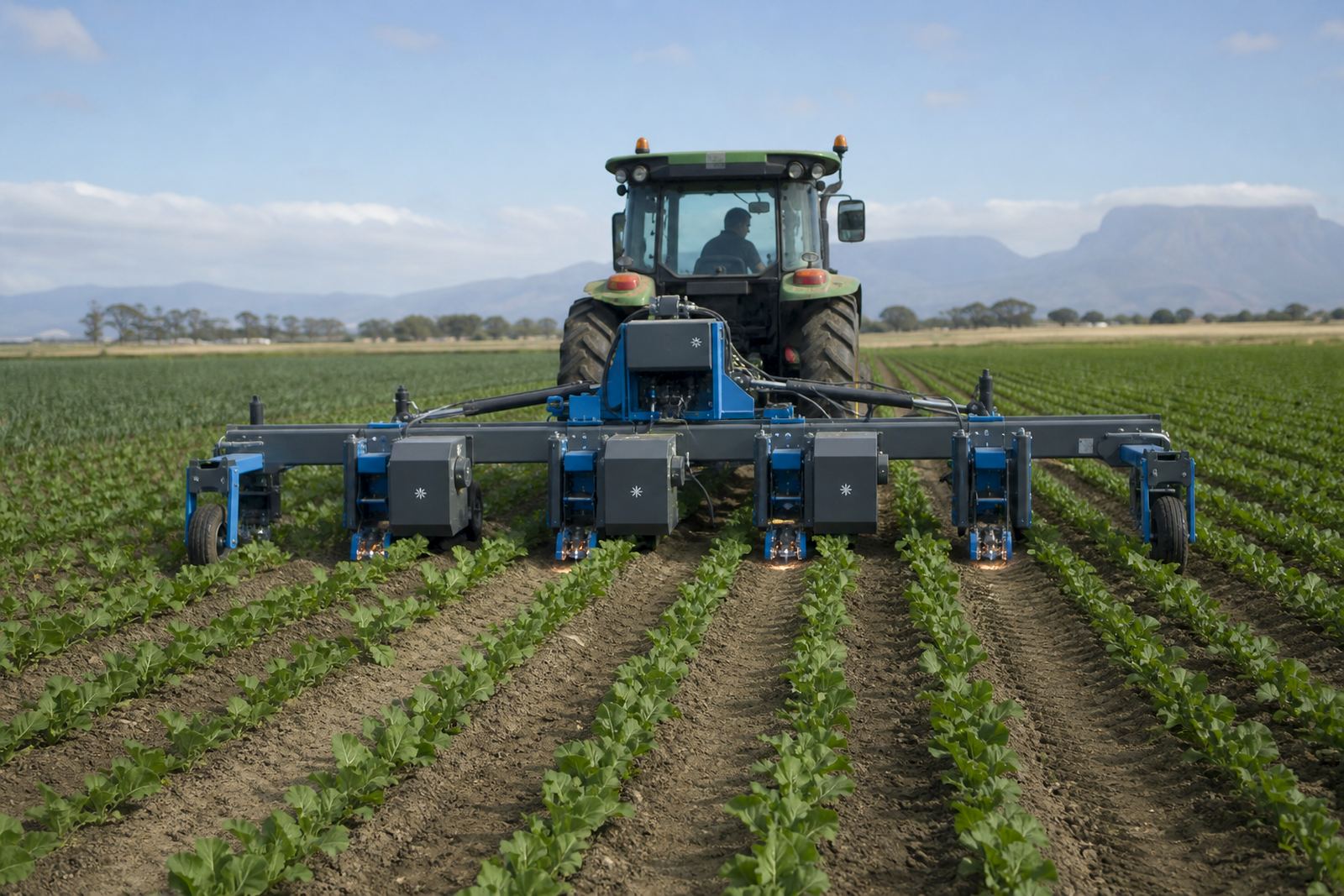
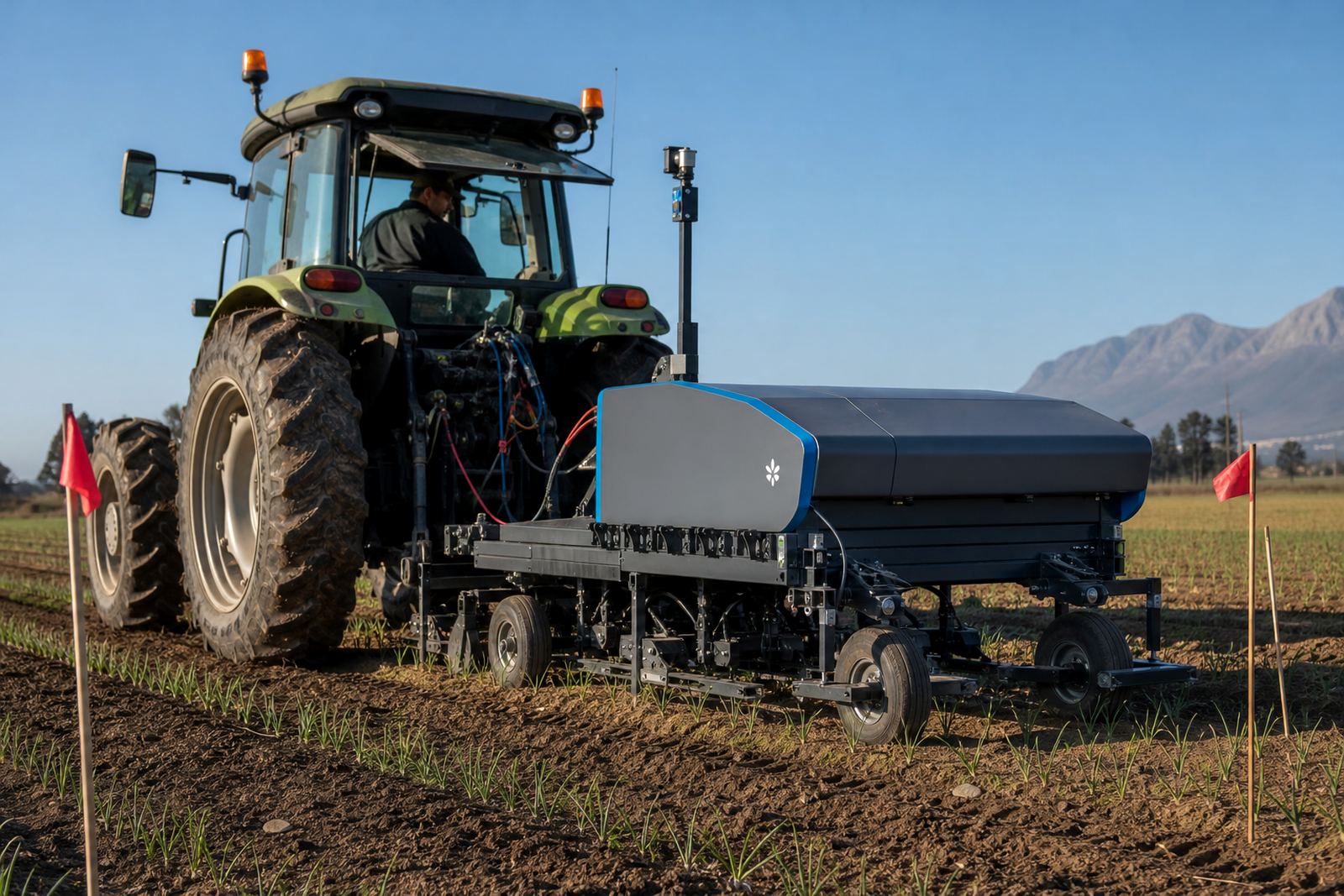
Laser weeding for row crops that need careful targeting
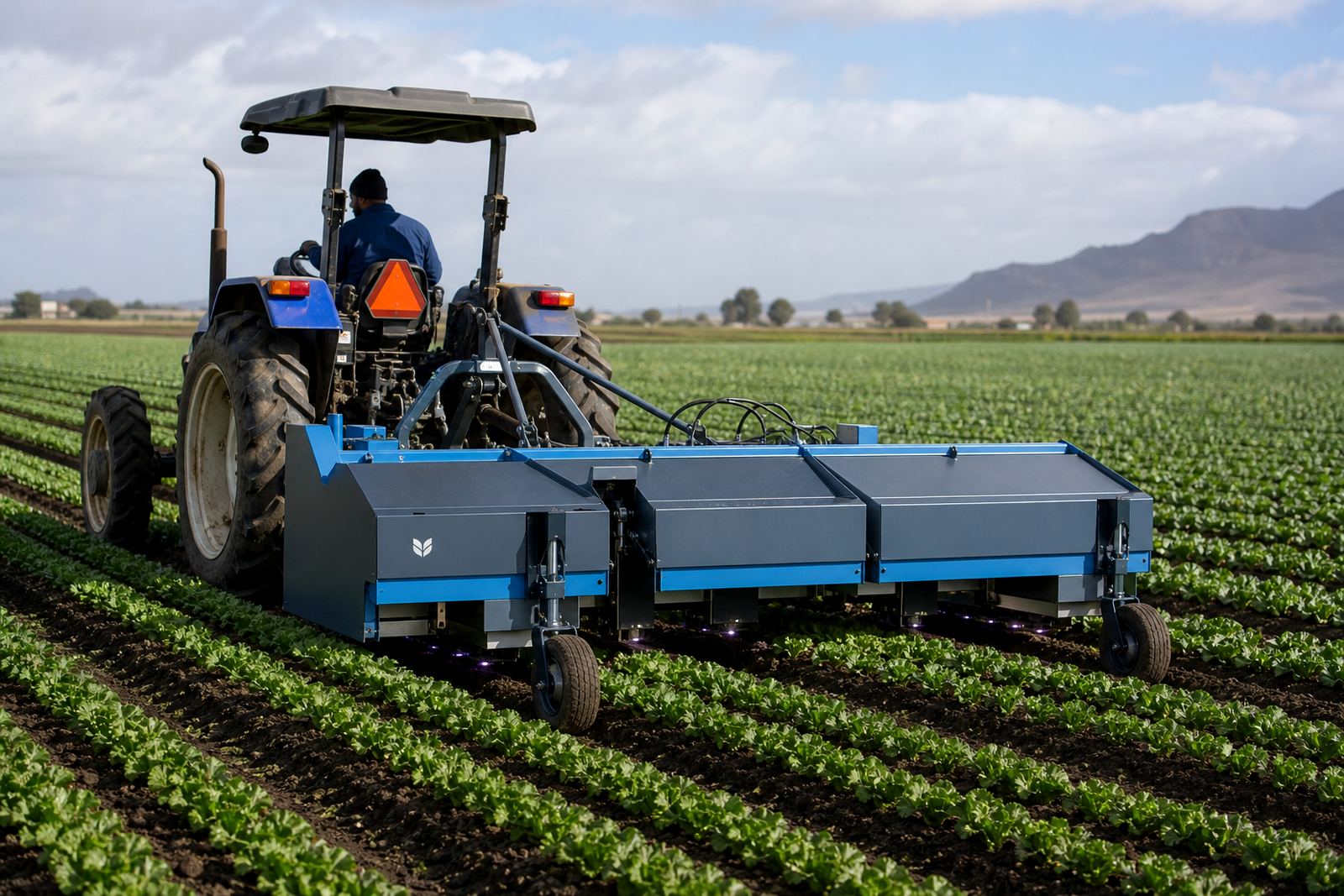
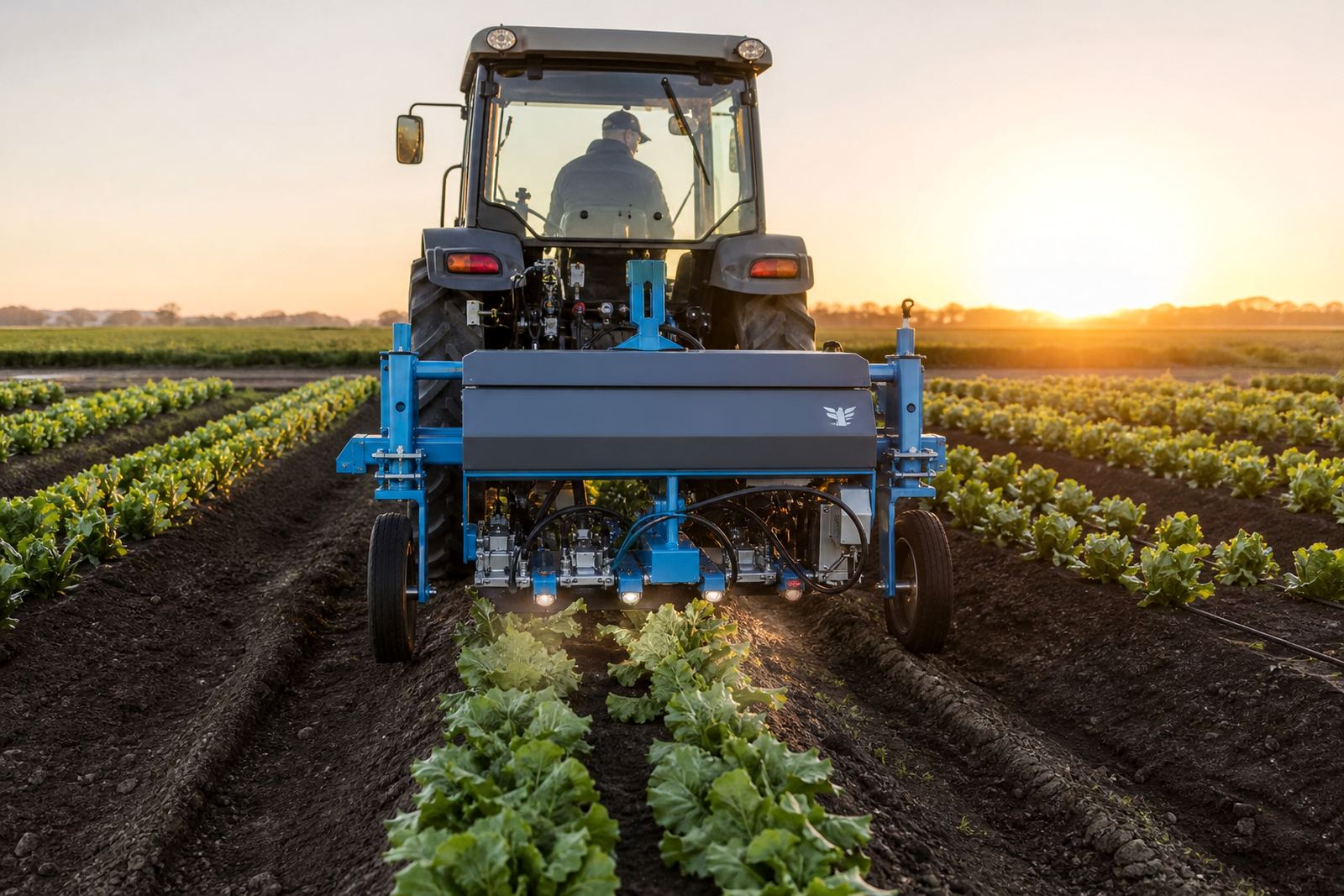
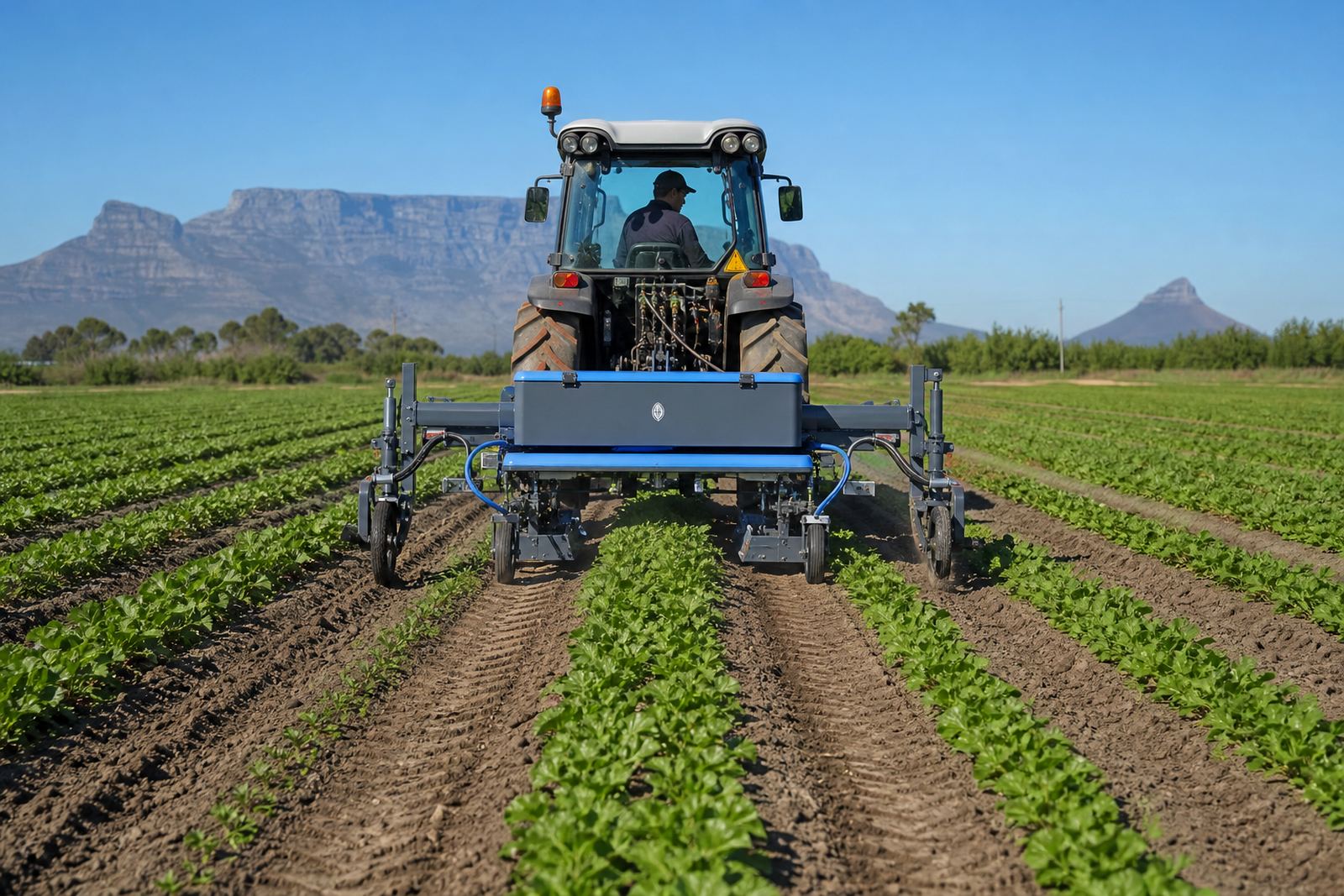
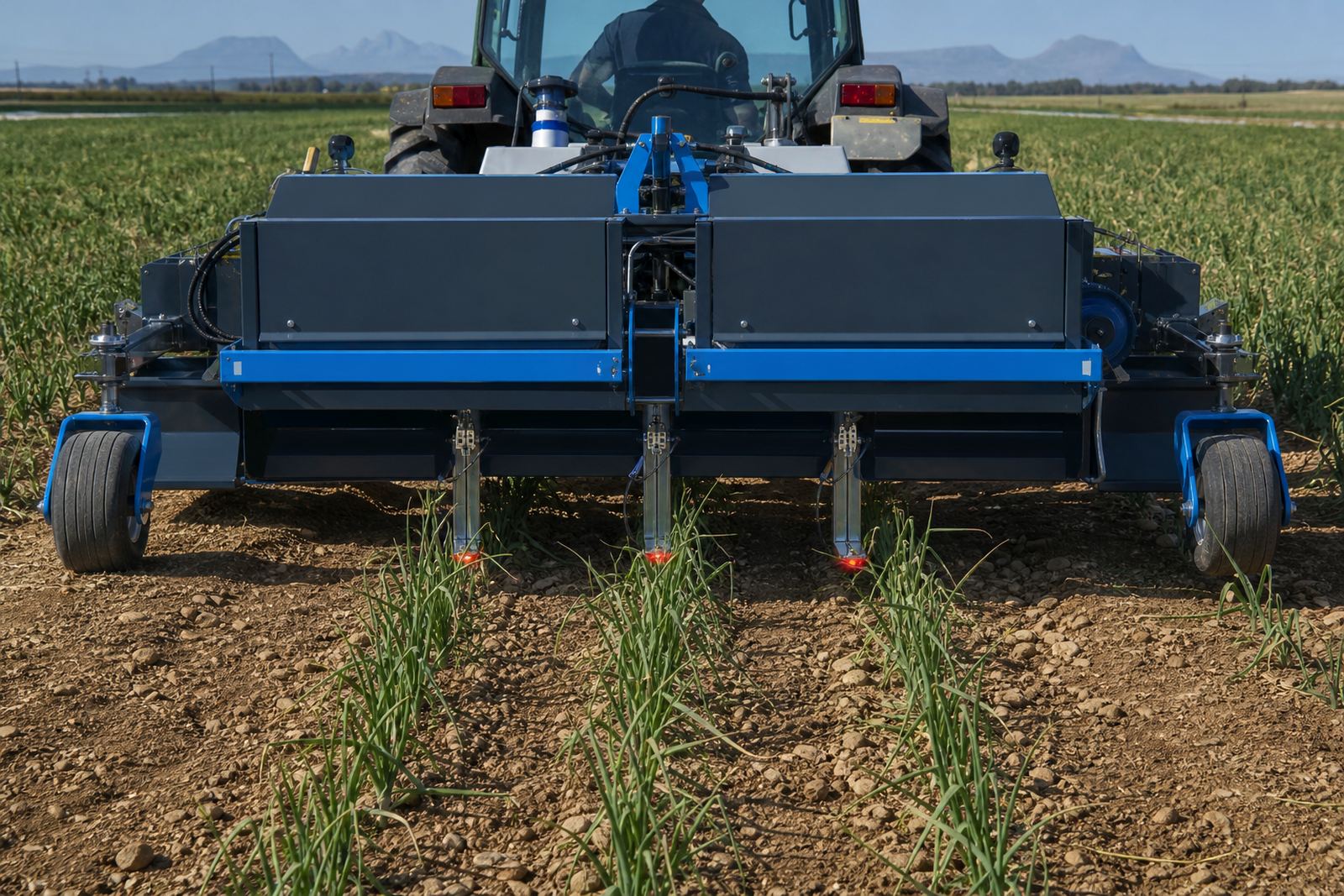
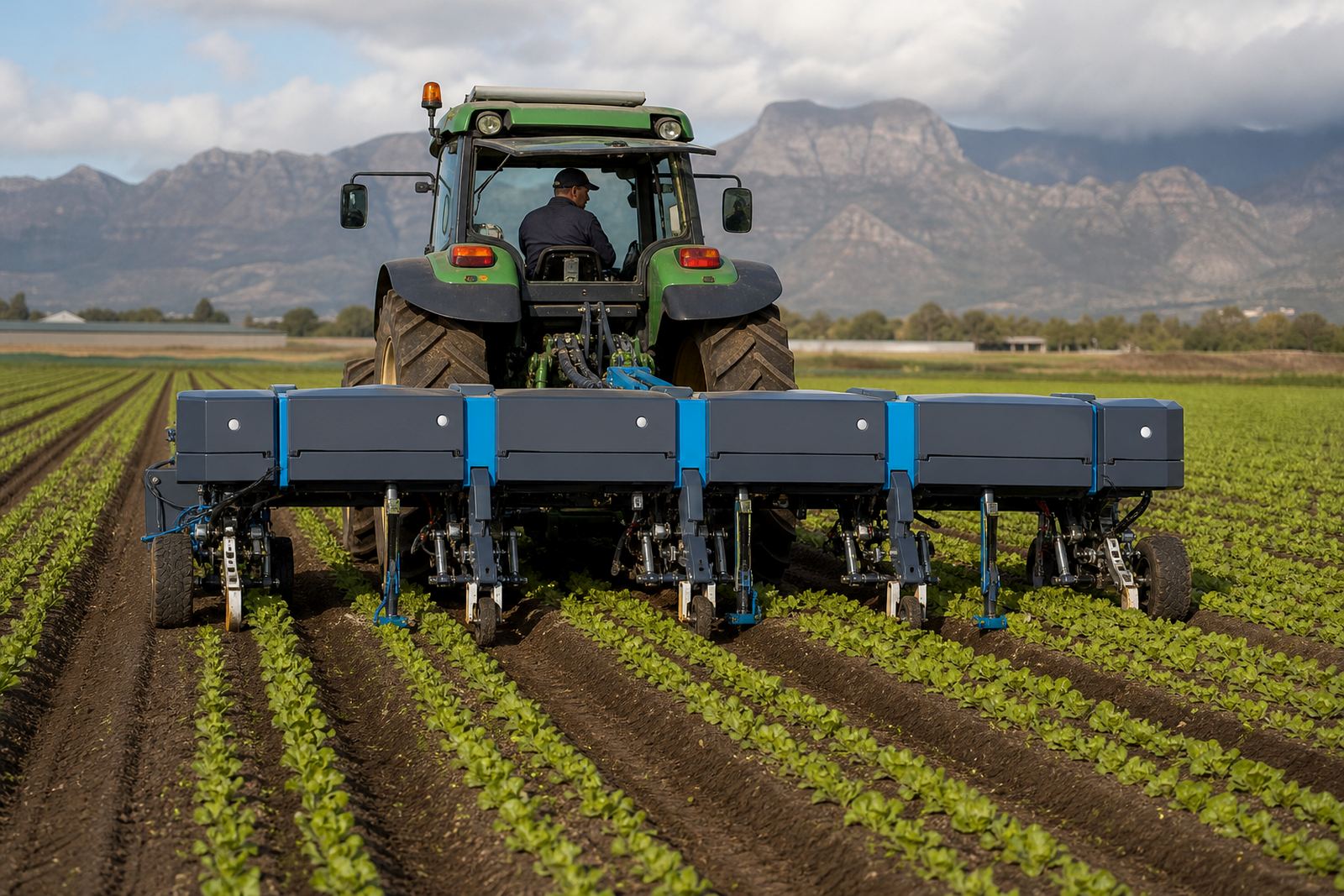
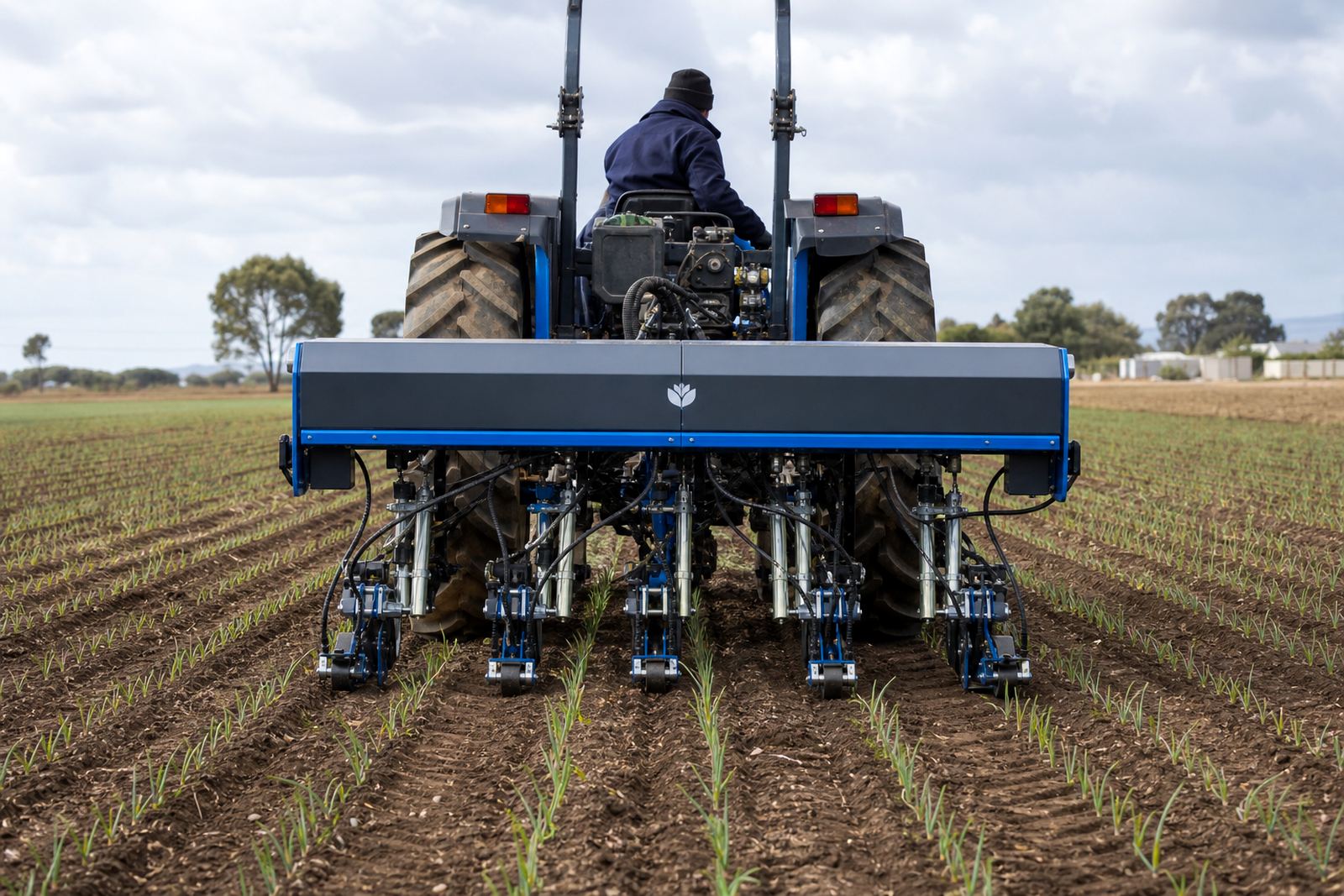
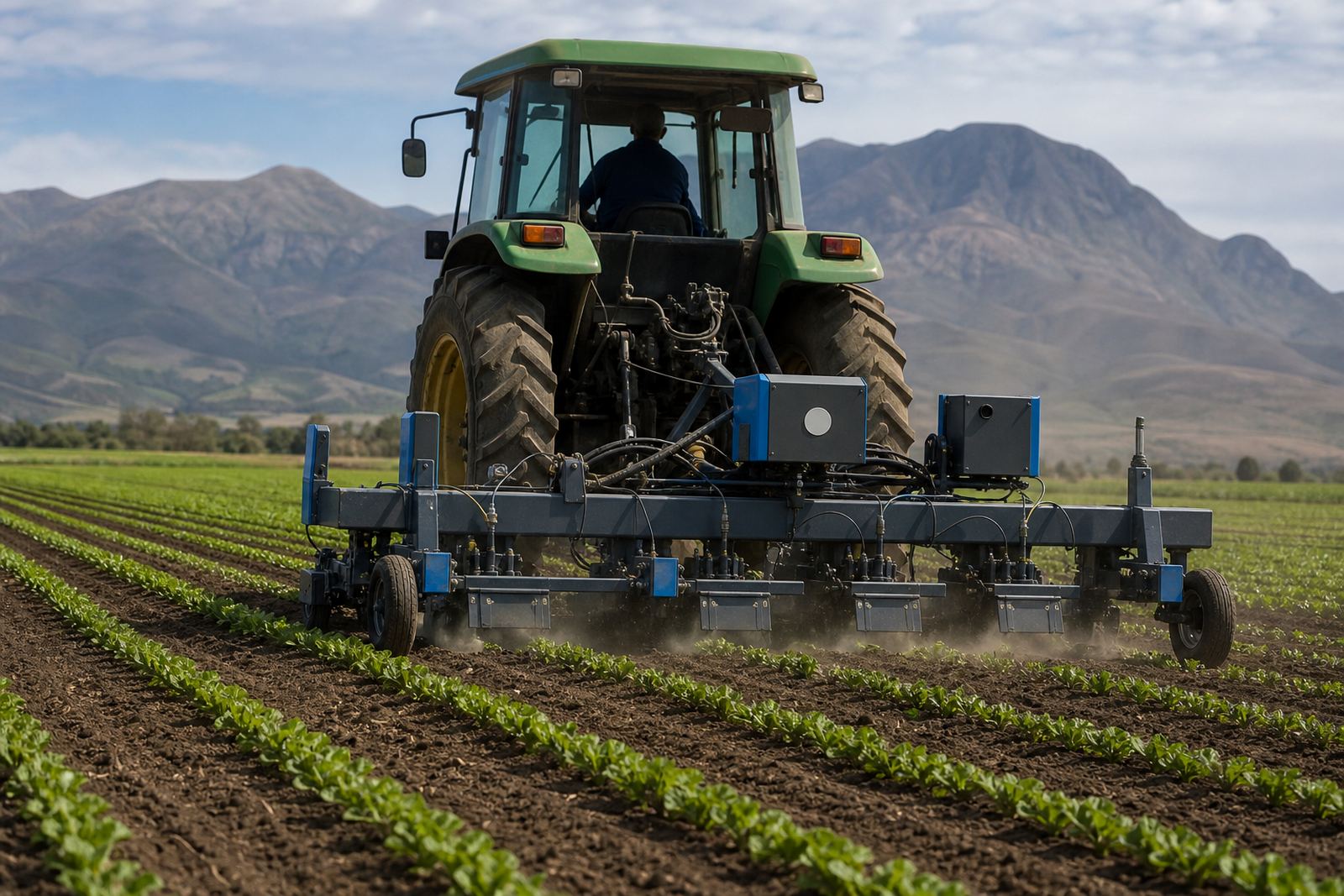
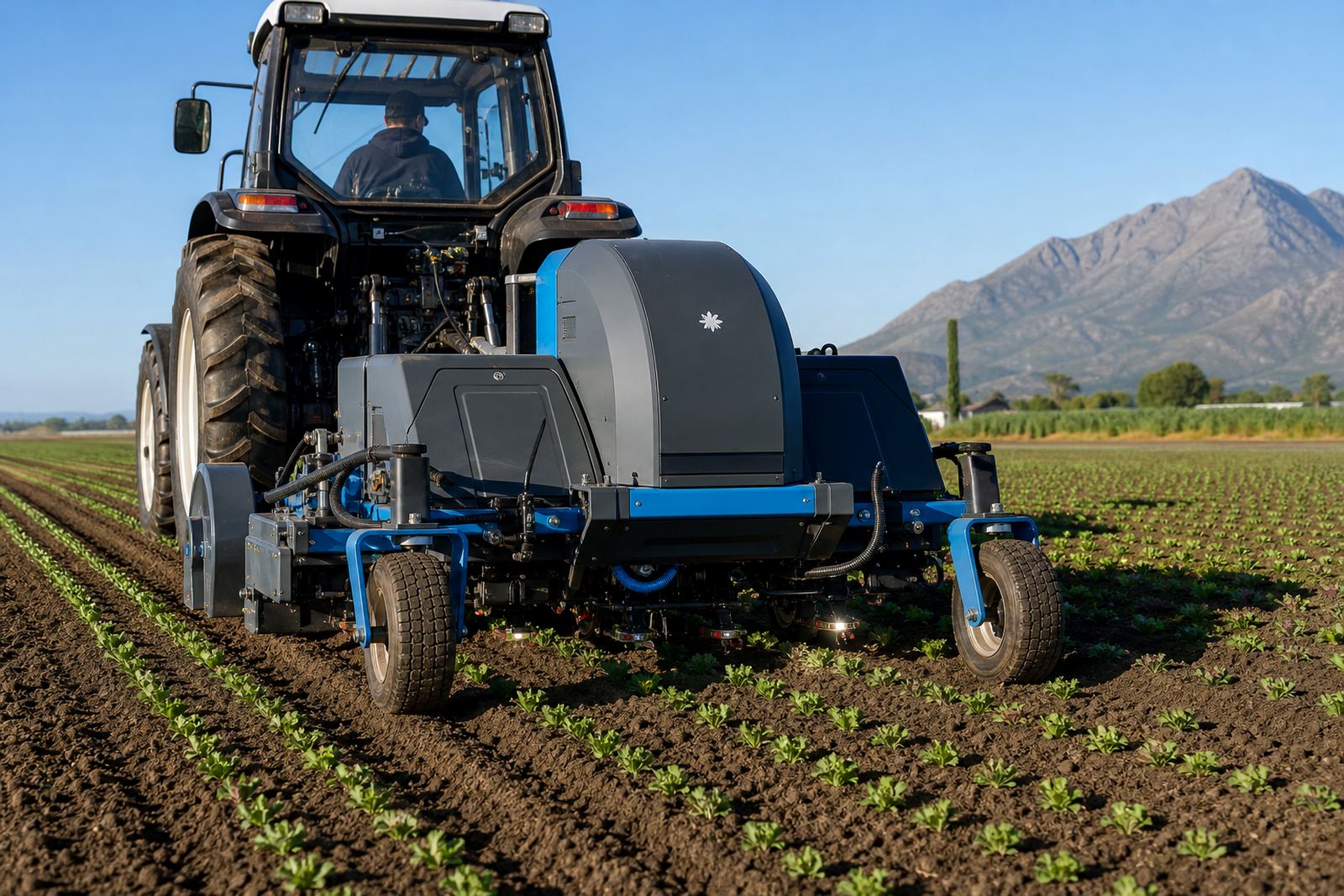
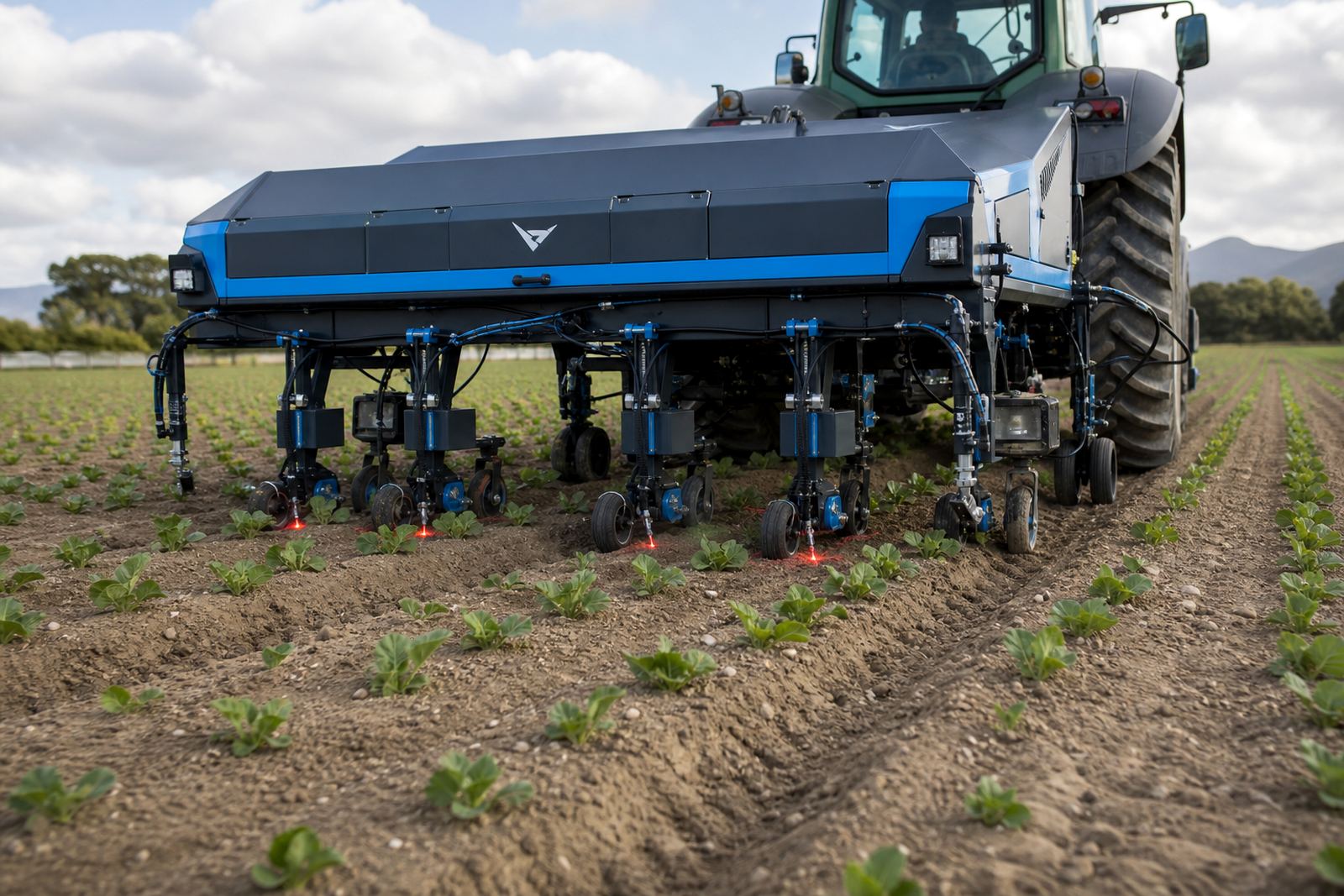
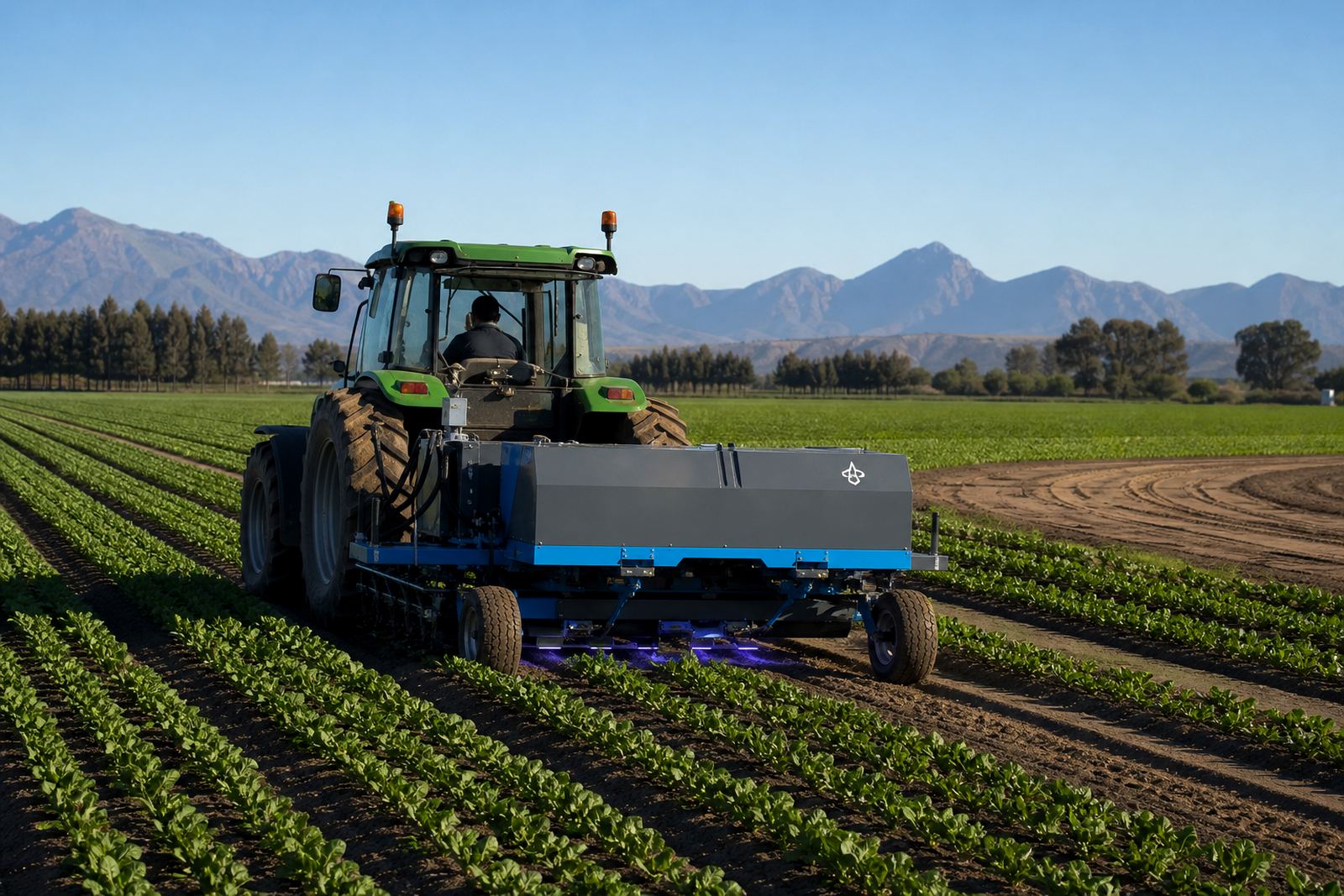
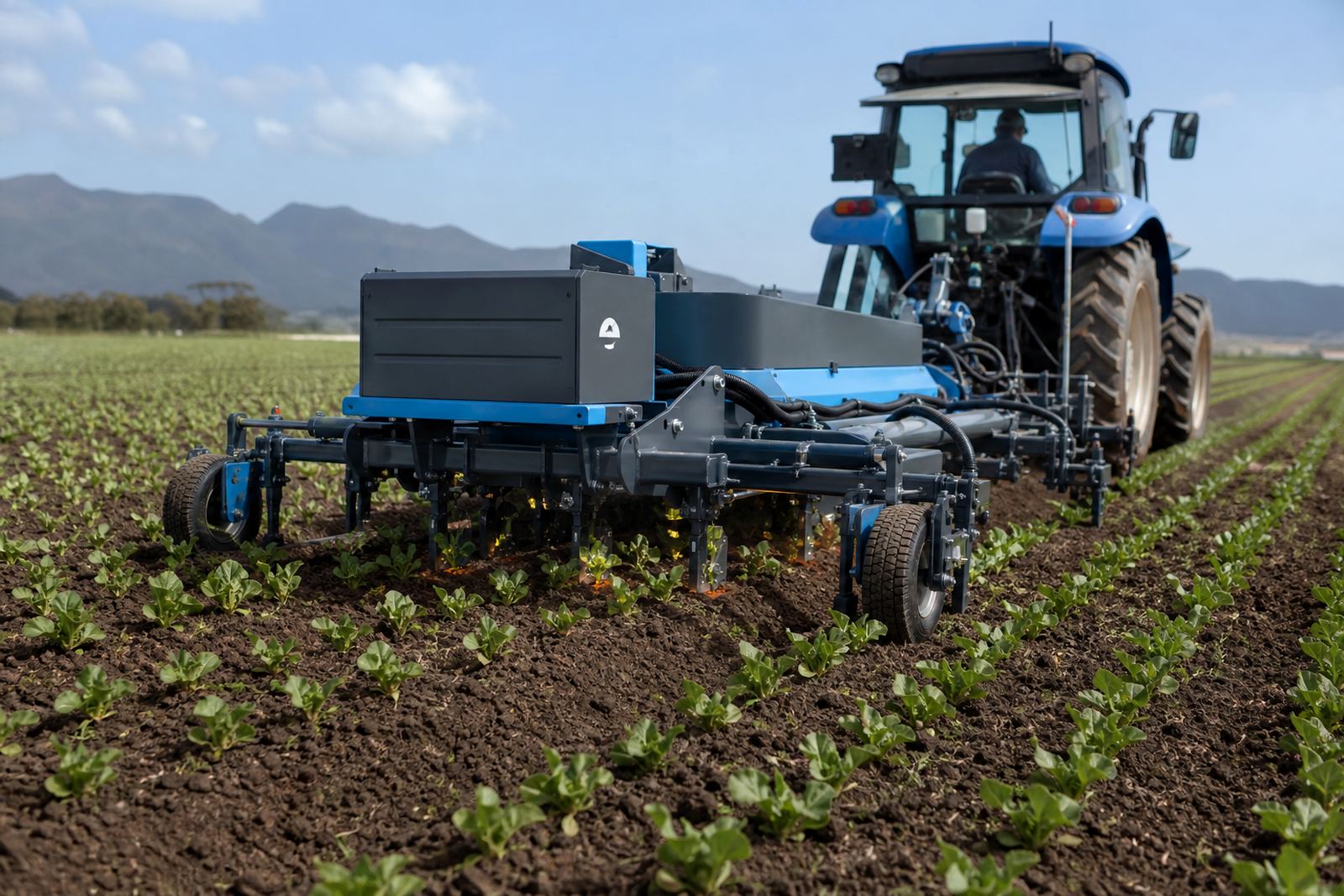
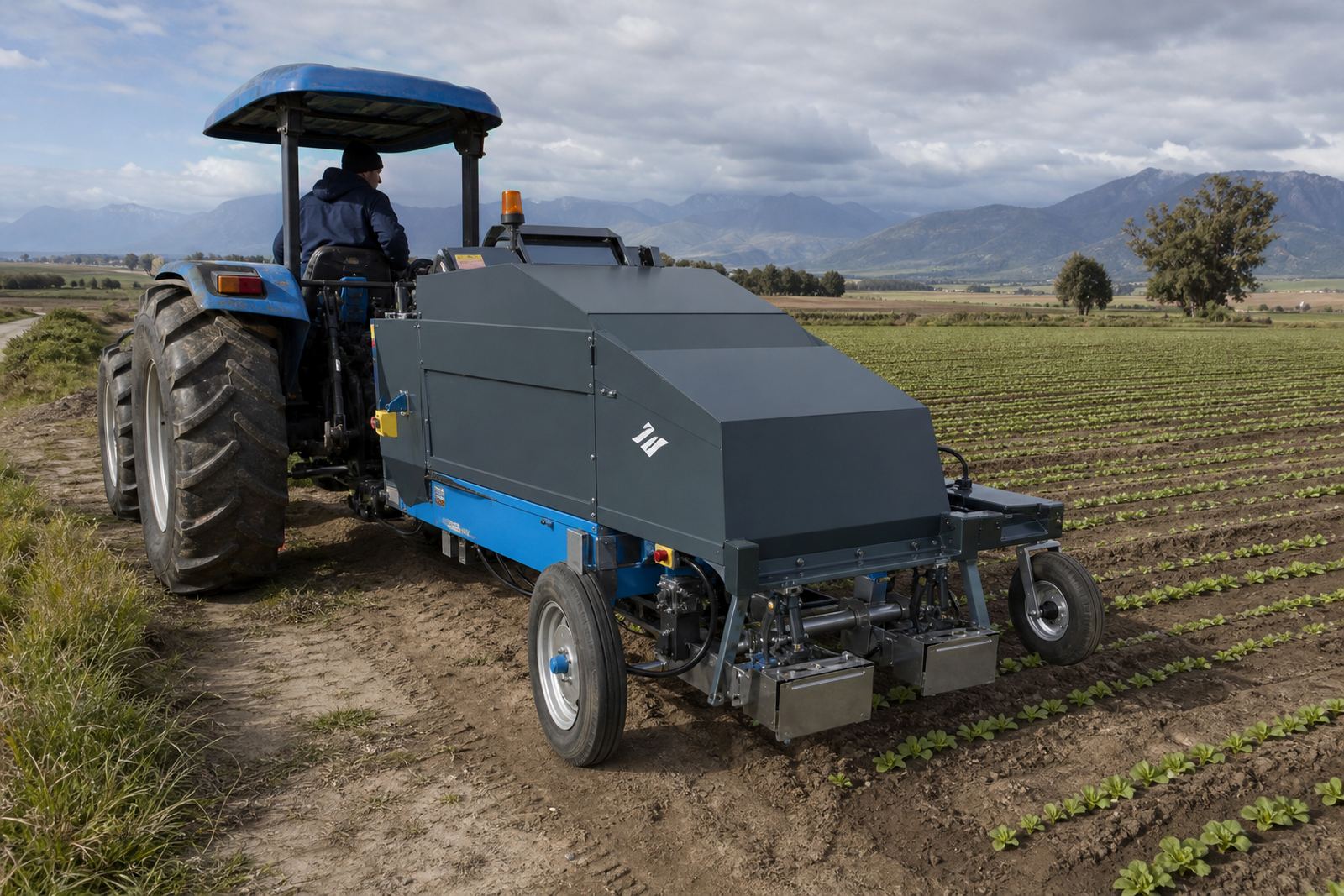
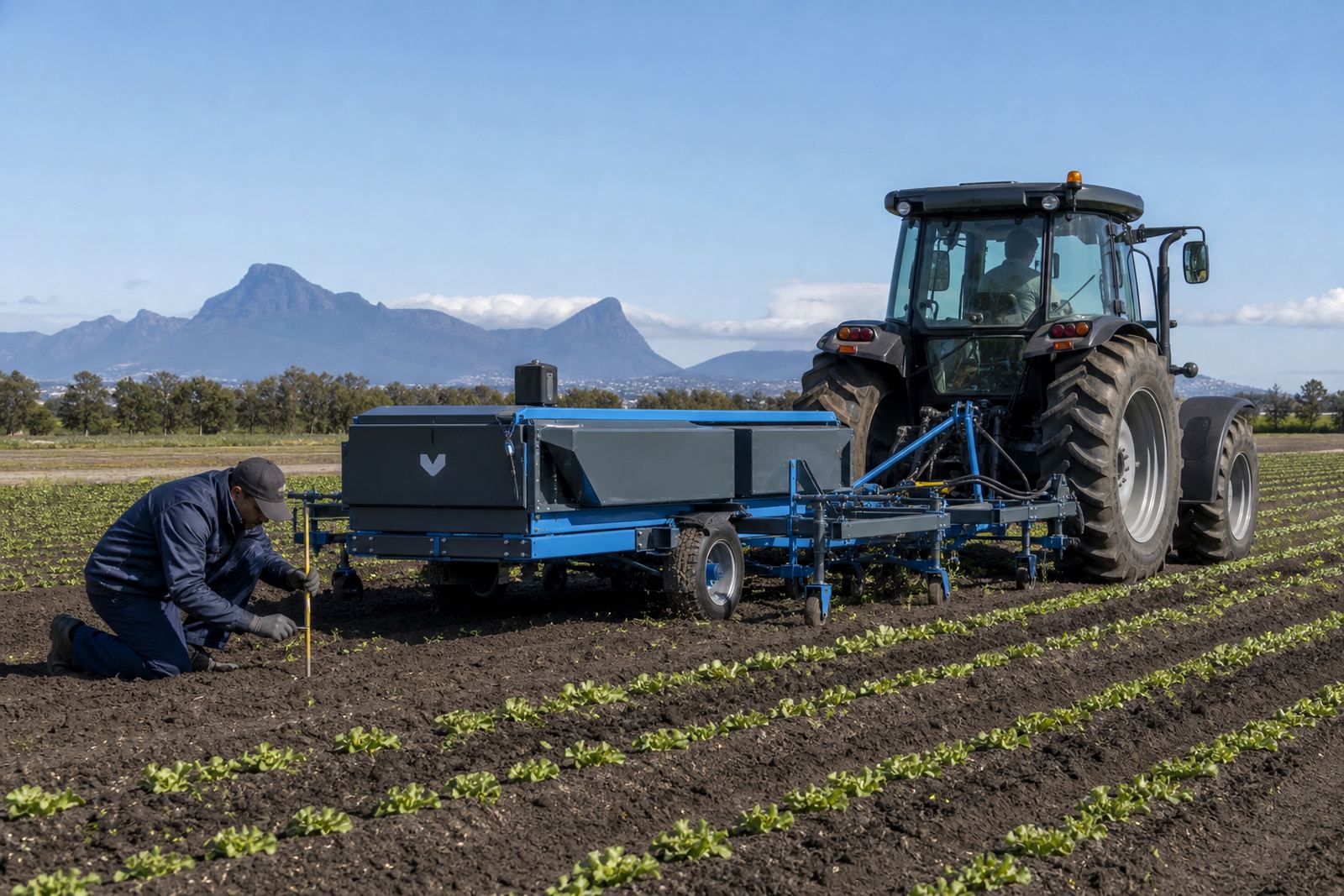
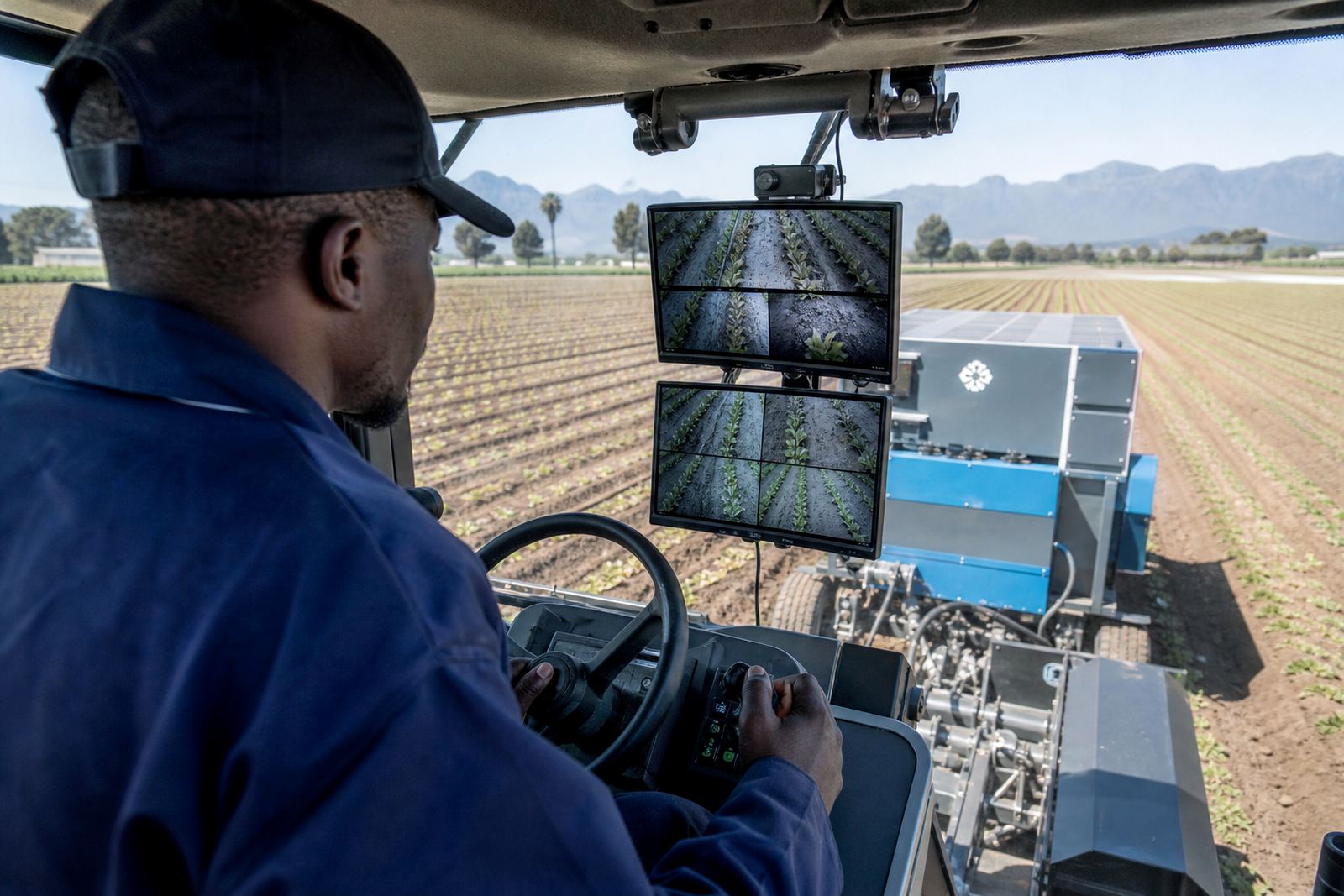
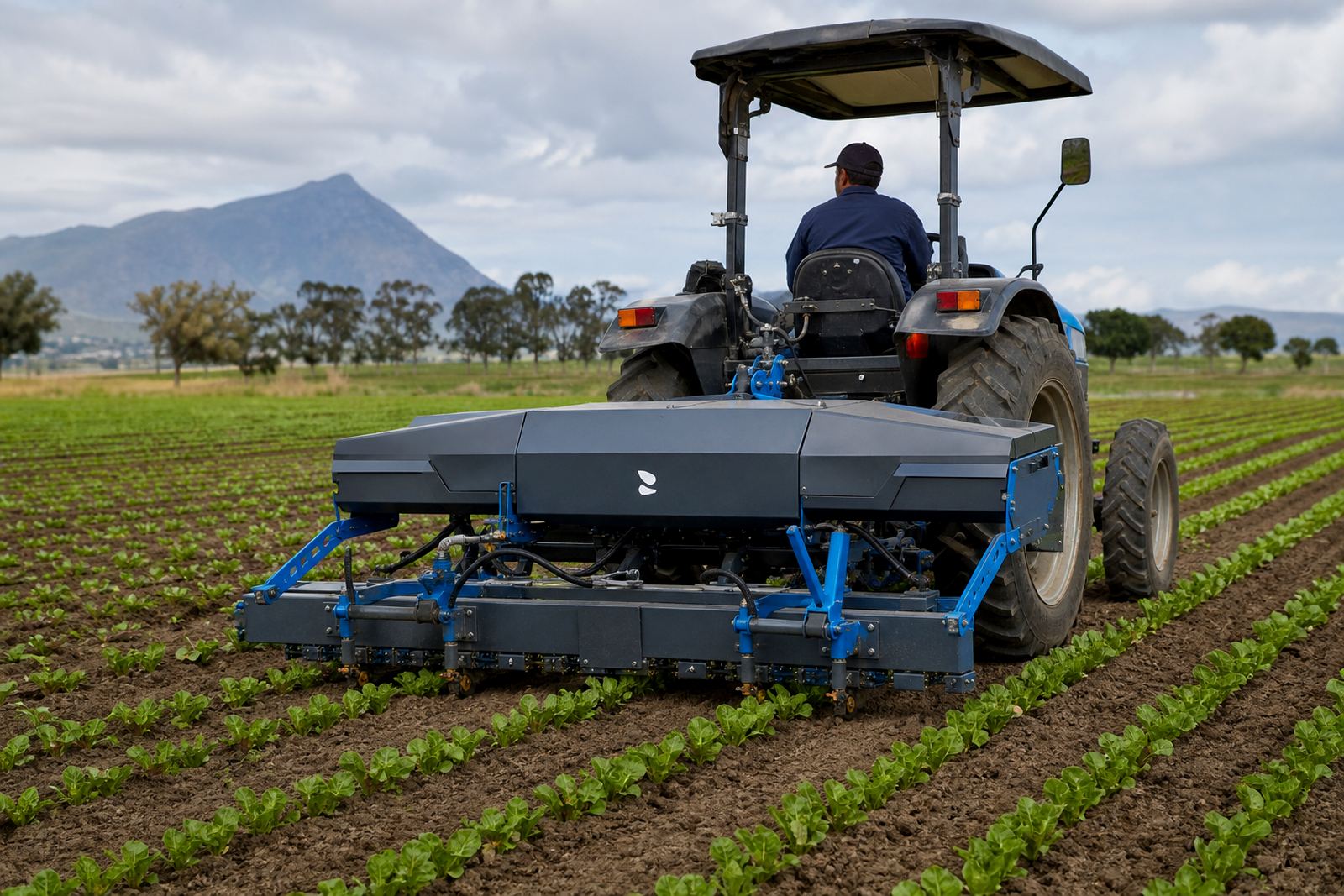
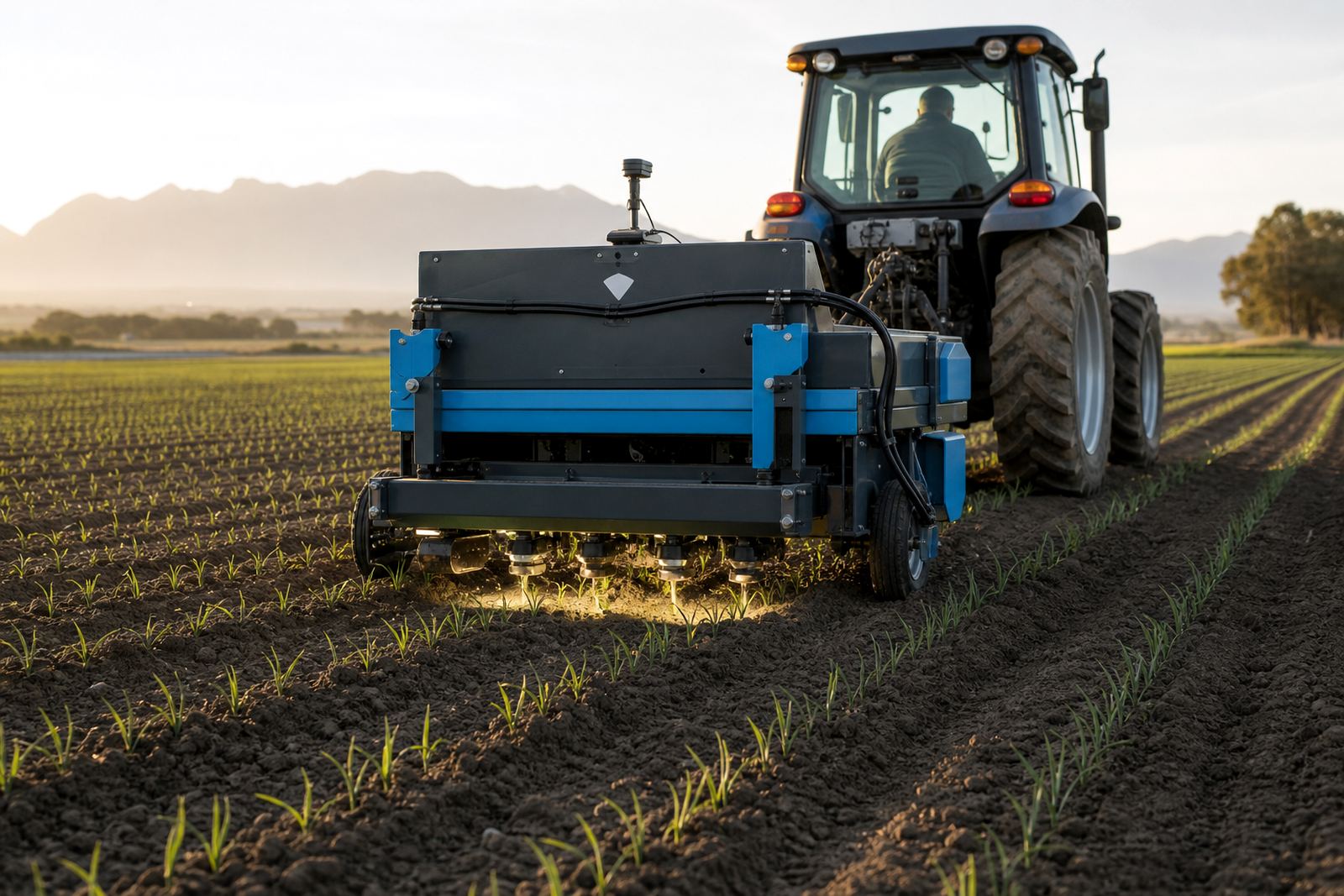
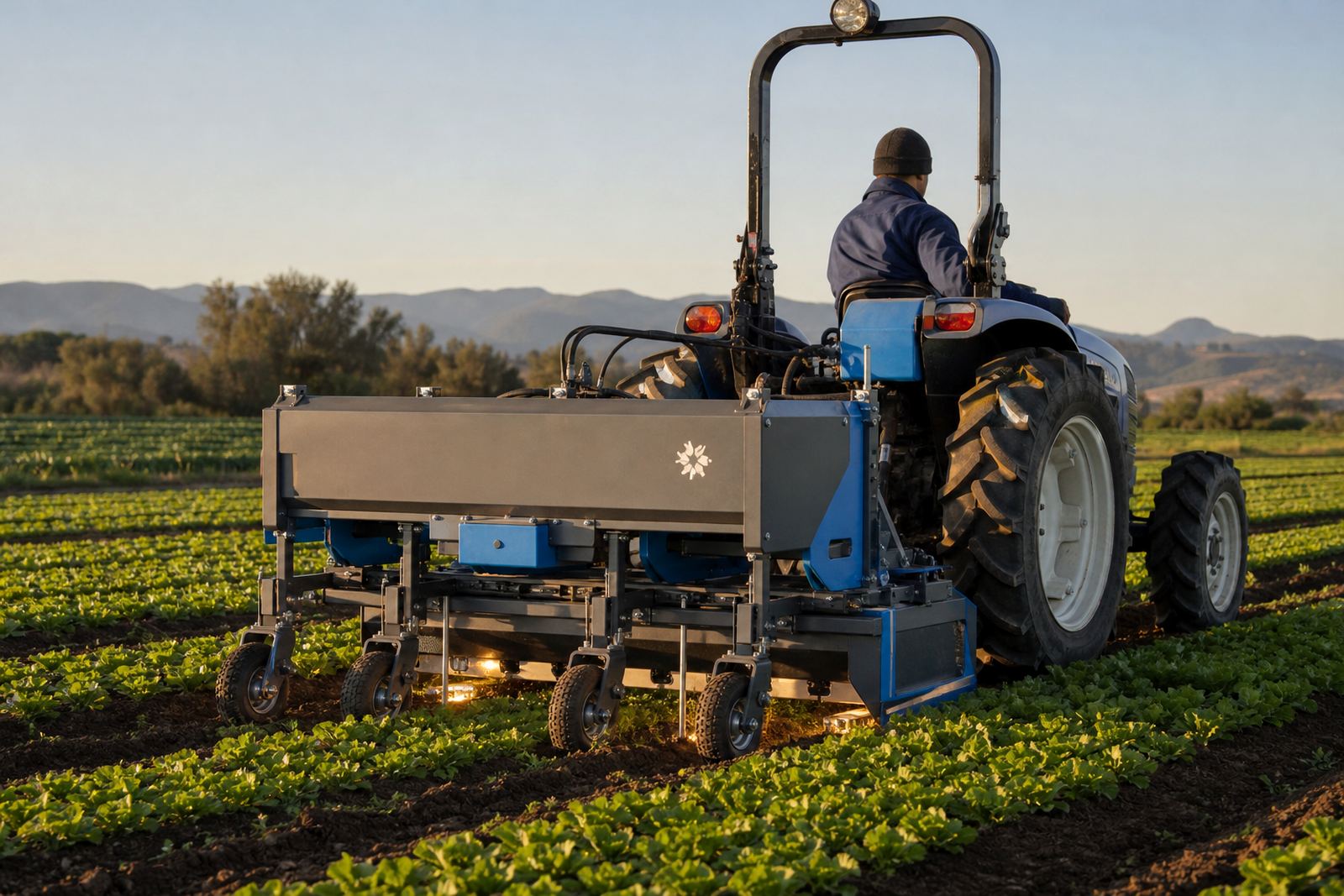
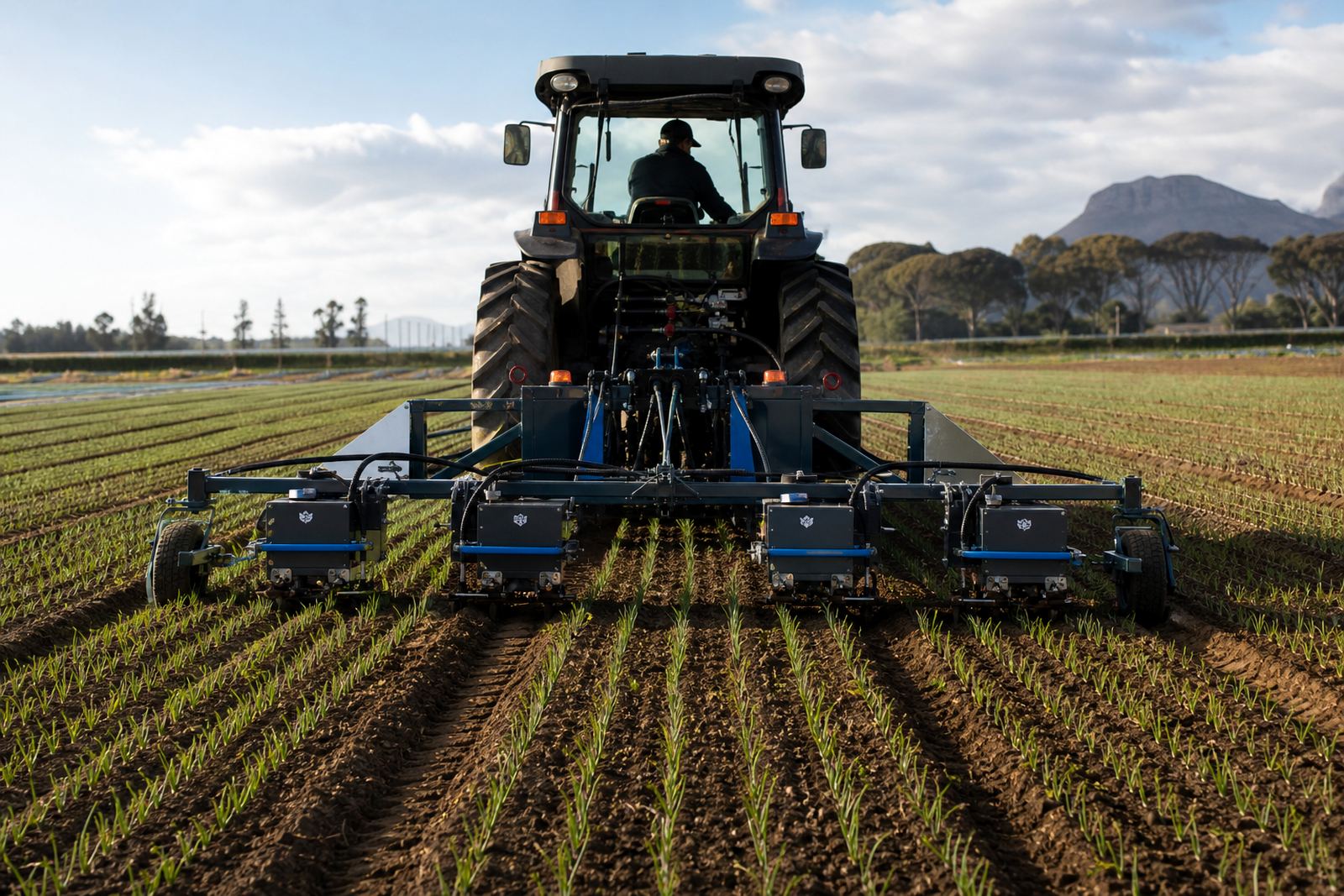
Laser weeding works best where crop rows are straight enough for camera-guided detection and where weeds can be hit before they become too woody or too close to the crop crown. The unit travels with a tractor and uses targeted energy to damage weed growing points, while the crop is protected by the guidance system and operator control.
This matters most in vegetables that are planted in regular bands, especially where hand labour is tight or repeated hoeing starts to disturb the bed. The method is herbicide-free and leaves the soil surface intact, which suits growers managing moist coastal ground, irrigated blocks and heavier inland soils that crust after rain.
How the service range is set up in the field
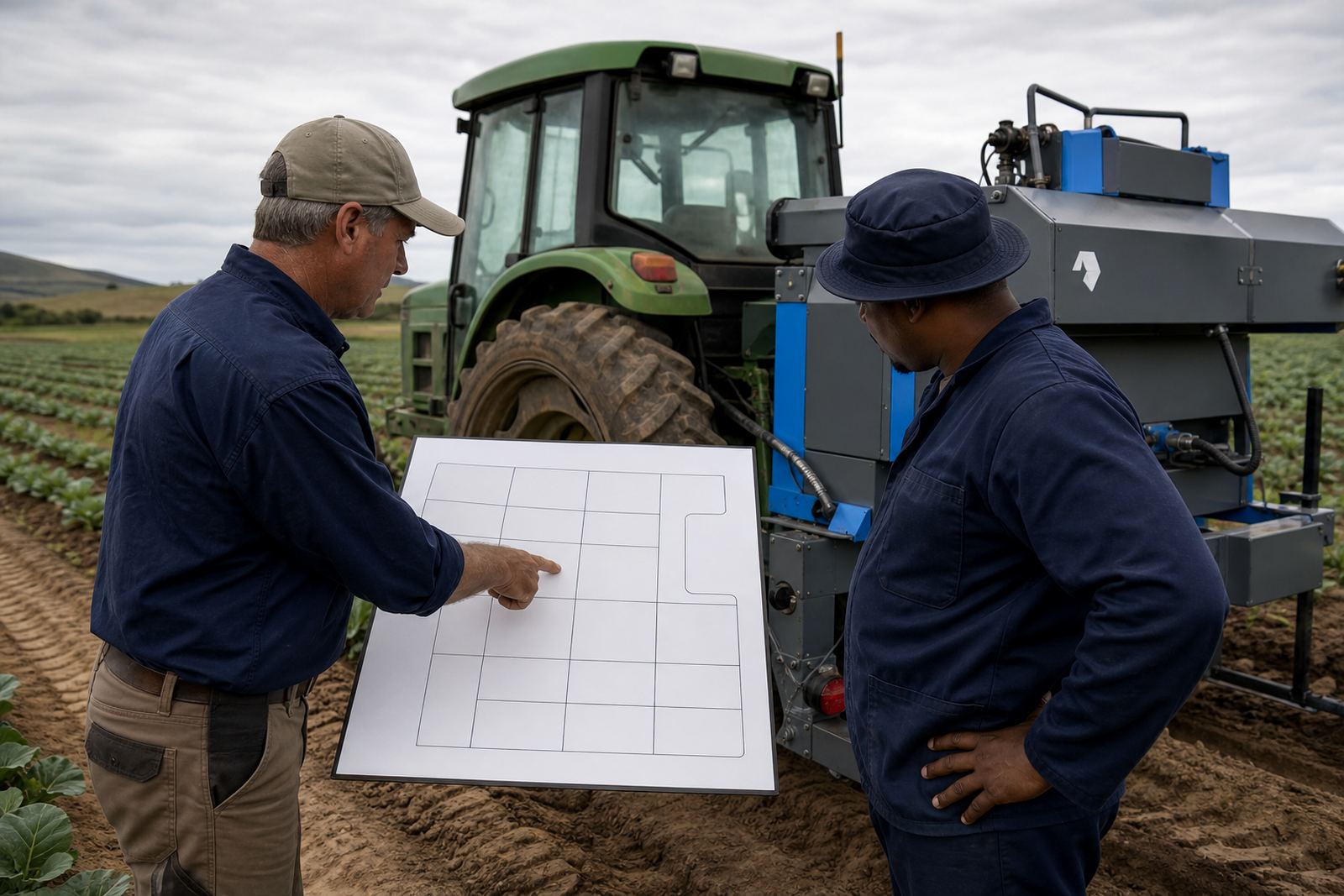
Every block has its own row width, weed flush and turning space, so the service is planned around the crop and the layout rather than a fixed pattern. The practical side starts with spacing, bed condition and weed stage, then moves through access, waterlogged corners and headlands that need slower handling.
- Field assessments for row spacing, weed pressure and access points
- Crop timing plans that match the weed stage to the pass window
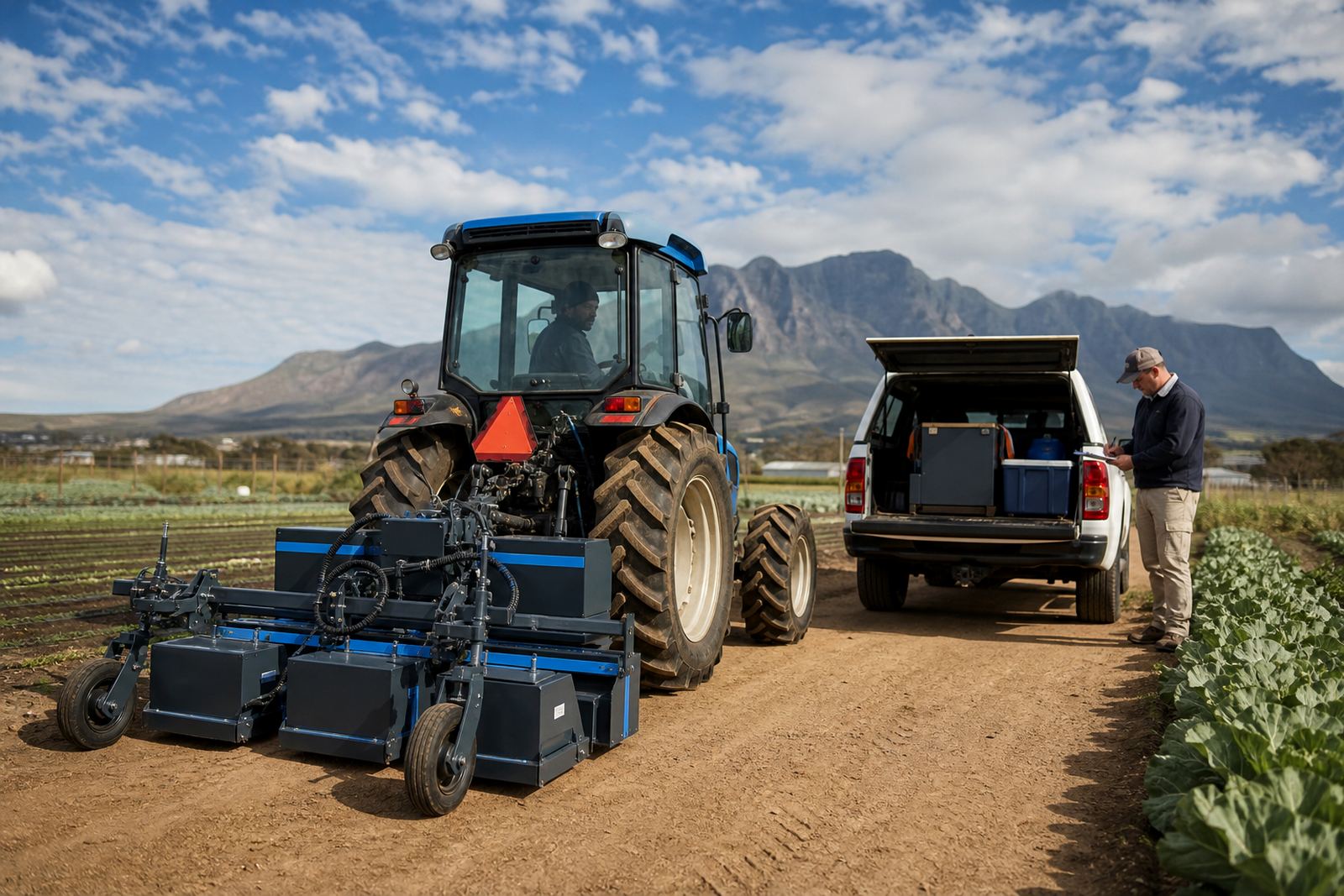
- Arrival site checks before the tractor and laser unit go in
- Trial strip runs where a grower wants a small section checked first
- Post pass reporting for the block and the next pass plan
What changes from one crop to the next
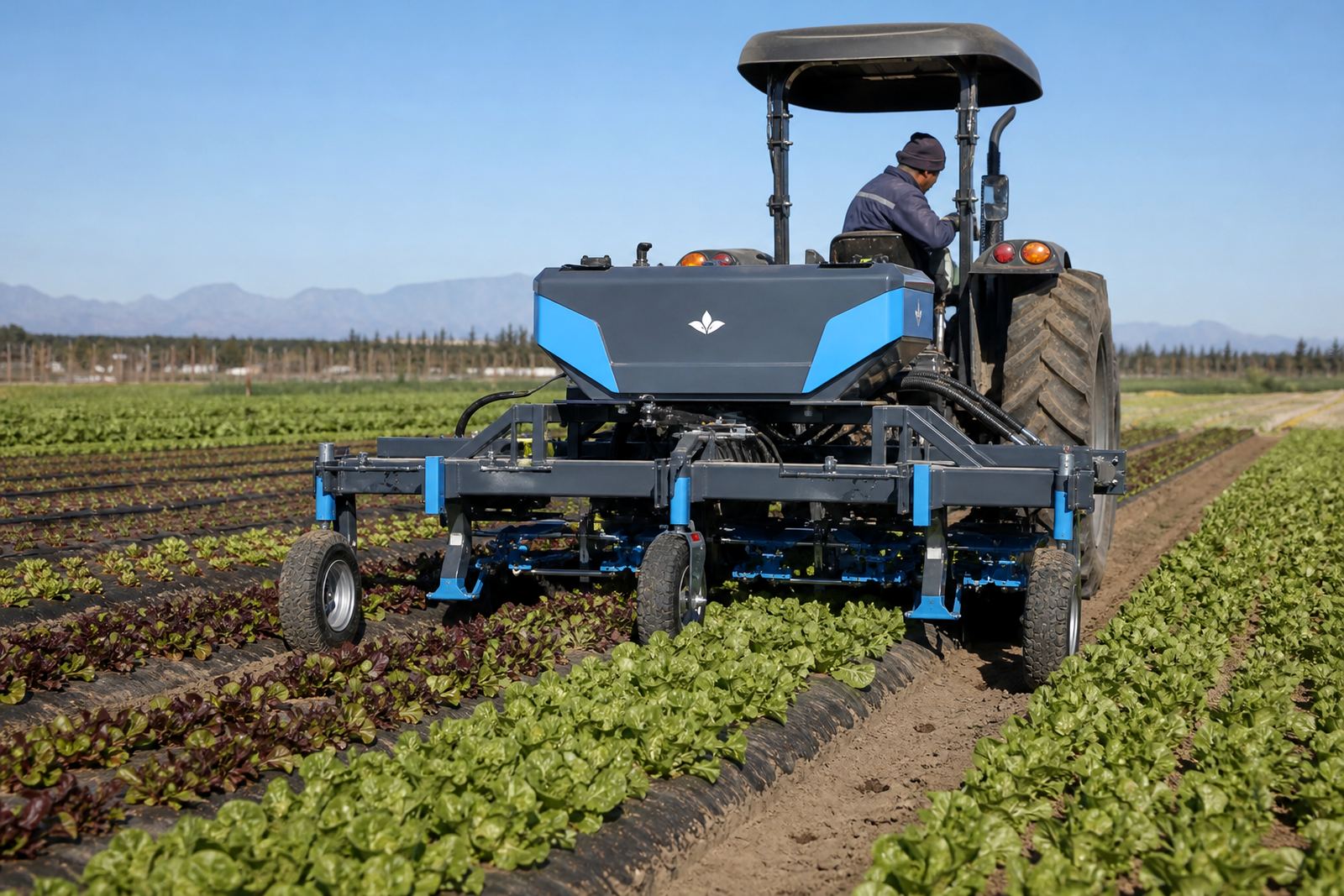
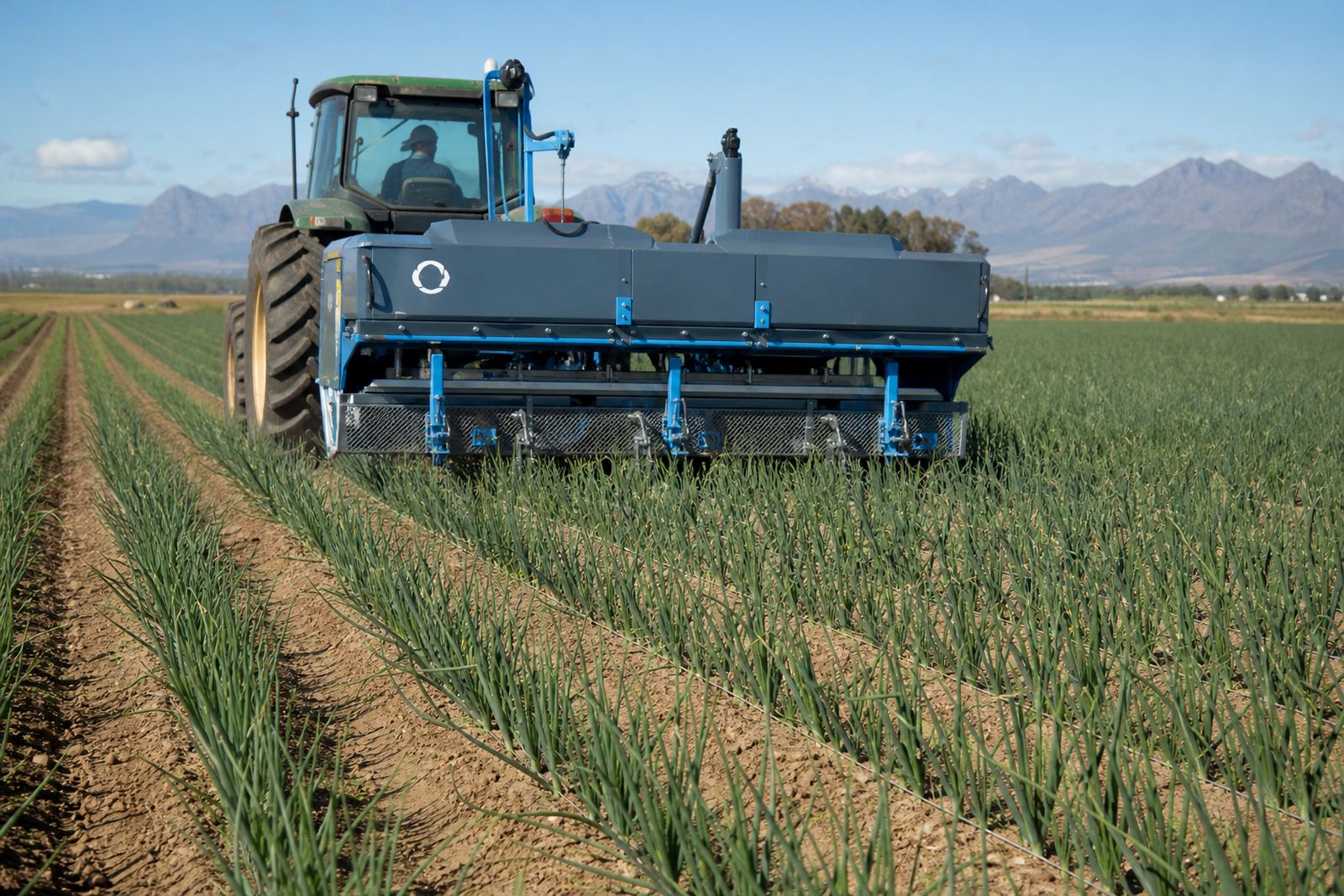
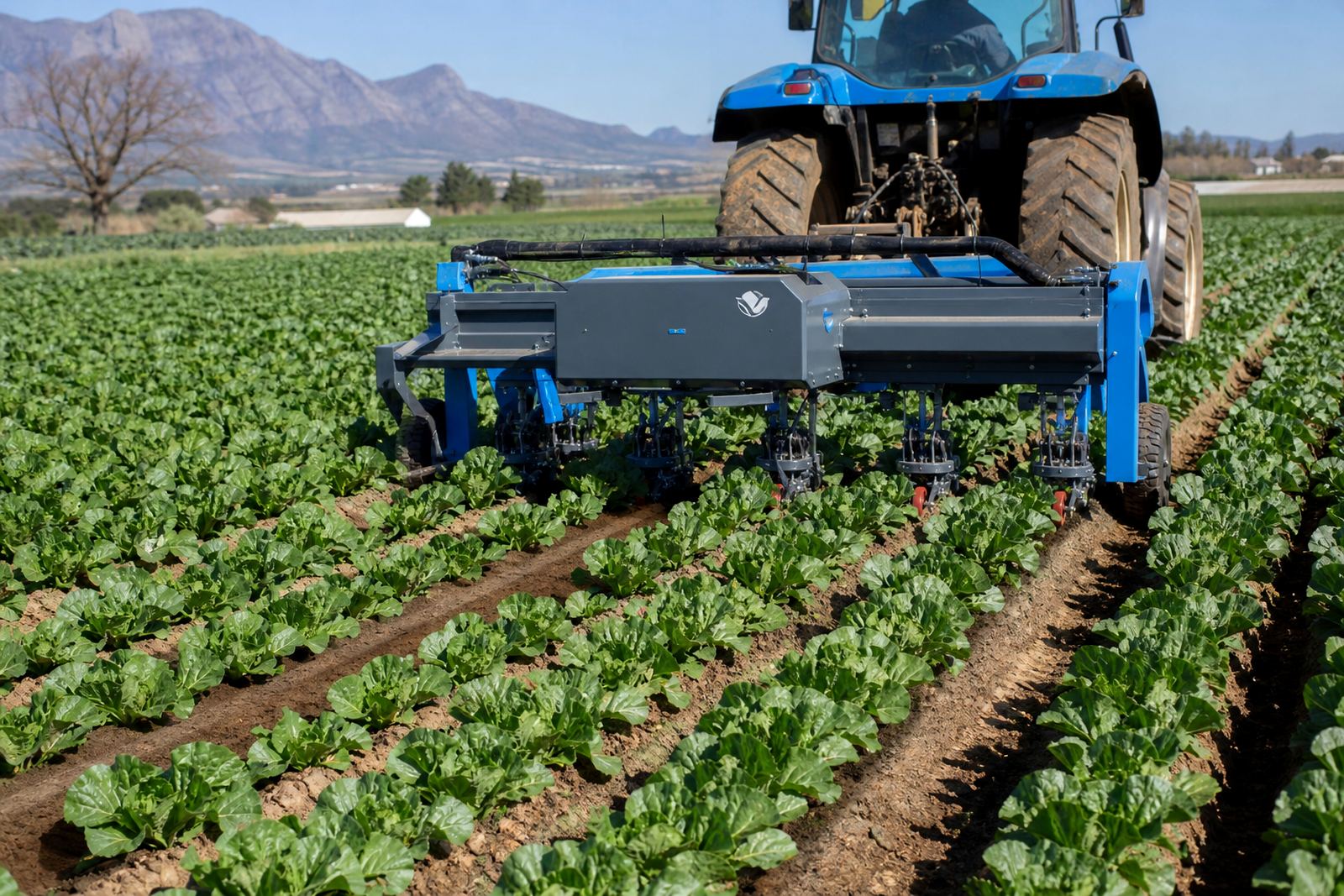
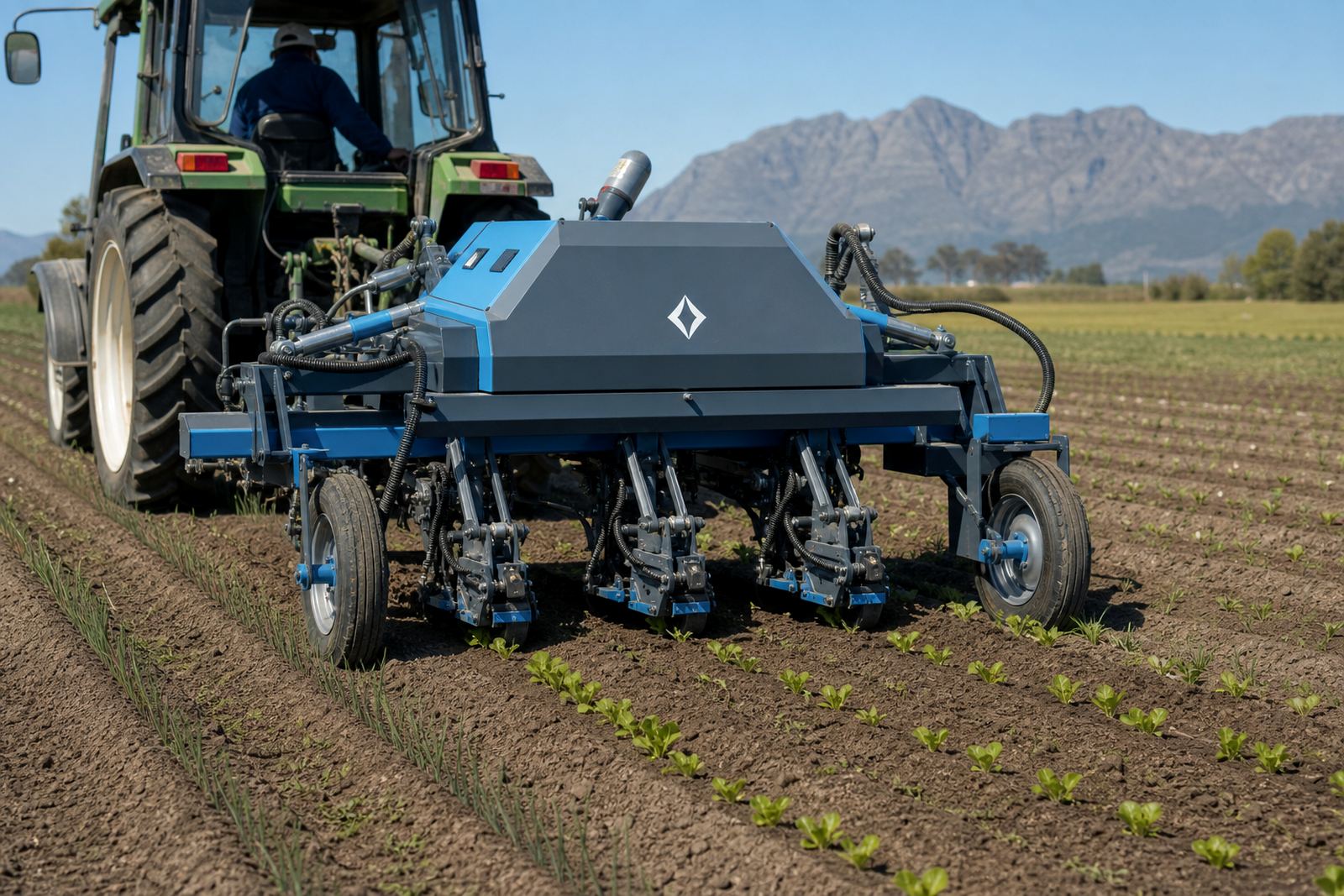
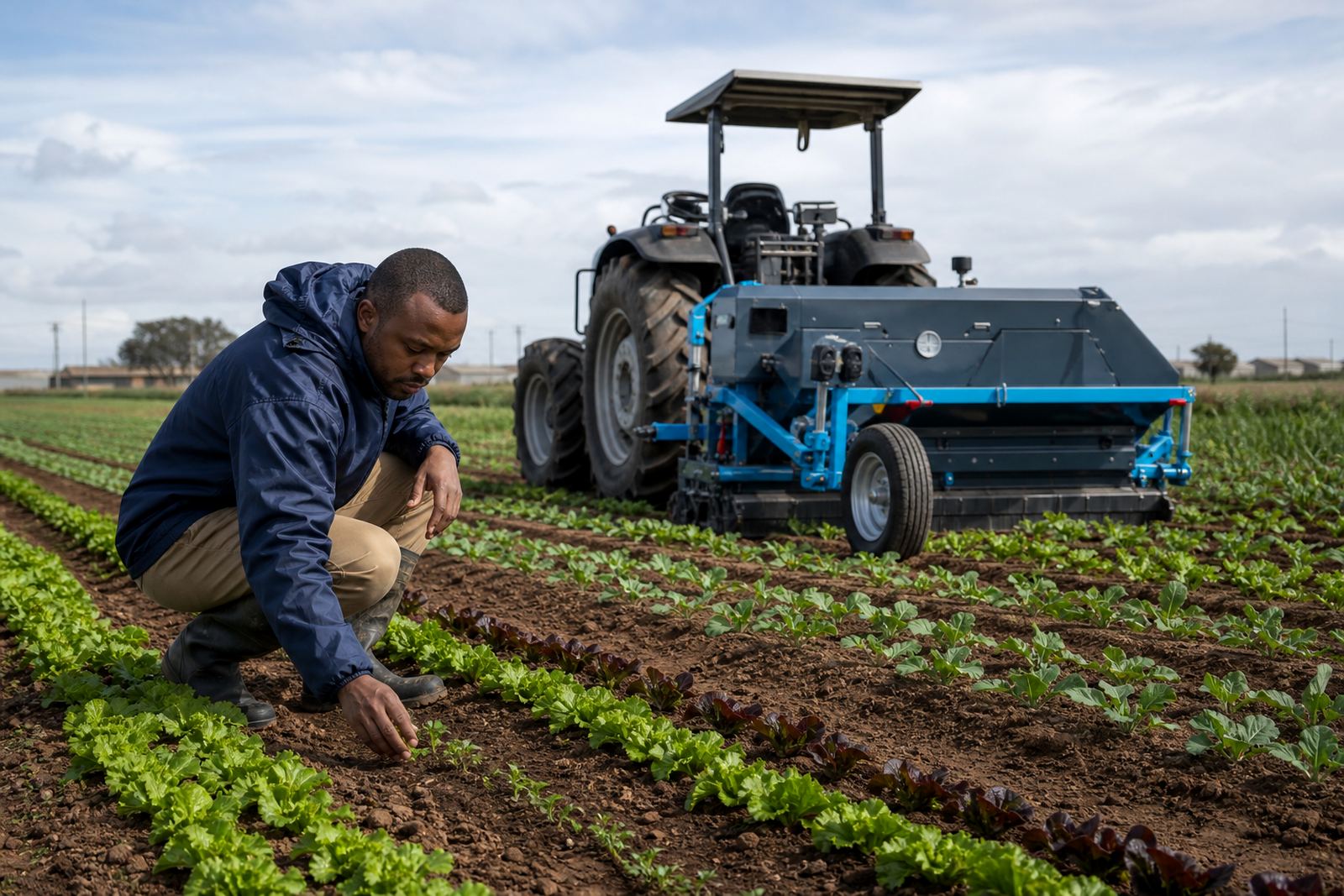
Onion and carrot rows can be narrow and unforgiving, while lettuce and brassicas often need careful travel through softer bed surfaces. The unit settings, driving speed and operator attention all shift with canopy cover, weed size and the amount of free space around the crop.
Field speed is not fixed across every block. It depends on weed pressure, row structure and how often the crop has already been worked. A lighter flush in a tidy block can move differently from a heavy flush in a patchy field, so the scheduling has to match the actual conditions on the ground.
- Onions and carrots often need tighter line discipline
- Lettuce blocks may need more caution around the plant centre
- Brassicas can change quickly once the leaves start to close
- Seedling stage and early weed stage usually give the cleanest timing window
Contract formats for growers with one block or many
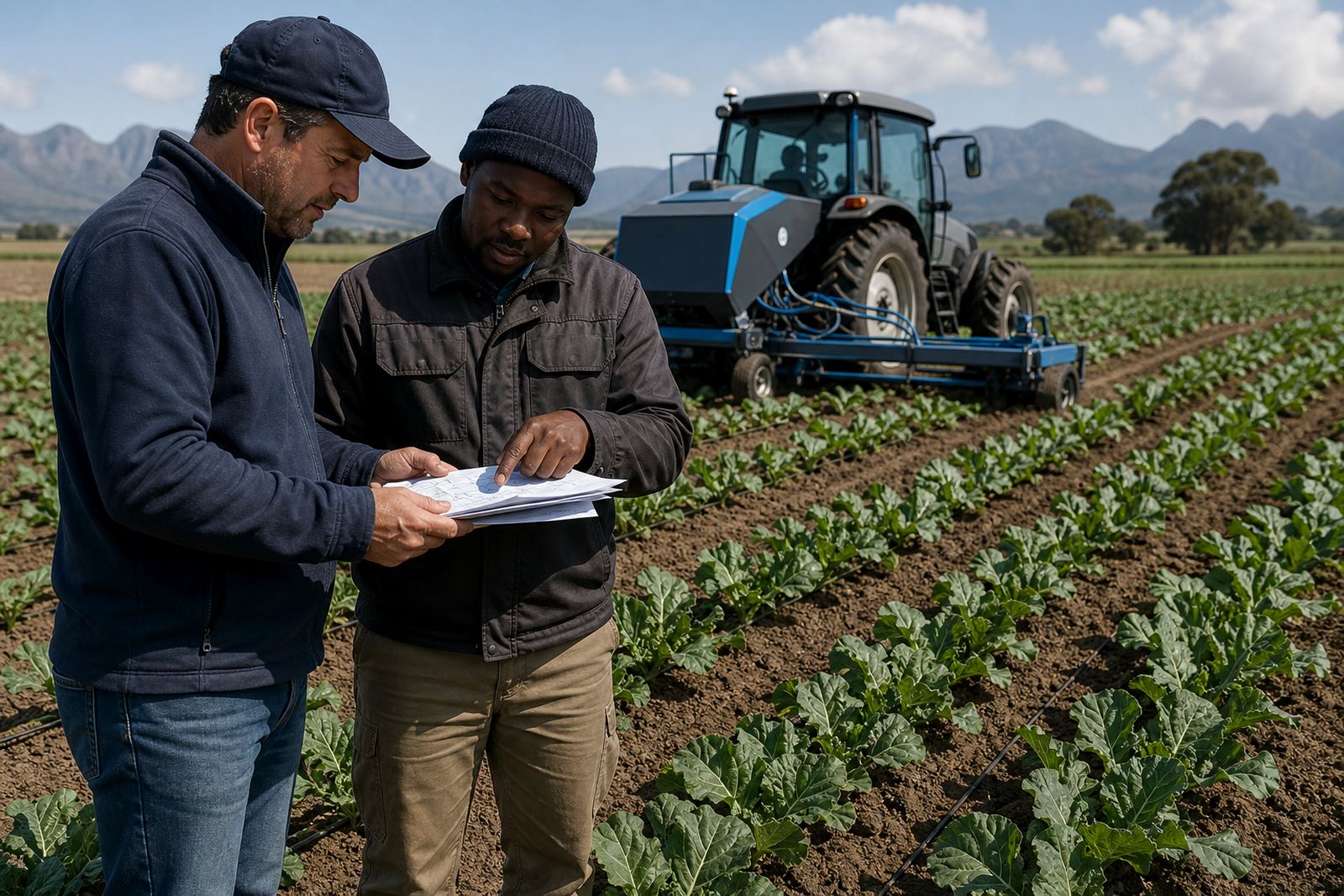
Some growers only need a single visit on one farm, while others run a season programme across several blocks. We set up contract laser weeding around the planting calendar, the crop sequence and the travel pattern between farms, which helps reduce dead mileage and keeps the work lined up with the crop stage.
Multi farm programmes suit growers with blocks in different towns or different soil types, because the timing pressure is rarely the same everywhere. The same operator can stay with a grower across more than one site, or a programme can be split around harvest access and replanting dates.
Operator supplied work with scheduling support
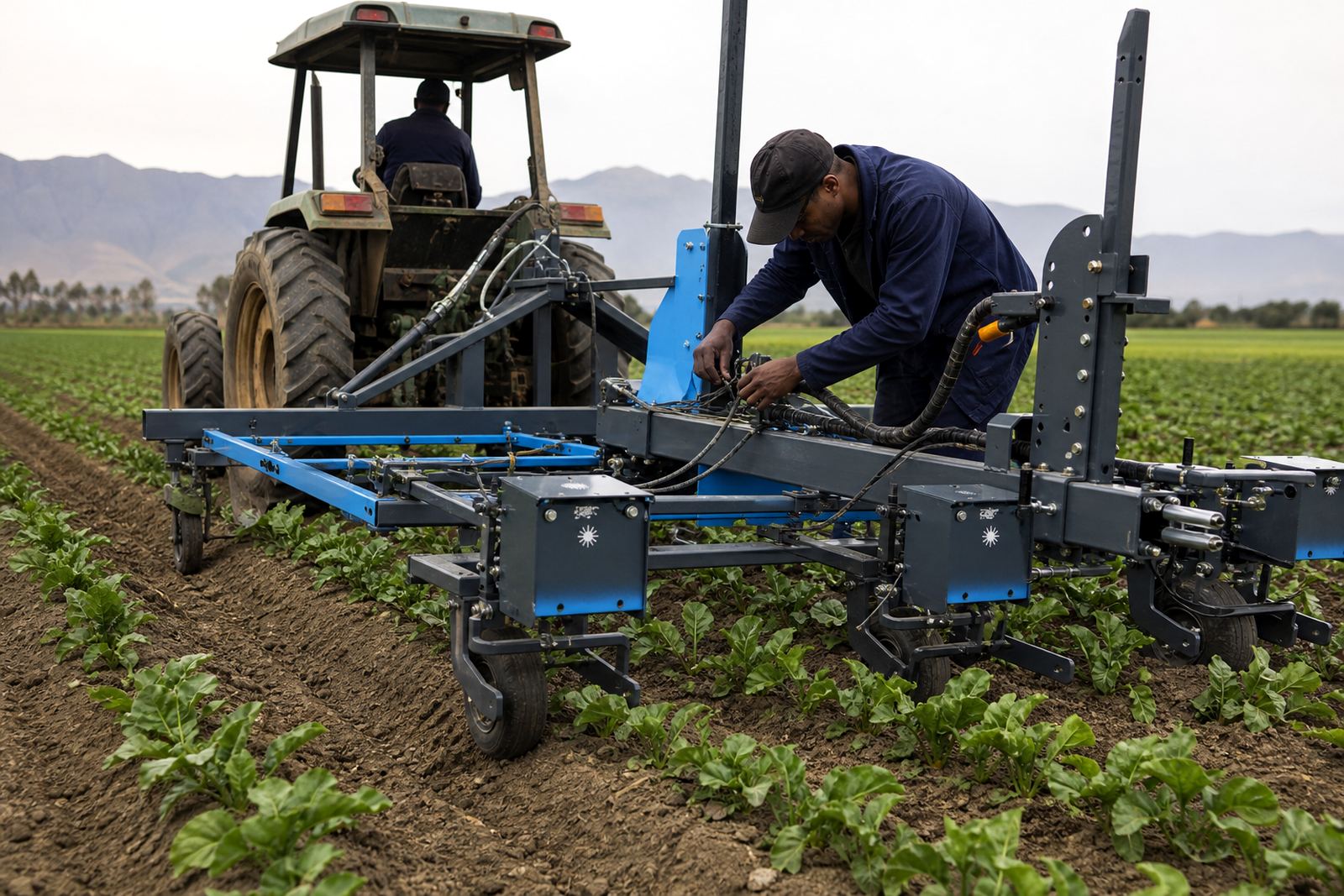
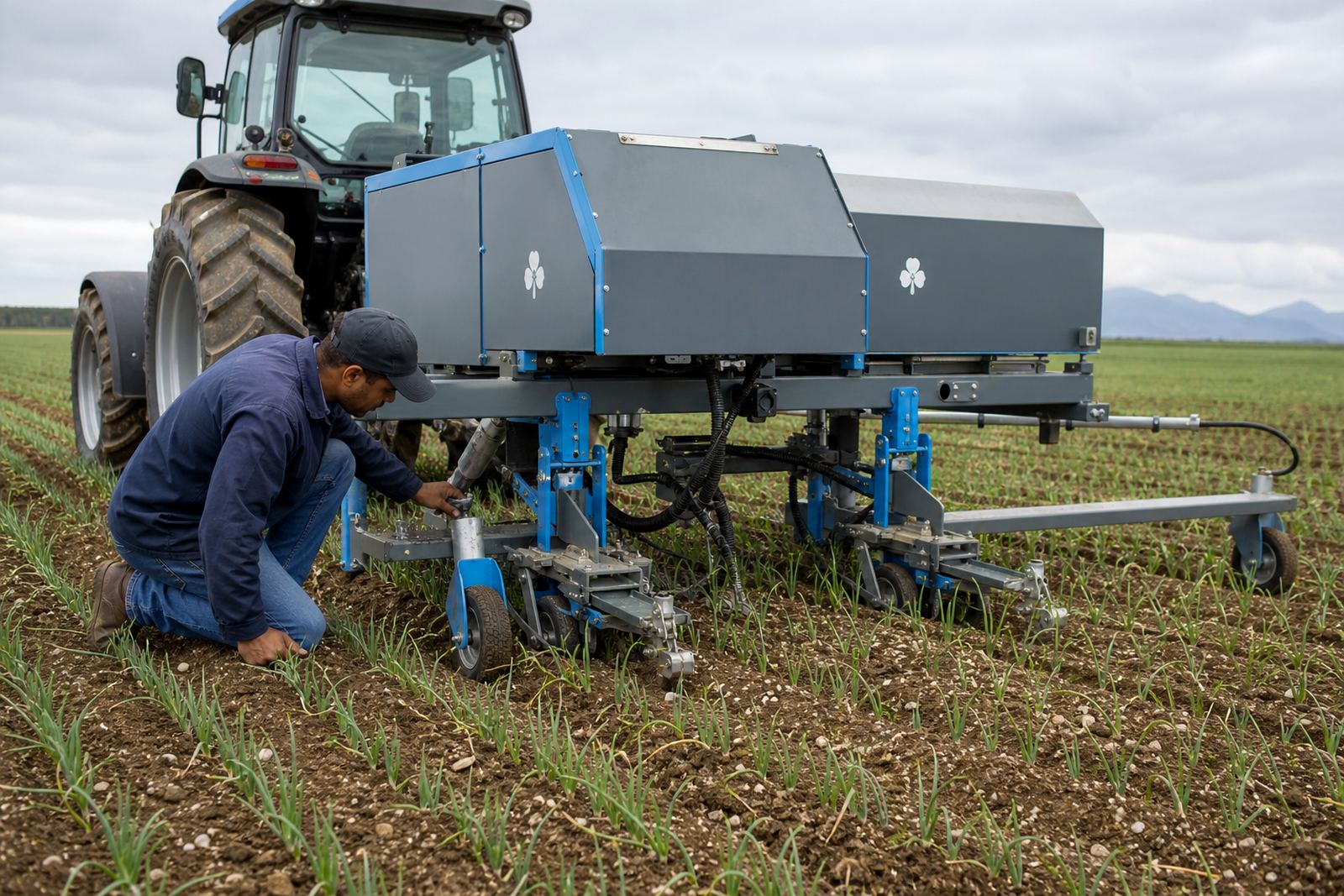
The service includes trained operators who work with the tractor-drawn unit and handle the pass in the field. That makes the job more than a machine hire exercise, because setup, row tracking and re-entry planning all affect how the block gets treated.
Field scheduling supports growers who need travel coordination, repeat pass planning and seasonal booking across the western and inland production zones. Philippi is our Cape Town base, and the work reaches growers in Ceres, Grabouw, Tzaneen, Bela-Bela, Nelspruit, Howick and Bethlehem, depending on the crop calendar and road access.
A practical list of the service pieces
The hub groups the main service pieces so growers can match the right support to the block. Some farms only need a timing check and a pass, while others need a fuller programme with site checks and reporting.
- Grower consultation
- Field assessments
- Crop timing plans
- Operator supplied
- Field scheduling
- Travel coordination
- Season bookings
- Repeat pass planning
- Multi farm programmes
These service pieces are built around vegetable production, not generic machinery hire. The aim is to match the row layout, weed stage and farm movement with a laser weeding pass that fits the crop, the ground and the season.
A direct route to the right service fit
If the block is already planted and the weeds are at an early stage, the setup can be quite different from a field that has drifted too far before treatment. That is why the right fit is usually worked out from crop type, row width, soil condition and the timing of the next labour window.
Laser weeding is most useful where a grower wants targeted weed control without spraying and without throwing soil back onto the row. For vegetable farms that manage multiple blocks across the Western Cape, Limpopo, Mpumalanga, KwaZulu-Natal and the Free State, the service range gives enough room to plan around real field conditions rather than a one-size approach.