Bed shape that gives the unit a clean line
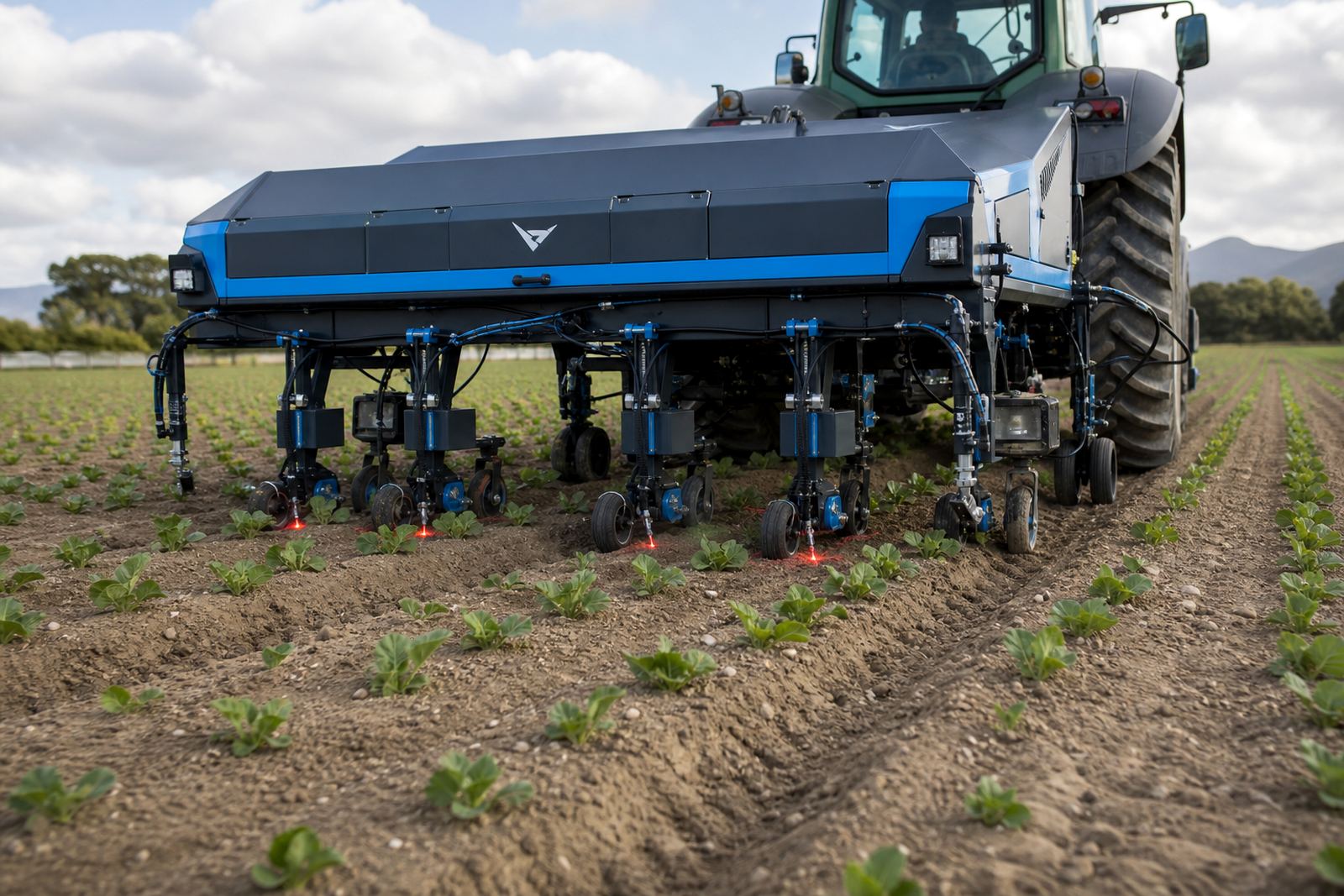
Raised-bed setup starts with the physical bed, not the machine. We look at bed crest height, shoulder fall, furrow depth and the width available for the tractor tyres, because a laser weeding pass depends on the unit holding a steady line beside the crop. On a good field the bed sits evenly, the crop row is clear of loose clods and the shoulders hold together after rain or irrigation.
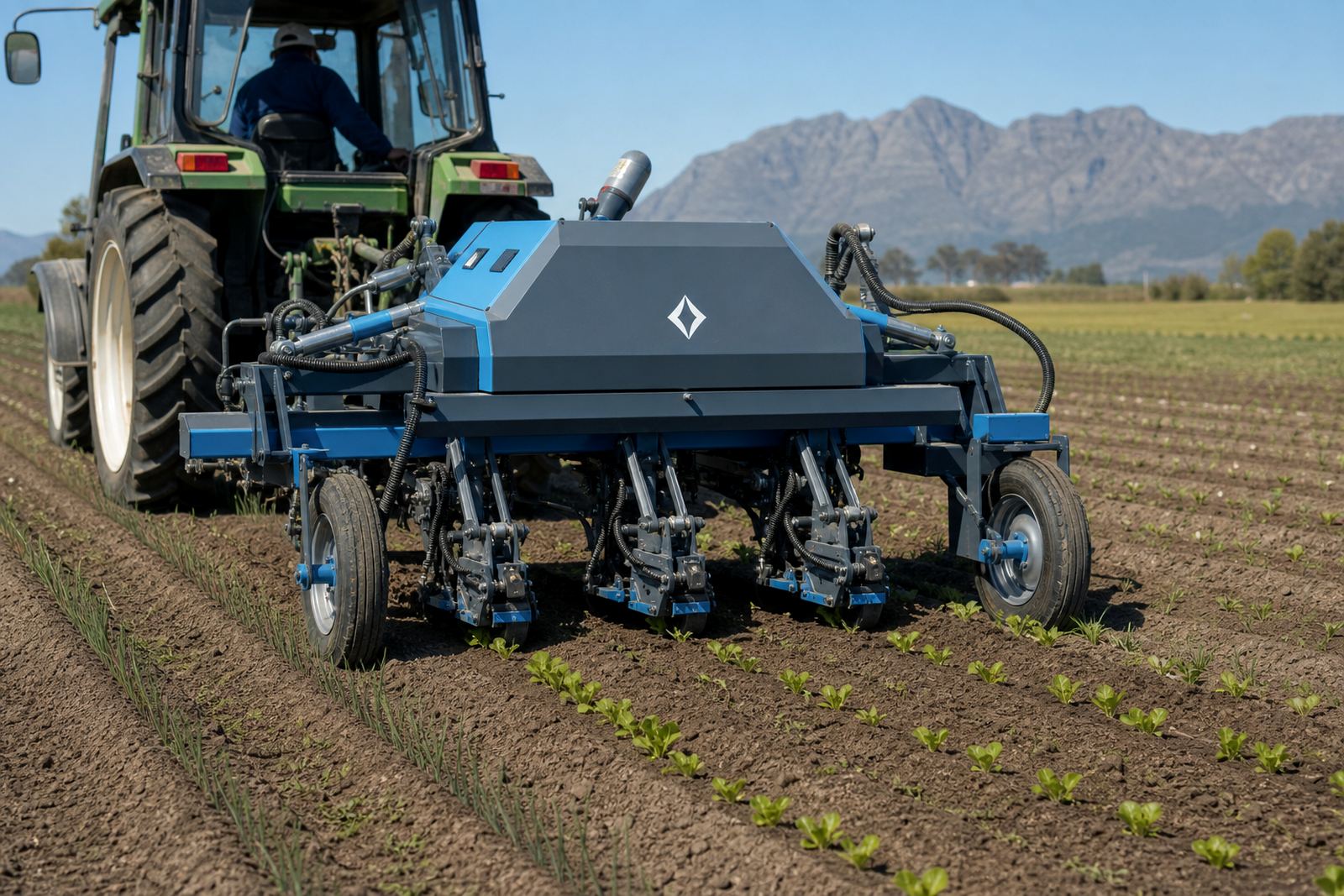
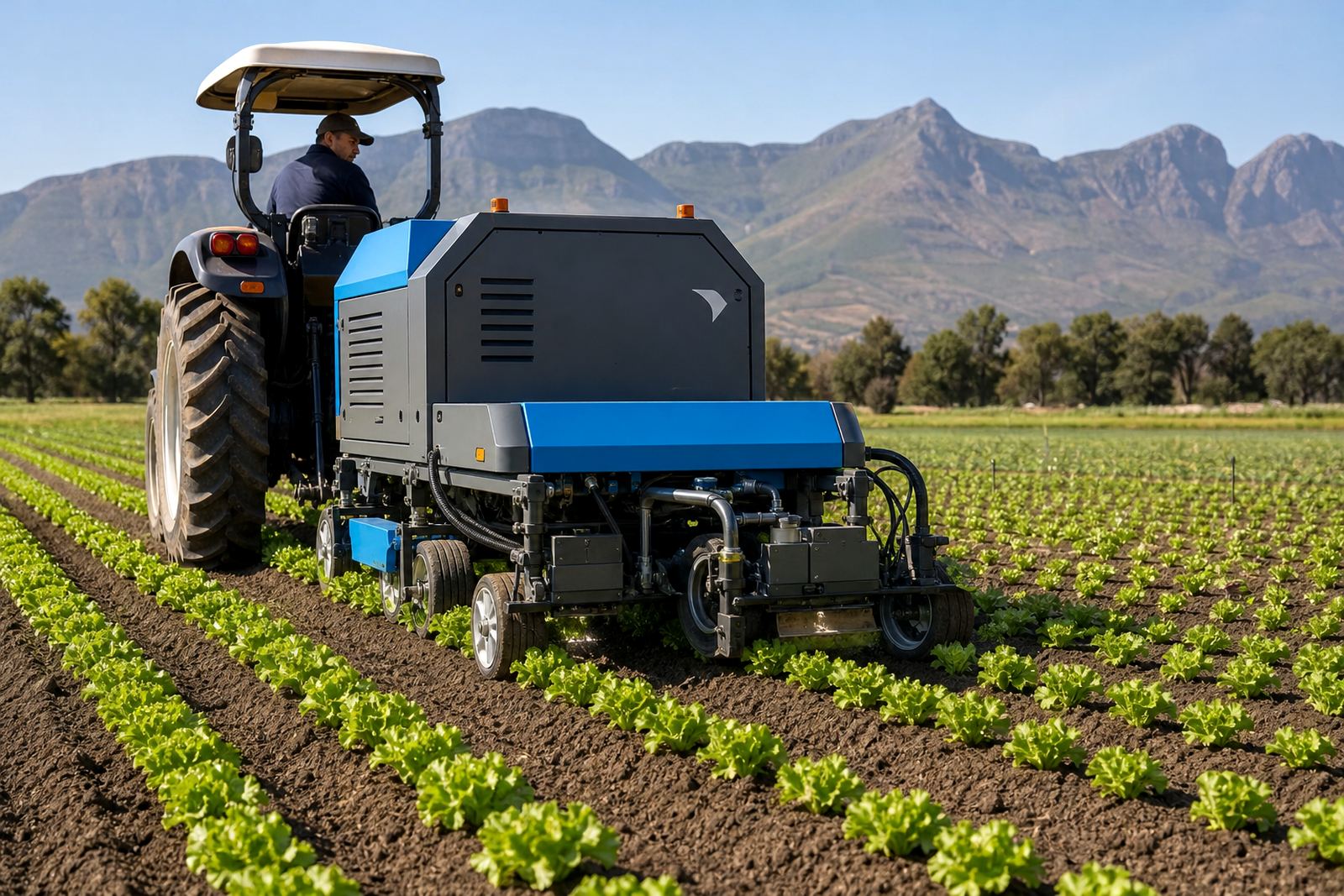
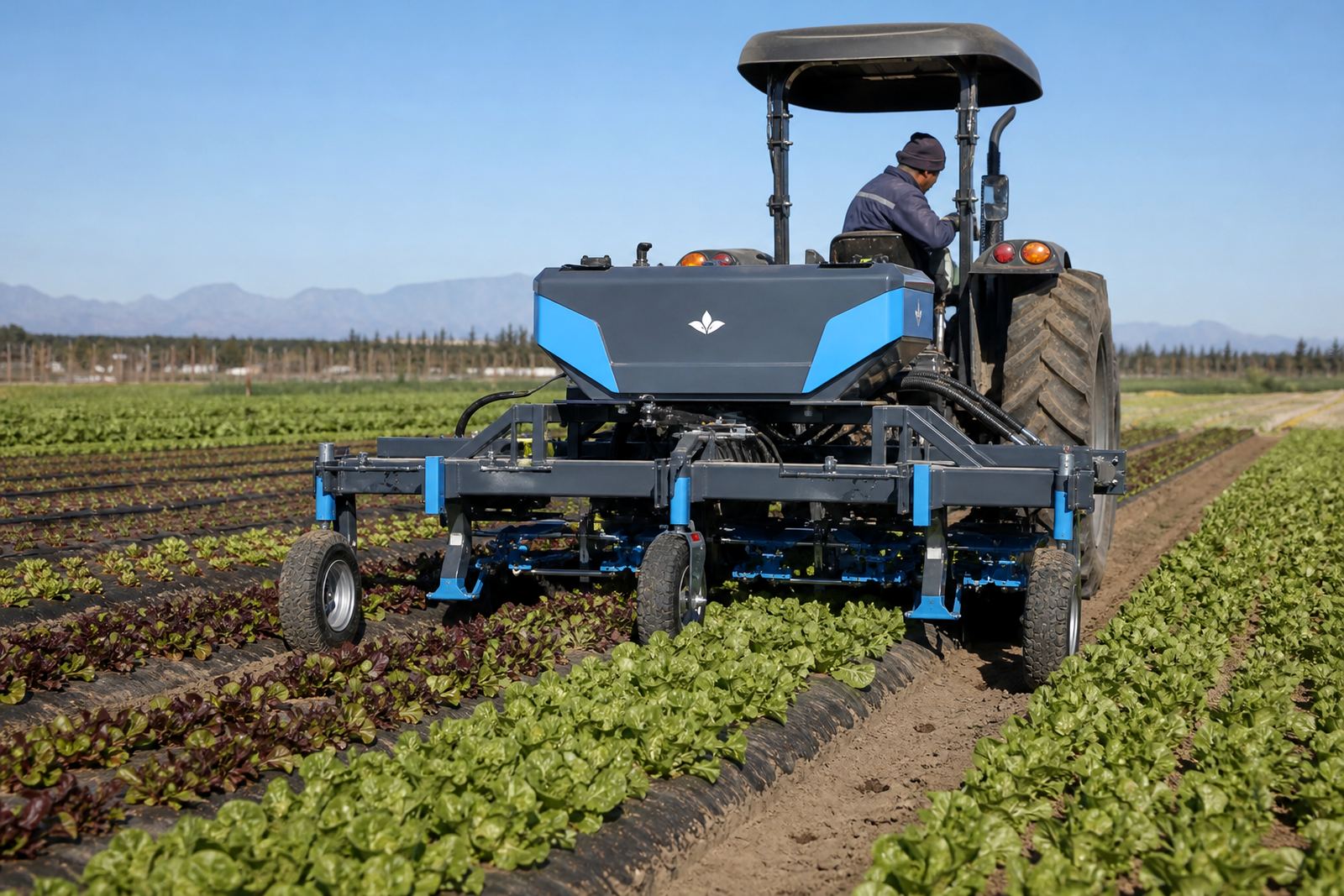
The setup is suited to row crops where plants are grown on raised beds with consistent spacing. That includes onions, carrots, lettuce and brassicas, where a tractor-drawn laser unit can work between rows and around plants while the operator keeps to the planned track. The field still needs enough access for the tractor and unit to travel without cutting into the bed edge or pressing soil back over young plants.
- Bed crest height matched to crop stage and irrigation method
- Shoulder width checked for tractor wheel placement
- Furrow shape reviewed for standing water and rut risk
- Row spacing mapped against the laser pass width
Where raised-bed setup fits best in the season
This setup is most useful when the crop is in a stage where the row is defined but the weeds are still at a treatable size. Laser weeding uses camera-guided detection to find weeds in the crop row and on the bed face, then targets the weed growing point with a controlled laser pulse. Timing matters. Small weeds are easier to manage, while large weeds with heavy leaf cover can slow the pass and need a different schedule.
Raised beds are common in intensive vegetable production where repeated cultivation would disturb the soil or throw fresh weed seed into the row. The method suits growers who want an herbicide-free pass with no soil disturbance, especially where the bed shape has already been built for irrigation and crop placement. If the bed surface is uneven or the shoulders have collapsed, the line still works but the field may need extra planning before the unit enters.
- Early flushes of weeds are easier to target than mature patches
- Bed shape should be stable after irrigation or rainfall
- Row crops need enough clearance for camera tracking
- Field access must suit tractor movement across the block
Sizes, spacing and field options we work with
Raised-bed setup is not one fixed size. Vegetable farms use different bed widths, plant-to-plant spacings and wheel tracks, and the setup needs to reflect that. In practical terms we look at bed widths from narrow market-garden rows through to wider commercial beds, with the tractor line matched to the crop spacing and the unit width. The goal is a setup where the operator can hold a clean pass without leaning too close to the crop canopy.
Options usually come down to the block layout. Some farms want a single field trial strip before the rest of the block is scheduled, while others need several beds arranged into a multi farm programme. In tighter blocks the wheels may need to run in the same traffic line each time, while broader beds give more room for the operator to keep pace with changing weed pressure. The field configuration is noted before any pass is planned, because that changes how the unit moves and where the cameras see the row.
- Single bed or wide-bed layouts
- Consistent row spacing for camera recognition
- Wheel track allowance beside the planted row
- Trial strip runs before larger field schedules
Getting the tractor, wheels and operator lined up
Installation in this trade is really field fitting. The raised-bed setup needs the tractor-drawn unit, the tyres and the operator position to suit the bed profile. Wheel placement matters because a tyre sitting too close to the crest can crush soil or nick a young plant, while a track that sits too far out can leave the laser unit off line. The operator also needs a clean view of the row entry and the crop spacing across the bed.
Before work starts we check the approach line, the turning space at the ends and any soft patches that could change the tractor angle. On farms near coastal air or inland dust, camera surfaces and moving parts need normal cleaning between blocks so the tracking stays clear. Raised-bed work is best when the field has been prepared with the harvest direction, irrigation layout and row traffic already in mind.
- Tractor wheel placement matched to shoulder width
- Entry and exit points checked at block ends
- Camera path kept clear of loose soil and residue
- Operator position set for uninterrupted row view
Care before and after a pass
Raised-bed setup holds better when the field is looked after between passes. Beds that slump after heavy rain can narrow the working line, and over-traffic can flatten the shoulder where the unit needs support. A light surface clean before the pass helps the cameras, while post pass reporting records where the bed shape changed and where weed pressure sat heavier than the rest of the block.
After the pass we look for wheel marks, edge collapse and any section where the crop row needs a different timing plan. That may lead to repeat pass planning or a revised crop timing plan for the next round. The point is not just to remove weeds once, but to keep the bed profile suitable for the next scheduled block without unnecessary soil movement.
- Keep shoulders firm after irrigation or rain
- Remove loose clods from the row line
- Check for wheel marks at the block ends
- Record sections that need a different pass timing
Order details that help us set the field correctly
When you send through a raised-bed setup brief, the field details matter more than general crop names alone. We need the crop, the bed width, the row spacing, the number of hectares, the field location and whether the block has narrow headlands or tight turning space. If the crop is still early, the timing plan changes; if the weeds have already thickened, field speed may need to slow depending on weed pressure and canopy cover.
We also need to know whether the block is a single farm, part of a multi farm programme or a seasonal booking with several passes across the month. That helps with travel coordination, arrival site checks and grower consultation before the unit reaches the field. For growers in Philippi, Ceres, Grabouw, Tzaneen, Bela-Bela, Nelspruit, Howick and Bethlehem, the setup is planned around the block itself, not a general rule copied from one farm to another.
- Crop type and growth stage
- Bed width, shoulder width and row spacing
- Hectares per block and number of blocks
- Turn space, slope and soft patch notes
- Preferred timing window for the field programme
Key facts
| Service type | Raised-bed field setup for laser weeding |
|---|---|
| Working method | Camera-guided weed detection with laser targeting |
| Unit format | Tractor-drawn laser weeding unit with trained operator |
| Suitable crops | Onions, carrots, lettuce, brassicas and similar row crops |
| Field setup focus | Bed shape, shoulders, wheel placement and row spacing |
| Coverage area | Philippi, Western Cape and field programmes across South Africa |