What In Row Targeting Means on a Vegetable Field
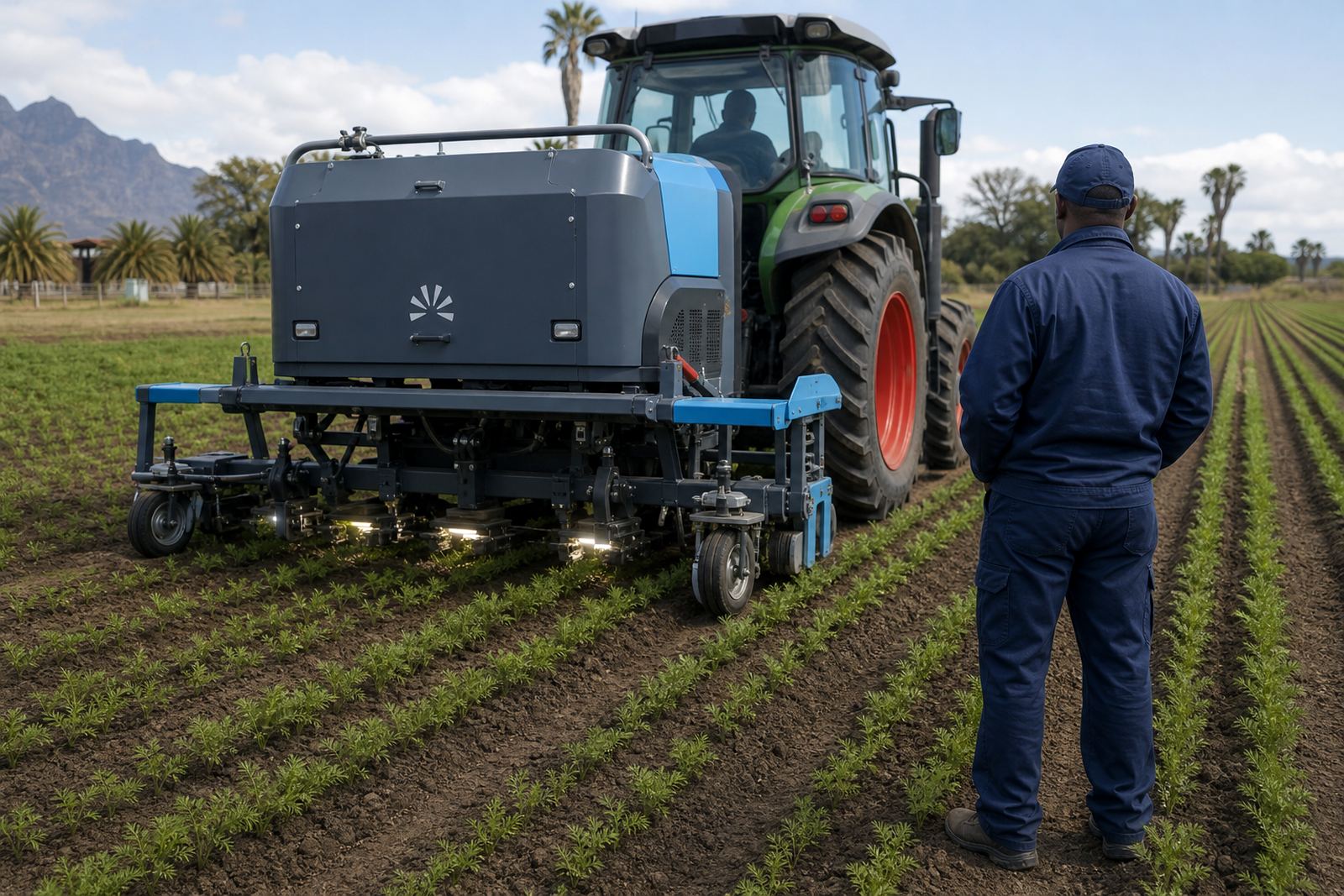
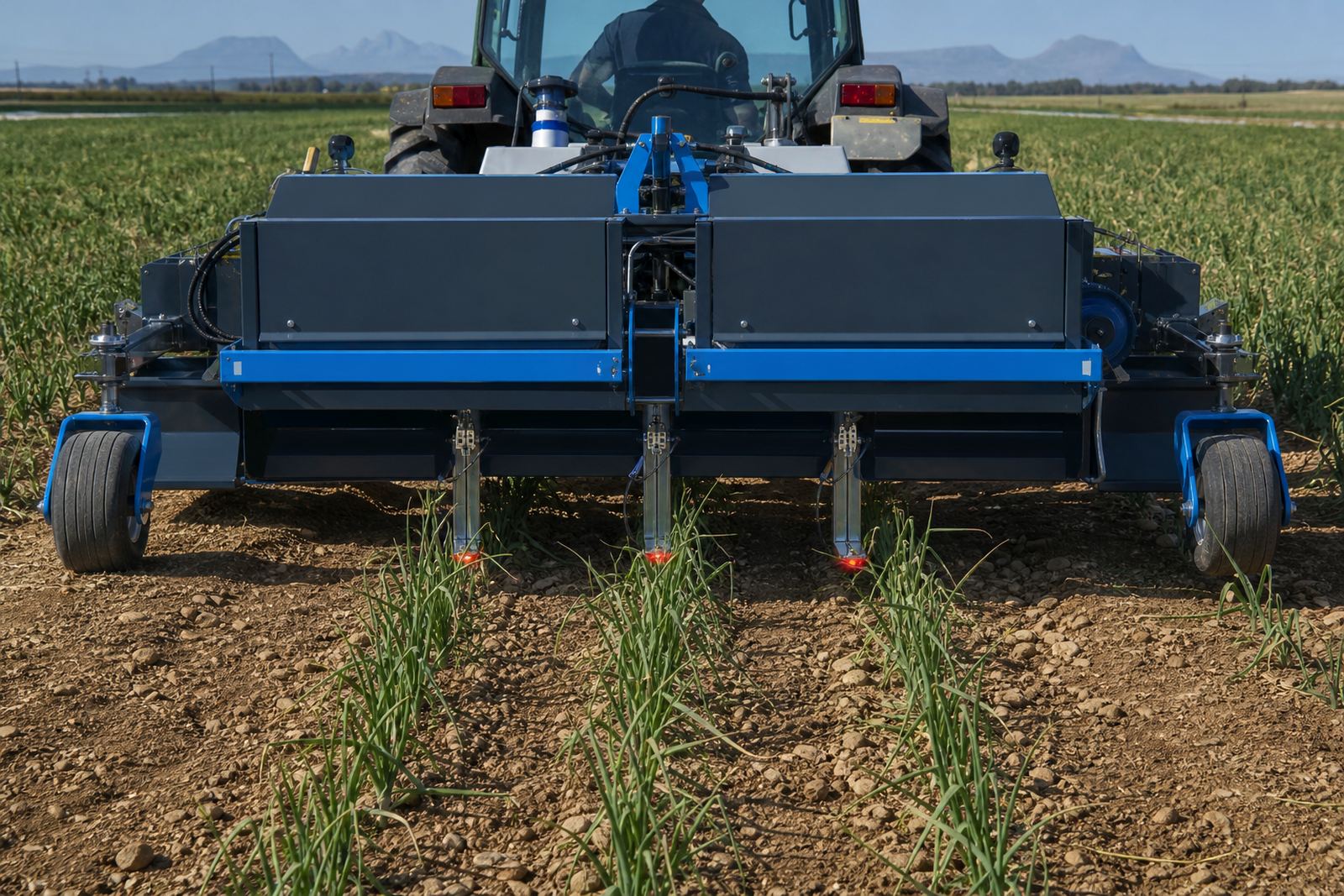
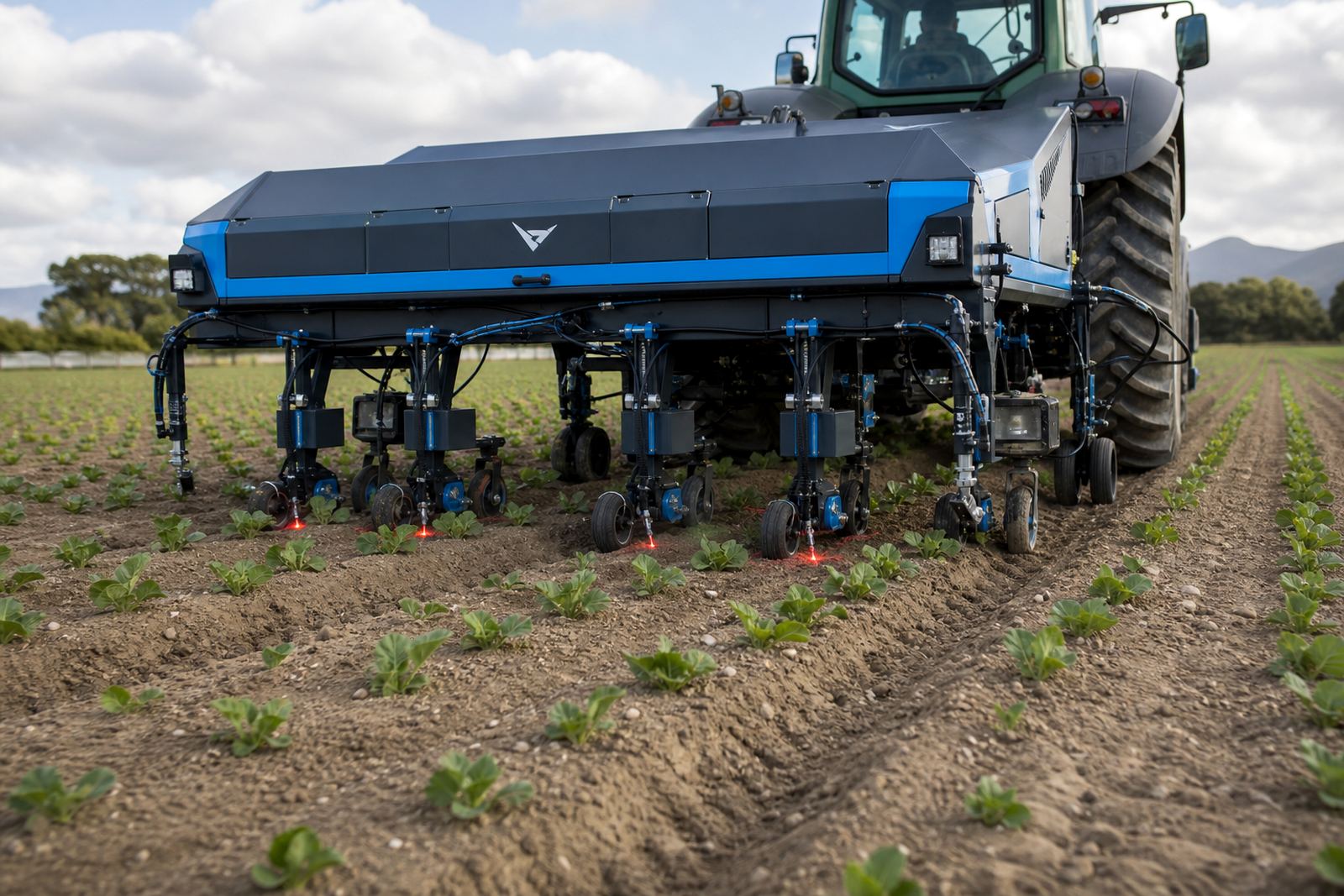
This configuration is built for work inside the crop line, not only between rows. Camera-guided detection reads the bed, finds weed growth points and directs laser energy at the weed tissue while the crop plant is left out of the firing line.
The unit is drawn behind a tractor and carried by a trained operator team, so the work can follow the spacing, bed shape and crop stage on the block. It is used where herbicide sprays are not wanted and where the soil should stay undisturbed.
Crop Lines That Suit the Setup
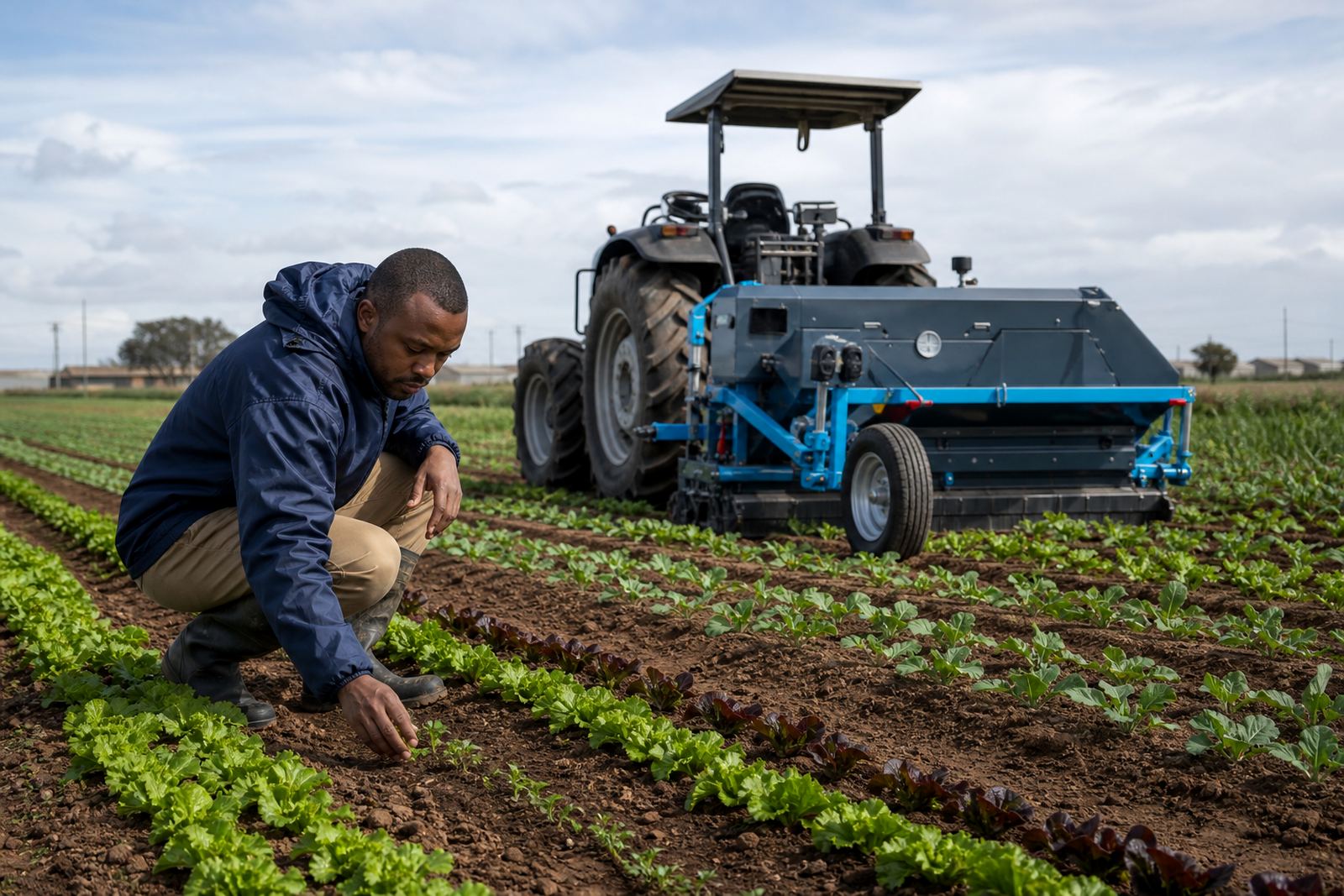
In-row targeting suits row crops where the plant count, spacing and timing are tight enough for a controlled pass. Common fitments include onions, carrots, lettuce and brassicas, with the best results coming when weeds are still small and the crop is clearly established.
- Onion lines with narrow spacing and early weed flushes
- Carrot beds where seedlings need careful separation from weeds
- Lettuce blocks with uniform transplant or direct sow spacing
- Brassica rows where repeat passes may be planned through the season
Field pressure, weed species and the stage of the crop all affect how the work is scheduled. A block with heavier pressure may need slower field speed, while cleaner rows can often be worked at a more steady pace.
Unit Size, Working Width and Pass Control
The laser weeding unit is tractor-drawn and set up to work in planted rows with controlled guidance. The working width, row count and head layout are matched to the crop spacing and bed pattern on the farm, so the operator can keep the beam on the weeds close to the plant line.
- Tractor-drawn laser weeding frame
- Camera-guided weed detection over the row
- Adjustable pass speed based on weed pressure
- Operator controlled run for field-by-field timing
The practical range depends on row layout, crop stage and weed density. A wider bed or mixed spacing can still be handled, but it needs the right setup and a clear field plan before the unit arrives.
Fitting, Field Access and Operator Setup
Installation on site is a field fitting task rather than a fixed installation. The tractor, laser unit and operator crew are matched to the block, with attention to row alignment, turning space, entry points and the condition of the soil surface.
Fields need enough access for a tractor-drawn unit and a clean line into the rows. If a farm uses different block widths, the setup is adjusted across the programme so the operator can move from one field to the next without losing the row pattern.
The service is organised with field scheduling, travel coordination and arrival site checks. That keeps the crew working to the right block order, and it helps when several farms need to be covered across the season.
Care Between Passes and What the Operator Watches
The equipment needs ordinary workshop care, clean lenses, checked camera views and a solid tractor hitch before the next field. Dust from dry western cape blocks, damp mornings in coastal areas and mud on lower ground all change what the operator inspects before work starts.
- Keep optics clean and free of crop residue
- Check row guidance and camera alignment before each block
- Inspect mounting points, guards and moving parts
- Plan the next pass while weeds are still small
Laser weeding works best when weed growth is caught early. Once weeds are bigger, the operator may need a slower field speed or a fresh timing plan for the next pass.
Details to Confirm When You Order In Row Targeting
Before a block is booked, the key details are crop type, row spacing, bed width, weed pressure and the field stage. It also helps to note the district, soil condition and whether the block sits in Philippi, Ceres, Grabouw, Tzaneen, Bela-Bela, Nelspruit, Howick or Bethlehem, because travel and field order matter in a multi farm programme.
- Crop variety and planting date
- Row spacing and bed width in metres
- Weed stage and block history
- Number of hectares and number of fields
- Access points, turning room and field order
- Whether trial strip runs or repeat pass planning are needed
That information lets the team shape the schedule around the real field conditions, not a generic plan. Grower consultation, post pass reporting and season bookings are all part of the work where several passes are likely over the crop cycle.
Key facts
| Product type | In-row laser weeding configuration for vegetable crops |
|---|---|
| Machine format | Tractor-drawn laser unit with camera-guided detection |
| Target area | Weeds growing within and around the planted line |
| Best suited crops | Onions, carrots, lettuce and brassicas |
| Operating method | Trained operator manages row guidance and field speed |
| Work method | Herbicide-free weed targeting with no soil disturbance |