Three rows, one tractor pass, careful crop spacing
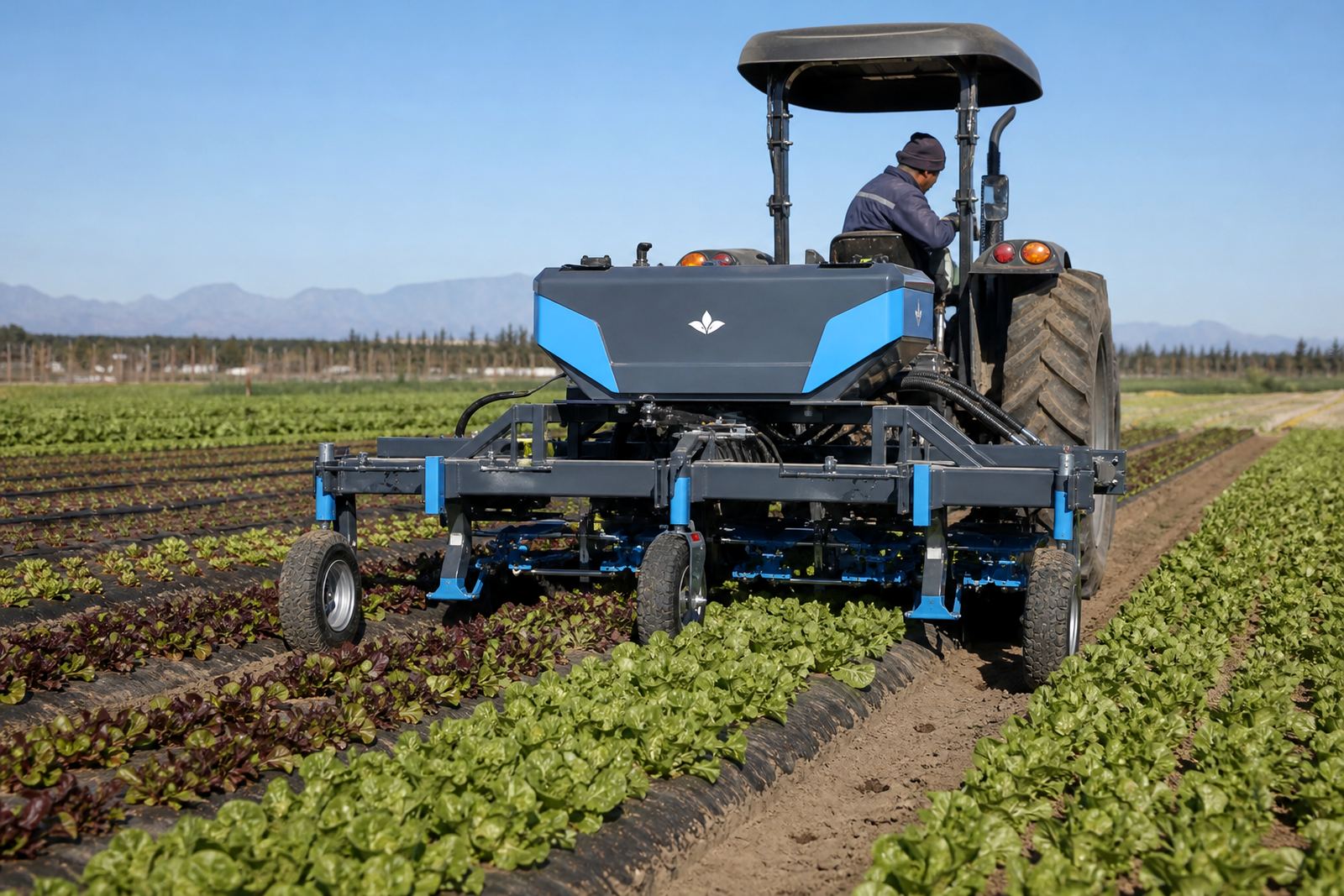
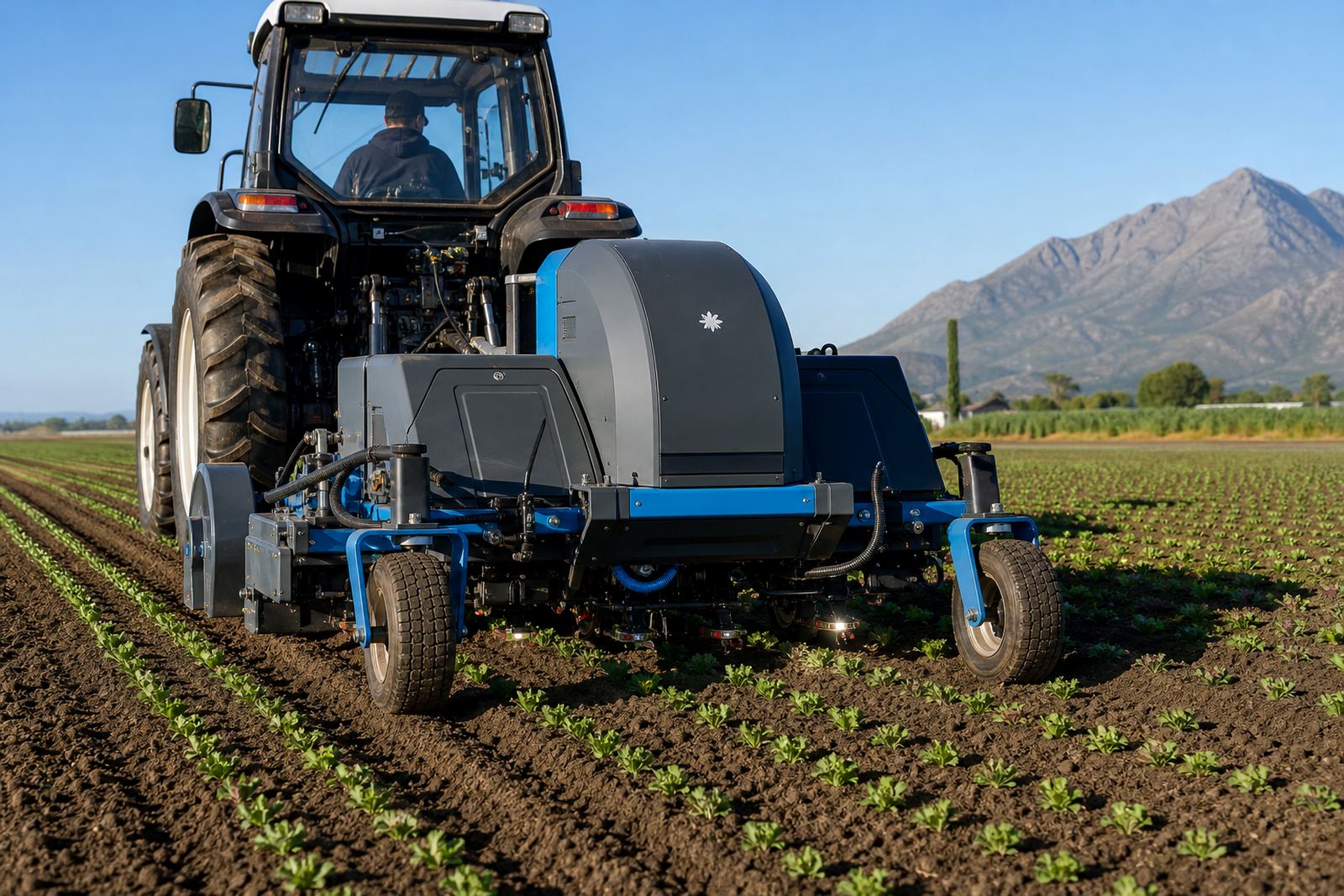
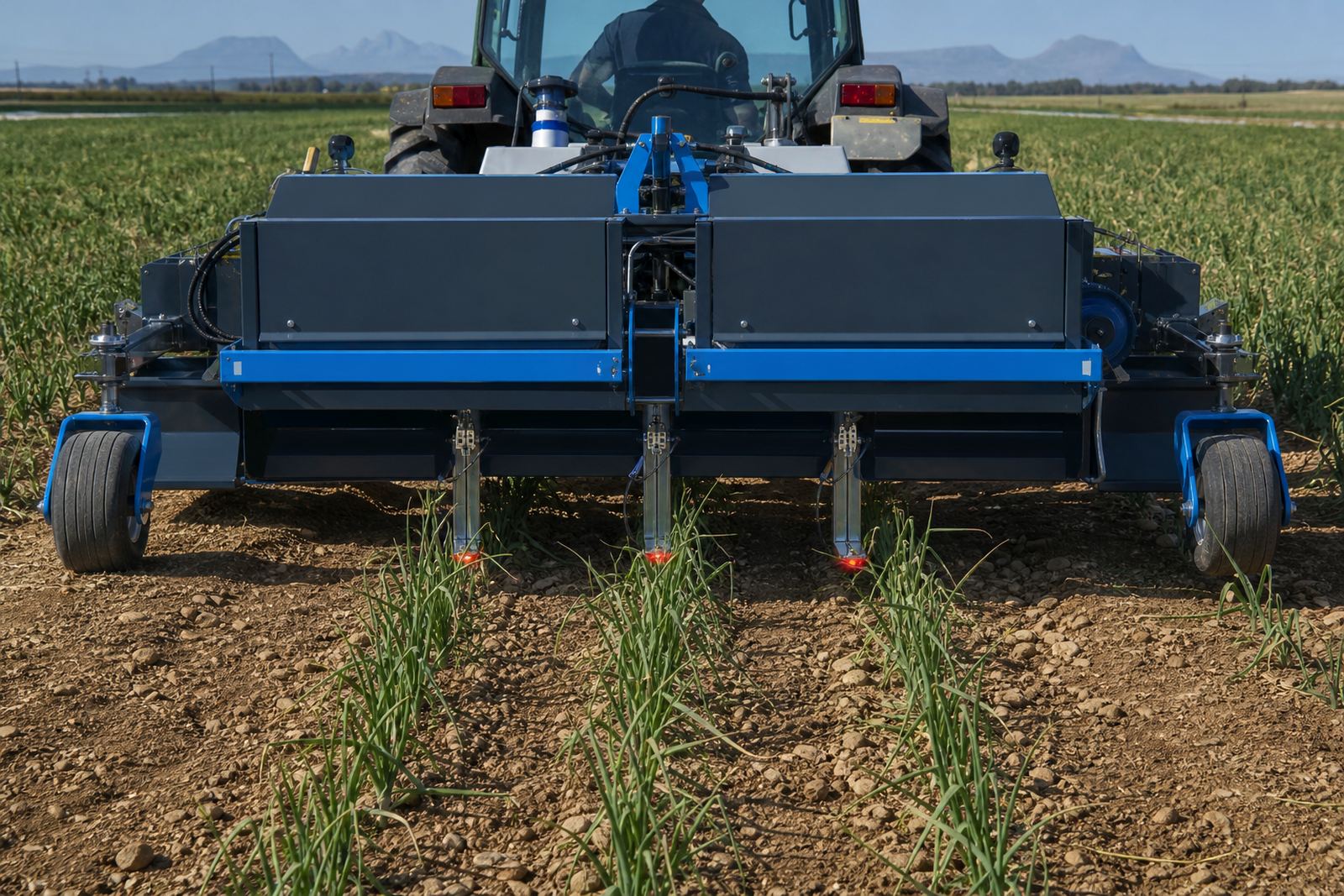
This configuration works with a tractor-drawn laser weeding frame set to treat three crop rows at a time. Cameras read the row pattern, then the system directs laser energy onto weed growing points between plants and around the crop line, while the tractor keeps moving at a controlled field pace.
The three-row setup is used where spacing is regular and the block sits squarely on row-crop geometry. It suits vegetable plantings such as onions, carrots, lettuce and brassicas where the plant line is clear, the beds are even and tractor movement stays stable across the pass.
- Three-row working width for matched row spacing
- Camera-guided weed detection between and around crop plants
- Laser targeting at weed growing points
- Contract operation with a trained operator on site
Where the three-row unit fits best
Growers usually look at this unit when they want herbicide-free weed control in a row crop block and the beds are laid out for measured tractor travel. It is suited to crops that hold a clear centre line and do not shift too much in the wind, because the camera system needs a steady view to distinguish crop from weed.
Field speed depends on weed pressure, weed size and how clean the row definition is on the day. Heavy pressure, uneven emergence or a mixed weed stage can slow the work, while smaller weeds and cleaner spacing allow a smoother run across the block.
- Onions, carrots, lettuce and brassicas are common fits
- Regular row spacing improves camera reading
- Best used where crop emergence is even
- Timing matters most when weeds are still small
Sizes, spacing and working width details
The three-row unit is built for row widths that can be set to suit the block, with adjustment tied to the crop plan and the tractor setup. Exact spacing depends on the planting pattern, wheel tracks and the gap needed for safe movement between rows, so the fitting is checked before field use.
When we set up a three-row programme, the main checks are the crop rows, the bed shape and the working clearance around the plants. The unit must sit level behind the tractor, with the sensing line aligned to the crop row and the laser heads matched to the row geometry.
- Working width arranged for three rows at a time
- Adjustable row spacing for suitable vegetable layouts
- Stable tractor drawbar alignment needed for clean tracking
- Field conditions checked before the first pass
Fitting the unit to the block and tractor
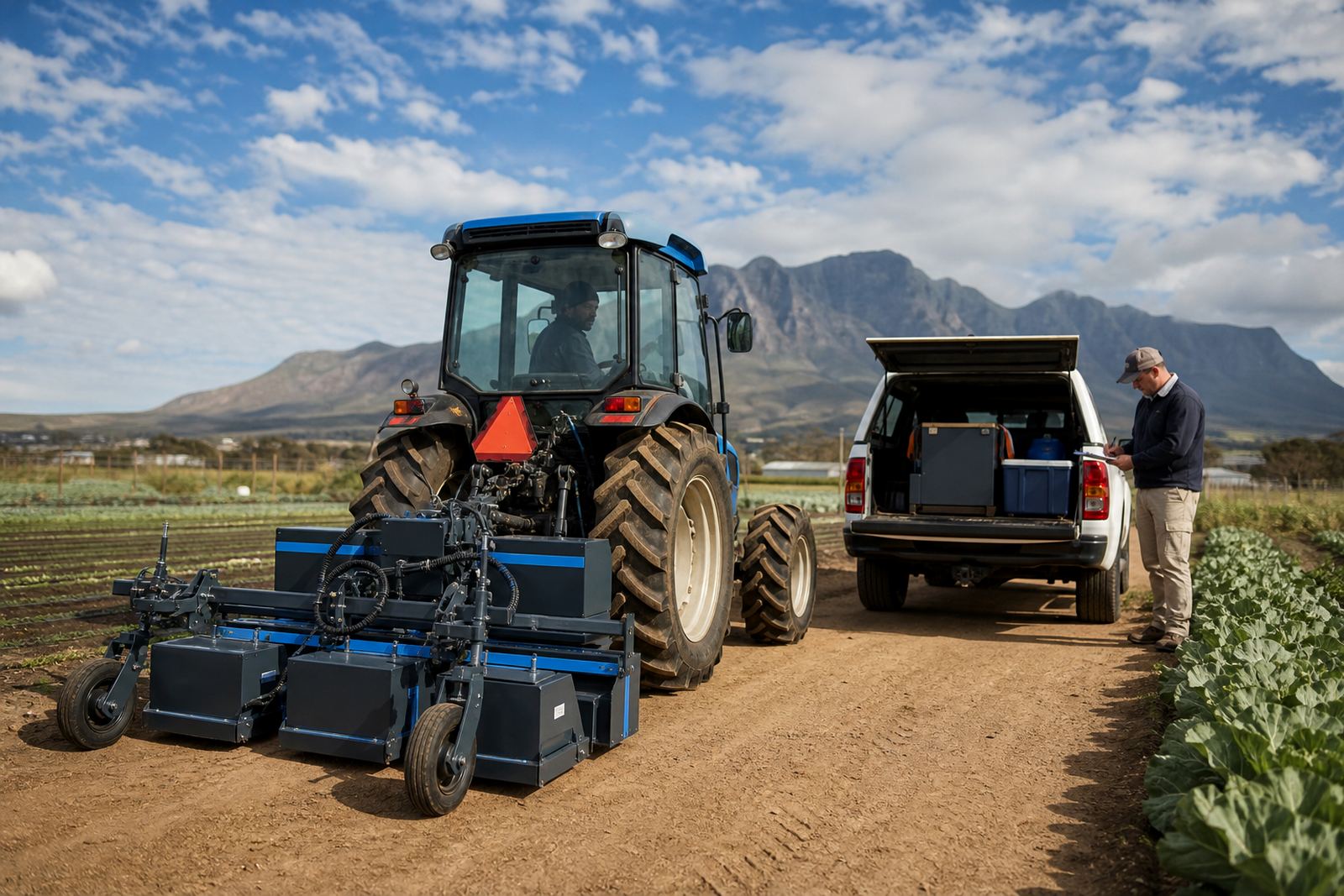
Installation is done as a field fitting rather than a fixed build. The tractor-drawn frame is positioned, the row spacing is set and the camera view is checked against the crop line before the operator starts work. In practice, the unit needs a tractor with steady pull, clean hydraulic function where the frame requires it, and enough room for controlled turning at headlands.
For contract work, we also plan arrival site checks, travel coordination and season bookings so the machine reaches the block ready for the crop stage on hand. If the planting plan covers several farms, the three-row unit can move between sites as part of a multi farm programme, with the schedule built around weed stage and crop access.
- Tractor-drawn frame set up on site
- Camera alignment checked against the crop row
- Headland turning space factored into the plan
- Travel and field scheduling arranged for each block
Care between passes and through the season
This equipment works best when lenses, sensors and moving parts stay clean. Dust from dry inland fields, mud after rain and crop residue after cultivation can all affect visibility, so the operator and workshop team keep the unit clear before and after use. Coastal humidity around Cape Town also calls for sensible storage and regular inspection of exposed parts.
Wear points are checked as part of normal workshop care, and the frame is inspected for looseness after transport. Where a grower wants a repeat pass plan, the timing is guided by the next weed flush and the crop stage rather than by a fixed calendar slot.
- Clean camera faces and sensor covers regularly
- Inspect frame joints after road travel
- Check residue build-up around the working line
- Store the unit under cover where possible
Details to confirm before ordering this unit
To match the three-row unit to your farm, the key details are row spacing, crop type, field access and the tractor available for the job. It also helps to note the weed stage, whether the block is level or slightly uneven, and how many hectares sit in the programme so the schedule can be set sensibly.
For a quotation or field plan, our contact form is the place to send the block details, crop timing and preferred farm towns. We work from Philippi, Cape Town and support growers across Western Cape, Limpopo, Mpumalanga, KwaZulu-Natal and the Free State, including Ceres, Grabouw, Tzaneen, Bela-Bela, Nelspruit, Howick and Bethlehem.
- Crop type and row spacing
- Tractor access and turning room
- Weed stage and crop growth stage
- Farm location and travel timing
- Number of blocks in the programme
Key facts
| Configuration | Three-row tractor-drawn laser weeding unit |
|---|---|
| Crop fit | Row crops with regular spacing |
| Typical crops | Onions, carrots, lettuce and brassicas |
| Working method | Camera-guided weed detection with laser targeting |
| Operation | Trained operator supplied for contract field work |
| Base | Philippi, Cape Town |
| Service area | Western Cape, Limpopo, Mpumalanga, KwaZulu-Natal and the Free State |