Flat-bed working pattern for straight-row vegetable blocks
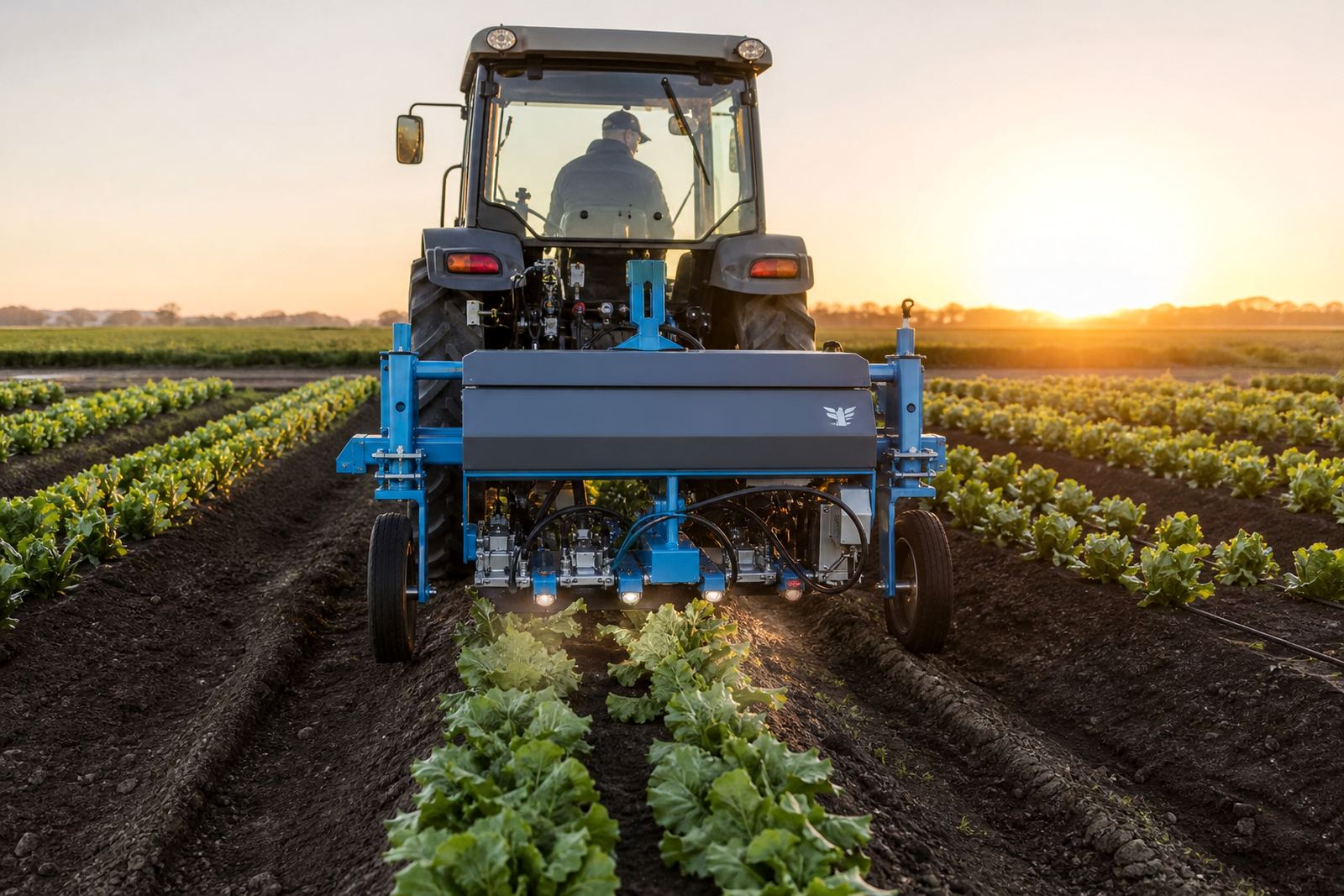
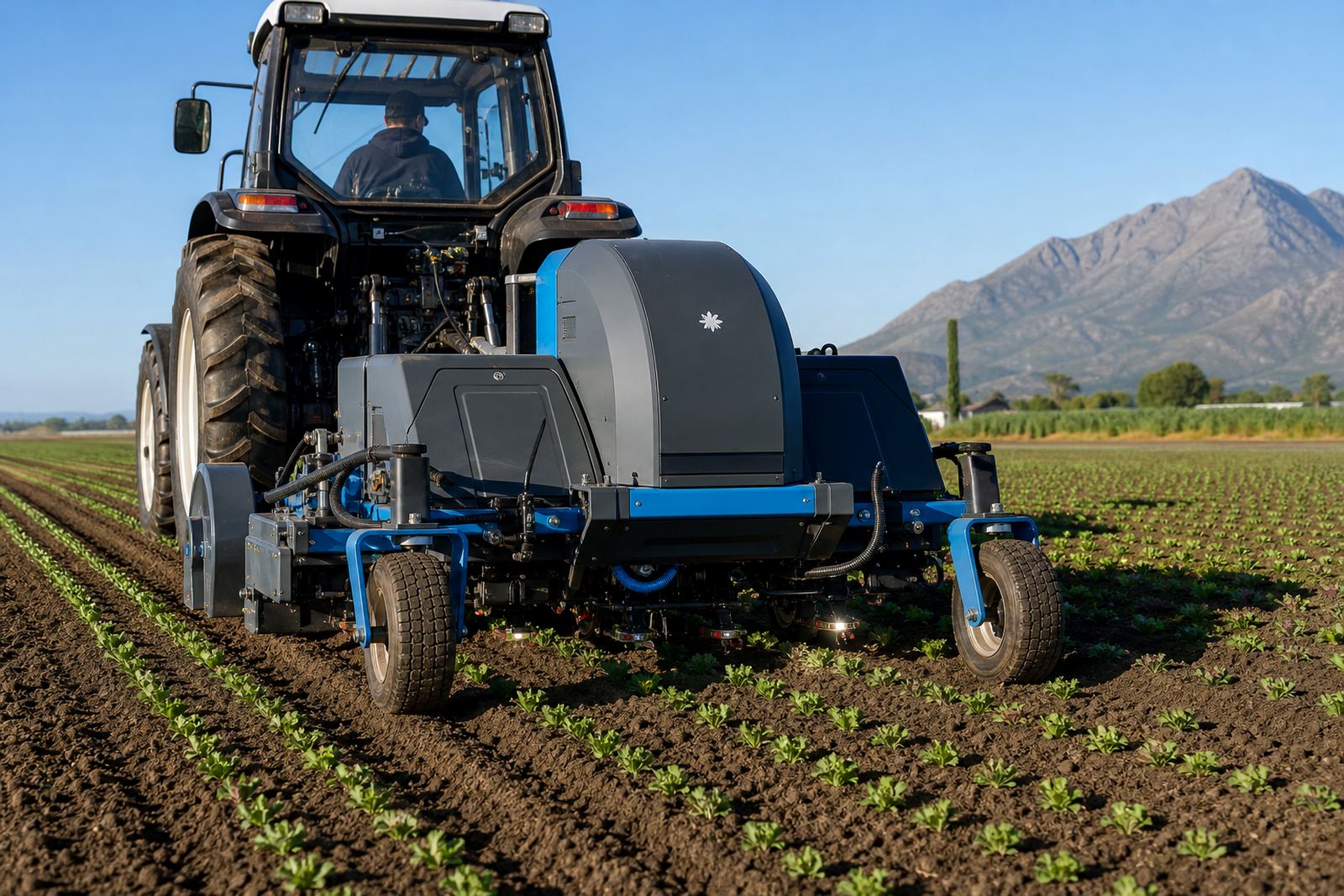
This setup suits planted beds that sit flat across the field, with regular row spacing and enough lane width for the tractor-drawn unit to move cleanly between rows. The camera system reads crop structure and weed presence as the operator keeps the machine moving at a controlled field speed, then the lasers target weed growing points in the open strip beside the crop.
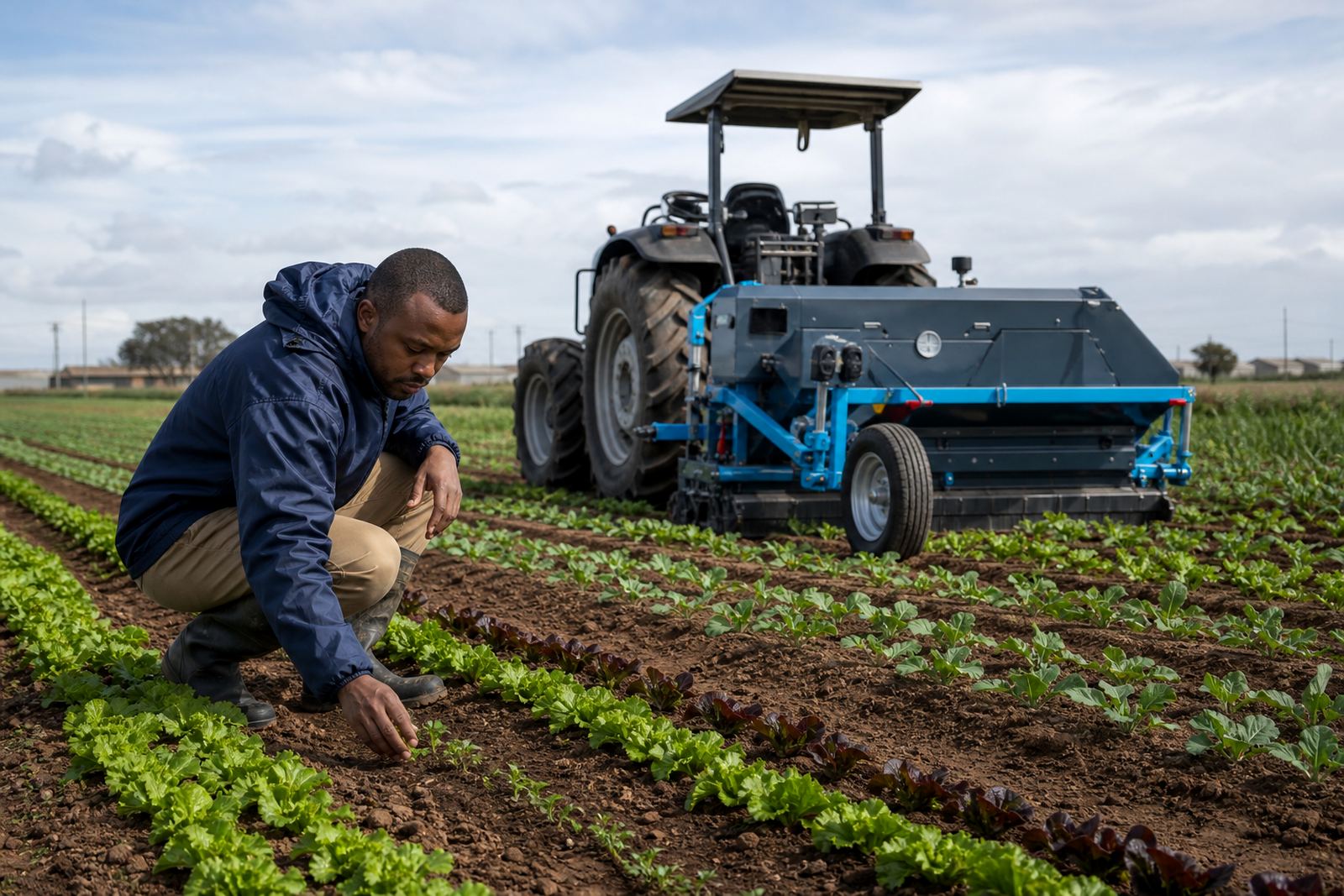
The arrangement is well matched to onions, carrots, lettuce and brassicas where row pattern, bed width and weed stage can be planned before the pass. It works best when the crop is already established enough for reliable plant recognition and when the field edges, headlands and turnaround spaces are organised in advance.
What the setup includes on arrival at farm level
A flat-bed arrangement is not just the machine in the field. It includes the tractor-drawn laser unit, a trained operator, field checks before the pass and the line-up needed for safe movement through the block. Where the farm wants more than one block covered in a season, we can plan the order of work, travel timing and repeat passes around crop stage and weed pressure.
- Tractor-drawn laser weeding unit with camera-guided detection
- Trained operator handling field movement and working depth of pass
- Arrival site checks for access, turning space and row alignment
- Field scheduling for single blocks, split blocks or multi-farm programmes
- Trial strip runs where row visibility or weed pressure needs checking
Bed width, lane spacing and field dimensions to match
Flat-bed work depends on the geometry of the block. We look at bed width, row count per bed, the gap between beds, headland room and whether there is a clean lane for the tractor and unit to travel without clipping crop edges. In wetter coastal parts of the Western Cape, drainage lines and softer edges matter as much as the row pattern, while inland blocks may need more attention to dust, wind and field finish.
Typical information to confirm includes the planted row spacing, average bed length, the number of hectares in each block and the access route into the farm. If the field has patches where the lane narrows or the rows wander, that does not always rule it out, but it does change the pass plan and may call for slower movement in those sections.
- Row spacing, usually measured in millimetres
- Bed width and lane width between travel lines
- Headland length and turning room at block ends
- Crop stage and weed stage in each block
- Soil condition after rain, irrigation or cultivation
Fitting and field-readiness before the unit enters the block
There is no fixed installation in the sense of a permanent fit-out on the farm. The fitting work is about matching the tractor, the draw arrangement and the field plan so the laser unit can travel steadily along the beds. Good preparation starts with an accurate crop map, a clear start point and a walk through the block to see where stakes, irrigation tails, damaged rows or wet patches could disrupt the pass.
For growers in Limpopo, Mpumalanga, KwaZulu-Natal and the Free State, field readiness can shift with soil type and weather. A block that has been recently irrigated may need a different pass window from a drier block, while heavy weed pressure can affect travel speed and the number of passes that make sense for the season. The operator also needs enough room to start and stop cleanly at the ends of each row.
Care, cleaning and working checks between passes
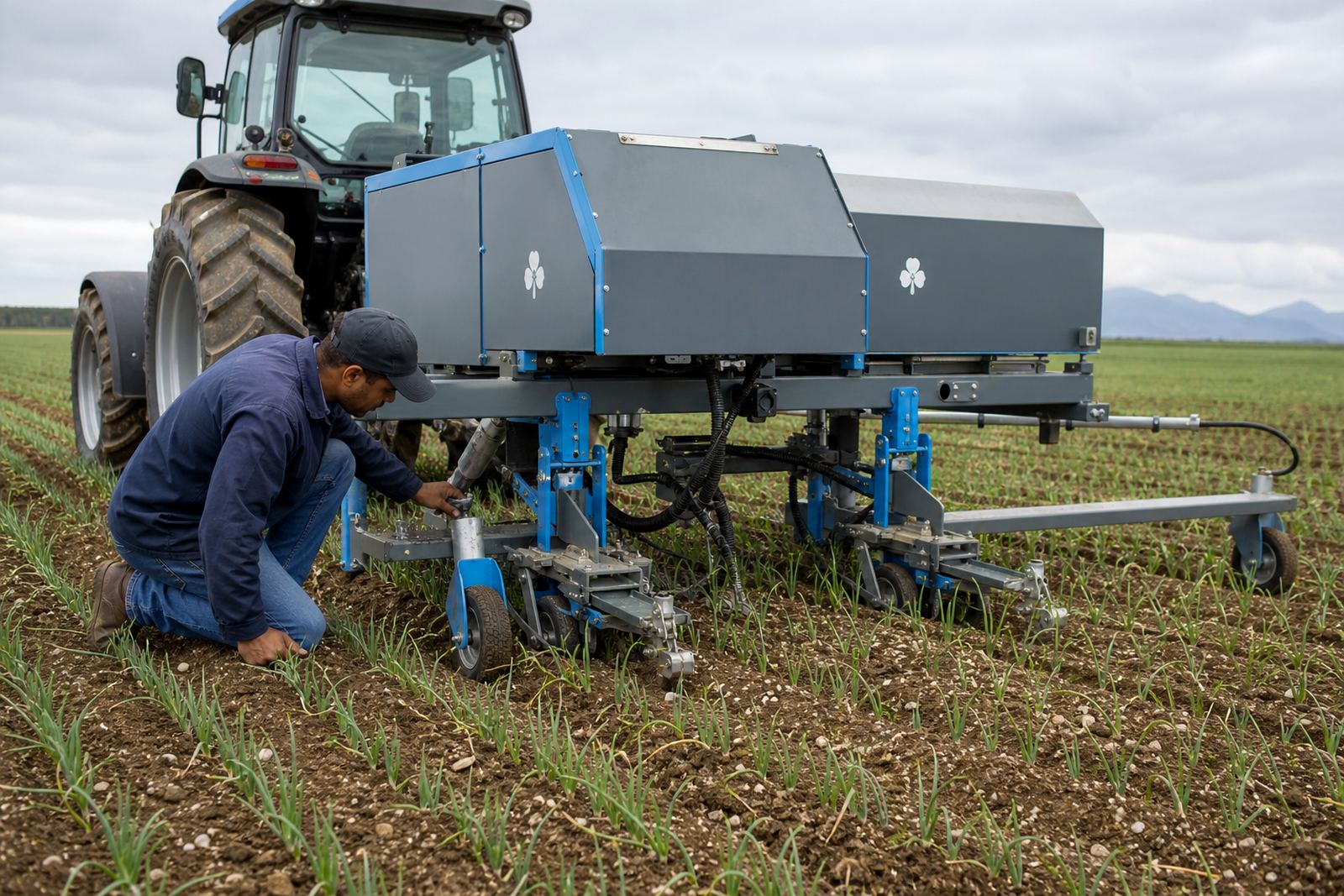
Laser weeding equipment carries cameras, optics and moving parts, so care matters. After a pass, the unit is checked for dirt build-up, plant residue, dust on viewing surfaces and any wear that could affect the next block. On farms with fine sand, windblown soil or sticky leaf matter, the cleaning routine needs to be more deliberate so the detection system keeps reading the crop line properly.
We also keep an eye on tyres, hitch points, lights where fitted and the general condition of the tractor-drawn arrangement. If the next block has a different bed width or a tighter lane layout, the setup is reviewed again before movement starts. A tidy field edge and a clear turn path often save trouble later in the day.
- Clean camera and viewing surfaces before the next block
- Check hitch, draw connection and tyre condition
- Remove leaf residue and lodged soil from guards and frame areas
- Review field notes for weed stage and any missed strips
- Store the unit under cover when not on the move
Details to confirm before a flat-bed booking
When you are ordering this setup, the main detail is the field itself. Send the row spacing, bed width, crop type, hectares per block and the current growth stage. It also helps to note whether the field is level, whether the travel lanes are firm, and whether there are sections with poor visibility, broken rows or wet ground that could slow the pass.
For growers planning season bookings or multi farm programmes, we can build the work around crop timing plans and repeat pass planning. Post pass reporting is useful where several blocks are being handled across different towns, because it keeps the notes tied to the crop stage and the weed pressure seen on the day. If the block is far from Philippi, travel coordination becomes part of the plan as well.
- Crop type and row spacing
- Bed width, lane width and headland room
- Hectares per block and number of blocks
- Weed stage and crop stage at booking time
- Farm location and access for the tractor-drawn unit
Key facts
| Operating arrangement | Flat-bed setup for level fields with straight rows and clear travel lanes |
|---|---|
| Machine type | Tractor-drawn laser weeding unit with camera-guided weed detection |
| Crop fit | Onions, carrots, lettuce, brassicas and similar row crops |
| Pass characteristics | Field speed and repeat passes adjusted to weed pressure and row visibility |
| Work method | Lasers target weed growing points without herbicide sprays or soil disturbance |
| Service coverage | Philippi, Cape Town and contract work across South Africa |