What crop line alignment covers in the field
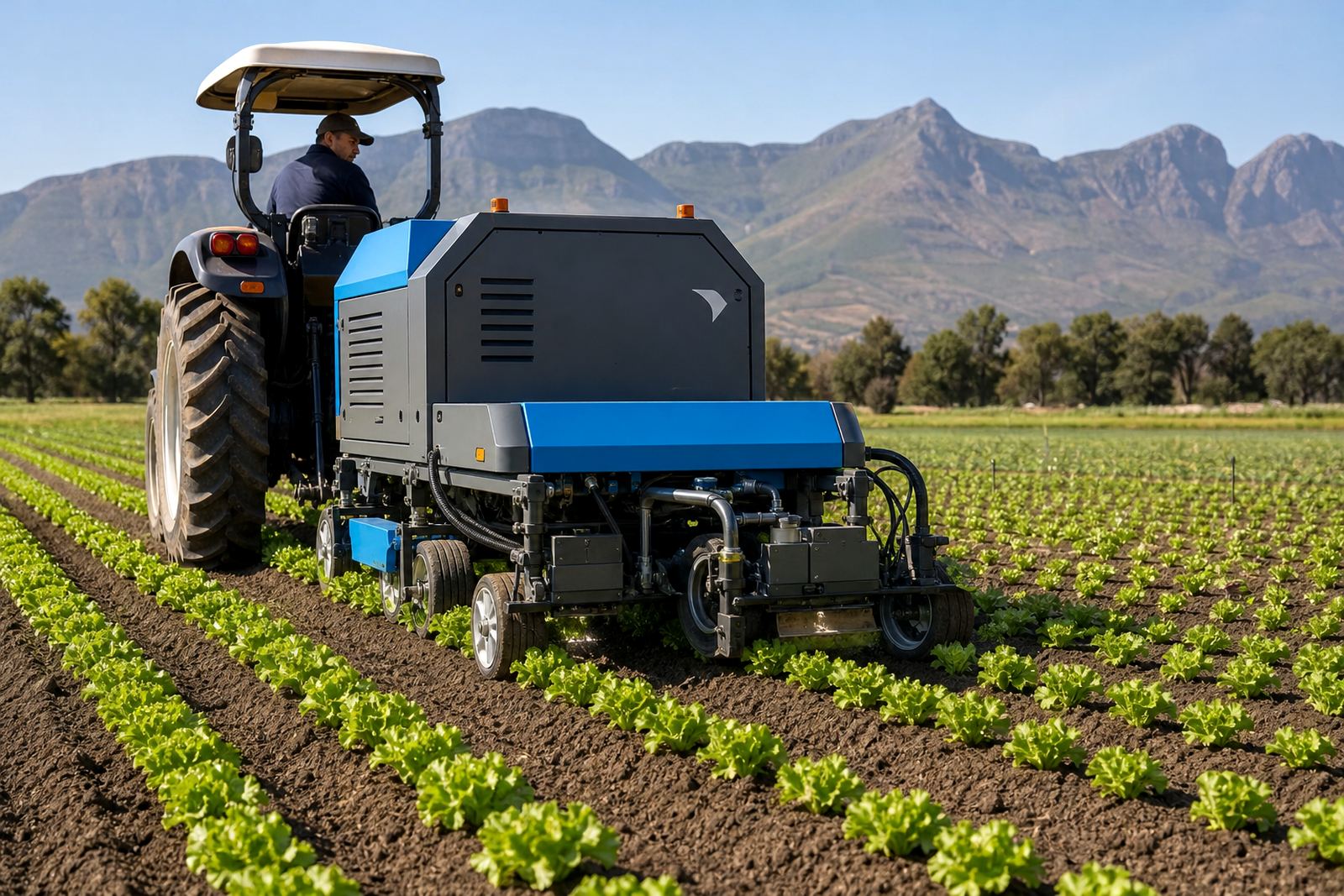
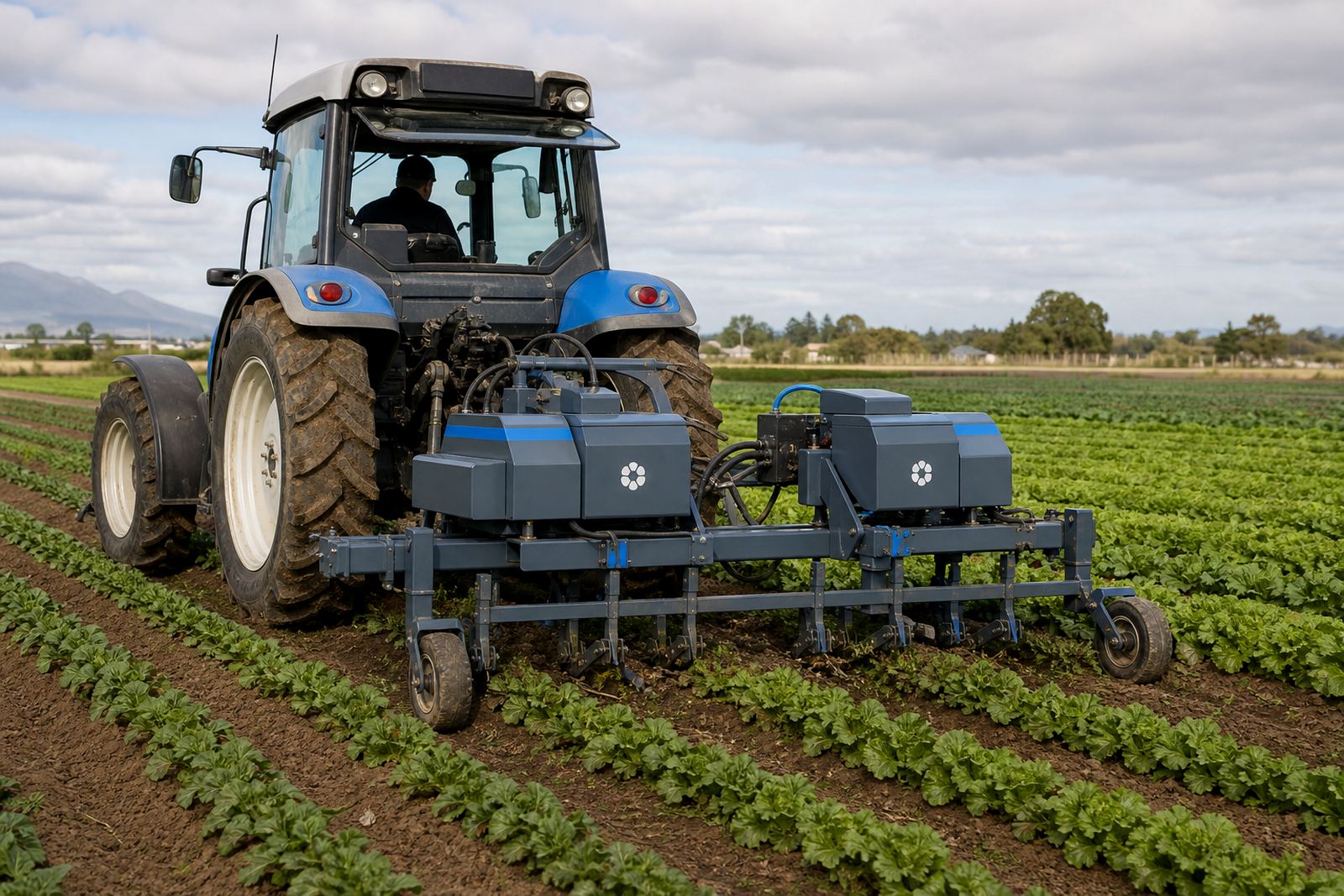
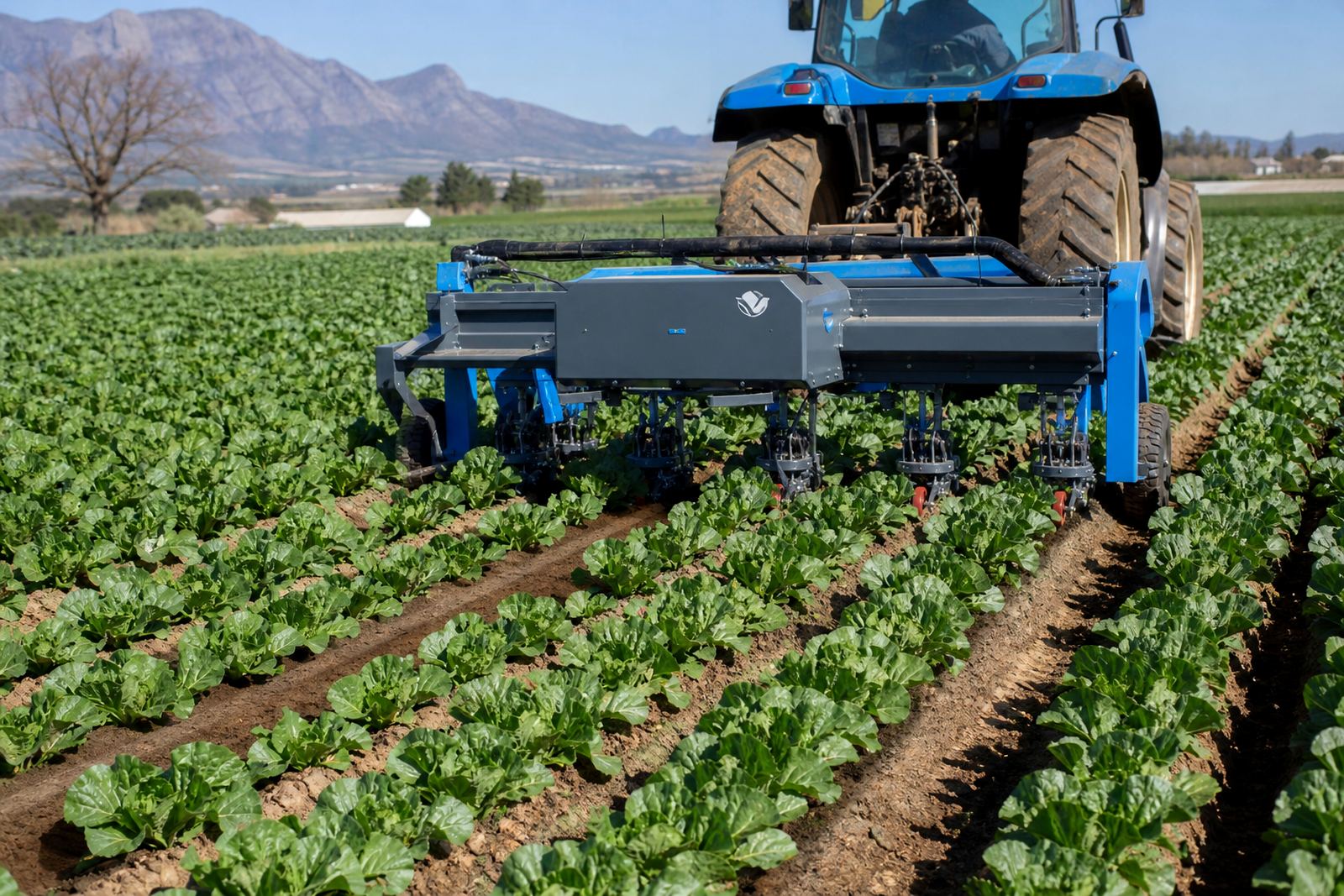
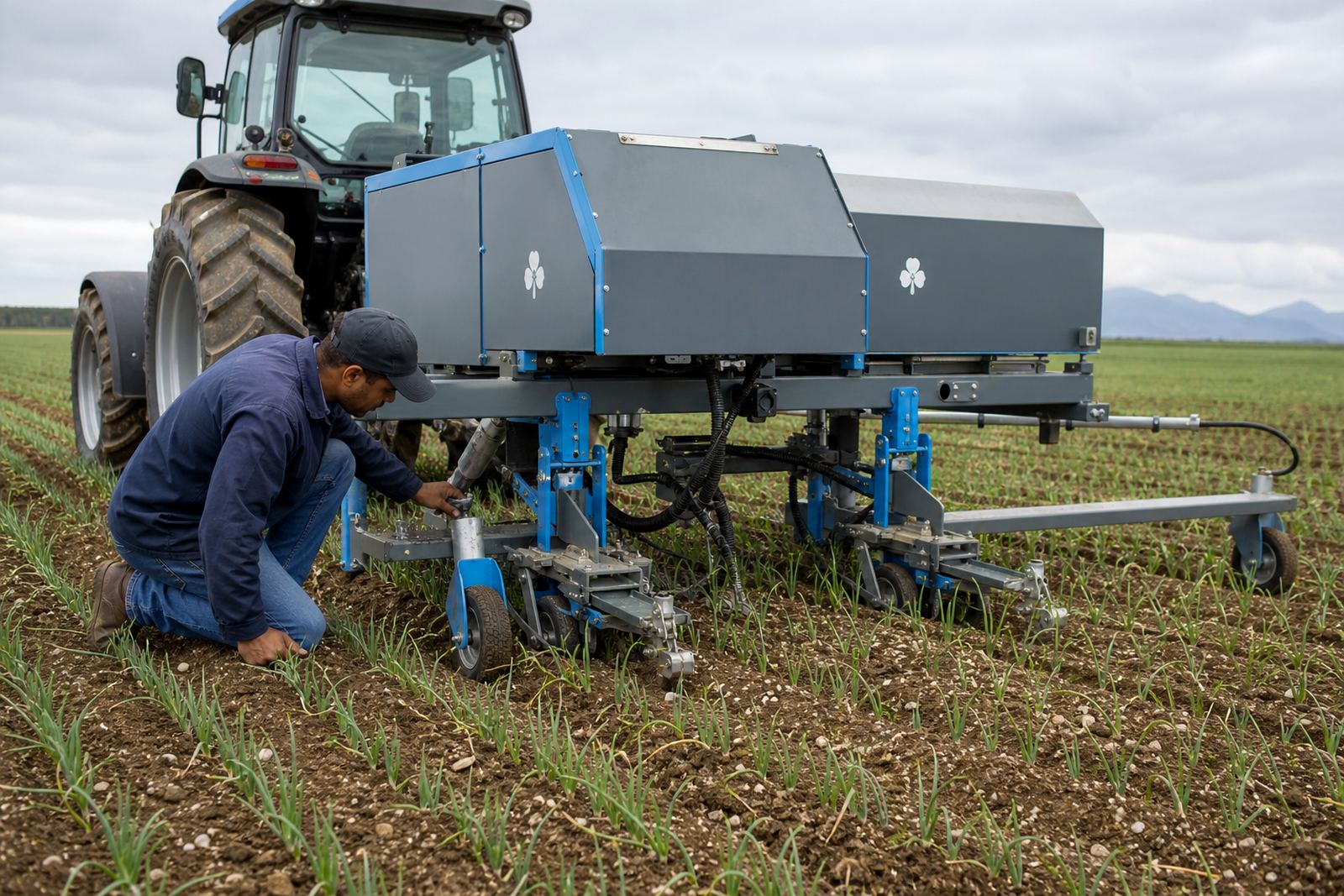
This service is the line setting step that comes before laser weeding starts on a block. The aim is to match the machine path to the planted crop rows, so the camera-guided unit reads the crop pattern correctly and targets weeds growing between and around the plants.
On farms in Philippi, Grabouw, Ceres and the colder inland growing areas, row position can drift a little after planting, irrigation work or shaping. Line alignment helps the operator set the pass so the unit stays with the planted rows and keeps the laser focus on weed growing points rather than crop plants.
- Row centre marking and pass-line setting
- Bed width checking for straight and curved blocks
- Crop row tracking for early and later growth stages
- Alignment notes for repeat passes on the same field
When this service fits best
Crop line alignment suits row crops where spacing is tight and the crop canopy leaves little room for drift. It is commonly used for onions, carrots, lettuce, brassicas and similar vegetable plantings where the machine must read a clean row pattern.
It is most useful when weeds are still small and before the block has too much canopy overlap. At that stage the laser unit can work to the row layout, and the field speed can be set against weed pressure, bed shape and how even the crop stand is. The pass plan changes from farm to farm, and from block to block, which is normal on working vegetable land.
- Newly planted or early establishment blocks
- Fields with mixed row lengths or headlands
- Blocks that need repeat passes after weed flushes
- Sites where the planting line is not fully visible from the cab
Options and working sizes
The service is offered as a block-level setup or as part of a wider season programme. Some growers need a single alignment check before a trial strip run, while others want several blocks mapped for a full crop cycle. The work is planned around tractor access, row spacing and the length of each planting run.
We handle field scheduling for growers across the Western Cape, Limpopo, Mpumalanga, KwaZulu-Natal and the Free State. Travel coordination is built into the plan, with site checks and block notes recorded before the first pass so the tractor-drawn laser unit enters the field on the right line.
- Single block alignment
- Trial strip alignment with a small test run
- Multi-farm alignment plans for grouped plantings
- Season bookings where repeat passes are needed
How the setup is checked before the first pass
Alignment starts with a look at the crop spacing, row length and any turns at the end of the block. The operator and field team confirm where the machine should enter, where it should exit, and how the pass line sits against the planted rows. If the crop is on raised beds, the bed crest and furrow positions are also checked.
The unit itself is tractor-drawn, and the camera system must read the crop line clearly. That means the block needs a clean working pattern, enough visibility between rows and a pass line that stays true through the run. Where needed, a trial strip run is used to check the line before the wider block is worked.
- Row spacing and bed profile
- Headland turning space
- Planting line visibility
- Field entry and exit points
Care, upkeep and field handling
Crop line alignment does not stop at the first setup. The notes need to stay current as the crop grows, weed pressure changes and the field dries out or takes moisture after rain or irrigation. On coastal farms, damp soil and wind can shift surface marking, so the pass notes need to be checked before the next run.
After each pass, post pass reporting records how the line held, whether the crop rows stayed easy to read, and whether another pass should be planned. This is useful on farms with staggered planting dates or several blocks running at different stages. The operator uses that record to keep the next visit tied to the crop, not just the map.
- Keep block notes with the original row spacing
- Record any patchy germination or missed rows
- Update the plan after cultivation, irrigation or heavy rain
- Store the alignment notes with repeat pass planning
Send these details with your order
When ordering crop line alignment, the useful details are the crop type, bed width, row spacing and the size of the block. It also helps to know whether the field is straight, curved or broken into sections, and whether the crop is at the same stage across the whole block.
For working farms around Cape Town, Tzaneen, Nelspruit and Bethlehem, the layout on paper is not always the same as the layout in the field. Share the planted spacing, the crop stage and any row changes before the visit, so the alignment plan can be set to the block as it stands.
- Crop type and growth stage
- Row spacing in millimetres or centimetres
- Bed width and number of rows per bed
- Block size and access for the tractor unit
- Any curved rows, skips or replant sections
Key facts
| Service type | Crop line alignment for laser weeding passes |
|---|---|
| Machine format | Tractor-drawn laser weeding unit |
| Guidance method | Camera-guided row tracking and pass setting |
| Crop fit | Onions, carrots, lettuce, brassicas and similar row crops |
| Working format | Single block, trial strip or season programme |
| Coverage area | Philippi, Cape Town and major growing regions across South Africa |