Turning space that protects the planted ends
A headland turning plan maps the last metres of each pass so the operator can lift, clear and re-enter without clipping crop crowns or packing the soil beside the row. On laser weeding jobs, that matters where the unit is working between tight beds, on soft soil after irrigation, or on fields with short headlands and uneven wheel tracks.
The plan covers entry angle, turn width, end-of-row clearance, and the order of passes across the block. On flatter land near Philippi or Grabouw the line can be tighter, while stonier or softer sections in Limpopo, Mpumalanga or the Free State often need a wider swing and more room at the ends.
- Defines the safe exit point before the row ends
- Sets the re-entry line for the next pass
- Reduces rutting at the field edge
- Helps keep row spacing usable across the full block
Where the plan fits into a laser weeding run
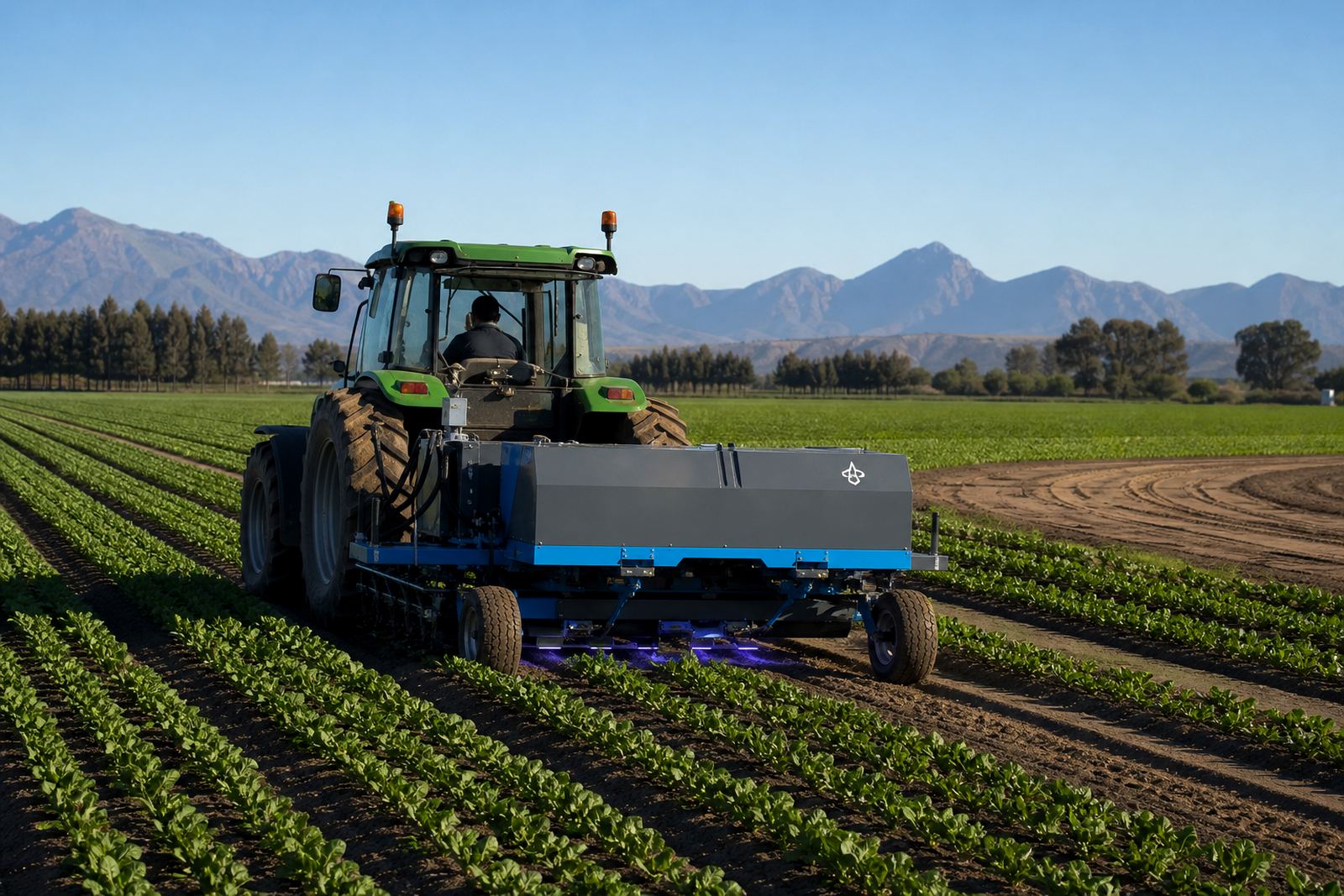
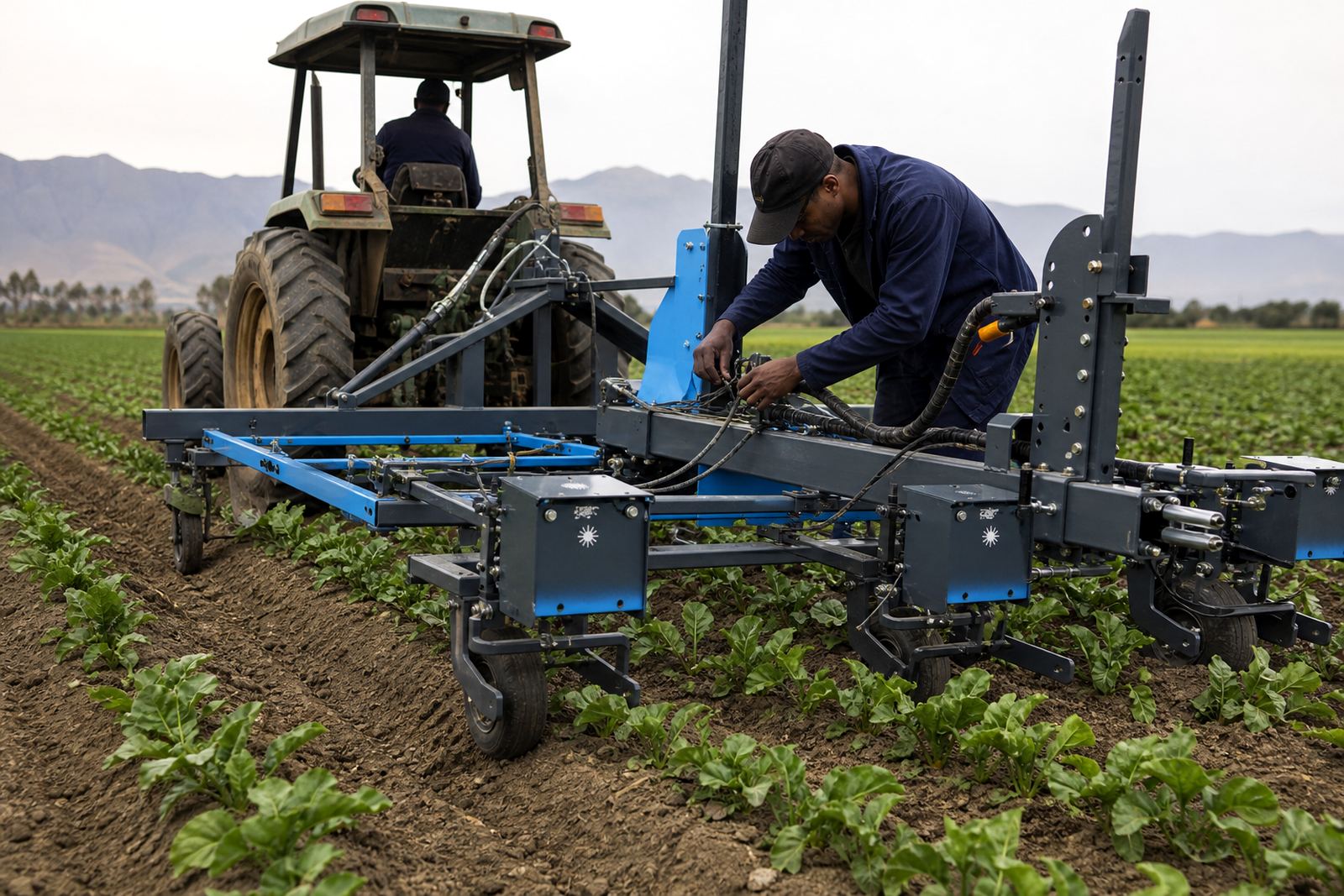
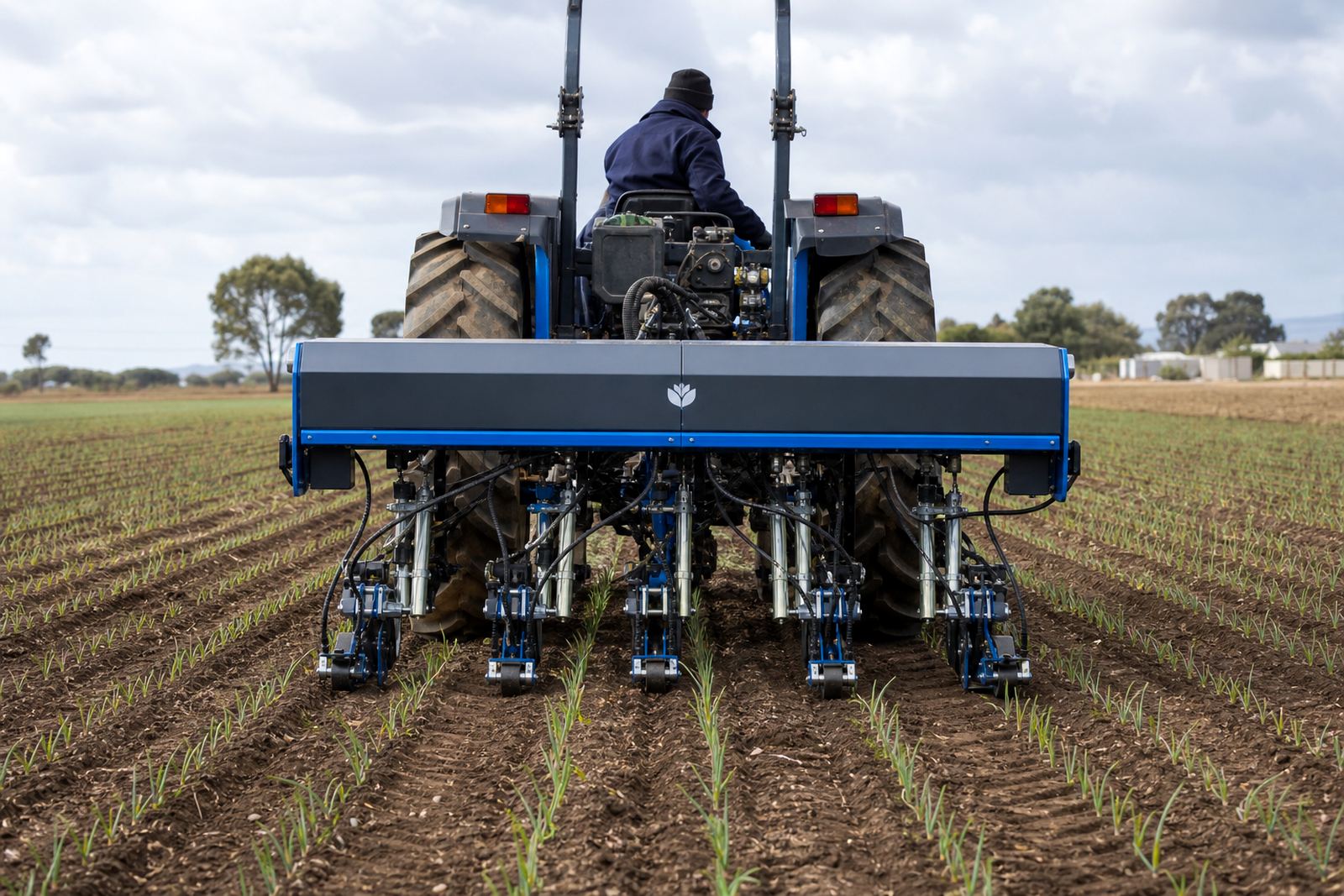
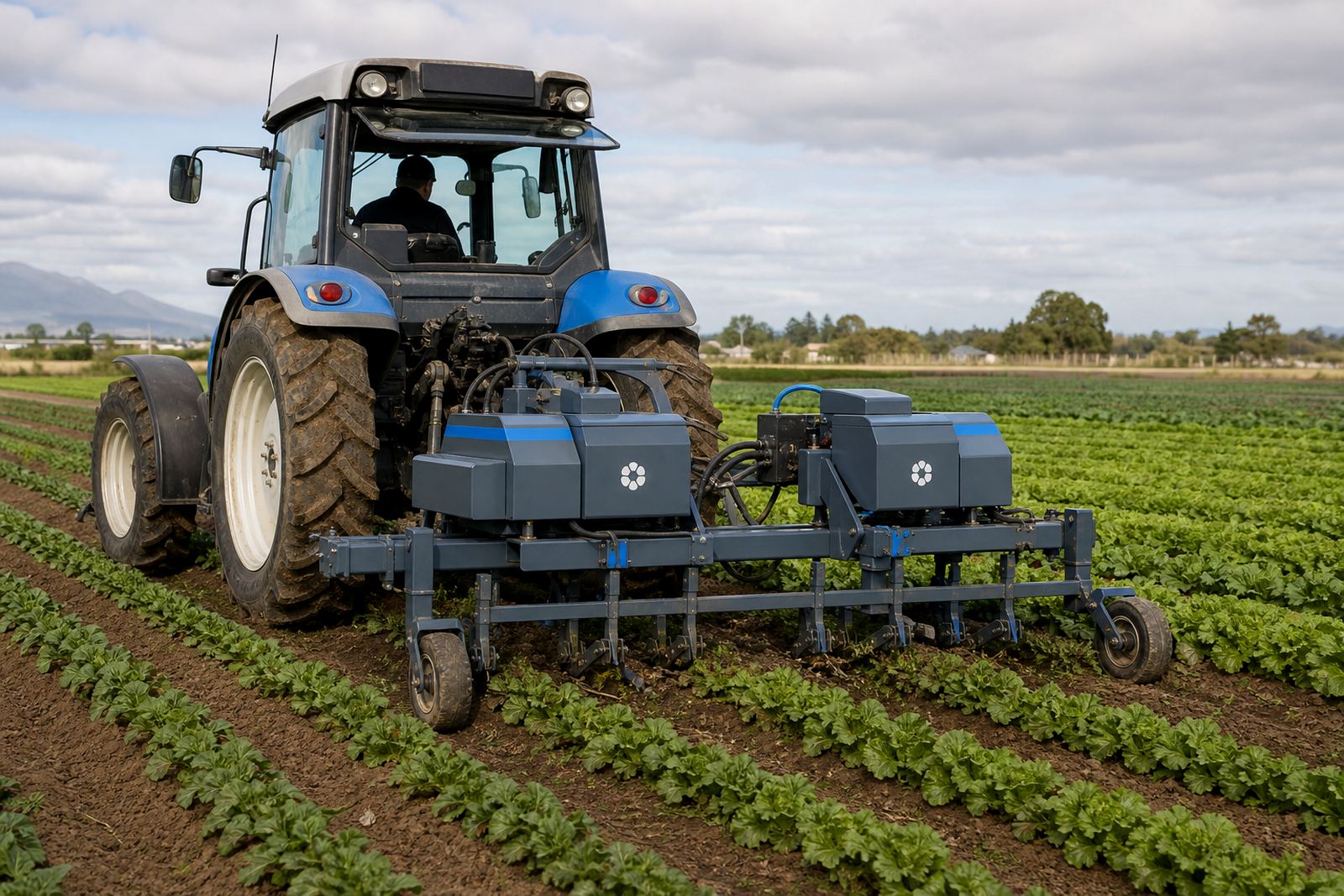
This is not a separate machine fitment, it is part of the field method used with a camera-guided laser weeding unit pulled by tractor. The operator needs a turning plan that matches crop spacing, bed shape, marker lines and the amount of room available at each end of the block.
It suits young to mid-stage row crops where weed growing points are still exposed and the unit can work cleanly between plants. For lettuce or brassicas on raised beds, the headland pattern is often more controlled because the beds carry a clear line. On carrots and onions, the turns may need extra care where the crop stand is thin at the edges or where the rows taper near irrigation lines.
- Works with tractor-drawn units and trained operators
- Supports field scheduling across split blocks and multiple farms
- Used alongside crop timing plans and trial strip runs
- Useful where re-entry needs to stay consistent from pass to pass
Options for narrow, standard and wide headlands
Headland arrangements are usually planned to suit the space already there. A narrow headland can work on small vegetable blocks, but it needs a cleaner turning line and slower cornering. Standard headlands are easier on the soil and allow a smoother swing. Wide headlands are preferred where larger tractor units, water furrows, or service lanes sit at the end of the crop.
For multi farm programmes, the same turning pattern may not suit every block. One farm might need a shorter run-in and a tighter turn in Ceres, while another in Tzaneen may need more room because of slope, softness or mixed bed widths. The plan can be set per block, or set as a repeat pattern for the season.
- Narrow headlands for compact vegetable blocks
- Standard headlands for most row crop layouts
- Wide headlands where equipment needs more swing room
- Block-specific layouts for farms with mixed field shapes
Fitting notes for field use
The turning plan is fitted in the field through measurement, marking and operator briefing. The team checks the row length, the usable edge space, the turning radius and any soft spots that may pull the tractor off line. On some blocks, the ends are marked with pegs, flags or visible reference points so the re-entry line stays steady through the day.
There is no fixed workshop installation for this item, but it does need a proper field check before the first pass. Arrival site checks help confirm access roads, gate width, gate swing, turning room and the best approach into the block. Where the crop is young and the rows are still forgiving, the plan may be simpler; where the crop is close to the end of the bed, a more careful set-up is needed.
- Field measurement before first use
- Marker points or flags where visibility is poor
- Operator briefing on entry and exit angles
- Access checks for tractor width and turning room
Care between passes and across the season
A turning plan only holds if the headlands stay readable. After rain or irrigation, the end zones can soften and the same turn may leave a deeper track. The operator should watch for rutting, crop leaning at the ends, loose soil and any growth that starts to hide the turn line. In coastal conditions around Cape Town, damp ground can keep the headland marked up, while drier inland blocks may need fresh reference points after a few rounds.
Care is mostly about keeping the edge workable for the next pass. If the crop stand thickens or the weed pressure changes, the turn may need a wider approach so the unit does not crowd the last plants in the row. For longer season bookings, repeat pass planning helps keep the same turning pattern across the block, with small changes when the crop stage shifts.
Details to confirm before a block is booked
When you book a headland turning plan, the useful details are the crop type, row spacing, bed width, field length, edge condition and whether the block has one working end or two. It also helps to note soft ground, slope, irrigation lines, gate access, and any places where the tractor has to turn around a corner or through a narrow opening.
These details shape the field schedule, the turn width and the order in which the operator should work the block. If the farm is spread across several areas, such as Philippi, Bela-Bela or Howick, the travel coordination and arrival site checks need to sit with the same plan so the day does not get broken up by avoidable movement.
- Crop and growth stage
- Row spacing and headland width
- Soil condition after rain or irrigation
- Access points, gates and turning room
Key facts
| Use case | Safe exits and re-entry where planted rows run to the field ends |
|---|---|
| Crop fit | Onions, carrots, lettuce, brassicas and similar row crops |
| Method | Camera-guided laser weeding with tractor-drawn equipment |
| Headland style | Narrow, standard or wide, set to block layout |
| Field inputs | Row spacing, bed width, edge space, soil condition and access |
| Service cover | Philippi, Western Cape and scheduled farm runs across South Africa |