What the calibration set-up is doing in the field
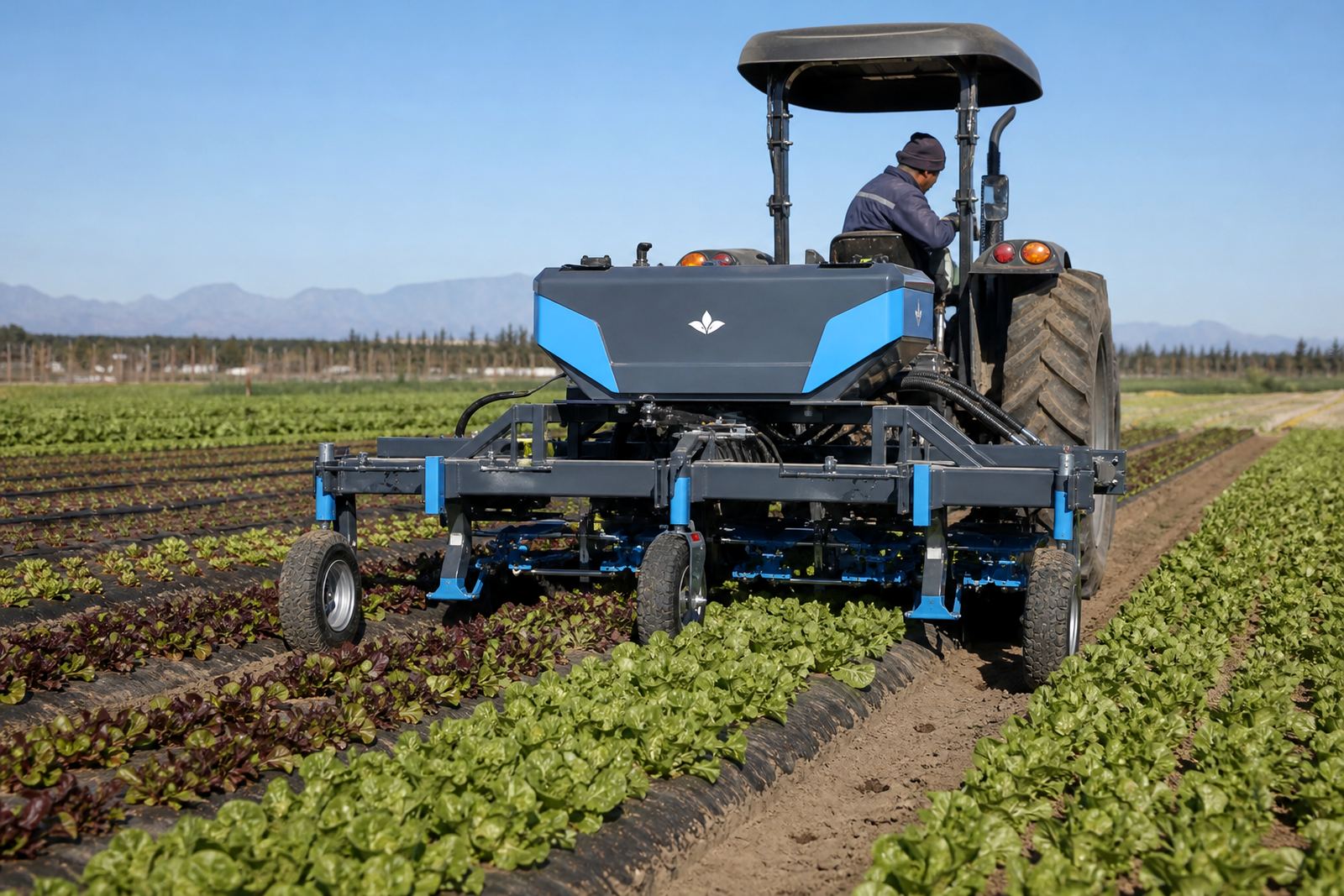
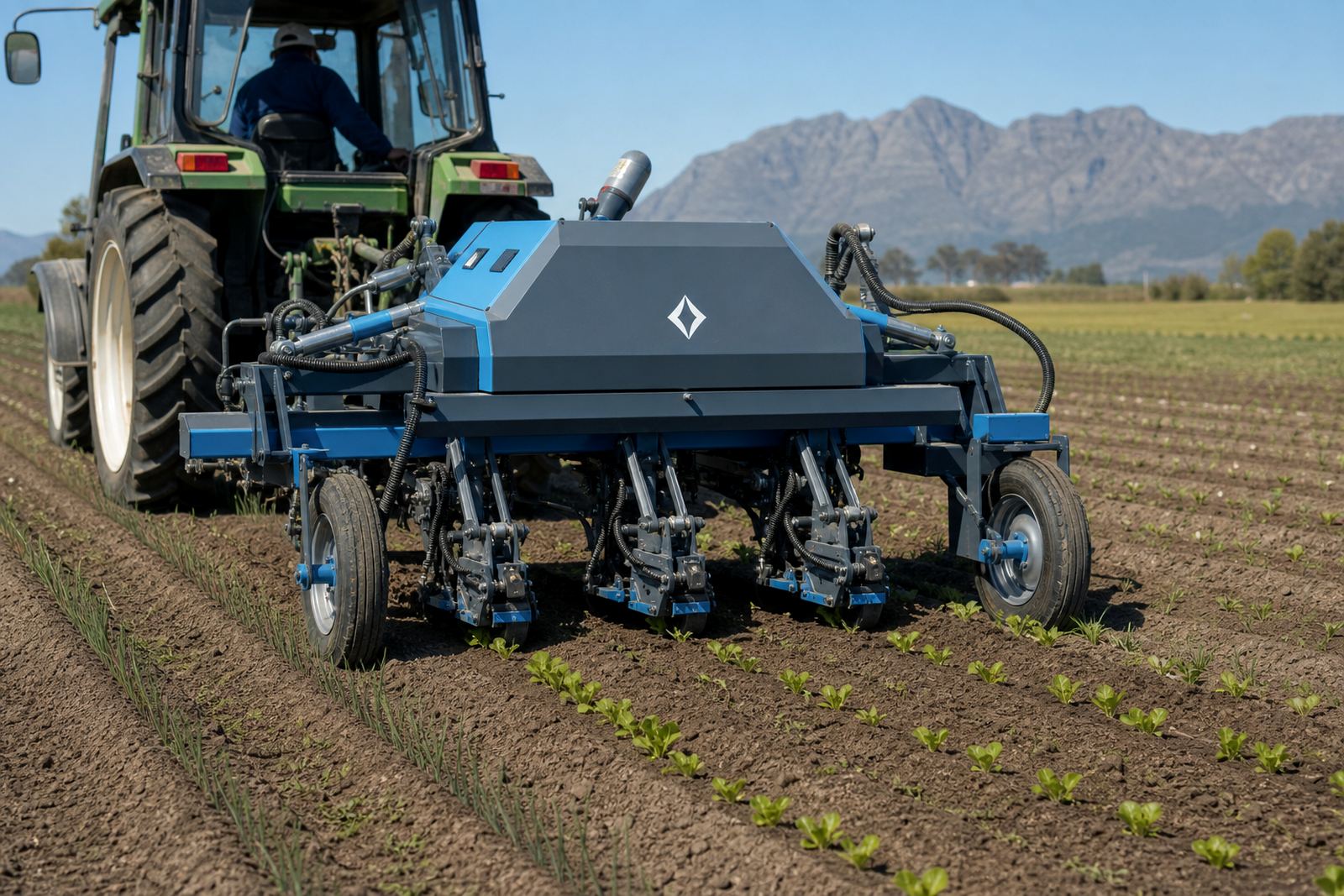
Camera calibration is the pre-work alignment that helps the unit interpret what it is seeing before laser weeding begins. The cameras are tuned to read row structure, plant centres and weed positions so the system can separate crop plants from unwanted growth with less drift when the tractor moves through the block. In practical terms, that means the operator starts with a cleaner reference for rows of onions, carrots, lettuce, brassicas and similar row crops.
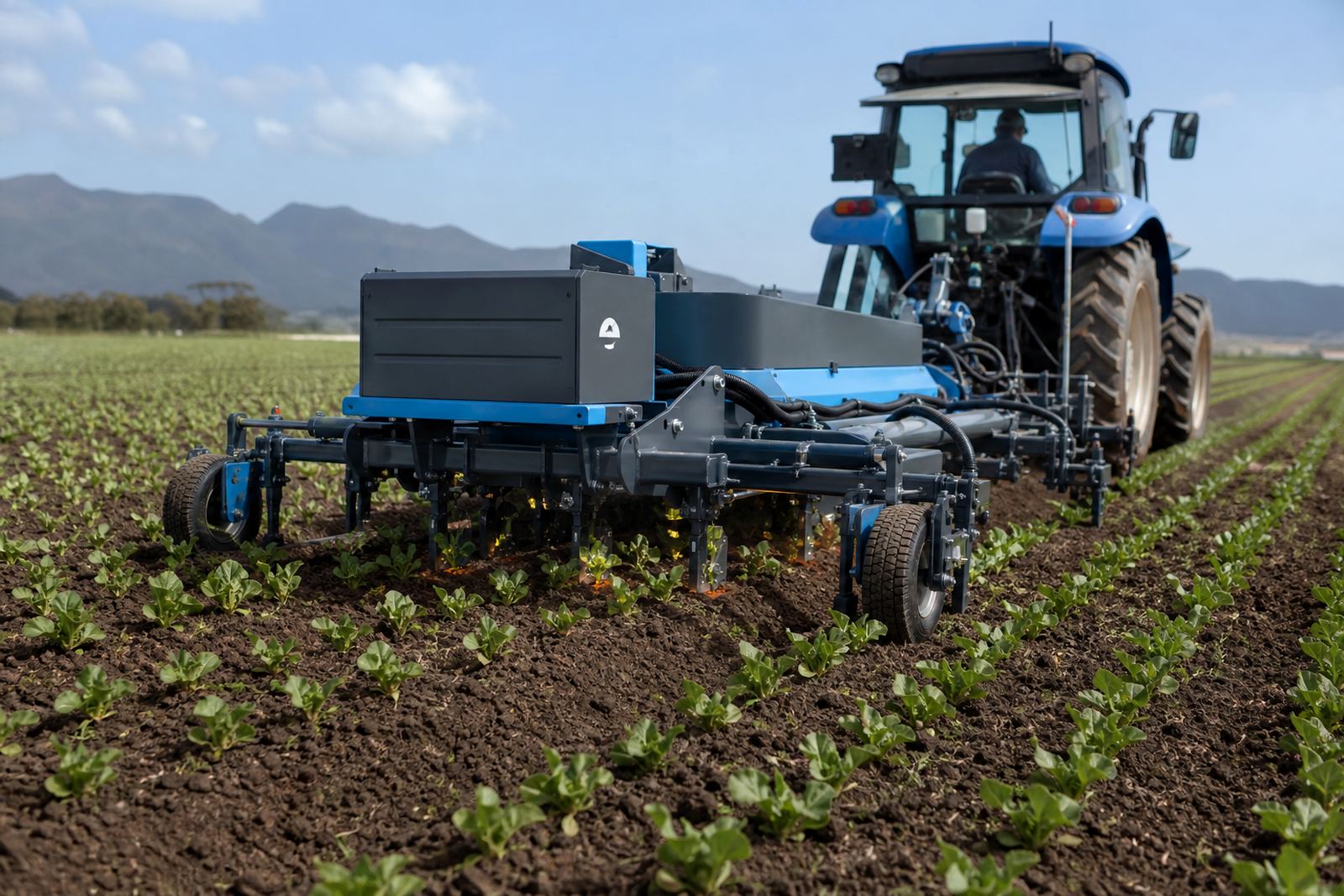
The process matters most where plants are still small, the row line is not fully closed, or the field has uneven emergence from one section to the next. A good calibration does not change the crop, the soil or the timing on its own, but it gives the equipment a better read before the tractor-drawn unit begins targeting weed growing points with the laser.
Sizes and alignment options for different blocks
Calibration settings are matched to the row layout and the crop stage, not to a single fixed pattern. Narrower spacing is often found in high-density lettuce plantings, while wider row sets are common in carrots, brassicas and some onion blocks. The camera field, detection window and working offset need to suit the row width, canopy height and the amount of bare soil between plants.
Our field team checks the crop line, the gap between rows and the weed pressure before setting the unit. Where the block has mixed vigour or uneven stand counts, a tighter calibration may be needed for one section and a looser setting for another. That is normal on working farms in Philippi, Ceres, Grabouw, Tzaneen, Bela-Bela, Nelspruit, Howick and Bethlehem, especially after weather shifts or patchy germination.
- Row width and row count across the block
- Crop height, leaf spread and growth stage
- Weed size and whether it is at cotyledon or early true-leaf stage
- Soil colour, residue level and surface contrast
- Expected tractor speed through the rows
Where calibrated camera work suits best
This service suits row crops where weeds can be treated between and around crop plants without disturbing the soil. It is most useful when the crop line is defined enough for the cameras to read, but the weeds are still small enough for laser targeting to work at the right growing point. When weeds are already too large or the stand is too close to the crop line, the setup may need a trial strip run before full field work.
Growers often request calibration before a season booking, after a reseeded section, or before moving from one block to another with different spacing. It also helps when a farm shifts between lighter coastal conditions and warmer inland blocks, because moisture, dust and leaf texture can affect what the cameras see. The system is herbicide-free and leaves the soil surface undisturbed, which is useful where shallow rooting, crusting or moisture retention are part of the management plan.
- Onions and other narrow-row alliums
- Carrots where crop lines are clear but fine weed pressure is active
- Lettuce blocks with tight spacing and visible inter-row soil
- Brassica plantings where row tracking matters through early growth
Fitting and set-up before the tractor enters the block
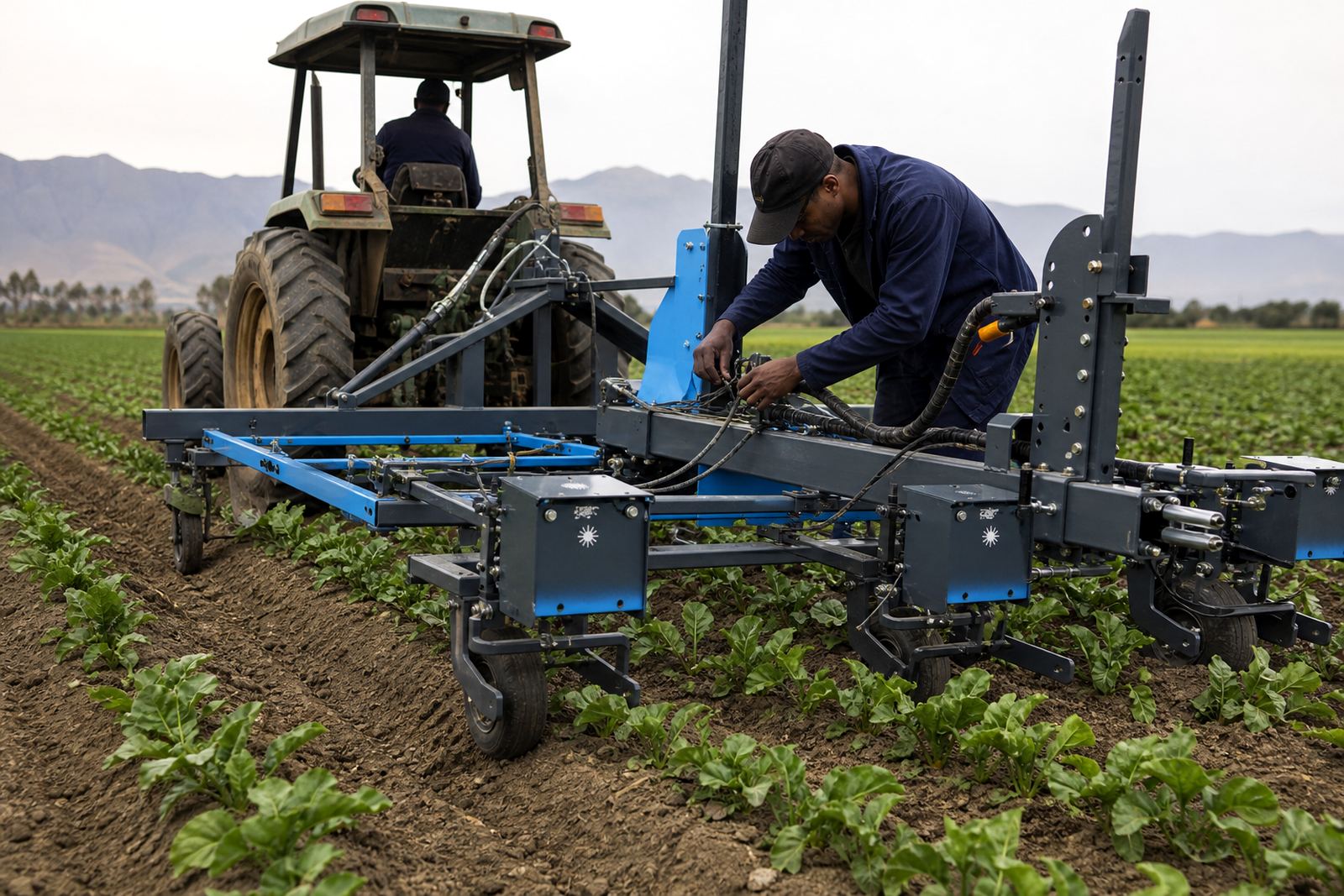
Camera calibration is carried out as part of the unit set-up, not as a loose add-on. The operator checks lens position, viewing angle and working height, then confirms the row line against the actual field conditions. If the crop has a different growth pattern at one end of the block, the unit may need a slight adjustment before work starts. That is especially useful on irregular plots, wind-blown sections or fields with wheel tracks from earlier passes.
The tractor-drawn unit needs a stable hitch arrangement, enough clearance for the row spacing and an operator who can hold a steady field speed. Speed matters because the cameras have to keep reading as the unit moves, and the laser must reach the weed growing point at the right moment. If pressure is high, the operating pace may need to slow for a better read across the row. Travel coordination, arrival site checks and field scheduling are part of the broader service when growers have several blocks on the go.
Care, cleaning and field handling between passes
Camera lenses and protective covers need clean surfaces, especially in dusty conditions or after working damp ground. Fine soil, leaf sap and spray residue from other operations can affect clarity, so the unit should be checked before it goes into the next block. A gentle wipe with the correct cloth and a visual check for scratches helps keep the image clean enough for reliable row reading.
The calibration state should also be reviewed after transport, vibration or a change in crop stage. A setting that worked on a smaller plant can drift once the canopy fills out, and the same applies when weed pressure changes from a light flush to a thicker stand. Post pass reporting helps the grower keep track of where the unit was calibrated, where the timing was tight and where a trial strip run should be repeated before the next pass.
Details to confirm when you book camera calibration
Before a field visit is scheduled, the team needs the crop type, block size, row spacing and the stage of both crop and weeds. It also helps to know whether the field has been recently irrigated, whether residue is still visible on the surface and whether there are shaded edges, headlands or uneven sections. Those details shape the camera set-up and the operator plan for the day.
For multi-farm programmes, we also confirm travel routing, arrival order and whether the same calibration needs to be repeated on more than one block. If the farm runs different crops in separate areas, the settings may need to be logged by block rather than kept as one fixed number. our contact form on our contact page is the best place to send the field notes, and the grower liaison team can work from there with the operations and scheduling staff.
- Crop name and growth stage
- Row spacing in metres or centimetres
- Weed stage and density
- Farm location and block access notes
- Need for a trial strip run or repeat pass planning
- Season booking requirements across more than one farm
Key facts
| Service type | Camera calibration for contract laser weeding |
|---|---|
| Application | Row crops with visible crop lines and early weed pressure |
| Working method | Camera-guided detection with laser targeting of weed growing points |
| Setup format | Tractor-drawn unit with trained operator |
| Common spacing | Tight and wider row layouts, set per block |
| Service area | Philippi, Cape Town and vegetable regions across South Africa |