

Row crops that suit the beam
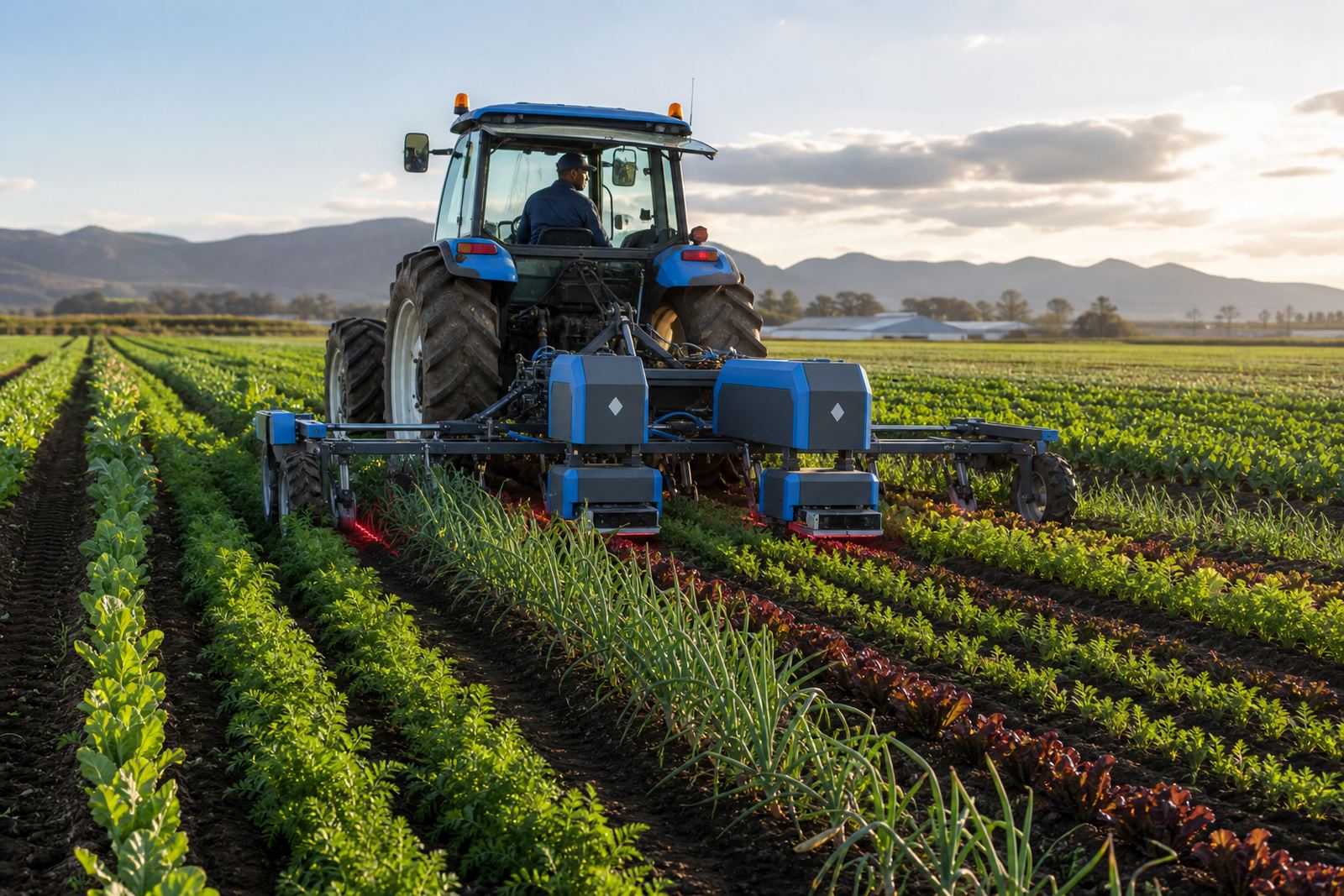
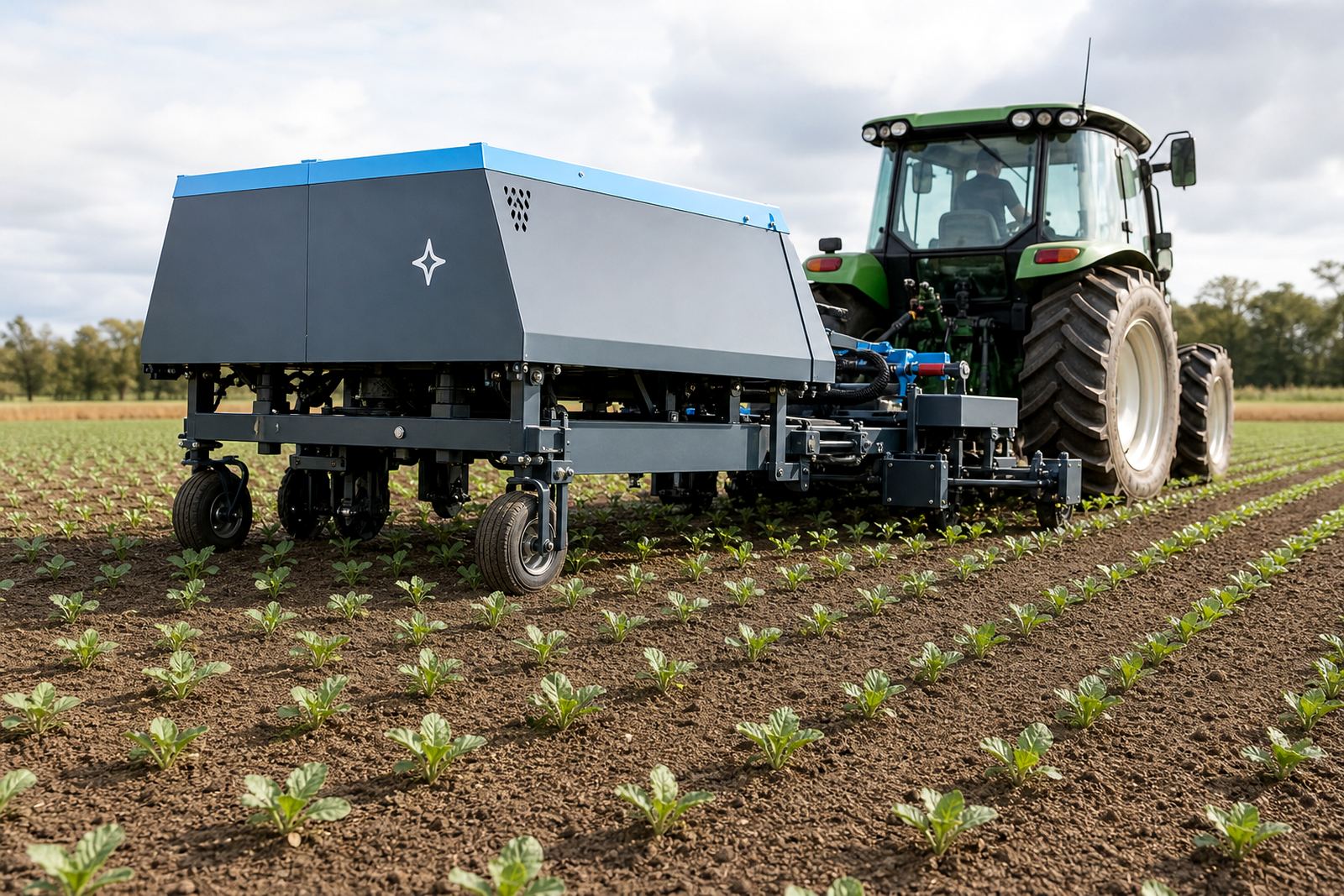
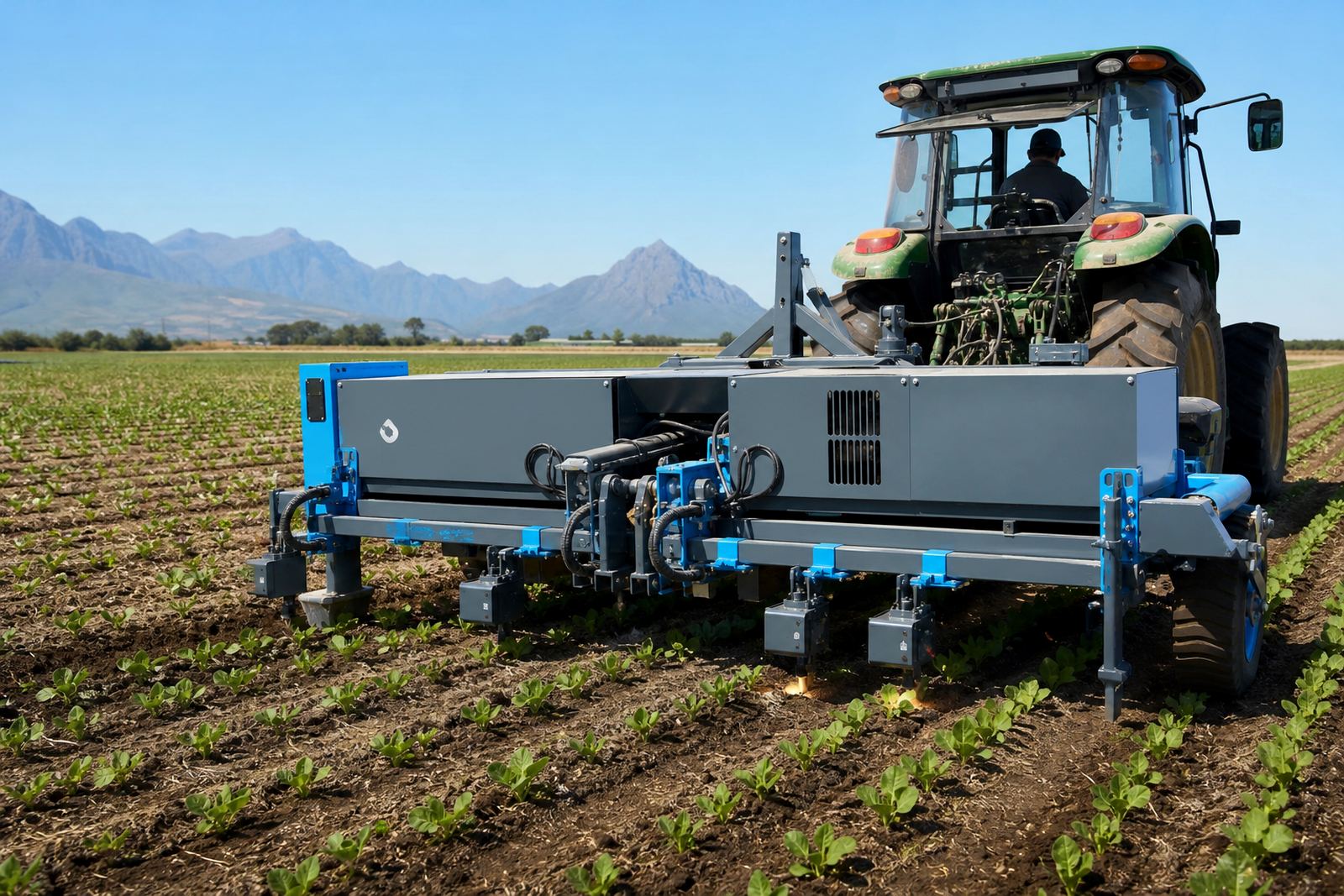
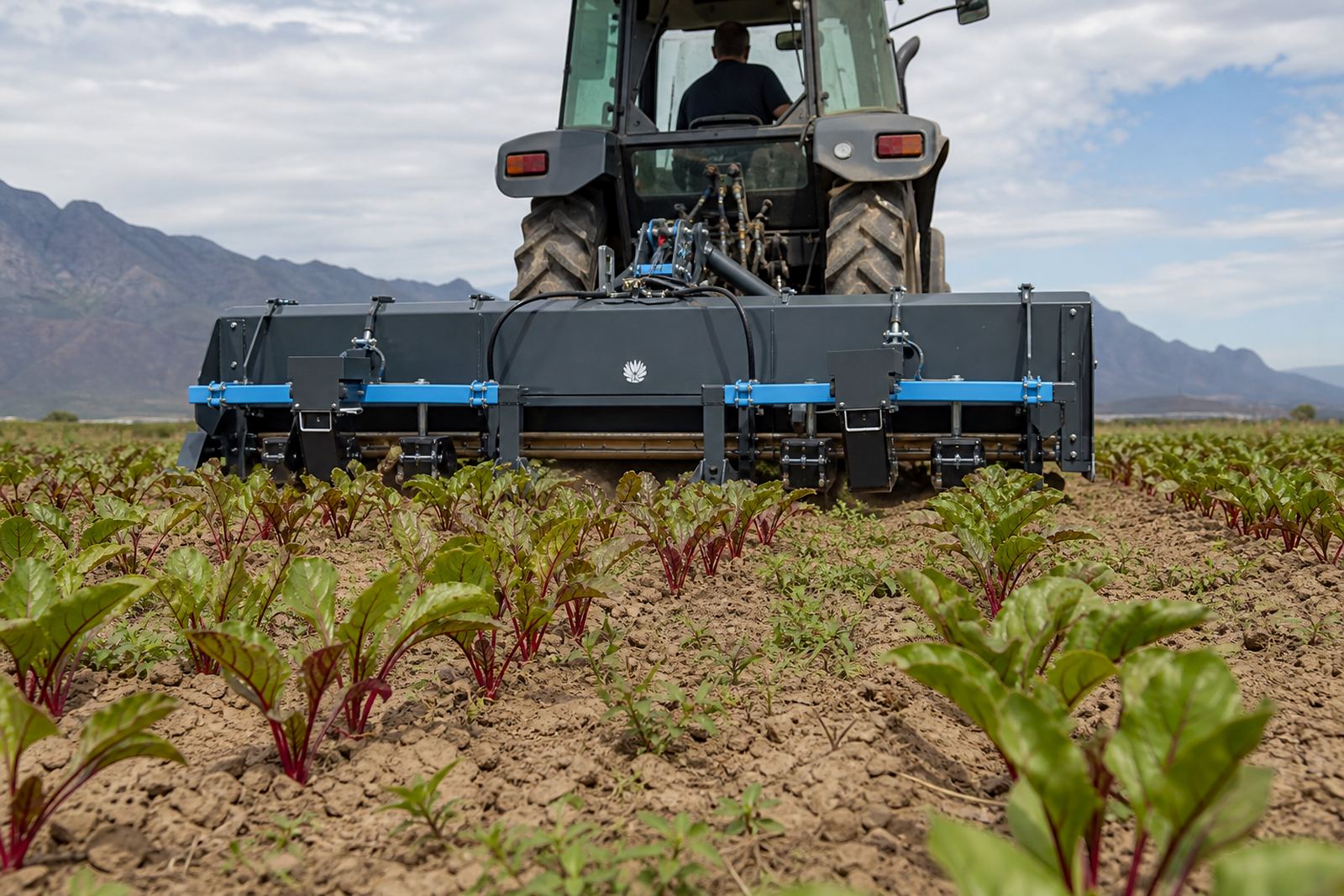
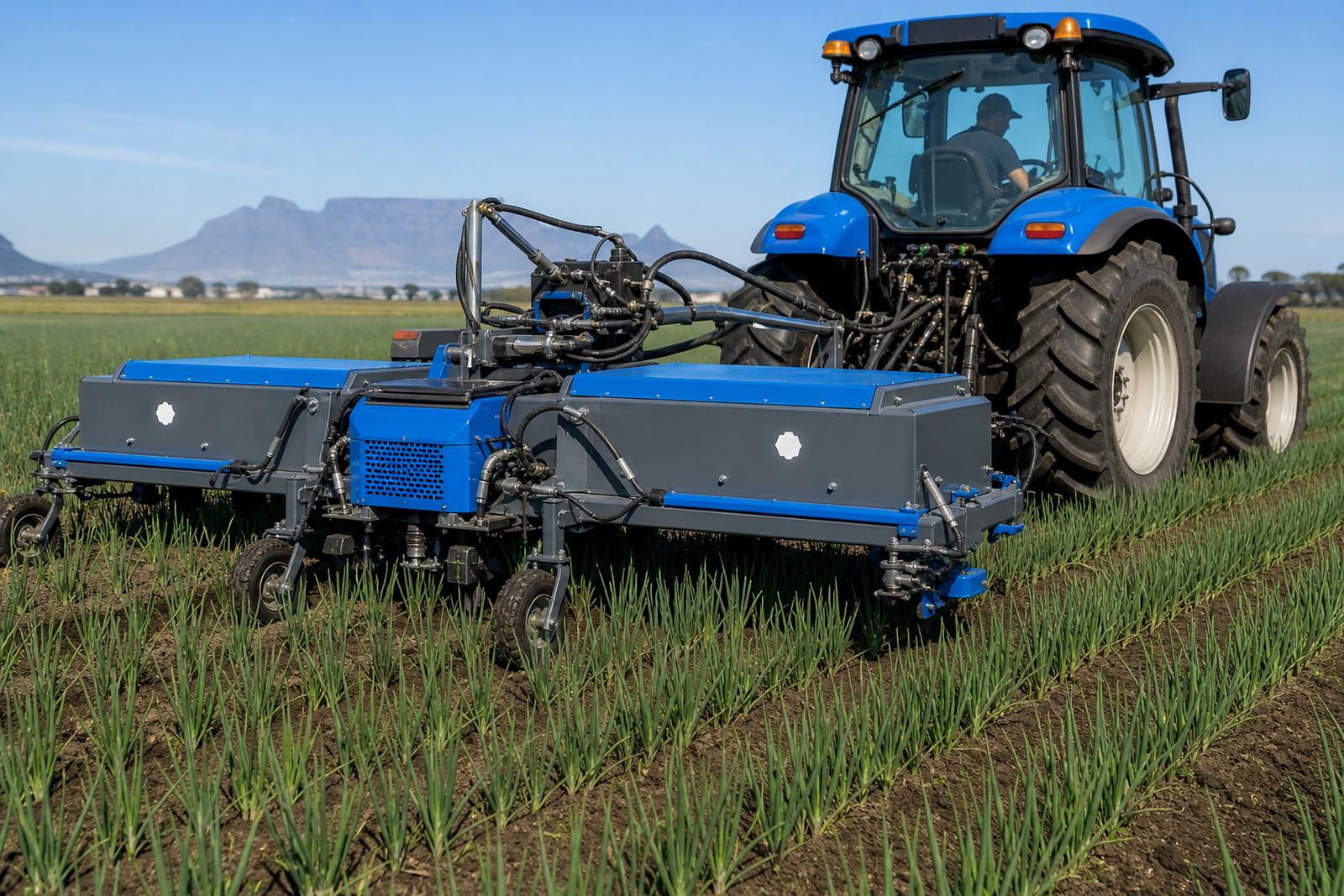
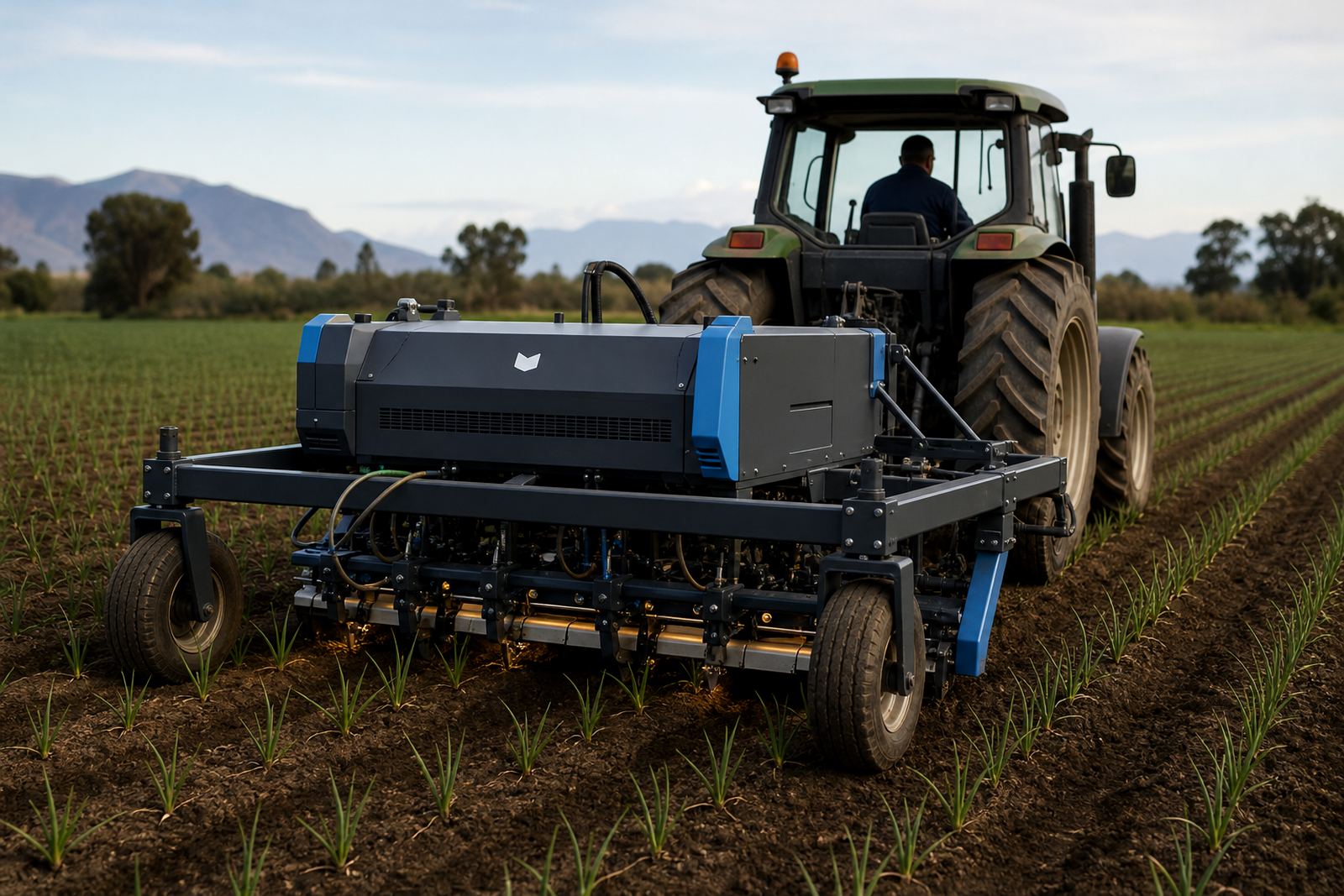
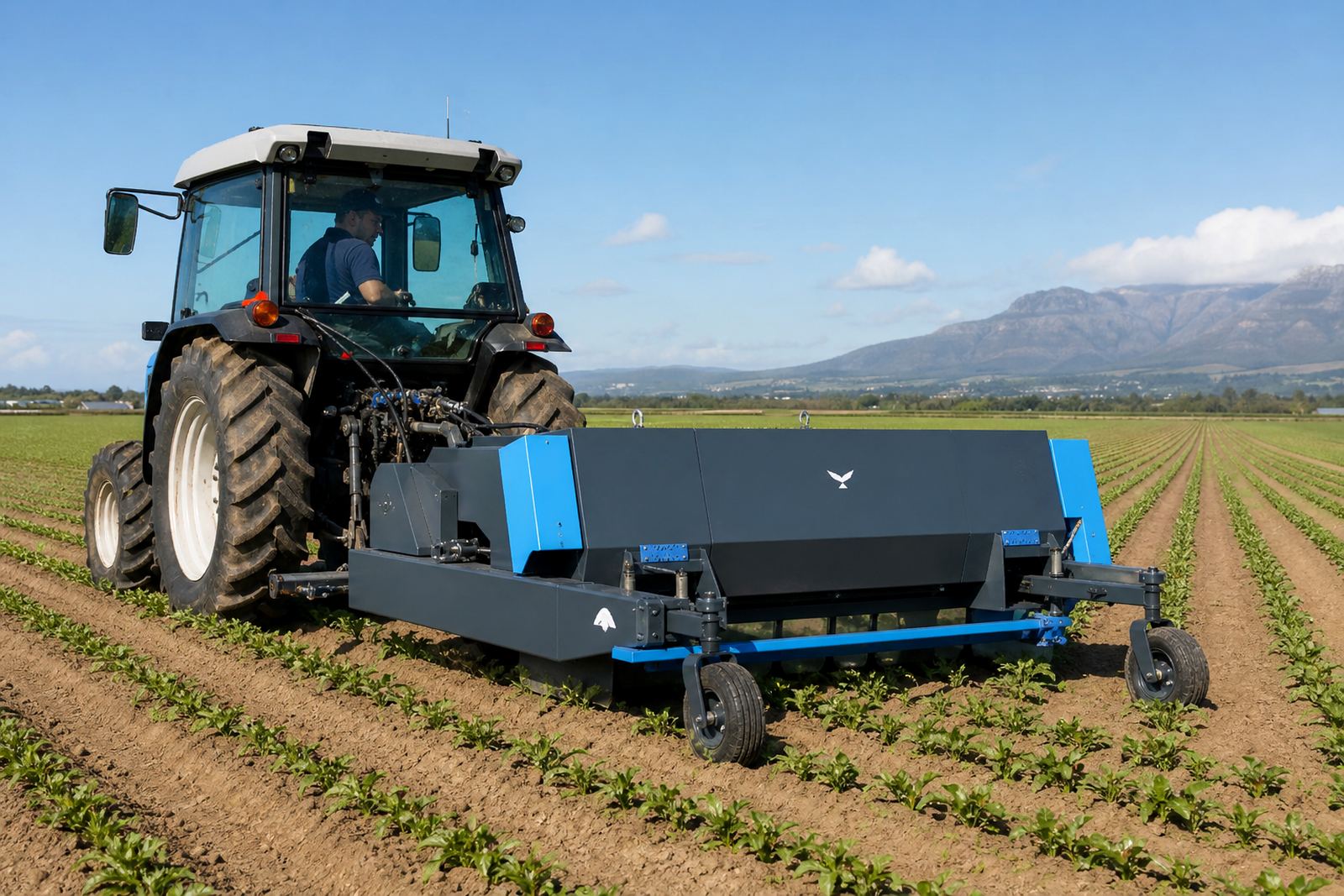
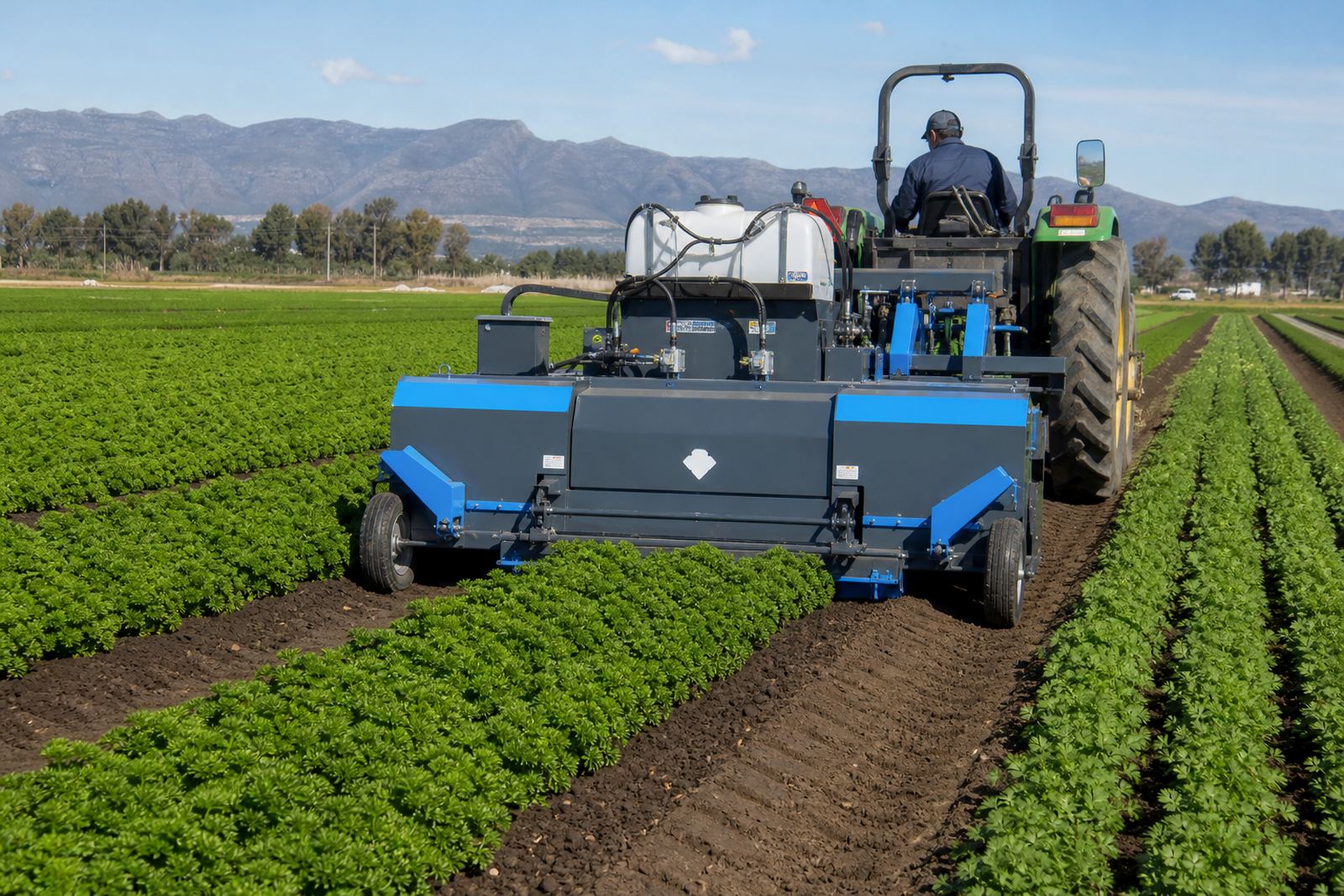
Laser weeding works best where the crop line is visible and the machine can move steadily between rows. On vegetable farms, that usually means crops planted in measured spacing, with weeds exposed enough for camera-guided detection and a clear path for the laser to target the growing point.
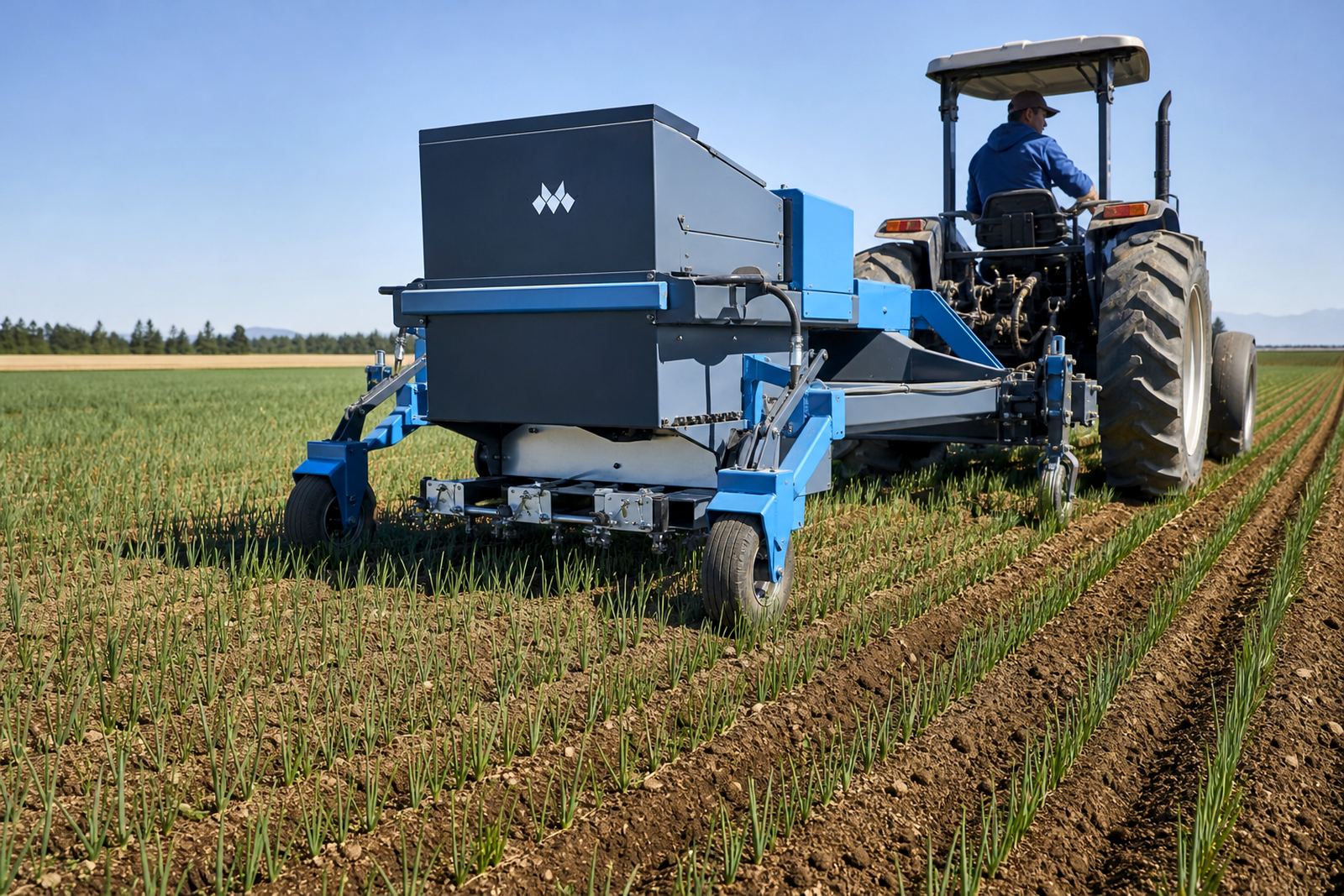
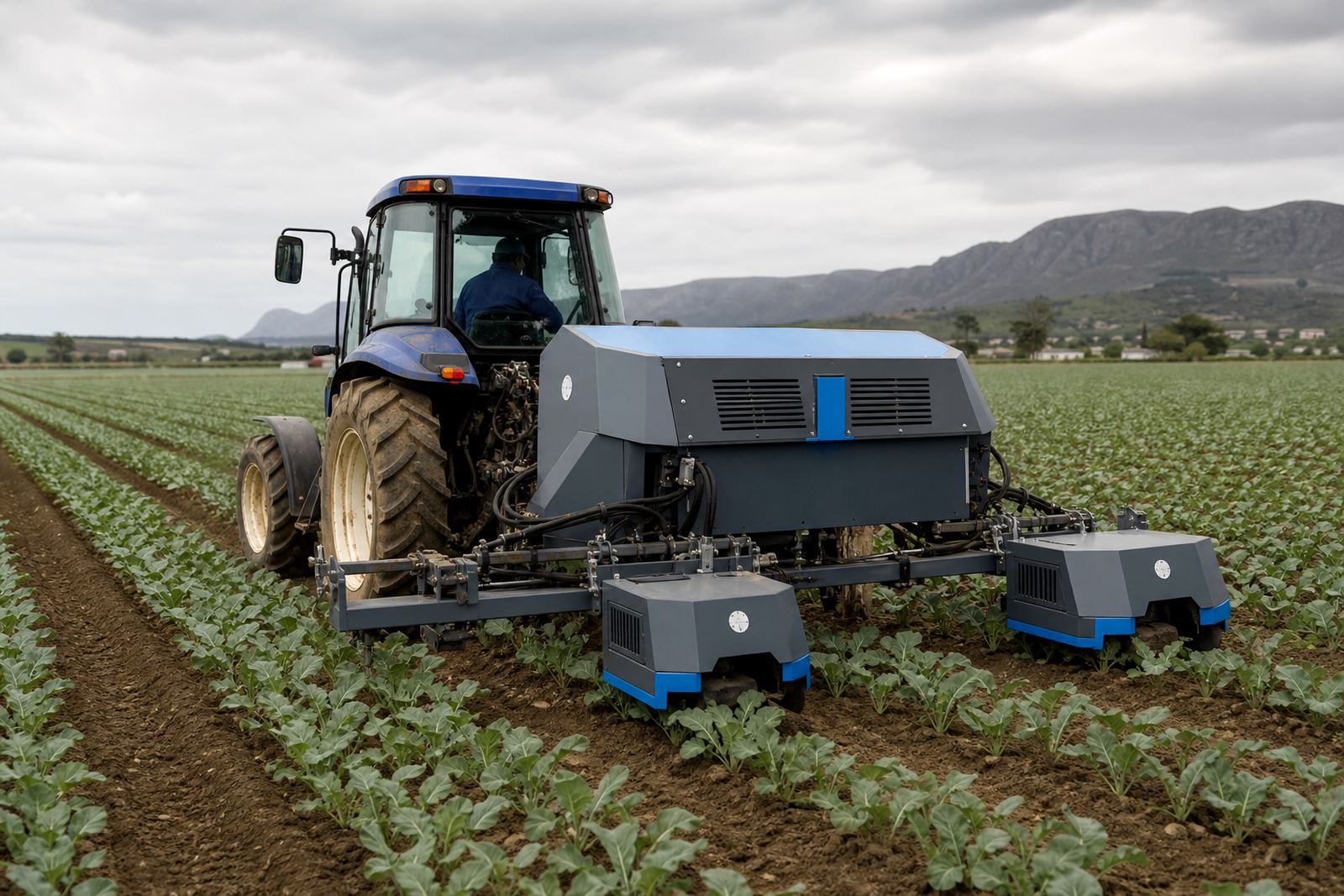
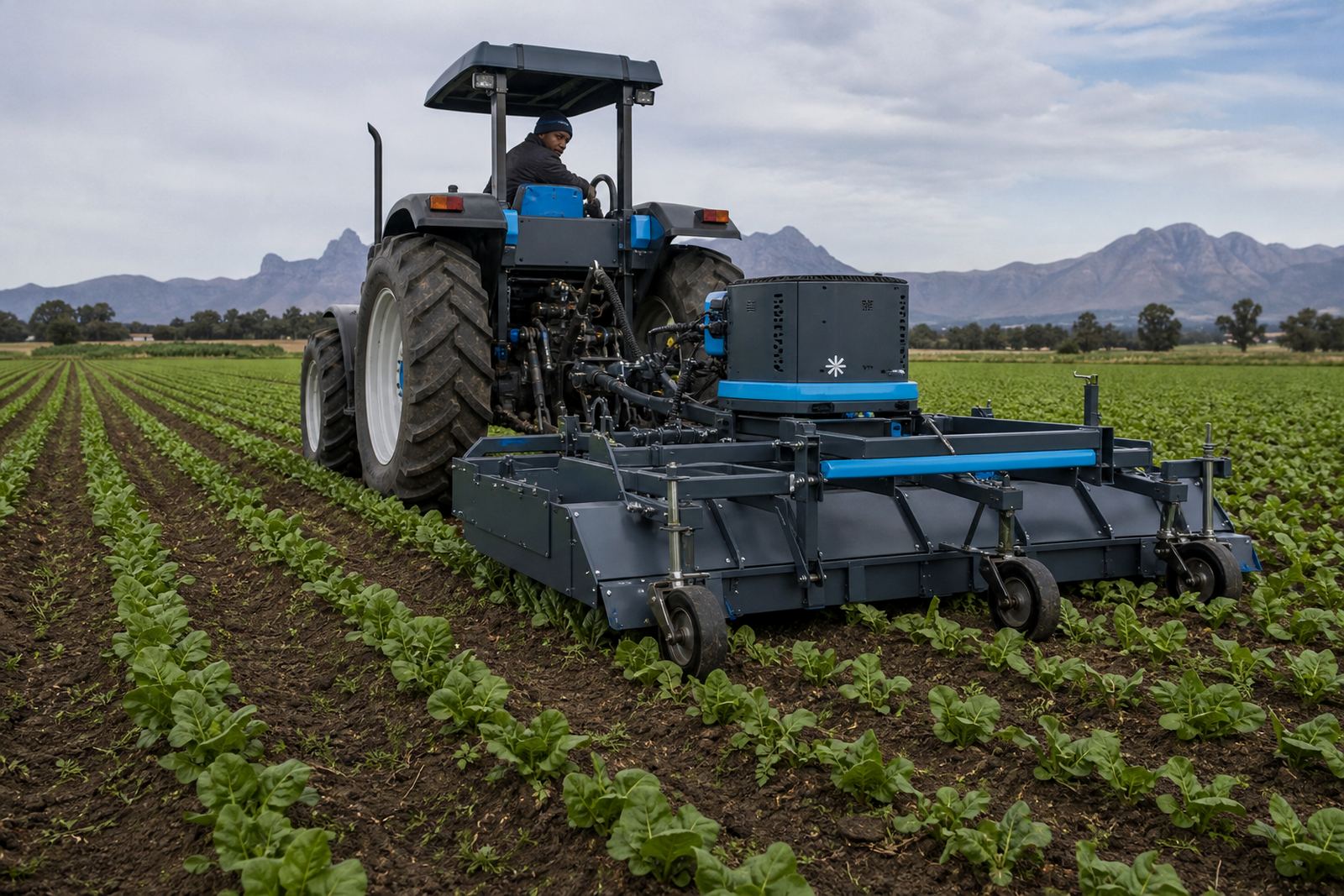
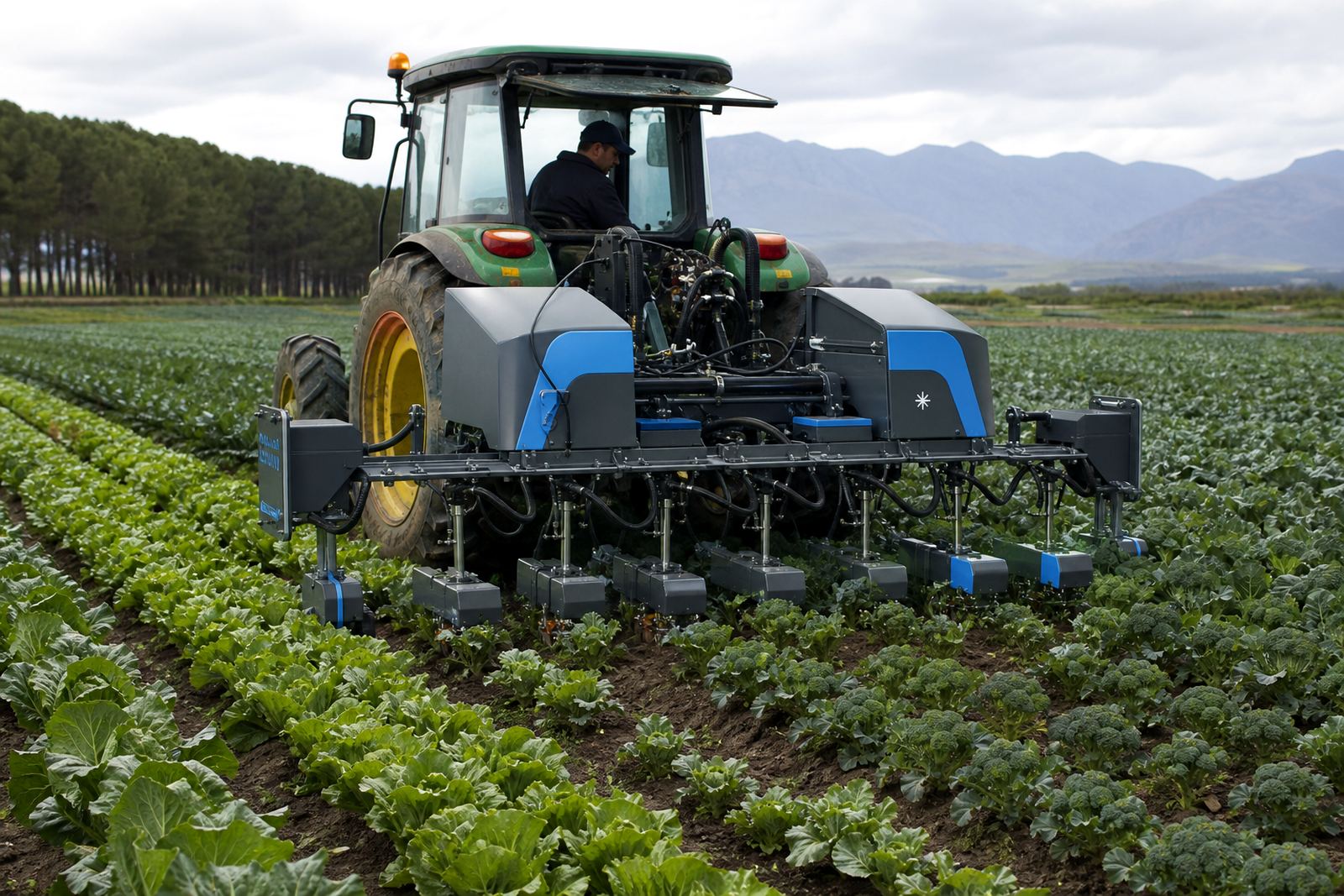
It is often considered for open field blocks where hand labour is hard to keep up, and where growers want a herbicide-free pass without disturbing the soil. The tractor-drawn unit runs with a trained operator, so the crop layout, row width and weed pressure all matter before any booking is set.
- Onions with straight row structure and manageable inter-row space
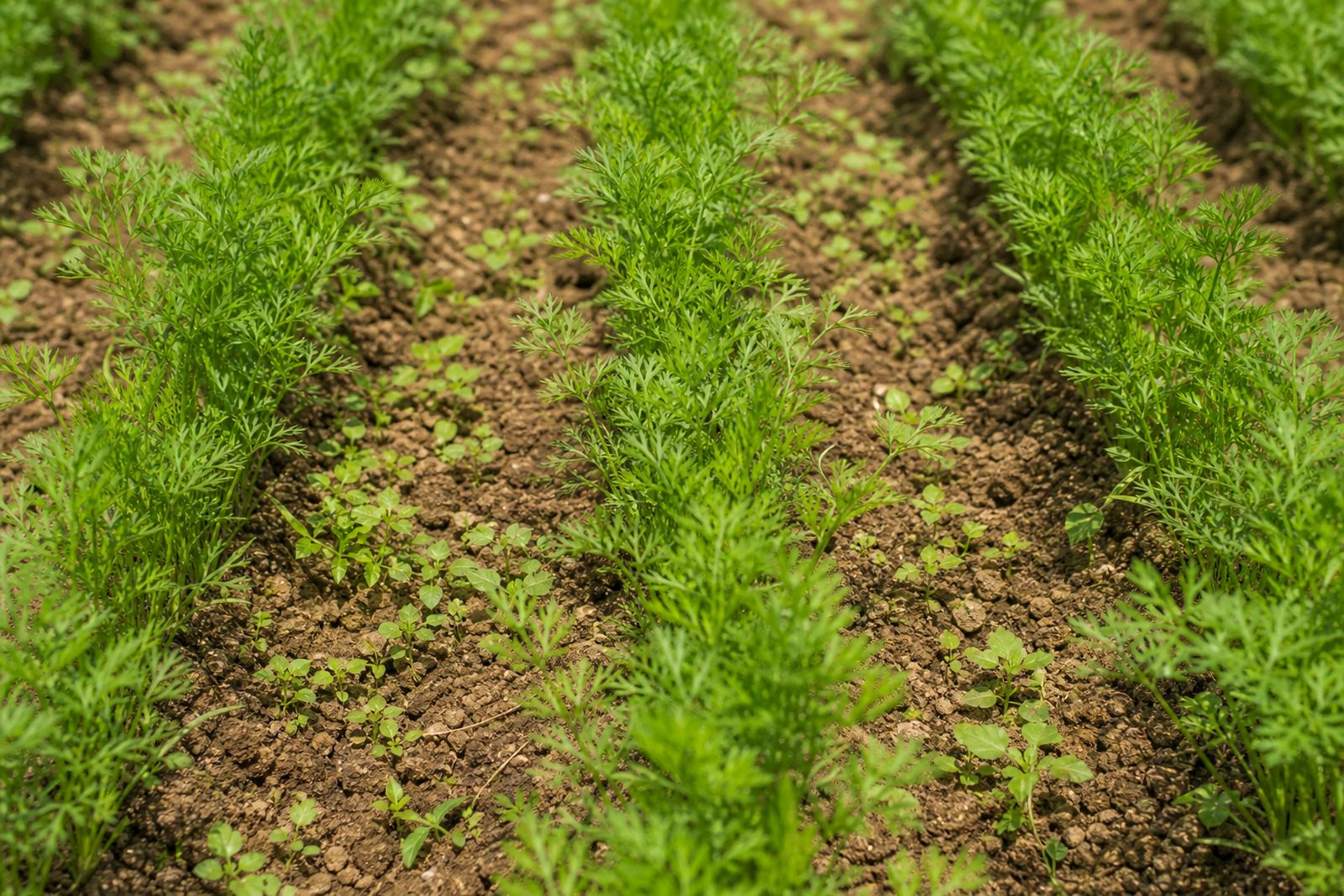
- Carrots where the stand is even and the timing is still practical
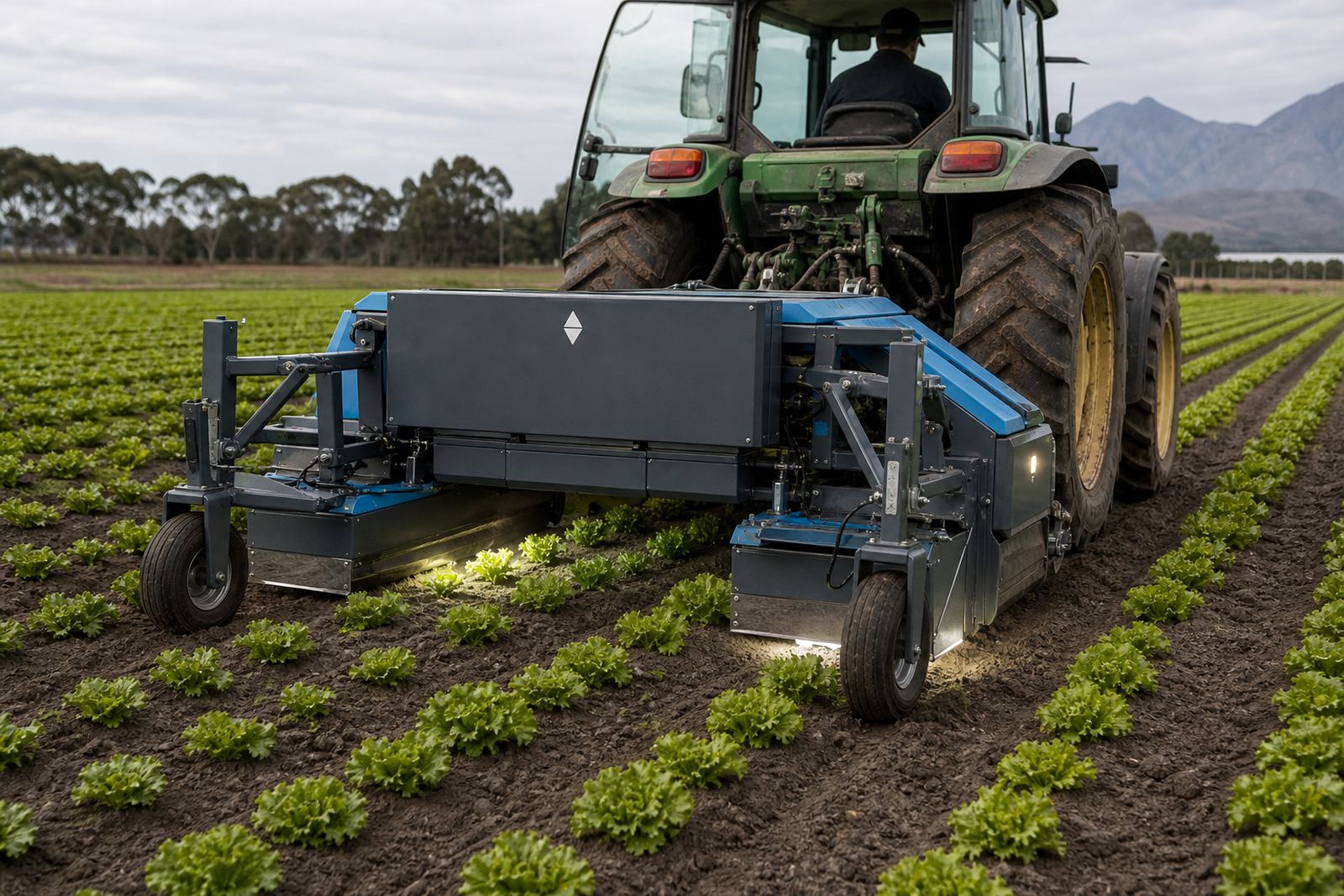
- Lettuce blocks with organised spacing and defined crop lanes
- Brassicas such as cabbage, broccoli and cauliflower in row formations
Timing shapes the result on the day
Laser weeding is not only about crop type, it is also about weed stage. Small weeds are easier to target than older plants with stronger stems or thicker leaf cover. The earlier a field is assessed, the easier it is to decide whether a pass is worth doing now or whether the block needs a different plan.
Field speed changes with weed pressure, plant size and how tidy the rows are. A cleaner block may run differently from a heavy flush, and some fields need repeat pass planning to keep pressure down through the season. The operator and grower need the crop history in front of them, not only the map of the farm.
- Fresh weed flushes are easier to manage than mature growth
- Uneven emergence can make targeting more difficult
- Heavy pressure usually slows the field pace
- Repeat passes may be part of the season plan
What the machine is doing between the plants
The unit uses cameras to read the crop line and the weed pattern, then directs lasers at the weed growing point. That means the work is aimed at the weed itself, not at the soil surface. Because the method is non-contact, there is no cultivation pass and no soil disturbance from the tool path.
That matters on ground where the surface needs to stay stable, or where repeated mechanical passes would create unnecessary movement in the row. It also helps on blocks where the grower wants a herbicide-free option and a narrower working footprint between plants.
- Camera-guided detection helps separate crop from weed
- Lasers target the weed growing point, not the whole field
- No spray application is involved in the pass
- The soil is left undisturbed by the treatment itself
Where contract laser weeding fits into a farm plan
For many growers, the value is in fitting the service around the crop calendar. A field assessment can help decide whether a block is ready, whether a trial strip run makes sense, and whether the farm needs multi farm programmes or a one-off booking for a specific window.
Contract work also helps with travel and site coordination. Farms in Philippi, Ceres, Grabouw, Tzaneen, Bela-Bela, Nelspruit, Howick and Bethlehem can be planned into the same seasonal picture, and growers elsewhere in South Africa often need the same kind of scheduling logic when blocks are spread across more than one farm.
- Field assessments before the first pass
- Crop timing plans based on crop stage and weed stage
- Trial strip runs on selected blocks
- Season bookings and repeat pass planning
A closer look at spacing, canopy and access
Visible crop lines are one thing, but access also matters. If the row spacing is too tight, or the canopy has closed too much, the unit has less room to work cleanly between plants. The same applies where field edges are awkward, turns are tight, or the ground condition makes steady travel difficult for a tractor-drawn machine.
Growers often find it useful to think about the whole block, not only the crop name. A lettuce field with neat lanes may be a better fit than a larger block with poor alignment, while brassica plantings can vary a lot from farm to farm. Crop structure, not just crop label, usually decides whether the pass is practical.
- Row width and alignment affect machine movement
- Canopy closure can limit what the cameras can read
- Field access points need planning before arrival
- Uneven blocks may need separate scheduling
Choosing the right block for the first pass
Not every field should be treated the same way, even on the same farm. Some blocks are good candidates for an early pass, while others need a later visit or a different weed strategy. The practical question is whether the crop is at a workable stage, the weeds are visible enough, and the layout allows the operator to work with care.
That is where grower consultation, post pass reporting and arrival site checks help the process stay ordered. Mandla Adonis leads the business from the Philippi, Cape Town base, with Anele Khoza handling operations, Pieter Mokoena on field scheduling, Zanele Naidoo on grower liaison, Johan Daniels as lead operator, Lerato Letsoalo on service coordination and Ruan Mkhabela in the workshop.
- Check crop stage against weed stage before committing the block
- Use site checks to confirm access, rows and field condition
- Keep notes for repeat passes later in the season
- Plan the field list around crop value and weed pressure