When broccoli fields suit laser work
Broccoli is often planted in planned rows, which gives the camera system a clear line to read once the crop is up and settled. The best results usually start when the stand is even, the beds hold their shape, and the weeds have not gone woody or too tall. That matters in coastal and inland growing areas alike, from Philippi and Grabouw to Limpopo blocks with mixed weed pressure.
Laser weeding is not a rescue pass for a rough field that has been left too long. It works as part of crop timing, with the first pass placed before weeds get ahead of the broccoli canopy. A row crop like broccoli also needs the operator to read gaps, head size and bed definition, because a tight line today can be a looser line after wind, rain or irrigation wash.
We look at spacing, cultivar timing, bed shape and the weed flush that is active on the day. In many cases that means a trial strip run before a wider field programme, especially where the field has varying soil texture or a few awkward corners.
The kit that comes to the field
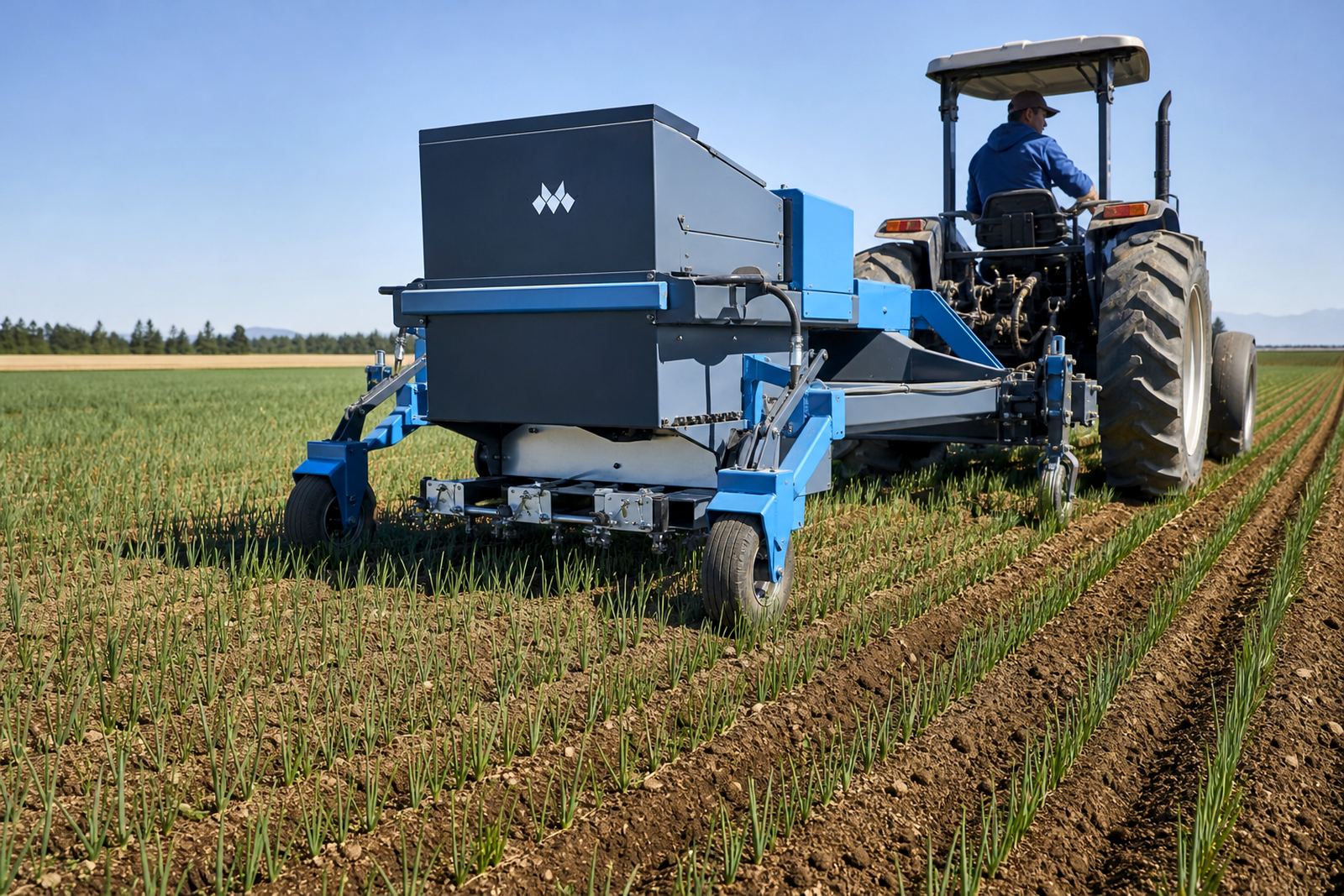
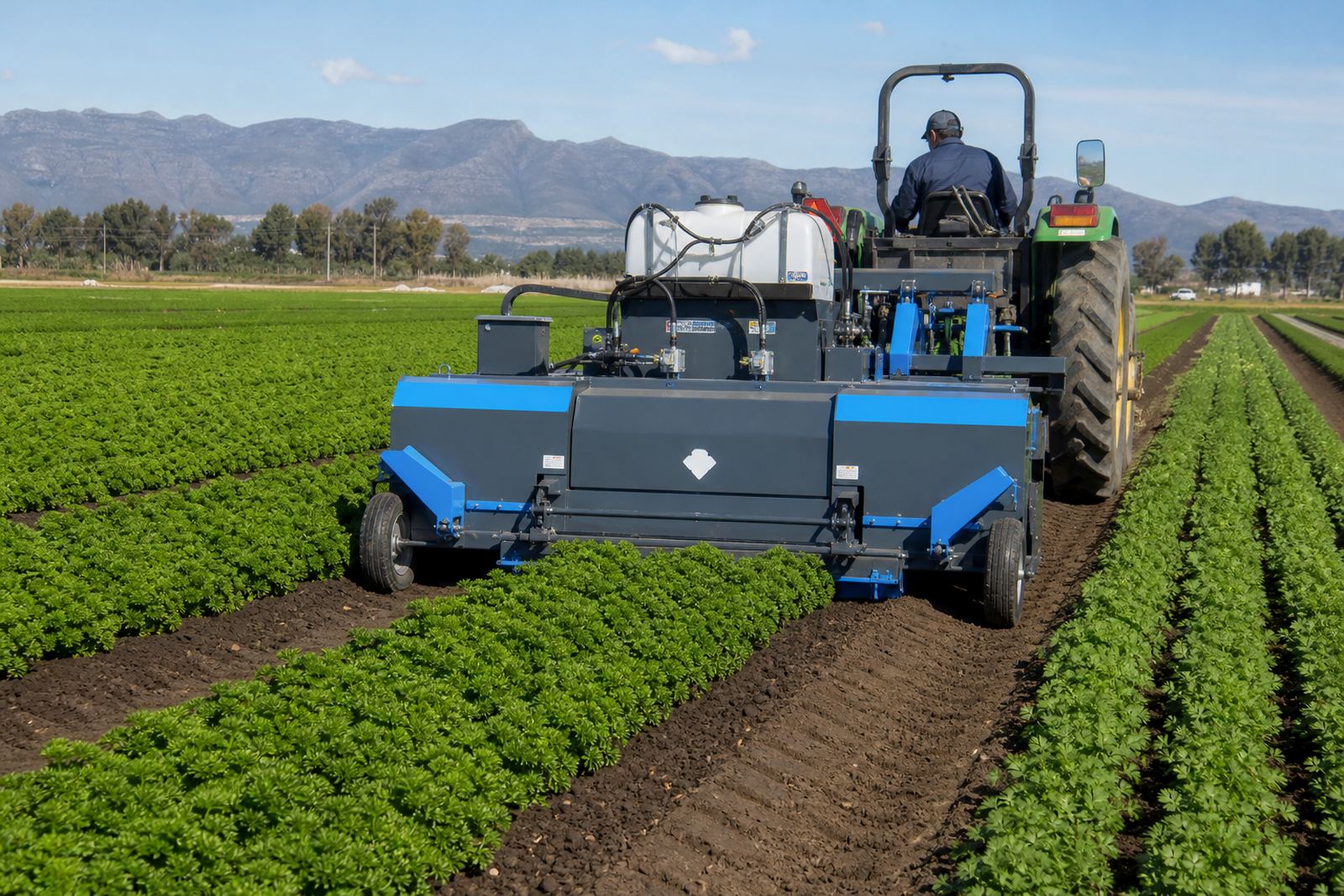
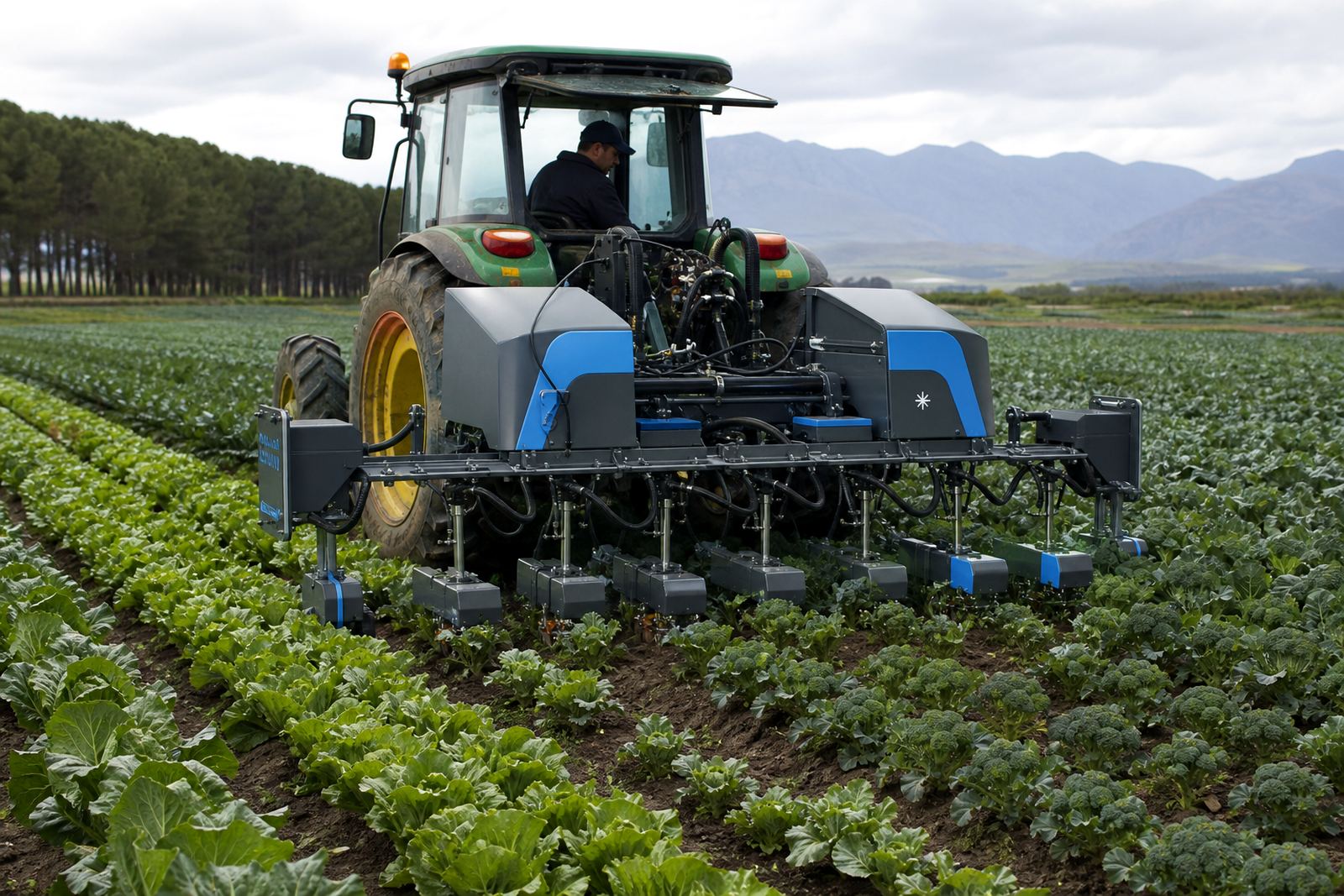
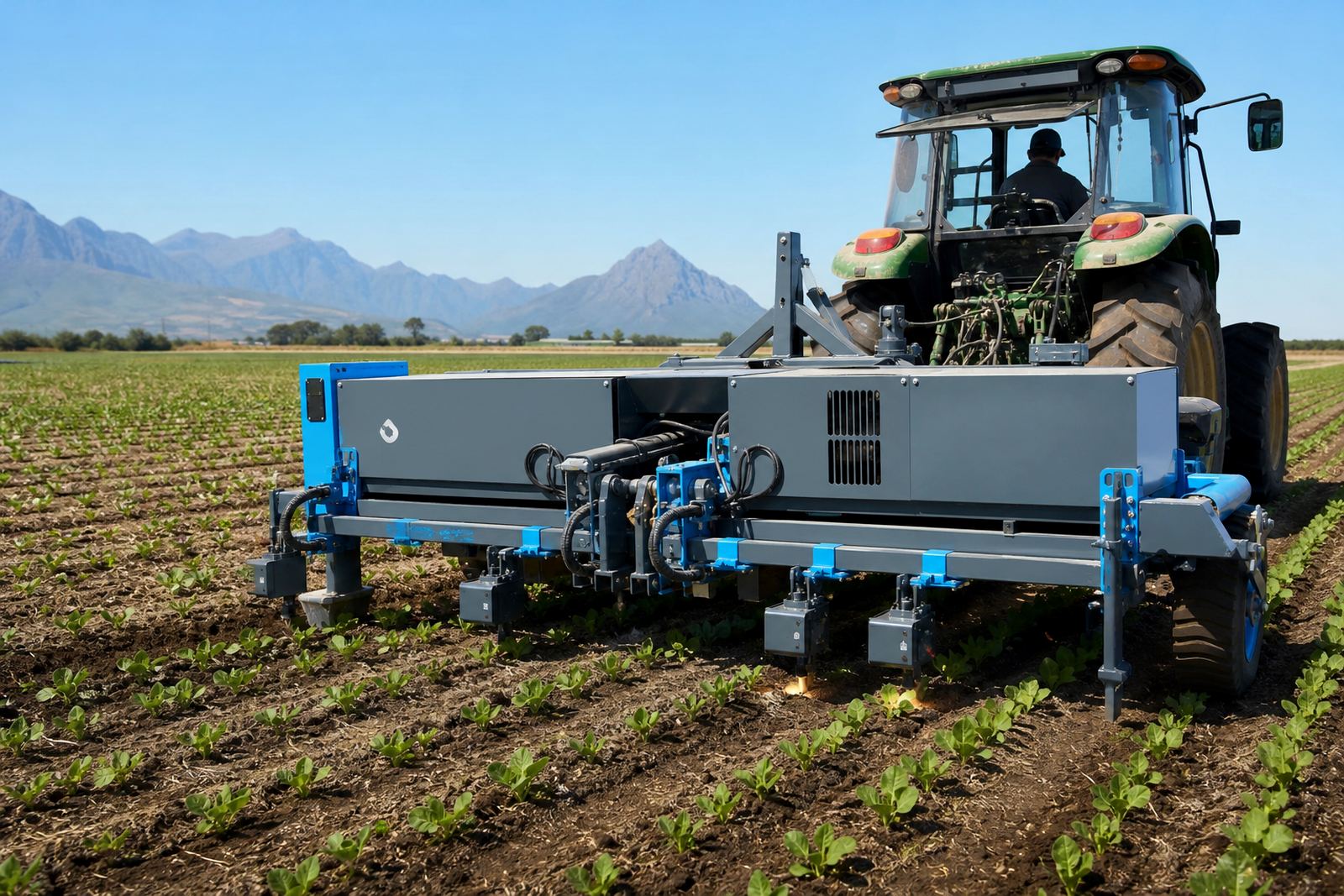
The working set is a tractor-drawn laser unit with camera-guided weed detection and a trained operator on the machine. The cameras follow the crop row and the system directs the laser to weed growing points, not to the broccoli itself. The field run stays shallow in the sense that it does not disturb the soil surface, which helps where crusting or moisture loss is a concern.
Broccoli blocks usually benefit from a practical setup rather than extra extras. A good pass depends on row visibility, the tractor's ability to hold a steady line and enough room at headlands for turning. In windy conditions or after irrigation, the operator may need to slow the field speed to keep the row readable and the weed target clean.
- Tractor-drawn laser weeding unit with camera guidance
- Trained operator supplied for the field run
- Arrival site checks and row visibility checks before work starts
- Trial strip runs where the crop layout needs a test pass
- Post pass reporting for the grower and farm team
Planning broccoli rows before the tractor arrives
Good planning starts with the field map, not the tractor. Broccoli rows need enough definition for the camera to follow the crop line, and the site should be clear on turns, gate widths and soft patches. In the Western Cape, that can mean tight coordination around wind, moisture and the movement of other farm vehicles. In warmer inland districts, weed flushes can move faster and the timing window narrows.
We use crop timing plans and field scheduling so the pass fits the broccoli stage and the weed stage together. If weeds are small, the work is cleaner and the machine can move with better rhythm. If weeds have grown past that stage, the run still has to be assessed carefully, because a fast block with heavy pressure often needs a different pace from a lighter field.
- Keep rows straight and well defined from the start
- Leave enough space for safe tractor movement at headlands
- Book passes before weeds get too large
- Share cultivar timing, planting date and irrigation notes
- Plan repeat passes where the pressure is uneven across the block
Where broccoli jobs go wrong
The most common mistake is leaving the field too long after the first weed flush. Once broadleaf weeds and grass weeds are past the small stage, the camera has more to read and the laser has more work to do. Another problem is a field that looks straight from a distance but breaks up close because of uneven planting, missed plants or poor bed finish.
Broccoli can also be tricky where spray history, hand weeding or hoe work has already changed the field surface. A patchy block does not always rule out laser work, but it does mean the operator needs better sightlines and more careful field speed. On some farms, the wrong mistake is not the machine choice at all, its poor timing and rushed scheduling between harvest movements and irrigation cycles.
Operators also watch for layout errors at the edges. Tight pivots, rough furrows and narrow access lanes can slow the run and increase the chance of uneven coverage. A site check before the pass helps avoid that sort of pressure on the day.
Rand ranges for broccoli programmes
Broccoli laser weeding is usually priced as a field programme, not as a one-size square metre quote. The budget depends on block size, weed pressure, travel distance, row definition and whether the farm needs one pass or several. A small, tidy trial block can sit in a lower range than a spread-out multi farm run with long road time and repeated scheduling.
As a broad guide, growers should expect field assessment and planning work to start from a modest service fee, with active laser weeding billed per hectare or per scheduled block. For many broccoli situations, programme costs can sit anywhere from a few thousand Rand for a narrow test strip and assessment to a fuller multi-hectare service moving into the tens of thousands, especially where repeated passes and travel coordination are needed. Exact numbers depend on the field map and the weed stage, so the layout matters as much as the area.
We can also structure season bookings for growers running broccoli alongside onions, carrots, lettuce or brassicas on nearby land. That reduces repeat travel and keeps the field calendar cleaner, especially where one farm has several blocks at different growth stages.
What a grower sends before a broccoli booking
A clear brief helps the team plan the work around the crop instead of forcing the crop around the machine. The most useful details are the block location, row spacing, planting dates, weed type and how far the broccoli has moved into canopy cover. If there are soft corners, narrow entrances or neighbouring crops close to the edge, those notes should be included too.
Our contact form is the normal starting point for broccoli enquiries from Philippi, Ceres, Tzaneen, Bela-Bela, Nelspruit, Howick and Bethlehem. From there, the team can arrange field assessments, travel coordination, trial strip runs, repeat pass planning, and post pass reporting where needed. For growers who manage several farms, multi farm programmes help keep the field order tidy across the season.
- Farm name or block reference and nearest town
- Approximate hectares and row spacing
- Crop stage and weed stage
- Access notes, waterlogged spots and headland space
- Any timing pressure around picking or irrigation