When brassica mixes need a different plan
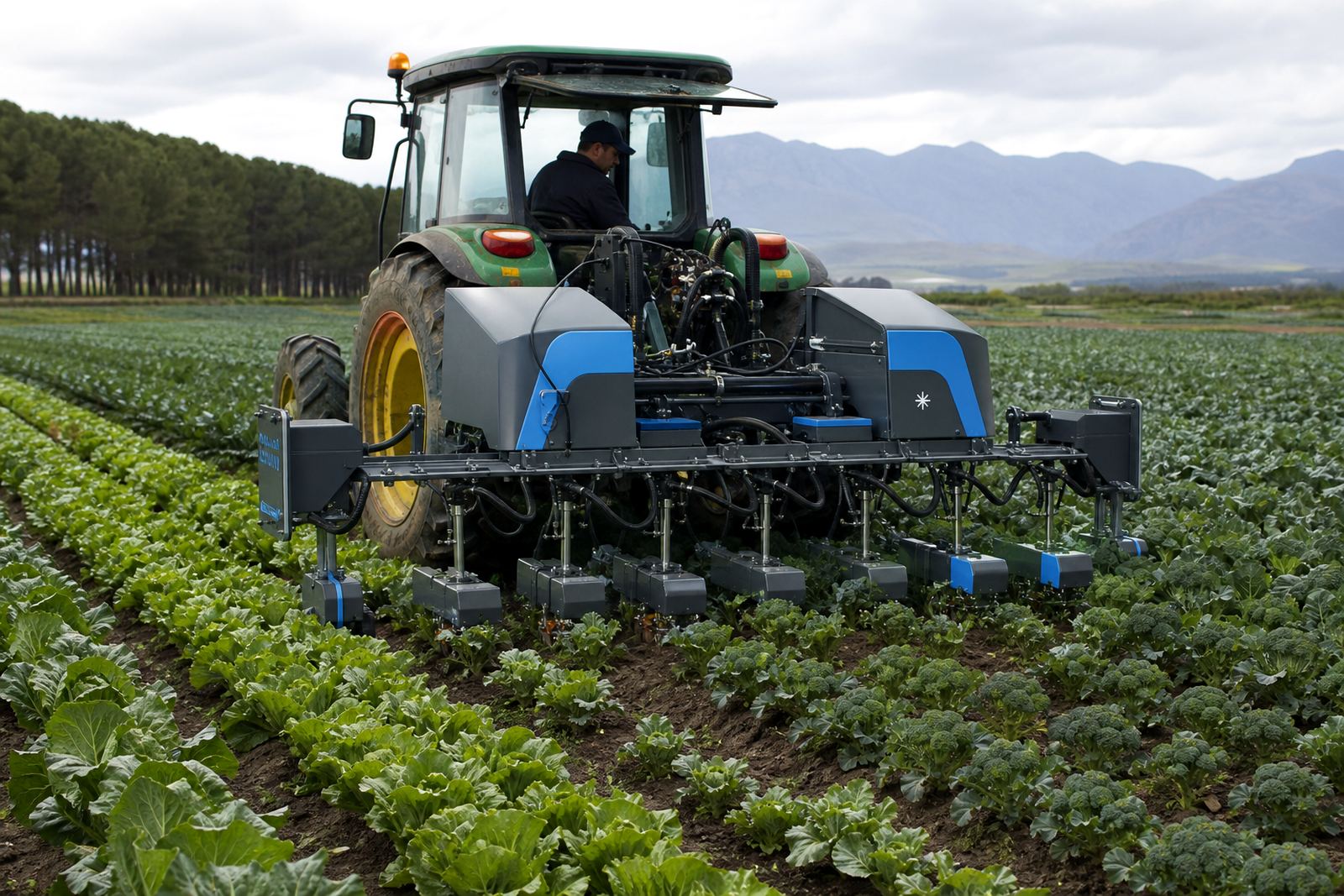
Mixed brassica plantings are not all treated the same. A block with young cabbage lines, a later cauliflower section and a tighter broccoli run will not all sit at the same weed stage, so the pass has to match the crop rather than the calendar.
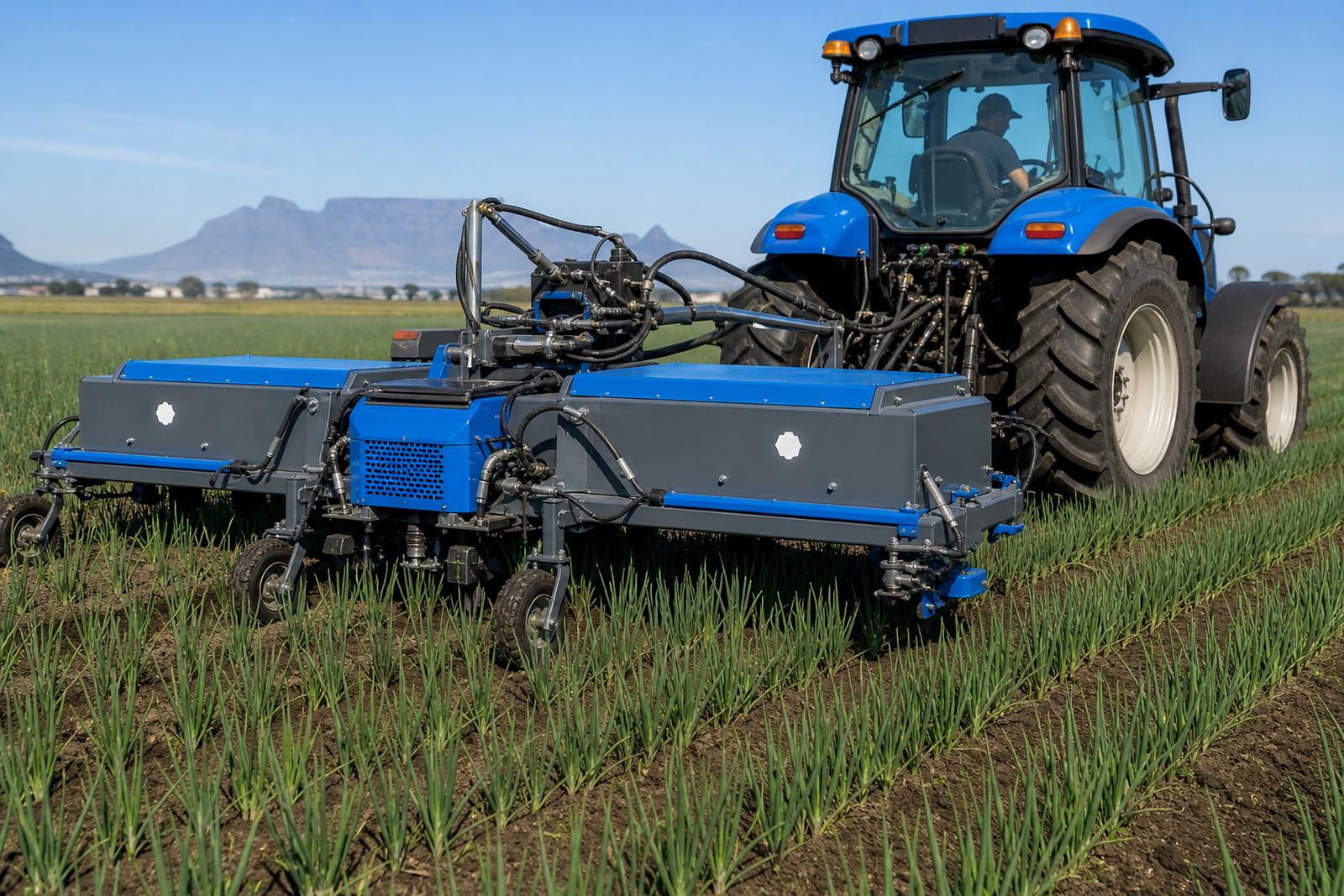
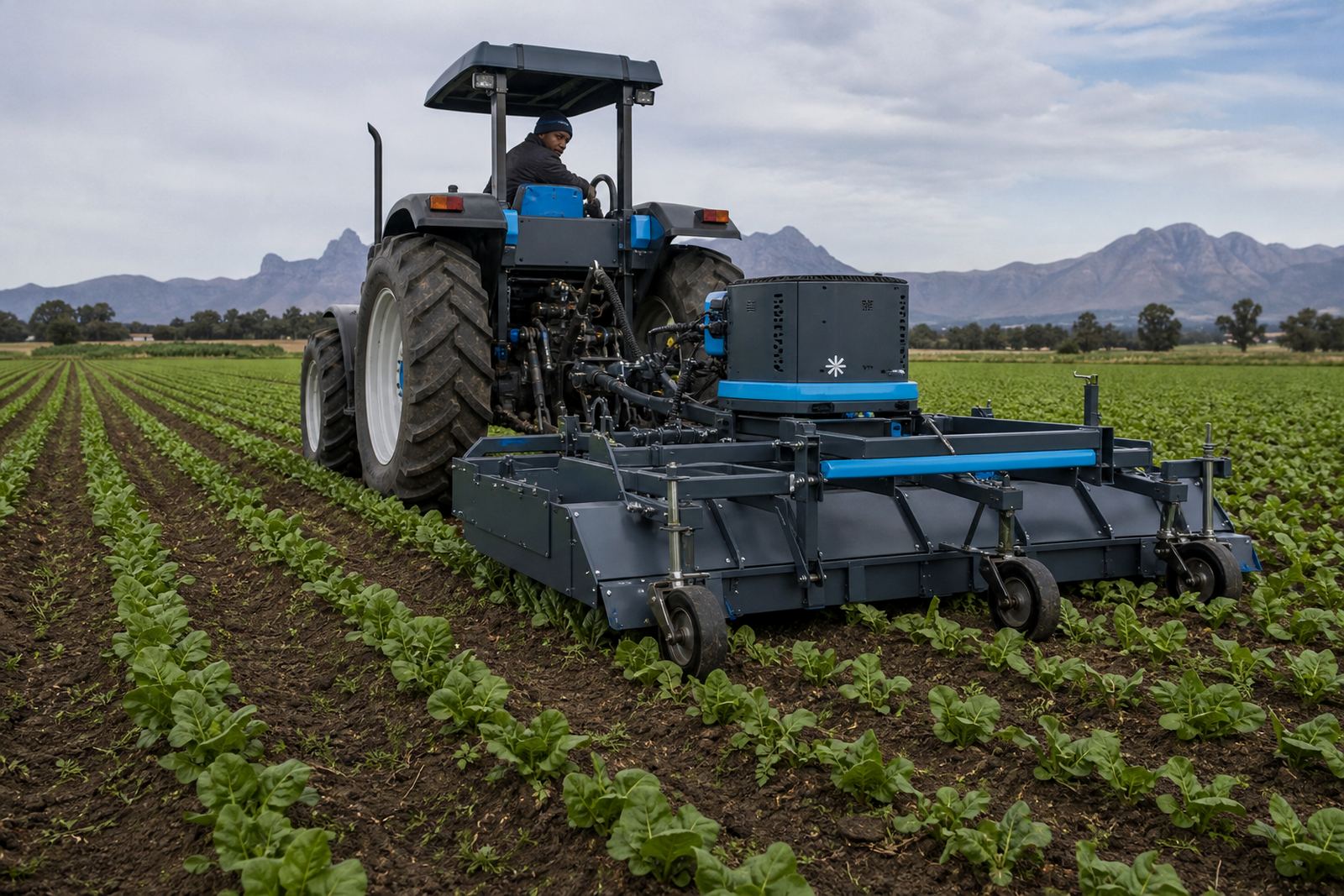
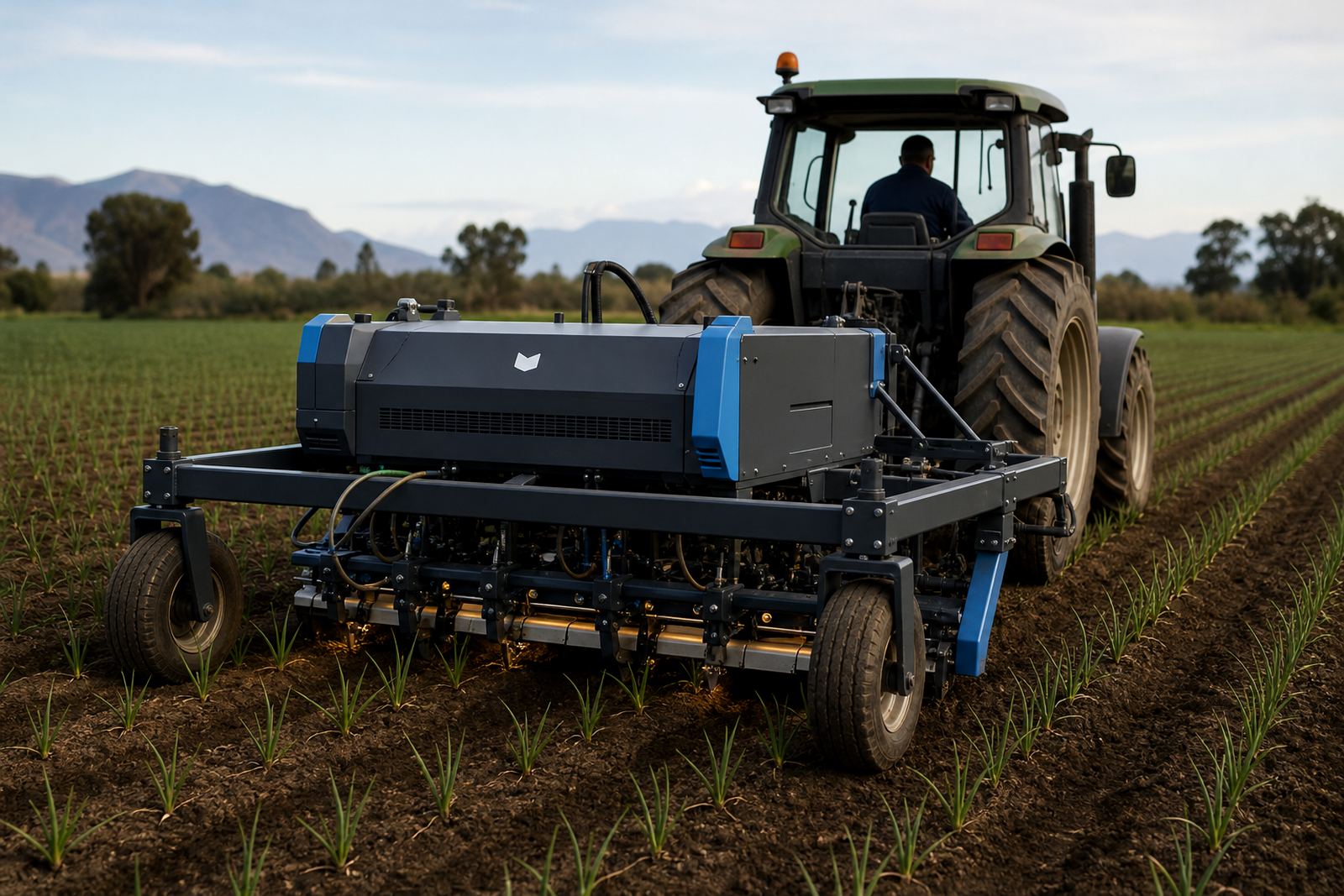
Laser weeding suits row crops where weeds are still small and visible between the rows or close to the plant line. The unit uses camera-guided detection to find weeds and direct the laser at the growing point, which helps reduce the need for herbicide sprays and leaves the soil undisturbed. That matters in loose sands around Philippi, but it also matters on heavier ground where you do not want another shallow disturbance after cultivation.
Spacing, row width and crop height all shape the plan. A mixed brassica block can have areas that are ready for a pass and other areas that need a little more growth before the crop is safe to run.
Typical set-up for cabbage, broccoli and cauliflower blocks
For brassica mixes, the usual set-up is a tractor-drawn laser weeding unit with a trained operator, plus field scheduling that follows the block layout. The operator watches crop rows, weed pressure and ground condition, then works at a field speed that suits what is actually in front of the machine that day.
- Tractor-drawn laser unit with camera-guided weed detection
- Trained operator on the machine and an arrival site check before work starts
- Field scheduling that separates young stands from more advanced sections
- Trial strip runs where spacing or weed density needs a careful first look
- Repeat pass planning for blocks that will need more than one visit
Brassica plantings with finer spacing or mixed age lines may need narrower timing windows. If the crop has filled out unevenly, the machine can still be used, but the pass plan has to respect the most vulnerable parts of the block.
How spacing and crop stage affect the pass
Mixed brassica fields are best assessed section by section. The older, more established lines may tolerate one pace and one pass pattern, while smaller plants need a slower, tighter run so the laser is working on weeds and not on the crop row.
We look at weed size, canopy cover and the way the rows were planted. Small weeds are easier to target cleanly. Once weeds get larger or more crowded, the field speed may need to drop and the pass may need to be split into sections. That is ordinary field judgement, not a miracle measure.
- Shorter weeds are easier to target accurately
- Even row spacing makes the camera work more predictably
- Mixed ages in one block often need separate passes
- Wet soil or very rough ground can slow the day down
On brassicas, a tight crop canopy can help later in the season by shading out some weed growth, but the first passes still need the weeds caught early. Timing is often the difference between a neat row and a messy follow-up job.
Planning points growers usually miss
The biggest mistake is treating every brassica block as if it has the same planting date and weed load. Another common issue is waiting until the weeds are too large, which limits how cleanly the laser can work through the field.
Growers also sometimes overlook access. Narrow headlands, soft turning areas and awkward field edges can slow the unit, especially where different brassica lines meet in one programme. If the block is being run across several farms, travel coordination and season bookings matter just as much as the machine itself.
- Do not mix very young and more advanced sections without checking the timing first
- Leave clear turning space at headlands and corners
- Mark out trial strips where the spacing changes
- Keep the block map honest, including odd ends and missed rows
- Plan around irrigation and harvest movement so the field stays workable
Post pass reporting helps when you need to compare one section with the next. It also makes repeat pass planning more realistic, because the next visit can be tied to the actual weed flush rather than guesswork.
Budget ranges for brassica mixes in rand
Budgeting for laser weeding on brassica mixes usually starts with the size of the block, the number of separate sections, travel between farms and the weed pressure at the time of the pass. A clean block with regular spacing and light weed pressure sits at a different level from a mixed planting with several age groups and tighter field edges.
For many brassica programmes, growers often work from a planning range rather than a fixed per-hectare assumption. Smaller trial strips or first checks may sit in the low thousands of rand, while full-field contract work across multiple sections can move into the higher tens of thousands of rand depending on area, travel and number of passes. The right figure depends on the block, not on a generic rate card.
Field assessments, crop timing plans, trial strip runs and repeat pass planning are part of the same conversation. A mixed brassica programme that is mapped properly usually costs less to manage than a hurried field with avoidable rework.
Where we work and how the programme is handled
We run brassica work from our Philippi, Cape Town base and schedule across the Western Cape, Limpopo, Mpumalanga, KwaZulu-Natal and the Free State. Farms around Ceres, Grabouw, Tzaneen, Bela-Bela, Nelspruit, Howick and Bethlehem are handled through the same field-led process, with travel coordination built into the booking.
The team includes Mandla Adonis, Anele Khoza, Pieter Mokoena, Zanele Naidoo, Johan Daniels, Lerato Letsoalo and Ruan Mkhabela. That lets us handle grower consultation, operator supply, arrival site checks and post pass reporting without turning the farm visit into guesswork.
If your brassica mix needs a field-by-field view, use our contact form and tell us the crop mix, spacing and planting stage. That gives us enough detail to line up the right machine, the right operator and the right pass order for the block.