Spring onion fields need early weed control, not late heroics
Spring onions give weeds very little room to hide. Once the crop is up and the rows are clear enough for machine work, the first flush of weeds can be the difference between a clean stand and a field that keeps carrying pressure into the next pass.
Laser weeding suits that stage because the machine is guided by cameras, not by spray nozzles or hand tools. The unit identifies weeds in the row gap and around plants, then directs laser energy to the weed growing point. That means the crop area is worked without soil disturbance, which helps on lighter soils and in blocks where moisture needs to stay in place.
For spring onions, the main value is timing. Young weeds are easier to target. Once weeds become too large, or the canopy gets too closed for clean access, the job gets slower and the plan changes. That is why field assessment matters before a booking is set.
What the setup usually looks like in a spring onion block
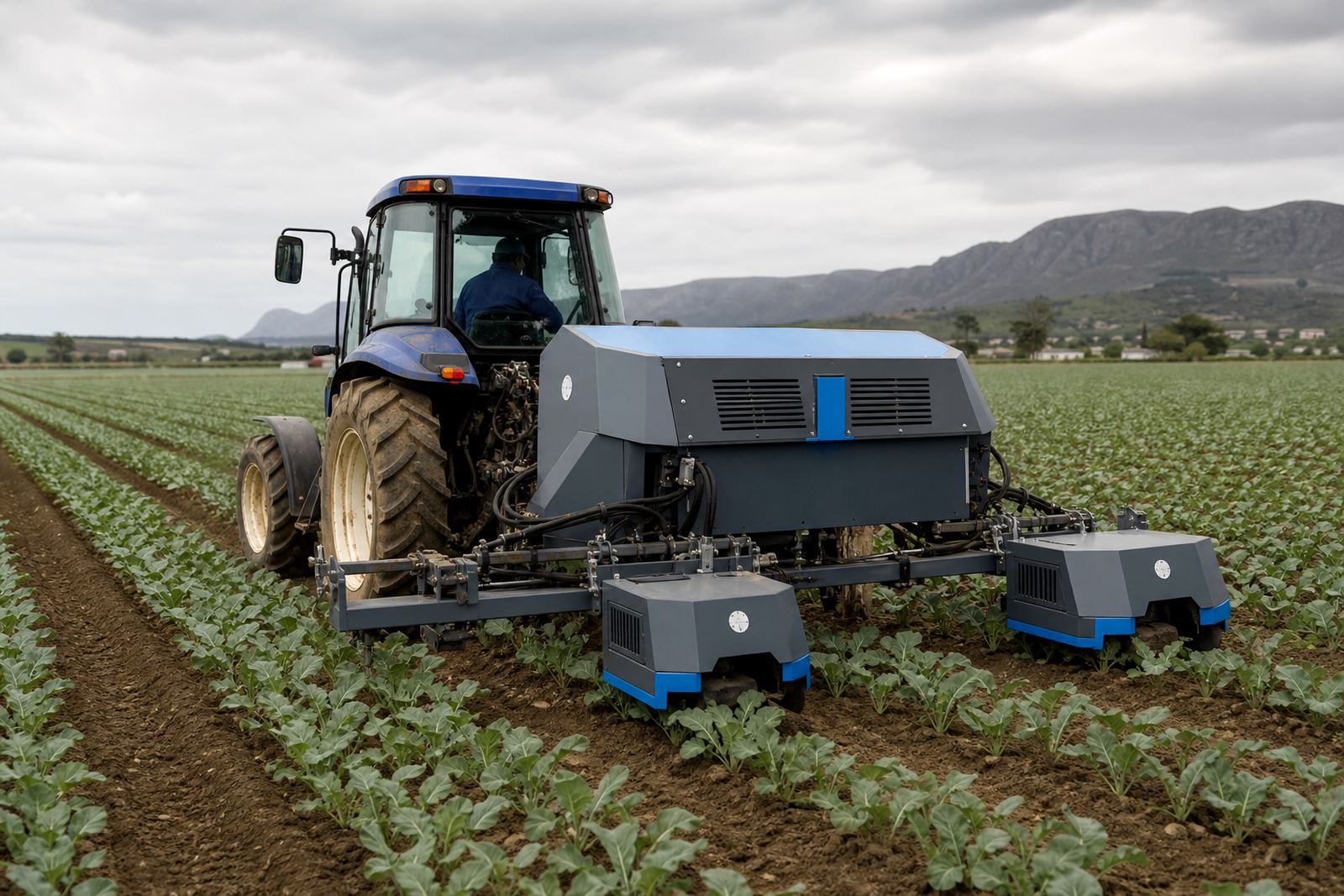
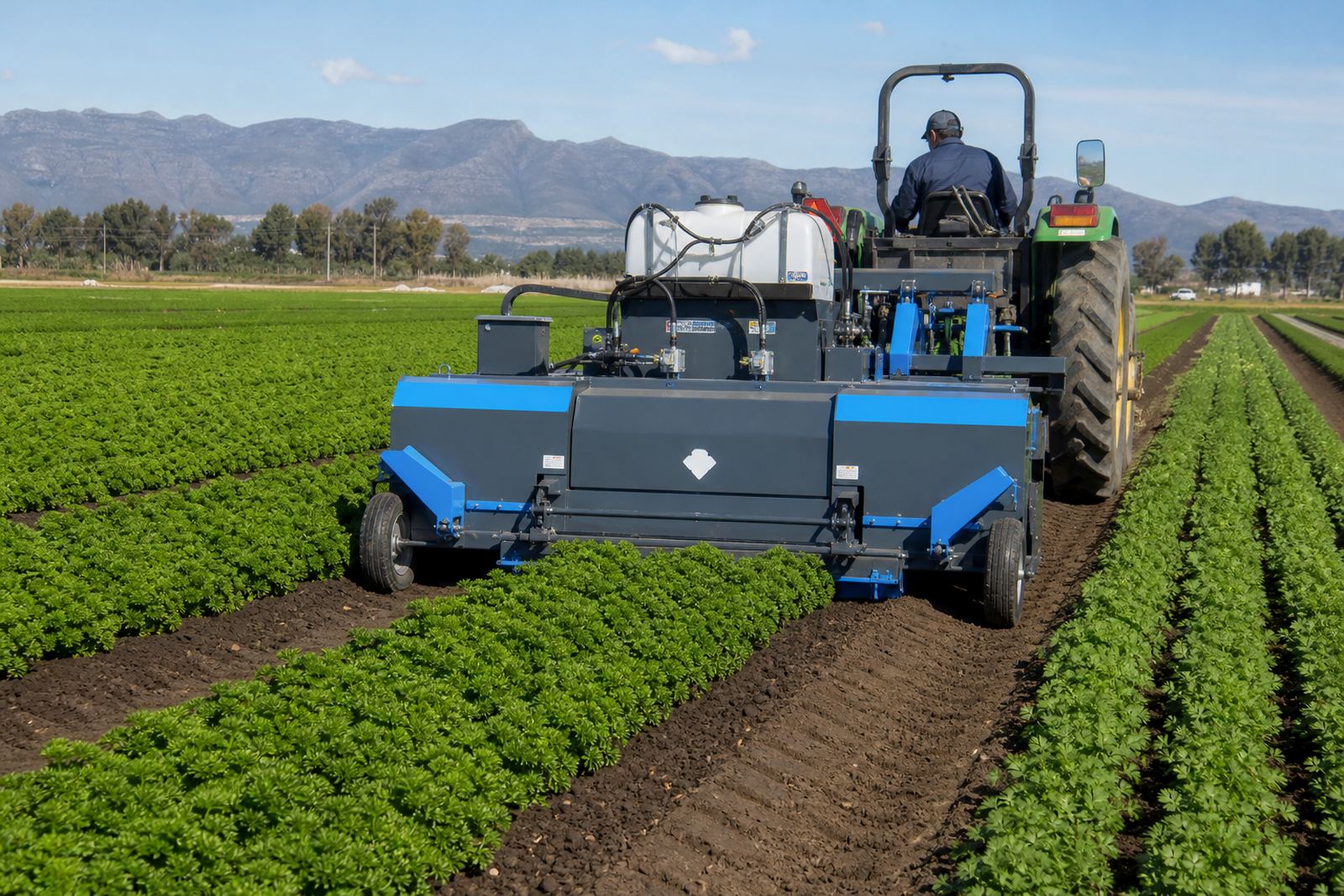
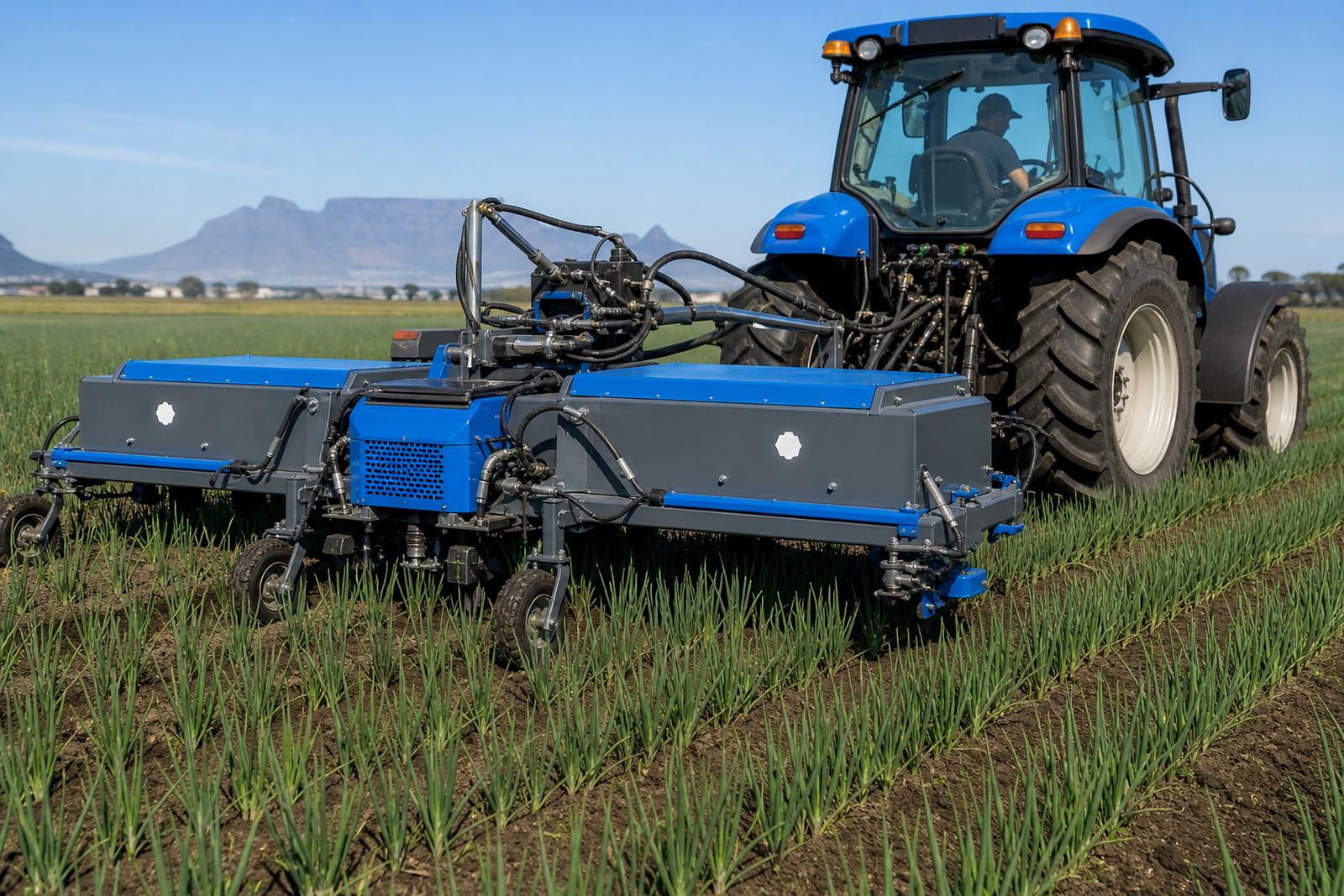
Most spring onion work uses a tractor-drawn laser unit with a trained operator on the day. The machine moves along the rows at a field speed that depends on weed pressure, row spacing, plant size and how even the bed formation is. In a clean, early block the pace can be steadier. In a weedy block the operator may slow the run so the camera system has more time to pick up targets.
The layout needs enough line discipline for the unit to stay true through the block. Straight beds, even row spacing and consistent planting depth all help. Headlands also matter because the tractor needs space to turn without disturbing the crop edge or compressing the wet spots near the ends of the rows.
- Narrow rows should be measured before the pass, not guessed from memory.
- Bed tops need to be stable enough for tractor movement after irrigation or rain.
- Weed stage should be checked in more than one part of the block.
- Late, patchy infestations often need a repeat pass plan.
Where spring onion jobs usually work best
Spring onions are a good fit when the field is kept ahead of weed surges and the first pass is timed while weeds are still small. That is true in the sandy soils around Philippi, but also in heavier or mixed soils where growers need a mechanical option that avoids herbicide sprays. Row crops with similar spacing and crop sensitivity can be scheduled in the same programme, especially where blocks are split across farms.
The crop itself is compact, so the laser system needs a clean line of sight to the target weeds. This is why trial strips are useful. A short section shows how the machine reads the row and how well the planting pattern supports the run. If the crop stand is uneven, timing has to be adjusted before the full block is taken on.
- Best results come from young weeds, not hardened patches.
- Uniform emergence makes camera detection easier.
- Blocks with mixed weed flushes may need separate pass dates.
- Windblown soil and crusting can change how the row reads from the cab.
Planning the row pattern before the tractor arrives
For spring onions, planning is not a side note. It is part of the job. The rows need to be mapped, headlands measured and access points confirmed so the tractor-drawn unit can move through the field without avoidable stops. If the block is on a programme with other farms, travel coordination and arrival site checks help keep the schedule orderly.
We also look at crop timing plans, because laser weeding works best when it is tied to weed stage. A bed that is too young may not tolerate the timing, while a block that has been left too long can need a different pass strategy. Growers in Grabouw, Ceres, Tzaneen, Bela-Bela, Nelspruit, Howick and Bethlehem often need this kind of field-by-field planning when spring onions sit inside wider vegetable rotations.
Common mistakes that make a spring onion pass harder
One of the biggest errors is leaving the first pass too late. Spring onions do not give much margin once weeds start crowding the row. Another mistake is assuming every block can be treated the same way. Soil type, planting line quality and weed pressure all change the job.
It also helps to avoid patchwork scheduling that ignores field condition. A block that was watered heavily the night before may not carry the tractor as well as a firmer block, and turn areas near wet headlands can suffer if the routing is rushed. Our workshop supervisor and operator team also look for equipment issues before the field run, because a small setting fault can affect the pass pattern.
- Do not wait for weeds to outgrow the crop stage.
- Do not mix uneven rows with a tight field plan.
- Do not leave turn zones unmarked.
- Do not assume one pass will suit every bed in the programme.
Budget ranges for spring onion laser weeding
Budgeting depends on hectare size, row spacing, weed pressure, travel distance and whether the block needs one pass or a repeat pass plan. A small, tidy spring onion block with straightforward access will sit at a lower labour and machine cost than a larger farm programme with several fields and staggered timings.
For planning purposes, growers often work from an indicative range of about R6,500 to R14,500 per hectare for laser weeding on spring onions, with tighter or larger programmes priced differently according to the block setup. Travel coordination across provinces, trial strip runs, post pass reporting and multi farm scheduling can affect the final figure. Seasonal booking blocks may also change the cost profile if several fields are grouped together.
The key point is that spring onions need a budget that matches weed stage and field access, not just crop area. A clean layout and early scheduling usually make the programme easier to run.
How the service is handled from Philippi
Our base in Philippi, Cape Town supports spring onion growers across South Africa with field assessments, crop timing plans, operator supplied work, field scheduling, travel coordination, trial strip runs, repeat pass planning, season bookings, multi farm programmes, arrival site checks, post pass reporting and grower consultation. Mandla Adonis leads the business, with Anele Khoza managing operations, Pieter Mokoena on field scheduling, Zanele Naidoo handling grower liaison, Johan Daniels leading operations in the field, Lerato Letsoalo coordinating service and Ruan Mkhabela supervising the workshop.
Clients usually start through our contact form on our contact page, then we look at the block layout, crop stage and weed pressure. For spring onions, that first discussion is mostly about fit: whether the rows are ready, whether the weeds are still in the right stage, and how the farm schedule can be lined up with the machine run.