When a carrot block is a good candidate
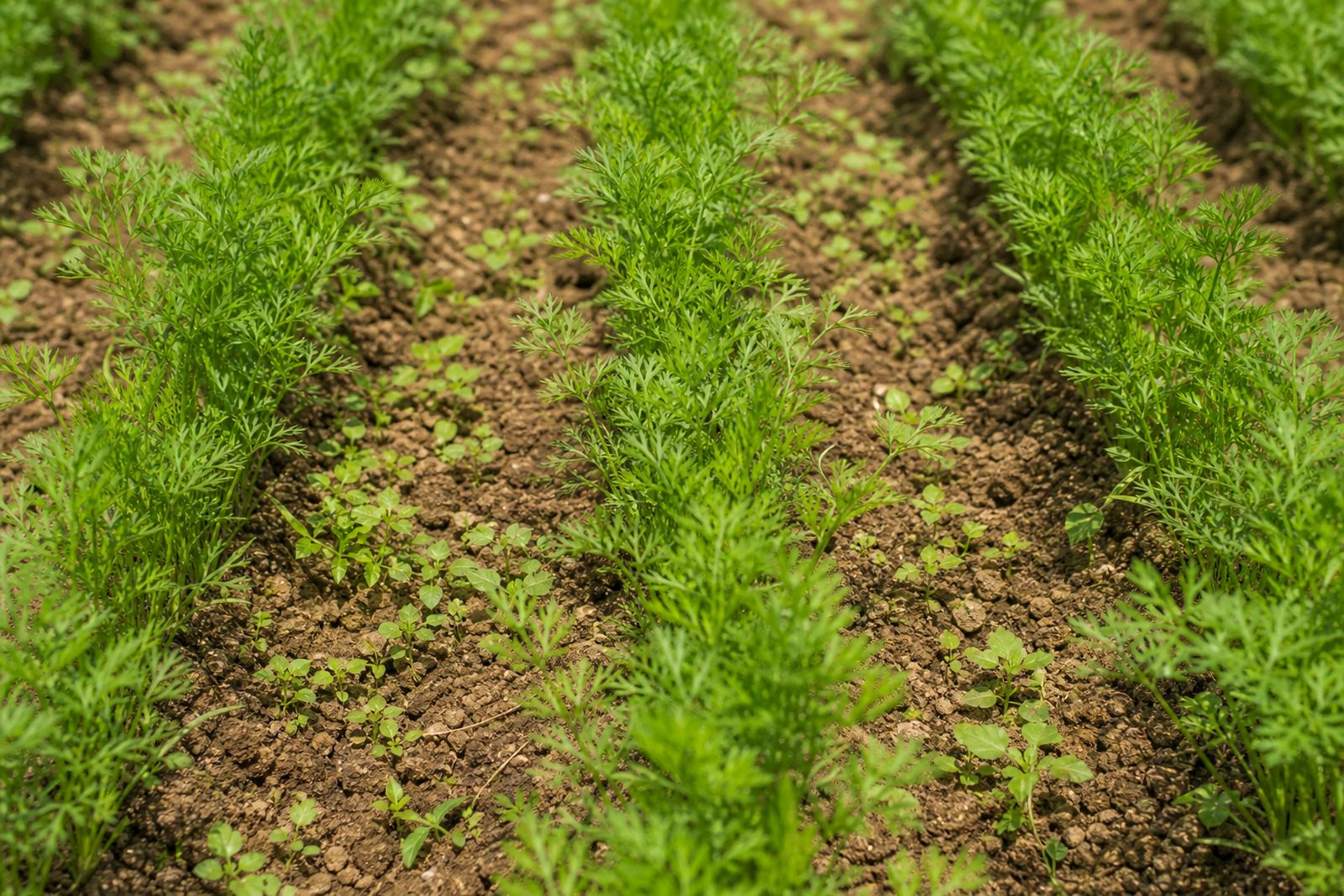
Carrots can be a strong match for laser weeding where the stand is even, the row spacing is clear and the weed flush is still early. The system works best once the crop has enough shape for camera-guided detection to separate crop from weed, so planning starts long before the tractor enters the block. On sandy ground around Philippi or coastal farms near Grabouw, that timing matters because weed growth can run hard after irrigation or a warm spell.
Farmers usually look at laser weeding when they want to reduce herbicide use, keep soil surface intact and hold the block cleaner through a busy hand weeding period. It suits row crops such as carrots, onions, lettuce and brassicas, but carrots need careful spacing and a clean layout. If the block has poor row definition, mixed cultivars or heavy overlap, the job can still be done, though the pace may need to slow and the visit plan may change.
What the field kit usually looks like
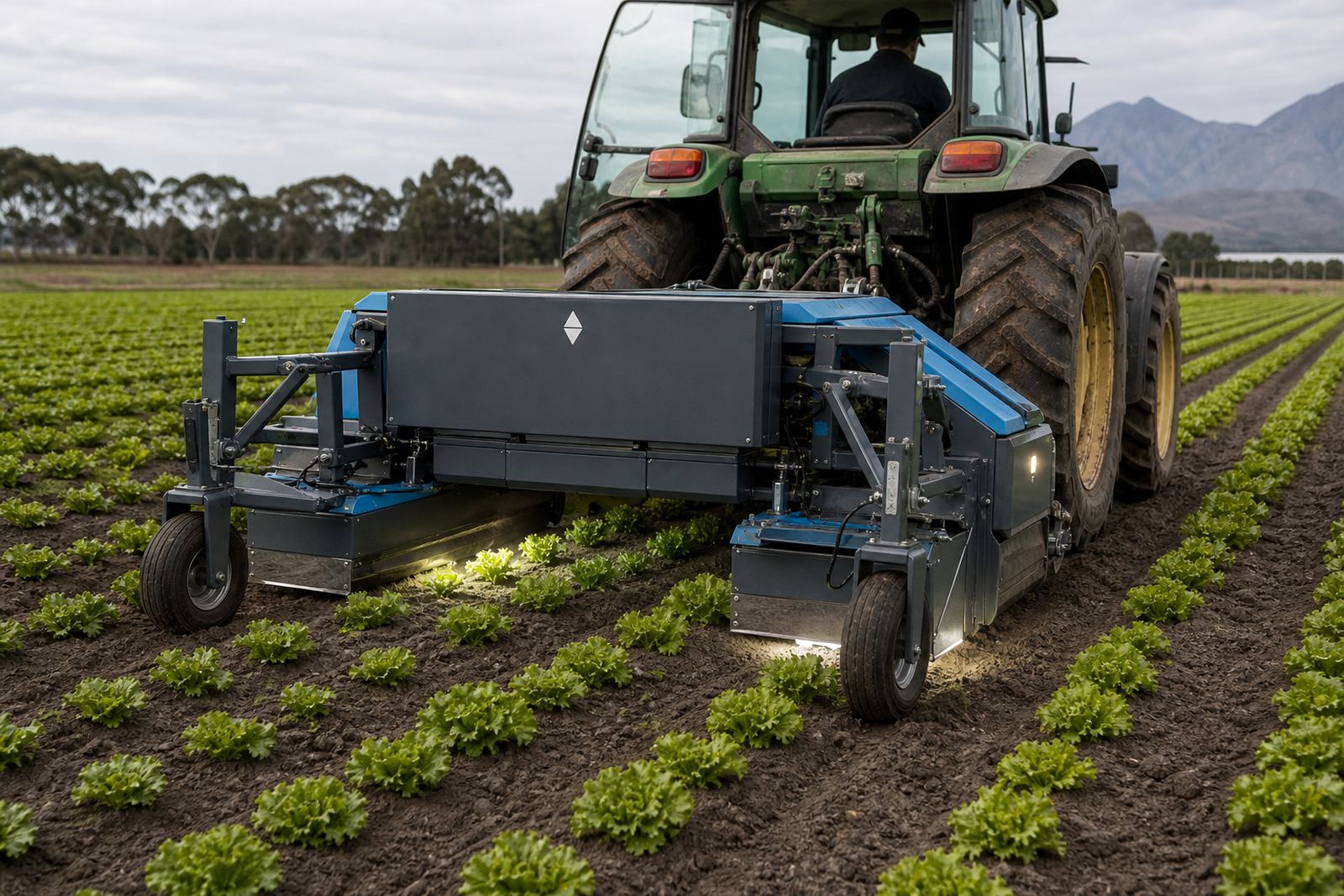
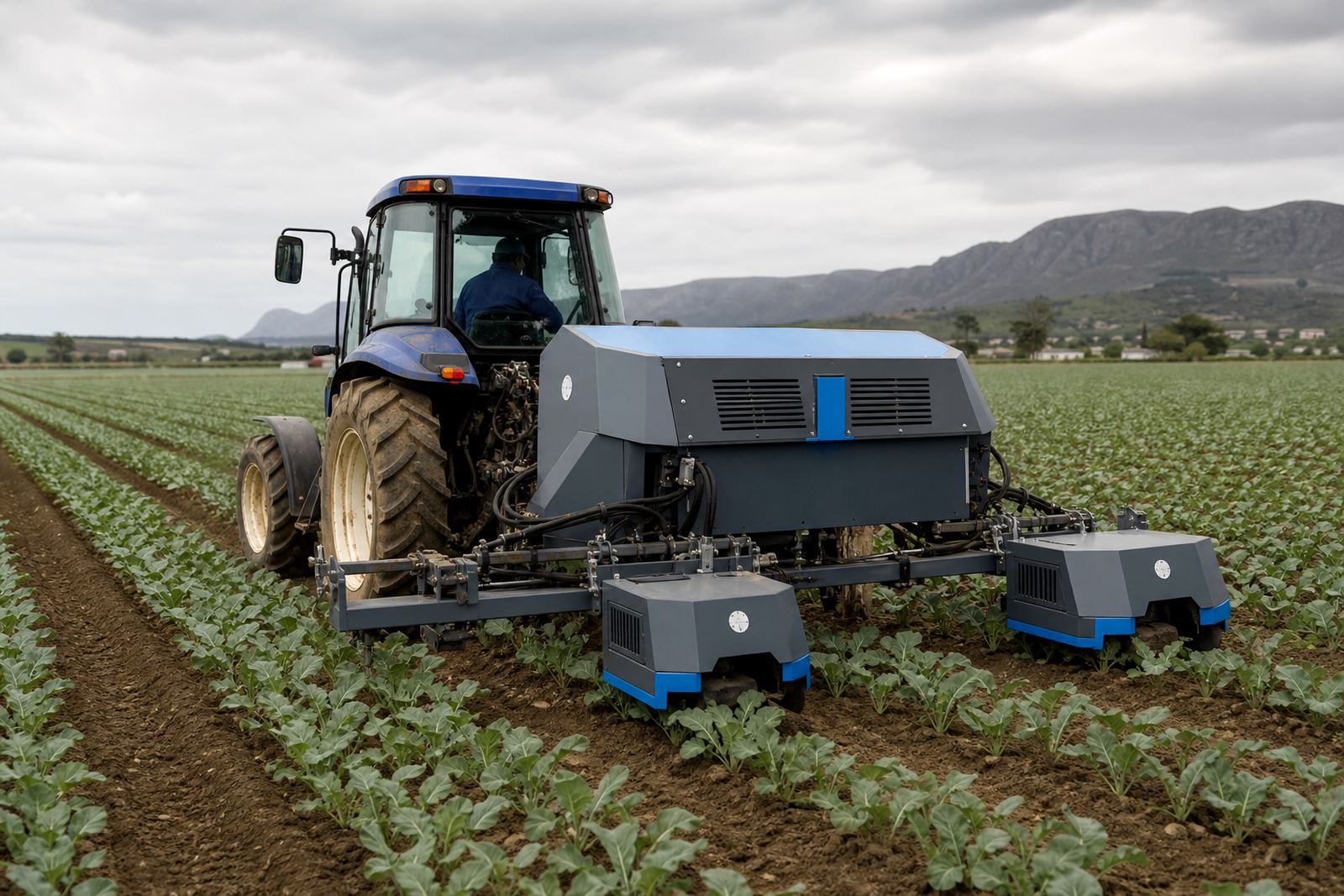
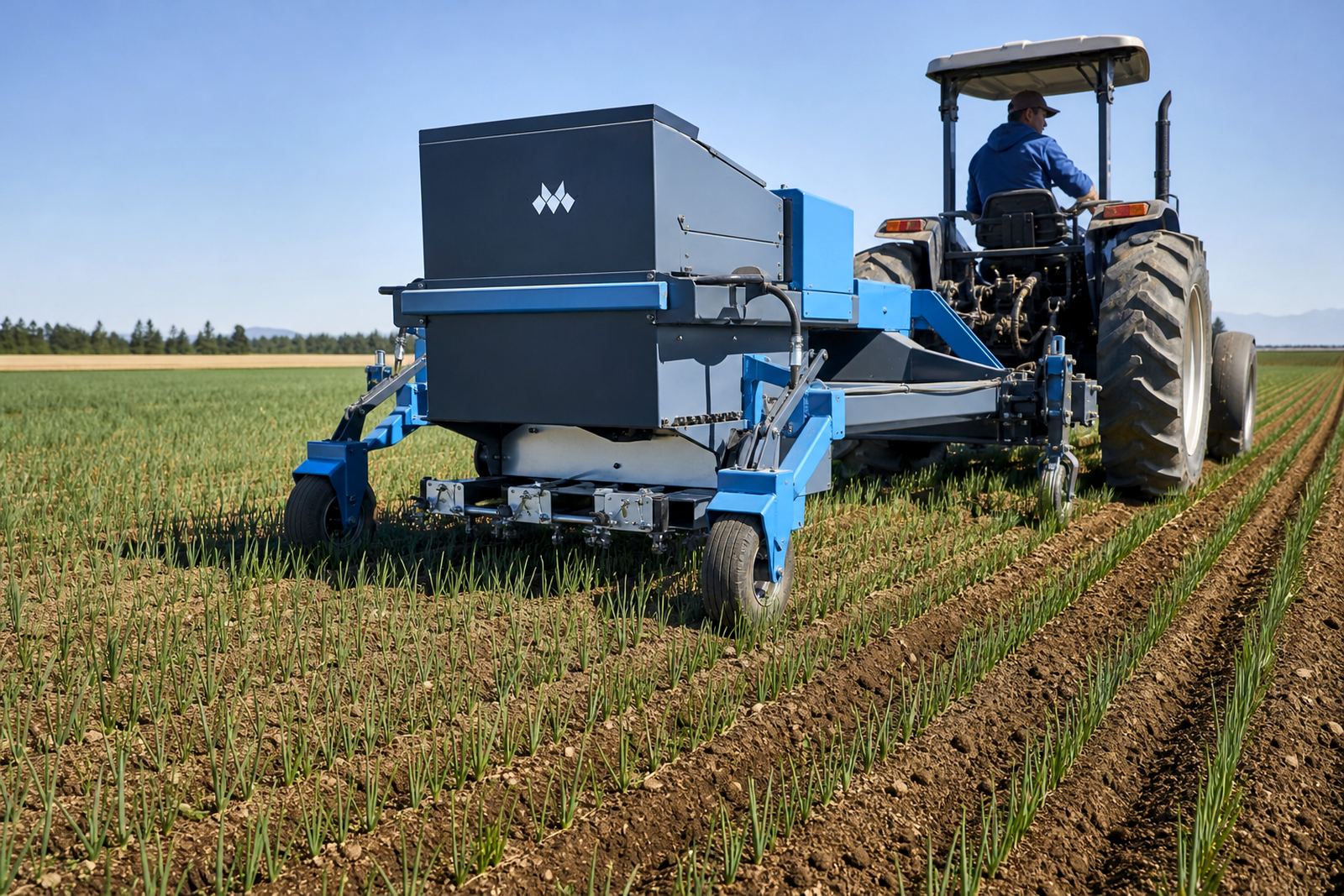
A typical setup is a tractor-drawn laser unit with trained operators, guidance cameras, safety controls and a field plan that matches the crop stage. The operator watches the crop pattern and the machine tracks weeds in the row gap or close to the plant line, then directs the laser at the weed growing point. There is no soil disturbance and no spray pattern to manage, which helps in beds that have crusted after rain or overhead irrigation.
- Tractor-drawn laser weeding unit for row crop work
- Trained operator and field support crew
- Camera-guided weed detection for visible rows
- Planning for crop stage, weed stage and block access
- Arrival checks, trial strip runs and post pass reporting
Field speed changes with weed pressure, row clarity and ground conditions. A light flush in a clean block can run faster than a block with uneven germination and a thick mat of tiny weeds. We look at the crop, the soil surface and the irrigation schedule before the tractor is booked in, because a day too early or too late can change the whole pass.
Row layout that makes the work easier
Carrot blocks with straight rows, steady bed width and clear headlands are easier to cover. A simple field map helps the crew work around wet spots, turn rows and awkward corners near windbreaks or drainage lines. Where blocks are split across farms in places like Ceres, Bela-Bela or Howick, travel coordination and start times need to be tied to the same plan so the tractor does not sit waiting at a gate.
Good layout advice often starts with the crop itself. Stony patches, slope changes and drift from nearby sprays can all affect weed pressure and crop visibility. If the carrots are young and the weeds are already larger than the crop line, the unit may need a slower pass or a repeat visit. A trial strip run can help the grower see how the row reads before the rest of the block is scheduled.
Mistakes that make carrot passes harder
Most problems come from timing rather than the machine. When weeds are left too long, the unit has more to sort through and the crop can be harder to distinguish in dense patches. Wet soils, fresh cultivation marks and poor row spacing also make the job less tidy. On coastal farms, humid conditions can push weed growth quickly after a rain event, so a block that looked fine on Monday may need attention by the weekend.
- Leaving the first weed flush too long before action
- Booking the pass before rows are visible enough
- Using uneven row spacing without a field check
- Ignoring headlands, overlaps and blocked access points
- Expecting one pass to suit every growth stage
Another common slip is trying to cover too many blocks in one plan without thinking about travel and field order. A multi farm programme can work well, but only if the sequence follows crop stage and weed pressure, not just distance on a map. For growers near Nelspruit, Tzaneen or the Free State, that ordering can make a real difference to how the week runs on the ground.
Timing around weed stage, not the calendar
Laser weeding is most useful when the weeds are small and the carrot rows are easy to read. That means the plan has to follow the field, not the calendar page. If the block is clean but the weeds are still tiny, the pass can be more efficient than waiting for them to harden off or spread into the row. If the block is already messy, a repeat pass plan may be safer than pushing one visit too hard.
We support crop timing plans, repeat pass planning and season bookings for growers who need a steady programme rather than a once-off visit. Some blocks need a light pass after emergence and another later in the cycle. Others fit a single well-timed visit, especially when weed pressure is moderate and the rows stay clear. The right schedule depends on the crop stage, the weed stage and how the farm can get the tractor into each block.
Budget ranges in Rand for carrot blocks
Costs vary with block size, travel from the Philippi base, weed pressure, row visibility and whether the job needs a trial strip run or a repeat pass. For smaller carrot blocks or first-time trials, budgets may start around R8,500 to R18,000 for a visit, with travel and on-farm coordination affecting the total. Larger blocks or multi farm programmes are often priced per hectare or per scheduled pass, rather than as a flat once-off figure.
When a grower wants the work spread across several sites, the price usually reflects distance, field time and how much operator support is needed. A block near Philippi with clear rows can be simpler than a larger programme split between Ceres and Grabouw, or between Limpopo and Mpumalanga. The best way to frame the budget is by crop stage, block size, access and the number of passes the season is likely to need.
- Field assessments for carrot blocks and access checks
- Crop timing plans for early, mid and repeat passes
- Operator supplied work for short or full season programmes
- Travel coordination for farms across South Africa
- Post pass reporting to support the next field decision