When lettuce rows leave enough room for a laser pass
Lettuce blocks often need a careful look at spacing before any machine enters the field. When row width, bed shape and plant size leave a clear path, camera-guided laser weeding can target weeds close to the crop without touching the soil surface.
The best windows usually sit before weeds get woody or too broad at the crown. Small seedlings are easier to target, while older weeds can demand slower field speed and more attention to misses. That is where timing matters as much as the machine itself.
In lettuce, the point is not to run fast for the sake of it. It is to match the pass to the growth stage, the amount of weed pressure and how the crop is sitting in the row. Tight spacing, uneven emergence and wet shoulders can all change the plan.
What the tractor-drawn unit is doing in the field
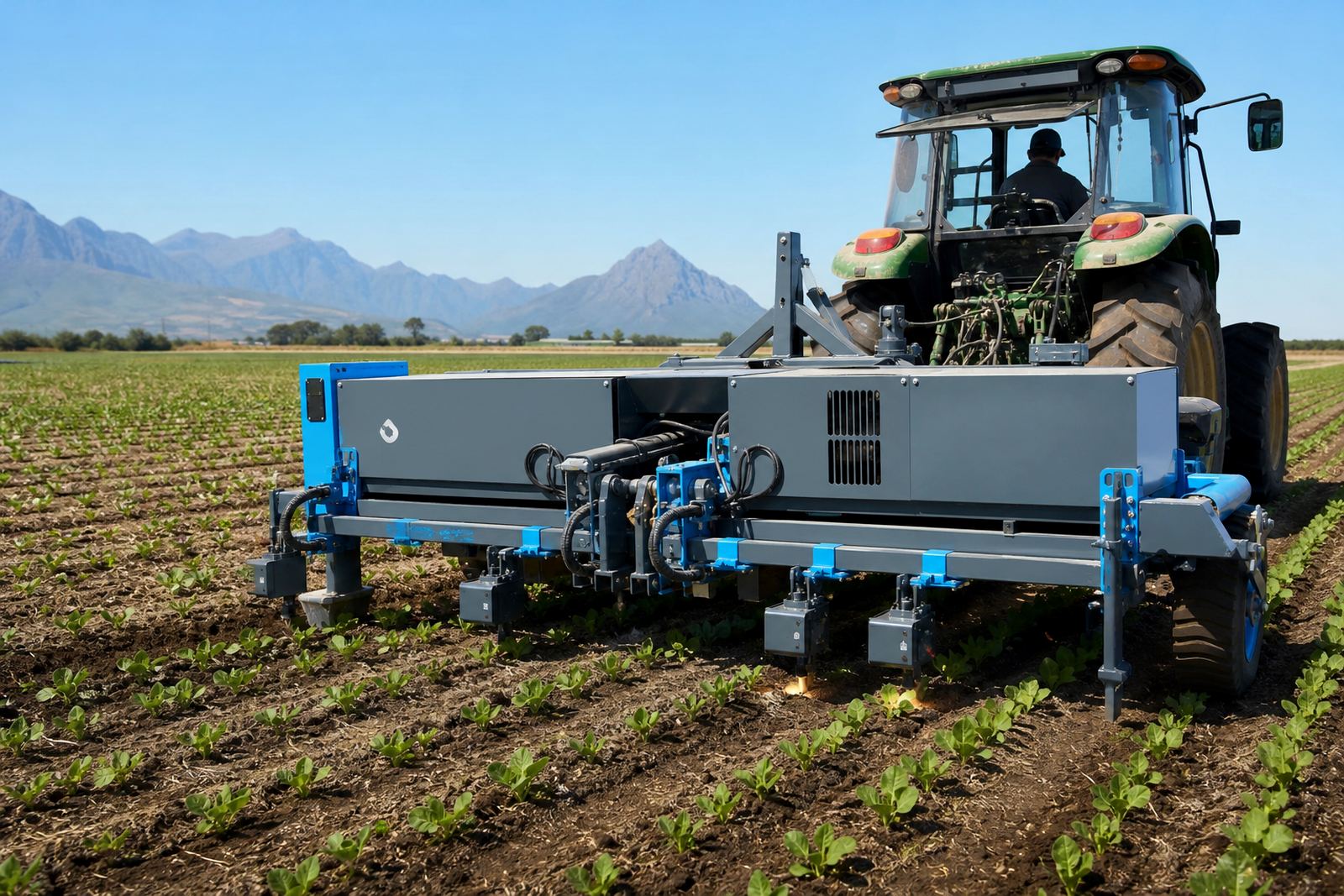
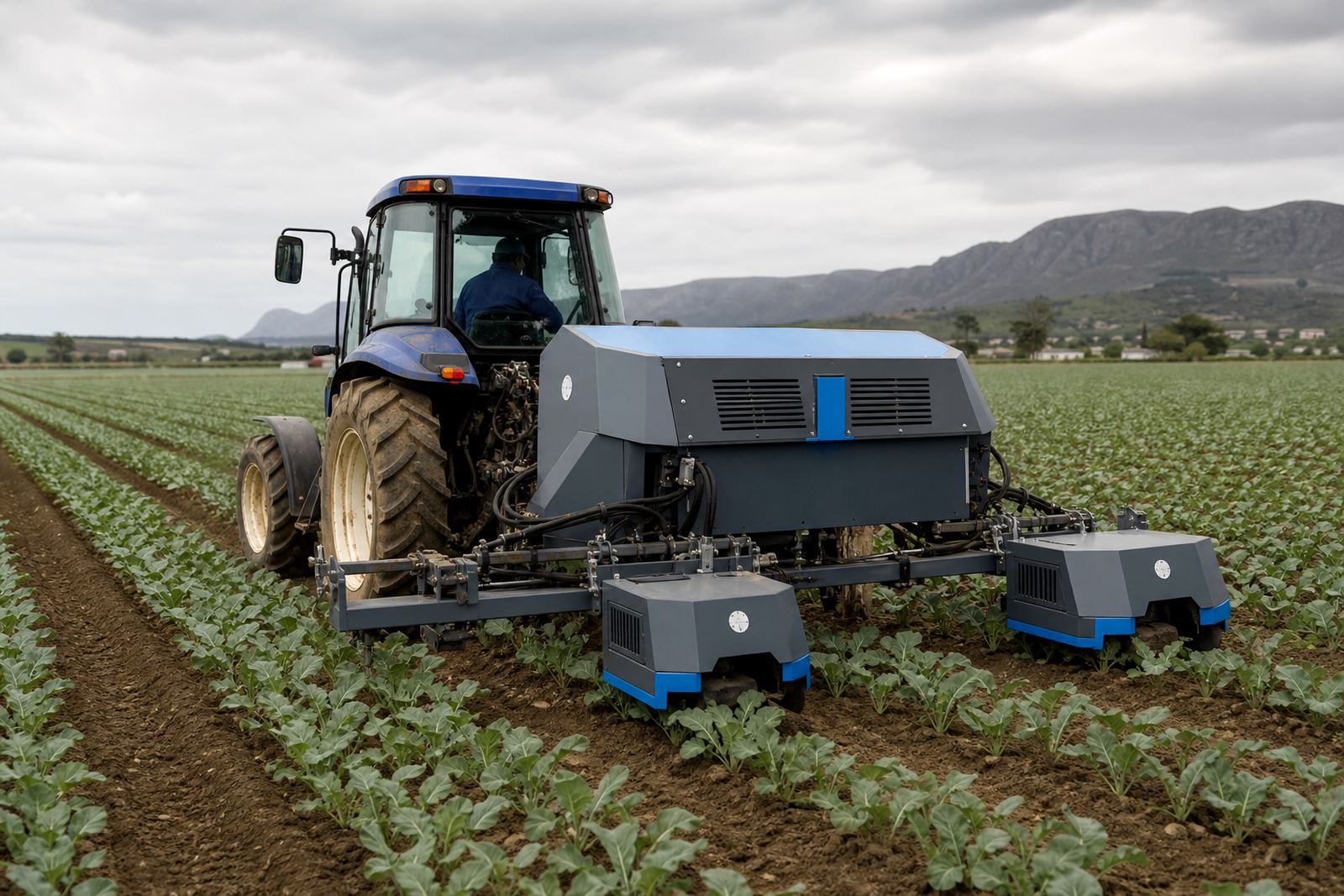
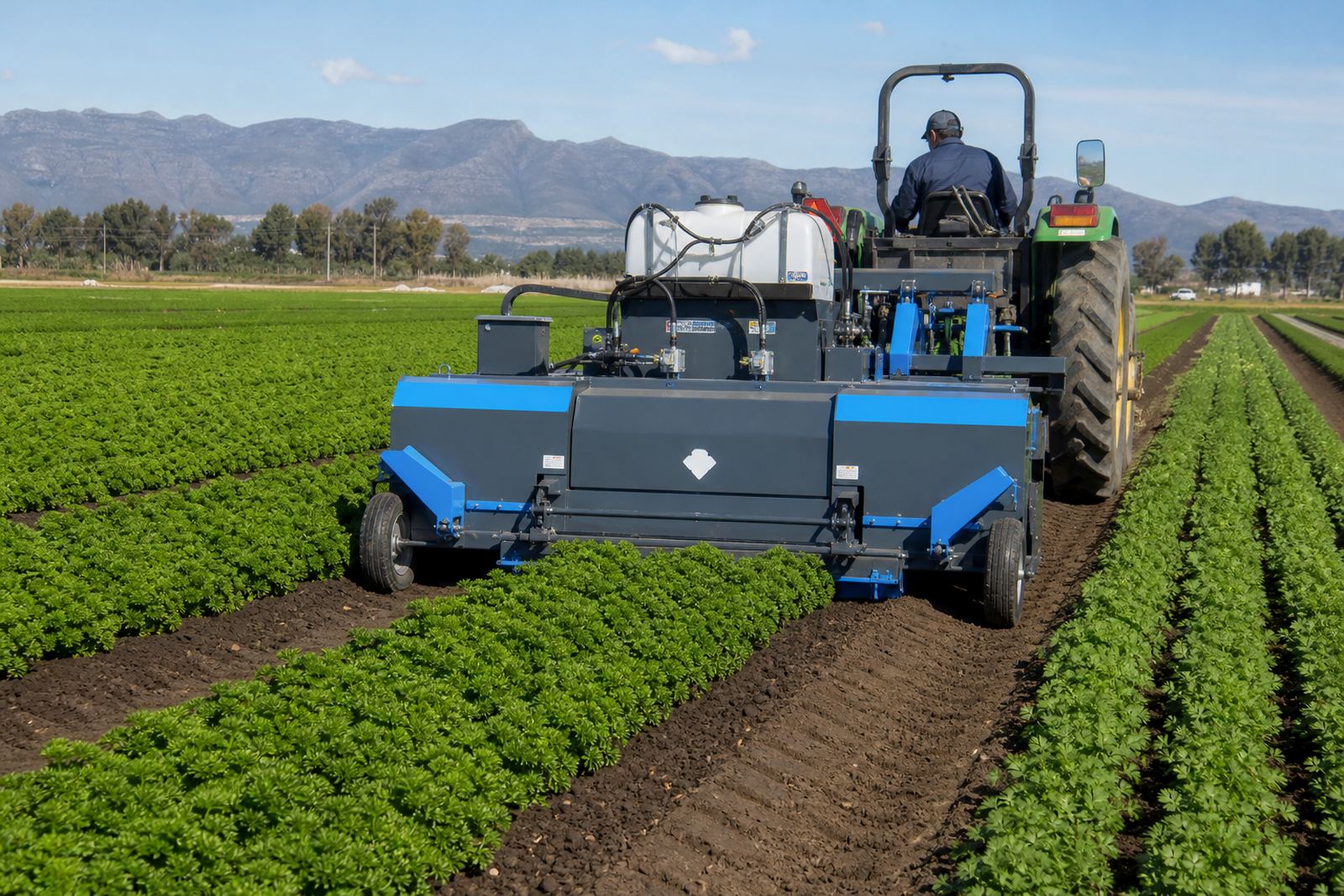
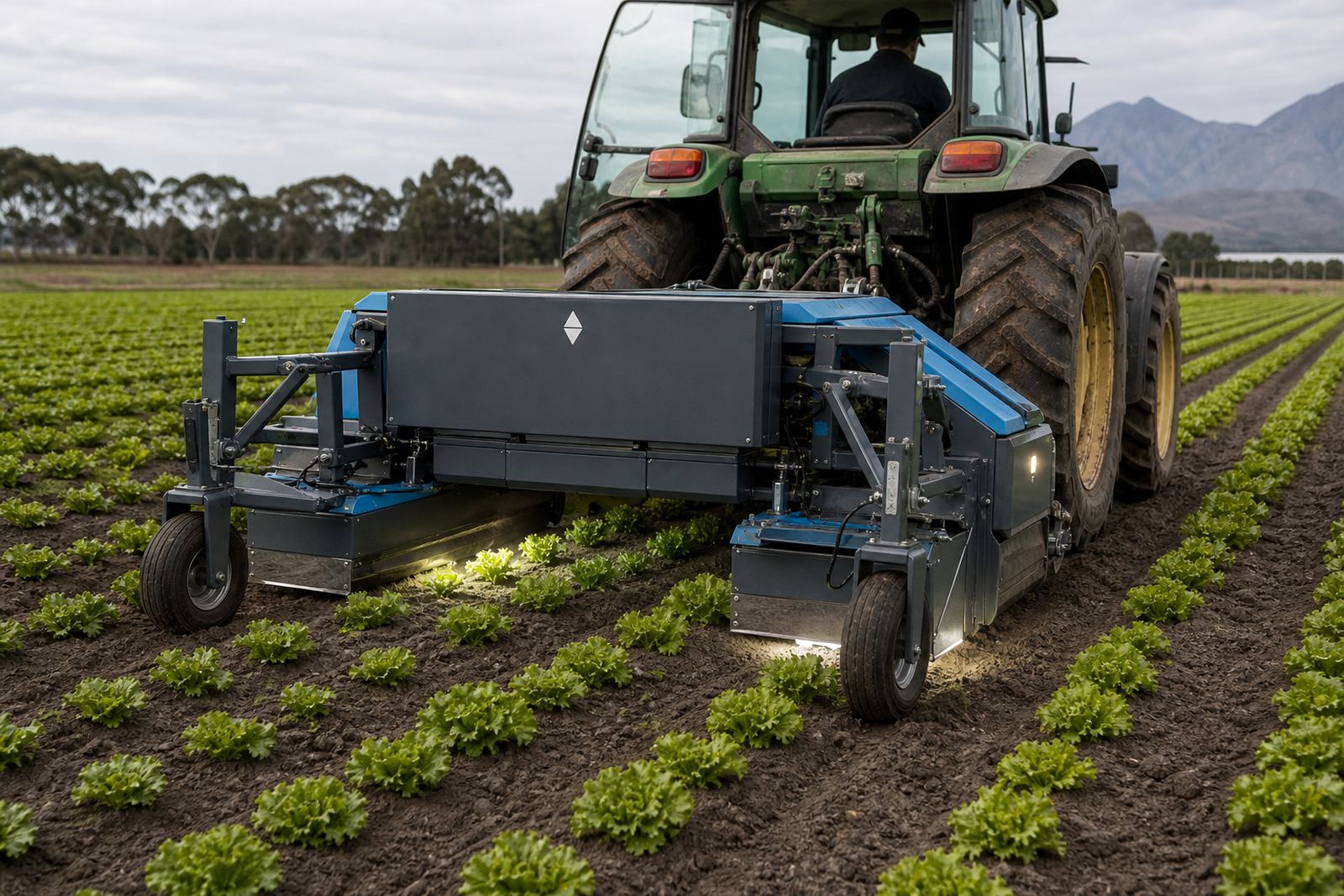
The unit we use is tractor-drawn and run by a trained operator, with camera systems identifying weed growth points in the row. Lasers are then directed at those growing points, which helps remove the weed without herbicide sprays and without soil disturbance.
For lettuce, that matters because the crop canopy can be low and open early on, yet the beds still need clean strips around the plants. A good pass keeps the crop zone free of competition while leaving the soil structure intact, which is useful where irrigation and compaction are already part of the picture.
- Camera-guided weed detection for small, visible weeds
- Laser targeting at the weed growing point
- Tractor-drawn application with an operator on the run
- Works best where rows are regular and accessible
- Suitable for herbicide-free programmes
Field layout notes that save trouble later
Lettuce fields reward tidy planning. If blocks are narrow, awkwardly turned or mixed with other crops, the movement plan needs to be set before the tractor arrives. Gate widths, turning bays, irrigation lines and headlands all affect how cleanly the work can run.
We usually look at row alignment, bed height and whether the crop has even emergence. Uneven stands can leave gaps and make the weed picture harder to read. In coastal areas such as Philippi or Grabouw, damp mornings can also change how quickly the field is ready for work.
- Check row spacing and bed access before the season starts
- Keep headlands clear for tractor movement and turning
- Note any soft patches near irrigated edges
- Allow for separate runs where blocks differ in age
- Plan around weed flushes, not only crop dates
Where lettuce programmes usually go wrong
The biggest mistake is waiting until weeds are already too large. By then the laser still works on some plants, but the pass may need to slow down and the job gets harder to keep even across the block. Another common issue is sending a field with poor spacing or damaged rows and expecting the machine to make up for it.
Some growers also plan for one pass and hope it covers the whole block. In lettuce, weed pressure often shifts after irrigation or rain, so planning for a further pass can matter where new flushes keep appearing. Trial strip runs are useful on new ground or where the layout has not been worked before.
Dusty paths, loose mulch edges and rough beds can also interfere with the operator’s line and the camera reading. If the field is not prepared, the machine spends more time managing conditions than cleaning the row.
Budget ranges for lettuce blocks in Rand
Cost depends on block size, weed pressure, travel, number of passes and how much field time the crop needs. For lettuce, a small or straightforward block may sit lower in the budget, while mixed layouts, heavier weed stages or multi farm programmes sit higher.
As a working guide, growers often plan for field assessments from about R1 500 to R4 500, with trial strip runs or first block checks adding a separate charge. Larger lettuce programmes can range from about R8 000 to R30 000 and upward per visit cycle, depending on area, timing and travel across provinces such as the Western Cape, Limpopo or KwaZulu-Natal.
Multi farm scheduling can shift the total, because moving the tractor-drawn unit and operator between blocks takes planning. If the lettuce is spread across several farms, travel coordination and arrival site checks should be part of the budget from the start.
How the work is arranged around your block calendar
For lettuce growers, the useful plan is usually built around crop age, weed stage and access dates, not around a fixed calendar slot. A clean run in one block may be followed by a repeat pass in another, especially where emergence is uneven or irrigation has triggered fresh weed growth.
Our team handles field assessments, crop timing plans, operator supplied work, field scheduling, travel coordination and post pass reporting. That allows the block to be assessed before the unit enters, and the next pass to be lined up with the crop rather than guessed after the fact.
Growers in Philippi, Ceres, Grabouw, Tzaneen, Bela-Bela, Nelspruit, Howick and Bethlehem often need slightly different timing because climate, soil type and planting pattern are not the same. Lettuce is sensitive to weed pressure, so a flexible plan helps keep the crop rows manageable.
For a lettuce block, our contact form is the place to send the field details, row spacing and planting stage so the work can be scoped properly.