When cauliflower fields suit a laser pass
Cauliflower is often planted in blocks where the row spacing gives a tractor-drawn unit enough room to track cleanly through the crop. That makes it a strong fit for laser weeding on vegetable farms that want weed control without herbicide sprays and without stirring the soil surface. The crop is sensitive to competition in its early growth, so the best results usually start with a block that is already well prepared and a weed flush that has not gone too far.
We look at the field as a working system, not only the crop. Headland turning space, bed height, row straightness, irrigation lines, wheel track width and the way the plants are standing all affect the pass. In cauliflower, a field that looks tidy from the road can still be awkward once the unit is in the row, especially where spacing changes across the block or where mud and crusting have changed the travel line.
- Most suitable where rows are even and the crop line is easy to follow.
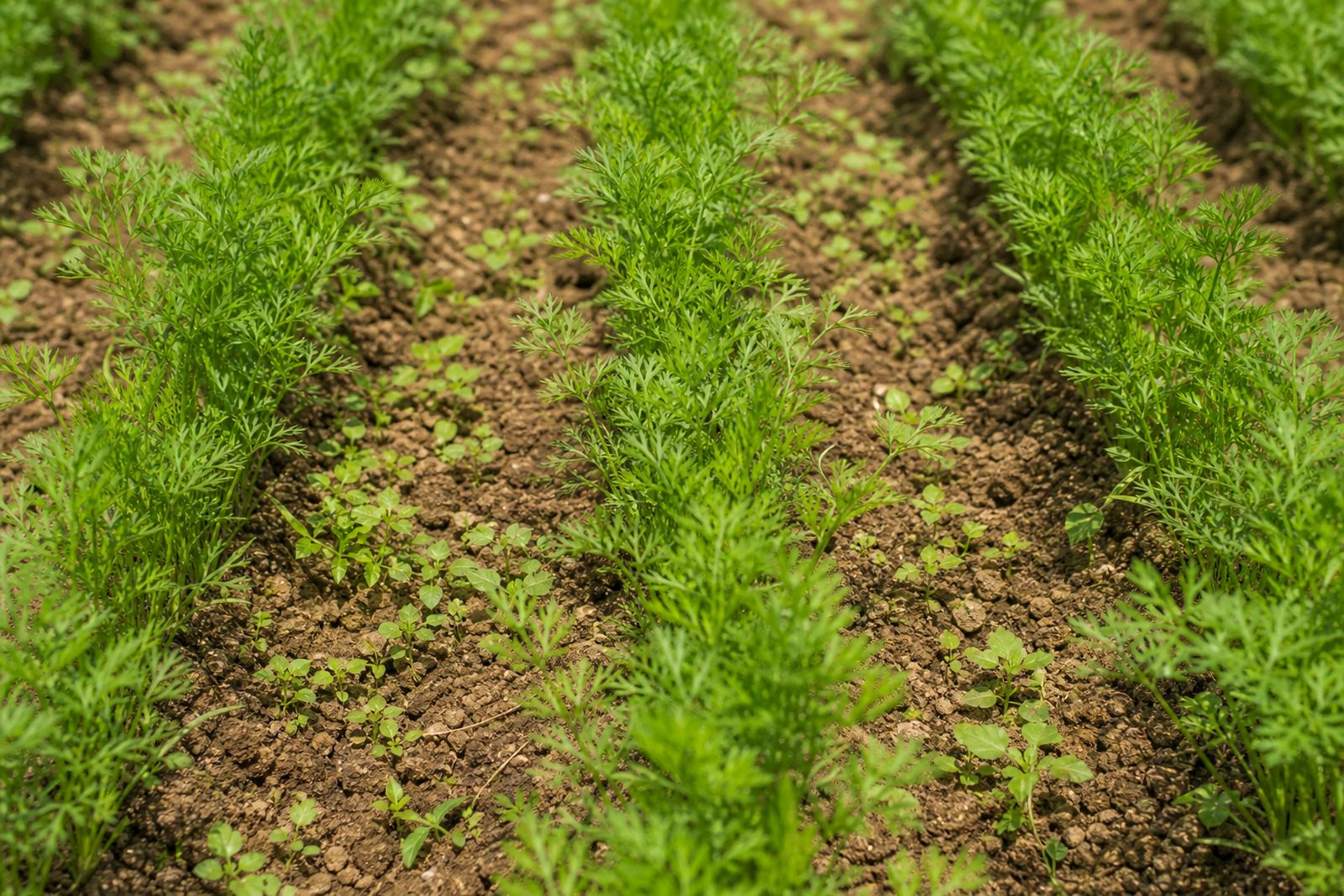
- Better when weeds are small and still exposing growing points.
- Useful on blocks where soil disturbance would be a concern.
- Needs enough tractor access for steady travel through the beds.
What the tractor-drawn set-up usually includes
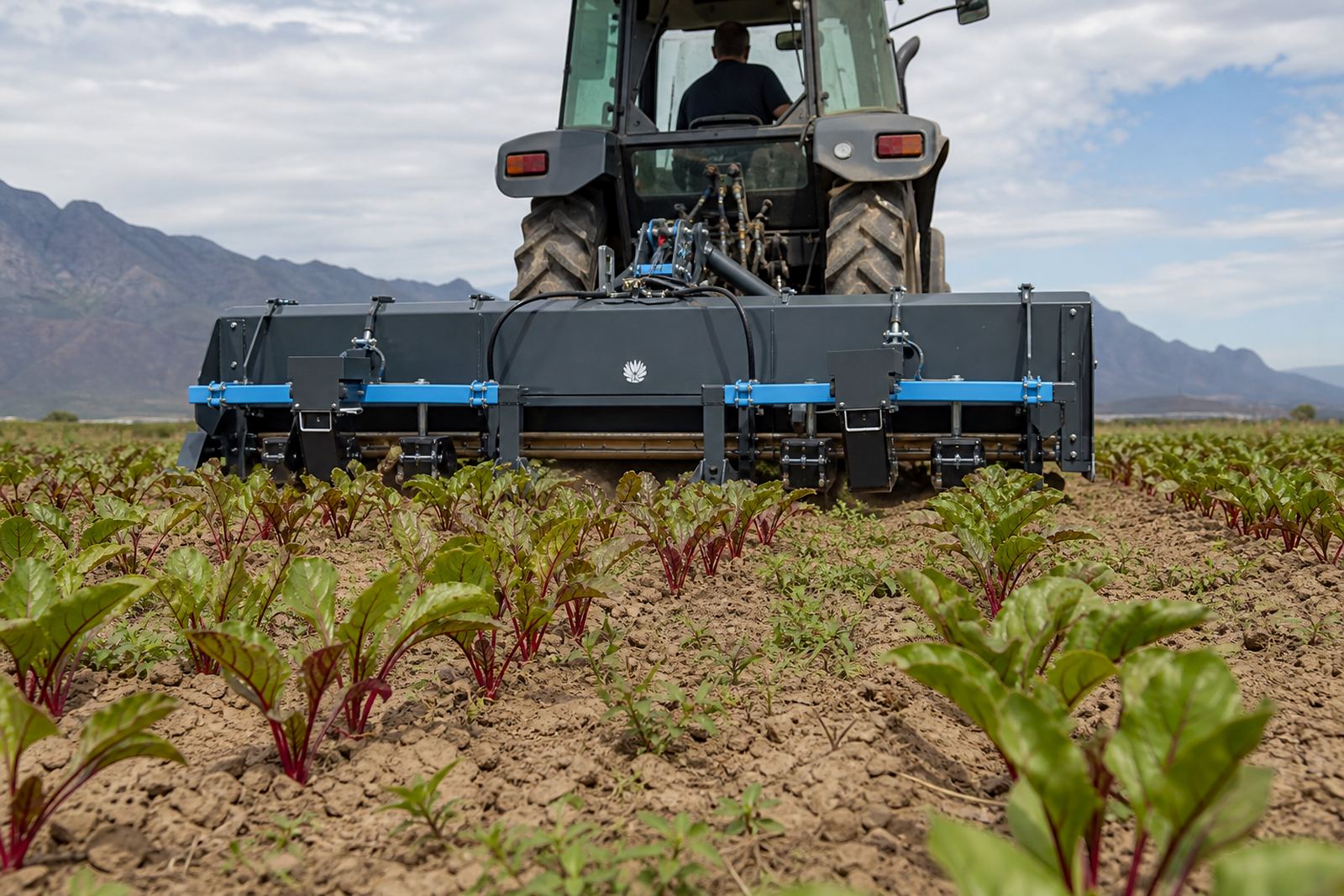
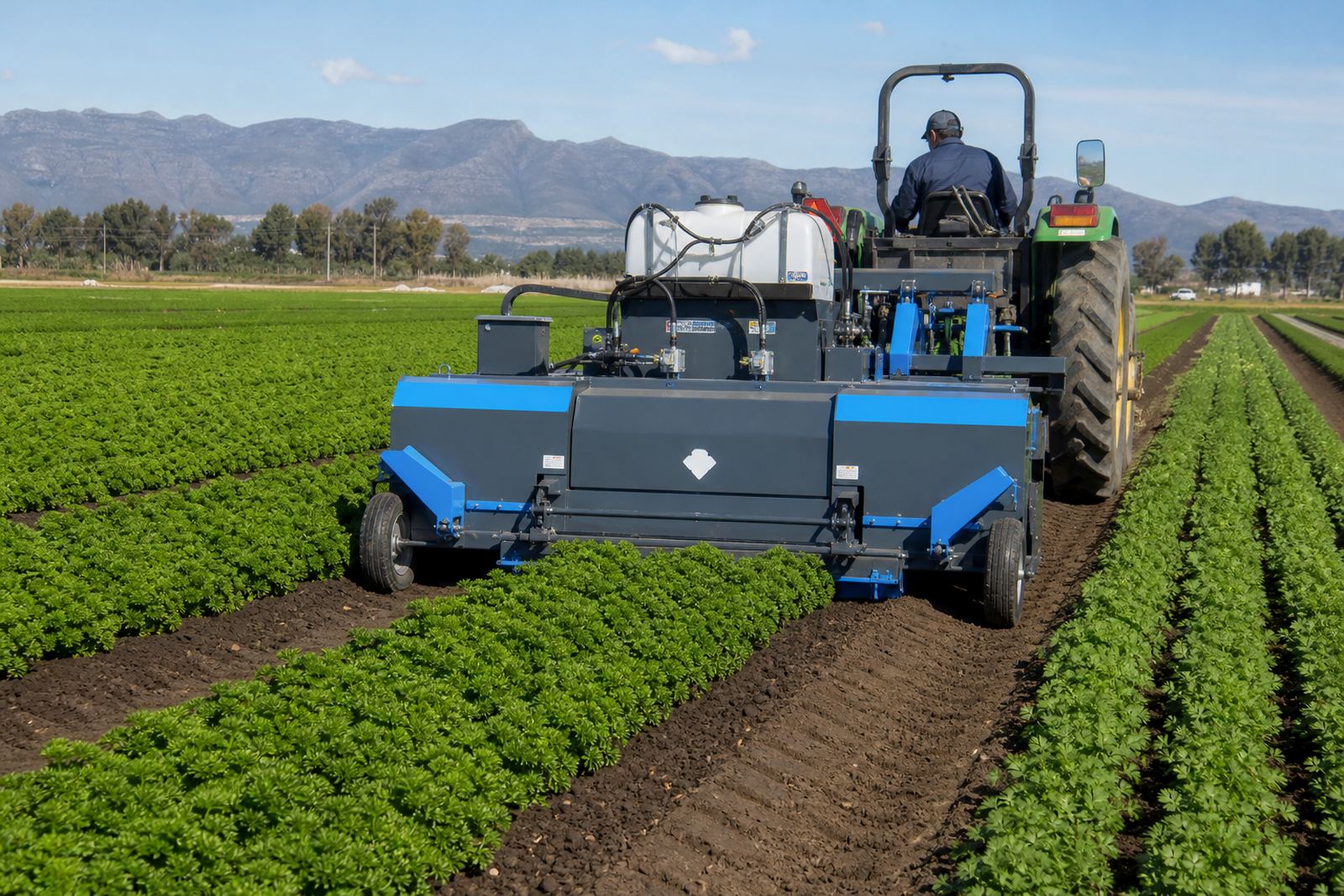
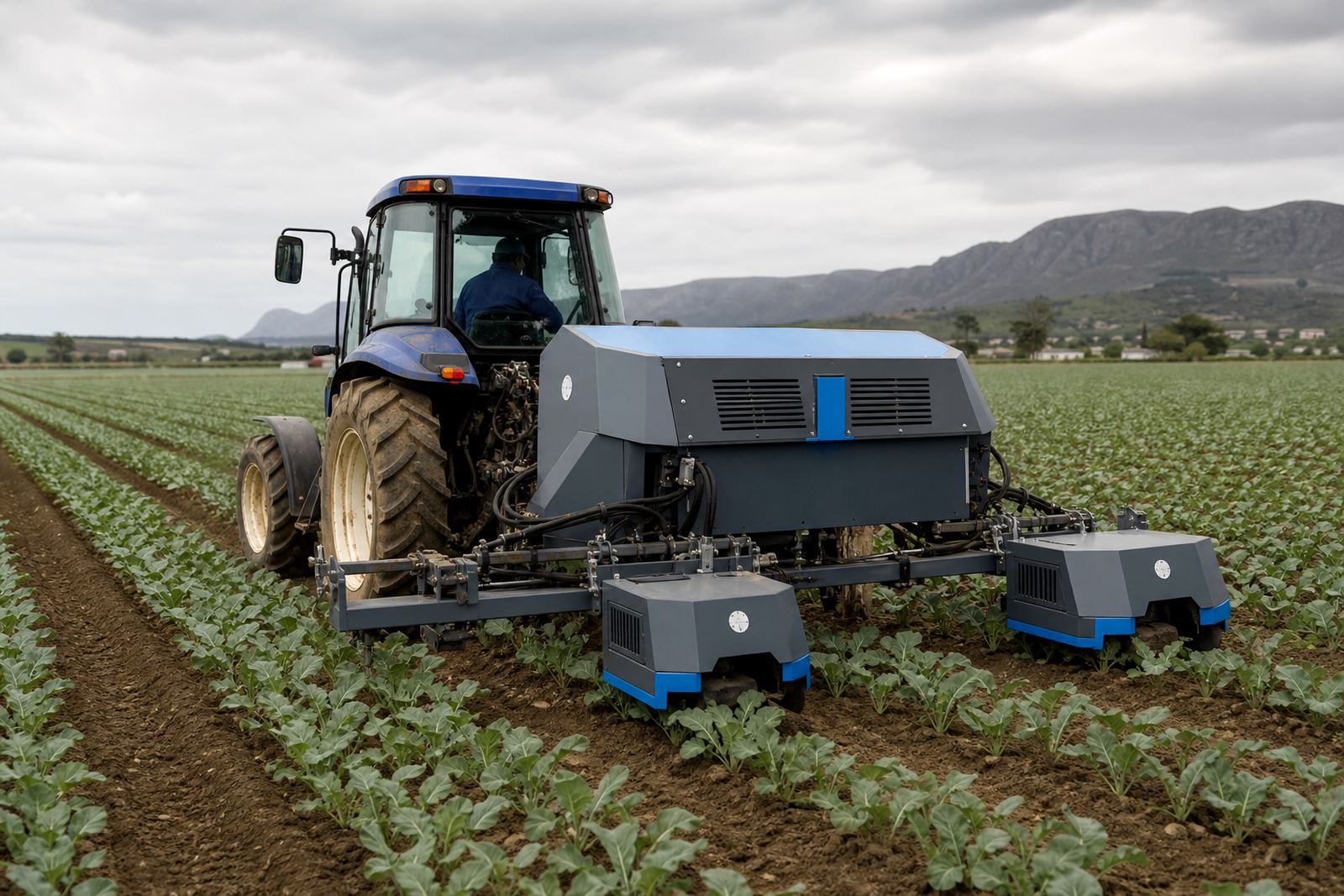
The usual set-up is a tractor-drawn laser weeding unit with camera-guided weed detection and a trained operator on site. The system scans the row, identifies weed growth around the crop plants and directs laser energy to the weed growing points. That method is different from spraying because the treatment is aimed at the weed itself, with no soil movement from blades, tines or cultivation tools.
For cauliflower, the operator needs a clear picture of crop position and weed size. Young weeds are easier to target than older, lignified growth. Once the weed canopy starts sitting over the crop line, the pass becomes less forgiving and the field may need a different plan. Speed through the block can shift with weed pressure, plant size and how uniform the stand is. A light block may run faster than a patchy one, but the speed still has to stay within what the camera system can read cleanly.
- Tractor-drawn laser unit matched to row-crop work.
- Camera-guided detection that reads the crop line and weed shape.
- Trained operator managing field conditions and pass quality.
- Travel rate adjusted to weed pressure and crop stage.
Layout and timing notes that save trouble later
Cauliflower blocks do better when the row pattern is decided with the laser pass in mind. Straight rows, uniform bed height and a sensible headland layout make the tractor line easier to hold. If the crop has been planted with wide variation, the machine may still work, but the operator spends more time adjusting the pass and less time moving cleanly through the field. That is where field scheduling matters, especially on farms with several blocks to cover in a short window.
We usually talk through crop timing plans before the unit arrives. The point is not to force every field into one schedule, but to match the pass to the weed stage and the cauliflower growth stage. A trial strip run can help test how the crop reads in that field. If the stand is uneven, a follow-up pass or repeat pass planning may make more sense than pushing the whole block in one go. Travel coordination also matters on farms around Philippi, Ceres, Grabouw, Tzaneen, Bela-Bela, Nelspruit, Howick and Bethlehem, where blocks may sit far from the main packhouse or wash line.
- Keep rows straight enough for camera reading and tractor tracking.
- Match the first pass to small weeds, not mature escapes.
- Allow room for turning, loading and site checks at the headlands.
- Use trial strip runs where the block is still being assessed.
Mistakes that make the pass harder than it should be
One common mistake is waiting too long and letting the weeds get ahead of the crop. Laser weeding works best when the weed is still in an early stage and the growing point can be targeted cleanly. Another problem is uneven planting. If the cauliflower line is wandering, the camera has to work harder and the operator has less margin for field variation.
Wet soil can also trip people up. Although the system does not disturb the soil the way cultivation does, the tractor still needs ground that can carry it without cutting up the beds. Mud on the plant bases, crusted beds and collapsed furrows can all change how the pass runs. On coastal blocks around Cape Town, humidity can also keep weeds active for longer, so waiting for the field to dry out can leave the next pass under more pressure than expected.
- Letting weeds get too large before the first visit.
- Planting rows that drift too much across the block.
- Ignoring waterlogged ground or damaged bed shoulders.
- Leaving the field too long between planned passes.
Budget ranges in Rand for cauliflower blocks
Budgeting for laser weeding is usually done per block or per hectare, depending on field size, access and weed pressure. For cauliflower, the working range can vary a lot because one block may be a clean young stand and the next may need slower travel, extra site checks and repeat pass planning. Travel coordination across provinces also affects the picture, especially where farms are spread between the Western Cape, Limpopo, Mpumalanga, KwaZulu-Natal and the Free State.
As a working guide, smaller or cleaner cauliflower blocks can sit lower in the range, while heavier weed pressure, tighter rows or more complicated field logistics push the figure up. On many vegetable farms, planning falls somewhere in the range of R3,500 to R9,500 per hectare, though a short trial strip or a multi farm programme can change the way the job is priced. A field assessment is useful before money is set aside, because row pattern, weed stage and travel distance all play a part.
- Cleaner blocks tend to cost less than patchy, overgrown ones.
- Repeat passes add planning needs and working time.
- Travel between farm areas can affect the final figure.
- Multi farm programmes can be planned across several cauliflower sites.
The people who keep the field moving
LaserWeeder Hire works from Philippi, Cape Town, with crop timing plans, field assessments, arrival site checks, post pass reporting and operator supplied work for vegetable farms. Mandla Adonis leads the business, with Anele Khoza on operations, Pieter Mokoena handling field scheduling, Zanele Naidoo on grower liaison, Johan Daniels as lead operator, Lerato Letsoalo coordinating service and Ruan Mkhabela supervising the workshop side. That mix matters on cauliflower, because a neat block still needs the right person in the right place when the tractor rolls in.
Clients get in touch through the contact form on our contact page. For cauliflower jobs, it is useful to include block size, row spacing, weed stage, crop age, access routes, and whether the work forms part of a season booking or a single pass. The clearer the field layout is at the outset, the easier it is to match the unit, operator, and travel plan to the farm’s real conditions.