When beetroot blocks are a good match
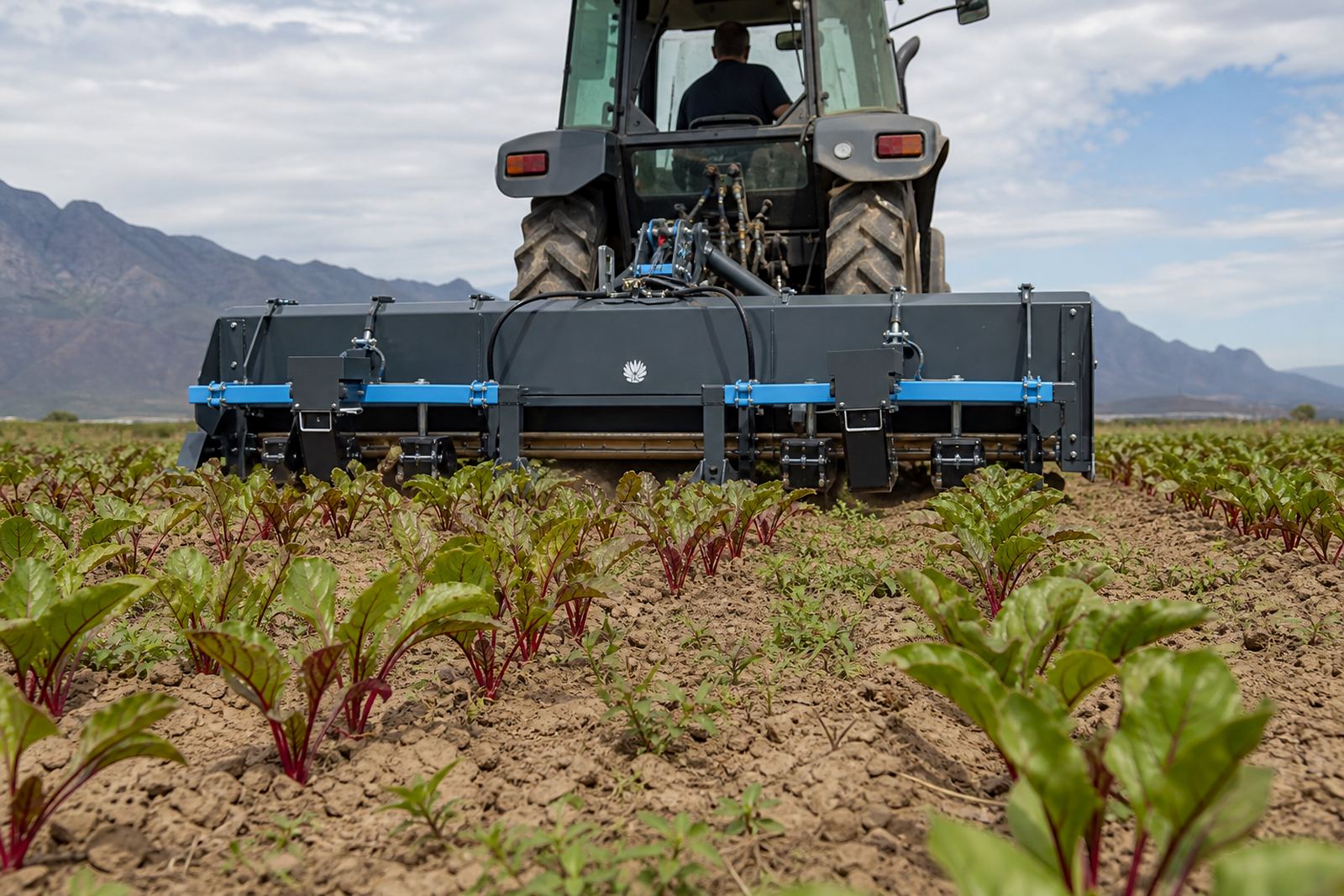
Beetroot is one of the better candidates for laser weeding when the crop is planted in straight, readable rows and the early weed flush is still small. The system relies on camera-guided weed detection, then lasers target the weed growing points while the beetroot plants are passed over. That makes the block more suitable when seedlings are upright, row gaps are visible and there is enough contrast between crop and weed.
Growers around Philippi, Grabouw, Ceres and the broader Western Cape often ask for laser work on beetroot where herbicide pressure is high or spray windows are tight. It can also help on farms running mixed vegetable programmes in Limpopo, Mpumalanga, KwaZulu-Natal and the Free State, where field timing shifts with planting dates, irrigation turns and labour availability. Beetroot does need tidy layout, and if the rows are too uneven or already closed over, the pass is less practical.
- Best suited to young beetroot with visible row centres
- Works well where weeds are at a small, early stage
- More useful on blocks with even planting depth and spacing
- Less suitable where crop leaves already hide the row line
The usual set-up on a beetroot field
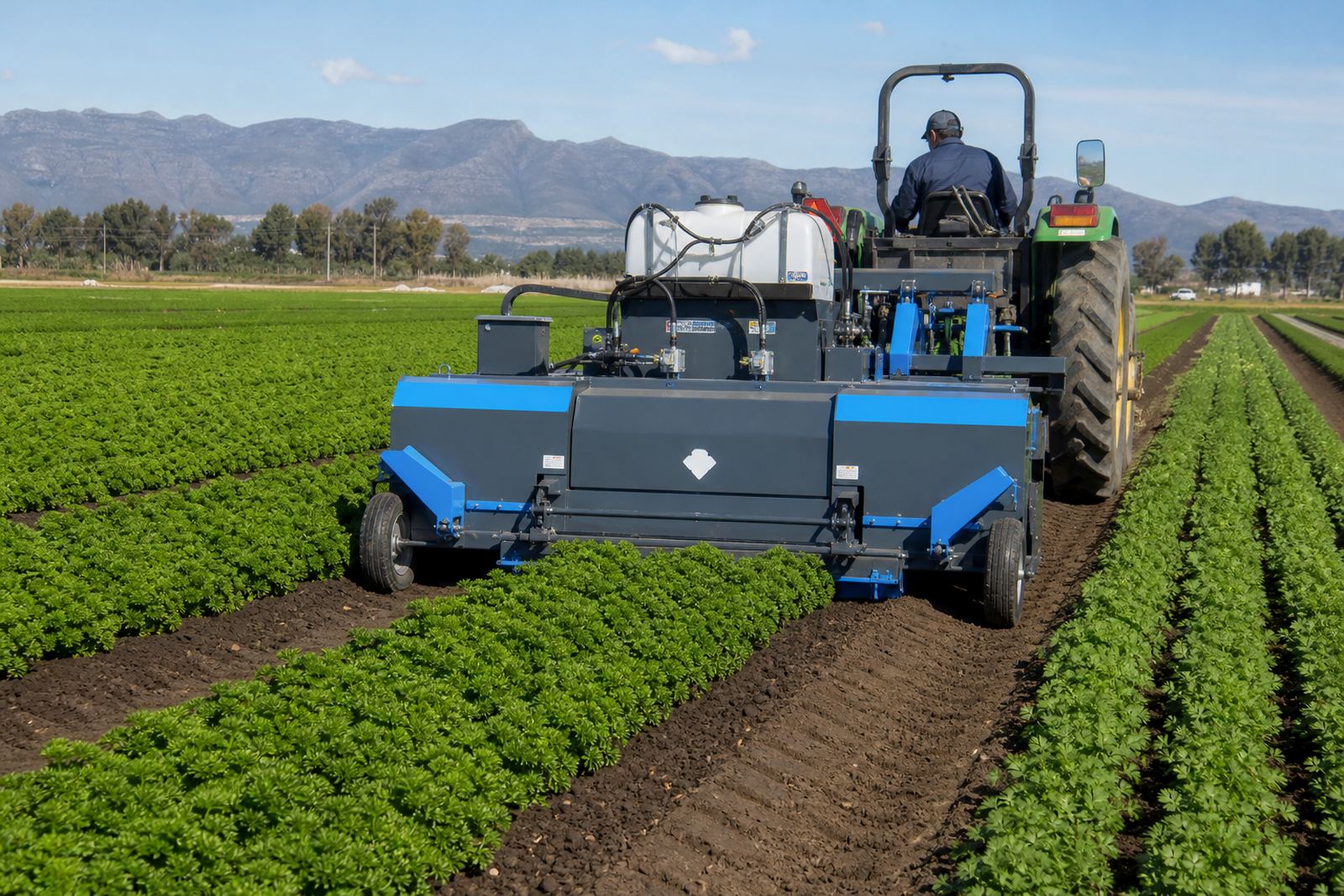
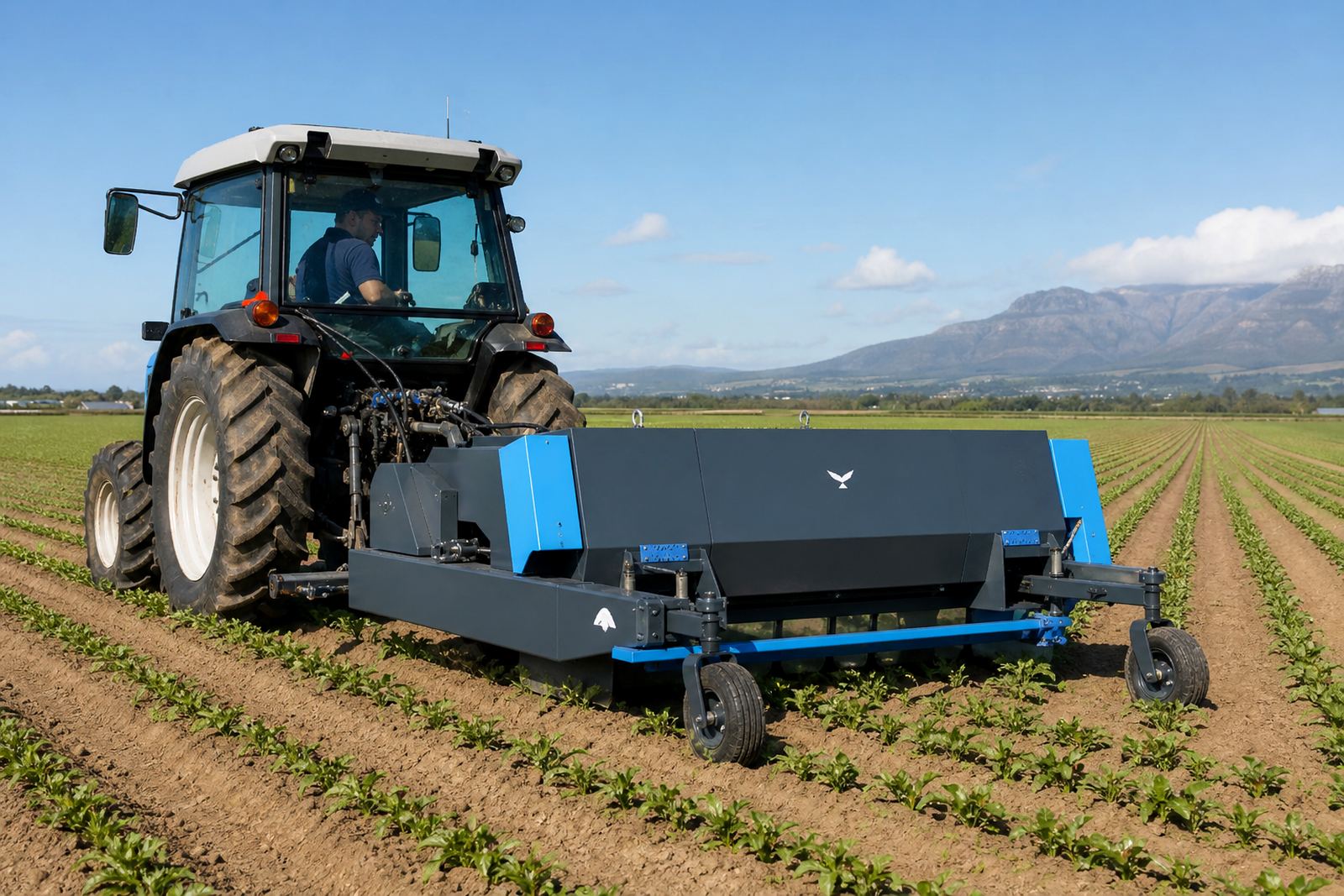
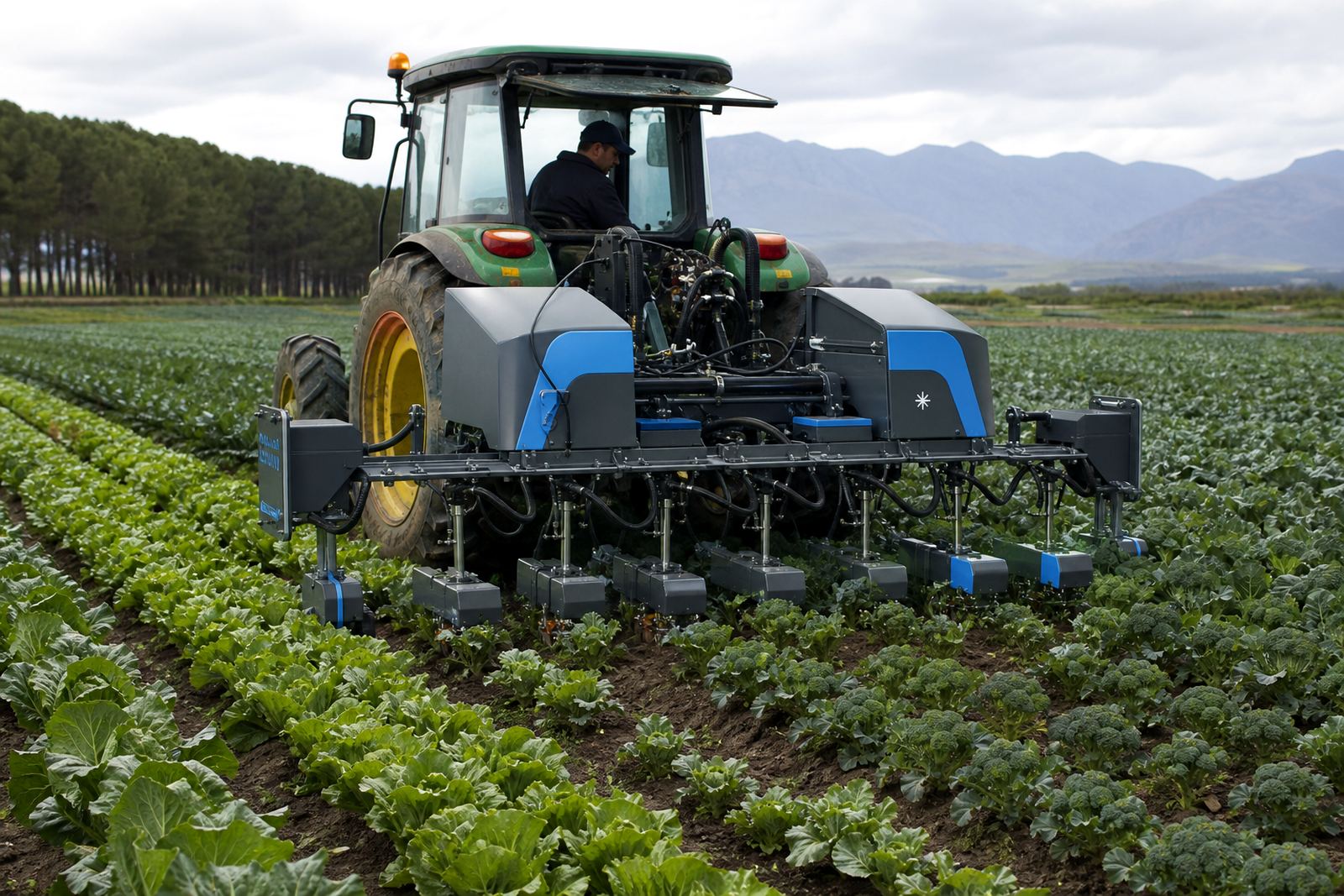
For beetroot, the usual set-up is a tractor-drawn laser unit with a trained operator, plus field checks before the pass starts. The unit moves along the row and reads the crop and weed pattern through camera-based detection. The operator keeps the run steady, and the field plan needs enough turning room, clean headlands and practical access for the tractor width.
We normally look at plant spacing, row alignment, soil moisture and weed pressure before booking a field. Beetroot is sensitive to crop stage, so the timing has to be matched to the growth point of the crop and the size of the weeds. If the weeds are too advanced, the lasers must work harder and field speed drops. If the crop is too small and the stand is patchy, the job may need a later pass or a trial strip run first, which saves guesswork on a bigger block.
- Tractor-drawn unit with a camera-guided laser array
- Trained operator on the machine for the full field pass
- Arrival site checks to confirm rows, access and turning space
- Trial strip runs where the beetroot stand or weed pressure is uncertain
Planning the block so the pass makes sense
Good layout does most of the heavy lifting. Beetroot rows should be straight enough for the camera system to hold the crop line, and the headlands must allow the tractor to enter and exit without cutting corners into the bed. In sandy ground or on wet coastal blocks near Cape Town, a field that is too soft can make the pass clumsy, so the schedule needs to fit the soil condition as well as the weed stage.
It helps when the grower has a clear crop timing plan. Beetroot planted for bunching may need a different pass window from beetroot grown for processing, and a repeat pass can make sense if the first flush is followed by another flush after rain or irrigation. We also plan around multi farm programmes where several blocks sit in one district, because travel coordination and field order affect the work day. The better the block notes, the cleaner the run, and less time is lost on field edges or blocked entry points.
- Keep row centres visible before the pass
- Set headlands wide enough for tractor movement
- Use crop timing plans to match weed stage and beetroot stage
- Allow for repeat pass planning where a second flush is likely
Mistakes that make beetroot harder to treat
The most common mistake is waiting until the weeds are too tall. Once the weed canopy starts to cover the row, the system has less room to read the target and work close to the crop. Another mistake is assuming every beetroot block behaves the same. A block with neat rows and light weed pressure is very different from a patchy corner near a wet drain line or a compacted turn area. That is where a trial strip run is worth the effort.
Some growers also underestimate how much field organisation matters. If irrigation lines, gates or loose debris slow the tractor, the pass becomes awkward and the operator has to keep stopping and starting. We also see trouble where the crop spacing is irregular after hand thinning or where the beetroot stand is uneven from emergence. In those fields the unit can still be useful, but the plan needs to be tighter and the expectations need to be practical, not optimistic.
Laser weeding is herbicide-free and there is no soil disturbance, which suits beetroot where you want to avoid bringing up new weed seed. It is not a cure-all though. If the block is already closed over, or if the weeds are far beyond the target stage, it may be better to reschedule the pass rather than force a poor run.
- Do not wait for tall weeds with broad leaves
- Do not send a block with poor row definition and expect neat targeting
- Do not treat every beetroot field as if it has the same timing window
- Do not ignore wet ground, debris or tight turning space
What the budget usually sits at in Rand
Beetroot laser weeding is usually priced as a contract field service, so the budget depends on block size, access, weed pressure, travel distance and whether a single pass or a repeat pass is planned. Small, tidy blocks with clear rows are easier to schedule than scattered fields that need more setup time. A short trial strip run can also be part of the planning cost if the crop stand is uncertain.
For beetroot, growers often budget in bands rather than fixed numbers. A straightforward block may sit in the lower tens of thousands of Rand for a visit, while larger or more complex programmes can move higher once travel, operator time and field coordination are added. Multi farm programmes across districts such as Tzaneen, Bela-Bela, Nelspruit, Howick and Bethlehem often need a wider budget spread because the field days are tied together. We keep the quote tied to the actual block shape, not just the farm name.
- Block size and row length change the cost more than crop name alone
- Travel coordination matters for farms spread across several towns
- Repeat pass planning affects the final programme budget
- Clear rows and light weed pressure usually make the field easier to price
What growers usually ask us to include
For beetroot, many growers want more than the pass itself. They ask for field assessments, grower consultation, crop timing plans and post pass reporting so the block record stays useful after the operator leaves. Others want arrival site checks and operator supplied service because that keeps the machine, the operator and the field order under one programme. On larger vegetable farms, the best fit is often a season booking with planned movement between beetroot and other row crops.
Our team in Philippi handles the field side and the scheduling side together. Mandla Adonis leads the business, with Anele Khoza on operations, Pieter Mokoena on field scheduling, Zanele Naidoo on grower liaison, Johan Daniels as lead operator, Lerato Letsoalo as service coordinator and Ruan Mkhabela in the workshop. That matters when beetroot sits inside a bigger vegetable programme, because the machine may need to move from one district to another without wasting a clean weather window. The job works best when the farm notes are direct and the row plan is already settled.
- Field assessments for beetroot blocks and adjoining rows
- Grower consultation for crop stage and weed stage timing
- Season bookings for repeat movement across several farms
- Post pass reporting for the block record and next step planning