Where baby leaf rows fit the method
Baby leaf crops are often planted tightly, so the gap between crop and weed has to be read carefully before any pass is set up. Laser weeding suits beds where the crop line is visible, the weeds are small enough to target, and the surface is even enough for the tractor-drawn unit to keep its sensors steady.
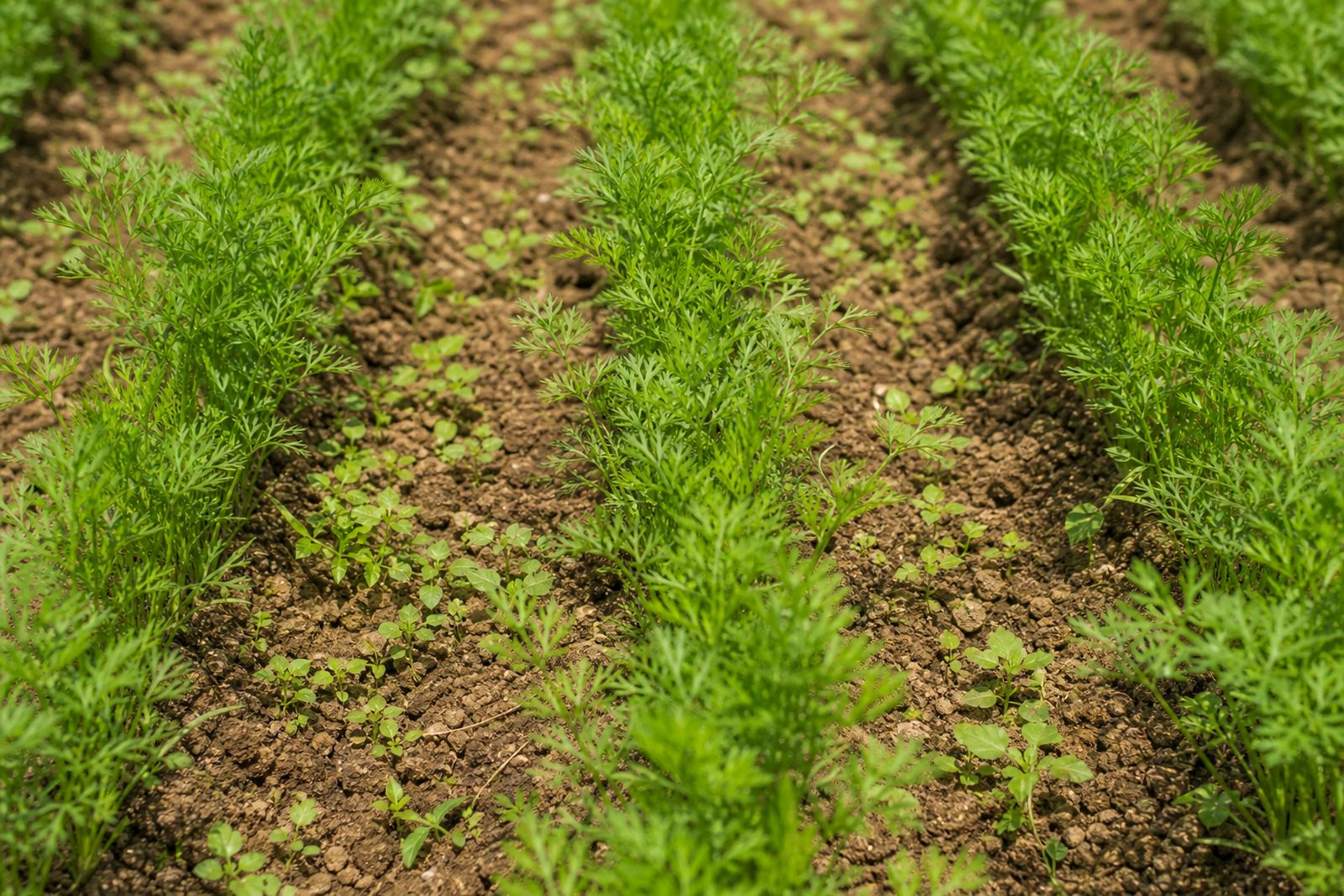
For growers in Philippi and other high-volume vegetable areas, the real question is not whether the crop is young. It is whether the stand has enough definition for camera-guided weed detection to separate crop tissue from weed growth without shaving into the row. That call changes with weather, germination pace and how tidy the field looked at emergence.
- Works best where the drilled row is visible and consistent
- Better suited to early weed stages than overgrown patches
- Needs a field surface that allows stable travel between beds
- Useful where herbicide-free weed control is part of the plan
Equipment set for a baby leaf block
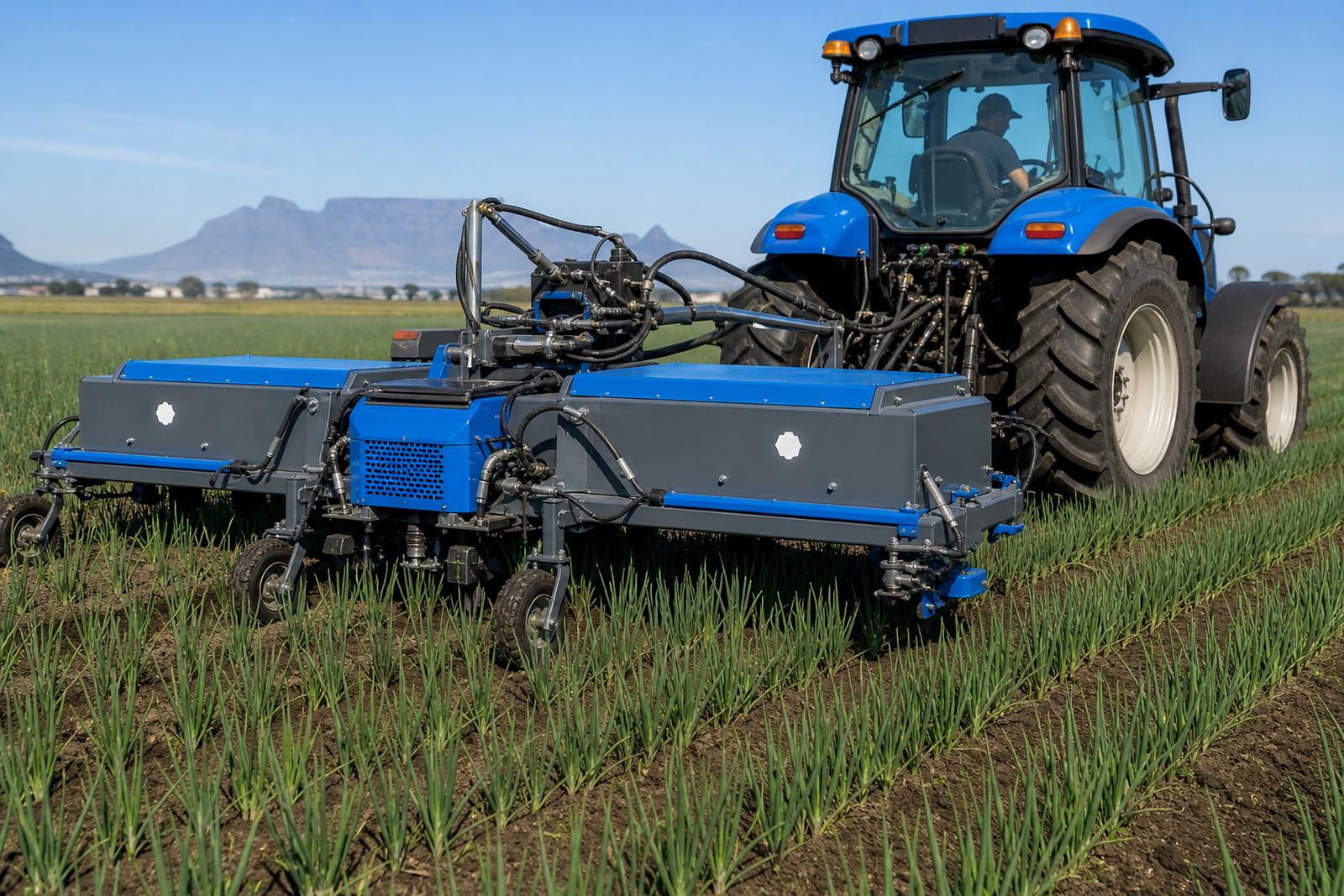
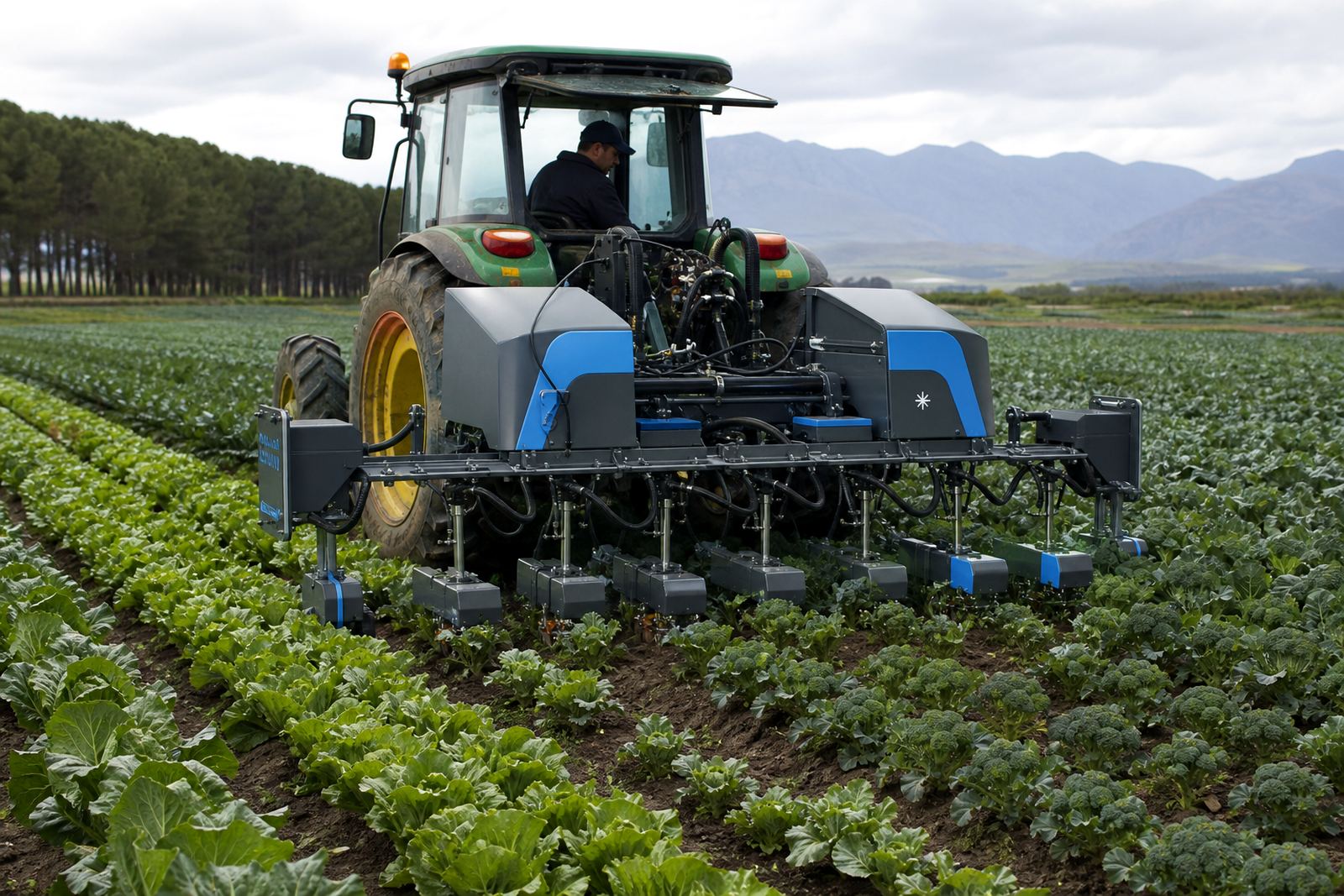
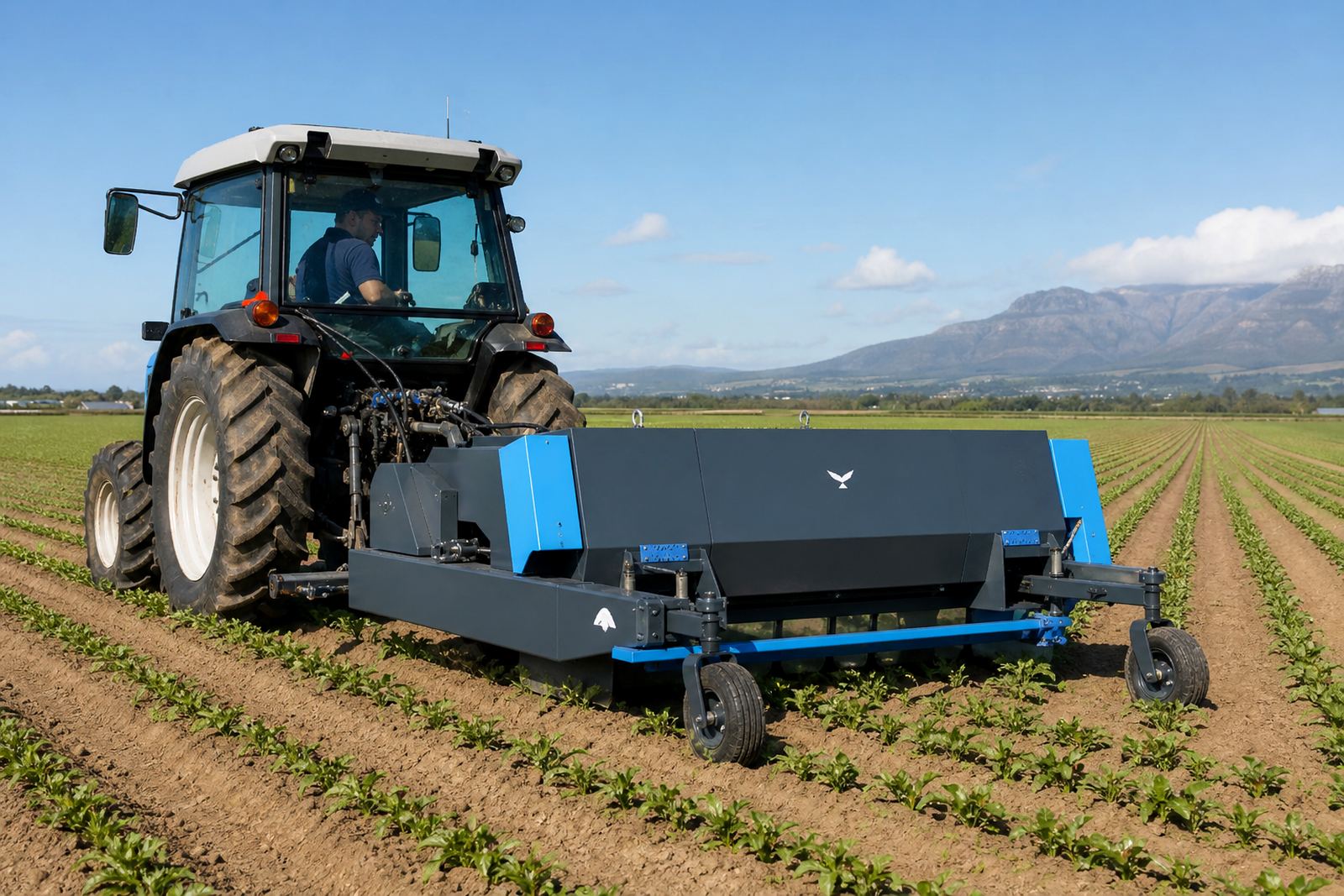
The usual setup is a tractor-drawn laser weeding unit operated by a trained person who watches field movement, row definition and weed pressure as the job runs. The machine scans the row, picks up weed growing points and directs the laser energy to those targets, while the tractor keeps moving at a field speed that matches the block conditions.
That speed is never fixed. A light, tidy block can be worked differently from a field with patchy emergence or heavier flushes at the edges. In a baby leaf crop, that difference matters because the crop canopy is low and spacing is close. The operator has to read what is safe to treat and what still needs time, otherwise the pass becomes too aggressive.
- Tractor-drawn laser unit with camera-guided detection
- Trained operator managing travel speed and target selection
- Field checks before the first row is treated
- Reporting after the pass so the grower can plan the next move
Planning the rows before the machine arrives
Baby leaf work is won or lost before the unit enters the block. Row layout, bed straightness and the timing of emergence all affect the job. If the crop was drilled unevenly or the headlands are messy, the system has less room to work cleanly. That is why a field assessment is part of the service, not an extra.
For row crops, the best result usually starts with a practical plan around crop timing, weed stage and the number of passes likely to be needed. A first pass may be enough in some blocks, while others need repeat pass planning after new flushes appear. Fields in humid coastal areas can move fast after rain, so the timing has to follow the block, not a fixed calendar.
- Check row definition before committing the whole block
- Map problem areas near drains, turns and wetter patches
- Build in travel and arrival checks for each farm block
- Plan for repeat visits where weed pressure is uneven
Common mistakes in baby leaf fields
The biggest mistake is waiting until weeds are too advanced. Laser weeding works best when the weed is still at a vulnerable stage and the crop row can be read clearly. Once weeds spread past that point, the machine has less room to target the growing point cleanly and the pass becomes slower and more selective.
Another mistake is treating every baby leaf block as if it has the same spacing or the same emergence pattern. That does not hold in practice. A field that looked tidy on Monday may present differently after rain, wind or uneven germination. If the operator is pushed to work too fast, missed weeds and crop damage both become more likely. Headlands also matter more than people think, because the tractor movement there can be rougher than the middle runs.
- Leaving the pass until weeds are too mature
- Using one schedule for every block, even when the crop differs
- Poor headland preparation and weak row definition
- Expecting the same field speed in every condition
Budget ranges for baby leaf rows
Budget depends on field size, travel, block layout and how many passes the season needs. For baby leaf work, smaller or more awkward blocks often carry a higher cost per hectare than long, tidy runs. Travel from the Philippi base to farms in places like Ceres, Grabouw, Tzaneen, Bela-Bela, Nelspruit, Howick or Bethlehem also affects the programme cost because the machine, operator and coordination all have to be organised around the farm window.
As a working guide, growers often budget from about R3,500 to R8,500 per hectare for a single laser weeding pass on suitable baby leaf rows. More complex programmes, repeat pass planning, trial strip runs or multi farm scheduling can move outside that range depending on distance, field shape and weed pressure. A field with difficult access or uneven emergence may need a different plan from a straightforward row block.
- Single pass on a clean, accessible block: lower end of the range
- Smaller fields with awkward layout: usually higher per hectare
- Repeat passes and travel coordination add to the programme cost
- Trial strips help test whether the block is worth scaling up
What the service looks like on farm
LaserWeeder Hire provides contract laser weeding for vegetable farms from our Philippi, Cape Town base, with field scheduling, operator supply and grower consultation built into the work. The service is set up for baby leaf rows that need careful timing, not broad brush treatment. A grower can use it for field assessments, crop timing plans, arrival site checks and post pass reporting when a block needs close handling.
Some farms want a single visit on one block, while others need a season booking across several areas. That can include multi farm programmes, travel coordination and repeat pass planning where weed flushes differ from one site to another. Clients reach us through our contact form on our contact page, and the working detail sits around the farm, the crop stage and the row pattern in front of the operator.
- Field assessments for baby leaf row suitability
- Trial strip runs before scaling across the block
- Operator supplied with the unit and the farm schedule
- Post pass reporting to support the next field decision