Where onion fields tend to get pressed hardest
Onions are unforgiving in the first stretch after emergence. The crop sits low, the spacing is tight, and weeds that seem small on Monday can be difficult to manage a short while later. In the Philippi sands and in heavier ground further inland, the pressure often comes in patches rather than evenly across the block, which makes timing and field layout matter just as much as the machine itself.
Laser weeding suits onion fields where rows are straight, headlands are clear, and the crop stand is uniform enough for camera-guided work. It is used to target weed growing points between and around the onion plants, without spray drift and without stirring up the soil profile. That matters in sandy coastal ground where any unnecessary movement can dry the bed out faster than growers want.
- Dense row patterns need accurate guidance between plants
- Early weeds are easier to target than larger, hardened growth
- Good row definition helps the operator keep a steady run
The kit that usually comes into the block
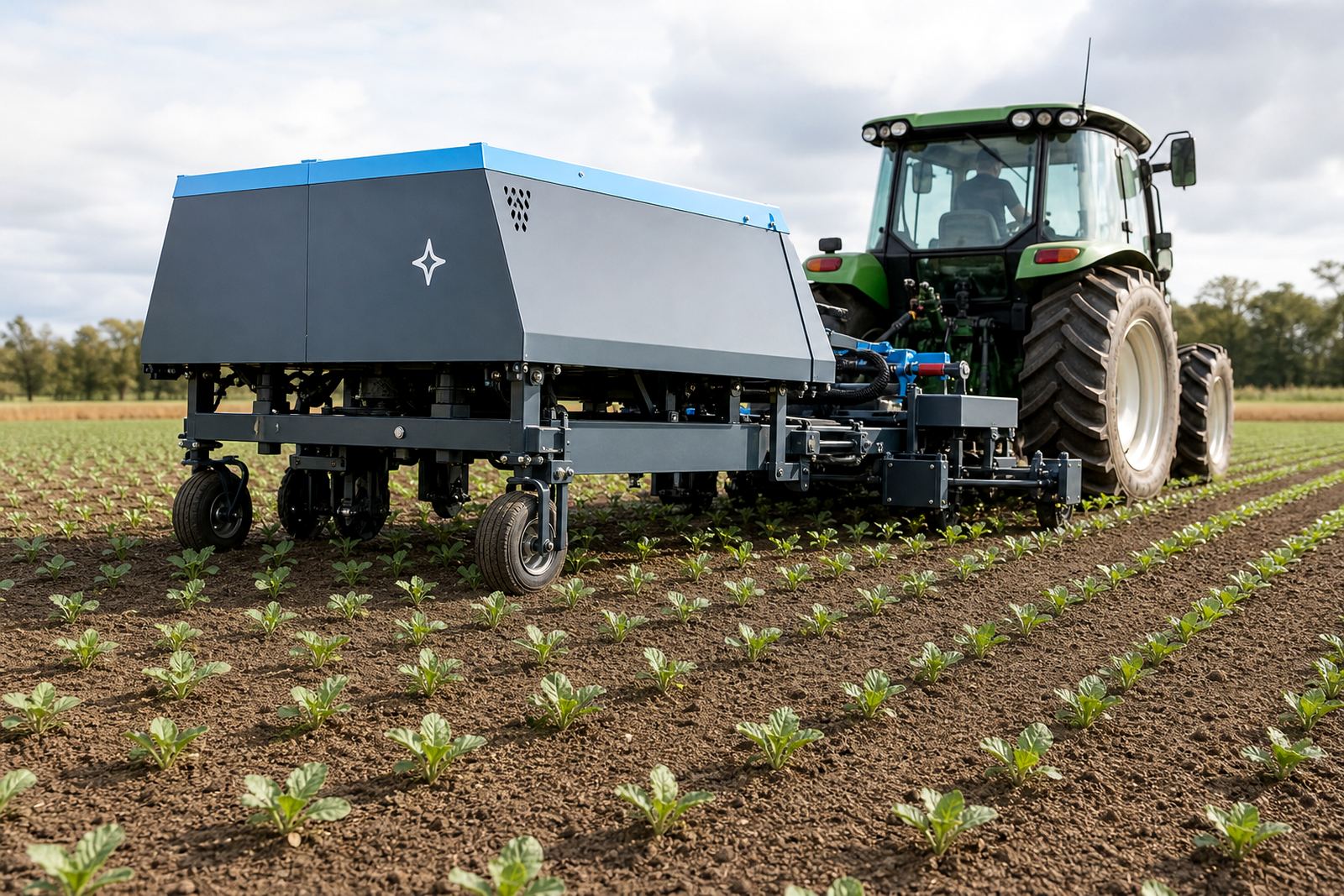
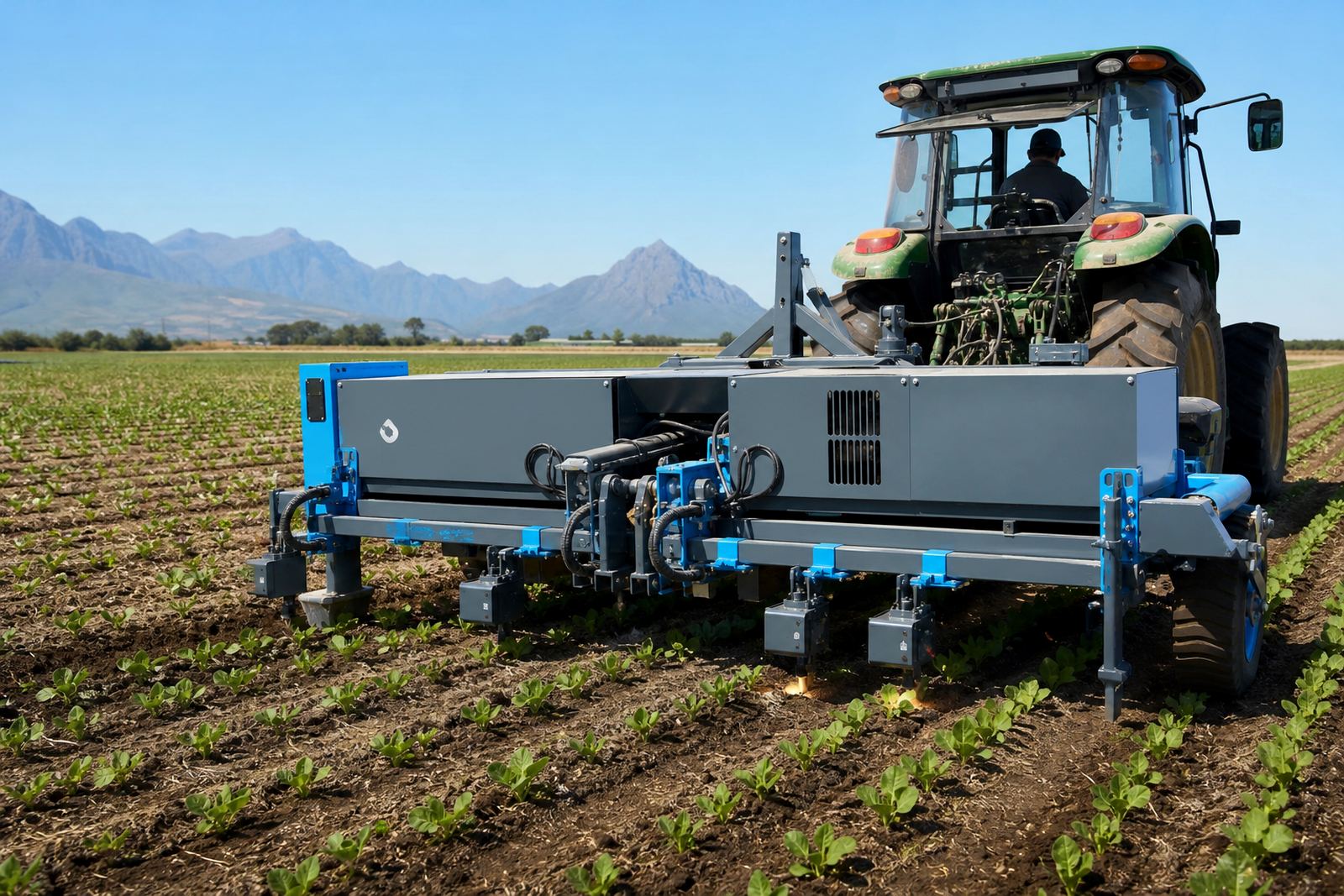
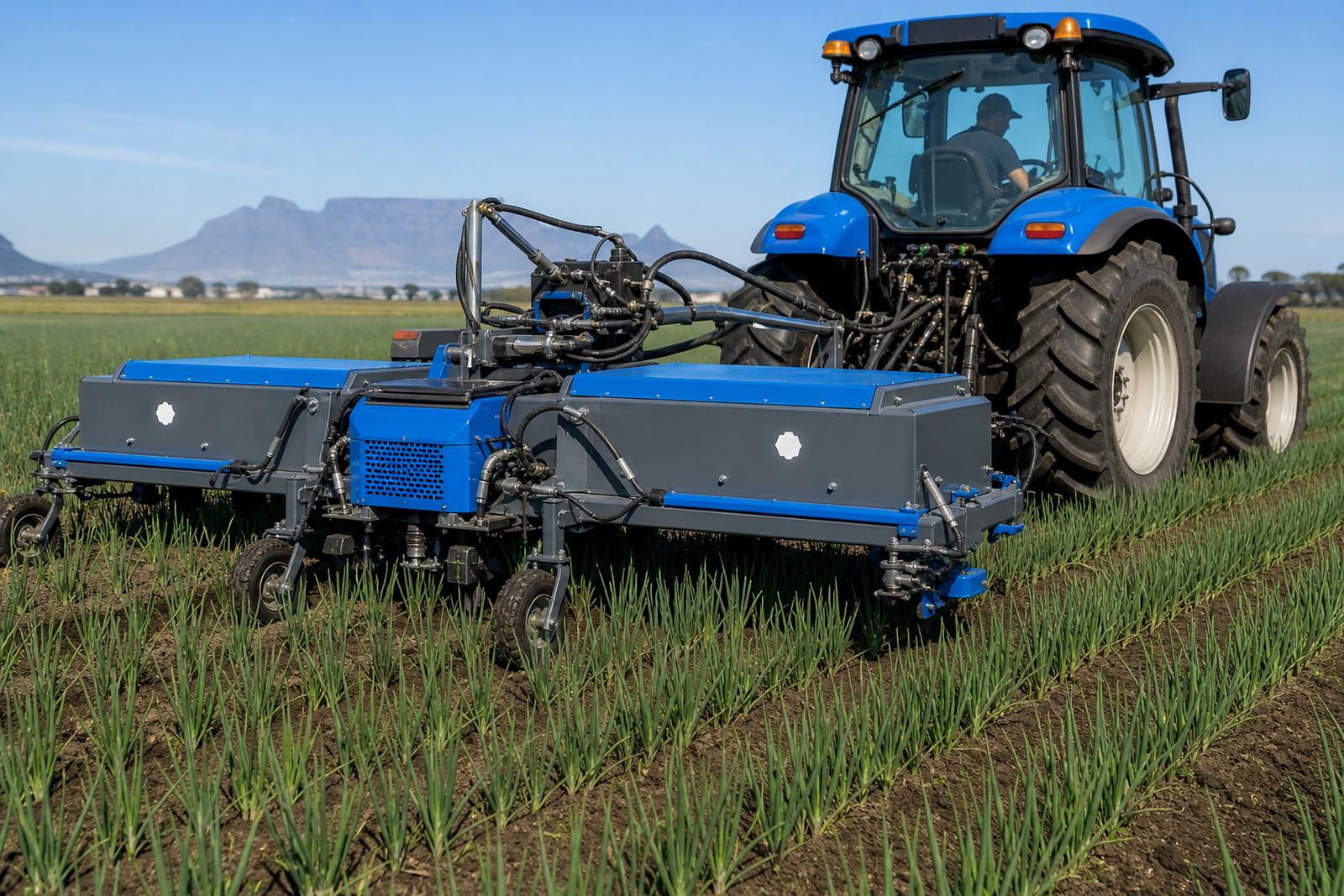
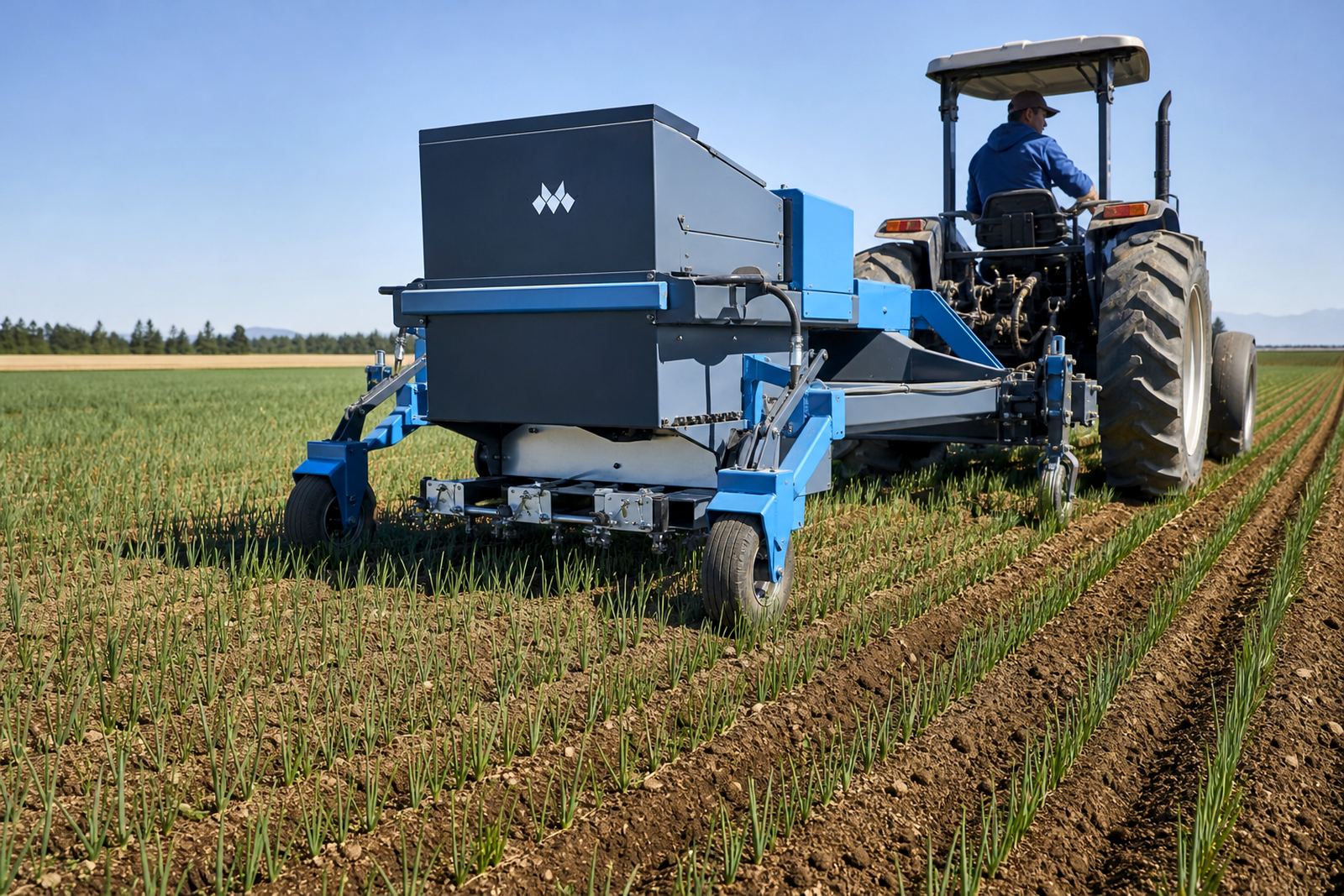
The set-up is a tractor-drawn laser unit with an operator who understands crop spacing, weed stage and field pace. The system uses cameras to pick up weed shapes and aims the laser at the growth point, which is the part of the weed that must be stopped for the pass to matter. On onions, that precision is the difference between a workable pass and a rushed one that misses too much in the row.
For a typical onion programme, the field visit is not only about the machine. We look at row width, soil moisture, turning space, and whether the crop is at a stage where the laser can work safely around the plants. Some growers want a single pass on a clean block, while others need repeat pass planning where new flushes of weeds are expected after irrigation or rain.
- Tractor-drawn laser unit matched to the block size
- Trained operator working from the crop rows and weed stage
- Field notes for turning points, wet patches and access tracks
Layout choices that make onion work less fussy
Onion blocks reward tidy field planning. Straight lines, clear markers and sensible headland access help the unit keep a steady rhythm. If the block has odd corners or waterlogged pockets, those need to be flagged before the run so the operator can plan the pass properly instead of trying to improvise in the middle of the field.
We also look at crop timing. Laser weeding works best when the weeds are still at a vulnerable stage and the onion stand is established enough for safe targeting. A pass that is too late can mean larger weeds with tougher growing points, and the machine then spends more time chasing the block than clearing it.
- Mark blocked rows, washouts and soft patches before the run
- Keep headlands open for tractor movement and turn space
- Plan around irrigation days so the soil surface is workable
Mistakes that usually push the job backwards
The biggest trouble starts when onion blocks are left until weeds are too advanced. Larger weeds are harder to target cleanly, and a field with mixed weed stages can slow the work down. Another common issue is poor row visibility from the start, especially after wind, crusting or patchy emergence. In those cases, the camera system has less clean detail to work with.
Some growers also expect one pass to solve the whole season. In practice, laser weeding is part of a programme. Weed pressure, weather and irrigation all shape what happens after the first pass, so repeat planning matters. It is a field tool, not a substitute for good crop timing and tidy cultivation planning where that still has a role.
- Waiting until weeds are already too mature
- Running over fields with poor row definition
- Ignoring follow-up flushes after rain or irrigation
What growers usually budget for onion blocks
The cost depends on block size, travel, number of passes, weed pressure and how much field coordination is needed. A small, tidy block with good access is different from a larger programme split across several farms in the Western Cape or further north. Travel coordination and season bookings can change the structure of the quote, particularly when more than one block is being run in the same programme.
As a working range, many onion jobs sit somewhere from about R8,500 to R22,000 per hectare for single-pass work, with multi-pass or multi-farm programmes often quoted differently because the field pattern changes. A trial strip run, field assessment, crop timing plan and grower consultation can all feed into the final structure. The point is to match the unit, operator and schedule to the actual block, not to force a standard number onto every onion field.
- Block size and travel distance shape the quote
- Repeat passes are priced differently from a single run
- Field assessments help narrow the scope before scheduling
A field programme that fits onion rows
For onion growers in Philippi, Ceres, Grabouw, Tzaneen, Bela-Bela, Nelspruit, Howick and Bethlehem, the strongest results usually come from a planned programme rather than a one-off visit. That means a look at the block, a check on row timing, then a pass plan that fits the crop stage and weed flush. We work with tractor-drawn laser weeding units, trained operators and field scheduling that takes the farm layout seriously.
Laser weeding is especially useful where herbicide sprays are not the preferred path, or where the grower wants a different approach to narrow row crops. Onions are often the crop where timing makes the whole call. If the rows are well set, the weeds are still young, and the block is ready for the machine, the job becomes easier to plan and easier to run.
- Field Assessments for onion blocks
- Crop Timing Plans for early weed pressure
- Season Bookings and Multi Farm Programmes