Where cabbage rows suit laser work best
Cabbage is one of the crops where a tractor-drawn laser unit can do useful work between rows and, in the right spacing, close to the crop line. The method depends on clear row geometry, a steady planting pattern, and weeds that are still at a workable stage. When the crop has moved past its fragile early phase and the bed is holding shape, the operator can work with a measured speed and keep the passes consistent across the block.
Laser weeding is not a blanket fix for every cabbage field. It suits growers who have regular row spacing, reasonably even emergence, and a field that has been planned with mechanical access in mind. The cleaner the layout, the easier it is to run a pass with fewer interruptions from gaps, turns, and odd-shaped corners.
- Best fit is usually a uniform cabbage block with straight rows
- Good access helps at headlands and along irrigation runs
- Young weeds are easier to target than overgrown patches
- Wet, rutted ground can slow the work and disturb tracking
What the tractor and operator are doing in the field
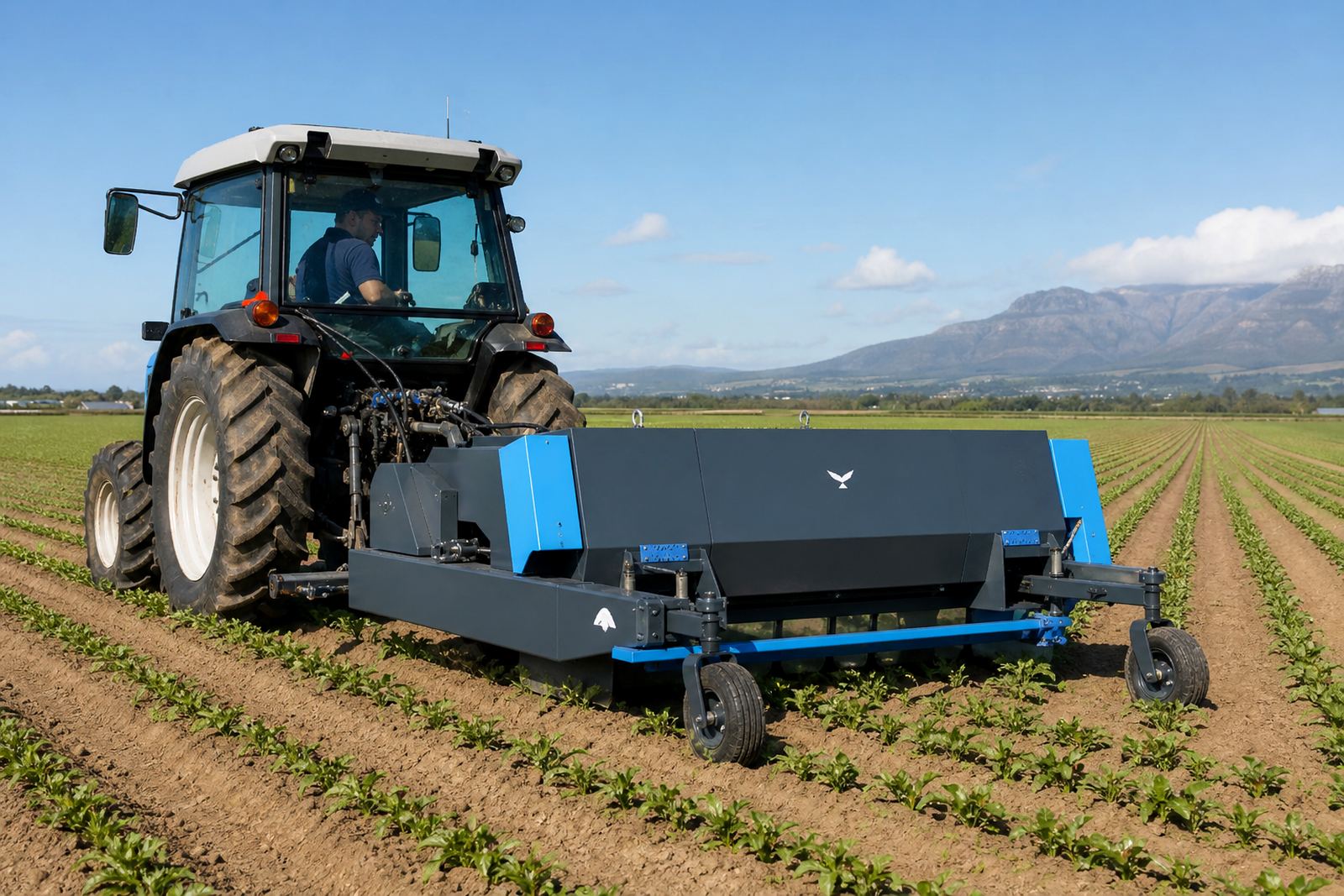
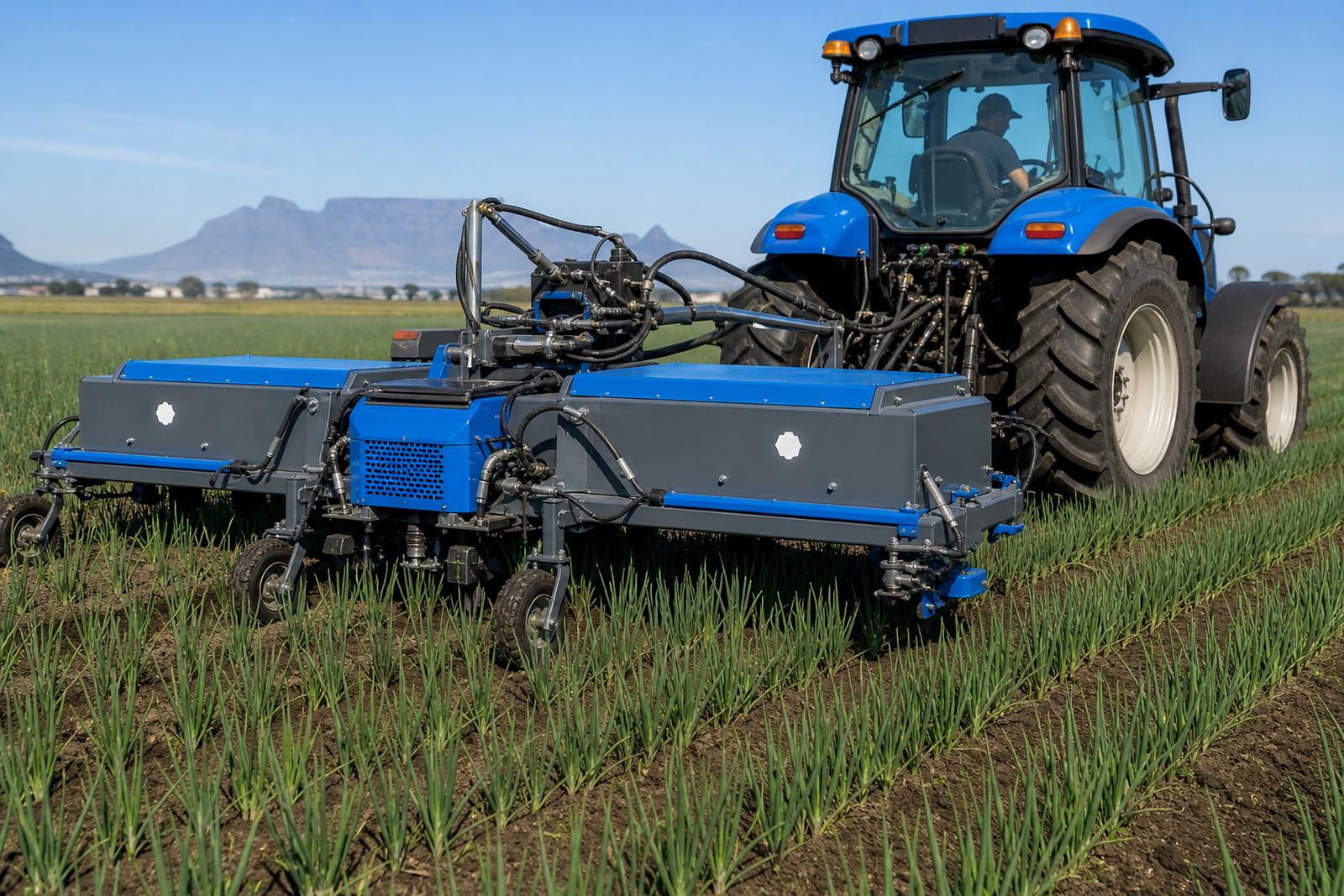
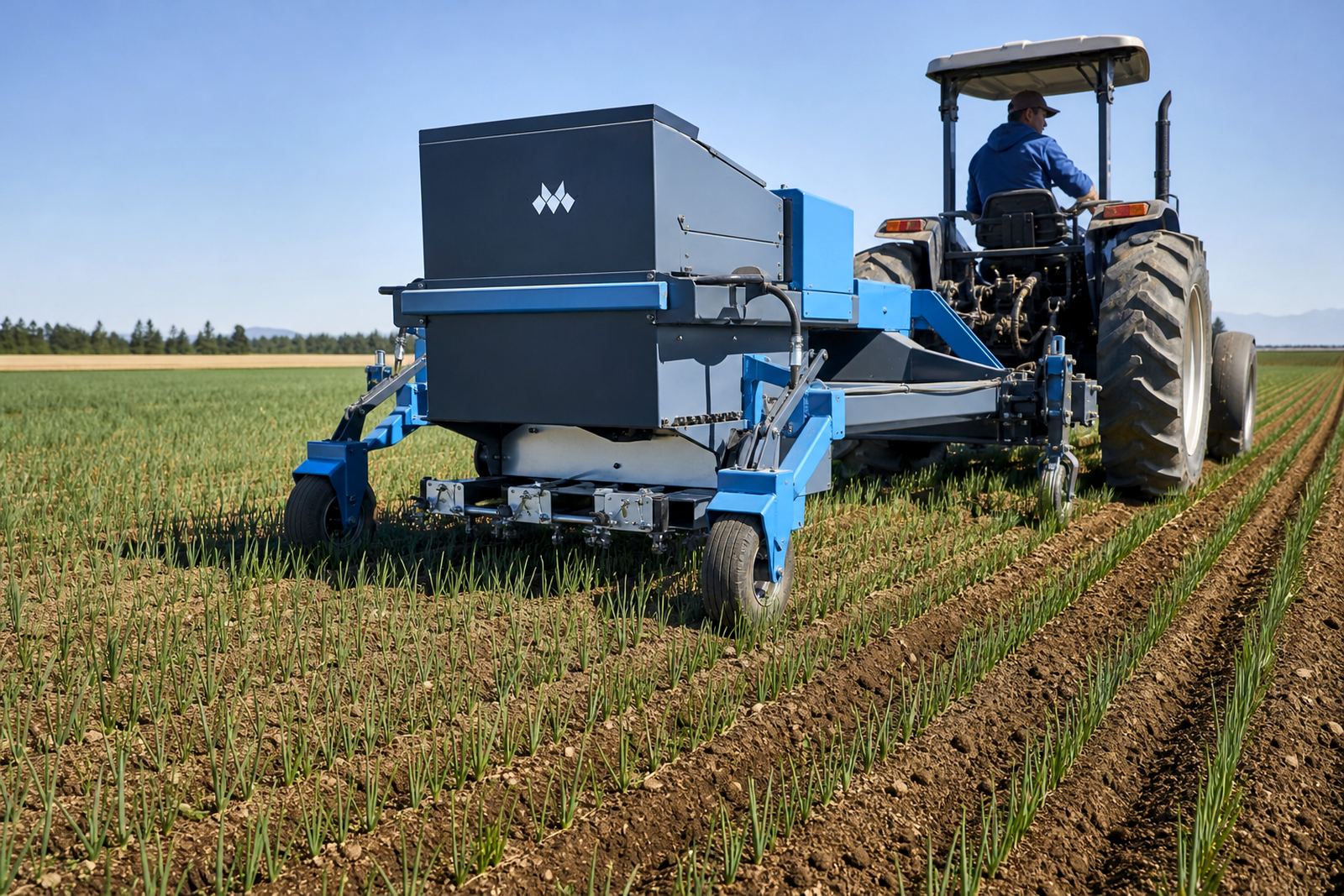
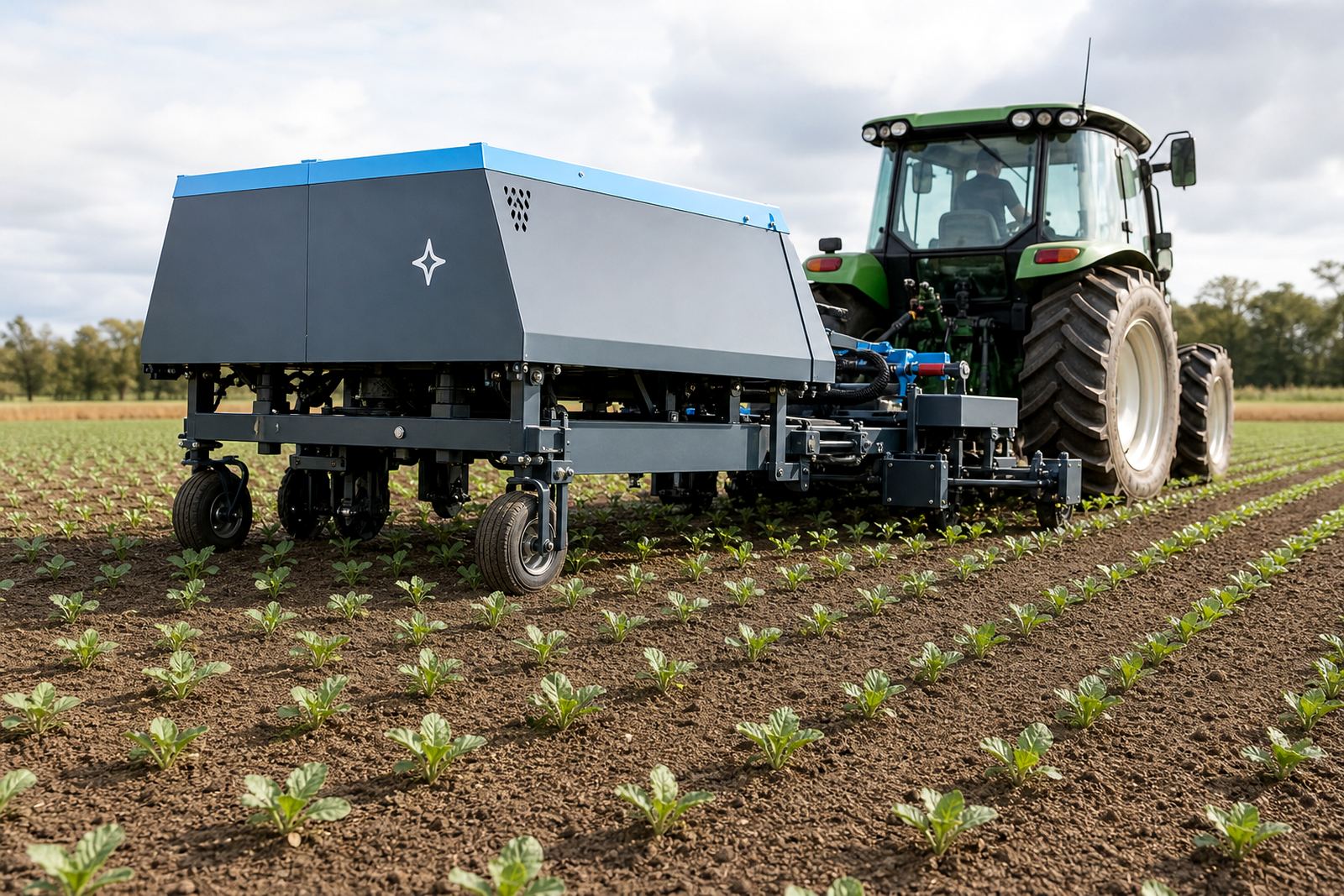
The setup is a tractor-drawn laser weeding unit with a trained operator who keeps the pass aligned to the crop and the weed pressure on the day. Camera-guided detection reads the row and targets weed growing points with laser energy, while the crop plants are left untouched where the spacing and timing are right. There is no herbicide spray and no soil disturbance from cultivation tines, so the method is useful where growers want to keep the surface calm.
For cabbage, the timing matters. If the weeds are too far advanced, the pass becomes slower and less efficient. If the crop is too small or too tightly packed, the margin around each plant is reduced. That is why field assessment, trial strip runs, and crop timing plans sit right at the front of the job.
- Camera-guided detection tracks weeds in the row and between rows
- Lasers target the weed growing point rather than the soil surface
- Tractor speed shifts with weed density, block shape, and turning points
- Repeat passes may be planned where new weed flushes keep appearing
Layout notes before the unit goes into cabbage
A cabbage field works better when the planter, irrigation, and row spacing were set with later access in mind. Laser weeding needs enough room to read the crop line and enough consistency for the operator to hold the pass. Narrow pinch points, broken rows, and awkward corner shapes create extra adjustments and can reduce field speed. On farms around Philippi, Ceres, Grabouw, Tzaneen, Bela-Bela, Nelspruit, Howick and Bethlehem, the same rule keeps showing up: the cleaner the layout, the steadier the work.
We normally look at crop stage, weed stage, and the likely window for a return pass. Cabbage growers often want the job fitted into a wider programme, not treated as a once-off visit. That means road access, gate width, turn space, and the order of blocks all matter before the tractor enters the first row.
- Keep row spacing regular from one end of the block to the other
- Leave workable headlands for turning the tractor and unit
- Record the block order so travel and field scheduling stay tidy
- Flag wet patches, slopes, or damaged areas before the pass starts
Common cabbage mistakes that make the job harder
The most common issue is waiting too long and letting weeds bulk up. Once they are bigger, the laser pass still has a place, but field speed often drops and the timing window tightens. Another problem is uneven cabbage stand establishment. Gaps and doubles can confuse row tracking and force the operator to slow down where the machine should be moving steadily.
Some growers also expect one pass to solve the whole season. Cabbage fields can need more than one visit, especially where flushes follow rain or irrigation changes. A practical plan accepts that the weed burden will move through stages, and the pass should match the stage rather than the calendar alone. A field that looked clean after an early visit can still need later attention.
- Do not leave the block until weeds have become woody or tall
- Avoid pushing the crop too early if the stand is still fragile
- Do not mix a laser pass with poor row marks and loose layout notes
- Budget for follow-up work where a second flush is likely
Budget bands for cabbage work in Rand
Budget for cabbage laser weeding depends on block size, travel, row spacing, weed pressure, and how many passes are being planned. Smaller or awkward blocks usually cost more per hectare than a wide, regular block. Travel into Limpopo, Mpumalanga, KwaZulu-Natal or the Free State also changes the structure of the job, because the field team has to plan road time, fuel, and scheduling around the crop window.
As a working guide, growers often look at project values in the range of R8 500 to R18 000 per field day for smaller cabbage blocks with straightforward access, while larger or more demanding programmes can sit from R18 000 to R45 000 or more depending on hectares, timing, and repeat passes. Multi-farm programmes are usually quoted as a package, not as a loose one-off. The final figure depends on the block layout and the number of labour and travel hours tied into the programme.
Field assessments, trial strip runs, post pass reporting, and grower consultation can be priced into the broader programme so the farm has a clear picture of what is being planned. That is often the cleaner option for cabbage, where spacing and timing can shift from one block to the next.
How our cabbage programme is put together
LaserWeeder Hire works from Philippi, Cape Town and supports cabbage growers across South Africa with operator supplied passes, field scheduling, travel coordination, and repeat pass planning. Mandla Adonis leads the business, with Anele Khoza on operations, Pieter Mokoena on field scheduling, Zanele Naidoo on grower liaison, Johan Daniels as lead operator, Lerato Letsoalo as service coordinator, and Ruan Mkhabela in the workshop. The team handles the practical side of getting the unit to the block and keeping the programme organised.
For cabbage, the useful service mix usually starts with a field assessment, then a crop timing plan, then an arrival site check before the unit goes in. Some growers want a trial strip run before the rest of the block is scheduled. Others need a season booking with multi farm movement built around planting dates. If your cabbage block has regular spacing and you want to see whether laser weeding fits the layout, our contact form is the right place to start the conversation.
- Field Assessments and Crop Timing Plans
- Operator Supplied and Field Scheduling
- Travel Coordination and Trial Strip Runs
- Repeat Pass Planning and Post Pass Reporting