Spinach rows and the spacing that makes laser work
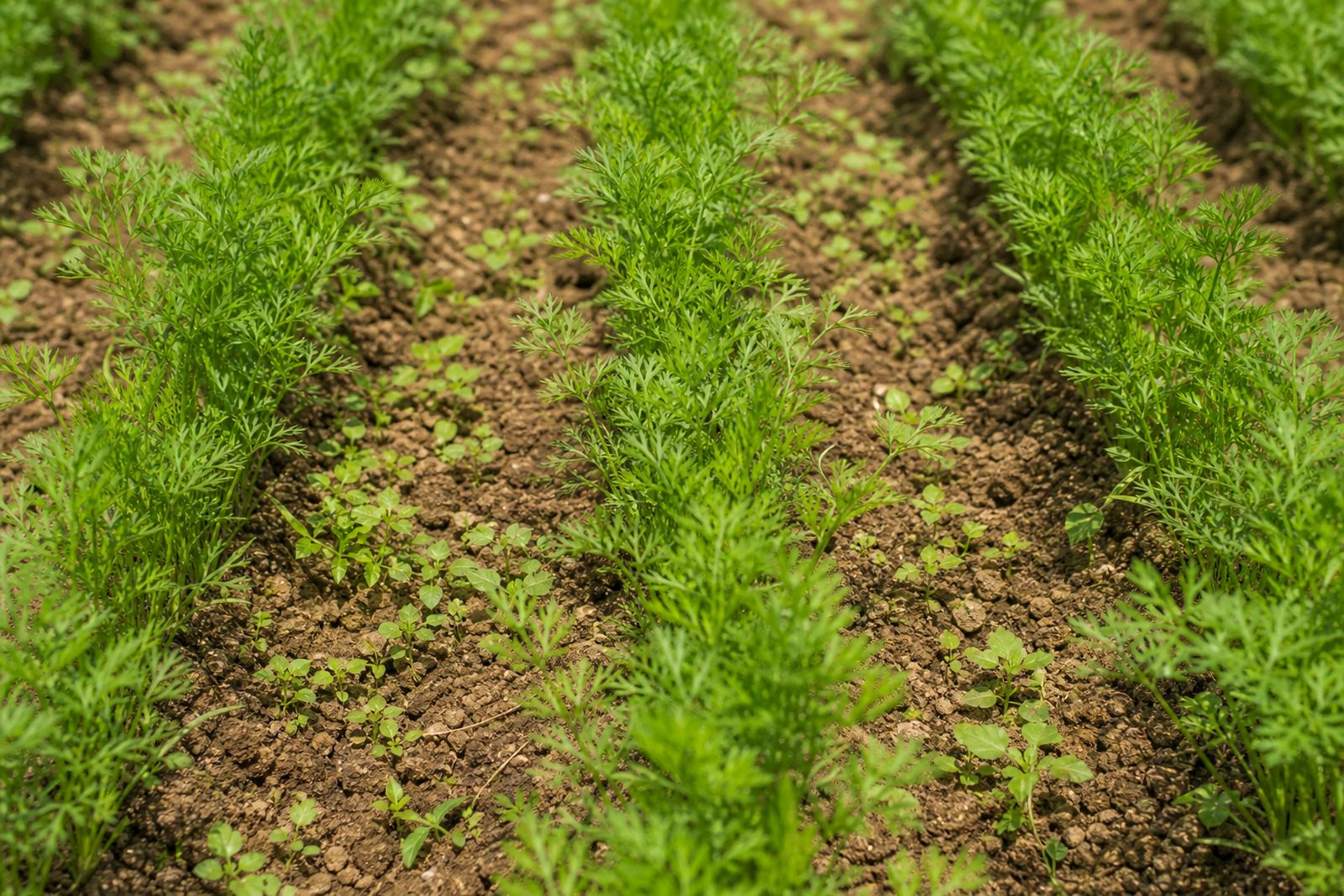
Spinach is often planted on narrow beds with close row spacing, so the first question is not equipment but fit. A laser weeding pass depends on how steady the rows are, how clear the plant line is and whether the weeds are still at a stage where the growing point can be targeted cleanly. In fields where the crop is young and the canopy is open, camera-guided units can move along the bed and act between and around the spinach plants without disturbing the soil. That matters on sandy ground around Philippi and other coastal growing areas, where a light surface can shift fast after wind or rain.
For spinach, bed height, wheel track and row consistency all shape the plan. If the rows wander too much or the bed crown is uneven, the operator has to slow the field pace and check alignment more often. The best results usually start with a field walk before the machine enters. That walk shows whether the beds are firm, whether irrigation has left soft patches and where a first pass should be timed against the main flush of weeds.
- Best suited to even beds with clear row definition
- Works well when weeds are small and upright
- Needs a crop stage where the plants can be seen cleanly by the camera system
- Field shape and headlands affect turning space and pass planning
What the tractor-drawn setup brings to a spinach block
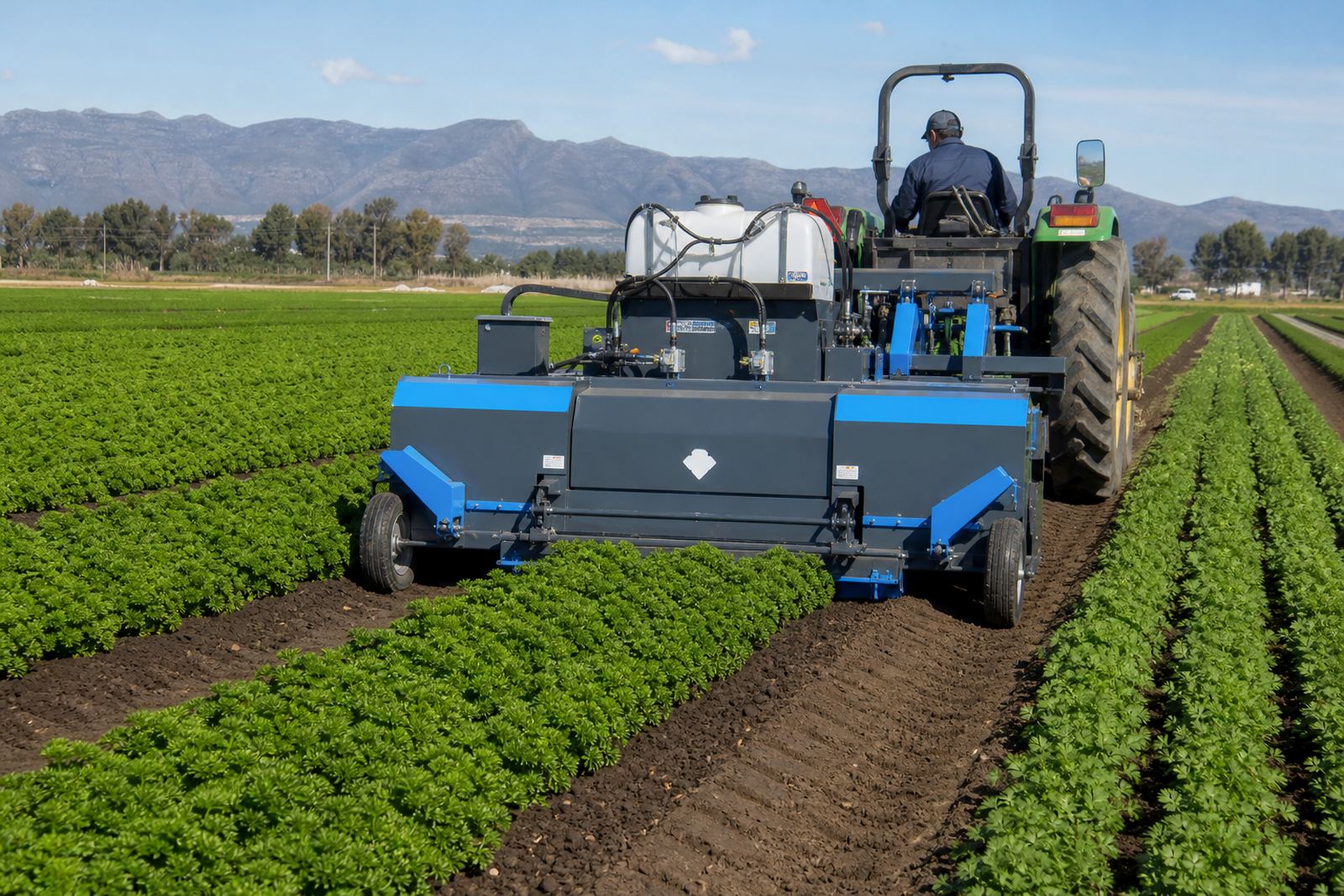
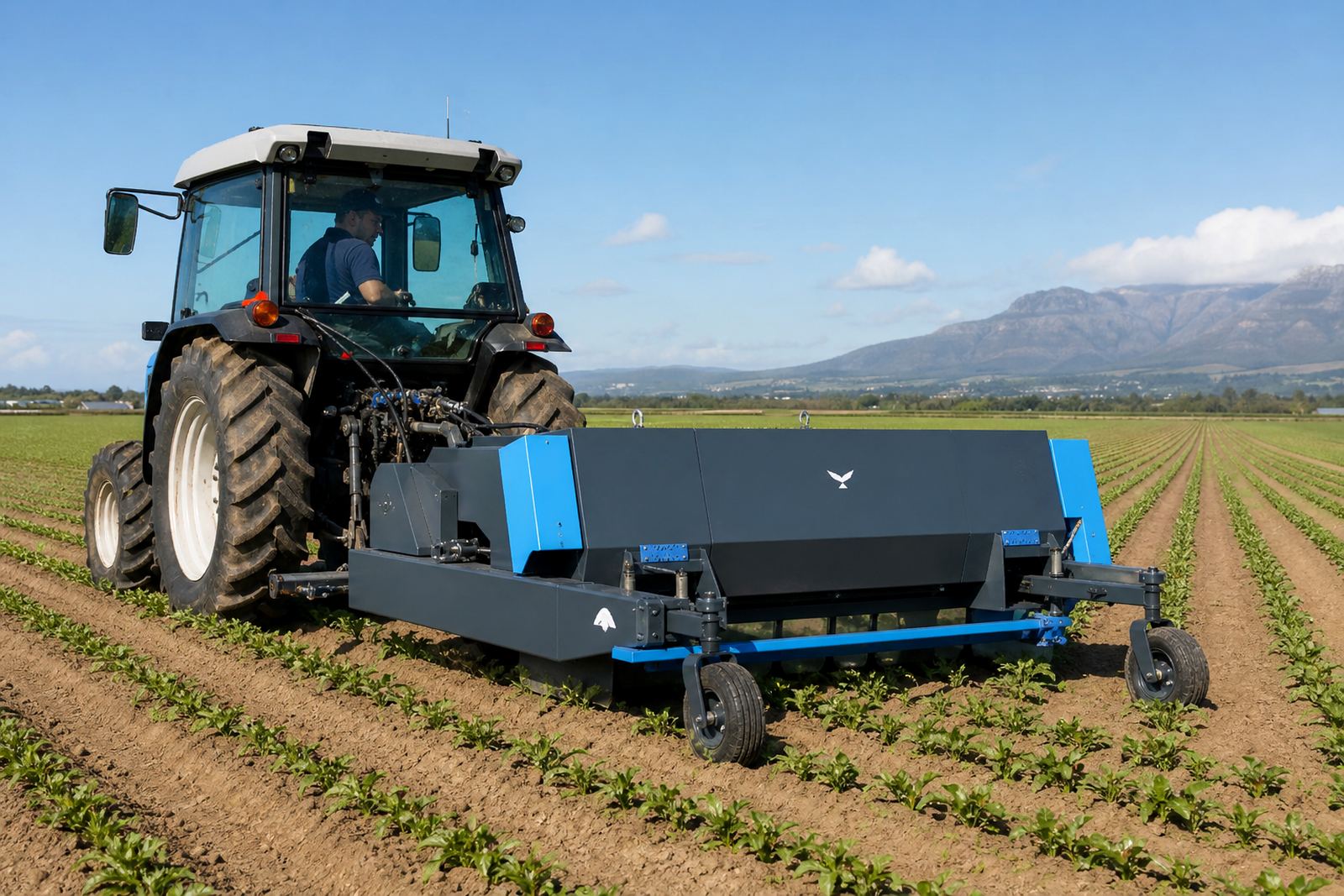
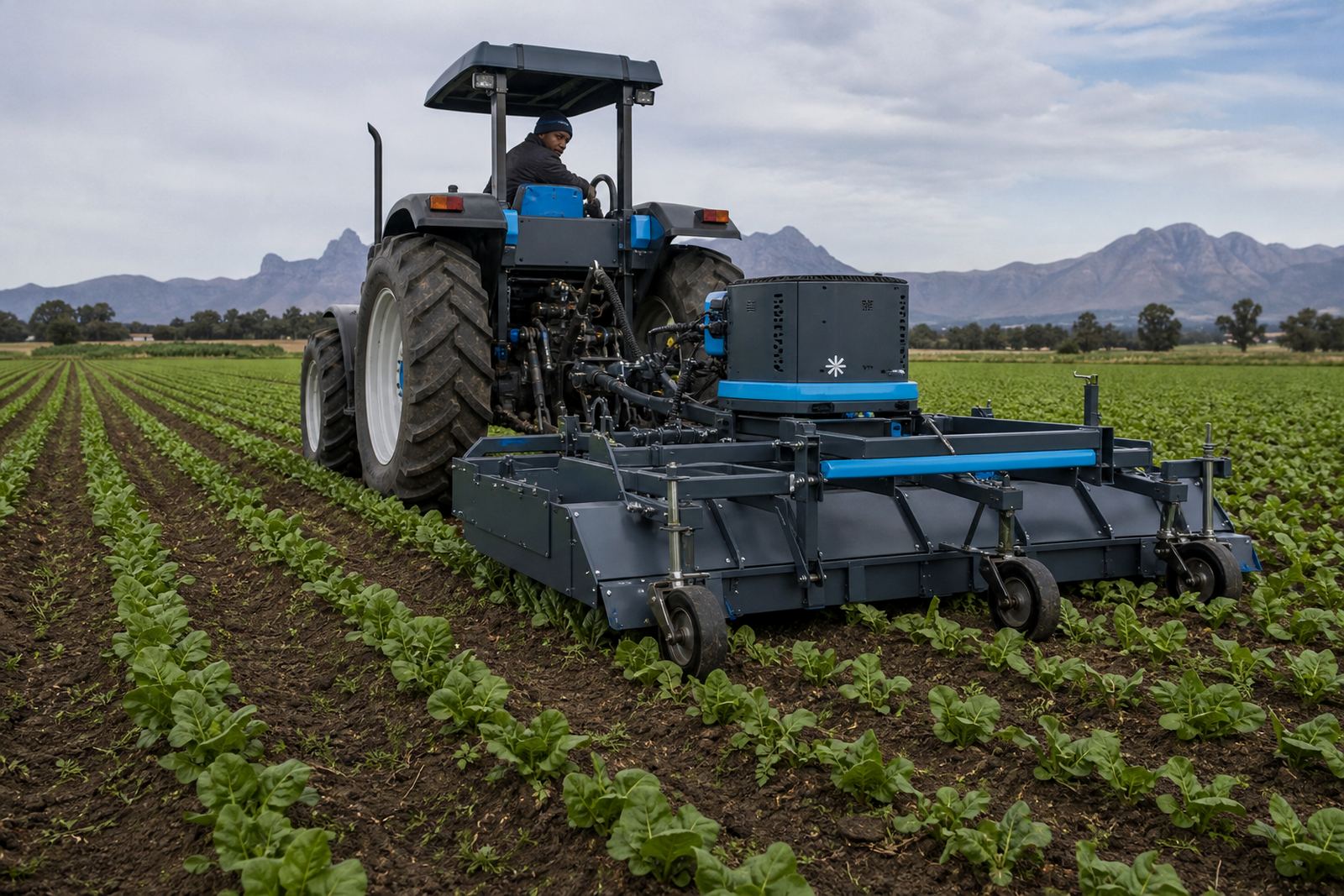
Our spinach work uses a tractor-drawn laser weeding unit with a trained operator on the day. The system uses camera guidance to follow the crop line and direct lasers at the weed growing points. Because the work is physical but precise, the field pace changes with weed pressure, plant size and how uniform the block is. Dense flushes take more attention than a light scattering of weeds, and that is where planning matters most.
The setup is a good fit for spinach blocks where growers want to cut herbicide use and keep the soil surface intact. There is no cultivation, so the beds stay as they are. That helps when a grower has already prepared a fine seedbed and does not want the surface opened again. It is also useful where irrigation placement and bed shape make mechanical hoeing awkward. We can work with a single block or with a series of spinach plantings on one farm, depending on how the season is laid out.
- Tractor-drawn laser unit with operator supplied
- Camera-guided detection for crop line tracking
- Laser targeting of weed growing points
- No soil disturbance from the pass itself
- Suitable for repeat passes where the season calls for it
Timing the pass before weeds outrun the crop
Spinach is sensitive to early weed competition, so timing is a practical part of the job, not a side note. A field can look manageable from the road and still be too advanced once you step into the rows. Small broadleaf weeds and young grasses are easier to target than mature stands, and that is why crop timing plans matter. We look at the weed stage, the spinach leaf cover and the spacing between rows before setting a schedule.
In some blocks the first pass is used as a clean-up move after emergence. In others it is part of a planned sequence with a second visit after a new flush appears. Weather, irrigation and the farm’s planting pattern all play a part. On coastal farms, humidity can keep weeds moving after irrigation or mist, while inland blocks around Limpopo or the Free State may show different flush patterns after rain or heat. The point is not to force one rule onto every farm, but to match the pass to the field on that week.
- Weed stage matters more than the calendar alone
- Spinach canopy should still allow crop line visibility
- Repeat pass planning helps on staggered flushes
- Arrival site checks can confirm access, row layout and turning space
Layout notes that save trouble on the day
Spinach fields work best when the layout is easy for the operator to read. Straight rows, clear headlands and a bed form that stays consistent across the block make the pass easier to manage. If the field has short turns, soft ends or mixed bed widths, that needs to be noted in the planning stage. It is not unusual for one corner of a block to need a slower pace than the rest, especially where water has sat in a low patch or where previous cultivations left a slight crown.
We also look at access for the tractor and the sequence of blocks if the farm wants several fields done in one programme. Travel coordination matters across regions such as Ceres, Grabouw, Tzaneen, Nelspruit, Howick and Bethlehem, because field time is cleaner when the order of work makes sense. For growers with multiple spinach plantings, a multi farm programme can be planned so the blocks are grouped by timing and weed pressure rather than by guesswork.
- Keep rows as straight as the planting pattern allows
- Mark soft spots, drains and awkward turns before the visit
- Group nearby blocks to reduce avoidable movement between fields
- Use post pass reporting to note where follow-up should be watched
Common errors on spinach jobs
The biggest mistake is waiting until the weeds are too far ahead. Once the weed has size and spread, the laser has more to deal with and the crop line becomes harder to read. Another common problem is planting variation. If row spacing changes too much across a bed, the operator has less room to hold a steady pass. Loose bed shoulders can also cause trouble because the tractor wants firm ground and a predictable line.
Growers sometimes ask for a pass without checking whether the block is really ready. That can lead to poor timing, extra field movement and more stop-start work than the crop needs. It is better to schedule one well-timed visit than to squeeze in a block that is not ready. We also see problems where irrigation has just left the bed too wet, which can make access awkward and can slow the field pace more than expected.
- Do not leave the block until weeds are well advanced
- Avoid mixed row spacing where possible
- Check soil moisture before the tractor enters
- Do not treat every spinach block as if it were identical
What spinach laser weeding usually costs
Budget depends on block size, travel, the number of passes, weed pressure and how much scheduling is needed across the season. For spinach, growers usually ask for a field assessment first, then a crop timing plan and a quotation based on the block layout. Smaller trial strips and single-block visits sit at one end of the range, while multi farm programmes with repeat passes sit higher because they use more planning and more machine time.
As a working guide, a short spinach trial strip or assessment visit may sit from about R7,500 to R15,000, depending on travel and field conditions. A single full block pass often falls between R18,000 and R45,000, while a season booking or multi-farm programme can move from about R60,000 upward once repeat visits, scheduling and travel are included. These are planning figures, not fixed prices, because weed stage and field access can change the day’s work.
If the crop is spread across several areas, we can build the schedule around the order that makes field sense. That is often better than chasing blocks in a way that burns time and adds costs. For spinach growers in Philippi and further afield across South Africa, the useful starting point is a clean field assessment and an honest look at whether the block is ready for laser work.