When leek rows suit a laser pass
Leeks are a useful fit for laser weeding when the rows are laid out cleanly and the crop stands far enough apart for camera-guided detection to read each plant. The method suits growers who want weed control between and around the plants without spraying herbicide over the bed. It also suits blocks where hand hoeing is getting costly and the crop canopy is still open enough for the system to work with confidence.
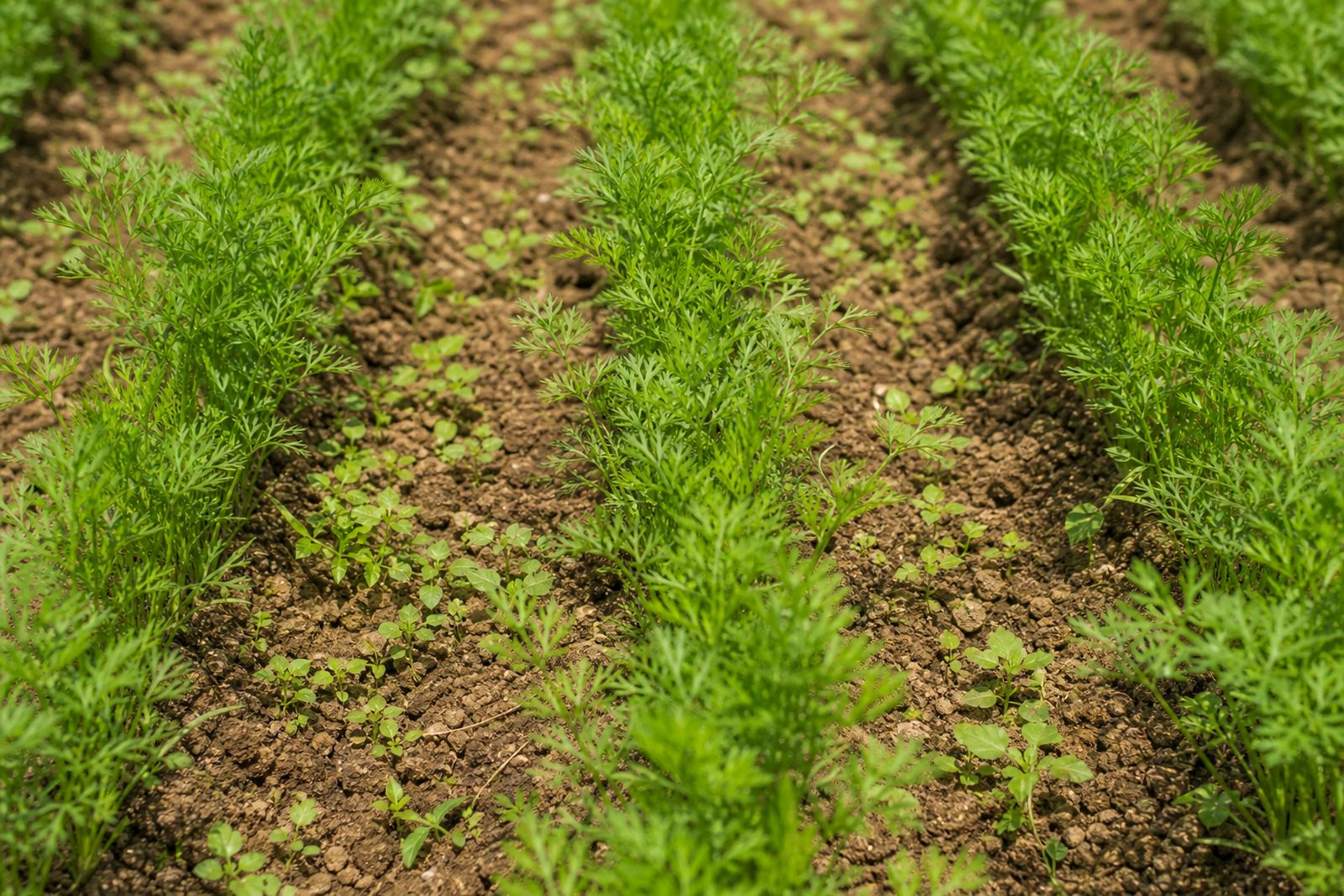
In practice, the strongest results come when the crop is healthy, the stand is even and the weed flush is still at a manageable stage. Small broadleaf weeds and young grass weeds are easier to target than older, woody or tangled growth. A laser pass is not a rescue for a neglected block, and it is not a substitute for good row prep, irrigation planning and tidy bed formation.
- Best suited to straight rows with consistent spacing
- Works better when weeds are small and upright
- Useful where herbicide-free weed control is preferred
- Most practical on blocks with repeatable access for the tractor
What the setup usually looks like on leeks
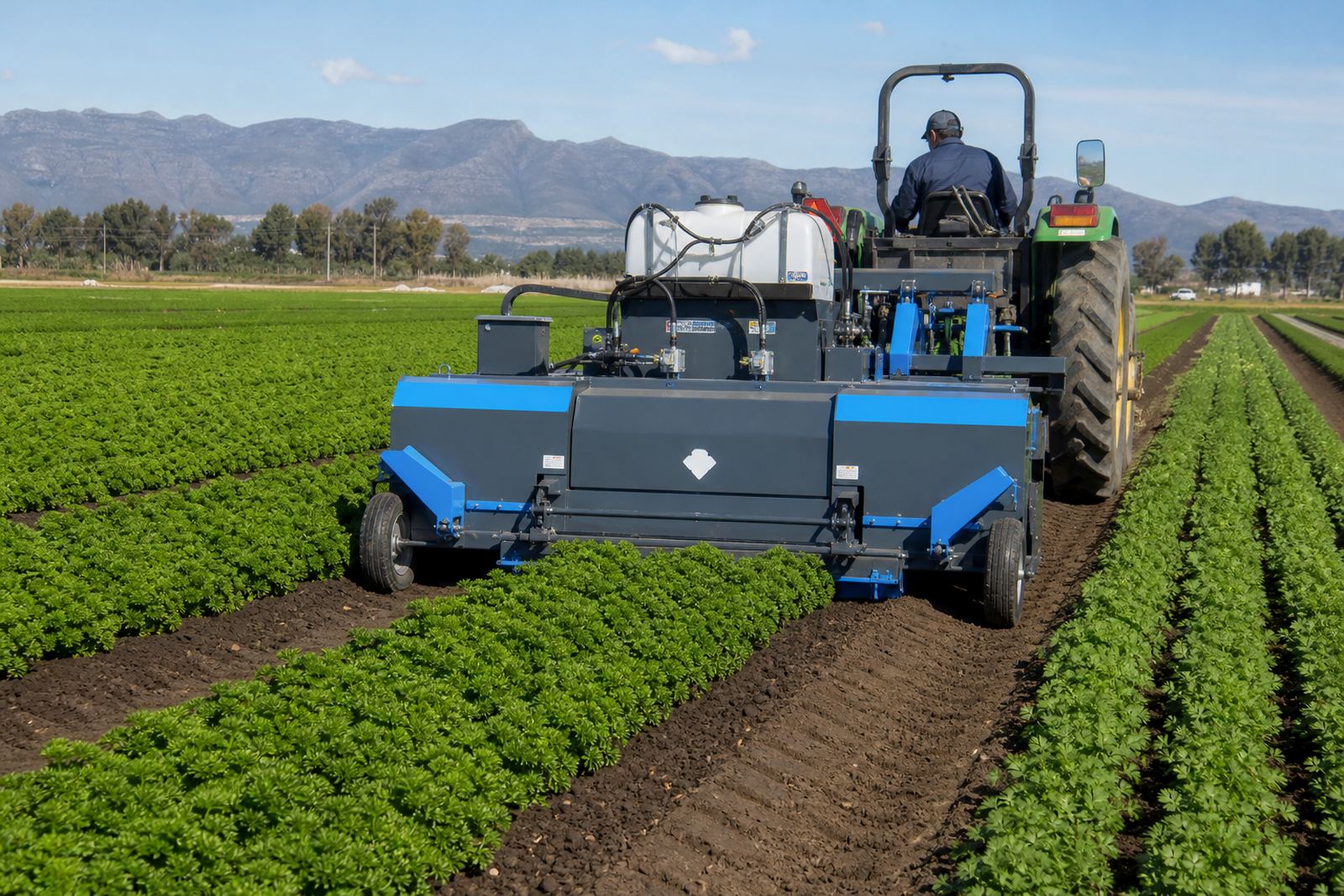
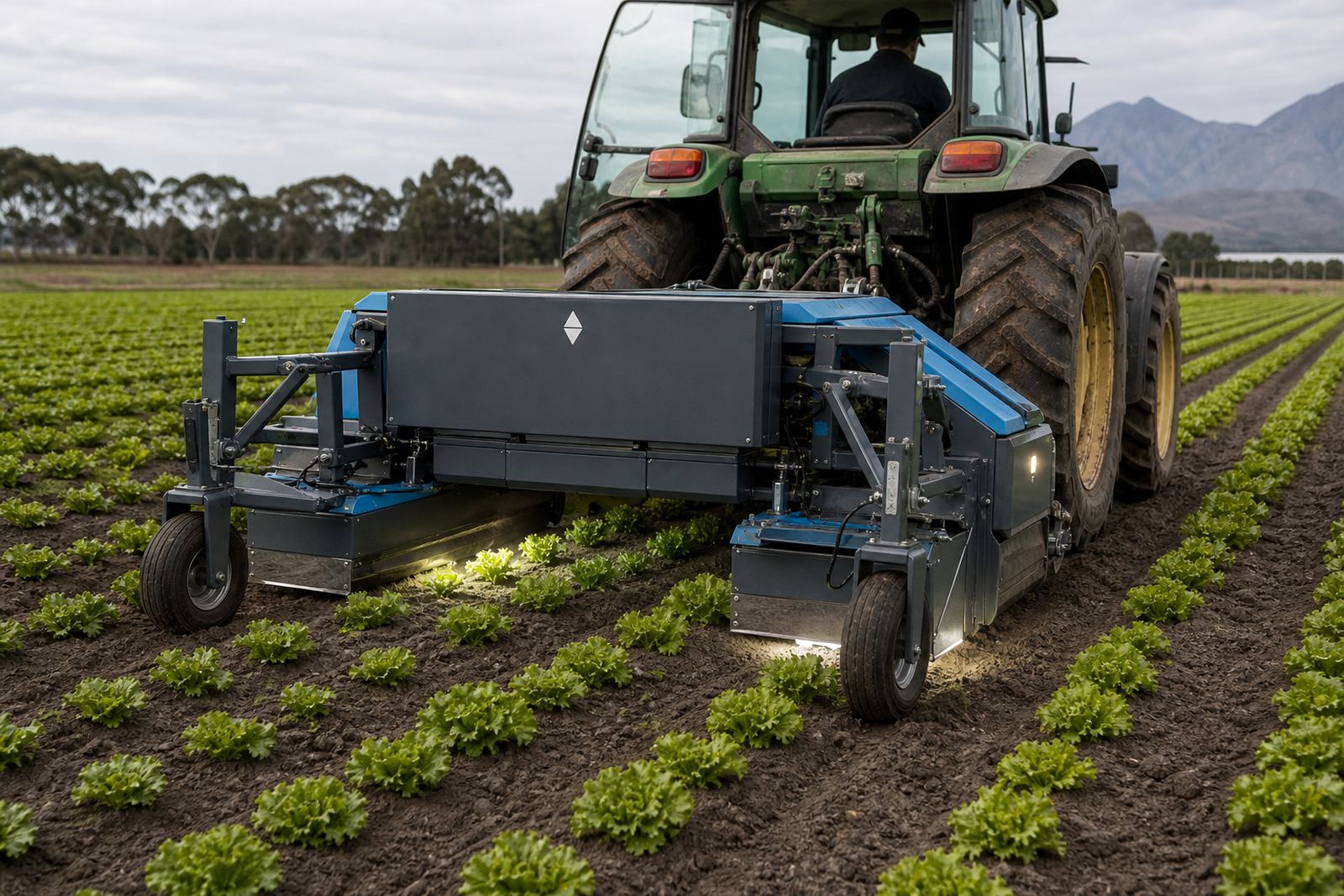
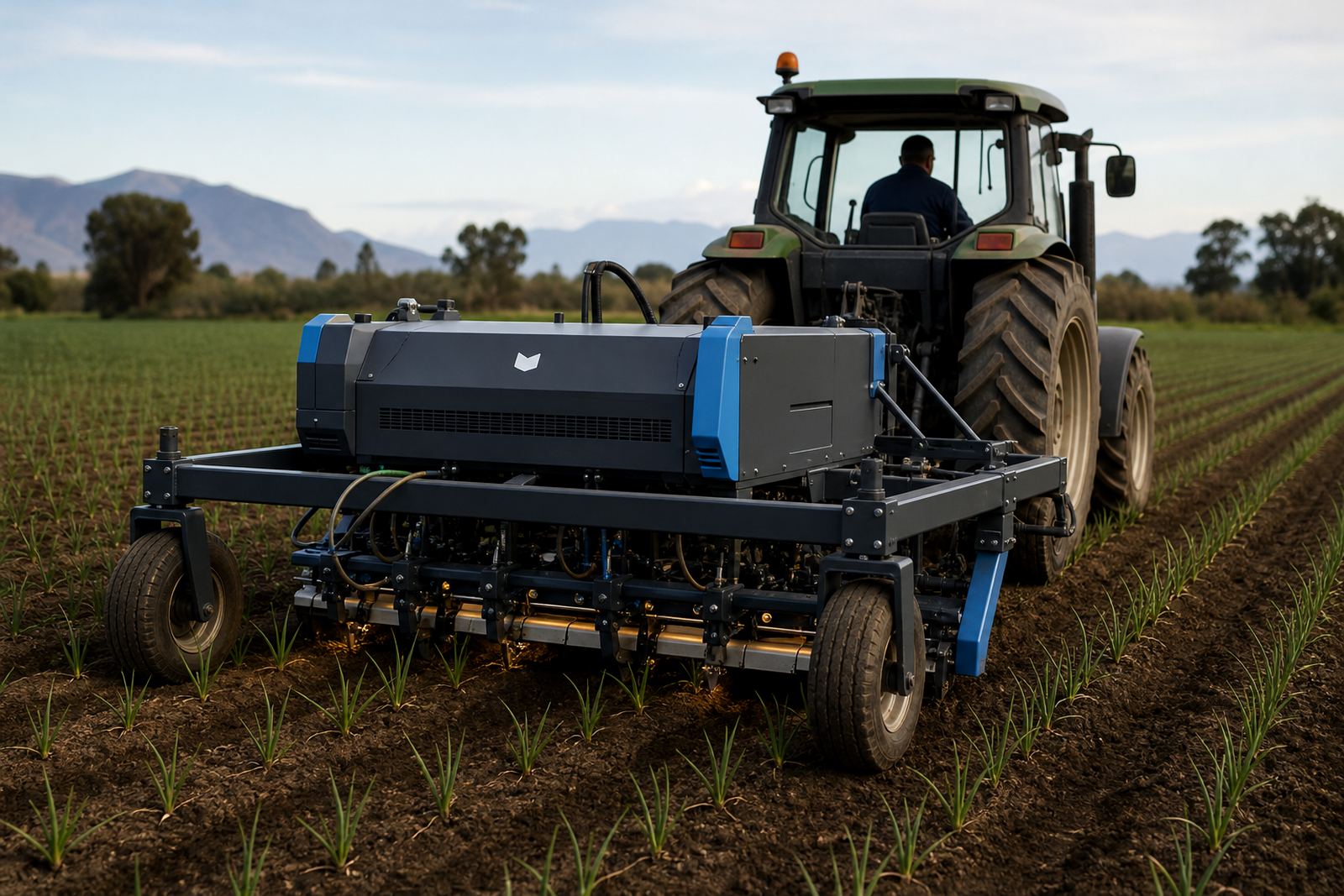
The working set is straightforward: a tractor-drawn laser weeding unit, an operator trained to run the system, and a field plan matched to the crop stage. The cameras scan the row, the software distinguishes crop from weed growth, and the lasers target the weed growing points. Nothing is disturbed in the soil, so the bed surface stays intact and the row structure remains as it was before the pass.
Leek farms often pair the laser pass with an arrival site check, a crop timing plan and a trial strip run on the first block. That helps confirm how the rows are reading, where the weeds are thickest, and whether the spacing allows a clean run. On larger farms, repeat pass planning and multi farm programmes help keep different blocks moving without guessing from one field to the next.
- Tractor-drawn unit for field work across open blocks
- Camera-guided weed detection at row level
- Targeting of weed growing points rather than blanket spraying
- Trial strip runs useful before larger area booking
Layout choices that make the job easier
Leeks are more forgiving when the row spacing is even and the plants are not leaning over into the inter-row. Narrow, twisted or badly staggered rows can confuse the camera system and slow the work. Clean headlands also matter, because awkward turning space can interrupt the rhythm of the pass and make field speed less consistent.
We usually look at planting pattern, bed width, weed pressure, irrigation lines, soil moisture and access tracks before a booking is finalised. In wetter coastal conditions, such as parts of the Western Cape, the surface can hold moisture and wheel marks stay longer, so field timing matters. In hotter inland areas like Limpopo, Mpumalanga, KwaZulu-Natal and the Free State, timing often turns on weed flushes and how quickly the crop closes in.
- Keep rows straight and spacing consistent where possible
- Leave enough turning room at the ends of blocks
- Avoid scheduling after heavy rain if the ground is soft
- Match the pass to the weed stage, not just the crop age
Common mistakes on leek blocks
The biggest mistake is waiting until the weeds are already too advanced. At that stage the lasers have more to sort through, and field speed drops because the operator has to work with a denser canopy of unwanted growth. Another common issue is uneven emergence. If the leeks are patchy, the system has less reliable crop shape to read and the pass can become slower than the grower planned.
A second problem is overpromising what one pass can do. Laser weeding works best as part of a season plan, not as a single fix. A grower who wants better control usually plans for repeat passes, a crop timing plan and a proper block schedule. Ignoring those pieces can leave gaps in coverage and more follow-up hand work than expected.
- Leaving weeds too large before booking the pass
- Planting too close for reliable crop recognition
- Using a one-pass mindset on a long crop cycle
- Skipping trial strip runs on a new block
Budget ranges for leek weed control in Rand
Budgeting for laser weeding depends on area, travel, weed pressure, block layout and how many passes the season needs. Smaller or awkward blocks often cost more per hectare than neat, larger fields because set-up and movement time carry more weight. Travel coordination also matters for farms outside the Cape, especially when the programme includes multiple blocks across different districts.
For leek work, growers often look at a planning range rather than a single flat figure. A field assessment and trial strip run may sit in a few thousand Rand, while a larger season booking with repeated passes is usually priced per hectare or by programme. For many farms, practical planning starts at about R3 500 to R7 500 for a small assessment and trial on a limited area, while full field programmes can run from about R8 000 to R25 000 plus per block depending on size, travel and pass count. Those figures shift with weed pressure and access, so the block needs to be seen before numbers are tightened.
- Assessment cost depends on access and field distance
- More weed pressure often means slower field speed
- Multiple passes are common in longer leek cycles
- Multi farm programmes can reduce stop-start movement across blocks
How we schedule leek work across farm areas
Our base is in Philippi, Cape Town, and we schedule leek work for growers across the Western Cape and further afield, including Limpopo, Mpumalanga, KwaZulu-Natal and the Free State. The team covers field assessments, grower consultation, arrival site checks, operator supplied work, travel coordination, season bookings and post pass reporting. Leek growers in places like Ceres, Grabouw, Tzaneen, Bela-Bela, Nelspruit, Howick and Bethlehem often use that mix when blocks need a planned sequence rather than an isolated visit.
For leeks, the key is to line up the block, the crop stage and the weed stage before the tractor arrives. Mandla Adonis leads the business, with Anele Khoza on operations, Pieter Mokoena on field scheduling, Zanele Naidoo on grower liaison, Johan Daniels as lead operator, Lerato Letsoalo coordinating service, and Ruan Mkhabela supervising the workshop. That structure helps keep the programme practical when several farms need attention in the same season.
- Field assessments for spacing, access and weed stage
- Crop timing plans for repeated leek passes
- Trial strip runs before wider scheduling
- Repeat pass planning for longer crop windows