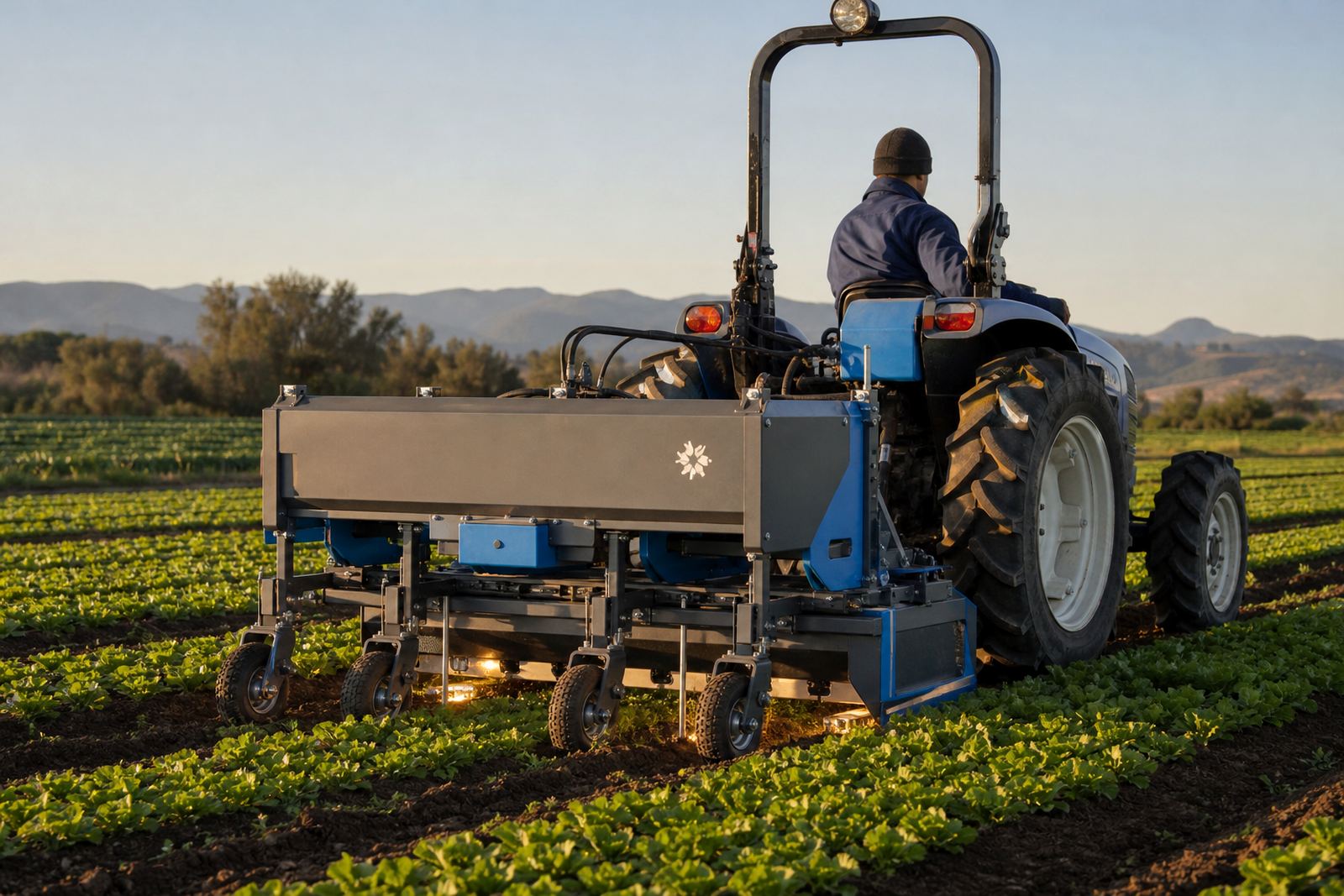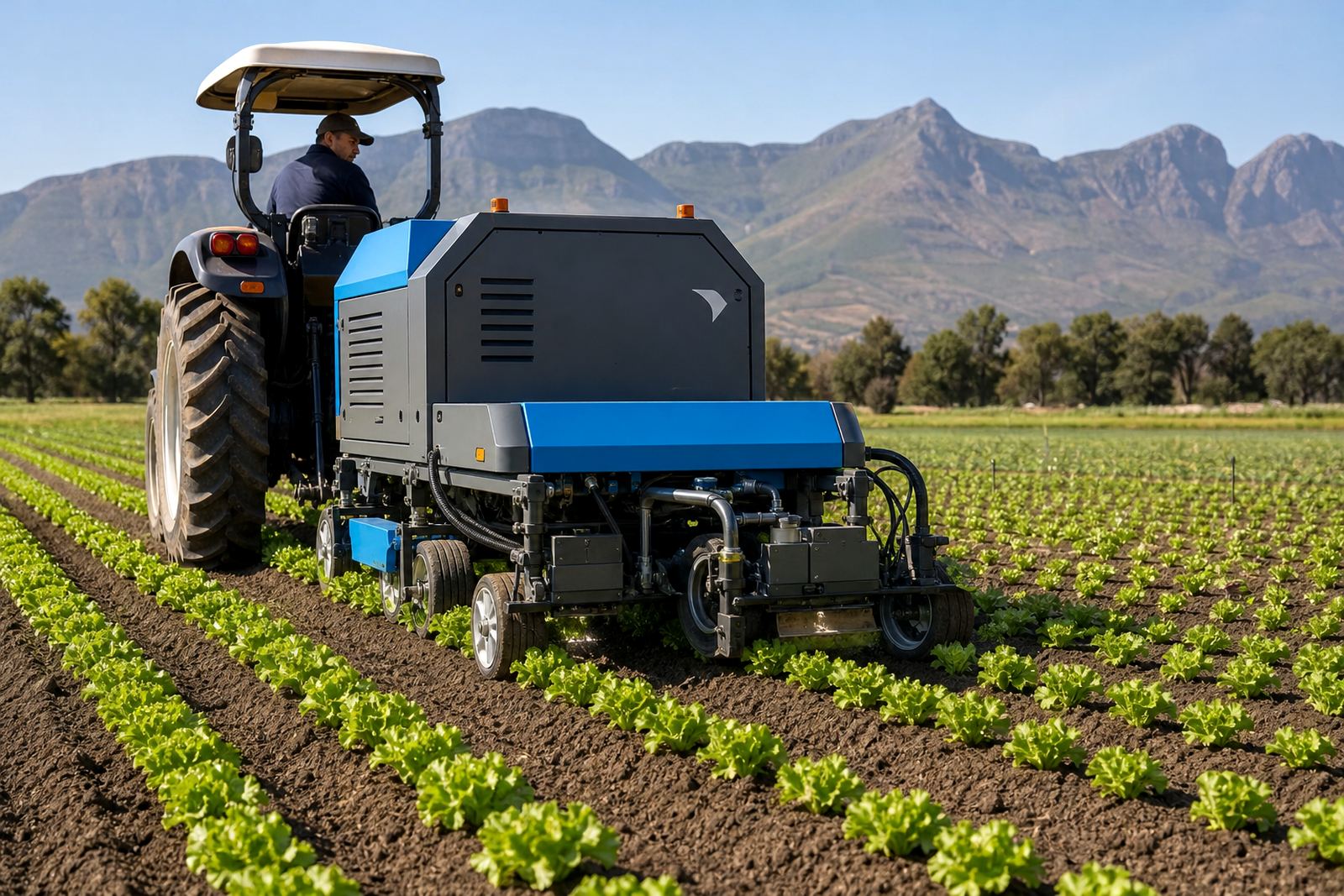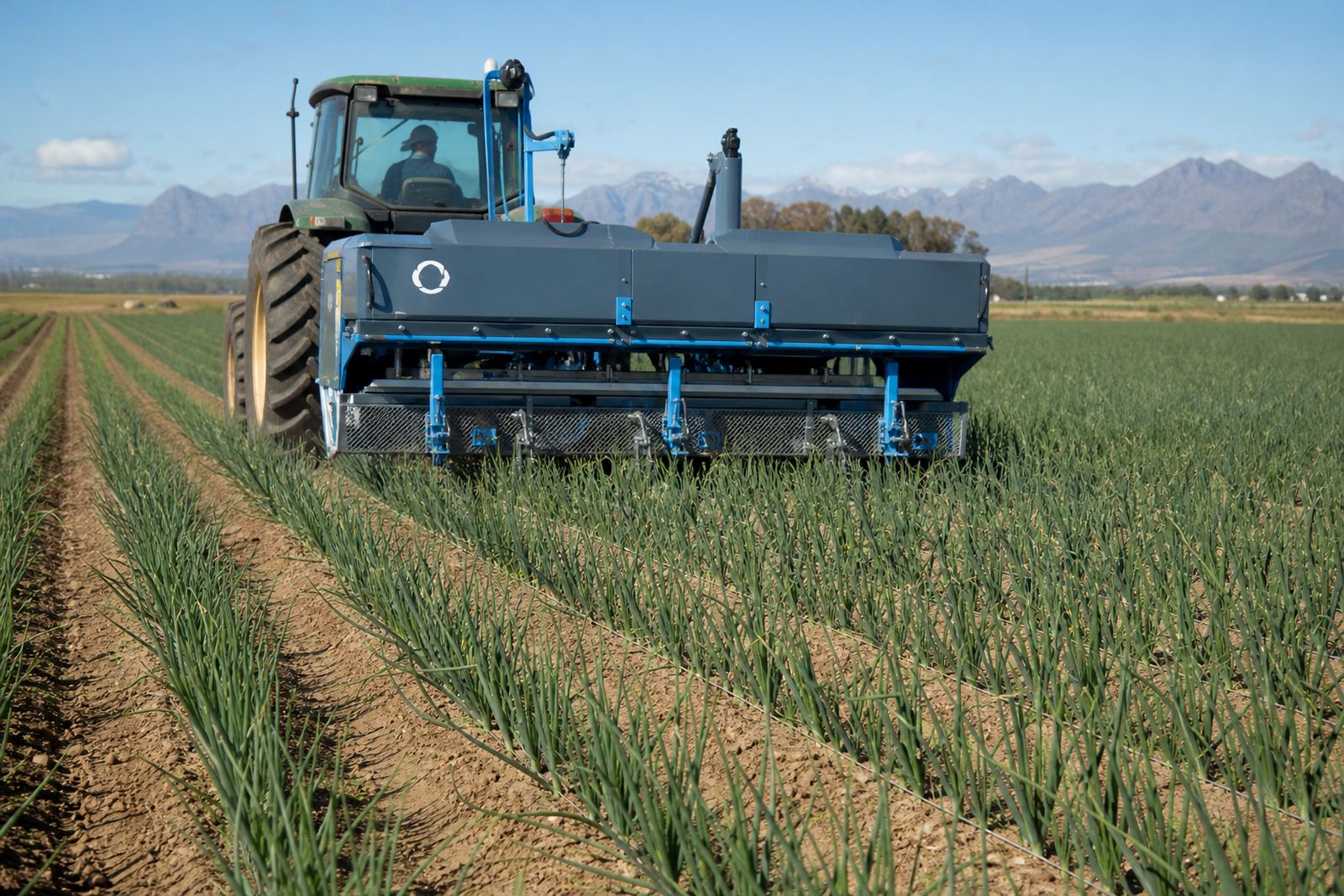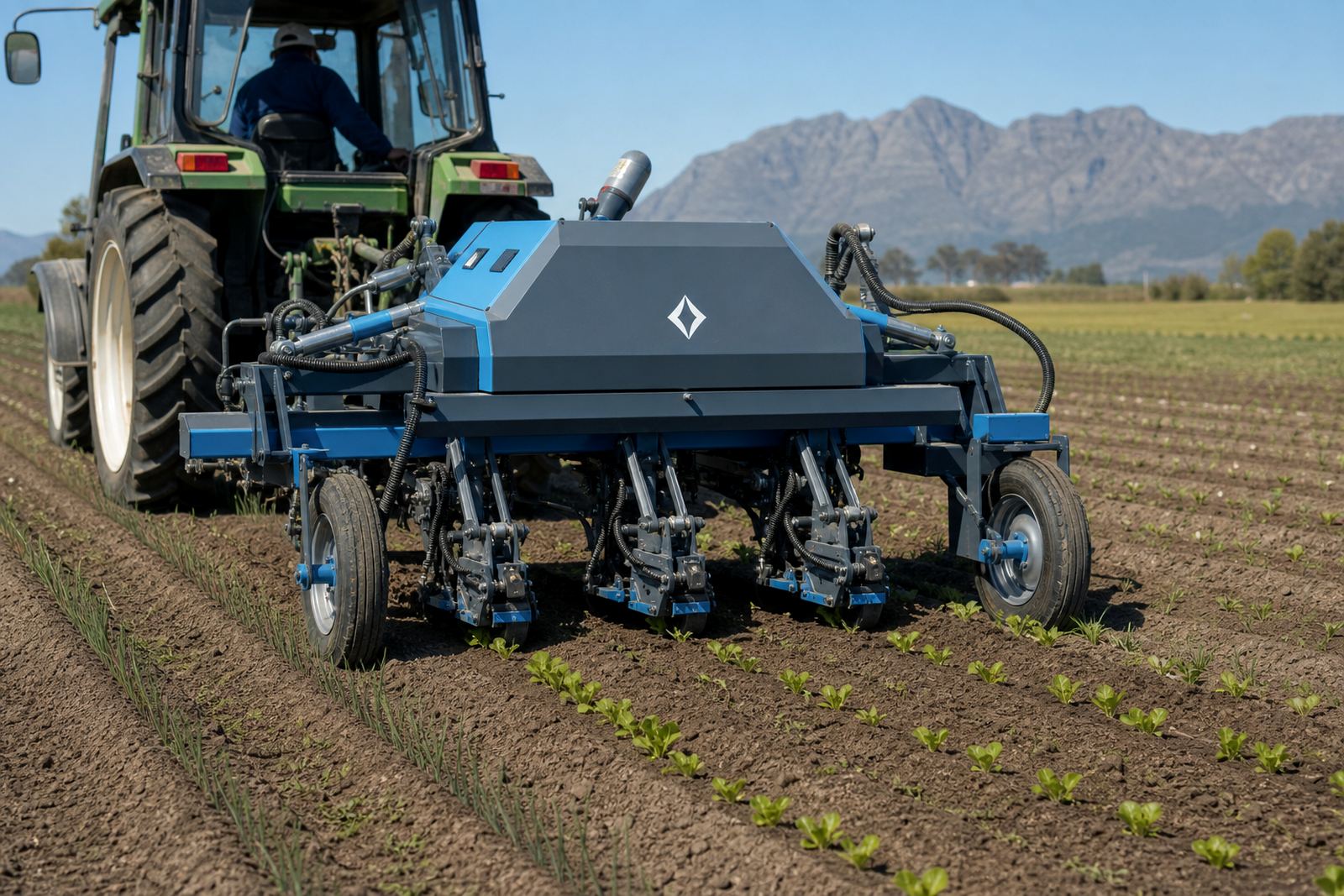
An early pass with the crop still in its working window
First Pass Hire is set up for the first laser weeding run on a block where weeds have emerged but are still small enough for accurate targeting. The unit uses camera-guided detection to find weeds between rows and close to crop plants, then directs laser energy at the growing point rather than disturbing the soil. That matters on beds where later cultivation would cut roots or throw fresh weed seed back into the row.
This service suits vegetable crops that are laid out in clean rows, especially onions, carrots, lettuce and brassicas. It is a practical option for growers who want a field pass before the canopy closes, while the crop still leaves enough open ground for the operator and the detection system to work properly. Field speed changes with weed pressure, crop spacing and how uniform the stand is, so the first pass is planned around what the block actually shows on the day.
What the hire includes on the day in the field
The booking includes a tractor-drawn laser weeding unit, operator supply and arrival site checks before work starts. Our team looks at row spacing, bed shape, irrigation lines, headlands and any rough ground that could affect travel. If the block needs staggered work because the crop is not even across the land, we set the pass up section by section rather than forcing the whole area into one pace.
- Tractor-drawn laser weeding unit for row crop work
- Trained operator supplied with the machine
- Arrival site checks before the first run
- Field scheduling for single blocks or multi farm programmes
- Post pass reporting for grower records
The first pass can also be used as a trial strip run on new ground. That lets the grower see how the crop and weed mix responds before the rest of the block is scheduled. On some farms, especially where labour windows are tight, that first strip gives useful information for the next pass and for later season bookings.
Where the first pass suits best
This hire works best on row crops with defined spacing and weed pressure that is still manageable. Onions, carrots, lettuce and brassicas are common candidates, though the block still needs the right stage and the right weed size. If weeds have already become large or woody, the pass may need to be adjusted or split into more than one visit.
We also handle areas with different soil and weather conditions across the season. Philippi, Ceres and Grabouw often need careful timing after wind or moisture changes, while inland blocks in Tzaneen, Bela-Bela, Nelspruit, Howick and Bethlehem may need different scheduling because the crop stage can move faster with heat and irrigation. The same unit can travel between regions, but the field plan should match the block, not a fixed calendar slot.
- Suitable for early weed control on open row crops
- Works without herbicide sprays in the target row zone
- No soil disturbance from hoeing or tine work
- Useful where bed structure must stay intact
- Can be planned for one farm or several farms in sequence
Sizing, field pace and the timing that matters
There is no single field speed for every first pass. Dense weed patches, uneven emergence and tighter crop rows all slow the work, while clean, even stands allow steadier progress. The useful measure is not speed alone but whether the unit can see the weed clearly enough to target the growing point without harming the crop beside it.
As a general guide, the first pass is best booked when the crop has enough strength to carry the equipment through the block, but before weeds start shading the row or seeding. In practice that means the timing should be checked against emergence stage, rainfall, irrigation and how long the land has been waiting after the last weed flush. On vegetable farms, a late first pass usually gives less room to manoeuvre and can force a narrower working window.
Because the unit is tractor-drawn, the field also needs workable access for turning, entry and exit, and enough headland space for safe movement. If the farm has several blocks, we can schedule the first pass in a sequence that keeps travel and farm traffic sensible for the day.
What to prepare before the machine arrives
The first pass runs best when the block is easy to read. Clear access roads, visible rows and a brief look at irrigation gear save time in the field. If the crop has mixed maturity, tell us which sections are ready first, because the operator can then work the most suitable area before moving on to less even ground.
- Confirm crop type, row spacing and bed width
- Share the weed stage and how patchy the pressure is
- Mark broken pipes, low wire, stones or soft patches
- Note headland width, turning space and gate access
- Tell us whether the block is for one pass or a sequence
On some farms the first pass is part of a larger season booking, while on others it is a stand-alone intervention for a block that needs urgent early control. Both work, but the crop stage needs to be right and the land needs enough access for the tractor-drawn unit to work without unnecessary stops.
Care after the pass and the next block of work
After the first pass, growers normally watch the treated rows for fresh flushes, especially where moisture has brought new germination. The method removes weeds without turning soil, so the bed structure stays in place and the next inspection can focus on what is emerging rather than on disturbed ground. If the crop canopy is still open, a repeat pass plan may be useful once new weeds reach the stage where the lasers can pick them up properly.
Post pass reporting is useful for record keeping and for deciding whether the next visit should cover the whole block or only the heavier sections. Our field scheduling team can fold that into a multi farm programme or keep it as a separate follow-up on the same farm. Mandla Adonis leads the business, with Anele Khoza on operations, Pieter Mokoena on field scheduling, Zanele Naidoo on grower liaison, Johan Daniels as lead operator, Lerato Letsoalo coordinating service and Ruan Mkhabela supervising the workshop.
For booking details, crop timing plans or travel coordination across the Western Cape, Limpopo, Mpumalanga, KwaZulu-Natal and the Free State, use our contact form and include the block size, crop stage and the farm area you want covered.