Late-day field windows for working blocks
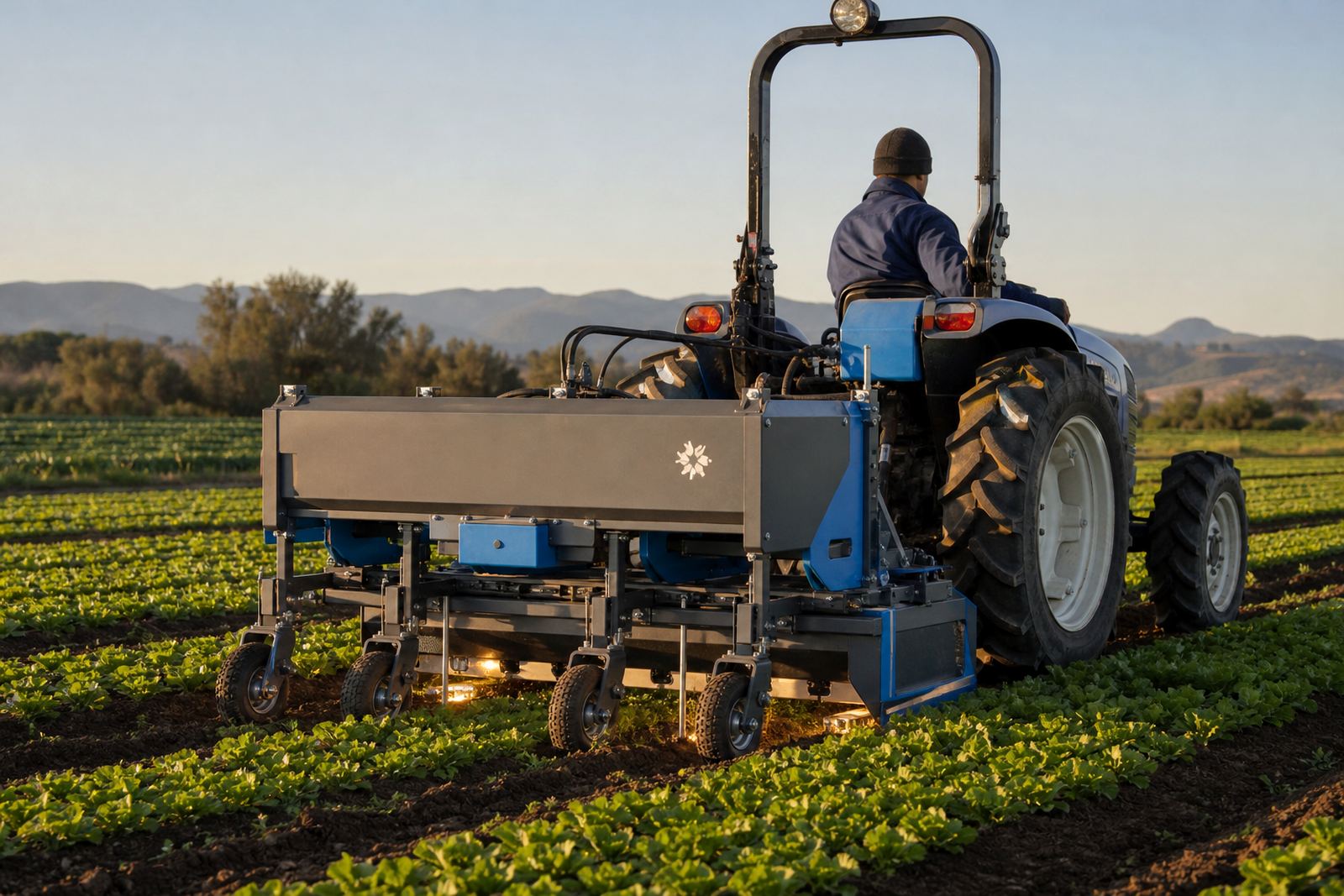
Afternoon Shift Hire is for farms that run better once the morning rush has cleared, the packhouse yard has opened up, or the block is easier to reach after other field work has moved on. It is commonly used where rows must stay open for harvest crews, irrigation checks or spray teams in the early hours, then shift to laser weeding later when access is cleaner.
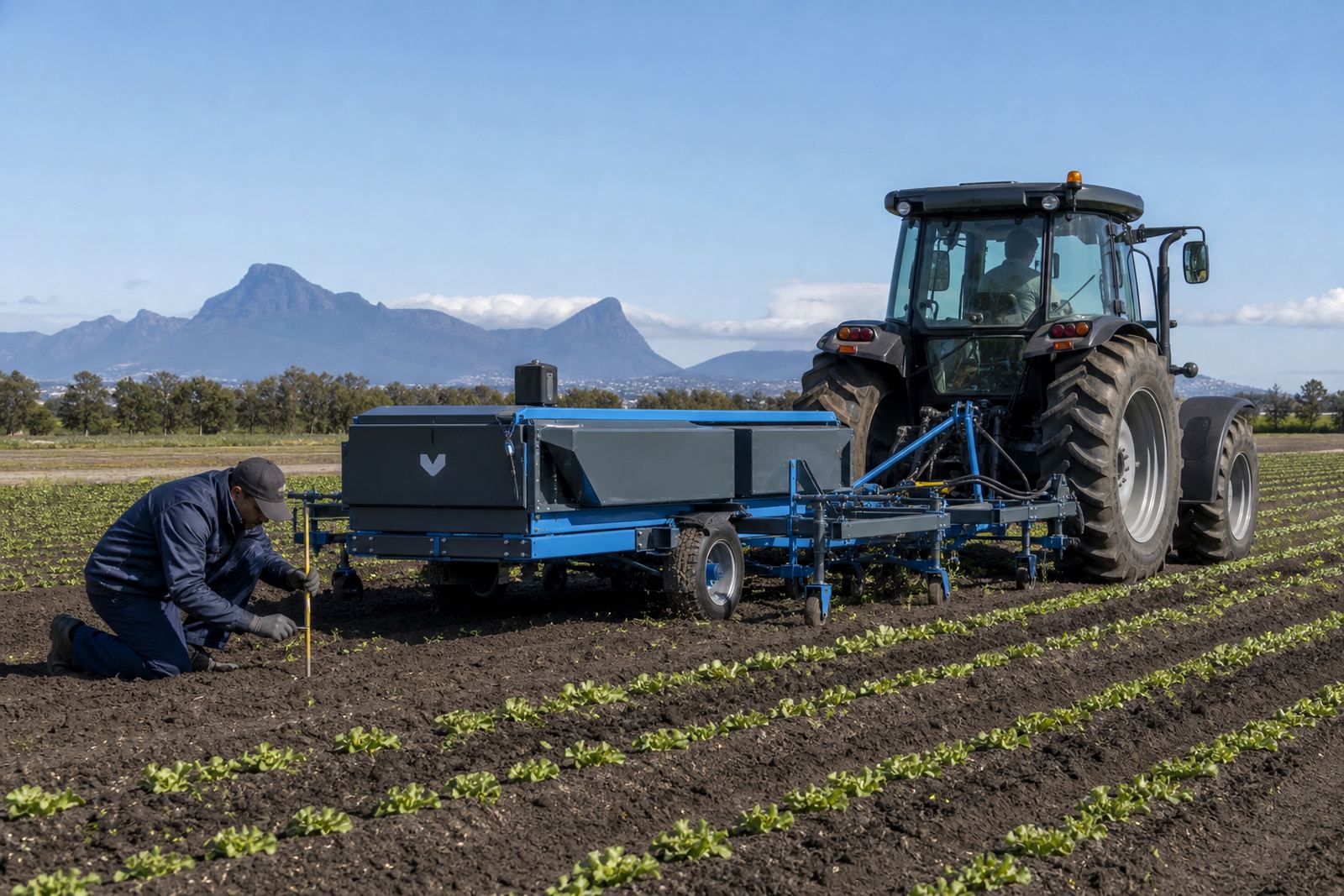
The service is built around a tractor-drawn laser unit and an operator who works the pass plan against the crop stage and weed stage in the block. The system uses camera-guided weed detection and targets weed growing points with lasers while keeping disturbance out of the soil profile. That matters in vegetable ground where moisture, crusting and row shape all need careful handling.
Afternoon scheduling is not about rushing a block before dark, it is about matching field access to the way the farm actually runs. Some sites in Philippi or Ceres have busy movement until midday, while blocks in warmer districts like Tzaneen or Nelspruit may be calmer after lunch once labour, packhouse movement and road traffic ease off.
What sits behind the afternoon run
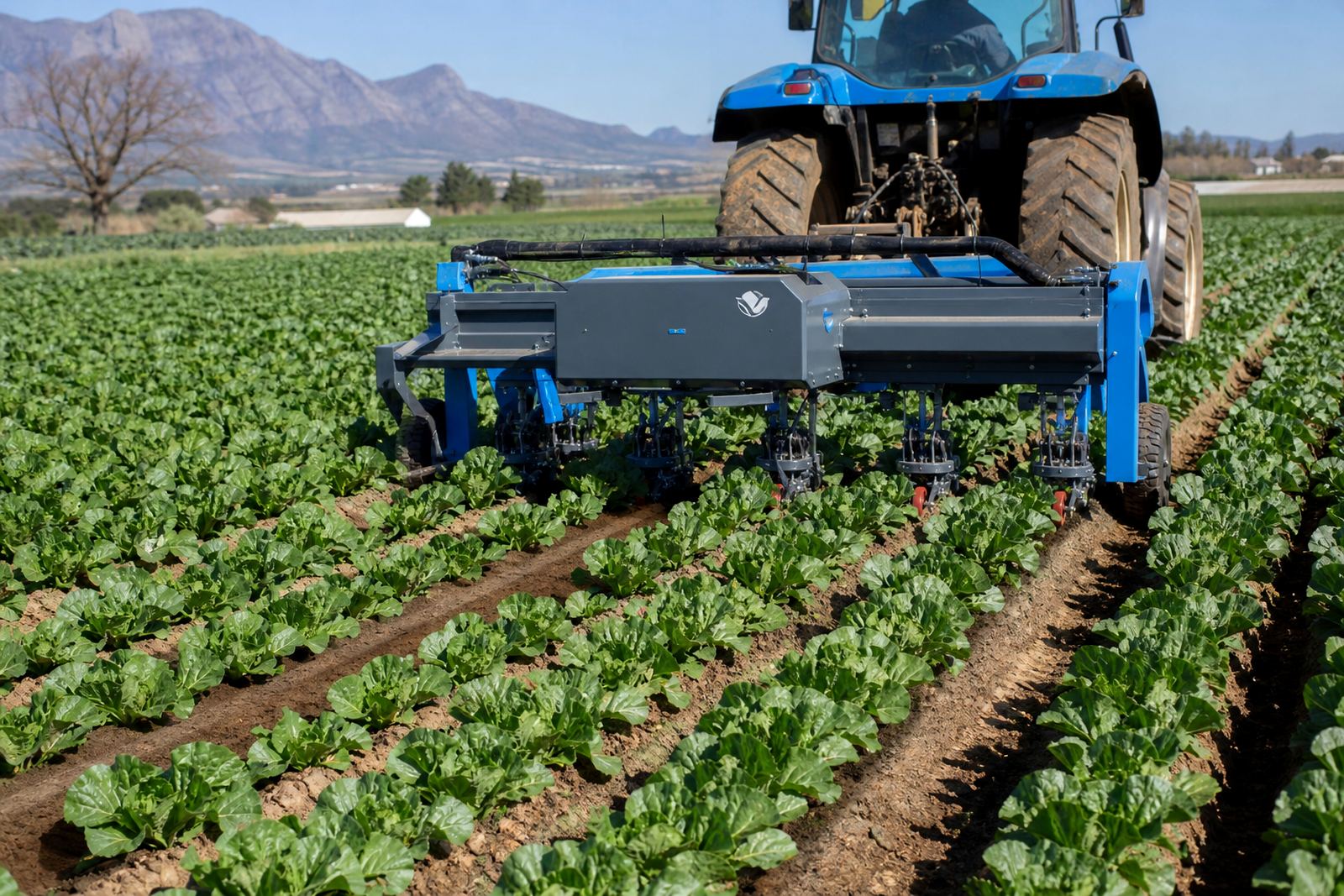
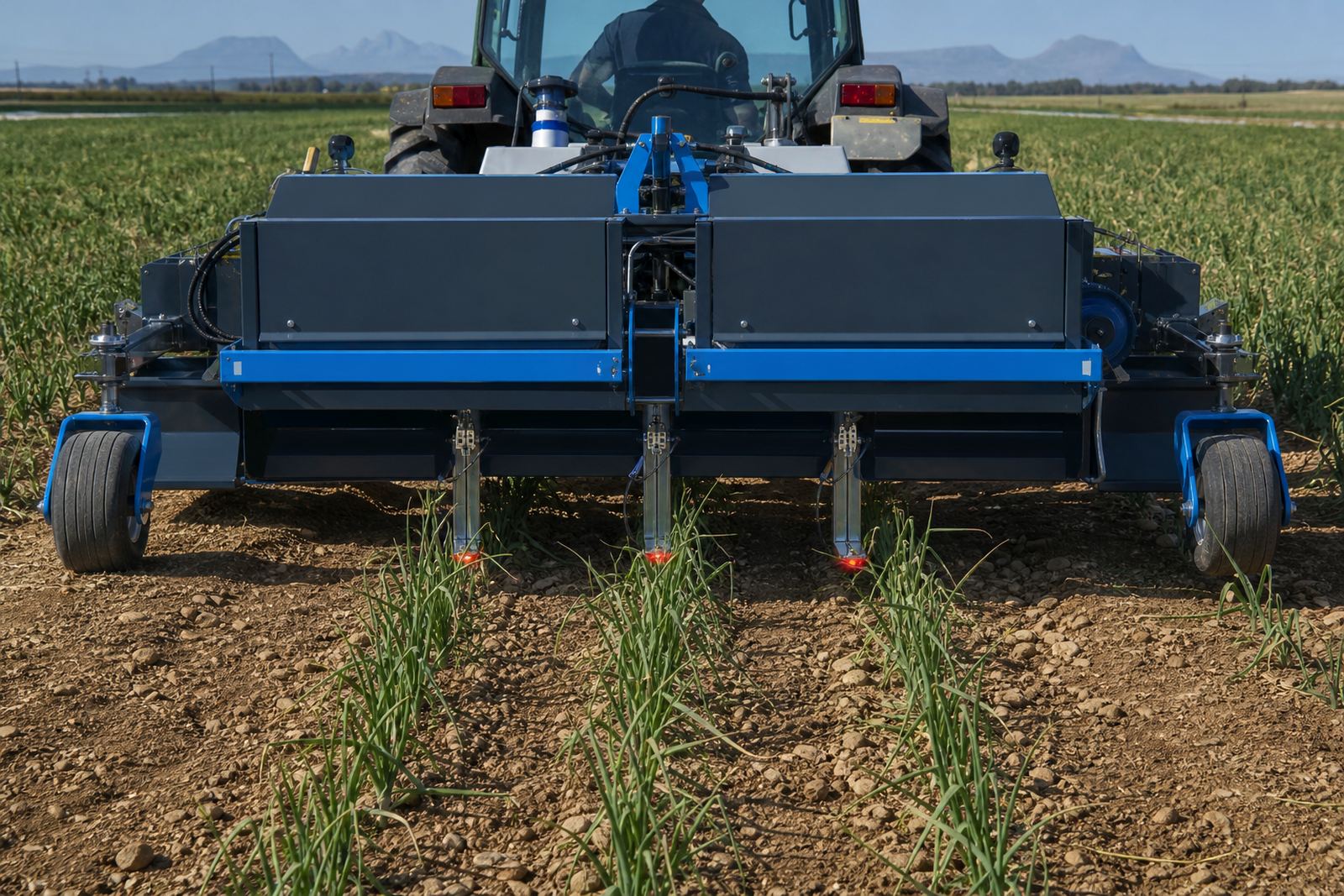
The hire includes a tractor-drawn laser weeding unit, a trained operator and field scheduling that is set around your crop rows, weed pressure and access pattern. The unit follows the planted line with camera-guided detection, then places the laser on weed growing points so the target plant is disabled without pulling soil or throwing residue across the row.
- Tractor-drawn laser unit for row-crop work
- Trained operator for in-field use
- Field scheduling for afternoon access
- Trial strip runs where a block needs a first look
- Repeat pass planning for follow-up timing
- Arrival site checks before the unit enters the field
Weed stage still matters more than the clock on the dashboard. Small weeds are easier to treat than larger, tougher plants, and the field schedule is usually set so the pass lands when the crop is clear enough for targeted work. On heavier pressure blocks, the tractor may move at a slower field speed so the operator can keep the cameras and targeting steady.
Where this format fits best
Afternoon Shift Hire suits row crops where the rows are defined and access can be organised around later-day movement. It is a practical option for onions, carrots, lettuce and brassicas, especially where the farm wants herbicide-free weed control and no soil disturbance between the plants.
- Onion blocks with tight row spacing and visible inter-row weeds
- Carrot fields where early access is blocked by other work
- Lettuce beds that need careful timing around labour movement
- Brassica plantings with repeated weed flushes after irrigation or rain
- Multi-farm programmes where one tractor and operator move between sites
It also suits growers across the Western Cape, Limpopo, Mpumalanga, KwaZulu-Natal and the Free State when afternoon road access or block entry is easier than morning entry. On coastal ground near Cape Town, the later slot can help when wind, moisture or yard congestion makes the earlier window awkward.
Site fit, tractor access and fitting notes
This is a field service rather than a fixed installation, so the main fitting work is about site readiness. The tractor-drawn unit needs suitable turning space, clear headlands, a field that is laid out for row work and an entry point that can take the equipment without tight reversals. If the block is muddy, overly soft or cut up by traffic, the schedule may need to shift to protect the crop structure and keep the unit tracking properly.
Power and gas sit outside the field process. What matters is the tractor pairing, access route, crop spacing and how the rows were established. A proper arrival site check lets the operator confirm the block shape, row count, weed spread and the best travel direction for the afternoon run.
In taller or uneven crops, the cameras need cleaner line sight, so crop canopy, row definition and weed height all affect how the pass is handled. That is why trial strip runs are useful on new blocks, especially where the grower wants to see how the field behaves before the full programme is set.
Care, handling and after-pass work
Afternoon scheduling is handled from our Philippi, Cape Town base and works across local blocks as well as longer travel routes. The team includes Mandla Adonis, Anele Khoza, Pieter Mokoena, Zanele Naidoo, Johan Daniels, Lerato Letsoalo and Ruan Mkhabela, with each person tied to a part of the service from scheduling to operator support and workshop care.
We work with growers in Philippi, Ceres, Grabouw, Tzaneen, Bela-Bela, Nelspruit, Howick and Bethlehem, and the schedule can be built as a single farm visit or as part of a wider multi farm programme. Travel coordination is part of the booking, so the afternoon window is matched to road access, block readiness and the order in which the farms need attention.
If you are setting up a new season plan, the contact form on our contact page is the place to send the block details, crop type and the time window that suits the farm. That gives the team enough to line up the unit, the operator and the route before the first field check.
What to send with the booking request
A clean booking note saves a lot of back and forth in the field. Include the crop, the block size, the row spacing if you have it, the weed stage, the district and whether you need a single afternoon run or a repeat programme across more than one farm.
- Crop type and growth stage
- Block area and row spacing
- Weed pressure and weed size
- Access time for the afternoon slot
- Whether the tractor can enter without tight turns
- Any harvest, irrigation or labour movement that affects the field window
For growers managing several sites, it helps to list the farms in the order you want them visited. The team can then set field scheduling, travel coordination and arrival site checks around the route rather than forcing a one-size plan onto every block.
Specs that matter on the day
Afternoon Shift Hire is built for practical field use, not showroom talk. The main numbers are the row work it can handle, the operator setup, the tractor draw format and the way the unit behaves in different weed stages. Field speed depends on weed pressure, crop definition and how clean the rows are on the day.
Where the block is ready, the unit can work later in the day without changing the weed control method. The process stays herbicide-free, soil stays undisturbed and the operator keeps the pass aligned to the crop row rather than the open ground between rows. That is the point of the hire, and it is why the afternoon slot works well on busy farms.
Key facts
| Service format | Contract laser weeding in an afternoon field window |
|---|---|
| Equipment | Tractor-drawn laser weeding unit |
| Operation | Camera-guided weed detection with trained operator |
| Crop fit | Onions, carrots, lettuce and brassicas |
| Field effect | Herbicide-free weed control with no soil disturbance |
| Coverage | Philippi, Cape Town and selected farming regions across South Africa |