Area-based hire for real field conditions
Our hectare based hire is built for farms that want laser weeding costed against the block size, crop arrangement and the state of the field. A quote is shaped by the hectares to be covered, row spacing, field access, weed pressure and the number of passes likely to be needed across the season.
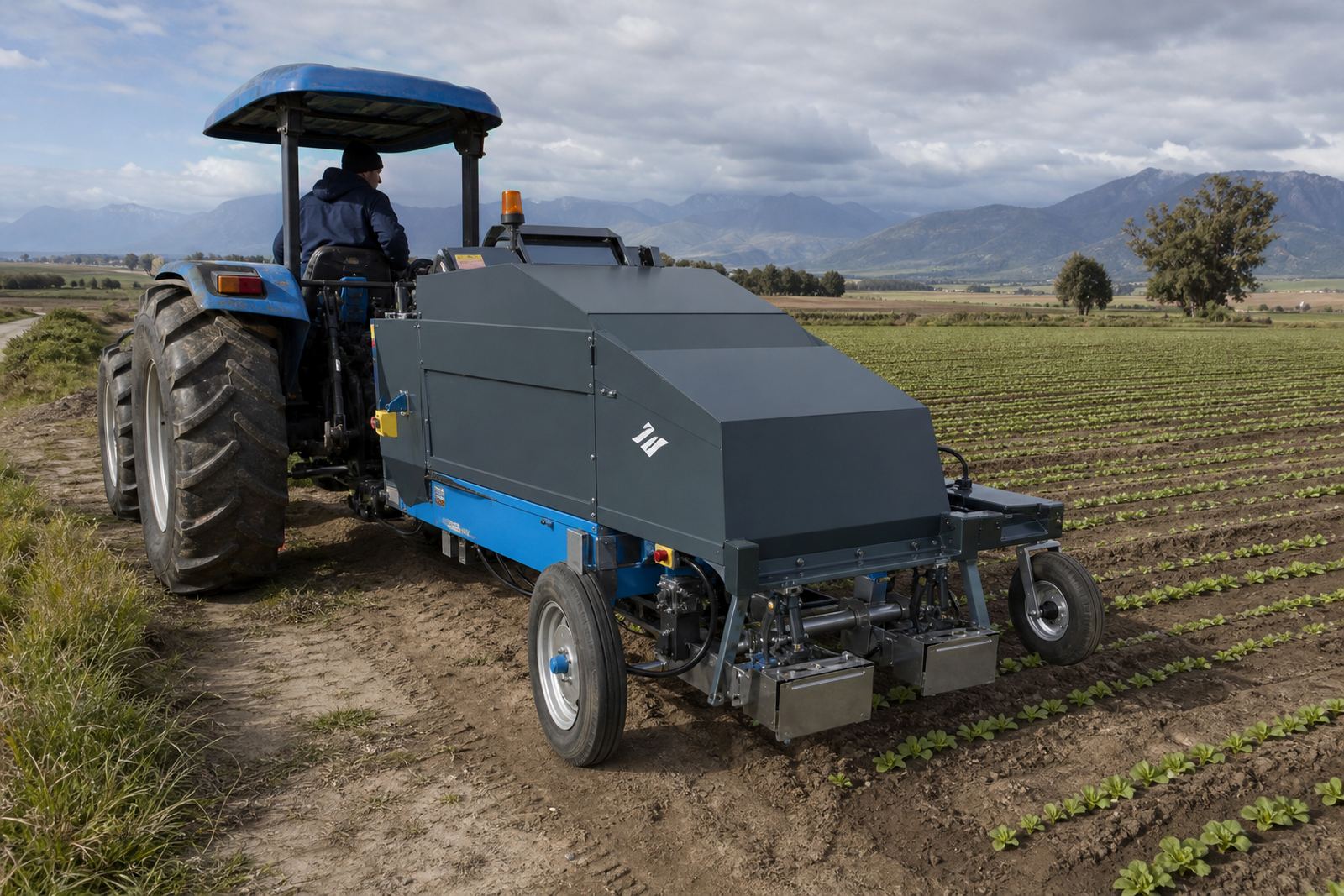
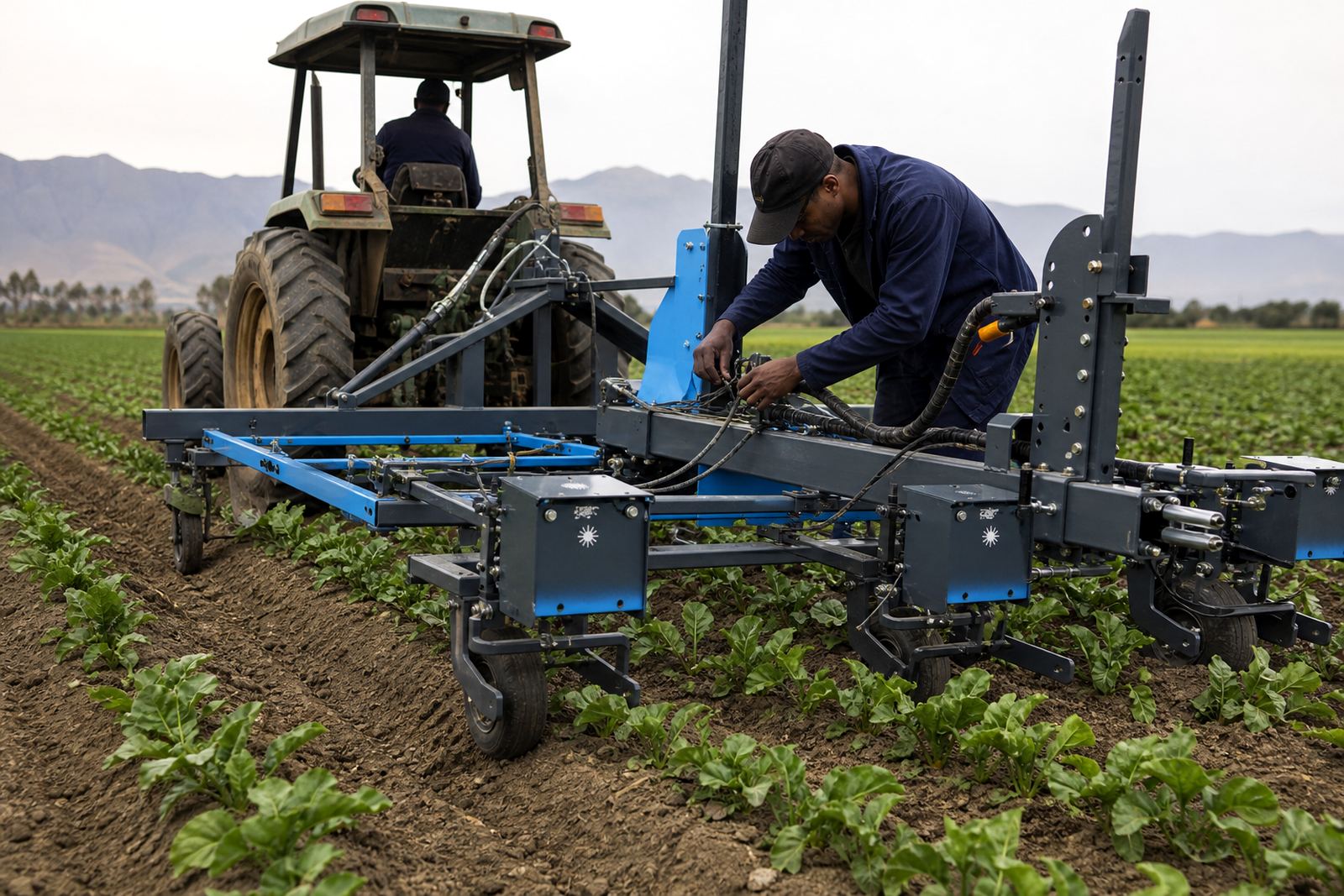
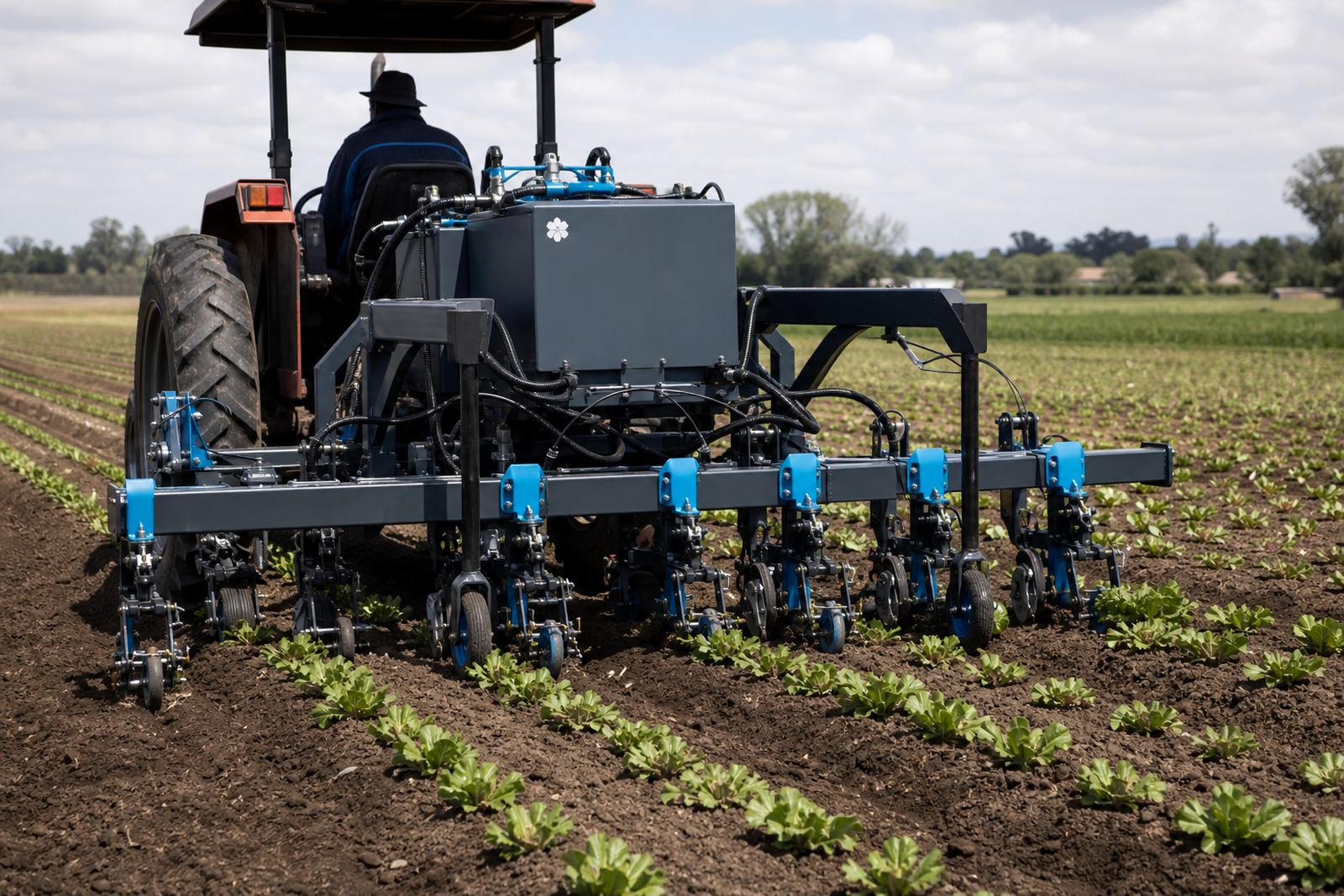
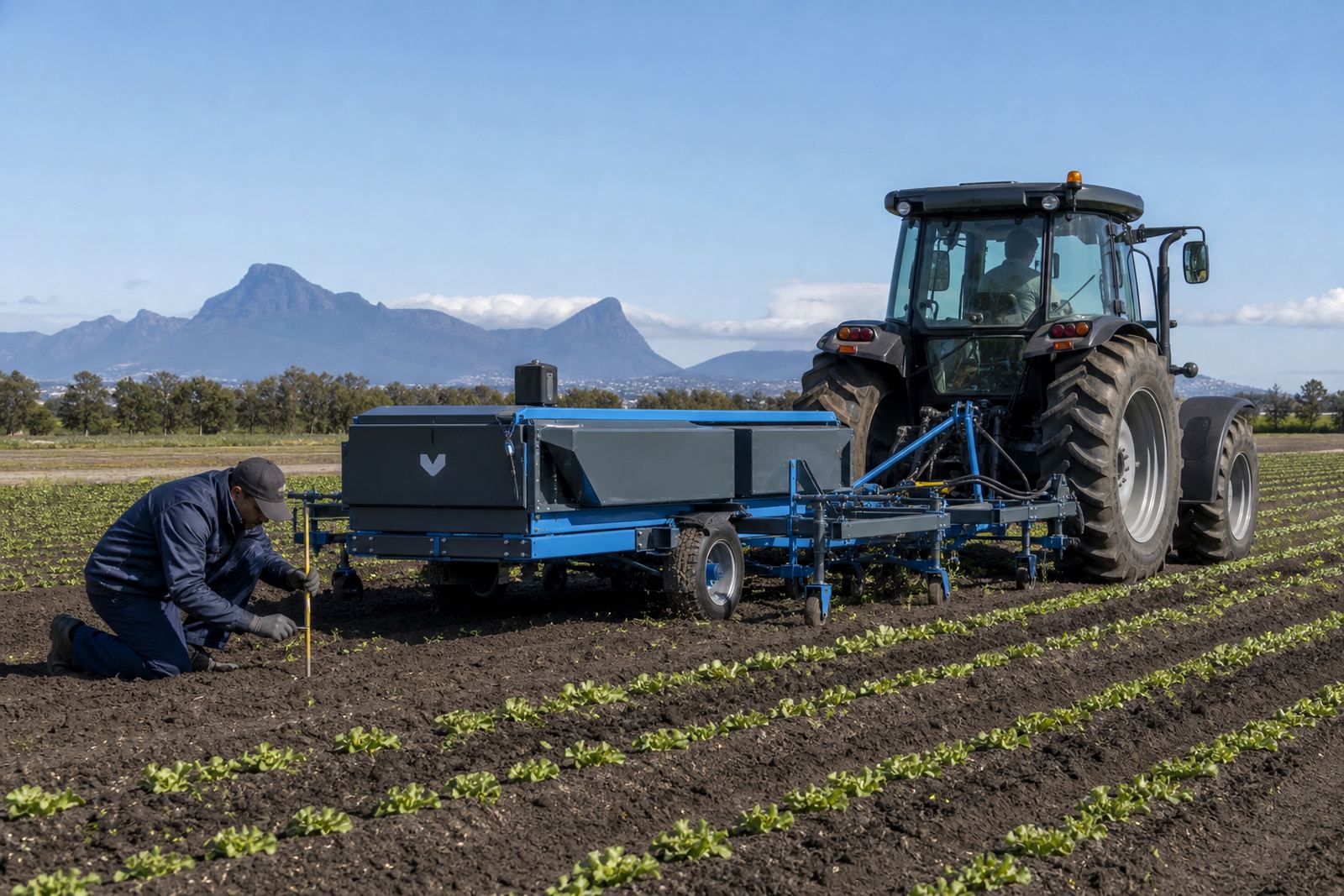
The work uses camera-guided weed detection and lasers aimed at the weed growing points. The unit runs on a tractor-drawn setup and is handled by a trained operator, with travel and field scheduling set around the grower plan. That makes it a practical fit for open vegetable blocks where hand hoeing is costly and herbicide use is being reduced or removed.
Crop blocks that suit this hire model
This hire format suits vegetable farms working with rows and repeat passes, especially where weeds must be tackled between plants and close to the crop line. Onion blocks, carrot lands, lettuce plantings and brassica fields are common examples, though the field layout and weed stage still decide whether a pass is worthwhile.
- Row crops with clear spacing for camera tracking and weed targeting
- Blocks where early weed stage gives the best working window
- Fields with enough access for a tractor-drawn unit to move cleanly
- Sites where a herbicide-free approach is preferred for crop management
- Farm plans that call for repeat passes rather than a single visit
Young weeds are easier to target than mature weeds with larger leaf cover. If the block has uneven emergence or a heavy flush after rain, the timing of the pass matters as much as the hectare count.
Sizes, passes and field speed
Hectare Based Hire is quoted by area, but the working pace is set by weed pressure, crop density and the shape of the block. Smaller blocks can still need careful set-up if there are tight corners, short rows or mixed crop sections. Larger blocks may allow steadier field movement, although dense weed pressure can slow the run and call for more than one visit.
The hire can cover trial strip runs, full field passes and repeat pass planning when the grower wants to stage the work across a season. The unit is suited to commercial vegetable areas where field speed has to stay balanced with precision around the crop line.
- Single block hires for one crop area
- Multi farm programmes across several lands
- Season bookings for planned weed control windows
- Trial strips to check crop fit and field response
Fitting, tractor match and site setup
The laser unit is tractor-drawn, so the field needs a suitable tractor match and enough access for towing, turning and headland movement. Setup usually includes arrival site checks, line-up of the implement, and a look at row spacing, crop height and any soft ground areas that may affect travel. The operator also checks visibility across the rows and the working angle for the camera system.
Because the unit works by targeting weed points rather than disturbing the soil, the field surface needs to be reasonably workable for stable movement. Wet patches, narrow headlands and badly broken rows can affect the pass. The better the field is prepared, the cleaner the movement through the crop.
Care after a pass and how the hire is managed
After a pass, the grower gets post pass reporting tied to the block and the work done. That can include notes on weed stage, row conditions, areas that need another visit, and any sections where timing should be adjusted. This helps with repeat pass planning across the season, especially when weather or crop growth changes the next working window.
Routine care is mostly about keeping the block accessible, keeping row maps accurate and watching weed emergence between visits. For the unit itself, our workshop supervisor and field team handle the equipment side, while the grower side stays focused on the field plan and crop timing.
Ordering details that need to be clear upfront
To quote the hectare hire properly, we need the crop type, hectare count, row spacing and the field location. It also helps to know the weed stage, whether the block is newly emerged or already well covered, and how many passes are likely to fit into the crop plan. If the farm sits near Philippi, Ceres, Grabouw, Tzaneen, Bela-Bela, Nelspruit, Howick or Bethlehem, travel and scheduling can be matched to the wider programme.
- Exact block size in hectares
- Crop type and planting layout
- Row spacing and headland access
- Current weed stage and pressure
- Preferred pass window and season plan
- Whether you need operator supplied support
Our contact form is the place to send the field details, crop timing and block locations. That lets the team line up field assessments, travel coordination and any trial strip runs before the season work starts.
Key facts
| Hire basis | Per hectare, shaped by crop layout and field conditions |
|---|---|
| Working method | Camera-guided laser weeding with weed-point targeting |
| Unit type | Tractor-drawn laser weeding unit |
| Crop fit | Onions, carrots, lettuce, brassicas and similar row crops |
| Service area | Philippi base with work across South Africa |
| Support | Operator supplied, field scheduling, repeat pass planning and post pass reporting |