Loam fields where the crop line stays clean
Loam soil suits laser weeding when the bed surface is level and the planted row is easy to read from the cab and the operator station. On vegetable farms around Philippi, Ceres and Grabouw, that usually means a field with settled tilth, firm enough traffic lines and rows that stay open for camera-guided weed detection between the crop plants.
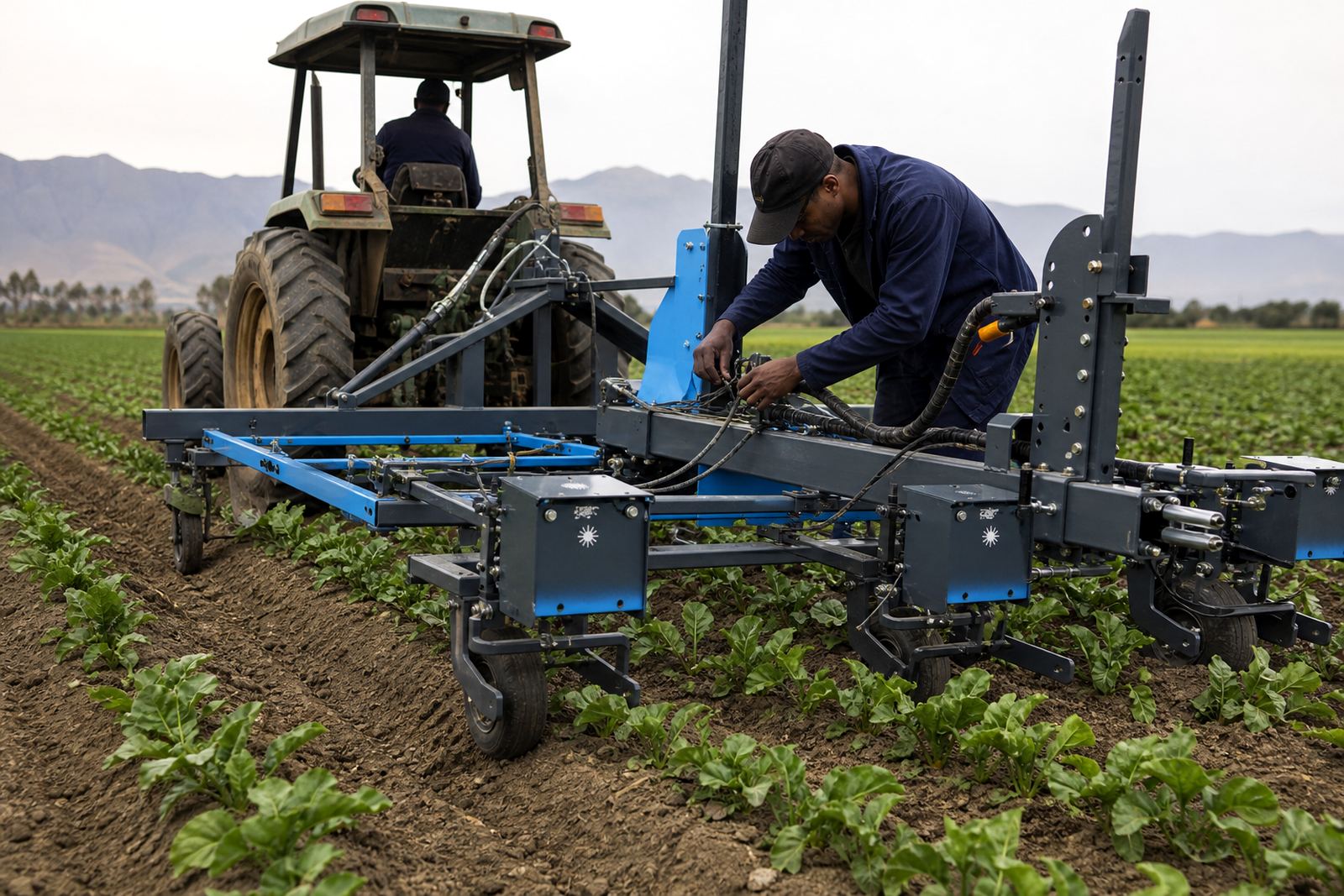
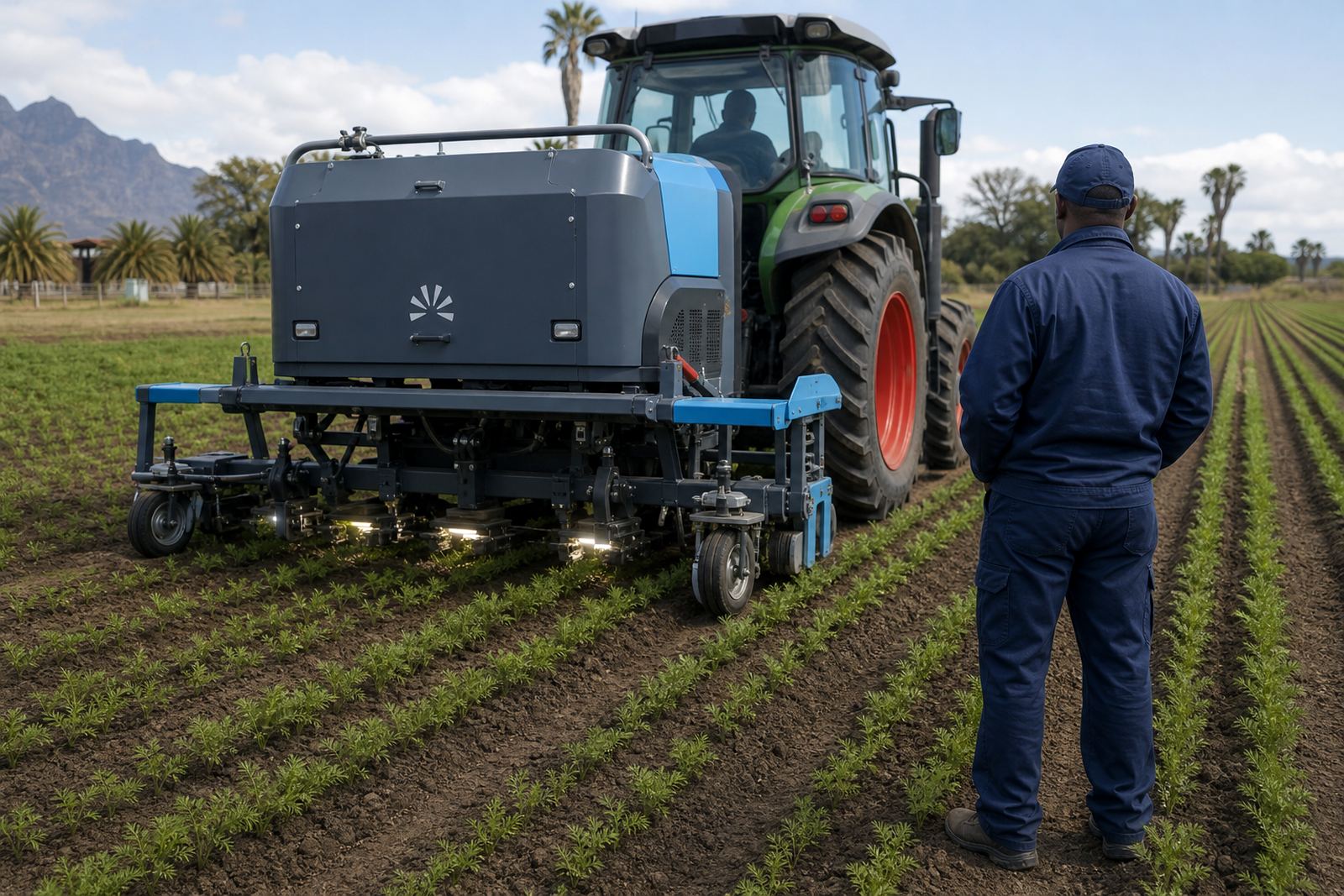
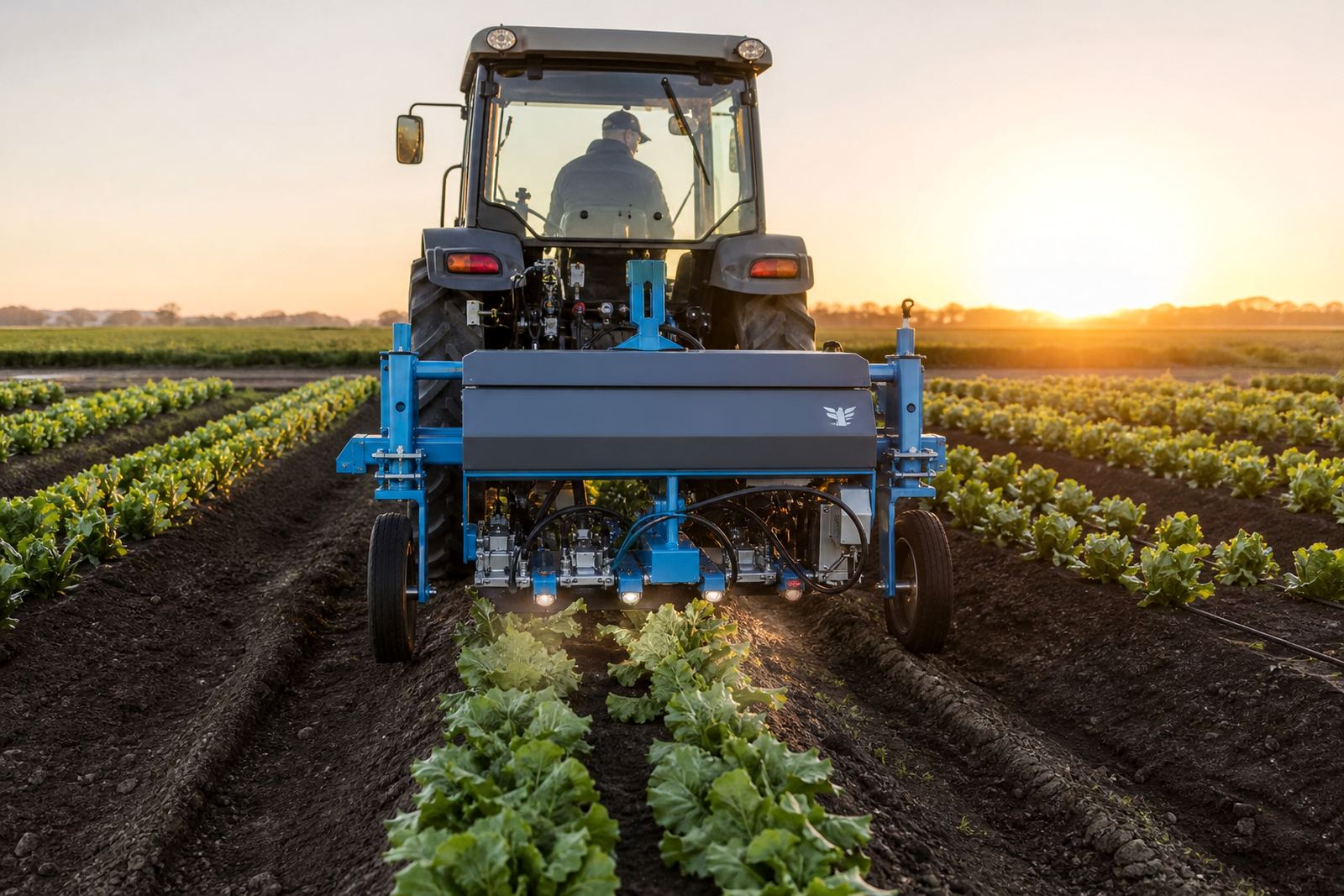
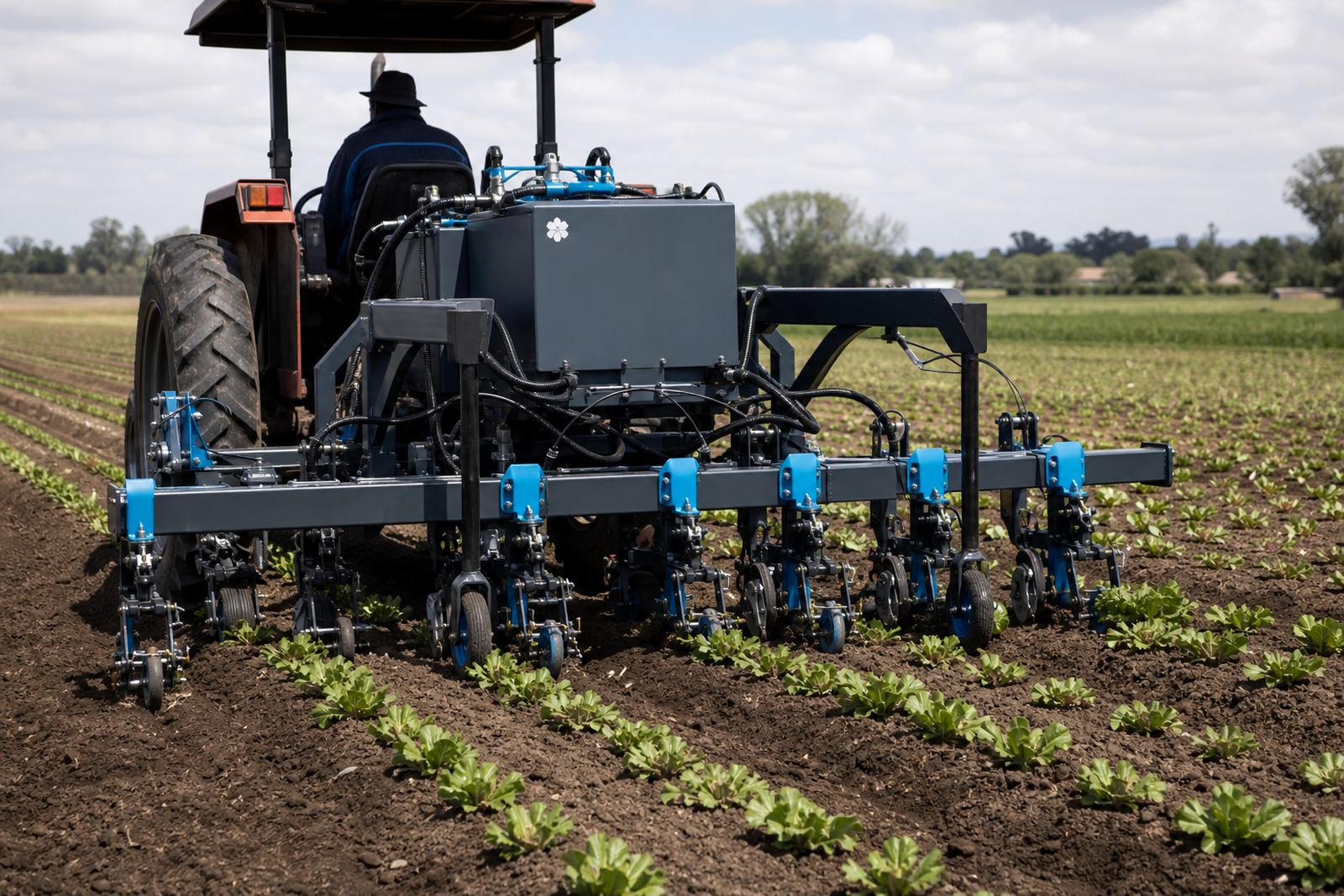
Our loam soil setup is used for contract laser weeding on crops such as onions, carrots, lettuce and brassicas. The tractor-drawn unit works best where the crop is already established, the inter-row space is clear and the weed stage is still in the early growth window. That gives the lasers a better target on the weed growing point, while the crop row is kept under close control by the operator.
- Even surface, without ruts that throw the camera line off
- Row crop format with consistent spacing from start to finish
- Soil moisture that allows steady travel without cutting up the bed
- Weed flushes that can still be read before they harden off
Setup sizes and working widths for loam blocks
Loam fields do not all look the same, so the setup is matched to the crop layout and the ground underfoot. The tractor-drawn laser weeding unit can be set for different row crops and working widths, with the travel speed adjusted to weed pressure, row definition and the amount of hand checking the block needs before pass start.
For wide beds with a neat row, the operator can work a quicker line. Where weeds are dense or the crop canopy has started to close, the pace comes down so the camera system has time to identify each weed growing point. That is part of the field scheduling note, especially for mixed farms in Limpopo, Mpumalanga, KwaZulu-Natal and the Free State where weather and crop stage do not always line up neatly.
- Row spacing set to match the crop pattern on the block
- Working width planned around headlands and turning space
- Travel speed matched to weed stage and crop clarity
- Pass planning for single fields or multi farm programmes
What the operator checks before the first pass
A loam setup starts with an arrival site check and field assessment. The operator and scheduling team look at the bed surface, crop uniformity, weed stage and any low patches that could affect run quality. That check helps decide whether a trial strip run is useful before the full field is cleared.
On heavier loam that holds moisture after rain, the field may need a little more settling time before travel. On lighter loam with a fine top layer, dust and crust can change how clearly the cameras read the weed line. The setup is adjusted on site so the lasers target weeds without disturbing the soil between rows.
- Headlands checked for turning room and tractor line-up
- Crop height reviewed so the sensors can read the row cleanly
- Weed pressure noted by block, not by farm generality
- Trial strip run used when a new layout needs a careful start
Where loam setup works best on vegetable farms
This product page suits growers who already run row crops on level ground and want a herbicide-free weeding option with no soil disturbance. Loam fields in Philippi often carry fine, even vegetable rows, and that makes them a strong fit for camera-guided weed removal where the crop is in a predictable line.
It also suits farms that want scheduled passes through the season, not a single visit. A repeat pass plan can be set for blocks that flush weeds after irrigation or after weather shifts. The system is used on established rows in onions, carrots, lettuce and brassicas, where the crop is visible enough for precise targeting and the weeds are still small enough for clean treatment.
- Vegetable blocks with even row definition
- Loam beds that stay stable under tractor traffic
- Sites needing herbicide-free weed control in the row area
- Blocks that need repeat pass planning through the season
Care on the ground after each pass
After each pass, the field needs a quick visual check for missed strips, crop knock and any change in weed stage before the next booking is set. On loam soil, the surface can hold a neat finish if the machine runs true and the headlands are kept tidy. If the block is due for irrigation or cultivation, that timing is folded into the schedule so the next pass is not fighting loose soil or a soft surface.
Post pass reporting notes the crop condition, weed pressure, field pace and any areas where the operator had to slow down. That record matters on multi farm programmes, especially when a grower wants the same line of control across farms near Bela-Bela, Nelspruit or Howick. It gives the next visit a proper field reference rather than a guess.
- Inspect row edges for missed weed pockets
- Keep headlands firm and free of loose clods
- Note irrigation, rain or crusting before the next visit
- Track any slow sections so future passes can be planned better
Details to confirm before booking the loam setup
When ordering this setup, the most useful details are practical ones from the field. We need the crop type, row spacing, block size, soil condition, weed stage and the farms that sit in the same programme. It also helps to know whether the site needs travel coordination, trial strip runs, operator supplied service or a longer season booking.
Loam fields in South Africa can change quickly after rain or heavy traffic, so the field note should mention any soft patches, slope changes or uneven rows. If the block is spread across more than one area, include the towns or farm groups so the scheduling plan can be built around travel and arrival site checks.
- Crop type and current growth stage
- Row spacing and block size in hectares
- Weed pressure by patch or by field section
- Farm location, access road and turning space
- Need for trial strip runs, repeat passes or post pass reporting
Key facts
| Product type | Loam soil setup for tractor-drawn laser weeding |
|---|---|
| Suitable crops | Onions, carrots, lettuce and brassicas |
| Surface condition | Even loam with settled rows and clear headlands |
| Operating method | Camera-guided weed detection with laser targeting of weed growing points |
| Service format | Operator supplied contract work with field scheduling |
| Soil impact | No soil disturbance during the weed pass |