What carrot bed hire covers on farm
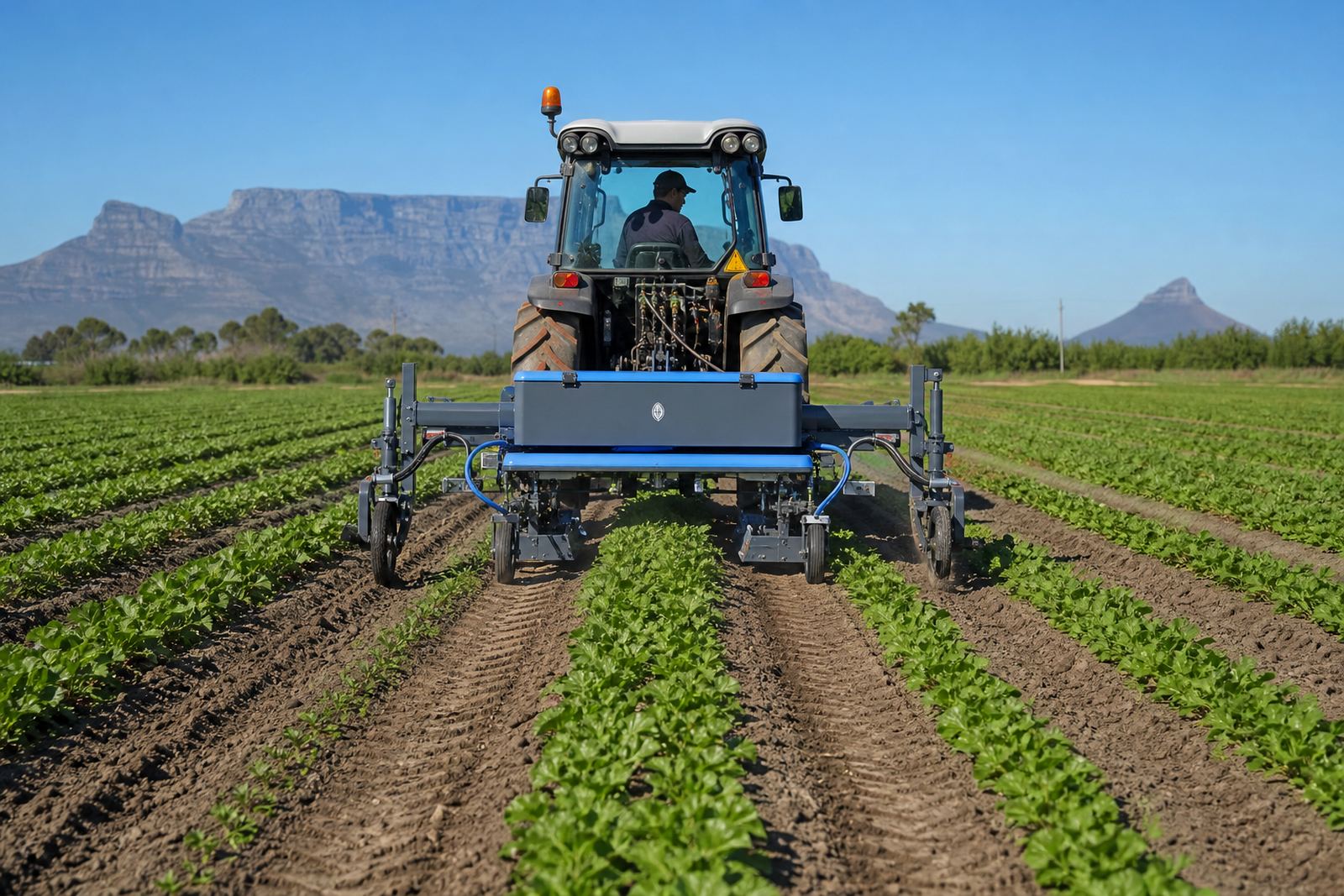
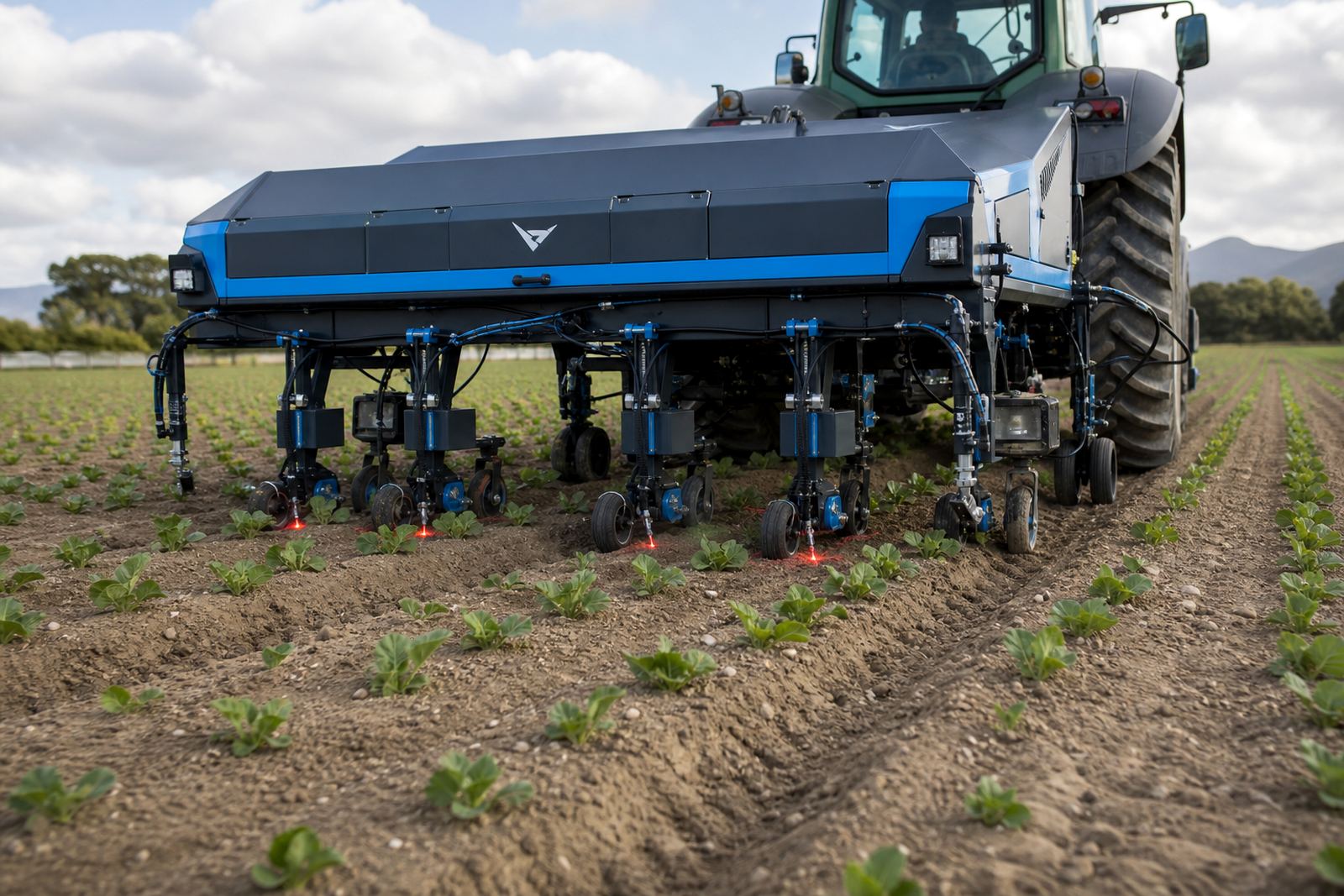
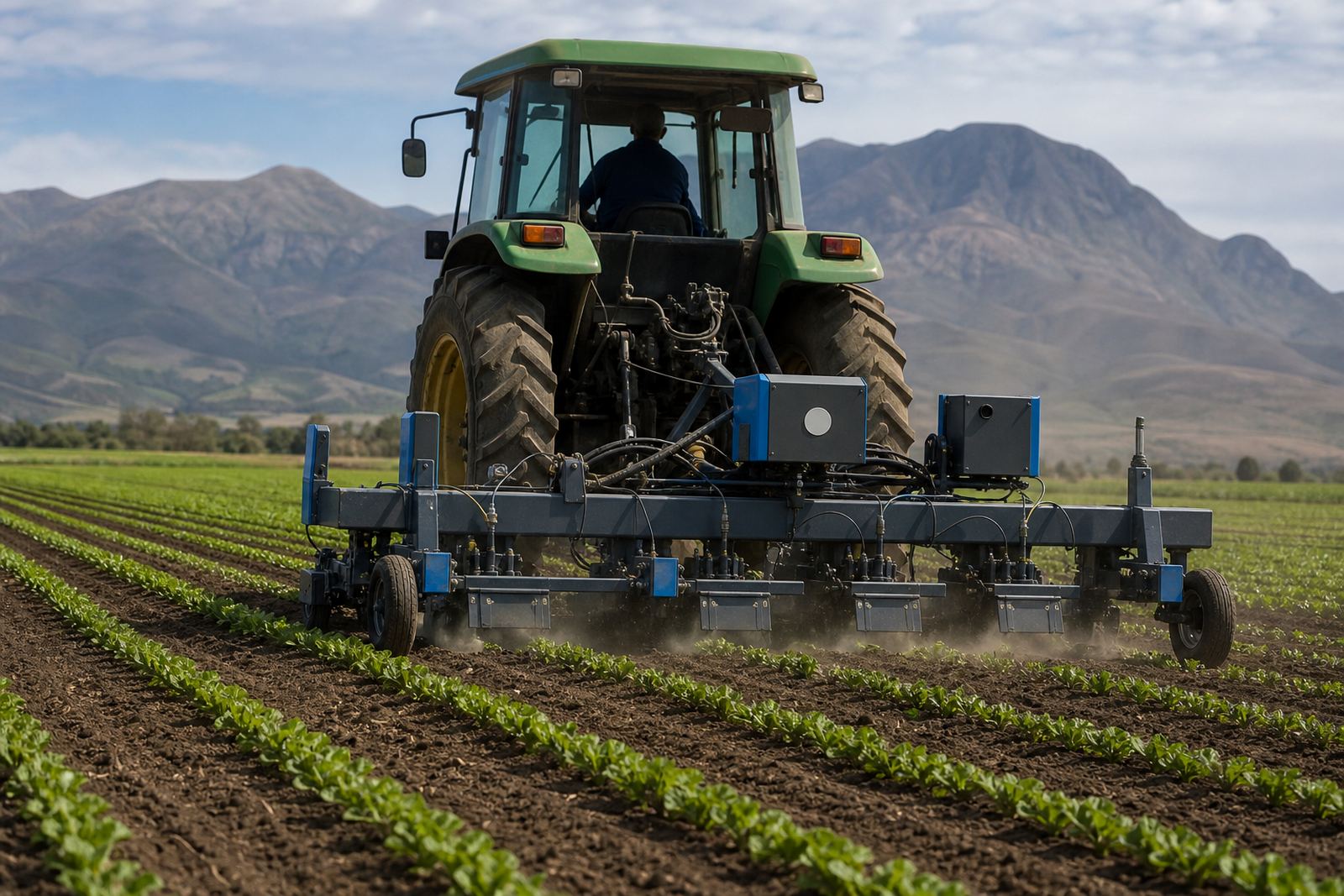
Carrot bed hire is a contract laser weeding setup for blocks where the crop lines must stay visible and the weed seedling stage matters. The work uses camera-guided detection, then lasers target the weed growing points in the open spaces between carrots and near the row edge, with the tractor-drawn unit moving through the block at a field speed that changes with weed pressure and the ground conditions.
This service suits carrot fields where a clean inter-row pass is needed without spraying herbicide or disturbing the soil profile. It is often used in rotation with other row crops too, especially where growers want a tighter weed window and less hand hoeing in the early growth stages.
- Herbicide-free weed control for carrot blocks
- No soil disturbance from cultivation blades or tines
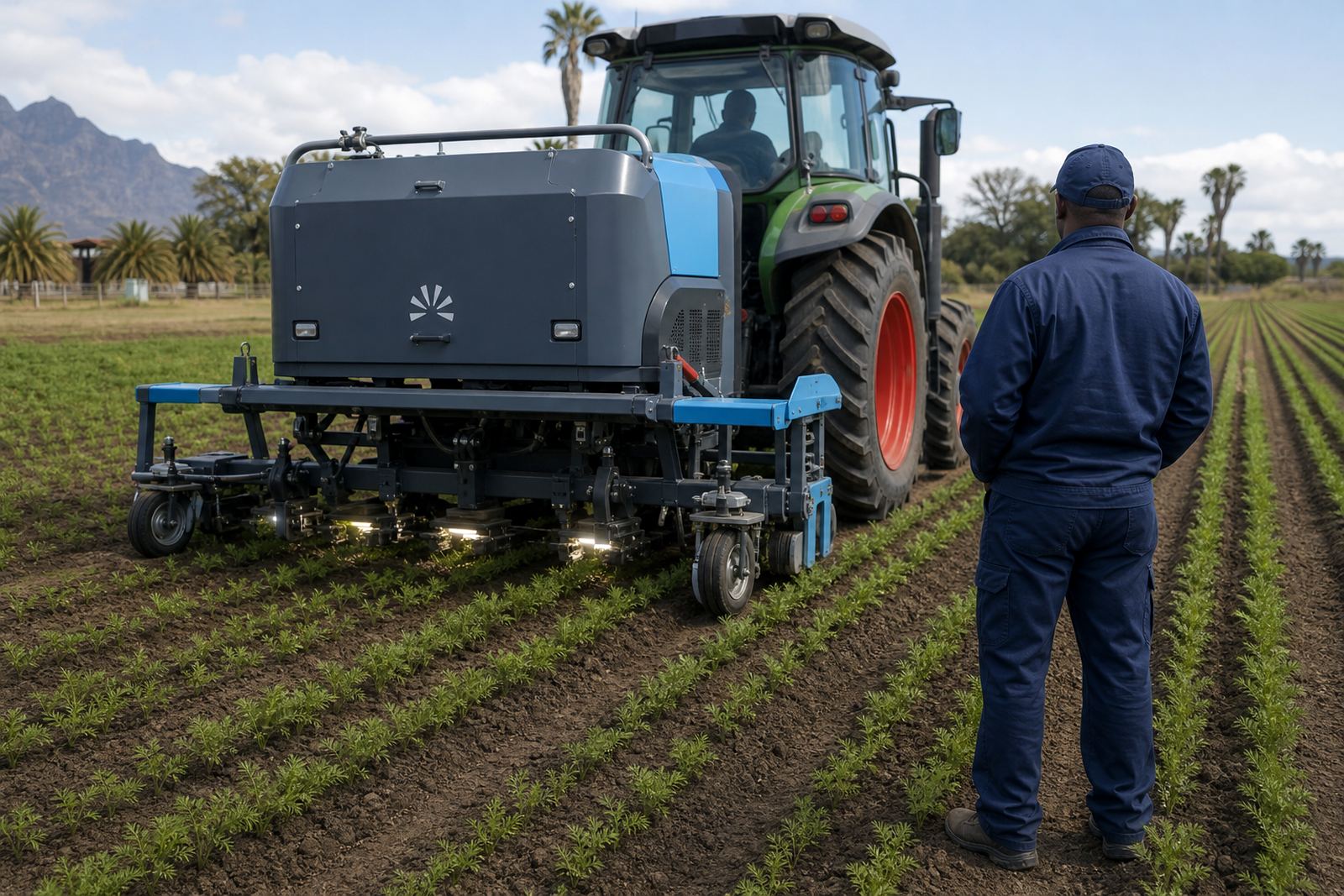
- Tractor-drawn laser unit with a trained operator
- Useful for early flushes, escapes and repeat passes
Bed widths, row spacing and block fit
Carrot layouts vary from farm to farm, so the pass plan starts with the bed width, row count and wheel track in the block. We work with carrot beds where the rows are narrow and the canopy closes fast, because that is where timing and line of sight matter most. Where the crop is younger, the operator can work with more open visibility between the rows; where the crop is thicker, the pass must be planned more carefully to avoid leaf contact and keep the camera view clean.
The setup is suited to row crops such as carrots, onions, lettuce and brassicas, but this page is focused on carrot blocks and the field conditions around them. Soil moisture, recent irrigation, weed flush stage and the number of hectares in each block all shape the schedule.
- Bed width and row spacing reviewed before the booking
- Headlands and turning space checked for tractor movement
- Useful on young carrots where row visibility is still open
- Block size can be split into staged passes when needed
Where the service suits carrot growers
Carrot bed hire is practical for growers working in the Western Cape, Limpopo, Mpumalanga, KwaZulu-Natal and the Free State, including areas such as Philippi, Ceres, Grabouw, Tzaneen, Bela-Bela, Nelspruit, Howick and Bethlehem. Coastal humidity, inland dust and local soil type all influence how the block is planned, especially where weeds emerge in waves after irrigation or rain.
It suits farms that want scheduled passes around planting, emergence and early crop development. The method is most useful where weeds are still small enough for laser targeting and where the crop rows can be read clearly by the camera system. If the block has uneven emergence or patchy weed pressure, the work can be split into trial strip runs first, then adjusted before the full pass.
- Best for early timing when weeds are small and visible
- Works well in carrot blocks with straight row definition
- Useful where soil disturbance would be a problem
- Can be fitted into season bookings and multi farm programmes
Fitting the unit to the field and crop stage
The tractor-drawn unit is brought to site with the operator, and the block is checked before the pass starts. Arrival site checks cover access, turning room, row direction, irrigation fittings near the headlands and whether the crop is at the right stage for a useful run. If a carrot block is too advanced, the canopy may hide the weeds and reduce the value of the pass. If it is too young, the row lines may still be settling and the work may need a lighter approach.
Installation in this trade means setting the machine up for the block, matching the pass to the rows and confirming the field plan with the grower. There is no buried pipework or fixed installation on the land. The fit is a working setup for the day, with travel coordination and field scheduling worked in ahead of the visit.
- Operator supplied with the unit
- Arrival site checks before work starts
- Trial strip runs can help read the block
- Repeat pass planning depends on weed emergence and crop growth
Care during and after a pass
Carrot blocks need steady handling through the pass because the rows are narrow and the crop can be tender in the early stages. The operator watches the line of travel, the weed pressure and the field surface, then adjusts the pace where the block has heavier patches or uneven emergence. Because the method does not turn the soil, the surface stays intact and the row pattern remains readable for the next visit.
After the pass, post pass reporting helps the grower see where weed pressure was strongest and where a follow-up run may be useful. On some farms the next step is a repeat pass planning note, on others it is a later season booking once new weeds have emerged. Fields near the coast may need a tighter watch on moisture and weed flushes, while inland blocks may be held for a different interval depending on growth speed.
- Keep irrigation and spray tracks clear of the access route
- Mark problem patches where weed pressure is higher
- Allow for clean headlands and turning lines
- Review the report before planning the next pass
What to confirm when placing a booking
Before booking carrot bed hire, the key details are the block location, hectares per block, row spacing, crop stage and the weed stage in each field. It also helps to note whether the farm needs one-off work, season bookings or a multi farm programme across several sites. Travel coordination matters for growers running blocks across different districts, and timing matters when the weed flush is uneven after rain or irrigation.
Our contact form can be used to send the block list, expected crop stage and any access notes for the farm road or headland layout. For carrot blocks, the useful details are practical ones: bed width, row direction, irrigated area, whether the crop is under open field or protected edge conditions, and whether trial strip runs are needed before the full schedule is set.
- Block location and travel access
- Hectares, bed width and row spacing
- Crop stage and weed stage
- Single visit, repeat pass or season plan
Key facts
| Service type | Contract laser weeding for carrot blocks |
|---|---|
| Unit format | Tractor-drawn laser weeding unit |
| Operator | Trained operator supplied |
| Crop fit | Carrots, onions, lettuce and brassicas |
| Method | Camera-guided weed detection with laser targeting |
| Coverage | Western Cape, Limpopo, Mpumalanga, KwaZulu-Natal and the Free State |