A wider centre line changes the whole pass
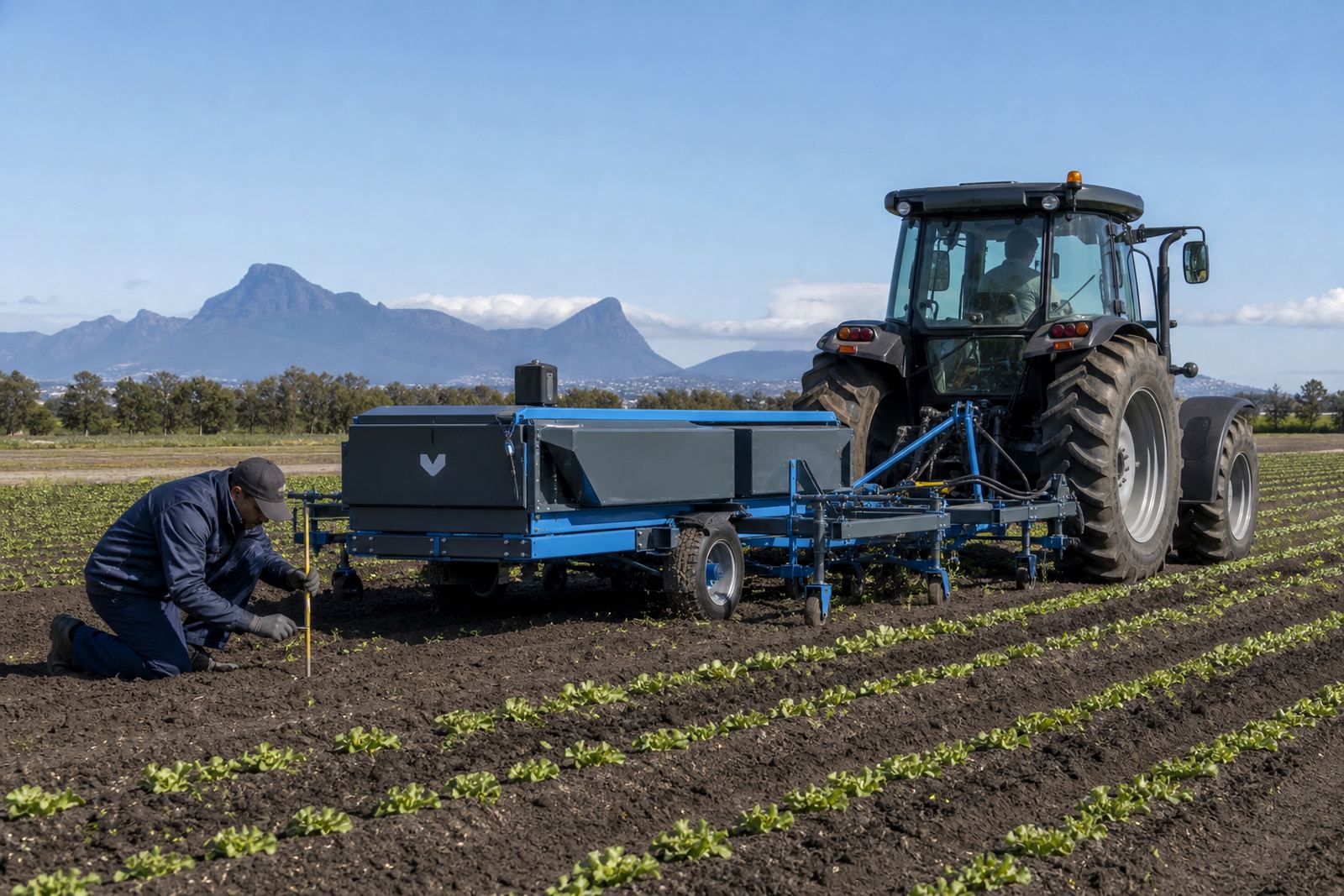
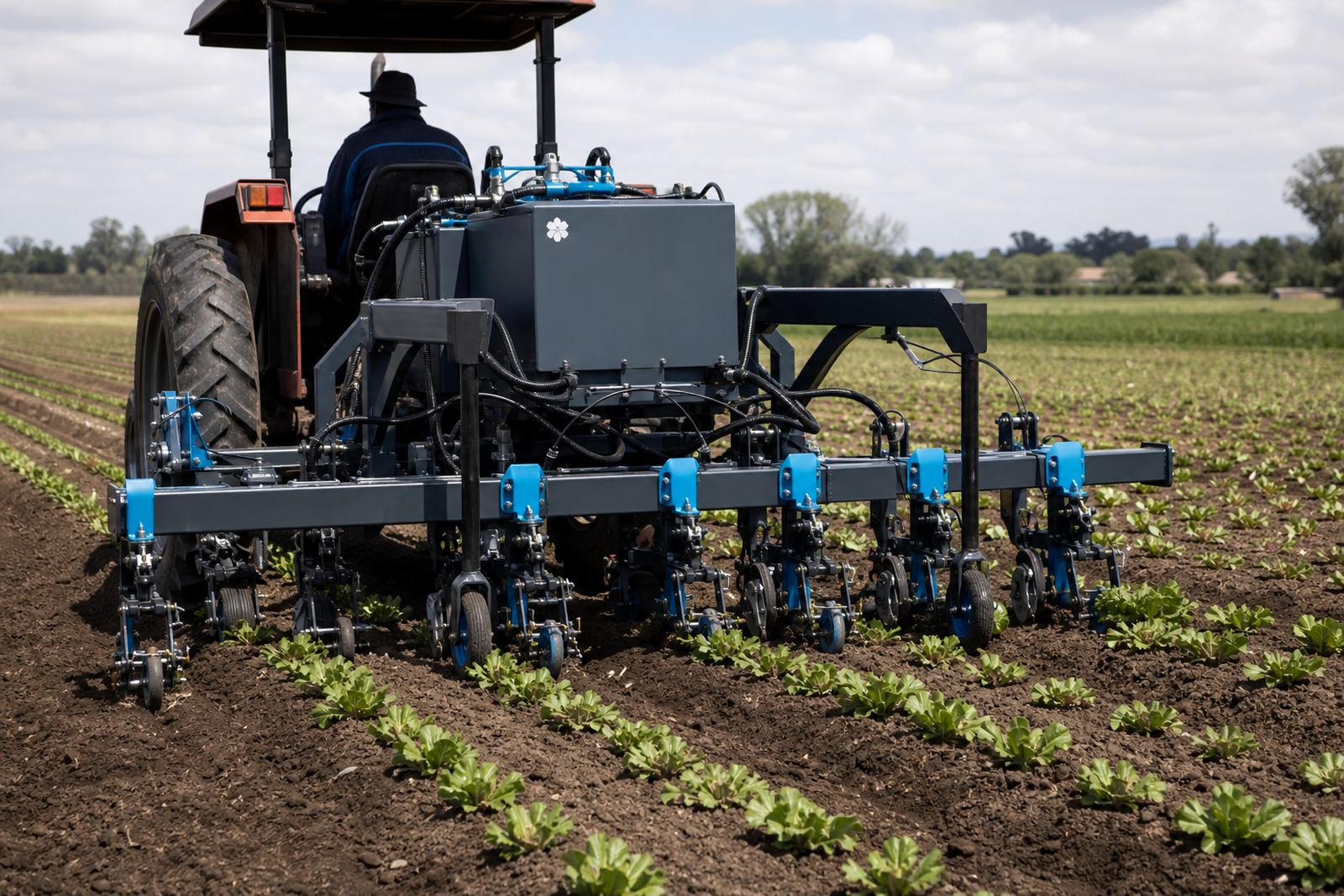
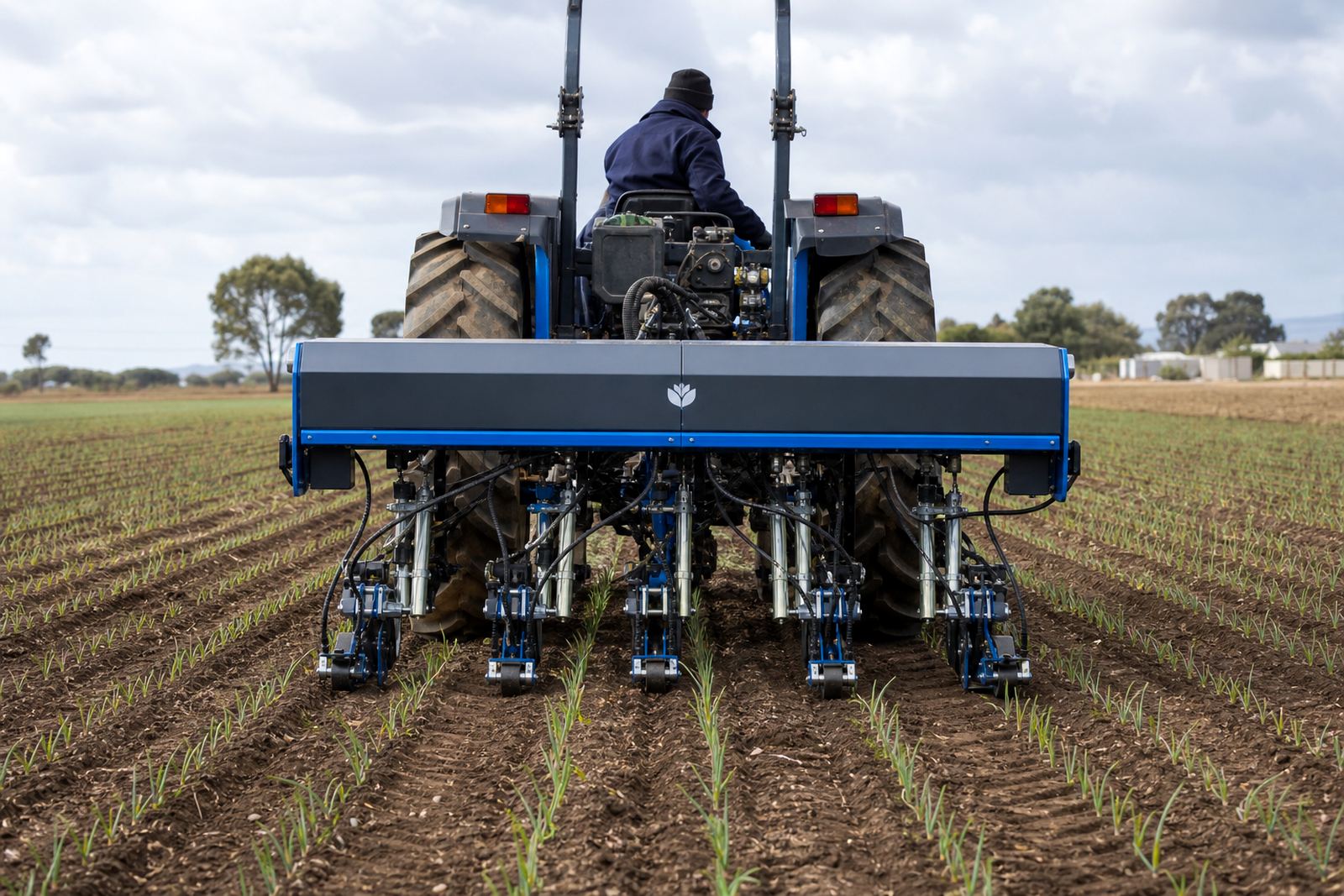
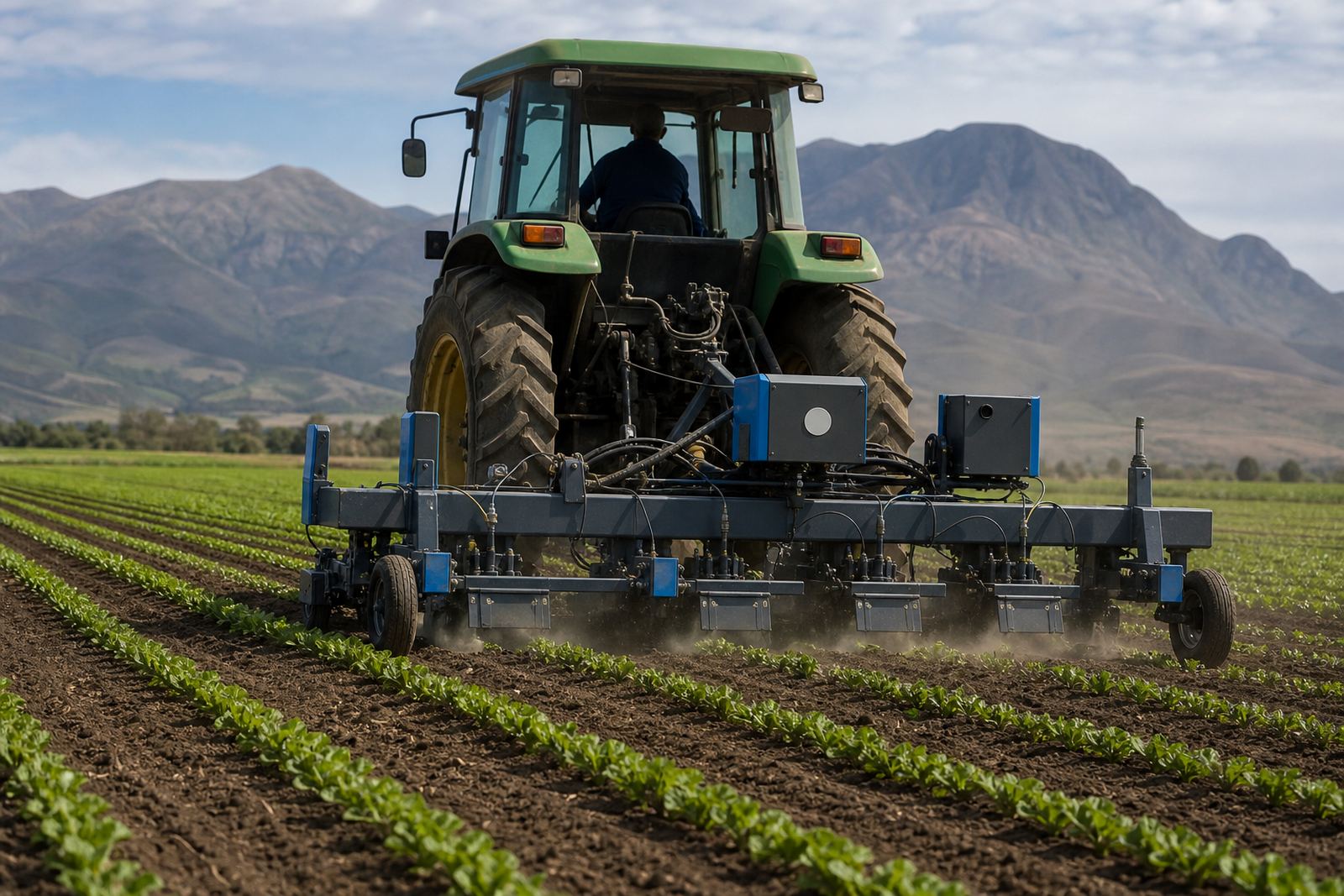
Wide row setup is the arrangement used when crop centres leave enough room for a tractor-drawn laser unit to move cleanly down the row. The camera system reads the crop and weed pattern, then the lasers target weed growing points with short bursts as the operator keeps the machine aligned through the block. The method suits mixed vegetable plantings where row spacing is planned for access, crop size and later canopy spread.
In practice, this setup is often used where the crop has a clear row structure and the weeds are still at a stage that can be targeted before they bulk up. On wider centres, the machine can work close to the row without throwing soil, which helps keep the bed shape intact and leaves irrigation lines and mulch systems undisturbed when those are part of the field layout.
- Tractor-drawn laser unit for open row access
- Camera-guided weed detection in the crop line and between rows
- Best matched to row crops with a defined planting geometry
- Works without herbicide sprays and without soil disturbance
Where the setup fits in mixed vegetable blocks
This arrangement suits row crops such as onions, carrots, lettuce and brassicas, especially where the block has broader centres and a tidy run for the tractor. It is also used in farms that split one block into several crop sections, because the operator can adapt the pass to the spacing and plant stage in each area. The method is useful where weed pressure changes from one section to the next and the timing of the pass has to match the crop condition, not only the calendar.
Wide row work also fits growers who want herbicide-free weed control in field conditions where spraying is not the preferred route. Because the machine targets the weed itself and not the whole bed, there is no broad soil throw, which makes it easier to keep the inter-row space clean on repeated passes.
- Onions with clear inter-row travel space
- Carrots where row alignment is consistent
- Lettuce blocks with measured centres and good plant recognition
- Brassicas in open field sections with space for tractor guidance
What the field team looks for before a pass
The right timing matters as much as the machine. Weed stage, crop size, row definition and moisture in the topsoil all shape how the pass is planned. A young weed with a clear growing point is easier to target than one that has already branched or hardened off. The operator also needs a row that is readable by the camera system, which is why early crop establishment and a clean planting line help the job along.
Field speed depends on weed pressure, crop visibility and how uniform the block is. A clean block with even rows usually allows a steadier pass than a block with patchy emergence or heavy escapes. The team may schedule trial strip runs, then use what is seen in the strip to shape the wider programme across the rest of the block.
- Weed stage and density in each section
- Crop height, spacing and line clarity
- Field moisture, wheel track conditions and access points
- Trial strip findings before a full programme is set
Sizes, options and working reach
Wide row setup is not a single fixed layout. It is arranged around the crop row centres, the block shape and the number of hectares in the schedule. Some farms need one block covered in a single visit, while others prefer a repeat pass plan across several sections with different planting dates. The tractor-drawn unit is paired with a trained operator, and the working width is matched to the row pattern on the ground.
Common planning points include the row spacing, the turning space at the headlands and whether the crop runs in long straight lines or shorter sections. If the block has tight corners, irregular ends or mixed crop sections, the field schedule may need extra time for setup and arrival checks. That keeps the pass tidy and avoids rushing the machine through awkward bends.
- Working width matched to the row centres in the block
- Single block passes or multi farm programmes
- Season bookings for repeated crop windows
- Headland space and turning room included in planning
Fitting the job to the farm and the season
There is no permanent installation in the field, but the job still needs a proper fit to the farm. The operator checks access, block layout, crop stage and travel points before the unit goes in. If the farm is spread across several localities, travel coordination becomes part of the plan so that the machine, tractor and crew arrive with the right sequence of jobs in mind. That matters in places such as Philippi, Ceres, Grabouw, Tzaneen, Bela-Bela, Nelspruit, Howick and Bethlehem, where blocks may sit far apart and the weather can shift the timing.
For growers on the coast or in wetter inland areas, the team also watches surface condition and crop recovery after rain. A block that is too soft under wheel load can hold the tractor back, so arrival site checks and field scheduling are used to protect the plan from avoidable delay. The unit is set up for field work, not a fixed shed job, and the setup needs a clear route in and out of the block.
Care, upkeep and the bits to keep in view
Wide row laser work depends on clean optics, steady alignment and regular checks on the moving parts of the tractor-drawn unit. Dust, sap, crop residue and moisture can build up over a day in the field, so the equipment needs basic care at the end of each run. The team also watches the operator settings, because a pass that suits carrots may not suit brassicas with thicker leaf cover or a different canopy shape.
Growers should keep the block map, planting dates, row spacing and crop stage notes ready before the season booking is set. The more exact the field details are, the easier it is to match the wide row setup to the actual block and plan repeat passes where needed. Our contact form is the right place to send those details, along with the farm area and any travel limits for the season.
- Row spacing in millimetres or metres
- Crop type, planting date and current stage
- Block size, headland room and access tracks
- Any split sections, trial strips or repeat pass needs
Key facts
| Setup type | Tractor-drawn laser weeding arrangement for wider row centres |
|---|---|
| Crop fit | Onions, carrots, lettuce and brassicas in row-crop blocks |
| Weed control method | Camera-guided detection with lasers aimed at weed growing points |
| Field effect | Herbicide-free with no soil disturbance |
| Planning inputs | Row spacing, crop stage, weed pressure and headland space |
| Service scope | Field assessments, trial strip runs, repeat pass planning and season bookings |