Close-bed geometry and the job it is built for
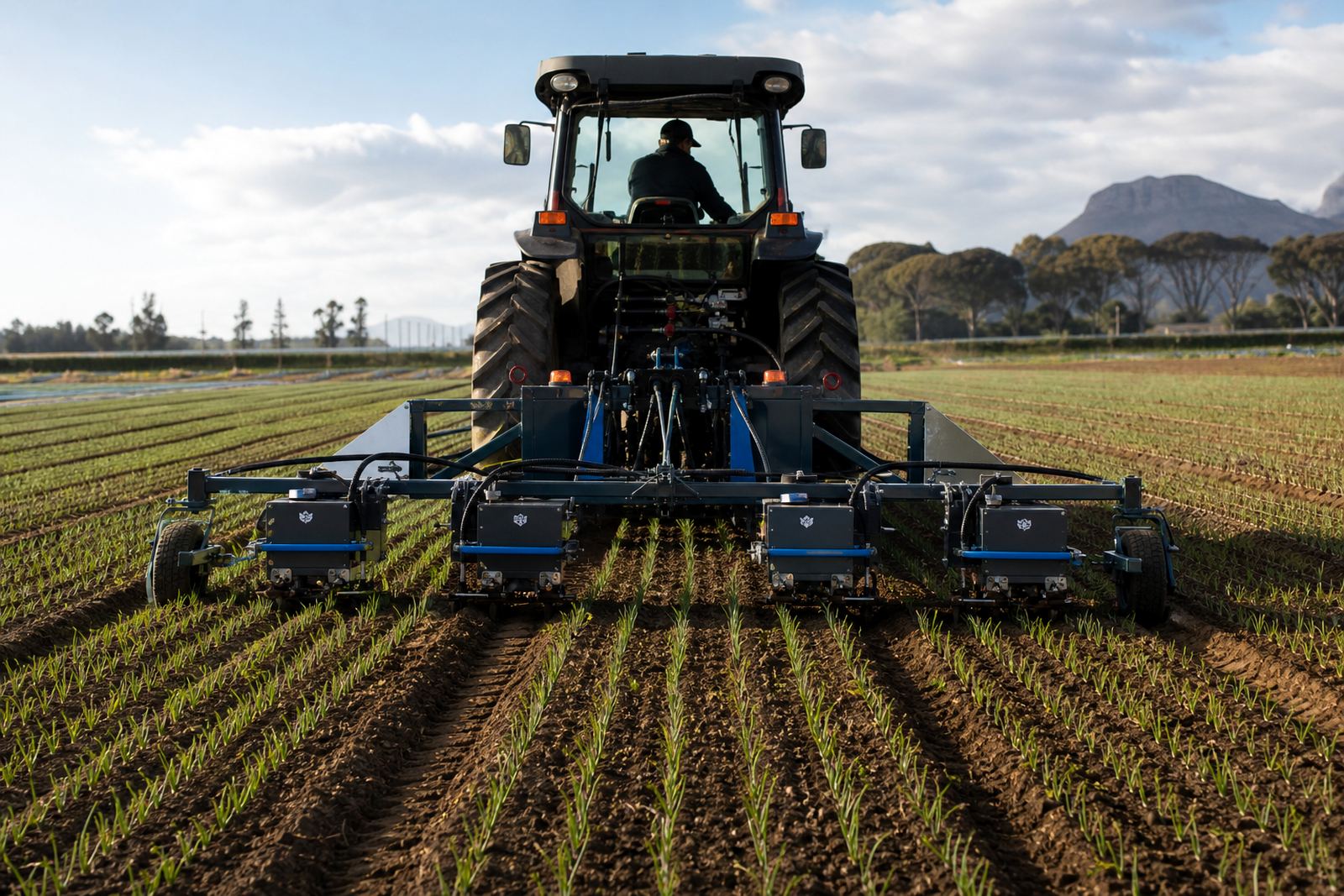
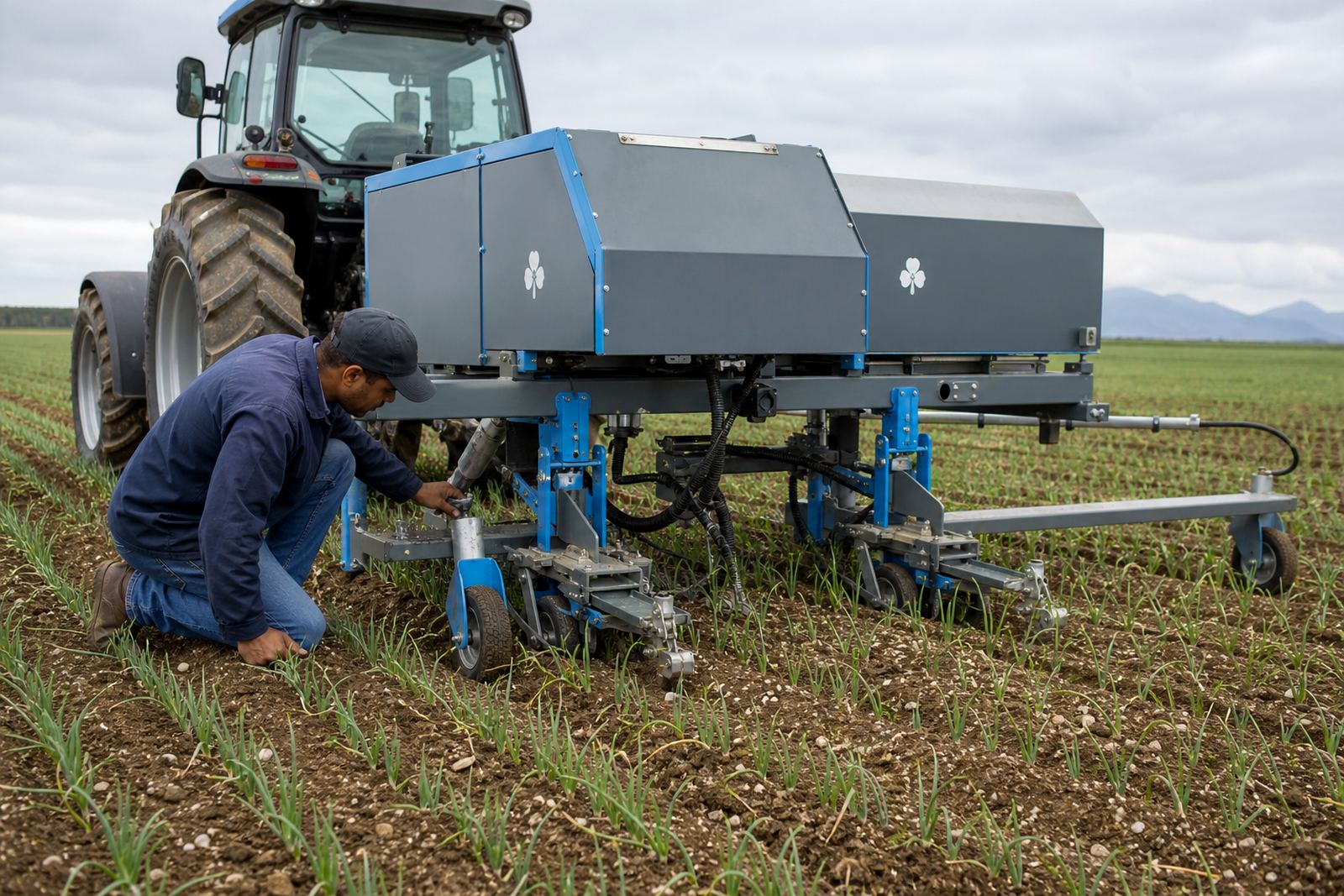
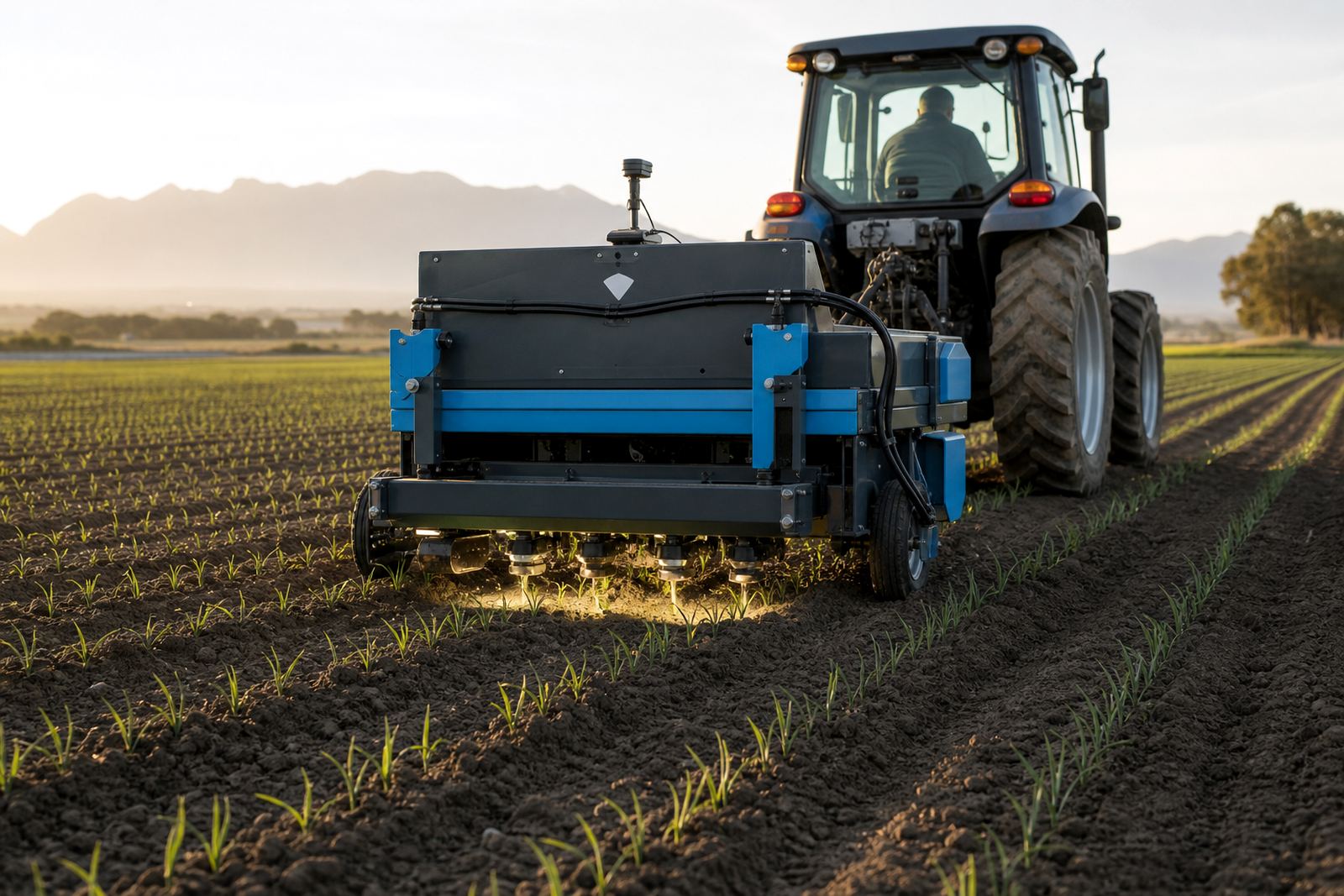
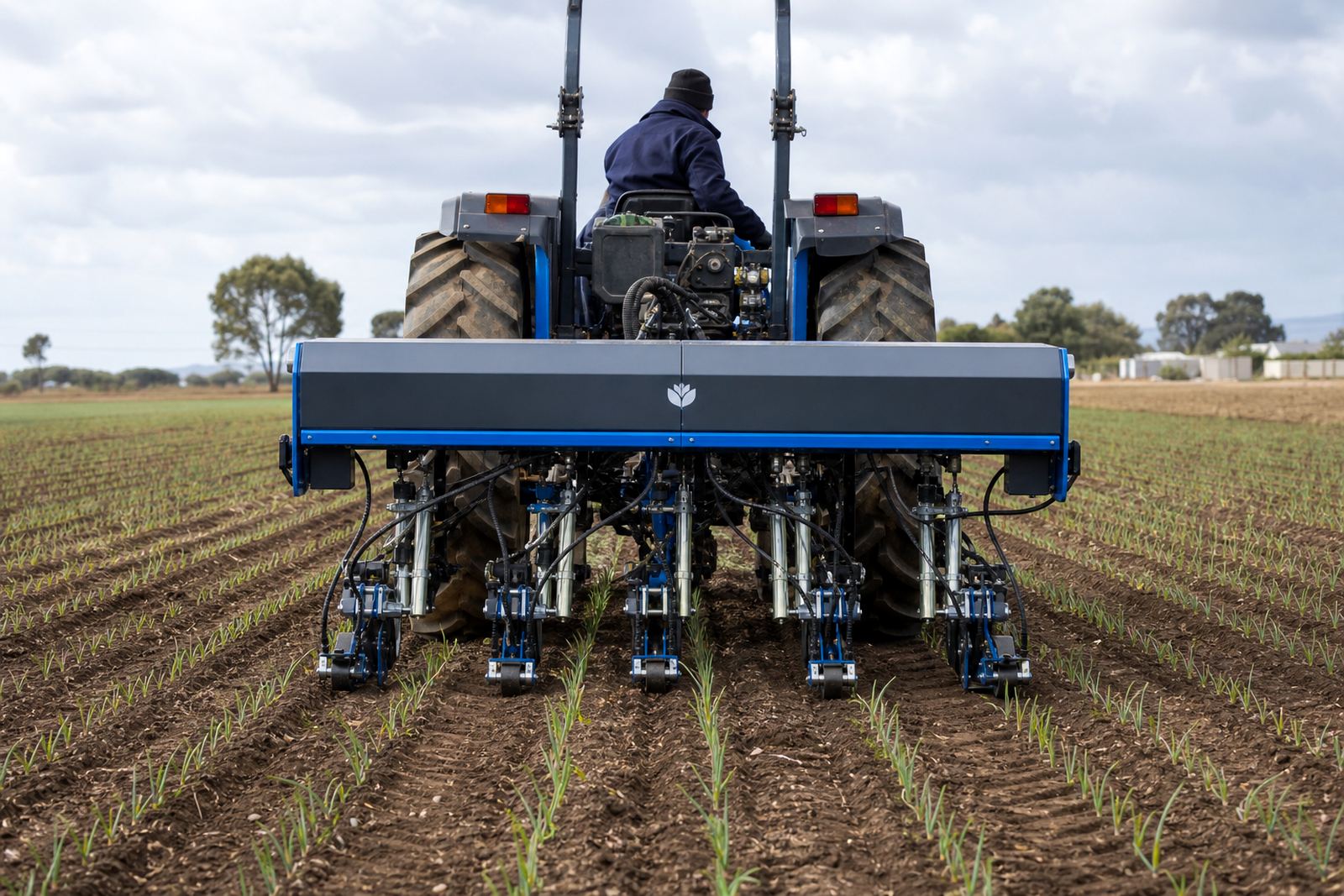
This setup is for fields where the rows sit close together and the working window between crop lines is narrow. The tractor-drawn unit is arranged so the camera-guided system can read the bed pattern, hold the line and direct the laser at small weeds before they get away from the crop.
It is commonly used on onions, carrots, lettuce and brassicas where the crop stands are uniform and the bed shape stays consistent across the block. The narrower arrangement helps when the planting pattern leaves little margin for drift, and the operator needs a clear run between plants without touching the soil profile.
Sizes, row spans and alignment choices
Narrow Row Setup is selected to suit the actual bed and row geometry on site, not a single fixed farm layout. The fitting is typically matched to bed width, row centre distance and the crop canopy at the time of passing, because those details decide how well the cameras can read the rows.
- Close row spacing where the inter-row gap is limited
- Single or paired bed working patterns
- Young crops with clear row definition
- Fields that need accurate tracking on both sides of the row
- Blocks with repeat passes planned as the crop develops
In practical terms, the narrower the row set the more important the first alignment pass becomes. A neat line at the start of the block helps the operator keep the unit centred through the run, especially where the field has short bends, headlands or uneven planting marks.
Where this configuration fits best in the field
This setup suits growers who work with high-value vegetable blocks and regular bed preparation. It is a strong fit for sandy or loam soils where the surface stays level enough for camera tracking, and where weeds are best treated at a small stage before they compete hard with the crop.
It is also useful on farms that need herbicide-free weed control without cutting into the soil between rows. Because the lasers target the weed growing points, the pass is aimed at disrupting weed growth while leaving the crop line intact and avoiding the disturbance that comes with mechanical cultivation.
- Vegetable blocks with steady row placement
- Sites where chemical weed control is limited or avoided
- Fields scheduled for early or repeat weed passes
- Blocks where the crop stands well enough for camera reading
Fitting and field set-up before the first pass
The unit must be matched to the tractor drawbar and set up to the field pattern before work starts. That means checking the hitch height, running line, row spacing and the condition of the beds, then confirming that the cameras can see the crop edges cleanly across the working width.
An arrival site check is useful on new blocks because the operator can mark the start line, check wheel tracking and confirm the crop stage against the weed stage. Narrow rows leave less room for error, so the fitting needs to suit the actual planting line rather than a rough estimate from the shed.
- Drawbar and tractor compatibility
- Bed width and row centre measurements
- Crop stage and weed stage on the day
- Headland turning room and access tracks
- Any wet patches, cambers or broken rows
Operating pace, field timing and pass planning
Field speed changes with weed pressure, crop size and how clean the row pattern is. A light block with clear row definition allows a steadier pace, while heavier weed pressure or less even planting usually calls for a slower run so the laser head can work on the smaller targets with care.
Timing matters as much as the hardware. Narrow Row Setup performs best when weeds are still at an early stage, before they shade the crop or spread across the bed edge. On many vegetable farms the first pass is only one part of the season plan, with repeat passes fitted around crop growth and weed flushes.
Growers often pair this configuration with field scheduling, repeat pass planning and trial strip runs on fresh blocks. That helps the team judge how the crop is standing, whether the bed line is holding and where the next pass should land if weeds germinate in waves.
Care, cleaning and wear points after each block
After work, the unit should be cleared of dust, plant residue and moisture before the next field. Coastal humidity around Cape Town and inland morning dew can leave light dampness on brackets, lenses and covers, so the machine needs a clean wipe-down and a check for buildup around the viewing system.
Attention also goes to cable runs, moving points and any shielding around the laser head. A narrow row configuration depends on accurate reading, so scratched lenses, misaligned brackets or mud on the camera path can affect the quality of the pass more than a general tractor service issue would.
- Wipe lenses and covers with clean, soft cloths
- Check for dust, sand and crop residue
- Inspect fasteners and bracket alignment
- Look over wheel tracks and drawbar points
- Store the unit in a dry, covered space
Details to confirm when placing the order
When ordering a Narrow Row Setup, the most useful details are the crop type, row spacing, bed width and the stage of the weed flush. It also helps to note the farm town, the block size, the number of hectares to cover and whether the same configuration must move between farms in one programme.
For growers in Philippi, Ceres, Grabouw, Tzaneen, Bela-Bela, Nelspruit, Howick or Bethlehem, the travel plan and arrival sequence can be tied to the block map and the season booking. Our contact form is the cleanest way to send those details, including any notes on narrow beds, turning space and whether trial strip runs or post pass reporting are needed.
- Crop type and planting date
- Row spacing and bed measurements
- Block location and field access
- Weed stage and follow-up pass needs
- Whether operator supplied service is required
Key facts
| Setup type | Tractor-drawn narrow row configuration for camera-guided laser weeding |
|---|---|
| Typical crops | Onions, carrots, lettuce and brassicas |
| Working principle | Cameras read the crop line and lasers target weed growing points |
| Best use case | Close row spacing where precise bed tracking is needed |
| Field effect | Herbicide-free weed control with no soil disturbance |
| Service fit | Field assessments, trial strip runs, repeat pass planning and season bookings |