Two-bed working for steady row patterns
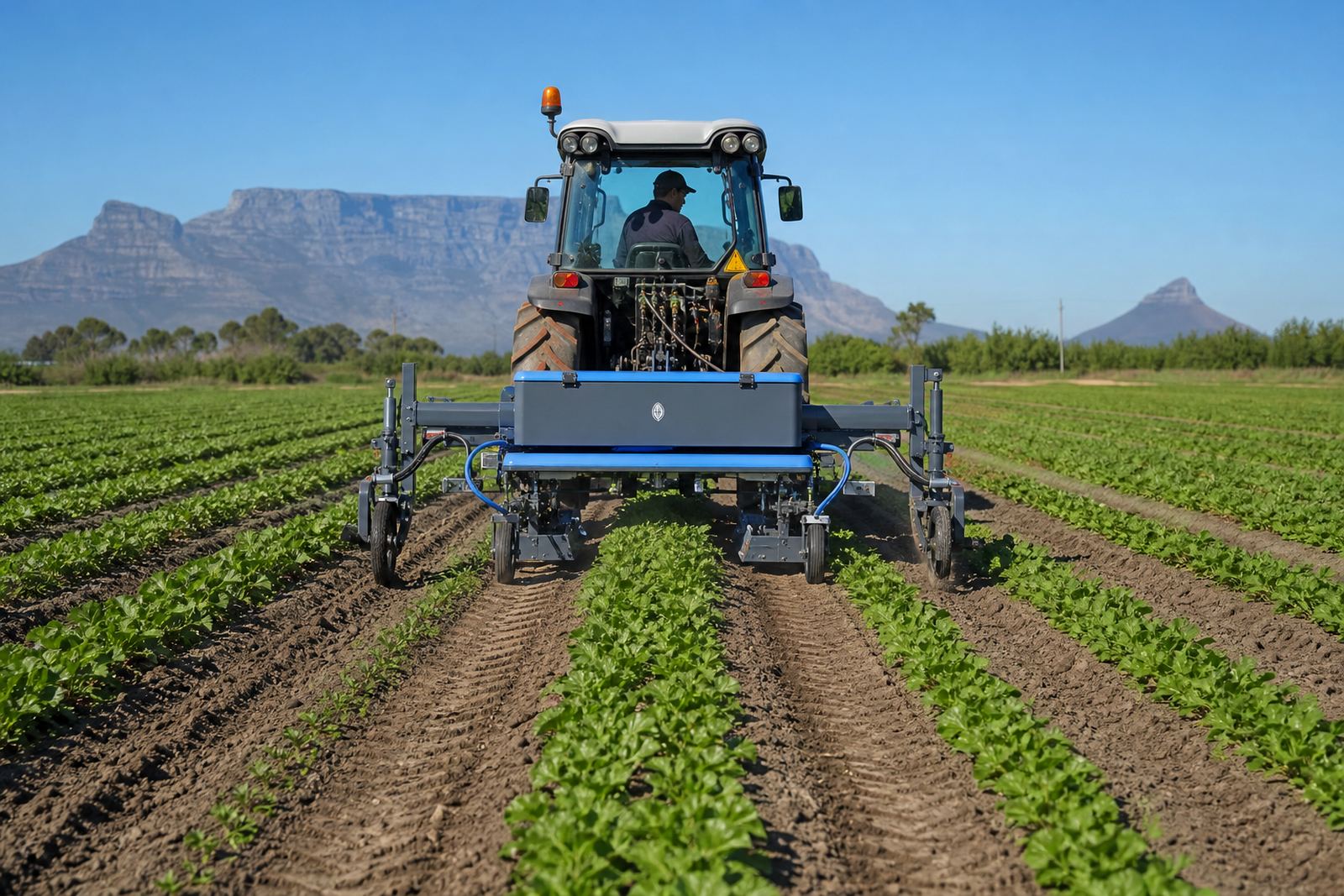
This unit is arranged for two adjoining beds so the operator can work across a clean, even run without constant reshuffling in the field. It is suited to crops planted in regular lines, especially onions, carrots, lettuce and brassicas, where the gap between crop plants and the weed flush needs careful control.
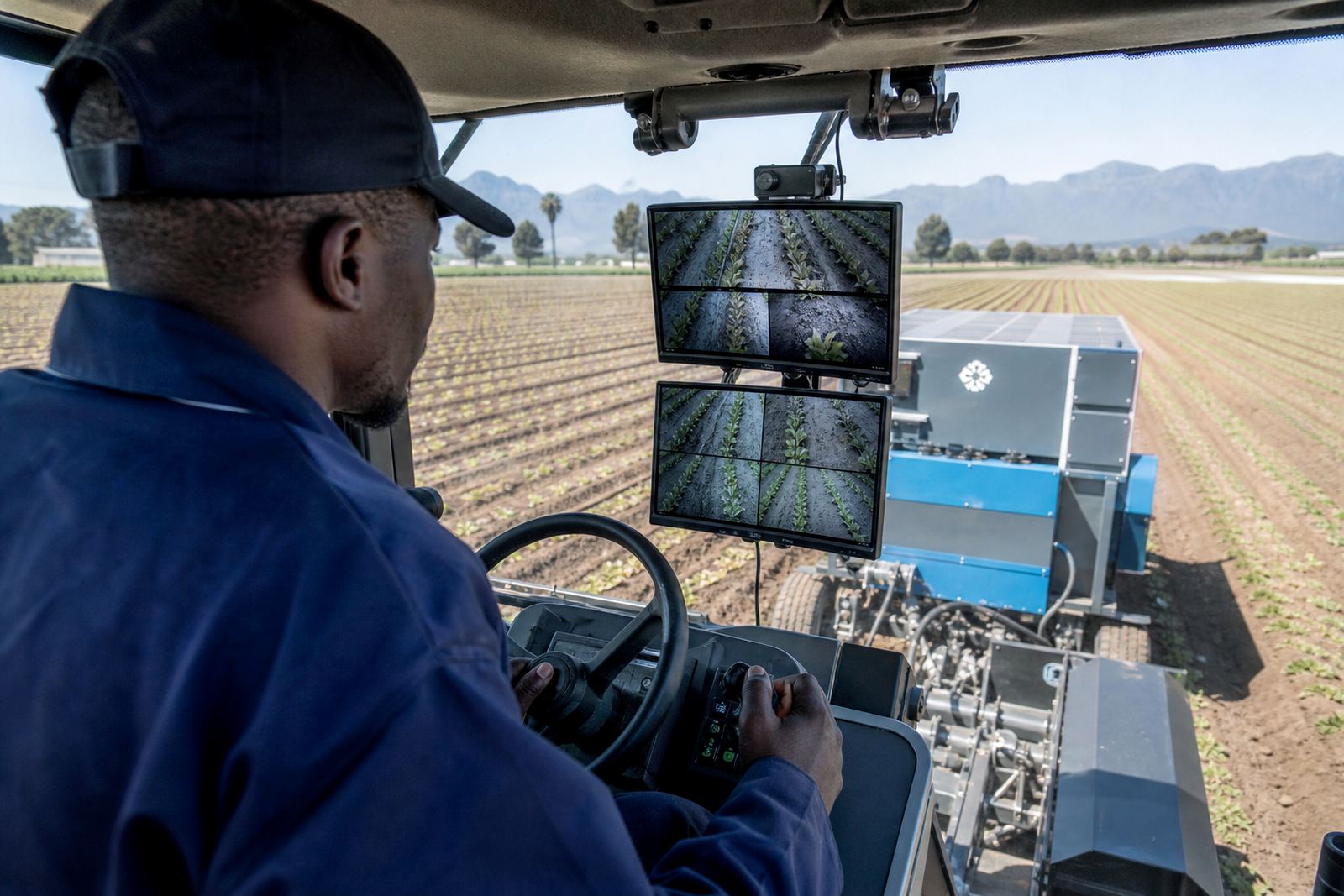
The laser system uses camera-guided detection to identify weed growth points and direct energy at the target rather than disturbing the soil. That matters on fine seedbeds and irrigated blocks where a hoe or inter-row tool can pull up fresh weed seed, bruise crop stems or leave the surface loose after rain.
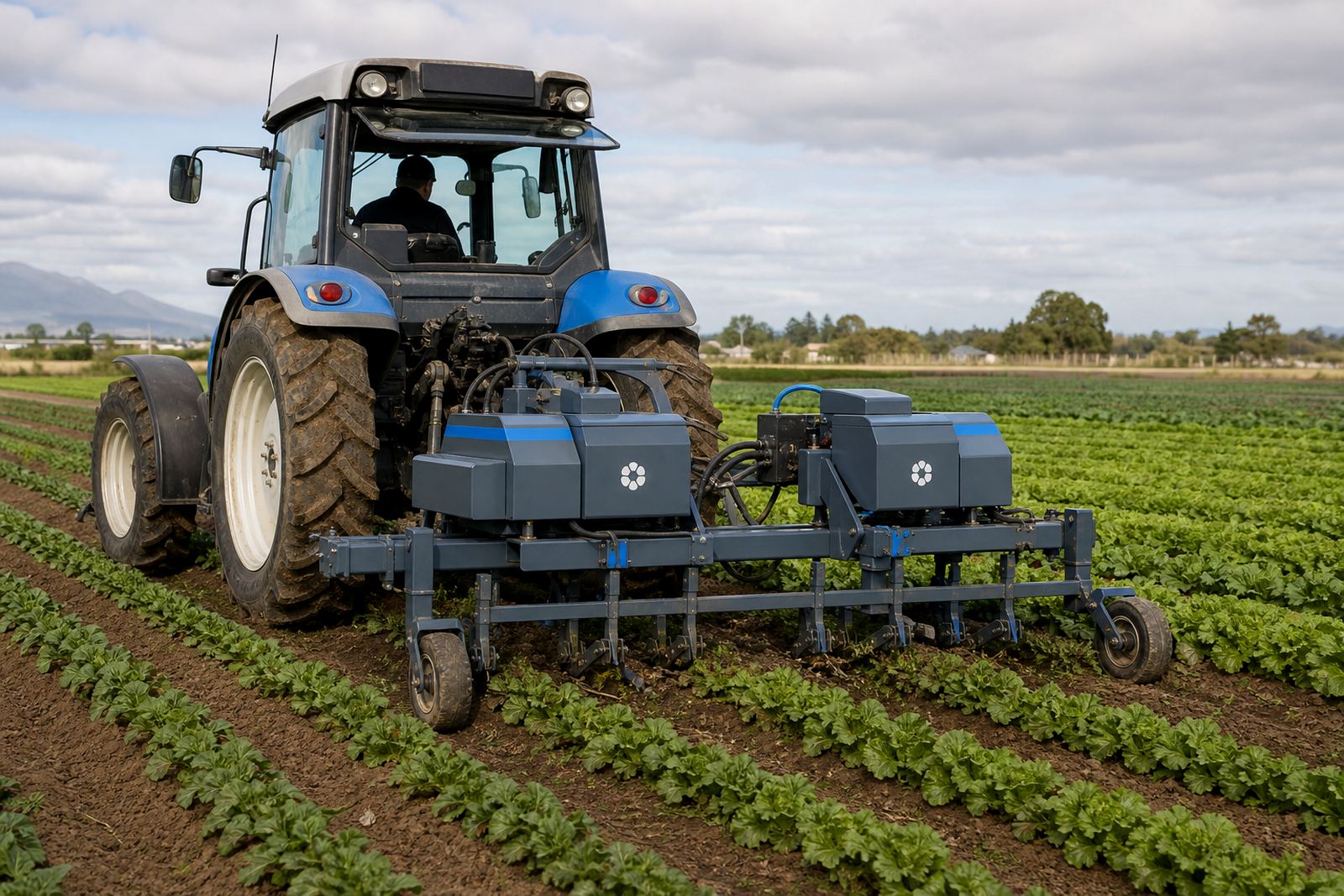
- Tractor-drawn operating setup
- Two-bed field coverage
- Camera-guided weed detection
- Laser targeting on weed growing points
- Trained operator on the machine
Where the layout works best
Double-bed format suits farms with straight rows, level headlands and a repeatable bed width across the block. It is often used where the crop spacing is tight and the field plan allows a consistent travel line from one end of the block to the other.
Growers in Philippi, Grabouw, Ceres, Tzaneen, Bela-Bela, Nelspruit, Howick and Bethlehem often ask for this setup when they want a measured pass through vegetable rows rather than a broad cultivation run. The unit is a practical fit for contract work on medium and larger blocks where field discipline matters more than a loose, one-off pass.
- Even bed spacing across the block
- Clear tramlines or tractor access
- Regular planting lines
- Crop rows that can be followed at a controlled speed
Sizing and operating options
The working width is planned around a two-bed layout, but the actual fit depends on bed width, row count per bed and the crop stage at the time of treatment. On tighter plantings the operator may work more slowly to keep the laser head aligned, while cleaner, lighter weed pressure usually allows a steadier run across the land.
Field speed changes with weed pressure, row clarity and the condition of the crop canopy. Young weeds at the right stage are easier to target, while larger weeds or uneven emergence need a more cautious pass. For that reason, crop timing plans and trial strip runs are often used before a wider programme is scheduled.
- Two-bed working width
- Adjustable operating pace
- Suitable for young weed stages
- Can be scheduled for repeat passes
- Works with season bookings and multi farm programmes
Fitting the unit into a working farm day
The Double Bed Unit is mounted on a tractor-drawn platform and needs a field-ready tractor setup, a clear access point and a crop block that has been mapped before the operator starts. Arrival site checks help confirm bed width, turning space, irrigation lines and the safest travel route into the field.
Where blocks are split across more than one farm, travel coordination becomes part of the plan so the unit reaches each site in the right order. For growers across South Africa, the scheduling is usually linked to weed stage, crop age and the blocks that need treatment first.
- Tractor towing arrangement
- Clear entry and exit routes
- Space for headland turns
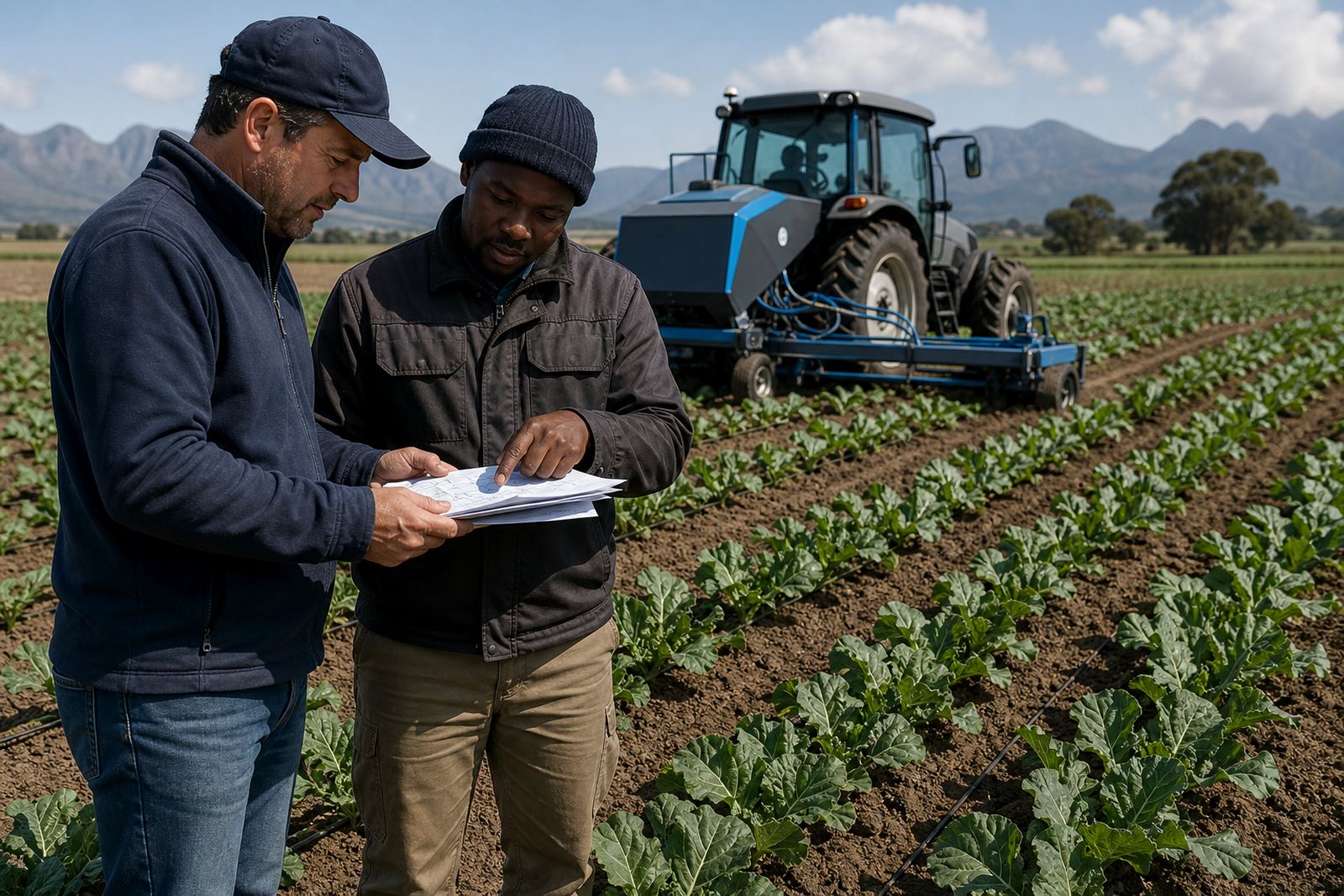
- Field notes before treatment starts
- Operator supplied with the unit
Care between passes and during storage
The unit needs regular cleaning after dusty work, especially in dry inland areas and on windy coastal blocks where fine grit can settle around moving parts and sensors. On wet farms the main care point is keeping lenses, covers and guards free of mud splash, so the camera system stays clear for the next pass.
Workshop checks focus on alignment, lens condition, cable condition and the general wear on the moving frame. A farmer does not need to strip the machine in the yard, but the field team should keep the unit washed down, parked under cover and inspected before the next booking. That habit helps avoid small faults building into a lost day in the field.
- Clean sensors and covers after use
- Park under cover where possible
- Check guards and moving parts
- Inspect before repeat pass work
Details to confirm before a booking
To schedule the Double Bed Unit properly, we need the crop type, bed width, row spacing, block size and the weed stage in the field. Timing matters because laser weeding is most effective when the target weeds are at the right stage, not after they have grown too large or spread unevenly through the line.
It also helps to know whether the land is one solid block or split across farms, and whether the grower wants a single pass, repeat pass planning or a wider season booking. Use our contact form with the crop name, field location and basic bed measurements, then the team can line up field scheduling, travel coordination and operator supply around the job.
- Crop and variety
- Bed width and row spacing
- Field size and access details
- Current weed stage
- Preferred treatment window
- Whether the block needs one pass or repeated visits
Key facts
| Product type | Two-bed tractor-drawn laser weeding unit |
|---|---|
| Working format | Camera-guided weed detection with laser targeting |
| Best suited crops | Onions, carrots, lettuce and brassicas |
| Field fit | Even beds, consistent planting lines, clear headlands |
| Operating support | Trained operator supplied with field scheduling |
| Service area | Philippi, Cape Town with nationwide contract work |