One bed, one focused pass
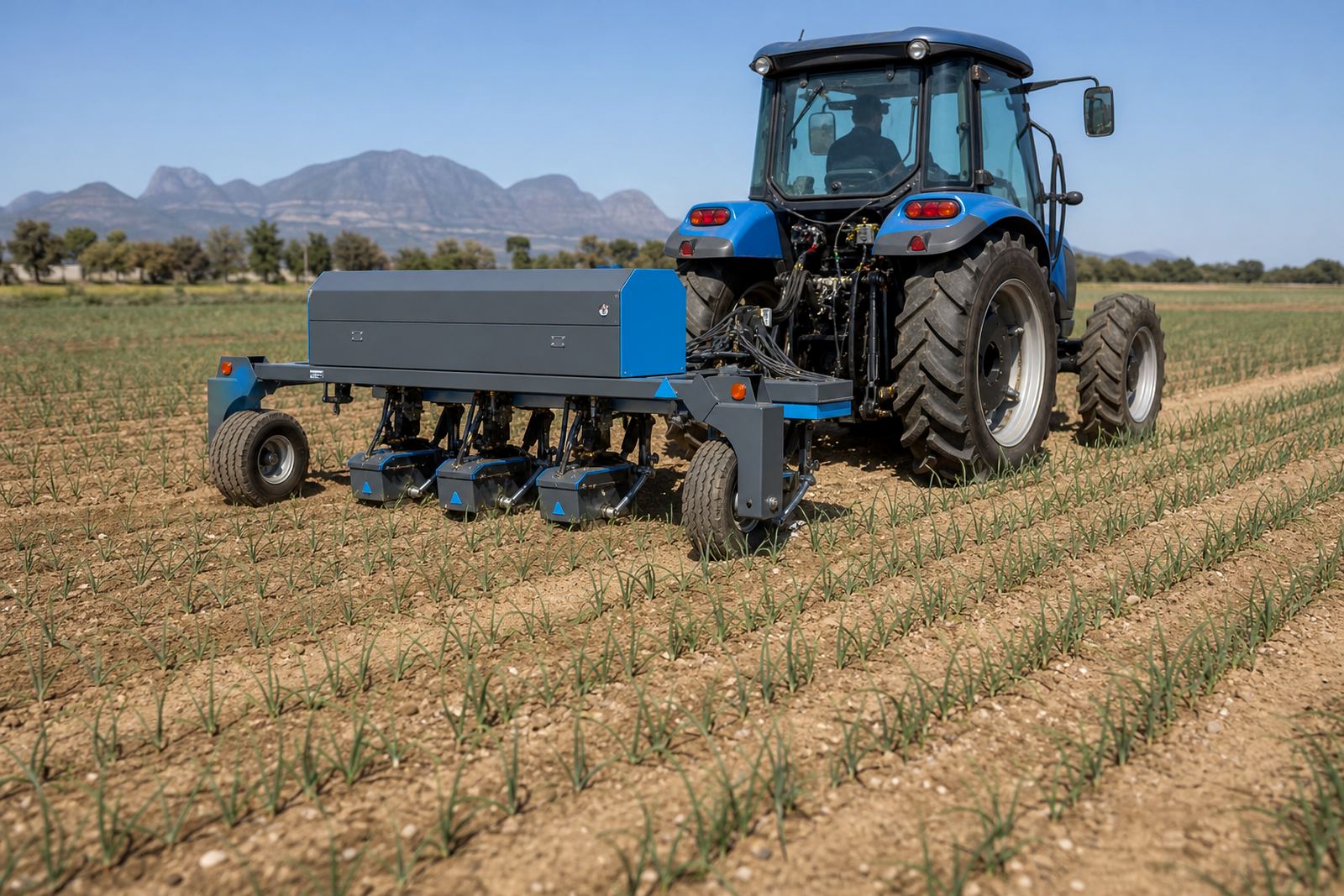
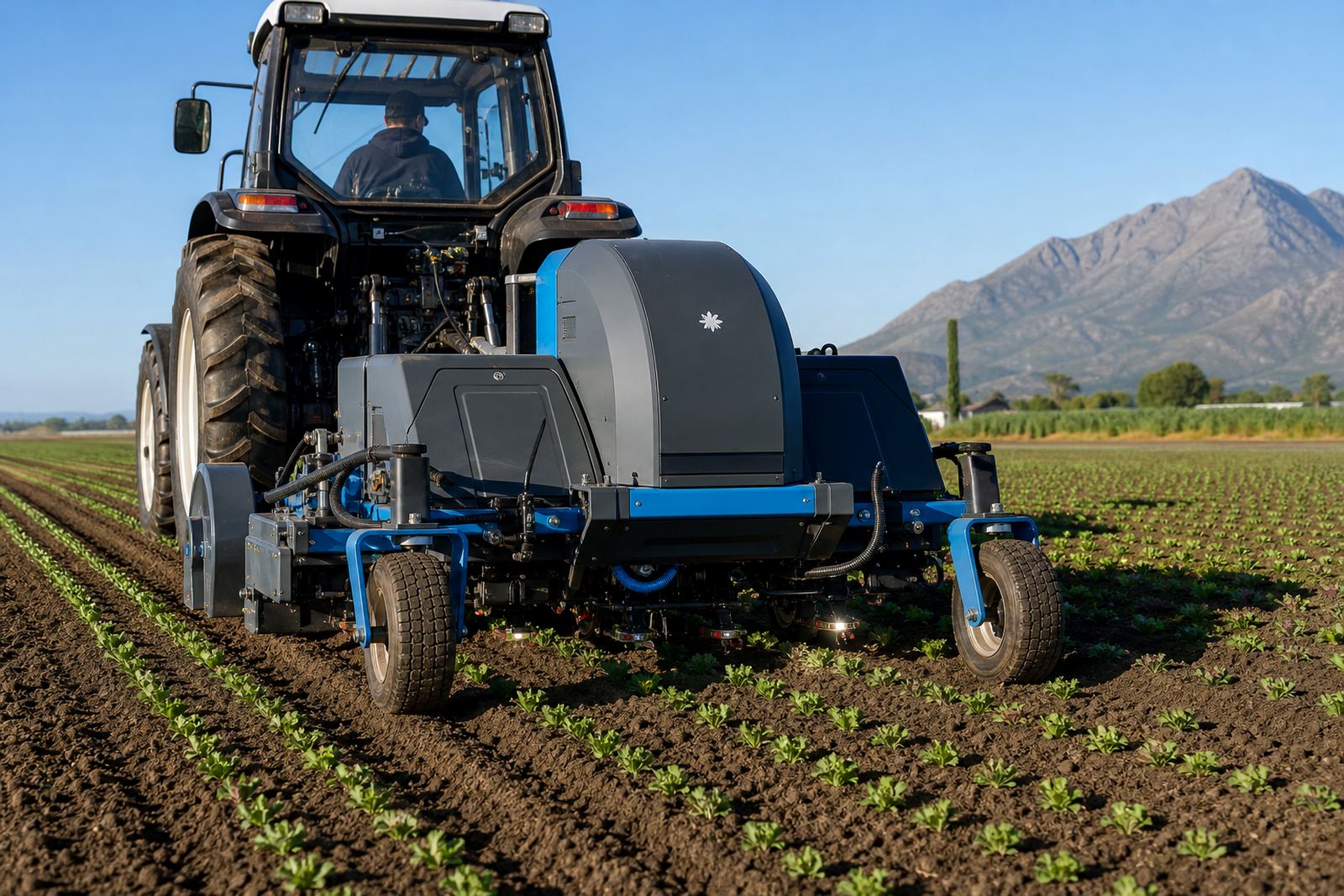
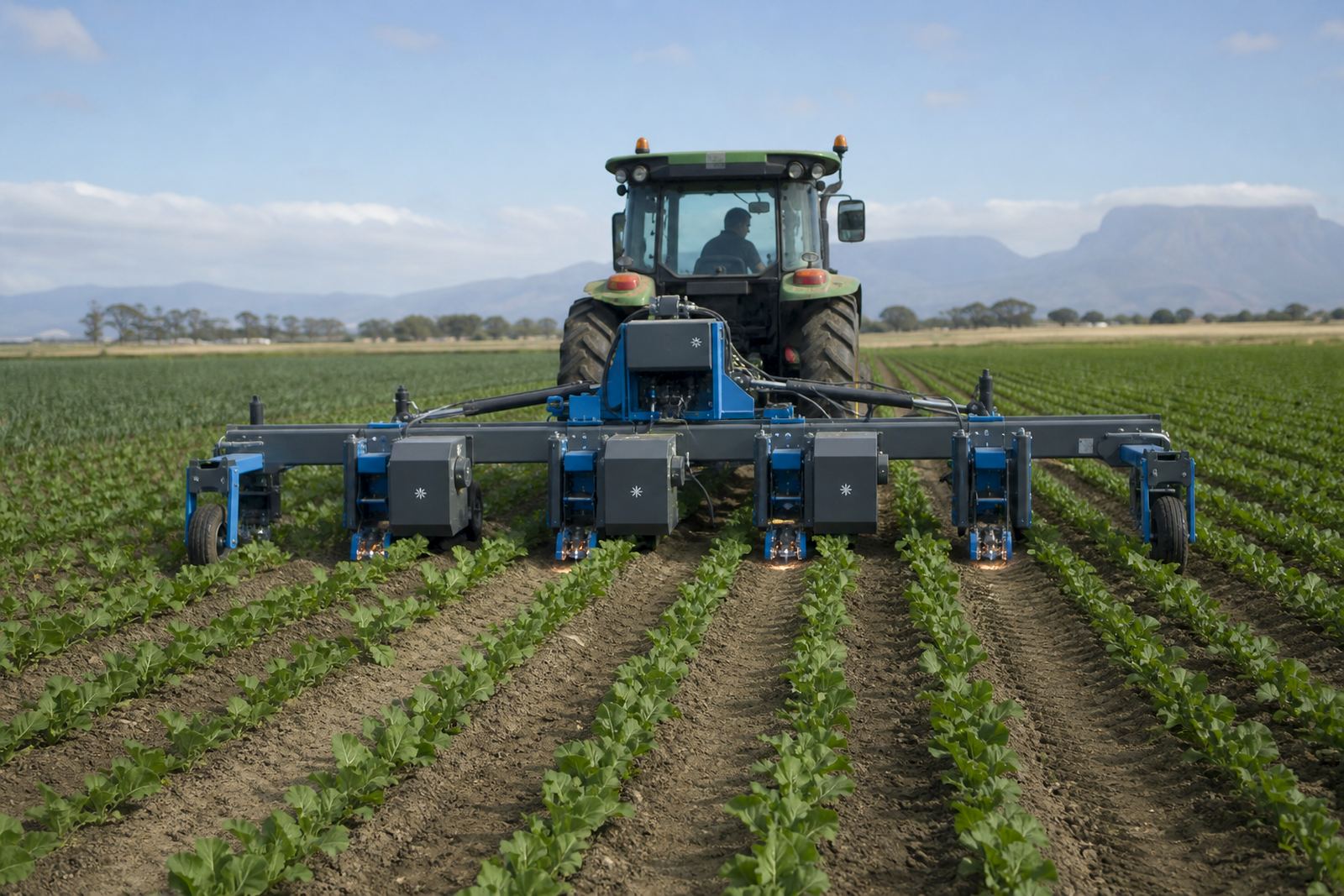
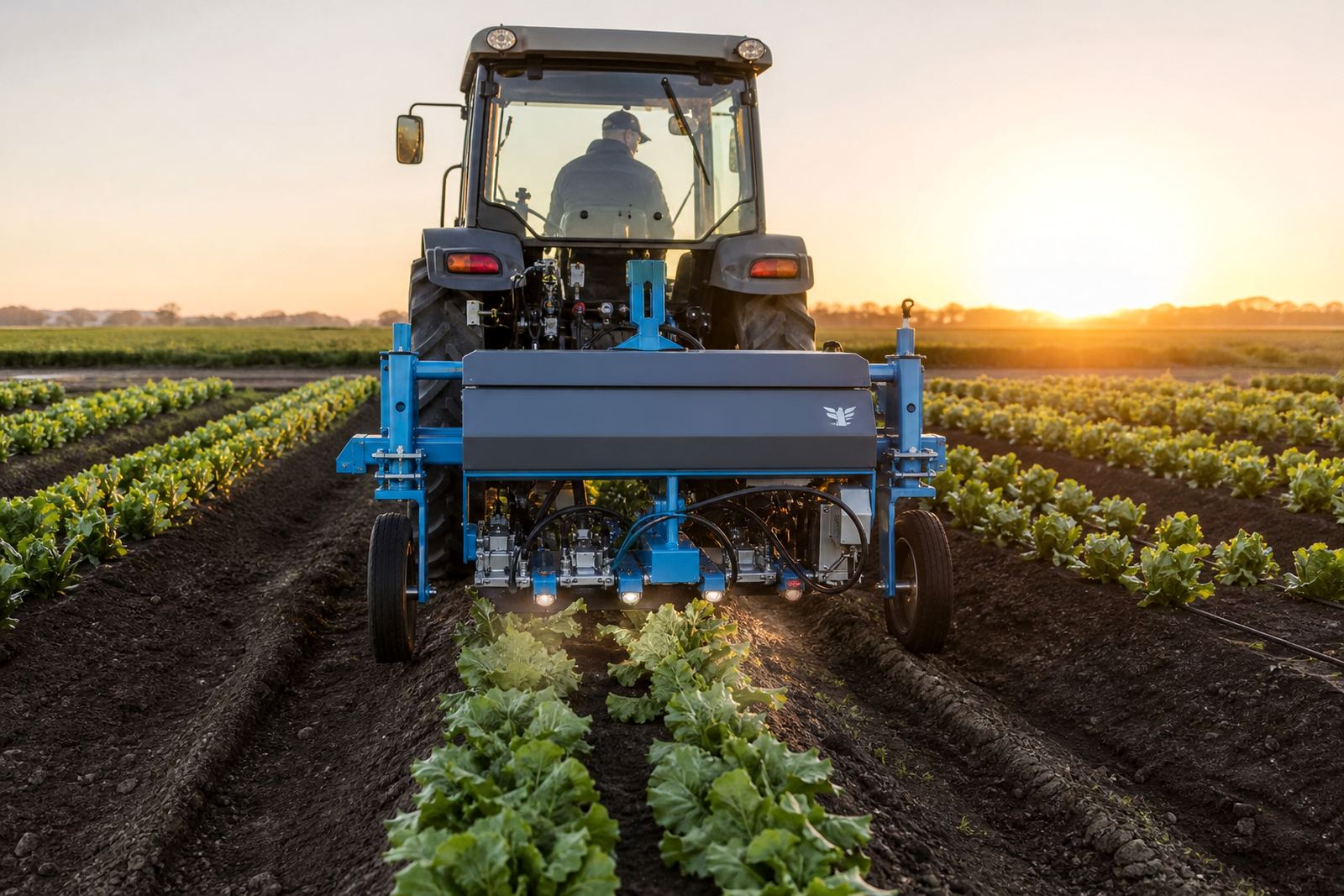
This setup is used where the crop is laid out in a narrow bed and the working space is tight. The unit follows the bed line and lets the operator work close to the crop row while camera-guided detection helps identify weeds above the soil surface and direct the lasers at the weed growing points.
It suits growers who want contract laser weeding on a smaller section first, or where access around the field is constrained by path widths, irrigation layout, soft shoulders or awkward turning space. The work stays above ground and leaves the bed structure intact.
- One planted bed worked at a time
- Suited to tight access and narrow headlands
- Useful for trial strips and block checks
- Operator controlled movement across the bed
Crop stages that fit this unit
The Single Bed Unit is generally used on row crops and leafy crops where weeds can be targeted while they are still small. It is commonly considered for onions, carrots, lettuce and brassicas, especially where crop spacing is even and the bed can be worked cleanly from start to finish.
Timing matters. The best window is usually when weeds are visible but still at an early stage, before they have grown too hard or too wide for the system to work across them properly. We look at crop size, weed pressure, bed condition and the amount of clean ground between plants before a pass is set.
- Onions, carrots, lettuce and brassicas
- Early weed stage gives better targeting conditions
- Crop spacing should be regular along the bed
- Works well in trial plots or smaller planted blocks
What the unit includes on site
The service is supplied as a contract field setup, not a loose machine hire. A tractor-drawn laser weeding unit arrives with the operator, and the field is checked before work starts so the bed shape, row layout and travel path are all clear. Where needed, the plan can include trial strip runs, repeat pass planning and arrival site checks.
For growers across the Western Cape, Limpopo, Mpumalanga, KwaZulu-Natal and the Free State, scheduling also takes travel distance and farm access into account. In Philippi, Ceres, Grabouw, Tzaneen, Bela-Bela, Nelspruit, Howick and Bethlehem, the same bed-based approach can be fitted into mixed field programmes and multi farm work.
- Tractor-drawn laser unit with trained operator
- Arrival site check before the pass
- Trial strip runs where a first look is useful
- Field scheduling for single blocks or linked farms
Bed width, row spacing and working speed
The right setup depends on the bed width, the row spacing inside it and how much weed pressure is present. A single bed can be shallow and tight or wider and more open, so the pass speed is set according to the actual field conditions rather than a fixed figure.
As weed density rises, the work normally needs more careful movement and more attention to each target plant. Clean, uniform beds are easier to run than rough blocks with broken rows or heavy volunteer growth. The operator also checks whether a repeat pass is needed after the first run or after fresh emergence.
- Bed width matched to tractor and unit travel line
- Row spacing confirmed before field movement
- Field speed changes with weed pressure
- Repeat pass planning can be built into the season plan
Fitting, access and field care
The Single Bed Unit needs a field that is ready for steady tractor movement and clear access along the bed. Gate width, turning room, surface firmness and the condition of the headlands all matter because the unit must travel without cutting across crop rows or damaging the bed edge. In wet coastal conditions around Philippi or Grabouw, the ground may need more thought before scheduling.
No soil disturbance is part of the method, so the bed shape remains intact after the pass. The work is also herbicide-free, which makes it practical where a grower wants mechanical and optical control rather than spray application. Care on the day is mainly about keeping the route clear, the crop map accurate and the bed line easy to follow.
- Check gate widths and headland turning room
- Keep bed edges firm and easy to follow
- Allow for wet ground in coastal and high rainfall areas
- Maintain clear travel lines for the tractor unit
Details to confirm before a booking
When ordering a Single Bed Unit pass, the useful details are practical ones from the field itself. We need the crop type, the number of beds, the bed width, row spacing, the stage of crop growth and how far along the weeds have come. It also helps to know whether the block is a trial strip, a full season booking or part of a multi farm programme.
Other points to confirm are site access, travel distance, the preferred work window and whether post pass reporting is needed after the job. Growers reach us through our contact form, and the same office team handles field assessments, crop timing plans, travel coordination and grower consultation for the farm schedule.
- Crop type and plant spacing
- Bed width, block size and access route
- Weed stage and expected pass timing
- Need for trial strip runs or post pass reporting
Key facts
| Product type | Contract laser weeding setup for one planted bed at a time |
|---|---|
| Machine format | Tractor-drawn laser weeding unit |
| Operation | Camera-guided weed detection with laser targeting |
| Best fit crops | Onions, carrots, lettuce, brassicas and similar row crops |
| Work style | Herbicide-free with no soil disturbance |
| Service area | Philippi, Cape Town and farm sites across South Africa |