Planned field days for blocks that are ready
Day Rate Hire is arranged around a defined field day, with the unit, tractor, operator and travel set for the block or blocks that are ready to run. It suits farms that want laser weeding applied to a set area under one plan, rather than a loose callout pattern that changes from week to week.
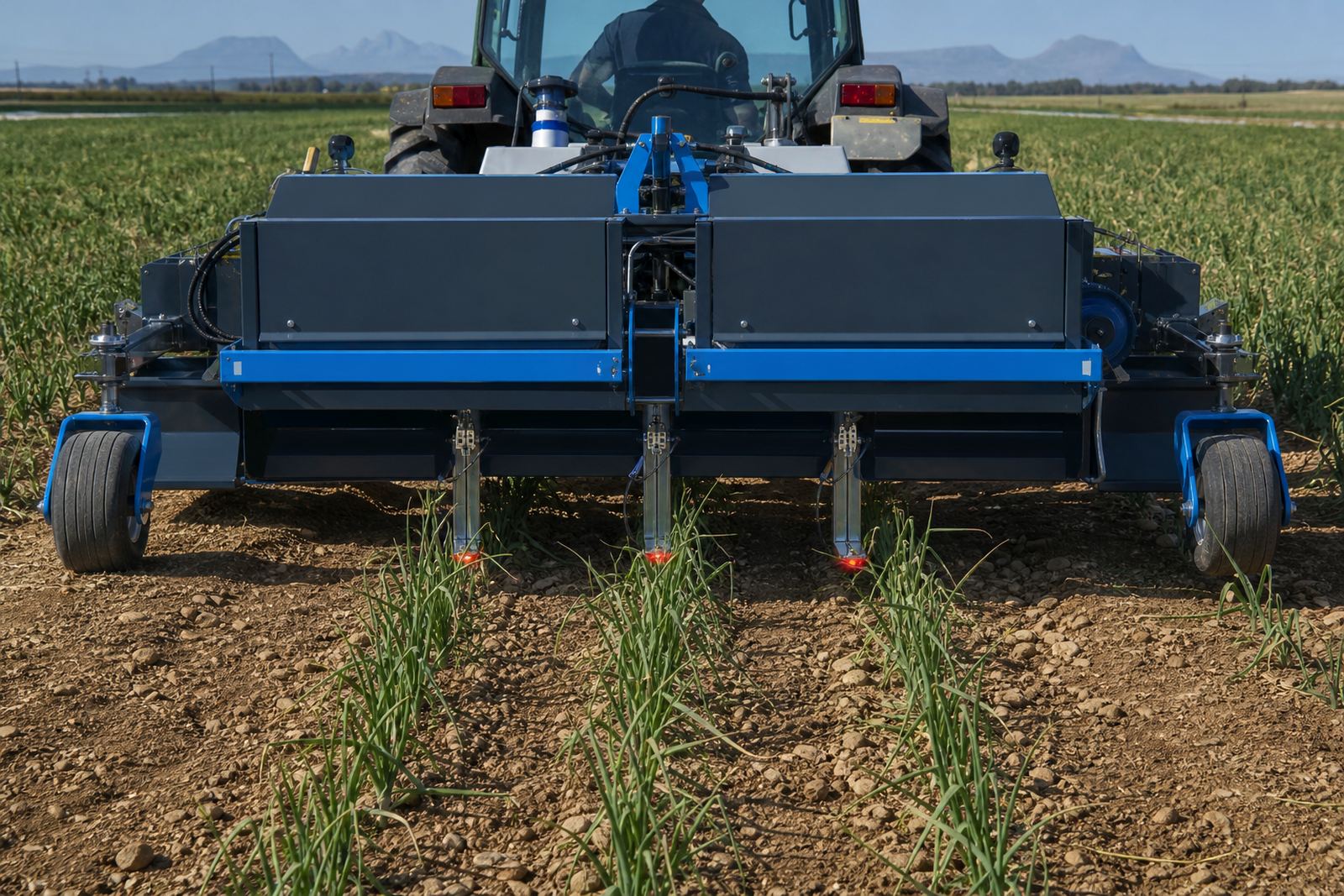
The work is best matched to crop stages where the row structure is clear and the weeds are at a treatable stage. Camera-guided detection is used to find weeds in the row zone, then lasers target the weed growing points while the crop is avoided by the control system. The pass is herbicide-free and there is no soil disturbance from cultivation tines or blades.
- Best for vegetable blocks with clear row spacing
- Useful where early weed competition needs tight timing
- Works on farms planning one day around several adjacent blocks
- Suited to cabbage family crops, onions, carrots and lettuce
How the unit works on the ground
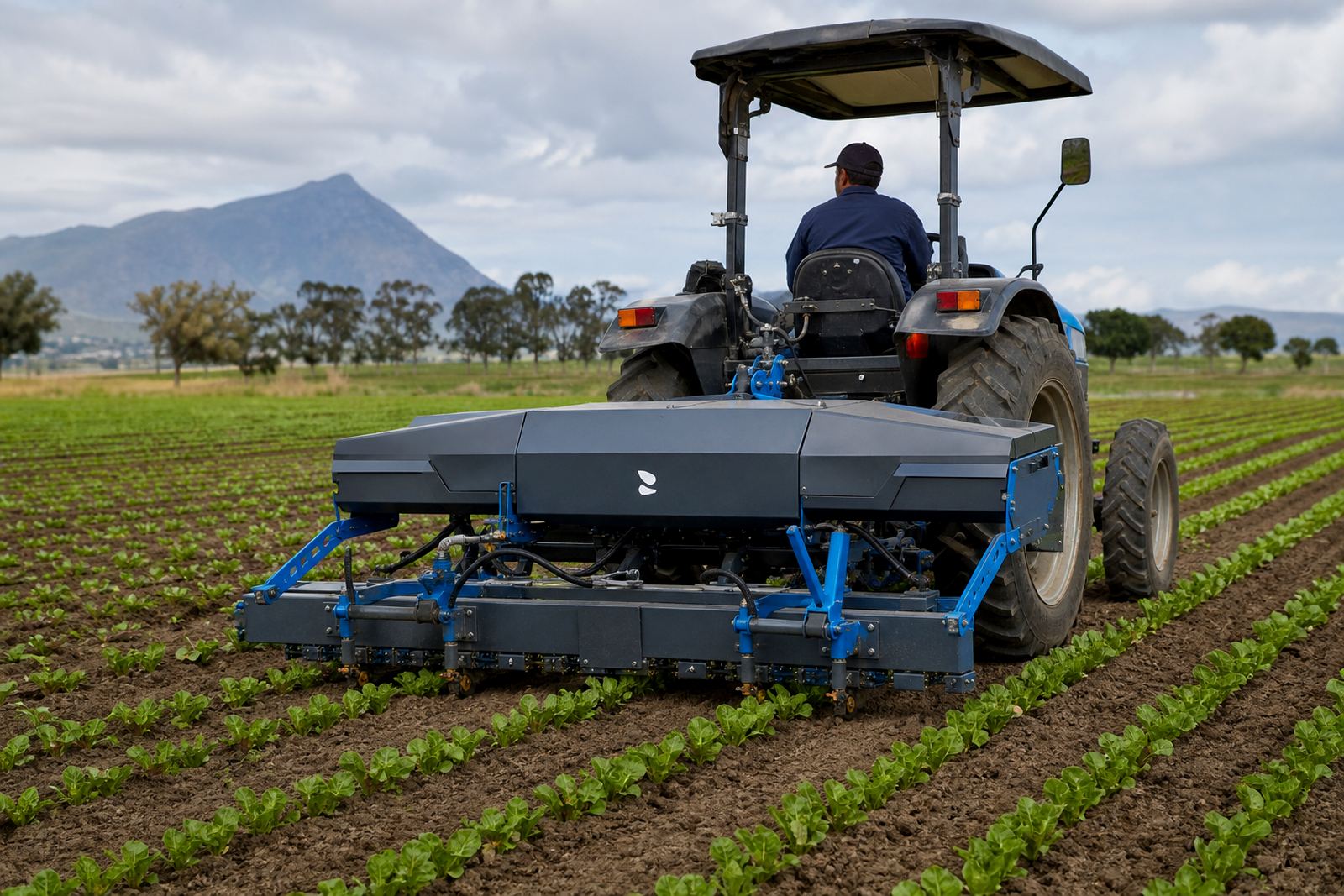
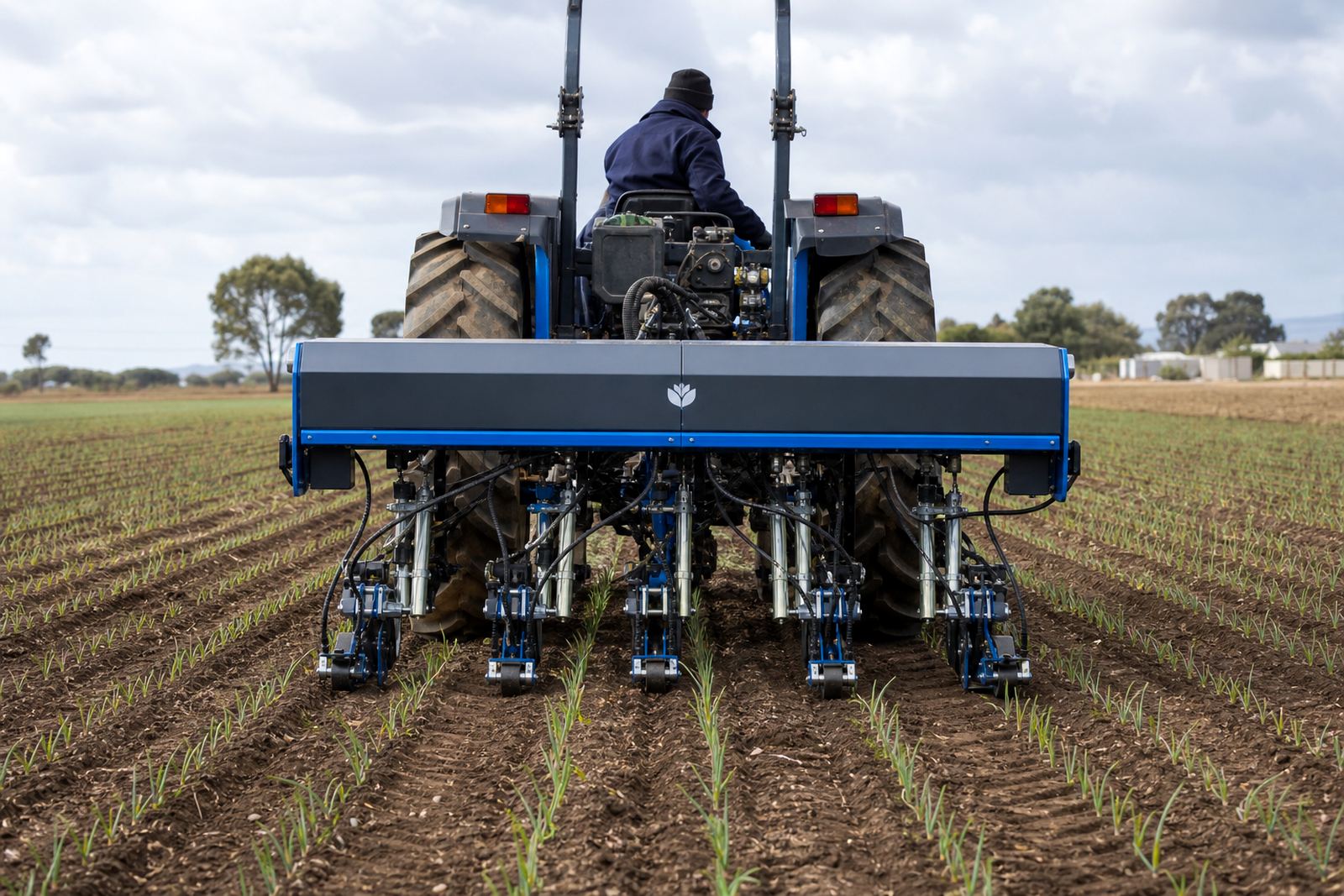
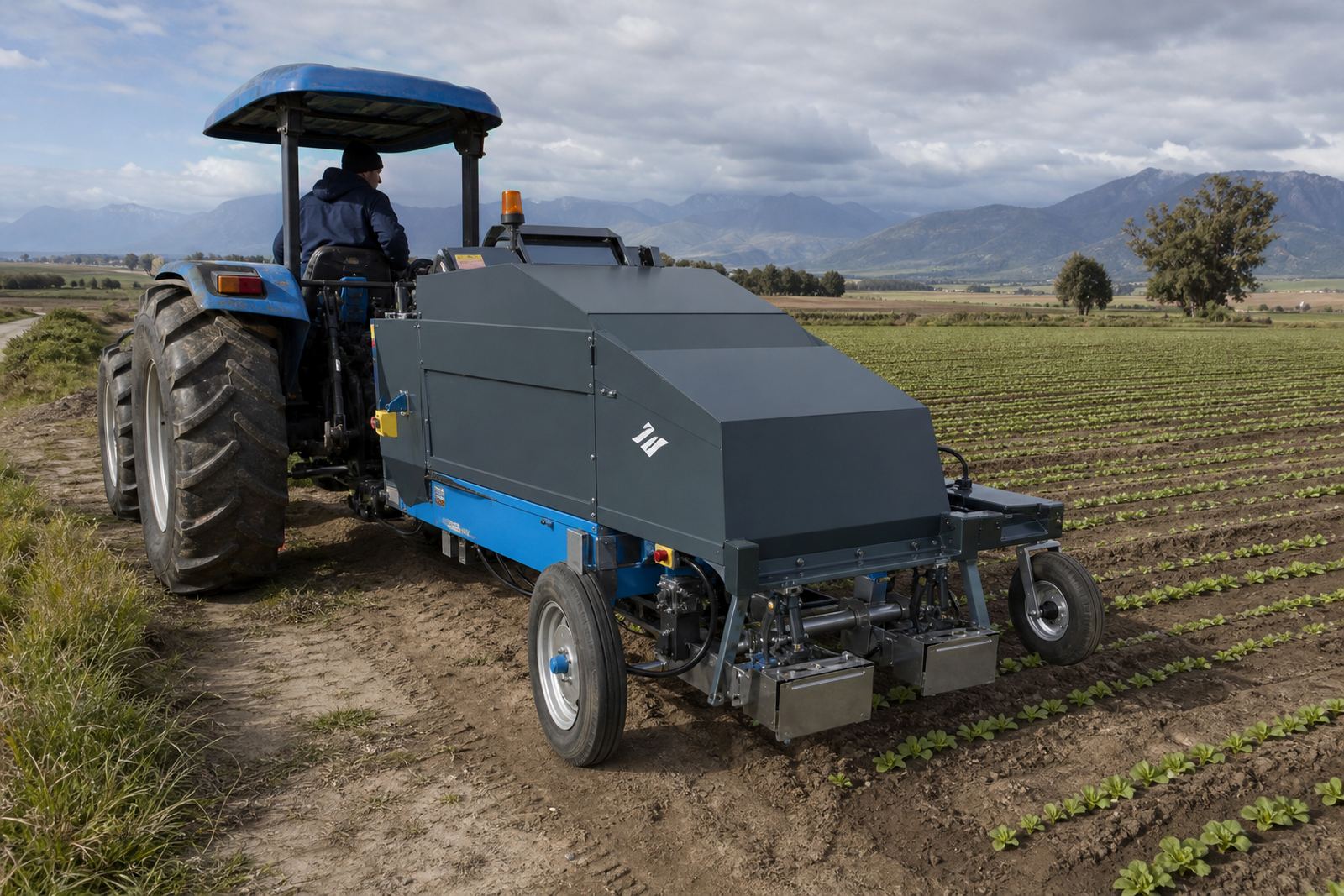
The setup is a tractor-drawn laser weeding unit with a trained operator working from the cab and control station. The machine uses cameras and guidance software to separate crop from weed, then directs laser energy to the weed growth point. That keeps the work in the row zone and between plants without disturbing the bed surface.
Field speed depends on weed pressure, row shape, crop stage and how uniform the planting is. Heavy weed pressure usually means a slower pass so the system can read the row cleanly, while lighter pressure can allow a steadier pace. The field still needs a sensible plan, because laser weeding works best when the weeds are small and the block has been laid out cleanly.
- Tractor-drawn system for open field vegetable work
- Camera-guided weed detection for row crops
- Laser targeting focused on weed growing points
- Pass speed adjusted to weed pressure and crop layout
Where day rate hire suits best
This booking format suits growers with row crops that are planted for mechanical access and regular field movement. Onions, carrots, lettuce and brassicas are common fits, though the real test is still the block layout, the crop stage and the weed stage on the day. The method also suits multi-farm programmes where one operator day can be scheduled across nearby blocks or across a longer travel route with a fixed field plan.
For farms in Philippi, Ceres, Grabouw, Tzaneen, Bela-Bela, Nelspruit, Howick and Bethlehem, the useful question is usually not the district alone but the crop timing and weed pressure in each block. Coastal humidity around Cape Town can alter weed flushes and crop pacing, while inland regions may push different growth windows, so the schedule has to follow the crop and not a calendar guess.
- Open field vegetable rows with manageable access
- Blocks where crop timing and weed stage are known
- Short or long travel plans, depending on farm cluster
- Single farm bookings or multi farm runs in one plan
Booking format and site preparation
A day rate booking works best when the field is ready for arrival and the crop blocks have been marked clearly. The operator needs sensible headland access, clean turning space and a known sequence for the blocks to be treated. If a farm wants trial strip runs first, that can be built into the day so the team can read weed pressure and crop response before the full pass begins.
Arrival site checks help confirm row direction, field entry points and any soft ground that may affect movement after rain. Where several blocks sit at different distances, travel coordination matters because it shapes the day plan and the order of treatment. If the crop schedule changes, the booking can be split into a repeat pass plan or a season booking for later windows.
- Mark the blocks and row ends before the unit arrives
- Leave turning space for the tractor and trailer unit
- Share crop stage, weed stage and block sequence
- Include access notes for gates, roads and farm traffic
Care, inspection and operating discipline
Laser equipment needs careful handling, clean lenses and a disciplined operator routine. Dust, plant sap and field moisture can affect visibility, so the unit is checked before and after each pass. Workshop support keeps the machine in working order, and the operator checks the crop rows for safe tracking, uneven stands and areas where weed pressure is too thick for a clean run.
The farm side of care is just as important. A block that has been harvested badly, watered unevenly or left with broken row lines can slow the pass and change what is practical on the day. After each booking, post pass reporting gives the grower a record of what was treated and what needs another look later in the season.
- Keep lenses, sensors and covers free of dust buildup
- Protect field access after irrigation or rain
- Plan follow-up passes where weed flushes are staggered
- Use reporting to track block-by-block treatment
Details to settle before the date is fixed
Day Rate Hire depends on clear block details, because the work is planned around crop timing and travel arrangements. When growers send the field sequence, crop type, planting dates and the expected weed stage, the team can set the right operator plan and load the correct route for the day. That matters whether the block is in Philippi or further afield in Limpopo, Mpumalanga, KwaZulu-Natal or the Free State.
The base in Philippi, Cape Town supports grower consultation, scheduling and arrival checks for farms across the country. Mandla Adonis leads the business, with Anele Khoza on operations, Pieter Mokoena on field scheduling, Zanele Naidoo on grower liaison, Johan Daniels as lead operator, Lerato Letsoalo on service coordination and Ruan Mkhabela in the workshop. That mix keeps the work practical from first plan to field pass.
- Crop type, block size and row spacing
- Planting date and current crop stage
- Weed pressure and the likely weed stage
- Travel route, farm access and field order
- Need for trial strip runs or repeat pass planning
Key facts
| Service type | Contract laser weeding booked by the field day |
|---|---|
| Unit format | Tractor-drawn laser weeding unit with trained operator |
| Crop fit | Onions, carrots, lettuce, brassicas and similar row crops |
| Working method | Camera-guided weed detection with laser targeting on weed growing points |
| Treatment style | Herbicide-free weed control with no soil disturbance |
| Coverage | Philippi, Western Cape and farms across South Africa including Limpopo, Mpumalanga, KwaZulu-Natal and the Free State |