Open lanes, tight crop lines, steady travel
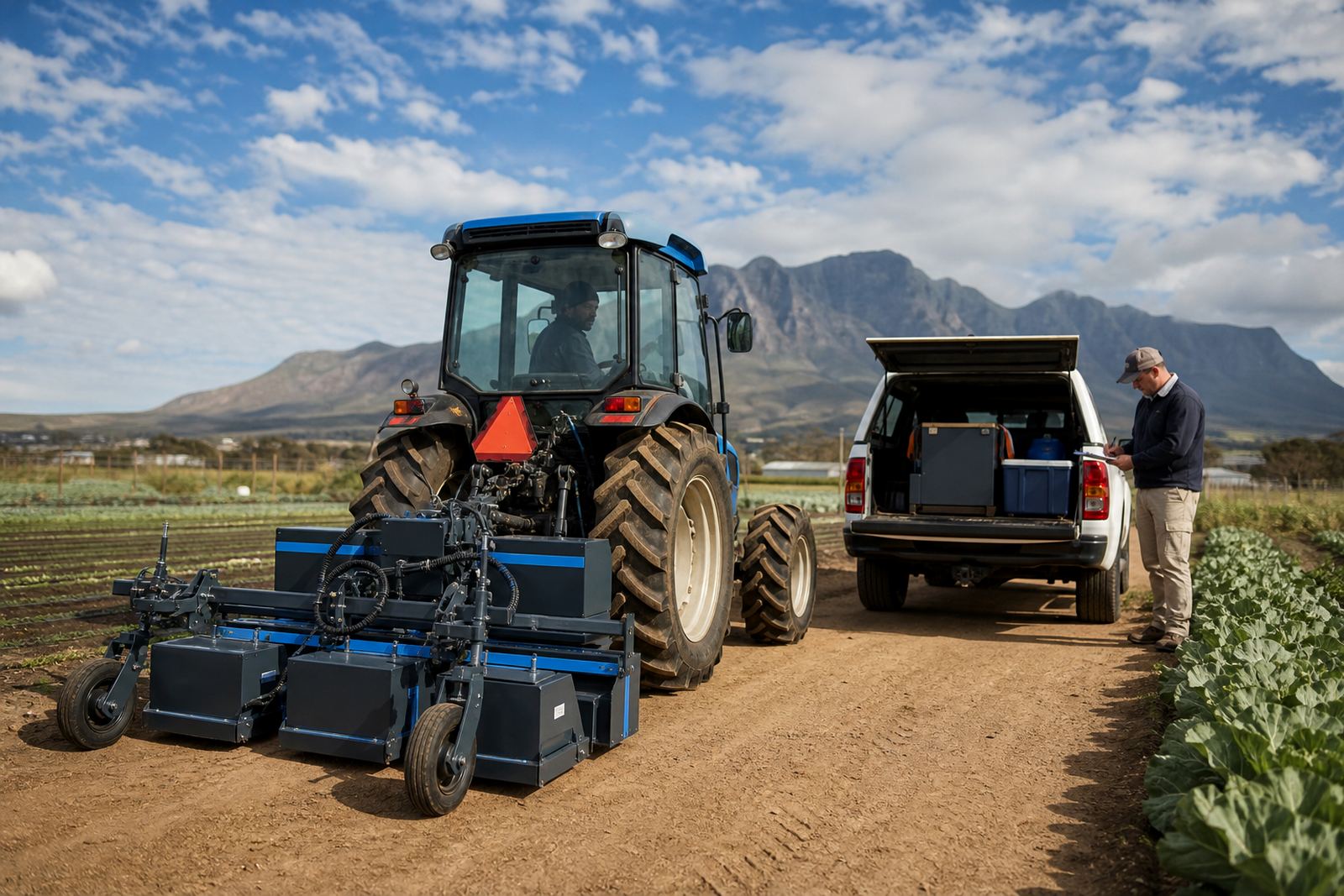
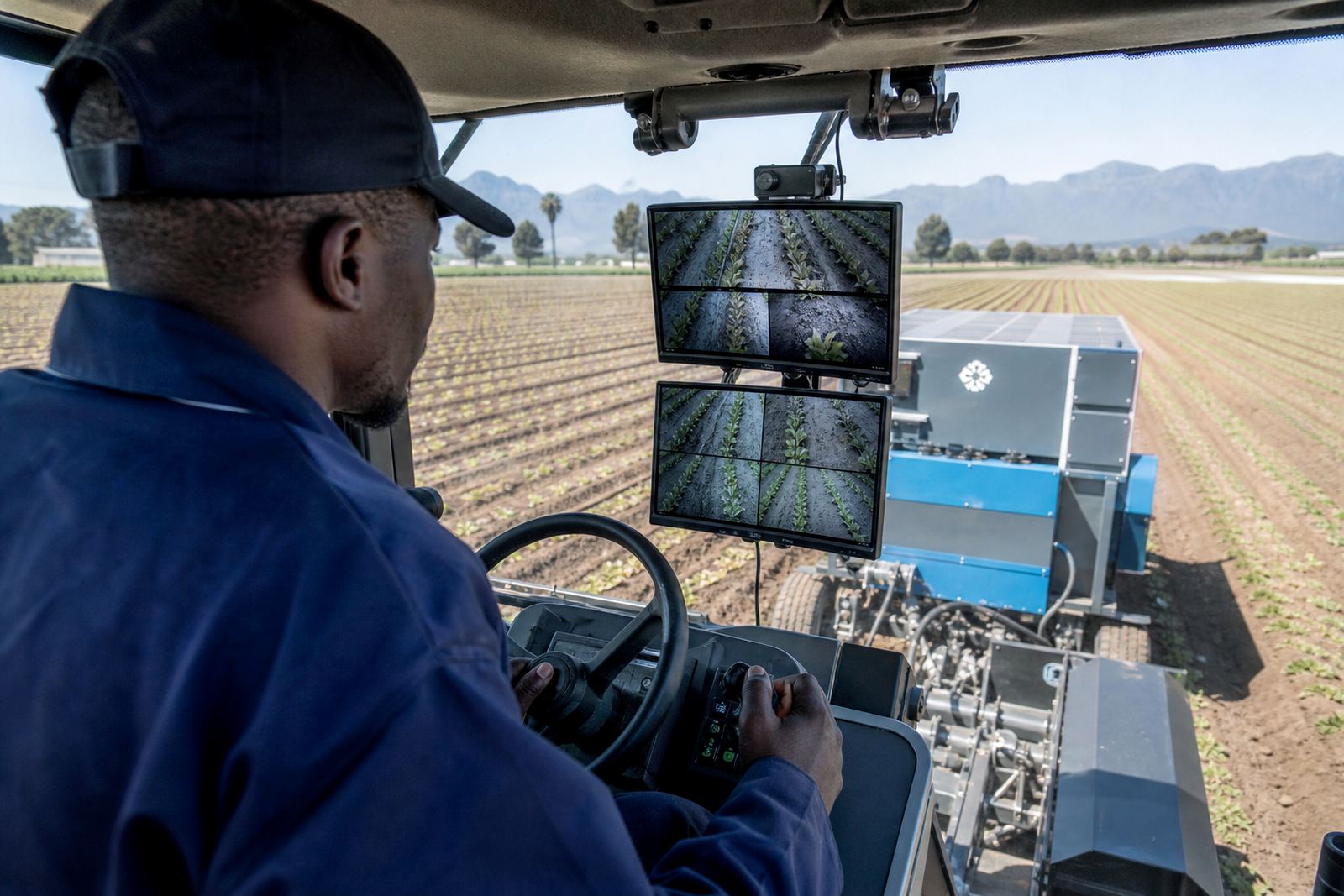
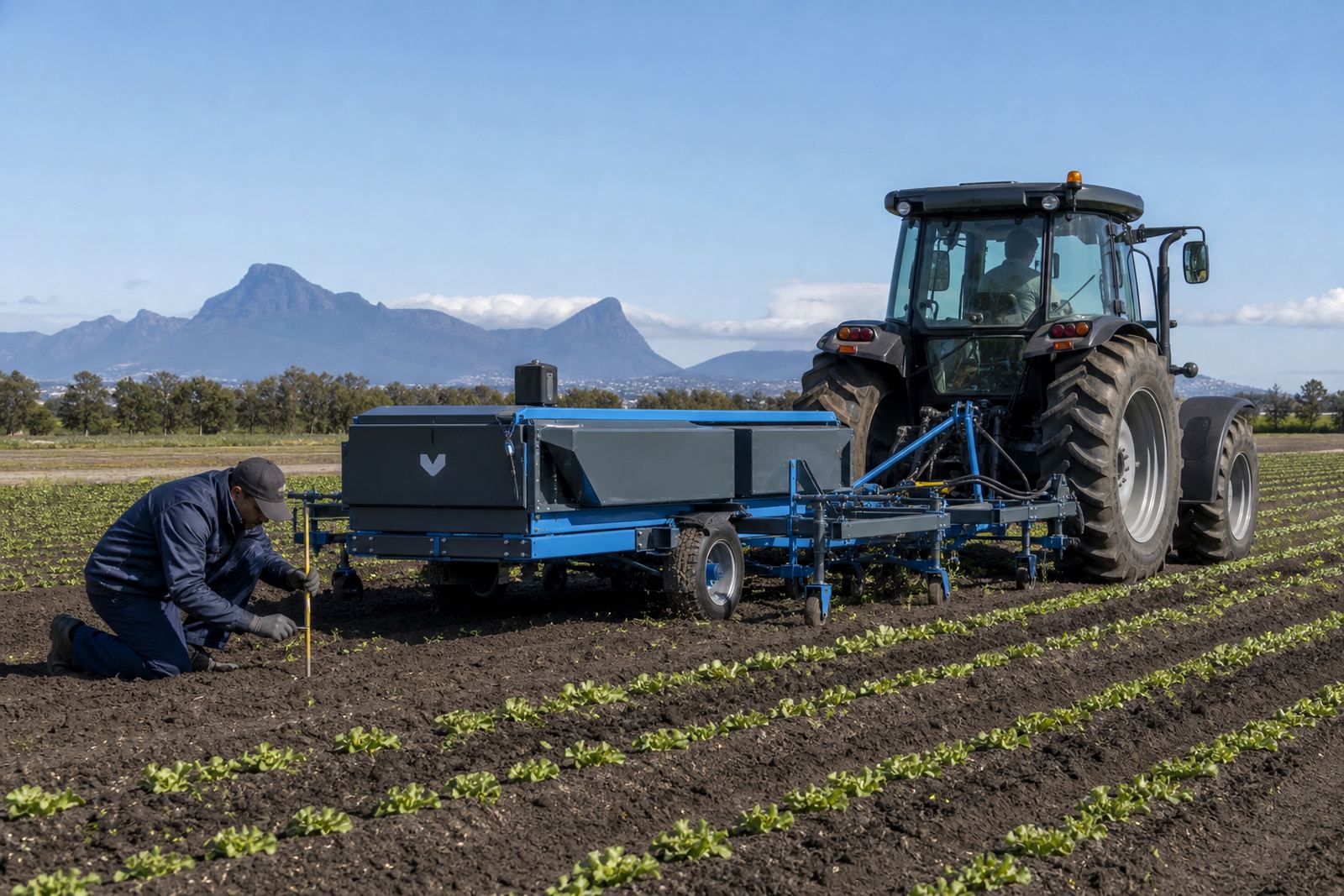
This setup works where the crop is laid out in clear rows and the space between those rows can be worked with a tractor-drawn laser unit. The cameras read the soil surface, pick out weeds against the crop pattern, then the lasers target the growing point of each weed while the operator keeps the unit moving at a controlled field speed.
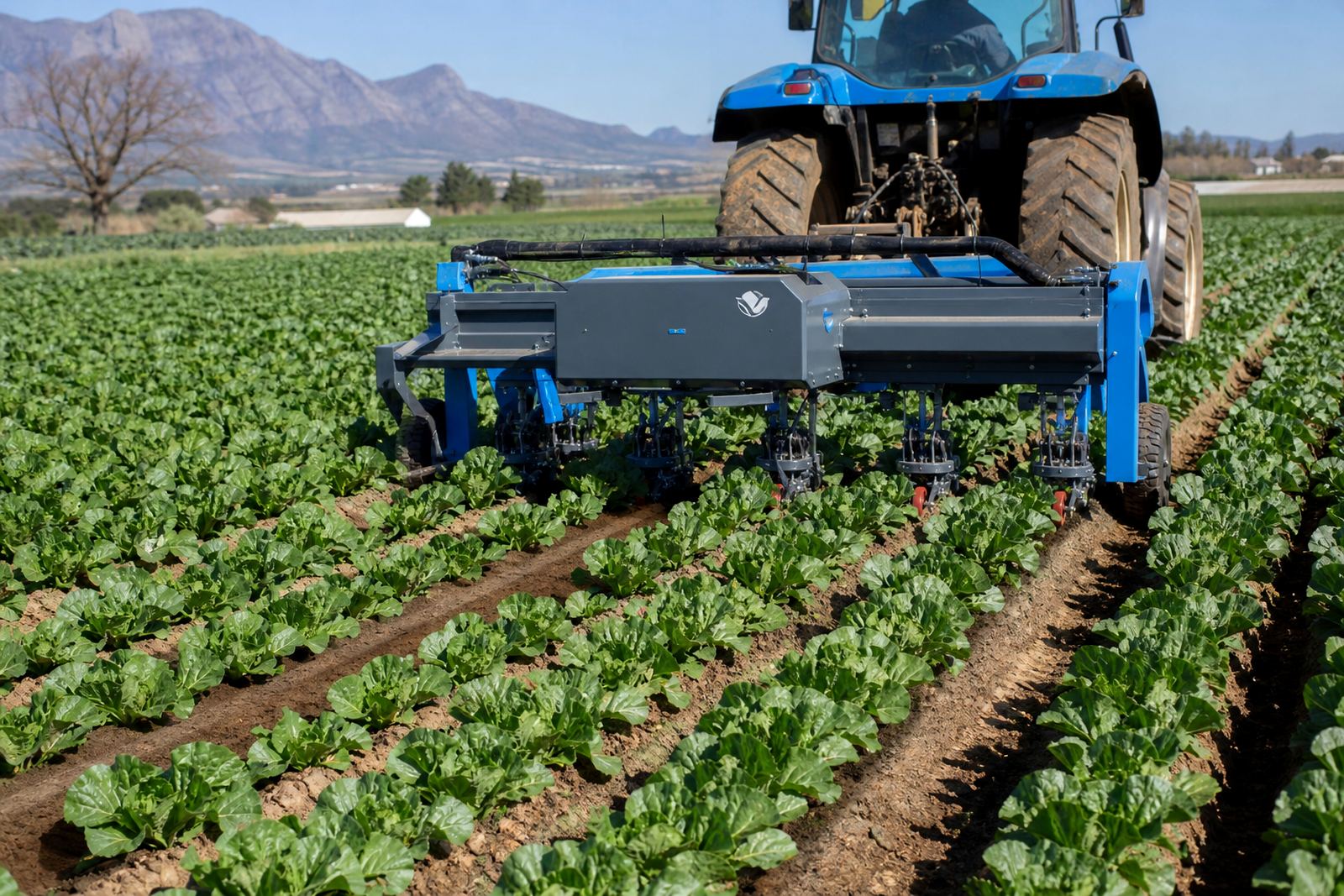
Between-row targeting is a practical fit for onion blocks, carrot beds, lettuce plantings and brassica fields where the row picture stays readable. It is used in herbicide-free programmes and leaves the soil surface undisturbed, which matters on lighter ground, irrigated blocks and fields where surface structure is already under pressure.
- Camera-guided weed detection across row spacings
- Laser action aimed at the weed meristem or growing point
- Tractor-drawn field setup with trained operator control
- Best used when weed seedlings are still small and visible
- Built for field work where rows stay consistent from end to end
Where this format earns its place in the field
The format suits growers who keep a regular row pattern and need another tool in the weed programme between cultivations or hand work. It is often lined up for blocks where post-emergence weed pressure is light to moderate, or where the timing of the first pass matters more than brute force clearing. When weeds are too far advanced, the operator will adjust the plan rather than forcing the machine through a poor window.
Across Philippi, Ceres, Grabouw, Tzaneen, Bela-Bela, Nelspruit, Howick and Bethlehem, the same unit can be scheduled for different blocks, but the field shape, soil finish and weed stage still decide the working pace. Coastal humidity in the Western Cape can keep small weeds active longer after irrigation, while inland blocks may need tighter timing around warm spells and wind.
- Onions with clear inter-row space and fine weed pressure
- Carrots where rows are straight and crop spacing is even
- Lettuce blocks with defined lanes between plant lines
- Brassicas where the crop canopy still leaves visible ground
- Farms using repeat passes as part of season planning
Sizes, working widths and field fit
Between-row targeting is supplied as a tractor-drawn unit matched to the block layout and the working width needed for the farm. The exact fit depends on row spacing, tractor availability, turning room and the number of hectares scheduled for the visit. Wider blocks need cleaner headlands and better field organisation, while smaller units suit tighter turns and mixed crop schedules.
Working speed changes with weed pressure, visibility and row clarity, so the operator sets pace from the field rather than a fixed promise. On lighter infestation and cleaner seedbed finish, the unit can work more smoothly. Where weed pressure is heavier or the crop line is less distinct, the machine is slowed to protect the plants and keep targeting accurate.
- Suitable for row spacing that keeps a clear inter-row lane
- Field speed adjusted to weed stage and crop clarity
- Tractor match checked against drawbar and hydraulic needs
- Best results when field layout supports straight passes
- Travel planning can cover one farm or several blocks in a season
Fitting the unit to the farm setup
The unit is brought in as a worked field system rather than a loose attachment, so the practical checks matter before the first pass. We look at tractor compatibility, row spacing, gate access, turning space, irrigation points, and whether the block allows clean entry and exit. The operator also checks the crop stage, because young plants, uneven rows and missed stand counts all affect how the cameras read the field.
For growers using irrigation lines or raised beds, the setup needs enough space for safe tracking without snagging the crop structure. If a block has mixed varieties or staggered planting dates, the scheduling plan may split the work into separate passes to keep the targeting clean and the row picture readable.
- Tractor drawbar match and field access assessed first
- Row pattern, bed height and crop uniformity checked on site
- Gate widths and turning circles reviewed for transport planning
- Irrigation layout noted where it affects lane movement
- Mixed planting dates may call for separate field blocks
Care, cleaning and pass-to-pass attention
The laser unit works best when the optics, cameras and external surfaces stay clean, especially after dusty runs, dew-heavy mornings or windy days that throw fine soil across the frame. The operator watches for crop residue on viewing parts and checks that the targeting path stays clear before entering the next block. That keeps the system reading the field properly and limits unnecessary wear.
Routine care also includes checking fasteners, cabling, moving parts and the transport condition after a day in the field. On farms near the coast, moisture and salt in the air can settle on metal surfaces, so a sensible wipe-down and storage routine helps protect the unit between scheduled visits.
- Keep cameras and optics clean before each field pass
- Clear dust, chaff and residue after work in dry weather
- Check fasteners and working joints during scheduled service
- Inspect transport condition before the next farm move
- Store under cover where coastal air or dust is a factor
Details to confirm before the booking is set
Before ordering, confirm the crop type, row spacing, hectares to be covered, weed stage and the field window you want to work in. It also helps to note whether the block has straight runs, tight corners, soft ground after irrigation, or any sections that were planted later than the rest. Those details shape the operator plan and the tractor setup for the day.
For multi farm programmes, the sequence of fields matters as much as the size of each block. Our contact form is the right place to send the crop list, site locations, preferred dates, and any notes on travel access or gate control. That lets the scheduling team map the route across Western Cape, Limpopo, Mpumalanga, KwaZulu-Natal and the Free State without guessing at the field order.
- Crop type and row spacing
- Weed stage and crop growth stage
- Hectares per block and total farm area
- Access roads, gates and turning room
- Irrigation layout and any soft ground areas
- Single block work or a multi farm programme
Key facts
| Setup type | Tractor-drawn laser weeding unit for between-row work |
|---|---|
| Detection method | Camera-guided weed identification |
| Target point | Weed growing point or meristem |
| Best crop formats | Row crops with clear spacing such as onions, carrots, lettuce and brassicas |
| Working method | Herbicide-free, no soil disturbance |
| Service scope | Field assessments, trial strip runs, repeat pass planning, season bookings and post pass reporting |