Tramlines that hold the working line
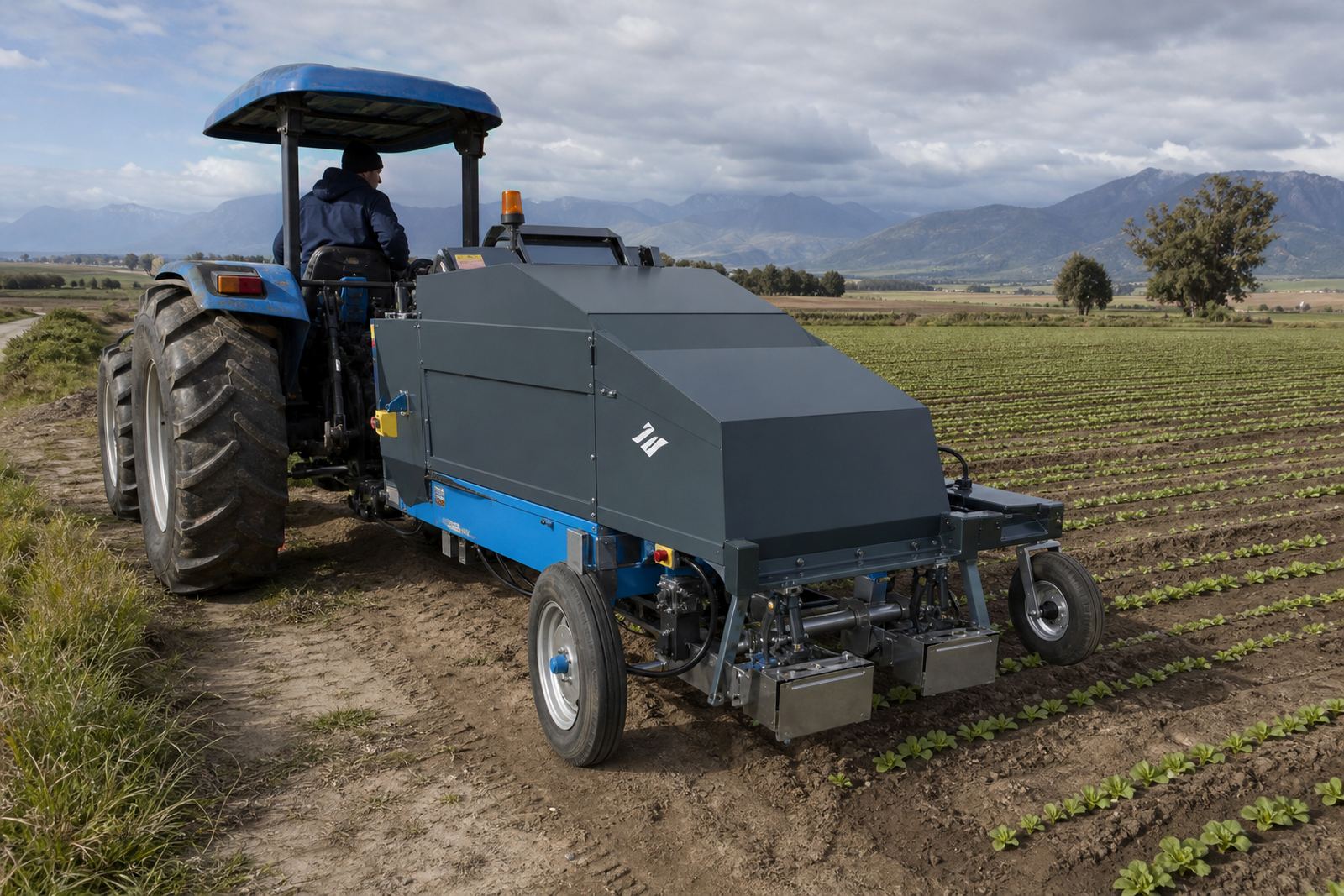
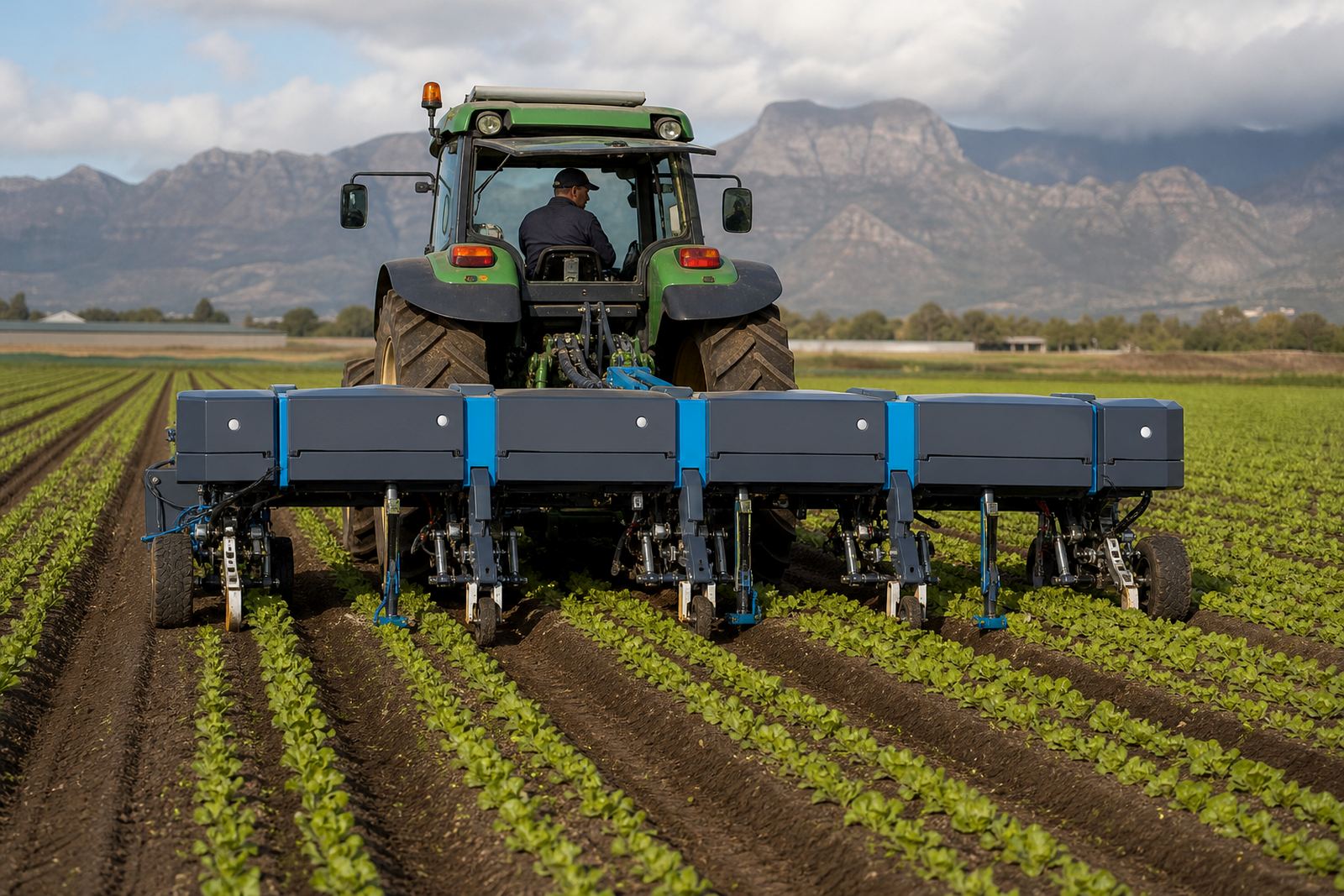
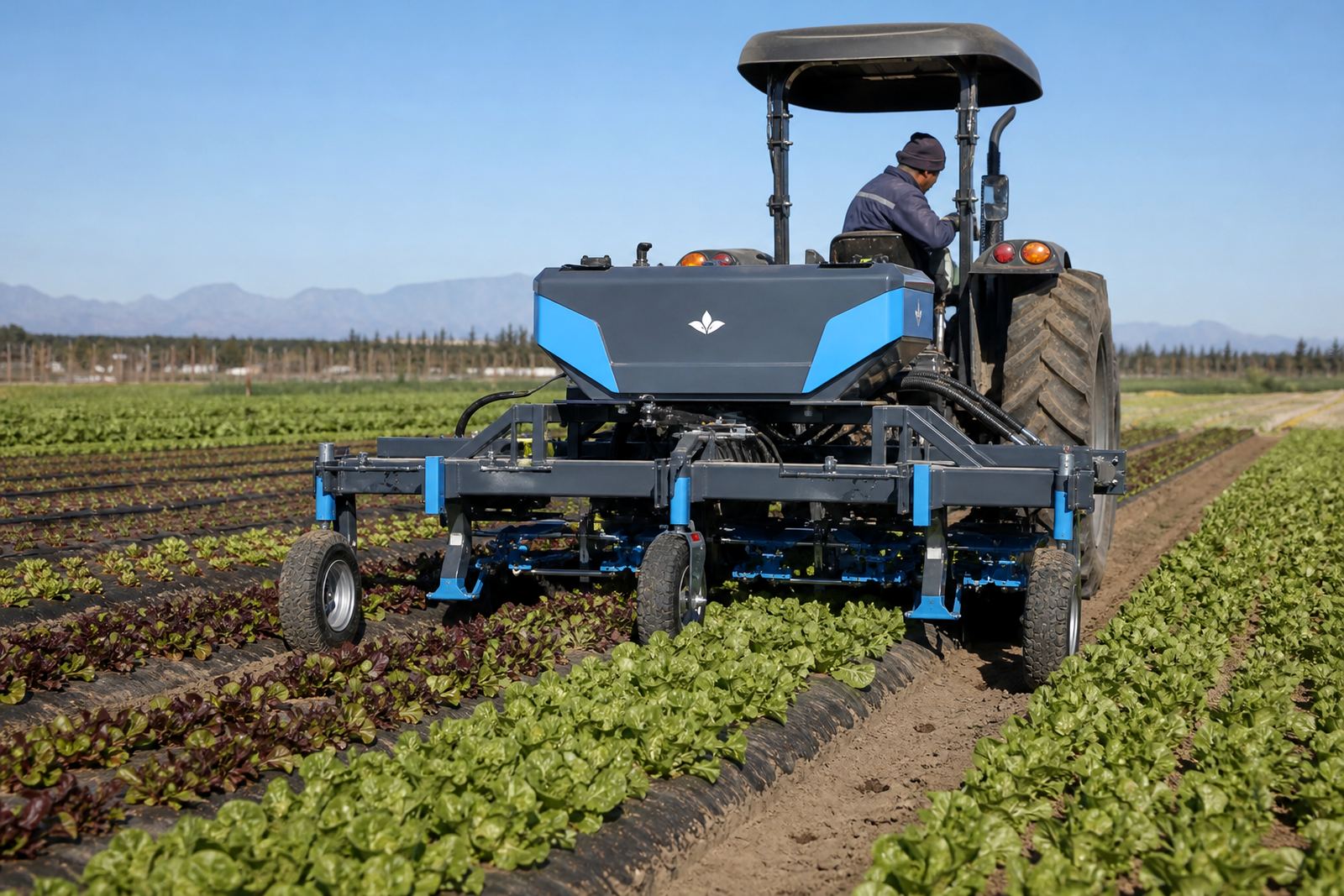
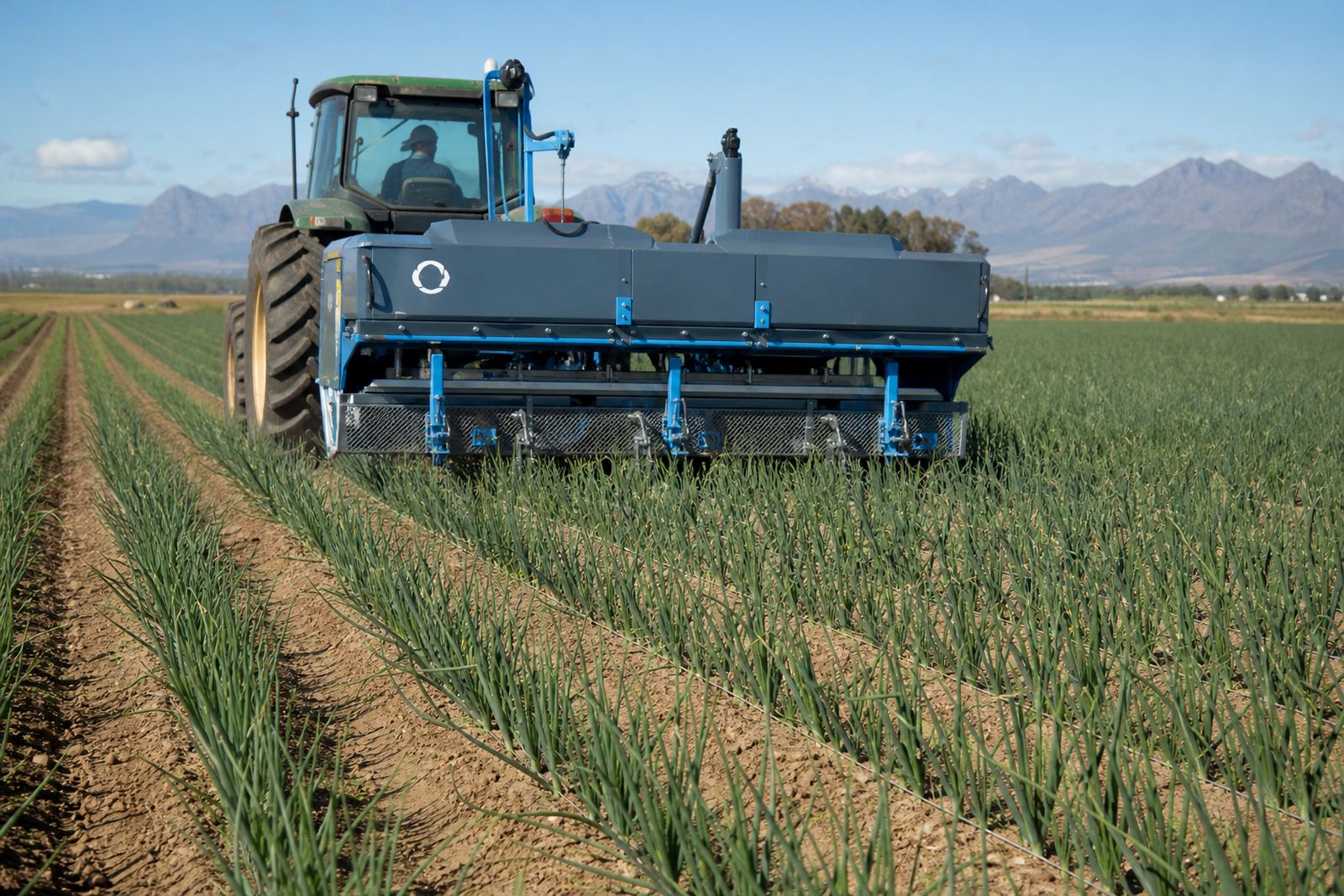
This hire setup uses the tramline pattern already present in the field to guide each pass with less drift from the crop row. The operator works the unit so the cameras can pick out weed growth against the planted row layout, then the laser targets the weed growing points while the tractor keeps a steady track.
It suits farms that already run planting, spraying or harvesting lanes through the block, especially where the same line needs to be used more than once in a season. The value is in order on the ground: fewer unnecessary wheel movements, cleaner repeat passes and less disturbance between rows.
- Steady passes on established wheel tracks
- Works with row crops laid out in regular spacing
- Useful for repeat visits in the same block
- Supports herbicide-free weed control
Crop blocks and row systems that fit the job
Tramline Guided Hire suits vegetable farms where rows are already set out neatly and the crop canopy still leaves a clear working window. Onions, carrots, lettuce and brassicas are common examples, though the real check is always the row spacing, weed stage and the condition of the tramlines themselves.
It is a practical option for coastal and inland growing areas, from Philippi and Grabouw to Ceres, Tzaneen, Nelspruit, Howick and Bethlehem. Humid coastal blocks can carry more follow-up weed pressure after rain, while drier inland fields may need a different pass rhythm depending on soil moisture and growth flushes.
- Row crops with clear tramline structure
- Blocks where the crop is still readable to the camera system
- Fields that need measured follow-up instead of broad spraying
- Sites where tramline wear is still controlled
What the hire unit brings to the field
The hire arrangement centres on a tractor-drawn laser weeding unit with a trained operator. The camera-guided system identifies weed targets in the row zone, then the laser is directed at the growing point. That makes the pass precise, but the work still depends on field conditions, weed size and how cleanly the tramlines have been kept.
Field speed changes with weed pressure and crop shape. A block with light early weeds can be worked differently from a block carrying heavier pressure between rows. The operator also watches canopy height, row straightness and how stable the tractor track is across the site.
- Tractor-drawn laser unit supplied for the job
- Trained operator on the machine
- Camera-guided detection and laser targeting
- Field speed matched to the weed load
Fitting into an existing farm routine
There is no heavy installation in the usual sense, but the field must be ready for the unit to run safely and cleanly. That means tramlines need enough width and firmness for the tractor, headlands need room for turns and the crop layout must be clear enough for the system to read. The machine runs from the tractor setup, so the drawbar, tyre width and working lane have to be checked before the booking is fixed.
On farms with mixed blocks, we can set out a plan that follows the tramline pattern from one field to the next. That is useful for growers managing multiple farms across the Western Cape, Limpopo, Mpumalanga, KwaZulu-Natal and the Free State, where block shape and travel distance change the order of work.
- Check tramline width and firmness
- Confirm headland turning space
- Match the crop row pattern to the unit path
- Plan travel between farms and blocks
Care, cleaning and repeat passes
The unit needs sensible care after field use so the optics, tracking parts and laser housing stay in working condition. Dust, leaf matter and damp soil can build up around moving parts, especially after work in heavier ground or on wet mornings. A proper rinse and inspection after the block helps keep the system ready for the next field.
Repeat pass scheduling is as important as the machine If weeds are still small, a second or later pass can be set around the crop stage and the expected flush of new weeds. In many South African vegetable areas, timing is the difference between a neat tramline run and a rushed correction through a field that has grown too fast.
- Clean optics and sensors after field use
- Inspect tyres, hoses and drawbar points
- Keep tramlines clear of loose debris
- Plan follow-up passes to weed stage
Details to settle before the booking
Ordering this service works best when the field facts are clear. We need the crop type, row spacing, block size, tramline layout, weed pressure and whether the site has one farm or several. If there are narrow gateways, soft patches or awkward corners, those points should be noted before the unit is moved in.
For growers using our contact form, it helps to include the farm area, the crop stage and the number of blocks that need work. That lets the scheduling plan account for travel, arrival checks, operator supply and any trial strip runs that may be needed before the full pass.
- Crop type and current growth stage
- Row spacing and tramline width
- Block size and field access points
- Known weed pressure and follow-up needs
Key facts
| Service type | Contract laser weeding with tramline guided passes |
|---|---|
| Machine setup | Tractor-drawn laser unit |
| Guidance method | Camera-guided weed detection with laser targeting |
| Crop fit | Onions, carrots, lettuce, brassicas and similar row crops |
| Field format | Established tramlines with repeatable alignment |
| Coverage area | Philippi, Western Cape and selected grower regions across South Africa |