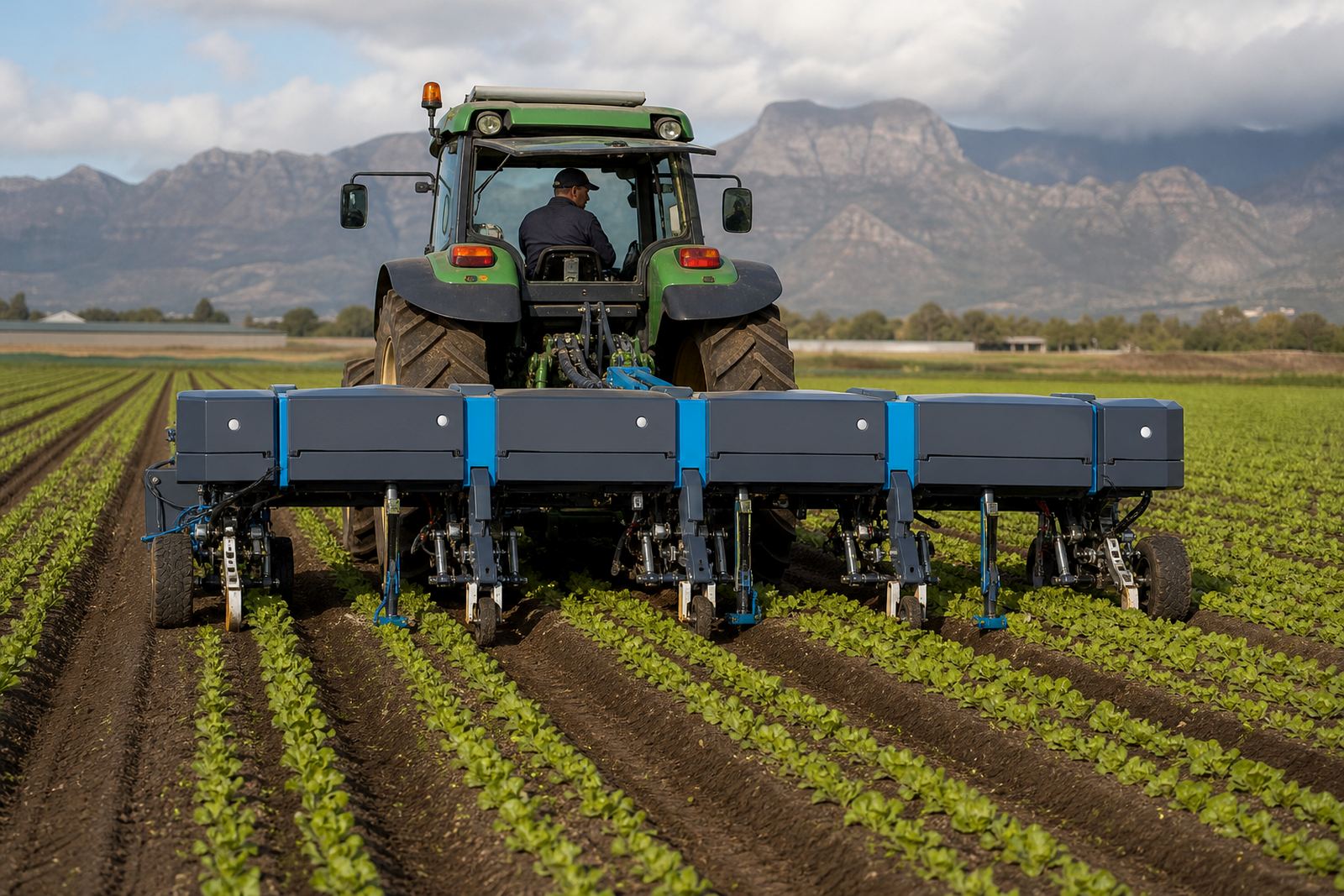
Four rows, one working pass
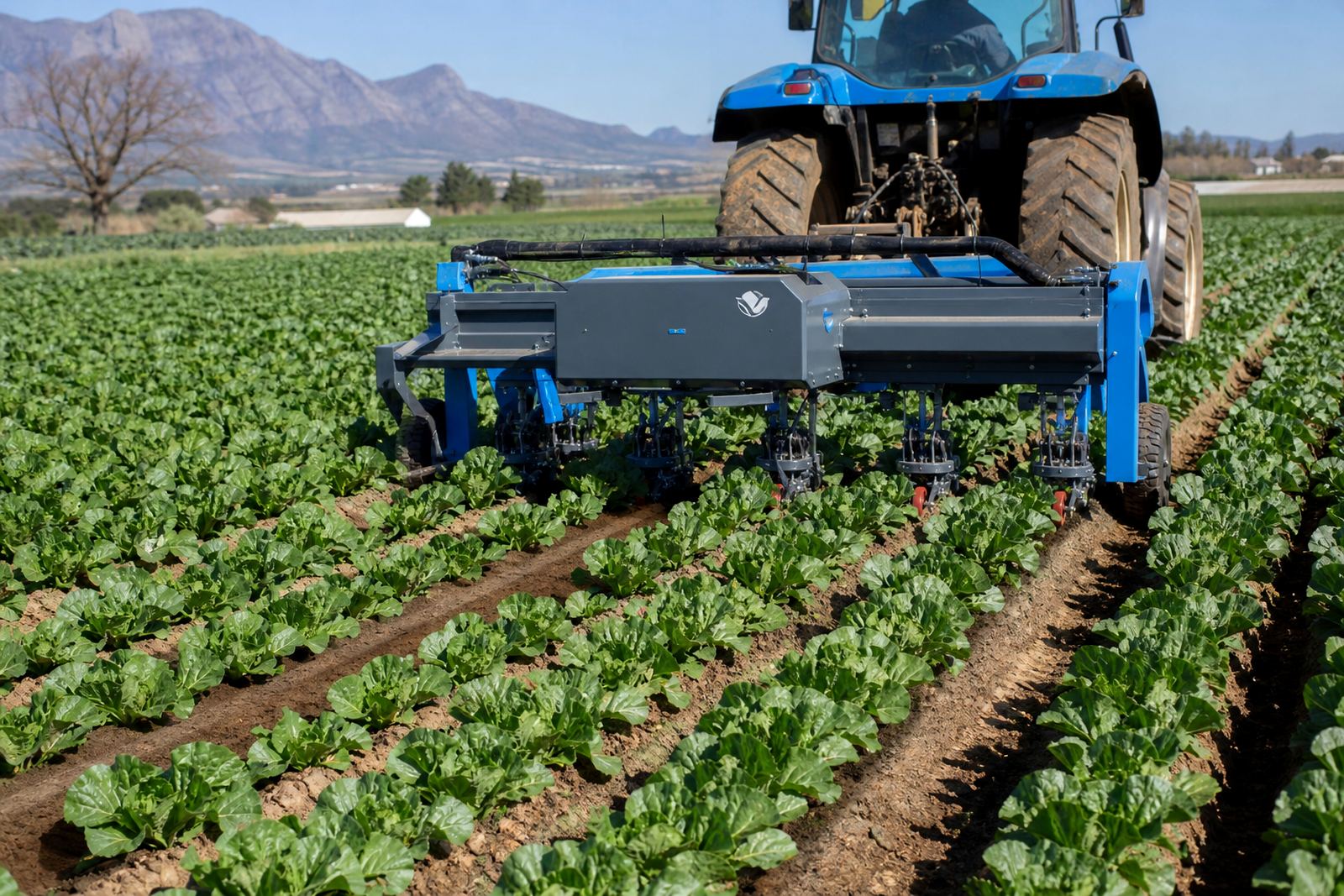
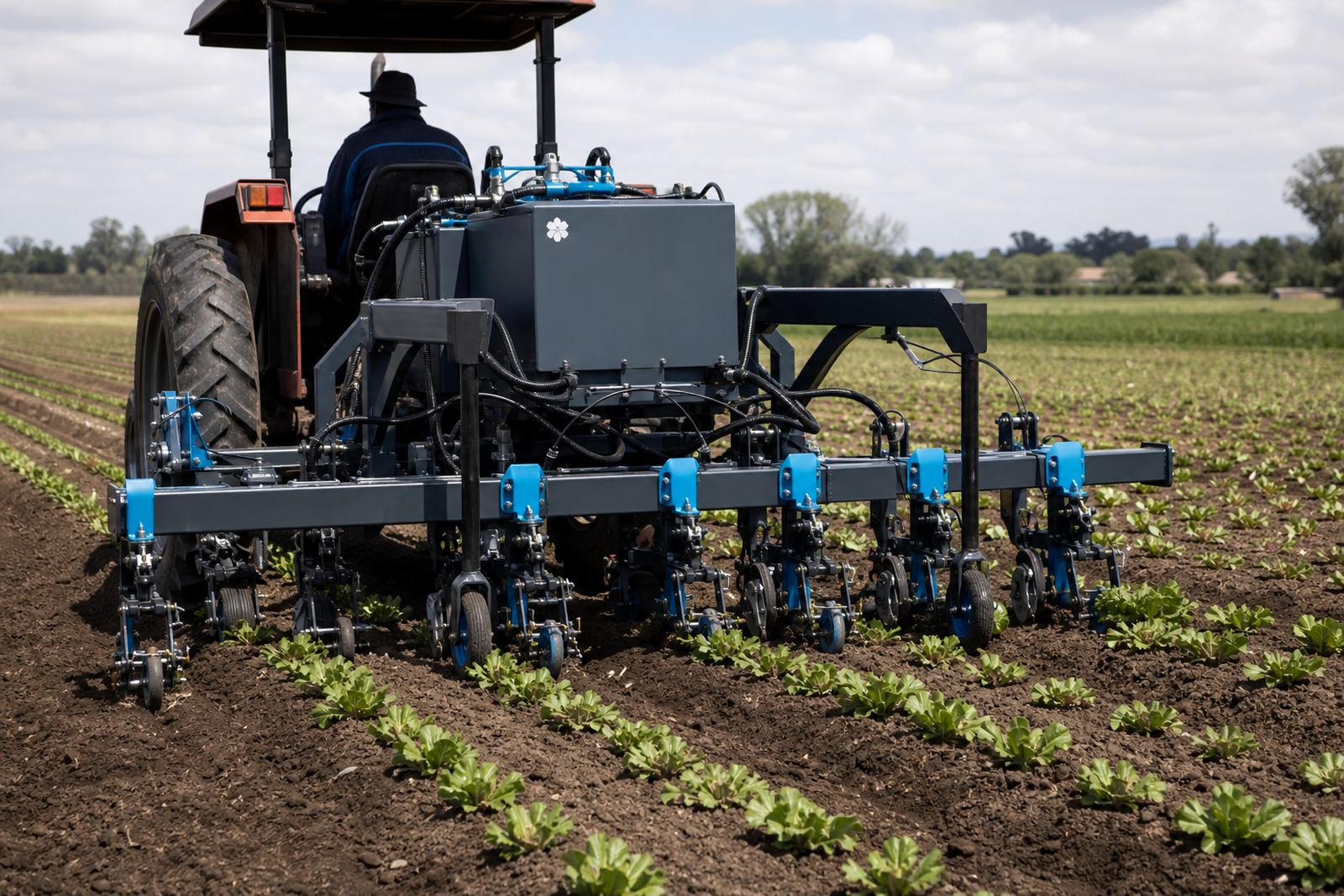
This setup is built for vegetable blocks where the layout can take a wider working face and the crop rows stay consistent across the block. The tractor-drawn unit carries four treatment lanes at once, with camera systems reading the crop line and spotting weed growth points before the laser fires.
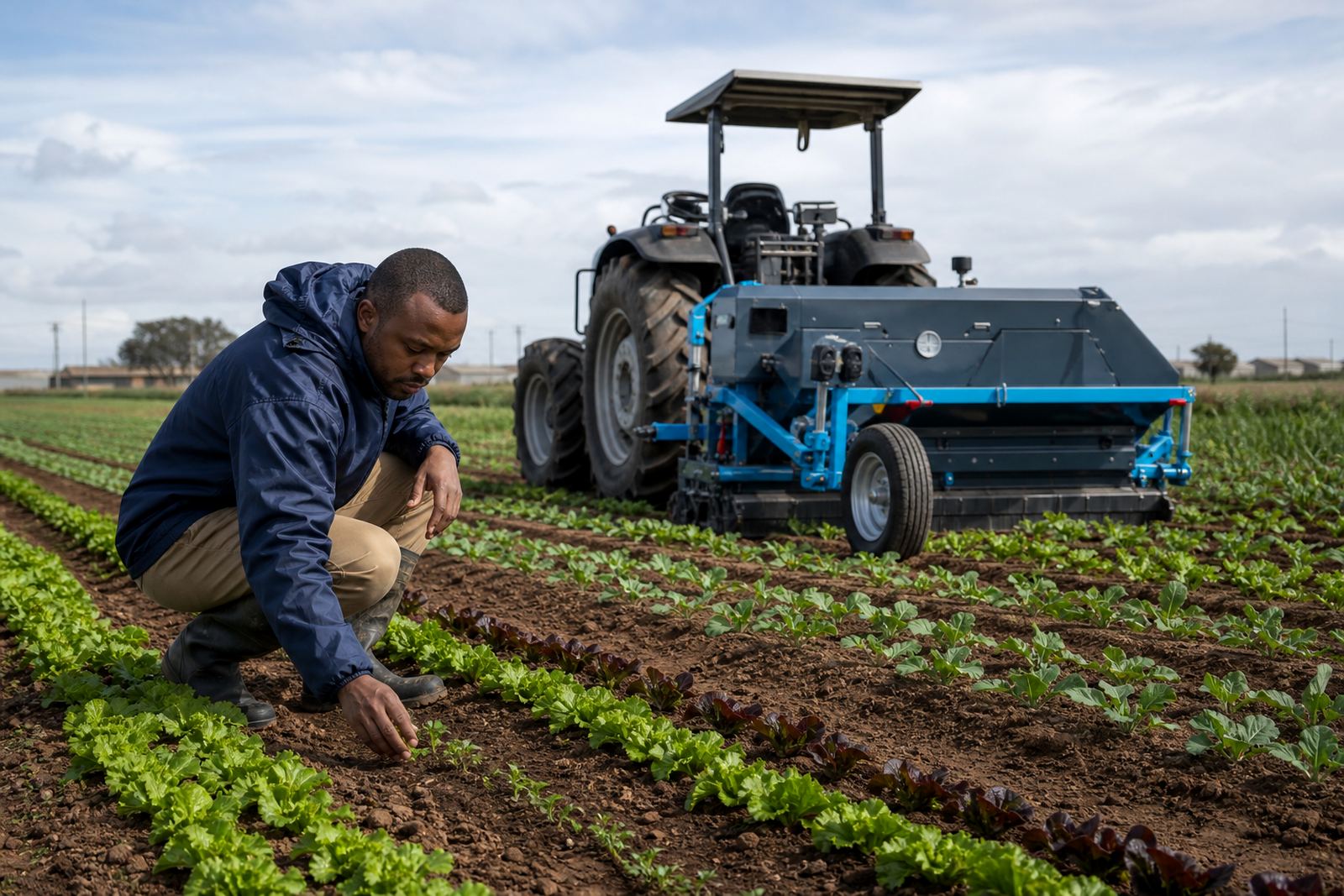
It is suited to row crops such as onions, carrots, lettuce and brassicas, where the planting pattern stays orderly enough for machine guidance. The unit works on the weed stage as well as the crop stage, so timing matters. Small, active weeds are easier to target than mature plants with thicker stems or a stronger root crown.
The wider format is often used where a grower wants more field coverage per move, but the block must still allow safe travel, clean row tracking and enough turning room at the ends.
Field sizes and crop layouts that fit
Four-row work is best when the field has long runs, even spacing and tidy bed formation. It suits blocks where turning bays are wide enough for the tractor and drawbar, and where access tracks can carry the machine without churning up the shoulders after rain.
- Row crops with stable spacing and clear crop lines
- Blocks with longer runs and fewer tight corners
- Fields where weed pressure is even enough for planned passes
- Sites that can be reached with tractor movement and service access
- Growers planning repeat passes through the season
In coastal and inland production areas alike, the block needs to be walked and checked before a schedule is set. Soil type, row straightness, moisture after irrigation and the crop stage all matter. A rough patch at the wrong point in the field can slow the pace and force a narrower operating window.
Sizes, fit and setup notes
The four-row unit is matched to the tractor and the crop spacing on site. Working width, wheel track and headland needs are checked before fitting, because the machine must stay centred on the row set. On some farms, that means minor adjustments to guidance marks, turning space or access points before the first pass.
Installation is not a fixed bolt-on job. The drawbar connection, hydraulic requirements and control setup must suit the tractor on hand. The operator also needs a clear view of row starts, overlaps and any drift in plant alignment. A clean setup helps the cameras keep the crop and weeds separated as the machine travels.
- Working width matched to four planted rows
- Tractor drawbar and hydraulic compatibility checked on site
- Camera alignment set to the crop row pattern
- Headland space confirmed for safe turning
- Operator viewing line and access points assessed
How the unit works in the field
As the tractor moves, the cameras read the crop pattern and the control system targets weed growing points between and around the plants. The laser action is precise and the aim is to damage the weed tissue without disturbing the soil. That matters in beds where the surface needs to stay stable after irrigation or light rain.
The field speed depends on weed pressure, crop spacing and the condition of the rows. Dense weed patches, uneven germination or a poor line in the crop can slow the pace. Lighter pressure and well-set rows allow a steadier run. The operator watches for missed patches, tight turns and any change in plant size that affects the camera read.
Because the work is herbicide-free, the timing plan often starts early in the season and may include repeat passes. The aim is to stay ahead of weed competition while the crop is still small and vulnerable.
Care, cleaning and working condition
The four-row unit needs careful cleaning after field use, especially in dusty conditions or after work on damp soil. Mud, crop residue and fine grit can settle around the lens area and moving parts, so the machine is inspected before the next block. On farms near the coast, salt air and moisture can add extra wear to exposed fittings.
Routine care also includes checking the tractor connection, hydraulic lines, sensor faces and any worn guards. If the block carries heavy residue or the bed edges are soft, the operator may adjust speed and travel line to keep the unit steady. Workshop attention is useful when the machine has covered several farms in one season and the fittings need a proper look.
- Clean camera windows and sensor points after use
- Check drawbar, hoses and control connections
- Inspect for mud build-up around moving parts
- Store the unit under cover where possible
- Keep service notes for each block and pass
What to confirm before the first booking
To set a four-row programme properly, we need the crop type, row spacing, block size, planting date and the weed stage. A block with onions in one section and brassicas in another may need different timing or different pass spacing. If the field has narrow headlands, sharp corners or soft access points, that changes the schedule too.
It also helps to know whether the farm needs one block, a season booking or a multi farm programme with travel coordination. Where there are several sites across the Western Cape, Limpopo, Mpumalanga, KwaZulu-Natal or the Free State, the route plan has to fit the crop window and the ground conditions. Our contact form is the way clients send those details through for a proper field plan.
- Crop type and growth stage
- Row spacing and block dimensions
- Access roads, turning bays and gate widths
- Weed pressure and any repeat-pass need
- Farm location and travel grouping with other blocks
Where this setup is used most often
The four-row unit works well on larger vegetable blocks around Philippi, Ceres, Grabouw, Tzaneen, Bela-Bela, Nelspruit, Howick and Bethlehem, where growers want broader field coverage and the layout supports the machine. It is often chosen for blocks that are already planted in clear rows and where the farm team can prepare the ground for repeated passes through the season.
We provide field assessments, crop timing plans, operator supplied work, field scheduling, travel coordination, trial strip runs, repeat pass planning, season bookings, multi farm programmes, arrival site checks, post pass reporting and grower consultation. The four-row setup sits well inside that service pattern, especially where timing and access have to be managed across more than one block.
For growers who need practical coverage without soil disturbance, this format gives a direct way to handle weeds between the rows while keeping the crop pattern intact.
Key facts
| Unit type | Tractor-drawn four-row laser weeding setup |
|---|---|
| Crop fit | Onions, carrots, lettuce, brassicas and similar row crops |
| Working pattern | Camera-guided weed detection with laser targeting at growing points |
| Field requirement | Even row spacing, good turning space and clear access |
| Operation | Trained operator supplied with field scheduling support |
| Treatment style | Herbicide-free, no soil disturbance during pass |