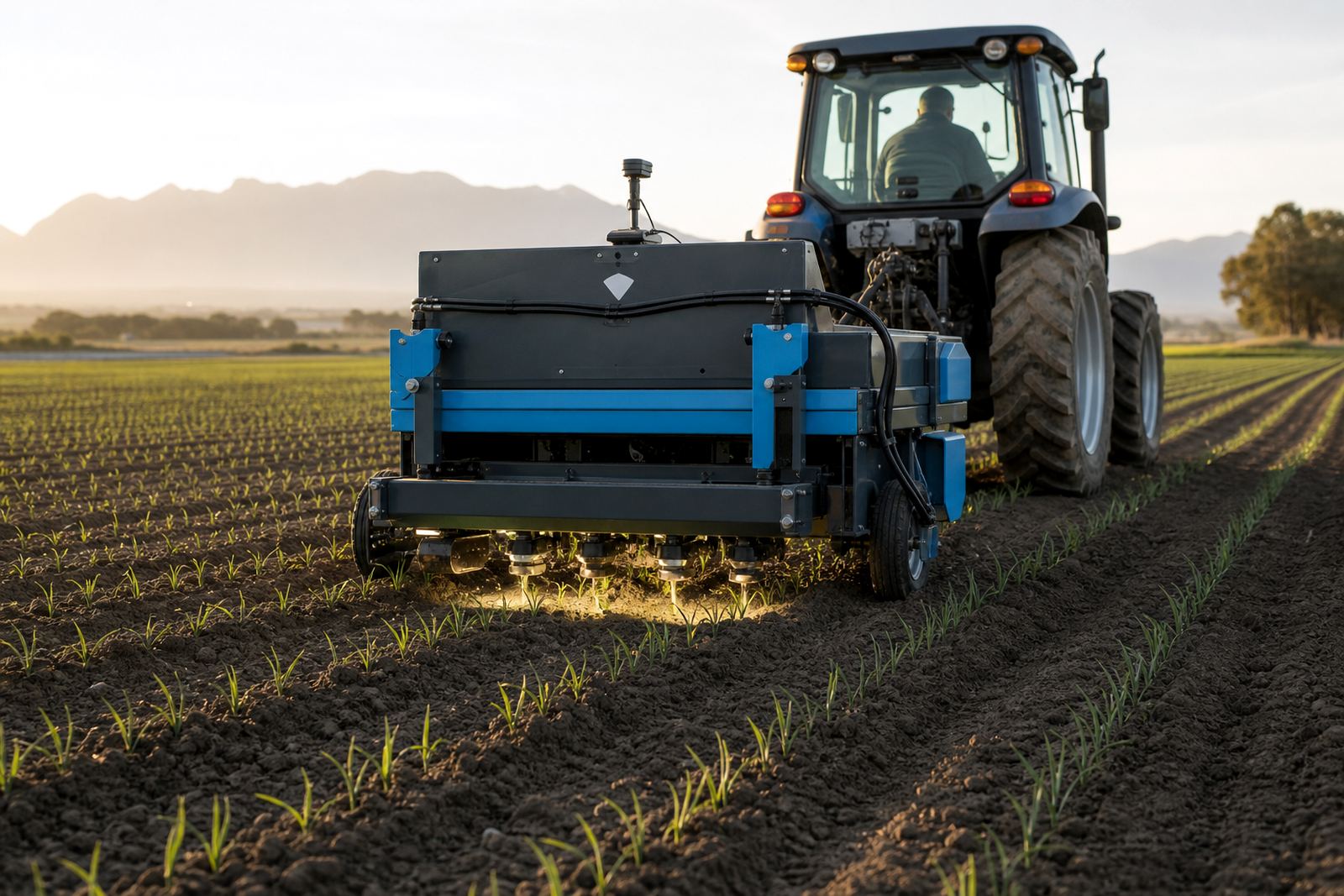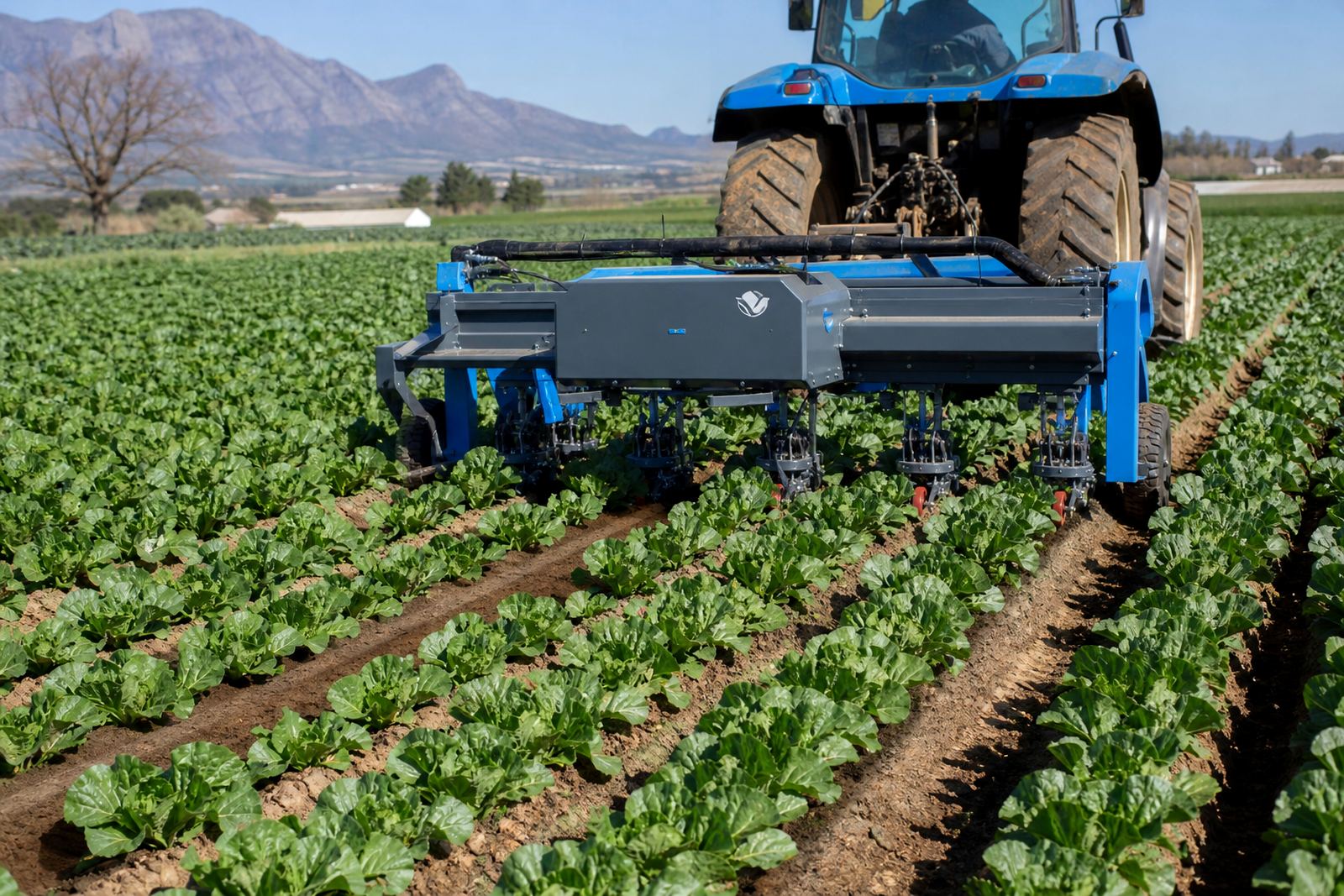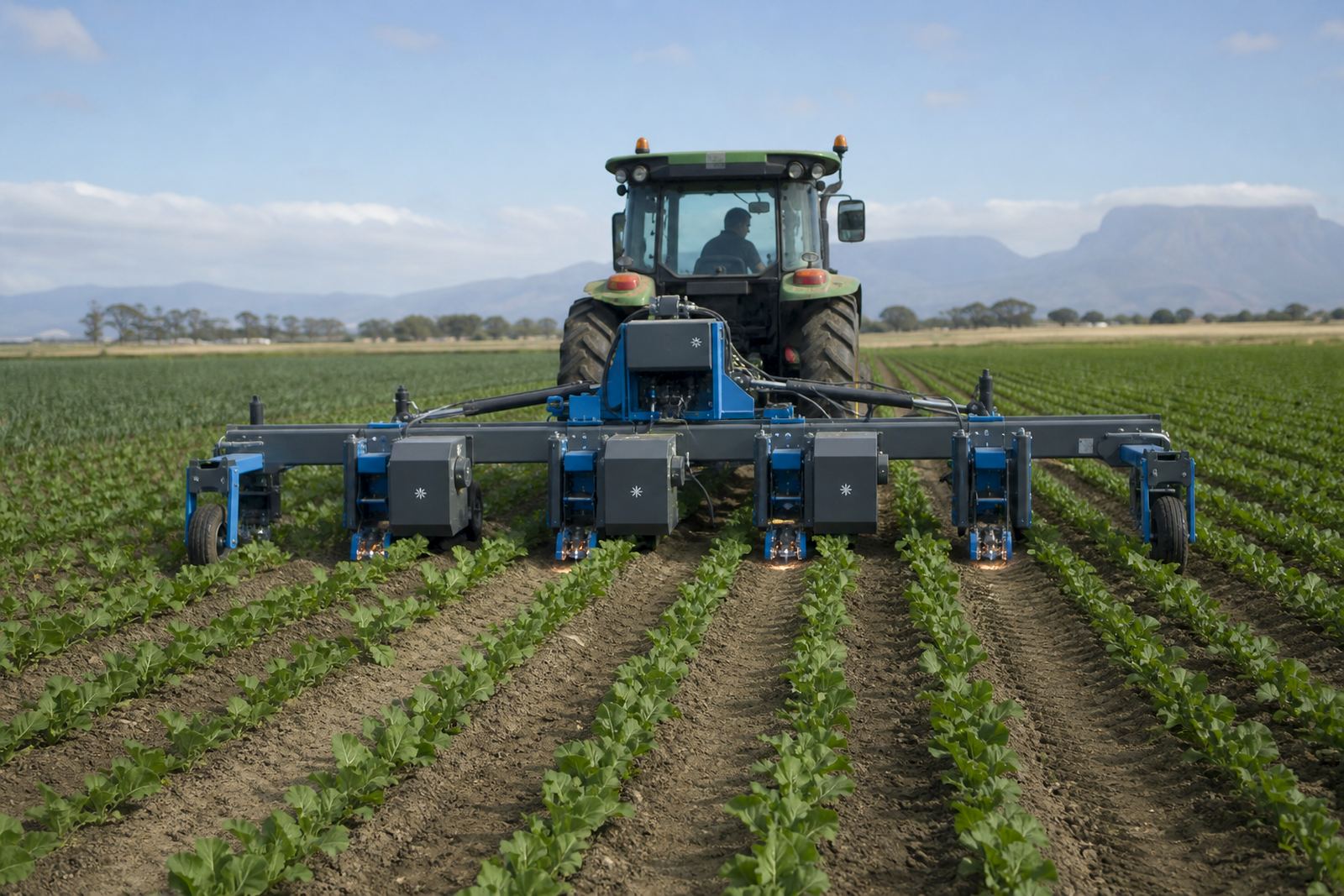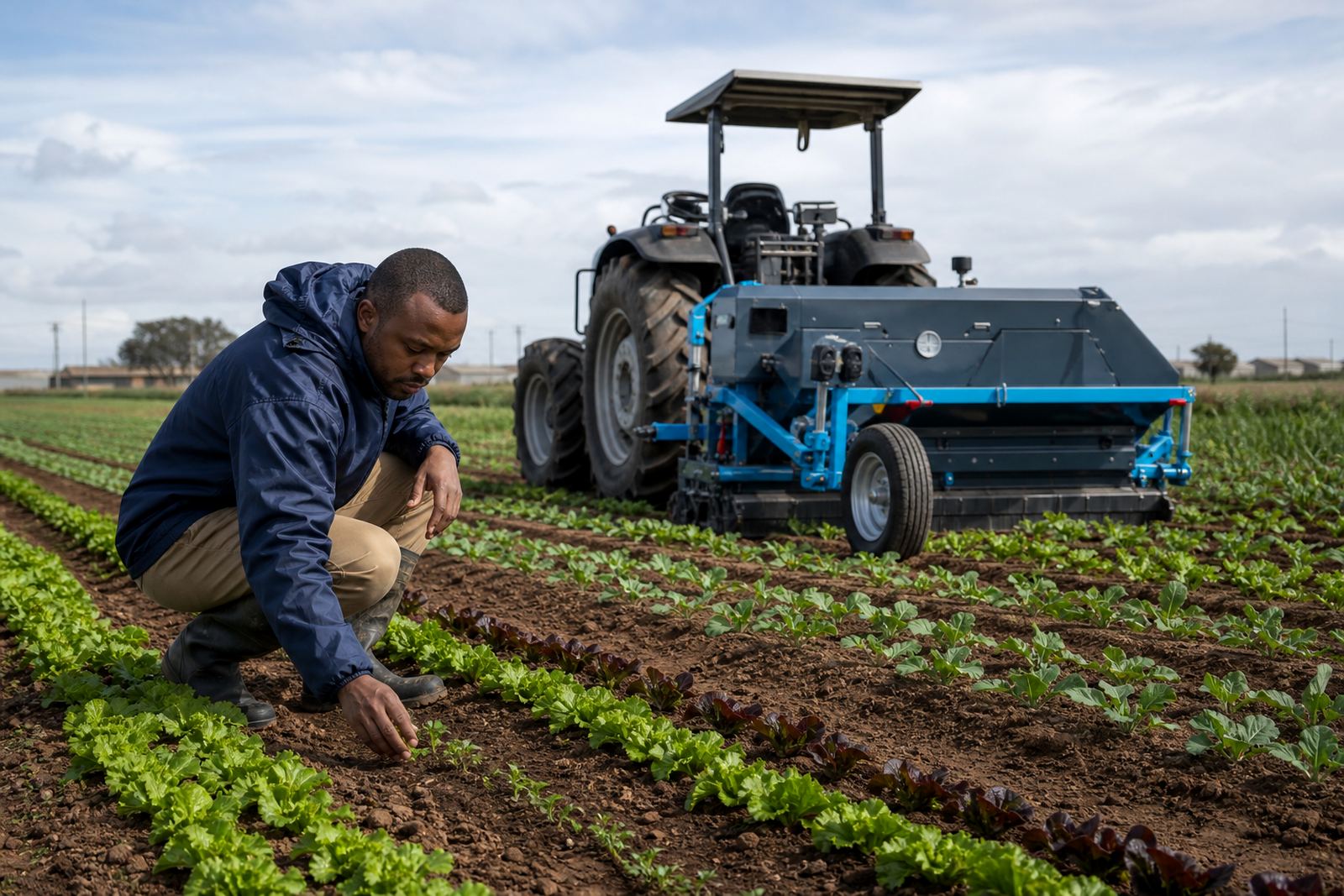
What the field entry check covers
This check is a practical start point for contract laser weeding on vegetable farms. The operator and field lead look at gate access, turning space, track firmness, headland shape, row straightness and whether the crop has enough definition for camera-guided work. It also gives a clear read on weed stage, because small weeds with visible growing points are easier to target than older, tangled growth.
The visit is aimed at row crops such as onions, carrots, lettuce and brassicas, where row visibility and timing matter. A clean entry check helps avoid wasted travel and awkward starts at the field edge, especially where the block sits on sandy ground, damp ground or uneven beds.
- Access for a tractor-drawn unit and operator
- Crop spacing, bed shape and row visibility
- Weed stage, density and patch spread
- Headland room for safe turning
What gets measured before the unit rolls in
The check is not a paperwork pass. It is a field-level look at what the machine will meet on arrival. The team notes whether rows are clear enough for camera guidance, whether young weeds are still at a stage that suits laser targeting, and whether irrigation lines, wet patches or loose soil could slow the run. If the crop canopy is closing too far, that is also noted because row visibility can change the way the pass is set up.
In practical terms, the check helps decide whether the block is ready, needs a short delay, or needs a trial strip run first. It also gives room for multi-farm scheduling, so work can be lined up by crop stage rather than by road order only.
- Weed pressure and growth stage
- Row clarity for camera-guided detection
- Field moisture, access and turning room
- Block order for scheduling across farms
Where this service fits on real vegetable blocks
Field Entry Check suits growers who want herbicide-free weed control, but still need the block to be read properly before work starts. It fits beds with narrow rows, repeated passes and crops where timing shifts fast after rain or irrigation. On a farm near Philippi or farther out in the Western Cape, the same check helps reduce guesswork before a tractor-drawn laser unit enters the field.
It is also useful on spread-out programmes in Limpopo, Mpumalanga, KwaZulu-Natal and the Free State, where one farm may be ready while another still has weeds at the wrong stage. That kind of variation changes field speed, travel planning and how the team stages the day.
- Onions and carrots on structured beds
- Lettuce blocks with tight row spacing
- Brassicas with clear inter-row lines
- Mixed programme farms with several sites
How the check links to laser weeding work
Laser weeding uses camera-guided weed detection, then directs laser energy at the weed growing point. That process works best when the crop rows are visible, the weeds are at the right stage, and the tractor-drawn unit can move at a field speed that suits the weed pressure. The entry check gives the operator a clear picture before the machine is set up for the block.
The same check also helps the team decide whether a trial strip run is sensible, or whether a full pass can start straight away. If the crop is uneven, or the weeds are patchy, the first look can shape the pass plan without disturbing the soil or mixing the rows.
- Camera-guided detection depends on row definition
- Laser targeting is strongest on young weeds
- Field speed shifts with weed pressure
- No soil disturbance during the pass
Sizes, options and what is included
This service is offered as a field visit for one block, a set of blocks on one farm, or a multi-farm booking where timing matters across several growers. The entry check can be booked with crop timing plans, travel coordination, trial strip runs and repeat pass planning when the season calls for more than one visit. For larger programmes, it can sit inside a grower consultation or post pass reporting cycle.
The visit is carried out by trained field staff from the Philippi, Cape Town base, with operator input where needed. It is built for contract work rather than loose advice, so the report reflects what the machine and crew will face on the ground.
- Single block or multi-block assessment
- One farm or several farms in a programme
- Trial strip support when row visibility is uncertain
- Season bookings with field scheduling support
What to confirm when placing the order
When ordering, give the crop type, block size, row spacing, weed stage and access route. It helps to note whether the field has soft patches, irrigation pipes, narrow gates or a headland that is tight for tractor movement. If the block sits in a windy coastal pocket or on a soil type that closes over quickly after rain, say so early because that affects the timing of the entry check and the pass plan.
The team also needs to know whether you want arrival site checks, grower consultation, or post pass reporting folded into the booking. Those details keep the day organised and help the operator arrive with the right view of the block, not just the map.
- Crop type and planting layout
- Access route, gate width and turning space
- Weed stage, soil condition and row visibility
- Need for follow-up passes or reporting
Key facts
| Service name | Field Entry Check |
|---|---|
| Use | Pre-work arrival check for contract laser weeding |
| Crop fit | Onions, carrots, lettuce, brassicas and similar row crops |
| Machine type | Tractor-drawn laser weeding unit |
| Core checks | Access, crop condition, weed stage, row visibility |
| Base and coverage | Philippi, Cape Town base, serving growers across South Africa |