When a second pass earns its place in the field
Weed pressure does not sit still. After the first pass, new flushes can show up from later germination, missed patches, buried seed banks, irrigation edges or ground that had uneven emergence. A follow up pass is scheduled to deal with those new weeds while the crop is still at a workable stage.
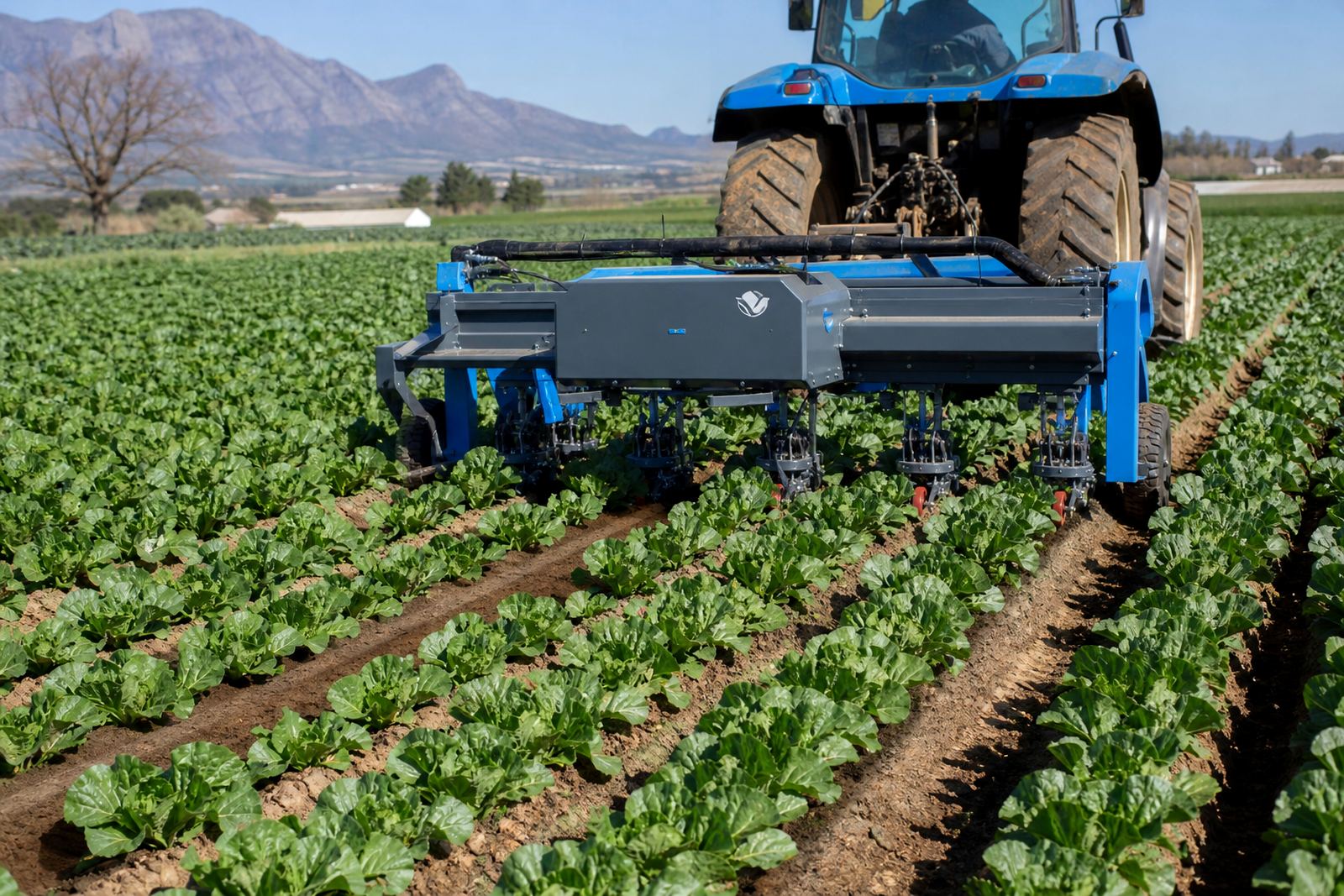
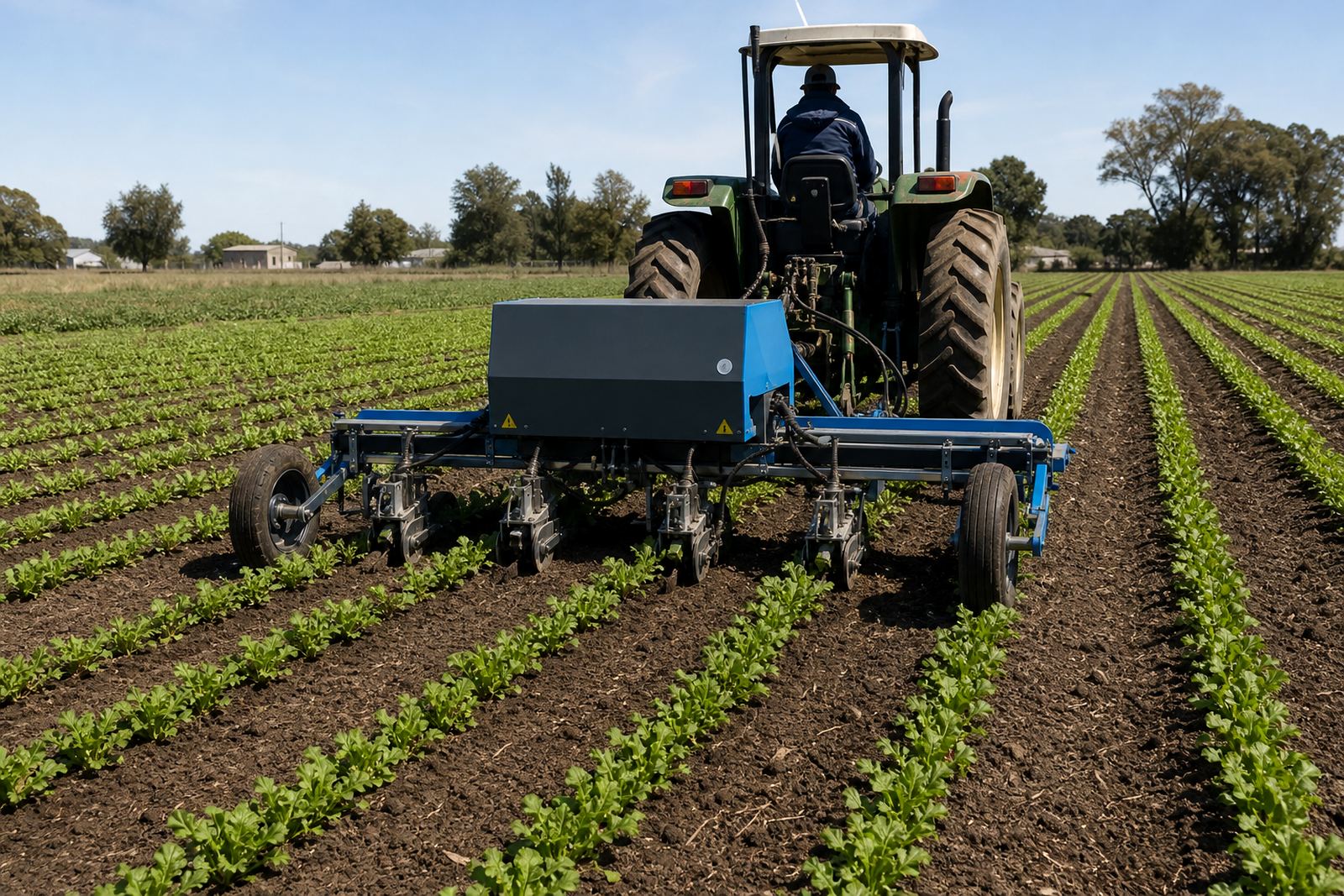
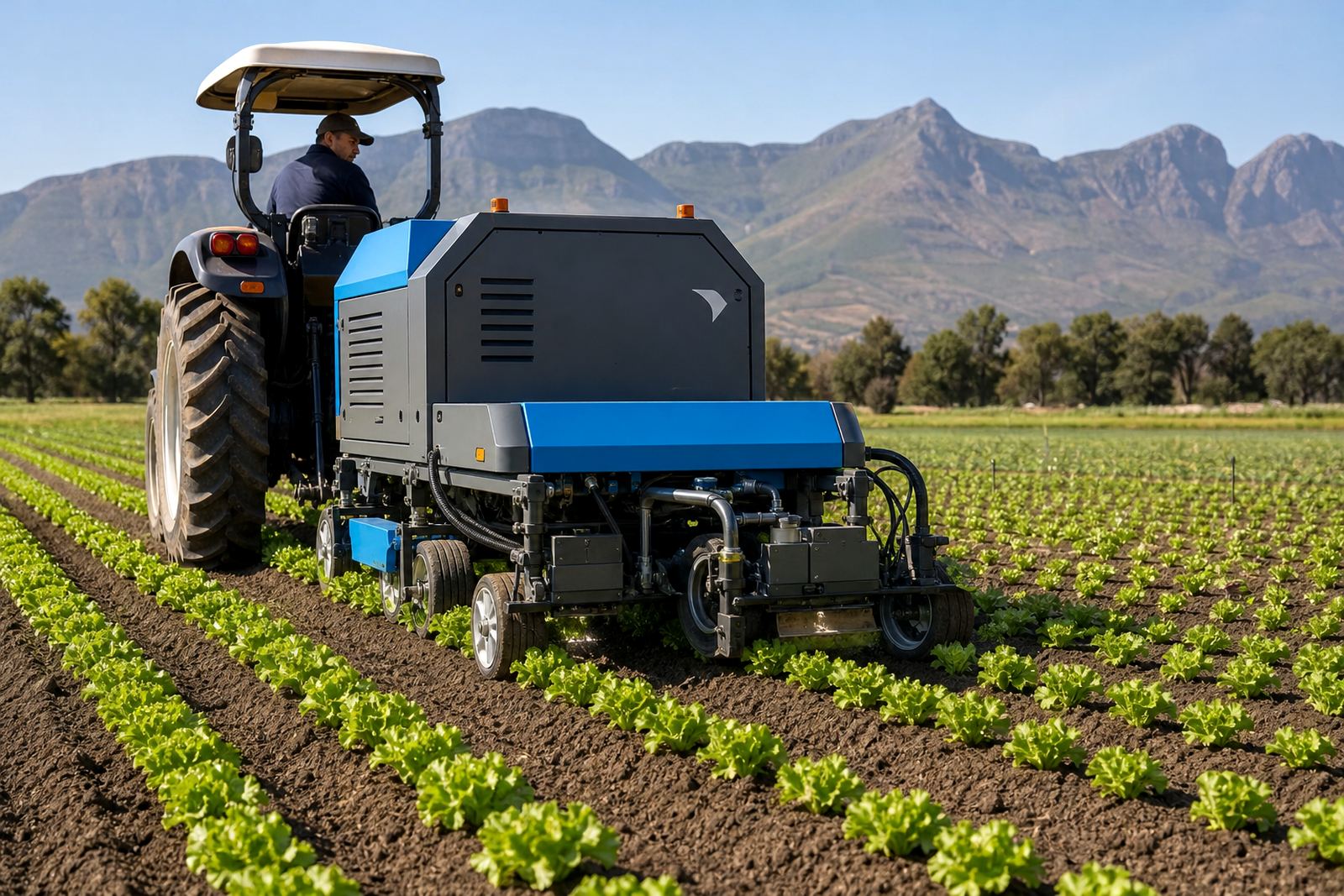
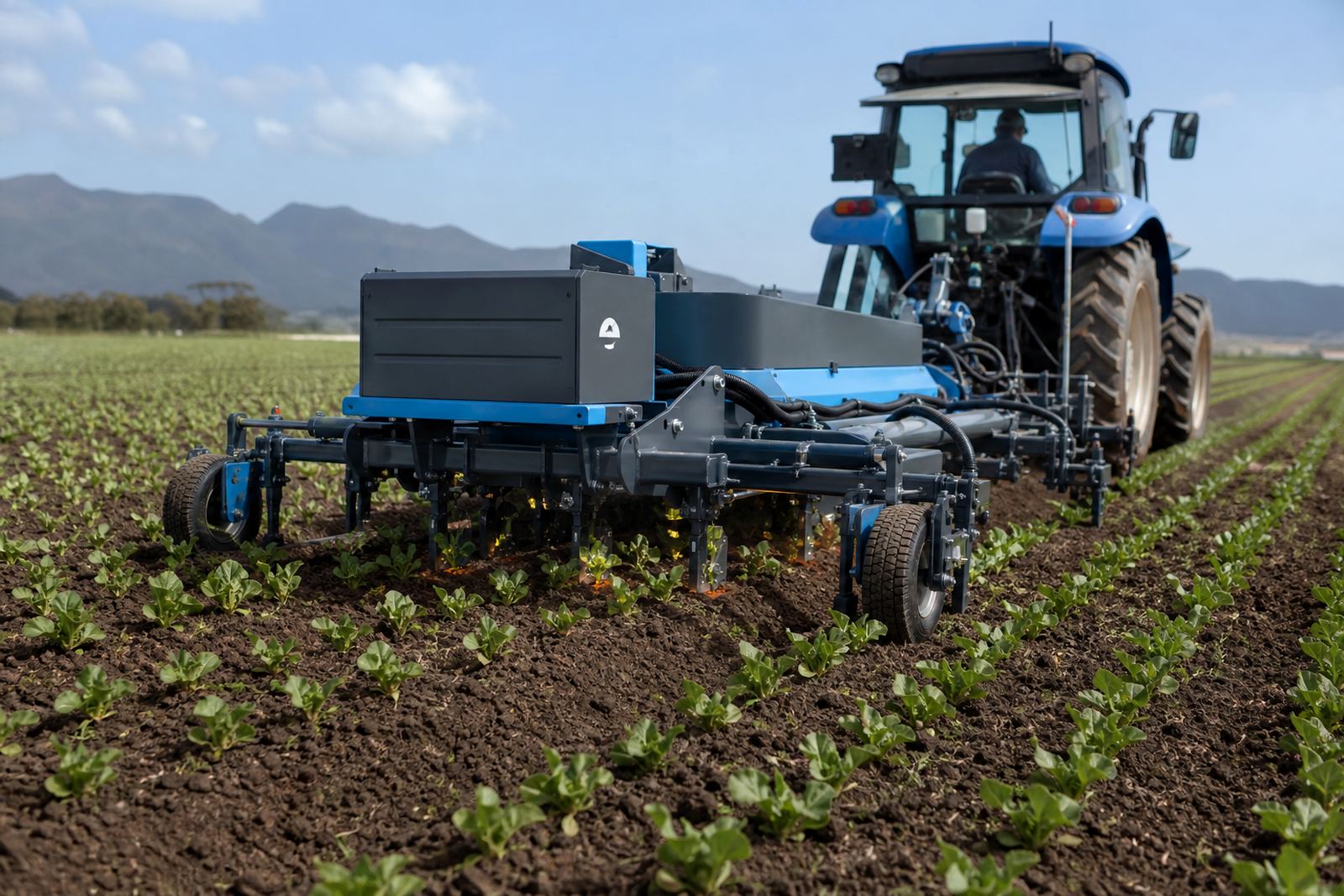
The pass uses the same tractor-drawn laser weeding approach, with camera-guided detection and lasers aimed at the growing points of small weeds. That keeps the work focused on the weeds and leaves the crop standing, with no soil disturbance and no herbicide spray pattern to manage afterwards.
This service is common on row crops where spacing stays open enough for mechanical movement and camera tracking. Onions, carrots, lettuce and brassicas are typical examples, although the timing changes from farm to farm depending on bed shape, weed flushes and how quickly the crop is closing over the row.
Field conditions that suit a follow up pass
The best follow up window is usually after the first flush has reappeared but before weeds have become woody, too tall or tangled into the crop canopy. Smaller weeds are easier to target cleanly, and the machine can move at a steadier field speed when pressure is moderate rather than heavy.
We also look at row spacing, soil surface condition and the amount of traffic already in the block. Wet ground can leave ruts and complicate travel, while very dusty topsoil may need a different pace and setup. In coastal areas near Philippi and Grabouw, humidity and irrigation patterns can shift weed emergence fast, so timing matters more than on a dry block in winter.
- Best suited to field crops already on a laser weeding programme
- Useful where weed flushes are staggered after irrigation or rain
- Works best when the crop is upright and row definition is still clear
- Can be planned for one block or a run of farms across a season
How the follow up unit is set up on farm
The follow up pass uses a tractor-drawn laser unit with trained operators who read the crop rows and adjust to the block as they move. There is no fixed installation in the field, but the tractor, hitch setup and access route need to be right for the block entrance, turning space and row length.
Before the run, we check access roads, gate widths, field edges, water lines, stones and any slopes that may affect travel. On some farms the best choice is a single block run, while other growers prefer a sequence of blocks so the operator can keep the schedule tight across several hectares.
For multi farm programmes, the pass can be lined up with harvest picks, irrigation cycles and labour plans. That helps keep the machine on the right block at the right stage, rather than pushing into a field too early or waiting until the weeds are past the point where the laser can work cleanly.
What to line up before the machine arrives
A second pass is not just a repeat booking. The crop can be at a different height, the weed mix can change, and the ground may have been worked or irrigated since the first run. We need enough field detail to set the pace and choose the right order for the blocks.
- Crop type and planting date for each block
- Row spacing, bed width and any irregular headlands
- What weeds are showing, and how advanced they are
- Access points, turning space and any soft spots in the soil
- Whether the block needs a single pass or a repeat pass plan
- Any farm timing limits linked to irrigation, picking or spraying windows
Clear block notes reduce hold-ups at the gate and keep the operator focused on the field work. If the crop has changed since the first booking, say so in the notes. Small changes in canopy cover or row definition can shift the whole setup.
Care between passes and after the run
The value of a follow up pass depends on how the field is managed in the gap between runs. Irrigation timing, cultivation, and crop vigour all shape the next weed flush. If a block is stressed or the soil surface crusts over, weeds often come through unevenly and need a fresh assessment before the next booking.
After the pass, growers usually want post pass reporting on what was covered, where the tougher patches sat and whether another pass should be planned for the block. That report helps with season bookings and keeps the programme aligned to the crop rather than guessing at the next movement.
Where a field has heavy pressure, a second pass may only form part of a broader plan that includes trial strip runs, crop timing plans and field scheduling across more than one farm. That is often the safer way to manage row crops through the warmer part of the season.
Service areas and crop blocks we follow up
Our base is in Philippi, Cape Town, and the follow up pass service reaches vegetable farms across the Western Cape, Limpopo, Mpumalanga, KwaZulu-Natal and the Free State. We work with growers around Philippi, Ceres, Grabouw, Tzaneen, Bela-Bela, Nelspruit, Howick and Bethlehem, with travel coordinated around the field list.
The service suits open-field vegetable production where crop rows stay distinct and weed flushes keep returning after the first intervention. In practice that means blocks of onions, carrots, lettuce and brassicas, plus other row crops where the canopy allows the camera system to read the row and target the weed growth points without disturbing the soil.
- Field Assessments for the next block in line
- Crop Timing Plans for follow up passes
- Operator Supplied for the booking window
- Travel Coordination across multiple farms
- Repeat Pass Planning for active weed pressure
- Post Pass Reporting after the field run
Key facts
| Pass type | Second field pass after an initial laser weeding booking |
|---|---|
| Machine setup | Tractor-drawn laser weeding unit with trained operator |
| Detection method | Camera-guided weed detection |
| Target action | Lasers aimed at weed growing points |
| Crop fit | Row crops such as onions, carrots, lettuce and brassicas |
| Field effect | Herbicide-free weed control with no soil disturbance |