Built for broad blocks that need ordered passes
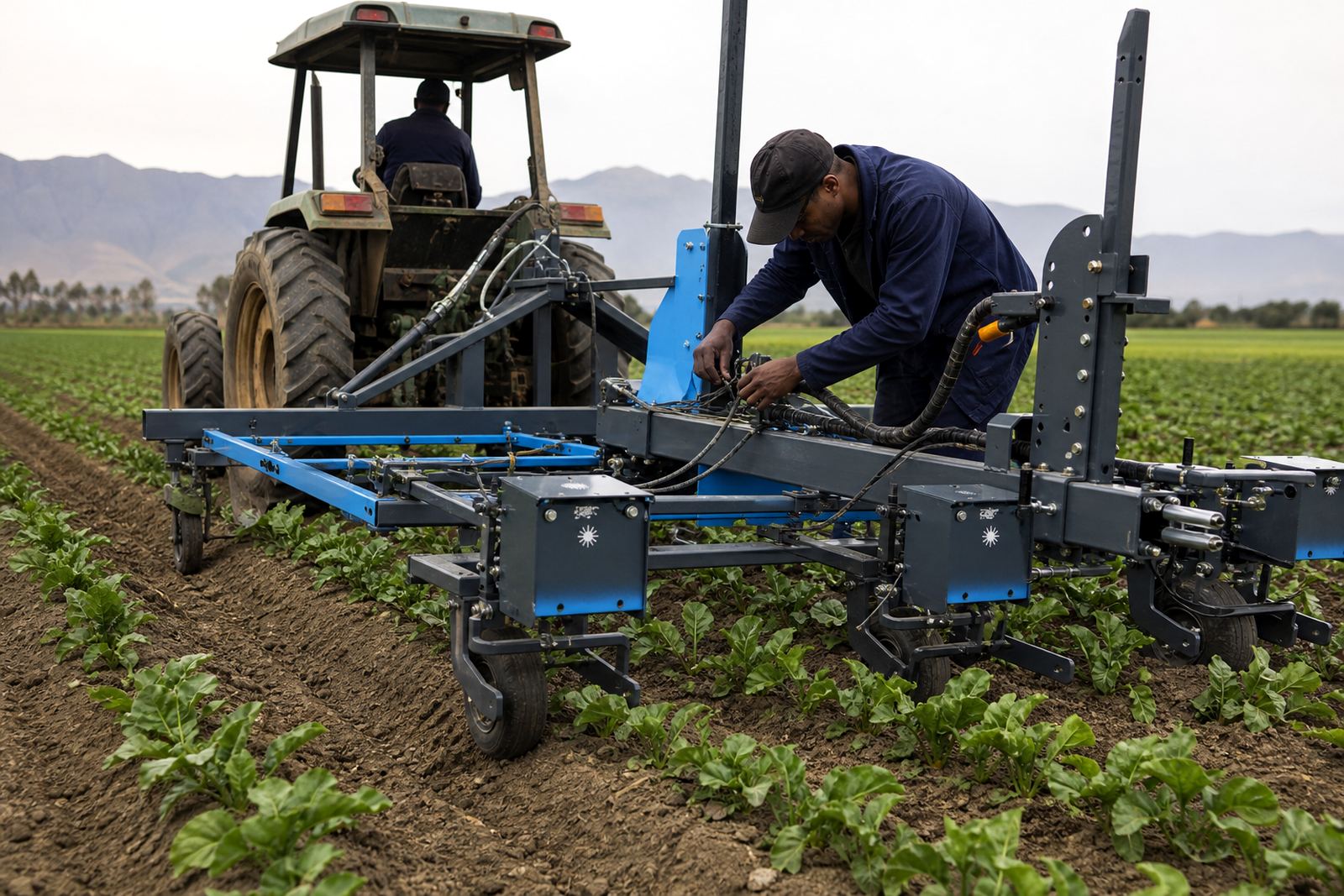
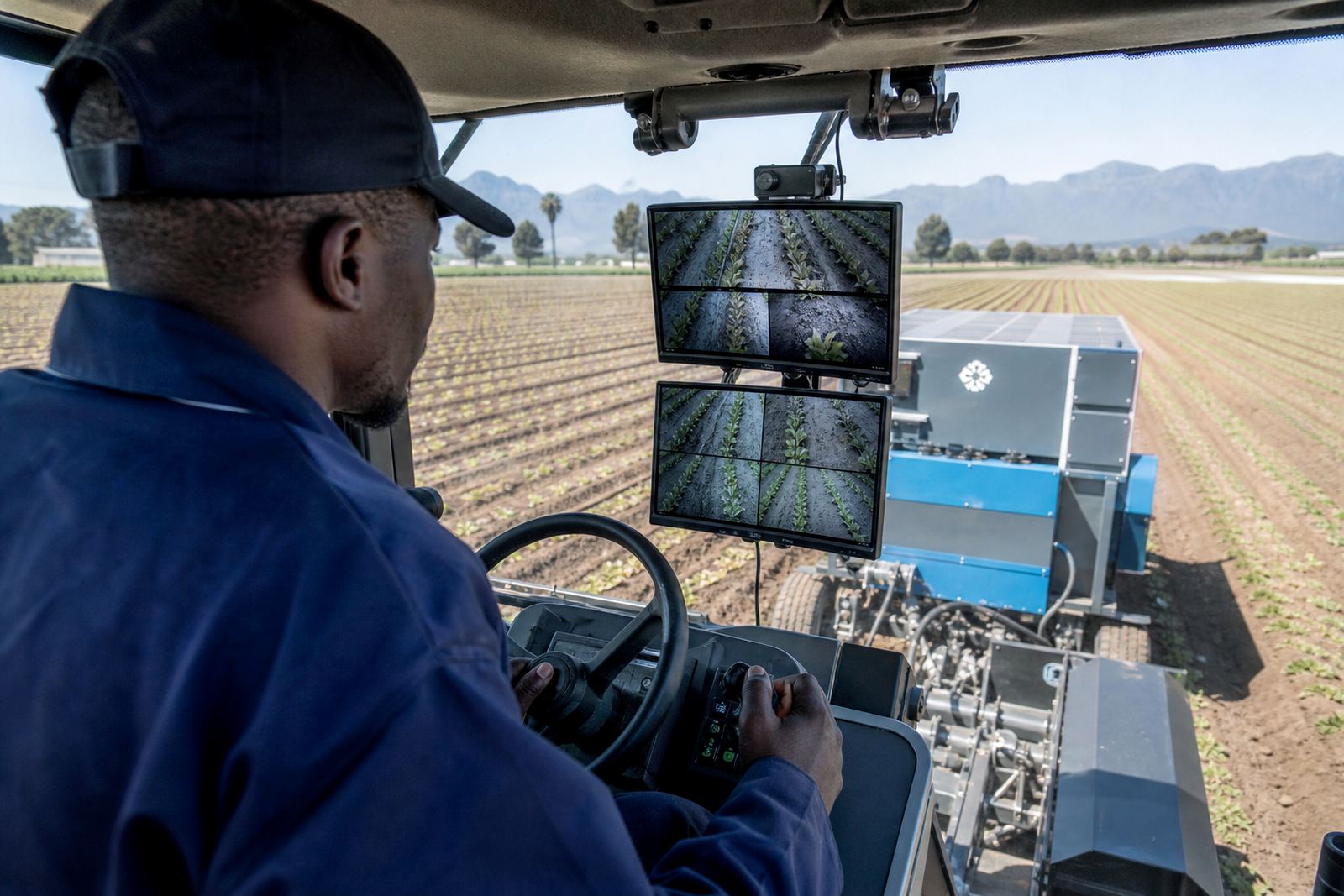
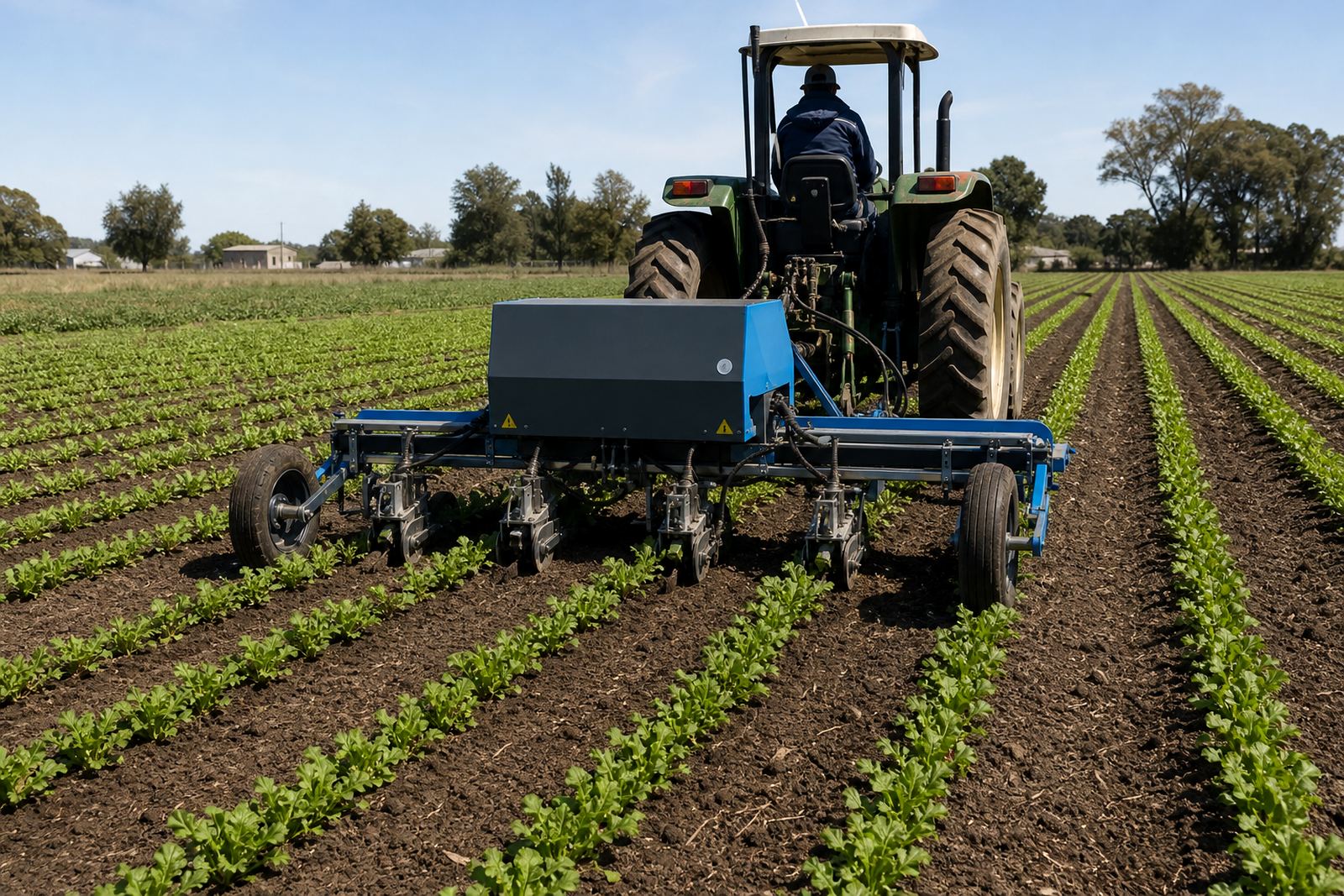
Large Block Hire is the right fit when the planted area is wide enough that hand work starts to lose rhythm and spray programmes are under pressure. The service is set up for row crops where a tractor can move through cleanly and the weed burden sits close to the crop, not just on open ground. The unit uses camera-guided weed detection and lasers that target the weed growing points, so treatment is directed where weeds are most vulnerable.
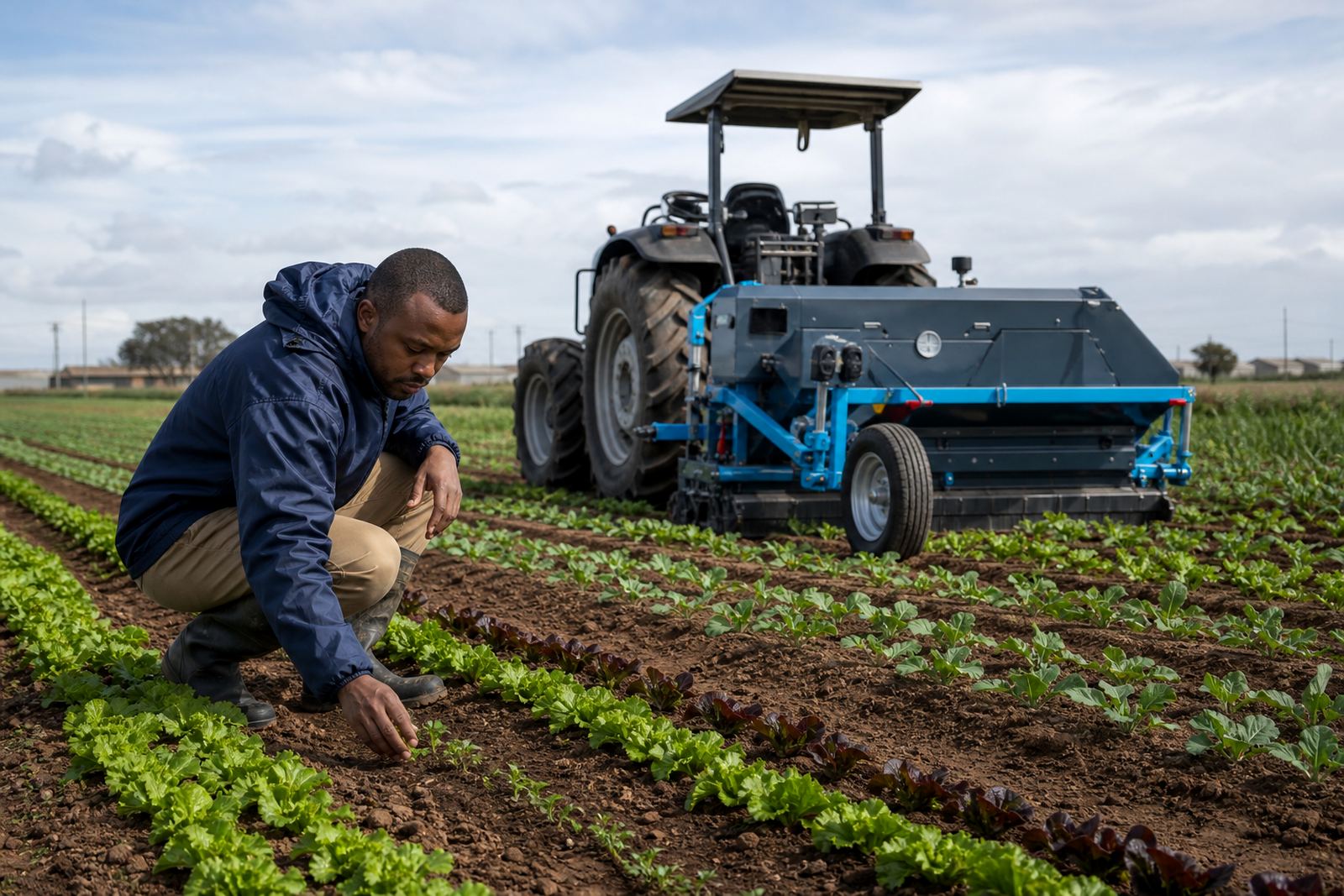
The work is well suited to onion blocks, carrots, lettuce and brassicas, especially where rows are uniform and the crop is already standing well enough for a controlled pass. It is a field service, not a retail hire unit dropped off at the gate. We bring the machine, the operator and the routing plan that keeps each pass tied to the block layout.
- Tractor-drawn laser unit for large planted areas
- Operator supplied for the field work
- Field routing planned around headlands, row spacing and access points
- Designed for herbicide-free weed control between and around crop plants
Sizes and block shapes that suit the service
Large Block Hire works best on medium to extensive blocks where the run length justifies steady machine movement. Long beds, repeated row patterns and connected planting areas all help the machine maintain consistent coverage. Blocks with awkward corners can still be worked, but the layout matters because turn points, gate widths and row direction all affect the pass plan.
Typical crop spacing and bed width must be checked against the machine working envelope before the first pass. The aim is not to force a block into a fixed pattern, but to match the route to the crop so the operator can keep a safe line and leave the crop plants undisturbed. The service can be arranged for one block or for a set of blocks that need to be worked in sequence.
- Best for uniform row crops and repeated bed layouts
- Useful where access roads, gates and turn space are defined
- Can be set up for single blocks or multi block programmes
- Field scheduling helps with blocks spread across more than one farm
How the laser pass works in the field
The machine scans the target area as it moves, identifies weeds against the crop pattern and directs laser action to the weed growing point. That approach is most effective when weeds are at a suitable stage and the crop rows are well established enough for clean separation. Early timing matters because a small weed is easier to target than a crowded patch with tangled growth.
Field speed depends on weed pressure, crop stage and the way the block is laid out. Where pressure is light and the rows are even, progress can be steadier. Where weed pressure is heavier or the block shape is irregular, the operator slows the work to keep the scan and treatment accurate. The service is herbicide-free and does not disturb the soil surface, which helps keep the block tidy after the pass.
- Camera-guided detection follows crop and weed patterns
- Laser action targets weed growing points
- Speed is adjusted to weed pressure and block conditions
- No spray drift and no soil cultivation from the treatment pass
Installation, fitting and field set-up
There is no fixed installation on the farm in the usual sense, but the block needs practical set-up before work starts. The route, access track, headlands and turning room must be checked, and the crop rows need to be confirmed against the machine path. If the ground is soft from rain or irrigation, timing has to account for traction and surface condition so the tractor can move without marking the block more than necessary.
Before the first pass, the team checks crop stage, weed stage, row width and entry points. Any narrow bridges, low hanging structures or awkward service roads are noted so the machine can enter and leave without delay in the field plan. For growers who run several blocks, the schedule is mapped to the crops that are ready first and the blocks that need repeat attention later in the season.
- Access roads and gate widths checked before mobilisation
- Headlands and turning circles planned in advance
- Row width and crop stage matched to the machine path
- Useful for single-farm work and multi-farm field programmes
Care during the season and between passes
Large Block Hire is strongest when the block is monitored through the season rather than treated as a once-off event. Weed pressure changes fast after irrigation, wind and warm weather, so repeat pass planning matters. The crop does better when the weed stage stays manageable and the rows remain visible enough for reliable targeting.
After each pass, the team can provide post pass reporting with notes on coverage, observed weed pressure and whether a later return is needed on the same block. Good records help the next booking line up with the crop stage instead of the calendar alone. In the Western Cape, Limpopo, Mpumalanga, KwaZulu-Natal and the Free State, this kind of timing is often what keeps the work orderly across changing weather and travel distances.
- Repeat pass planning for growing weed pressure
- Post pass reporting for follow-up decisions
- Season bookings available for planned crop windows
- Travel coordination for farms spread across regions
What to confirm when ordering Large Block Hire
The most useful details are the crop type, block size, row spacing, location, access conditions and the stage of the weeds. It also helps to note whether the work is for one block, a trial strip run or a wider programme across several farms. If there are narrow entrances, soft patches or uneven rows, those points should be listed so the route can be set correctly.
Growers often include the expected field window, any irrigation rhythm that affects soil firmness and the order in which blocks should be worked. That gives the scheduling team enough information to fit the tractor-drawn unit, operator and travel plan together without guesswork. Our contact form can be used for the booking details and the block notes.
- Crop type and growth stage
- Block size, row spacing and access points
- Weed stage and timing window
- Single block, trial strip or multi farm programme
Key facts
| Service type | Contract laser weeding for large vegetable blocks |
|---|---|
| Working format | Tractor-drawn unit with trained operator |
| Crop suitability | Onions, carrots, lettuce and brassicas |
| Treatment method | Camera-guided weed detection with laser targeting |
| Soil impact | No soil disturbance from the treatment pass |
| Service areas | Philippi, Cape Town and selected farm regions across South Africa |