A defined strip for real field reading
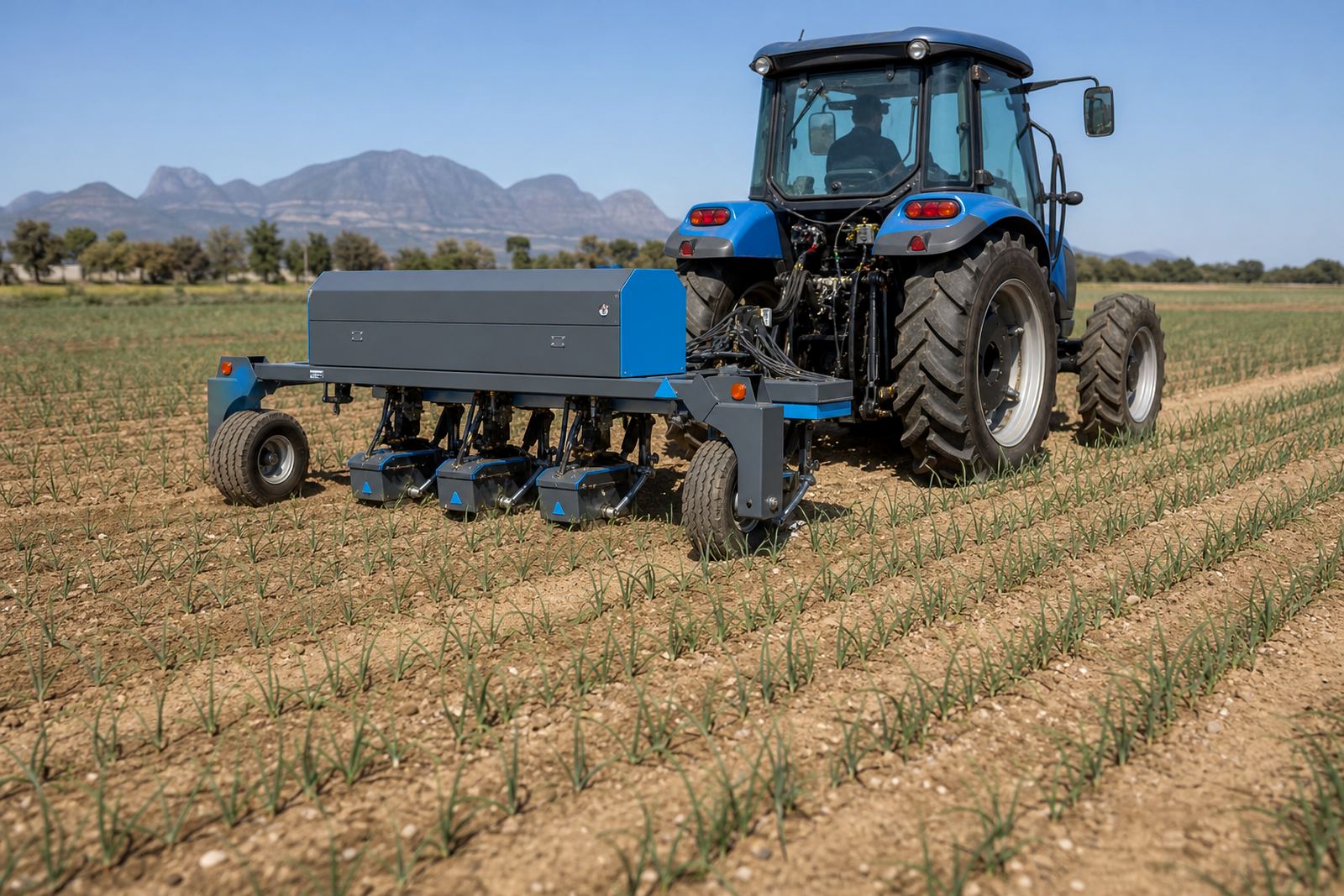
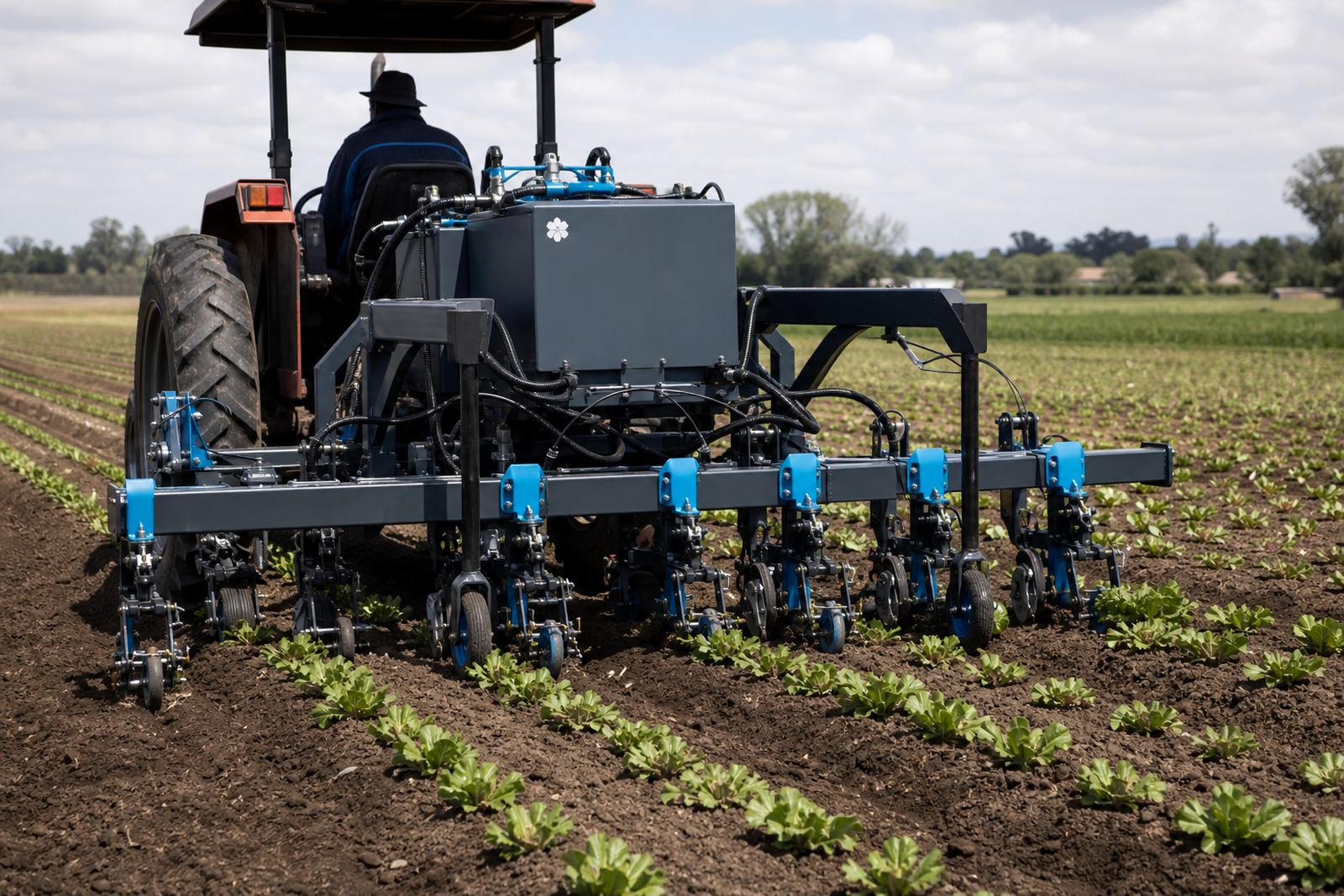
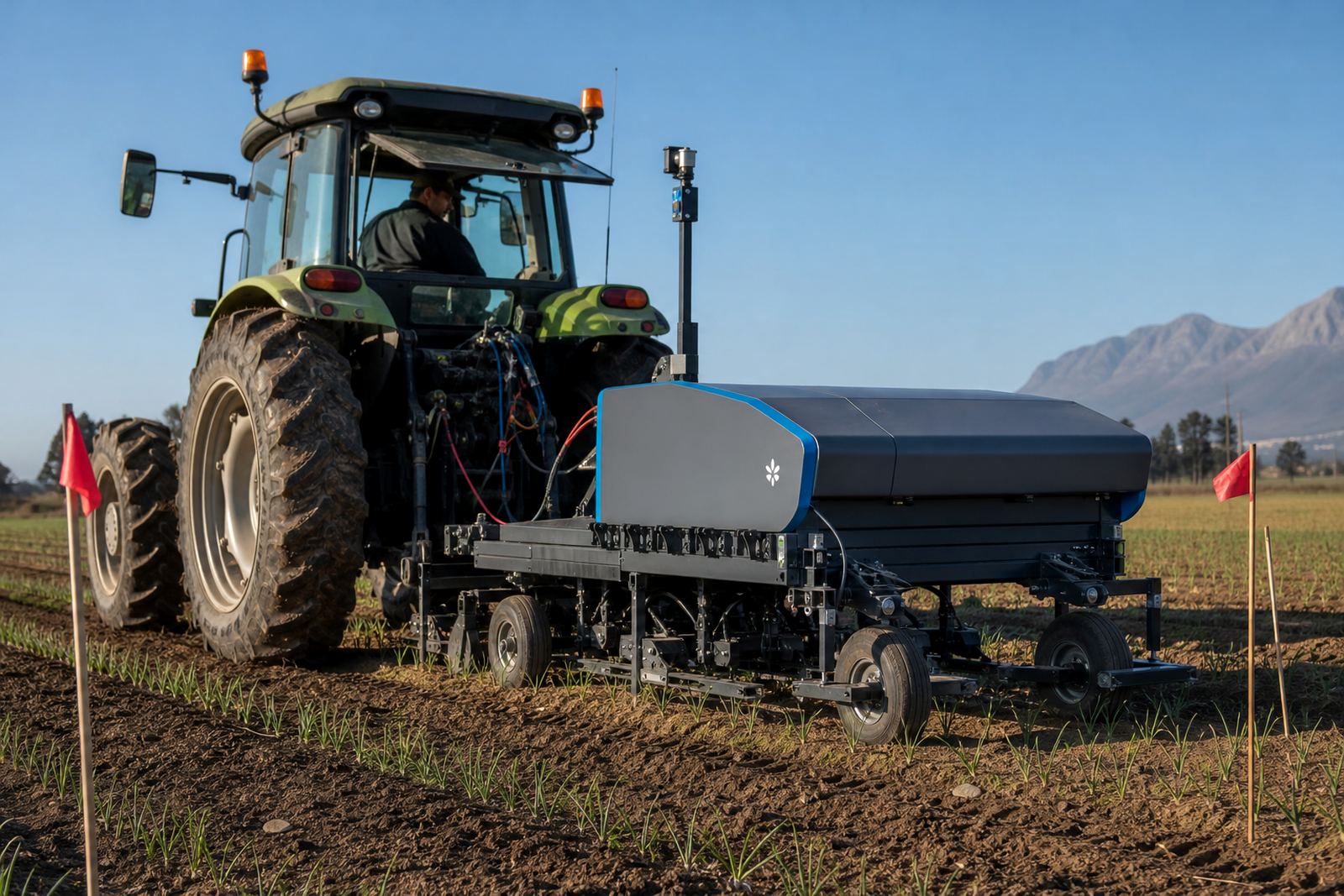
This service places a tractor-drawn laser weeding unit on a measured strip of crop so the block can be assessed under the same conditions the rest of the field faces. Camera-guided detection reads the weeds as the machine moves, then lasers target the growing points of small weeds between and around the plants, with no soil disturbance from the pass.
The test is useful where the row spacing is known, the crop is upright enough for camera movement, and the weed mix is at a stage where the strip can show how the machine behaves in that field. It suits onions, carrots, lettuce and brassicas, though the best strip is set by crop stage, row form and weed pressure rather than by crop name alone.
- One measured strip for field reading and operator checks
- Camera-guided laser pass across the marked section
- No herbicide spray applied in the trial strip
- No cultivation or soil throw during the pass
Strip sizes and booking shapes that work on farms
Trial Strip Hire is usually set up as a short run on one block, or as a pair of strips where spacing, weed pressure or soil conditions differ across the field. The working length is planned around the crop rows and access, and the width follows the machine travel and turning room at headlands.
On smaller farms the strip may be narrow enough to show control in a single zone, while larger growers often use it to compare two weed stages or two blocks with different soil texture. The aim is to give a clean field read, not a rushed sample that hides the real conditions.
- Single strip or paired strips on the same farm
- Useful where row length and headland access differ
- Can be set beside untreated rows for visual comparison
- Planned around crop stage, not just block size
Where the trial strip fits in the crop calendar
This product suits growers who want to judge laser weeding at a practical point in the season, before the whole programme is fixed. The timing matters: weeds that are too mature can slow the pass and reduce the value of the trial, while very small weeds can show the machine at its best in a given field.
Fields in Philippi, Ceres, Grabouw, Tzaneen, Bela-Bela, Nelspruit, Howick and Bethlehem often present different weed flushes, soil moisture and row uniformity, so the same crop can need a different strip date from one area to the next. Coastal humidity can also change weed growth pace, which is why the test strip is planned with current field conditions in mind.
- Suited to early or mid-season weed flush checks
- Useful before a wider season booking is set
- Helps compare weed pressure across farm blocks
- Works for growers across several provinces
Setting the machine up on your block
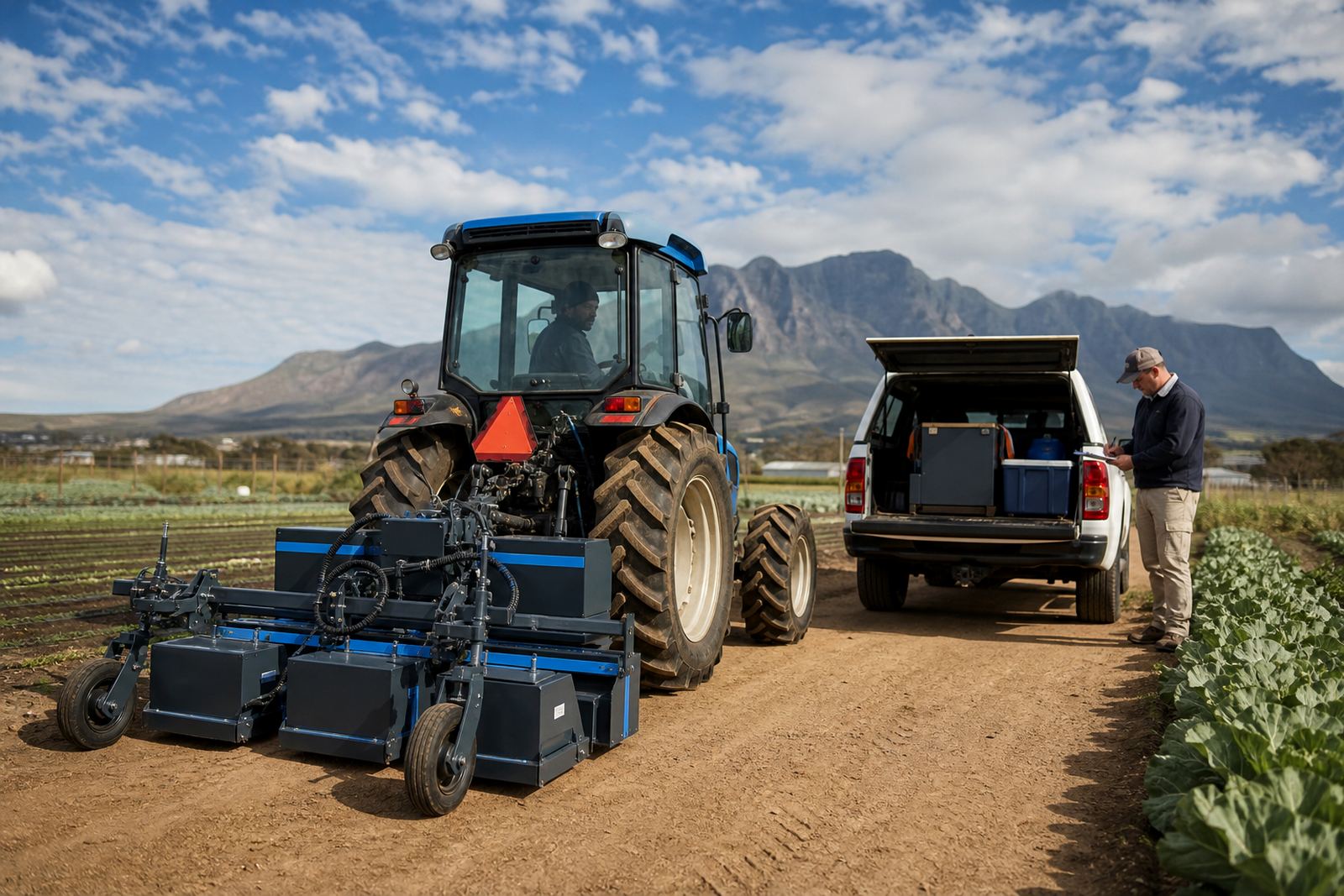
The trial strip needs the same practical field setup that a full contract pass needs. The operator checks row alignment, turning space, crop height, weed stage and surface condition before work starts. The unit is tractor-drawn and travel depends on safe access, wheel tracks and the condition of the headlands.
Laser weeding relies on clean row recognition, so the strip should be selected where the crop stand is even and the weeds are visible enough for camera detection. Waterlogging, loose ridging or badly broken rows can change the pass, and those points are noted during the arrival site check and field assessment.
- Tractor access with enough turning room at headlands
- Even row pattern helps the camera system read plants
- Crop height and weed stage are checked on site
- Field condition noted before the strip is set
Care during and after the pass
Once the strip is run, the block needs a simple follow-up walk to see how the crop and weeds read after the pass. No special irrigation step is needed for the machine itself, but field moisture, dust and plant stage can affect how the strip should be judged. The post pass report records what was seen in the strip and where the crop or weeds may need another timing choice later in the season.
Growers often use the strip to decide if a repeat pass should be planned, whether another block should be brought into the programme, or whether the weed stage needs to be tightened before the next booking. That is practical work, not guesswork, and it suits farms that want field notes before broadening the run.
- Post pass reporting on strip condition and weed stage
- Useful for repeat pass planning on the same block
- Can inform wider season bookings and travel coordination
- Supports grower consultation on later timings
What to confirm before the strip is booked
When ordering Trial Strip Hire, the important details are the crop type, row spacing, field size, weed stage, access route and whether the strip should sit inside one block or across two blocks. The team also needs to know the province and the farm area so travel and field scheduling can be fitted around the route plan.
If the crop is onions, carrots, lettuce or brassicas, the strip should note the current growth stage and any uneven sections. Those details help set the operator, the tractor-drawn unit and the field timing so the trial stays tied to real farm conditions, not a theory on paper.
- Crop type and growth stage
- Row spacing and strip length
- Weed pressure and weed size
- Farm area, access road and headland room
Key facts
| Service type | Contract trial strip for laser weeding on vegetable farms |
|---|---|
| Machine format | Tractor-drawn laser weeding unit with trained operator |
| Typical crops | Onions, carrots, lettuce and brassicas |
| Working method | Camera-guided weed detection with lasers aimed at weed growing points |
| Field effect | Herbicide-free pass with no soil disturbance |
| Coverage area | Philippi, Cape Town base with travel across South Africa |