Block-by-block planning for mixed lands
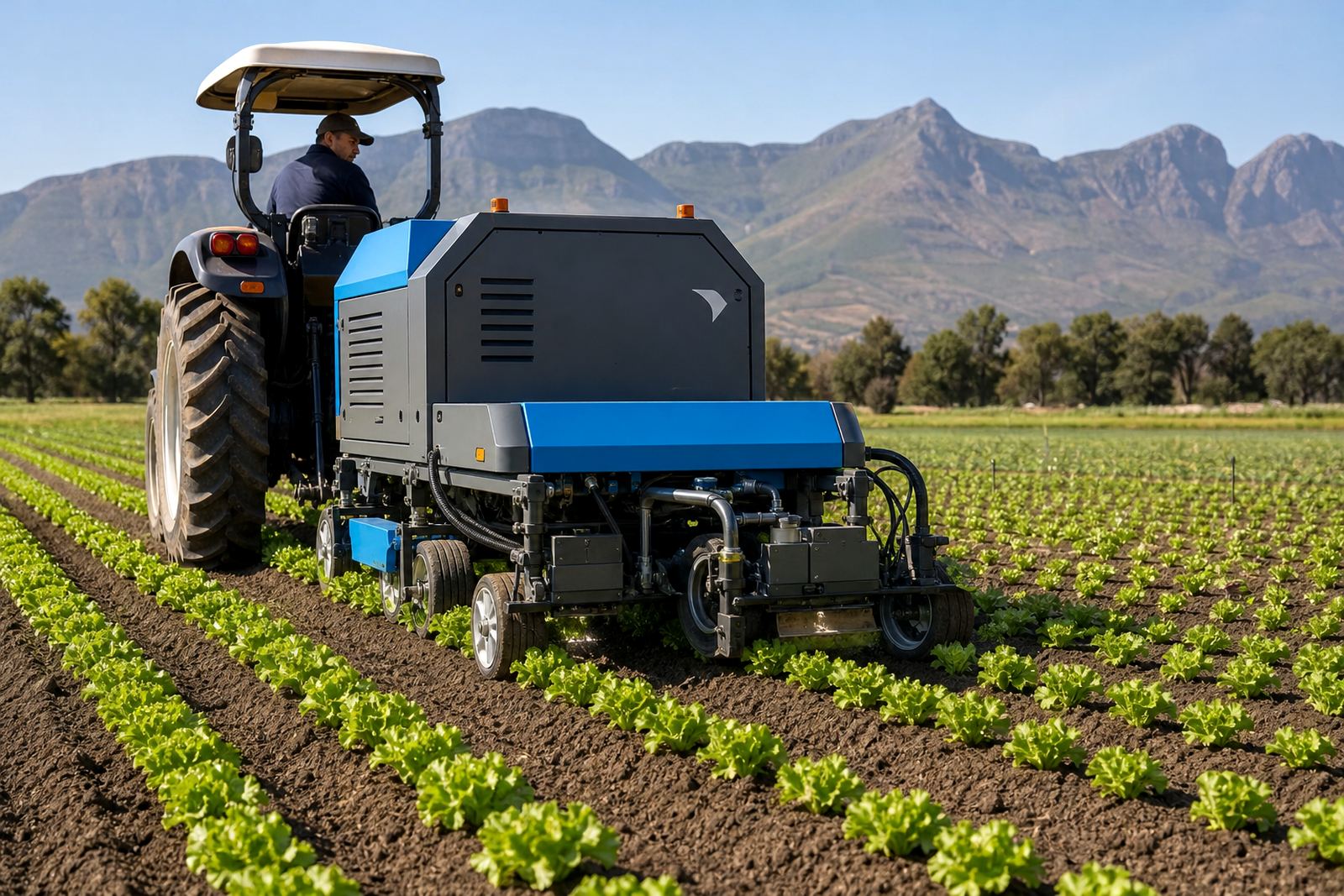
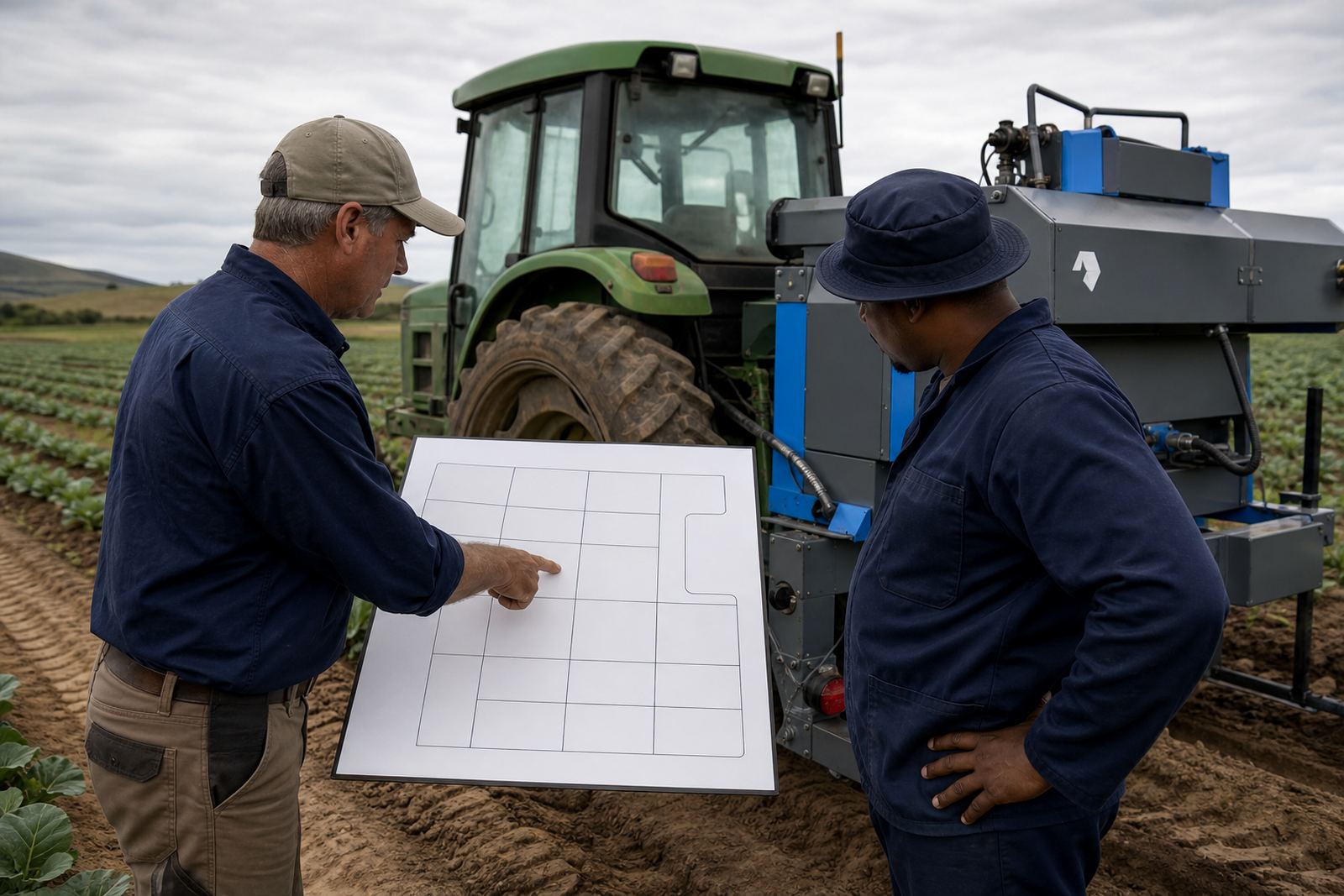
Some farms do not run as one continuous block. They have a few lands at different stages, maybe onions in one section, carrots in another, then lettuce or brassicas that need a different pass date. Block By Block Hire suits that pattern. We schedule each land on its own, so the operator arrives with the tractor-drawn laser unit ready for the exact block that needs attention.
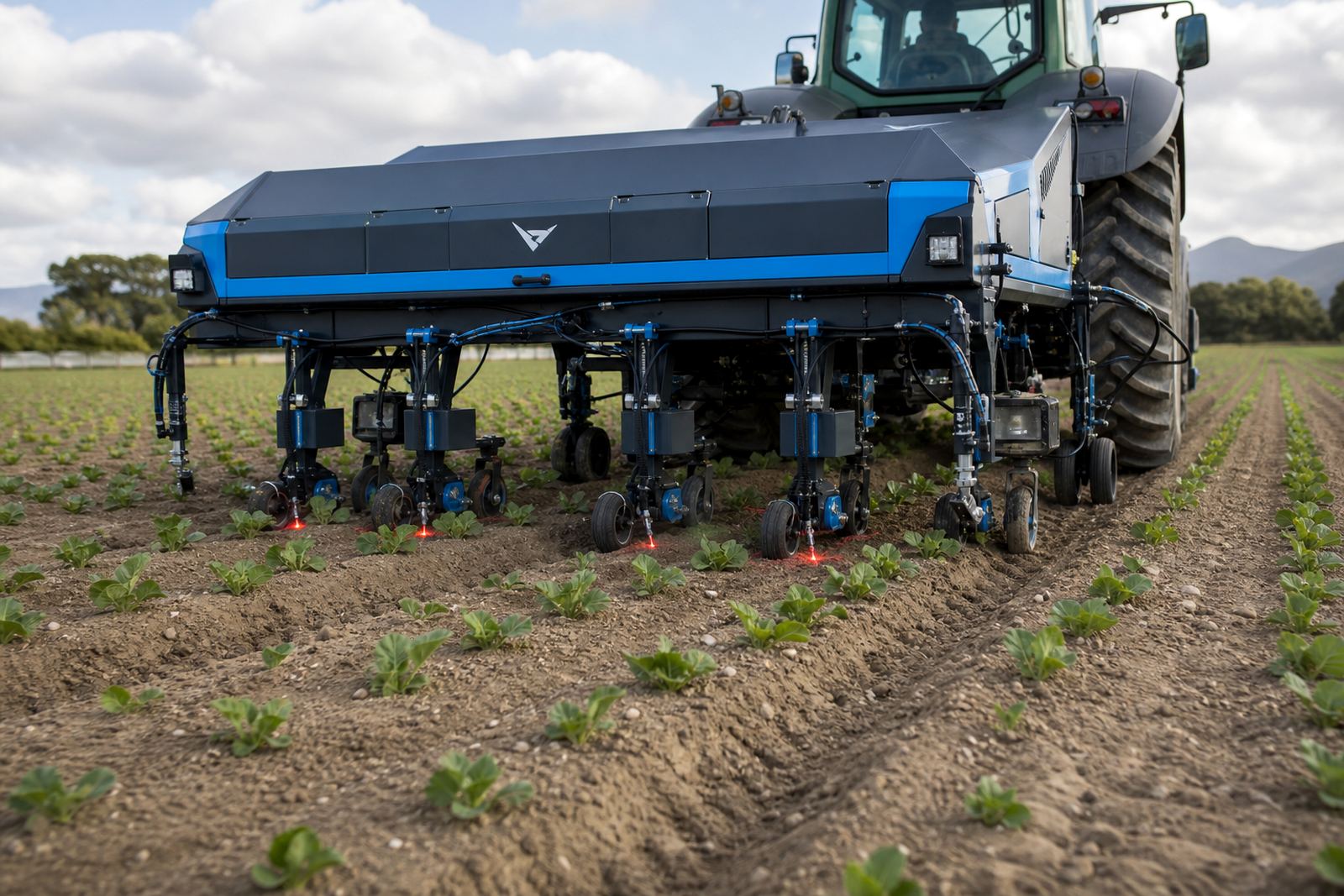
The method uses camera-guided weed detection. The system reads the crop row, finds weed growth in the spacing between and around plants, then directs lasers at the weed growing points. The aim is to work close to the crop without cultivation, hoes or spray drift. It is a field service for growers who want a set order of work across multiple lands, not one loose visit with no sequence.
Sized for row crops and narrow intervals
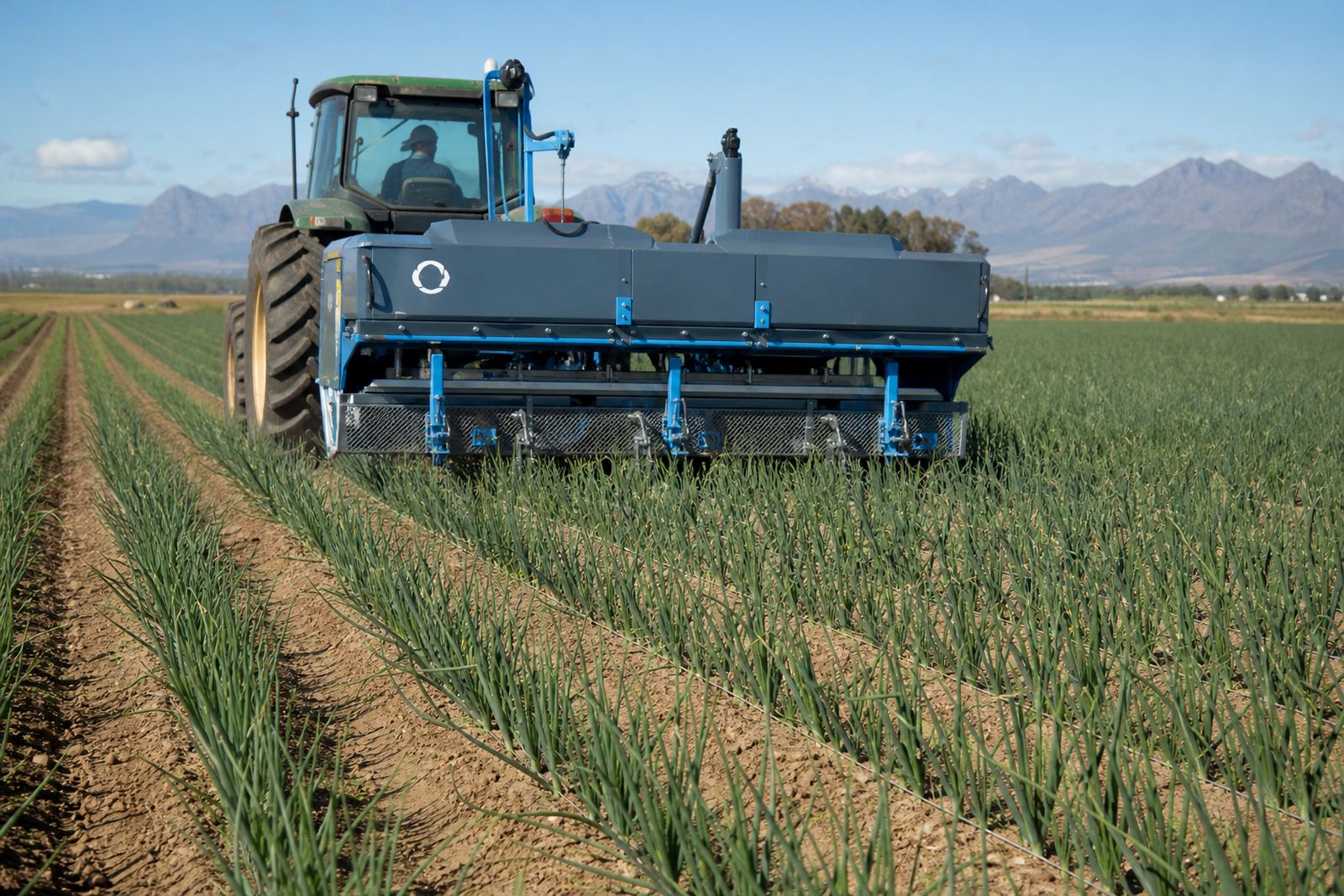
Block By Block Hire suits row crops where spacing is clear and the crop stand is already established enough for camera guidance to read the row. We work with vegetable lands such as onions, carrots, lettuce and brassicas, and the plan changes with row width, bed shape and weed stage. If weeds are too large, the pass can lose efficiency, so timing matters just as much as the field size.
For practical use, growers usually want the pass scheduled when weeds are still small and before the crop canopy closes too far. That keeps the laser work focused on the early stage, where the growing points can be targeted cleanly. A block that looks ready on paper may still need a few days of monitoring if the crop row is not stable enough for the camera system.
- Suitable for open-field vegetable blocks with visible row structure
- Useful where herbicide-free weed control is preferred
- Well matched to lands that need separate timing by cultivar or sowing date
- Works best on weeds that are still in an early growth stage
How the hired unit fits into farm operations
The hire includes a tractor-drawn laser weeding unit and a trained operator. Field scheduling is set around the lands on your list, so one block can be completed before the next is opened up. That is useful when different blocks sit in different towns, or when a grower has lands spread across Philippi, Ceres, Grabouw, Tzaneen, Bela-Bela, Nelspruit, Howick or Bethlehem.
There is no soil inversion and no hoe line left behind. The unit stays on the surface, and the operator works from the tractor seat with the guidance system doing the weed detection. Field speed depends on weed pressure, crop layout and the way the rows present in that specific block. Heavier weed pressure usually means a slower pace, because the machine must read each row and target the weeds with care.
- Tractor-drawn unit supplied with operator
- Sequence-based scheduling across multiple lands
- Travel coordination for farms outside Philippi, Cape Town
- Trial strip runs can be arranged before a wider programme
Details that keep the pass practical
Before a block is added to the schedule, we confirm the crop type, row width, block size and weed stage. The team also looks at access roads, turning space at the headlands and whether the land is ready for a controlled pass. If a block has uneven crop emergence, the timing may need to shift, because laser guidance performs best when the rows are clear and the crop is not too patchy.
Arrival site checks help avoid delays at the land edge, especially where equipment movement is tight or the block sits far from the main yard. Growers also use crop timing plans when the season is busy and the lands are not all at the same stage. That lets us line up the order of work, then keep the block sequence clear for the operator and the field team.
- Crop stage and weed stage
- Row spacing and bed pattern
- Access for tractor entry and turning
- Block size, travel distance and farm-to-farm movement
Care after a pass and between seasons
The unit needs regular checks between jobs, especially on optics, sensors and moving parts that sit in field dust. We keep the equipment clean and the working faces clear so the camera system can read row structure properly. If a season runs through dry, dusty conditions or coastal humidity, extra care around lenses and housings helps protect field performance.
Repeat pass planning can be built into the season booking, because one pass is not always enough for every block. Some growers want a first run on the younger weeds, then a later pass where regrowth has started in a different strip. Post pass reporting helps track which land was worked, which block needs attention next, and how the sequence should move across the farm programme.
Speak to the scheduling team about your lands
Block By Block Hire is handled from our Philippi, Cape Town base, with field scheduling for growers across the Western Cape, Limpopo, Mpumalanga, KwaZulu-Natal and the Free State. Mandla Adonis leads the business, with Anele Khoza on operations, Pieter Mokoena on field scheduling, Zanele Naidoo on grower liaison, Johan Daniels as lead operator, Lerato Letsoalo on service coordination and Ruan Mkhabela in the workshop.
If you are planning a sequence of lands and want them worked in order, our contact form on the contact page is the place to send the block list, crop mix and preferred timing. Multi farm programmes can also be organised where several holdings need the same weed control approach across one season.
Key facts
| Service format | Tractor-drawn laser weeding with trained operator |
|---|---|
| Working method | Camera-guided weed detection and laser targeting of weed growing points |
| Crop fit | Onions, carrots, lettuce and brassicas, plus other row crops |
| Programme types | Single block, repeat pass planning, season bookings and multi farm programmes |
| Coverage | Philippi, Cape Town base with work across South Africa |
| Field notes | Herbicide-free, no soil disturbance and timing based on weed stage |