Start with a block that tells a fair story
Pick a block where weed pressure is typical for the farm, not the cleanest patch beside the road or the roughest corner near the windbreak. A useful strip should sit in the same soil, same irrigation pattern and same crop stage as the rest of the field, so the result means something beyond that one patch.
For onions, carrots, lettuce and brassicas, the strip should run through the row pattern the crop already uses. It helps when the section includes the same headland turns, the same plant spacing and the same low spots where moisture stays longer after rain or irrigation. That way the operator sees the real field conditions, not a tidy pocket that hides the hard parts.
- Use one crop block with similar vigour across the strip
- Avoid mixed soil zones if you can help it
- Keep the trial away from damaged rows, wheel tracks and washouts
- Choose a section with the weed species the farm wants to tackle
Mark the strip so the crew can follow it cleanly
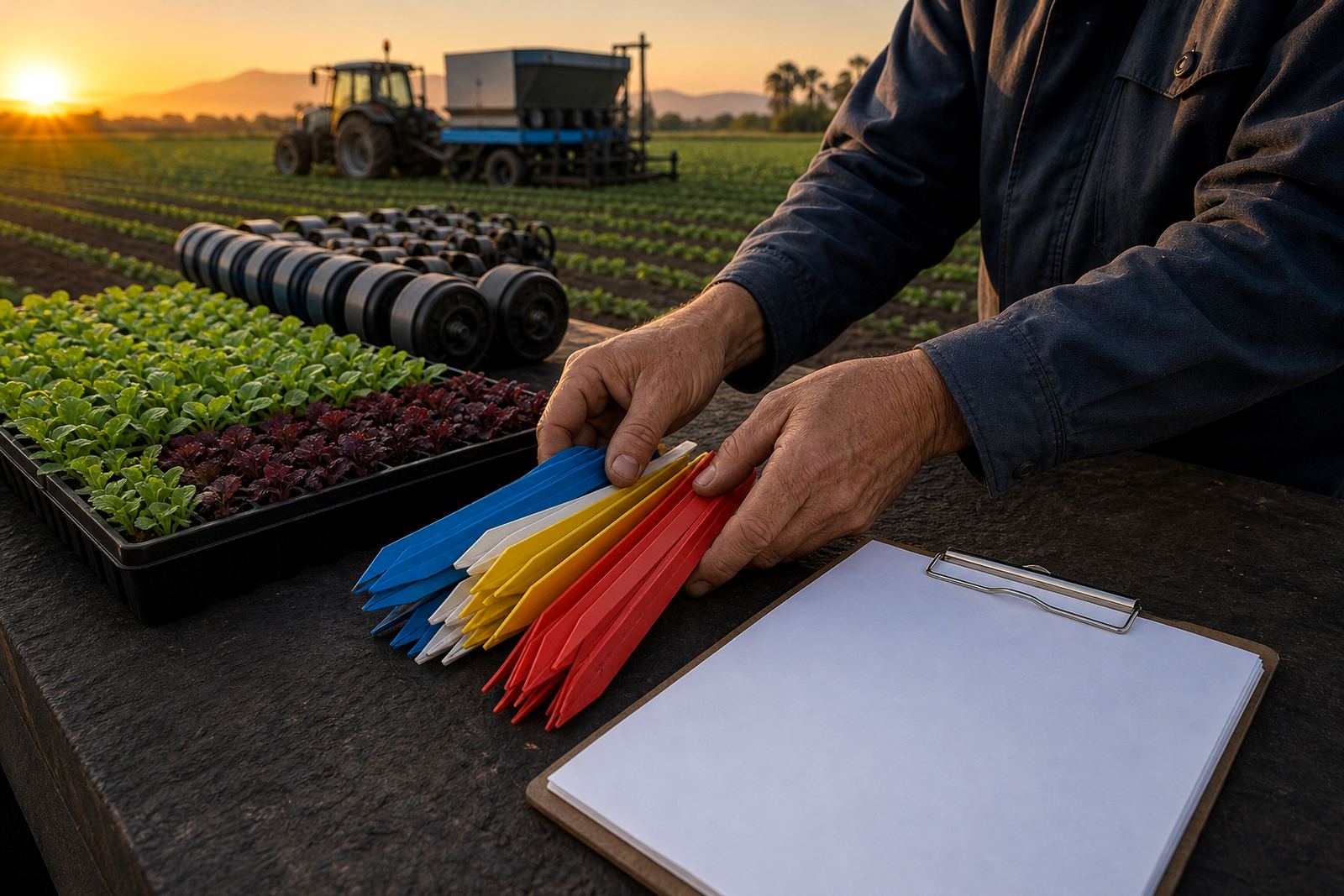
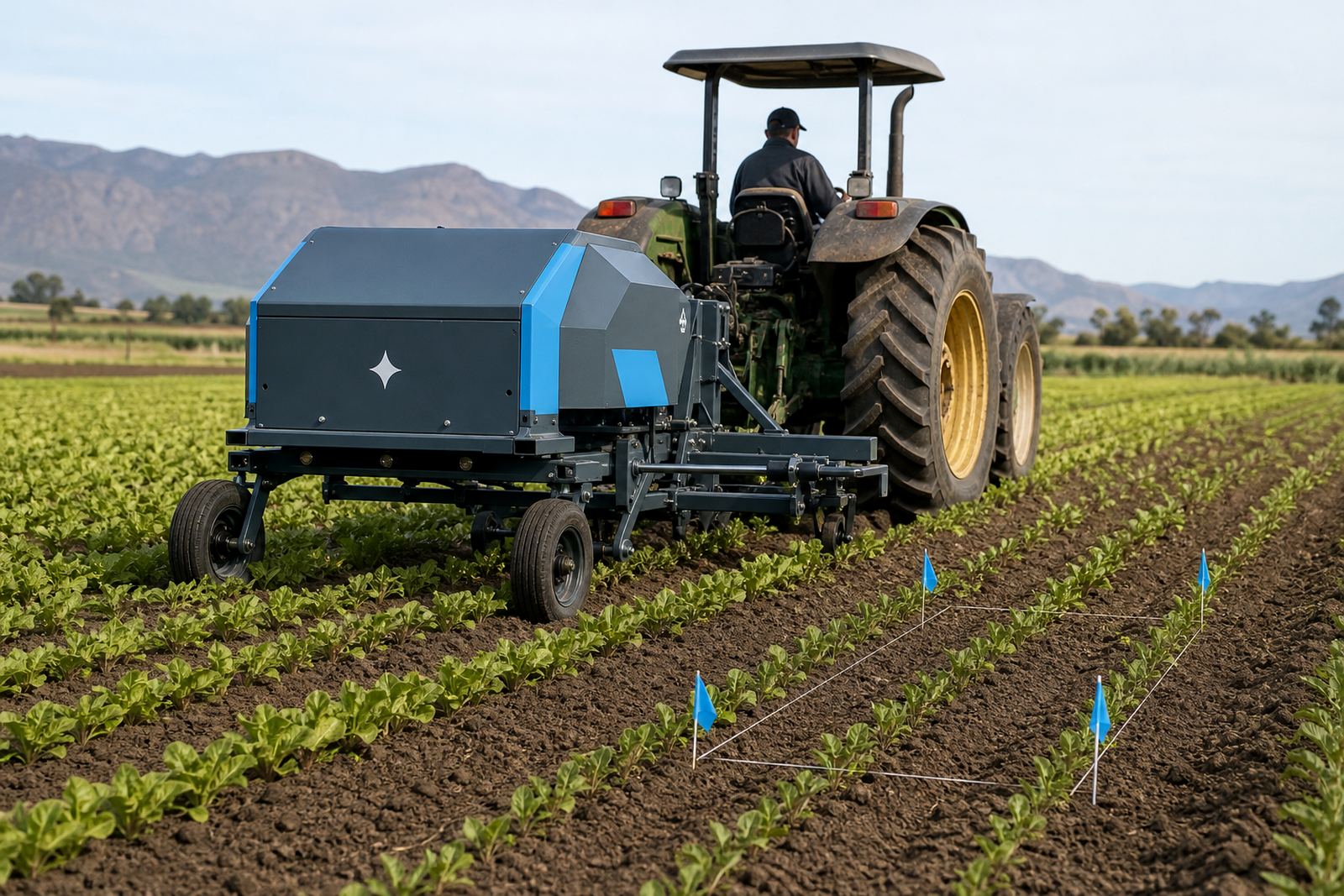
Mark the start and end points before the unit arrives. Stakes, flagging tape or clearly cut row ends work well when they are visible from the tractor seat. Straight edges help, but the bigger need is clarity, because a strip that drifts across rows makes later comparison harder.
Keep the marked area long enough to show the machine working through the crop and the weed pattern. A short patch near the gate may feel convenient, though it rarely shows enough of the field rhythm. If the block changes shape, mark the boundaries on both sides and note the row count, the crop variety and the field name on the farm map.
- Mark both ends and both sides of the strip
- Use visible markers that hold in wind and sun
- Record the crop, row spacing and block reference
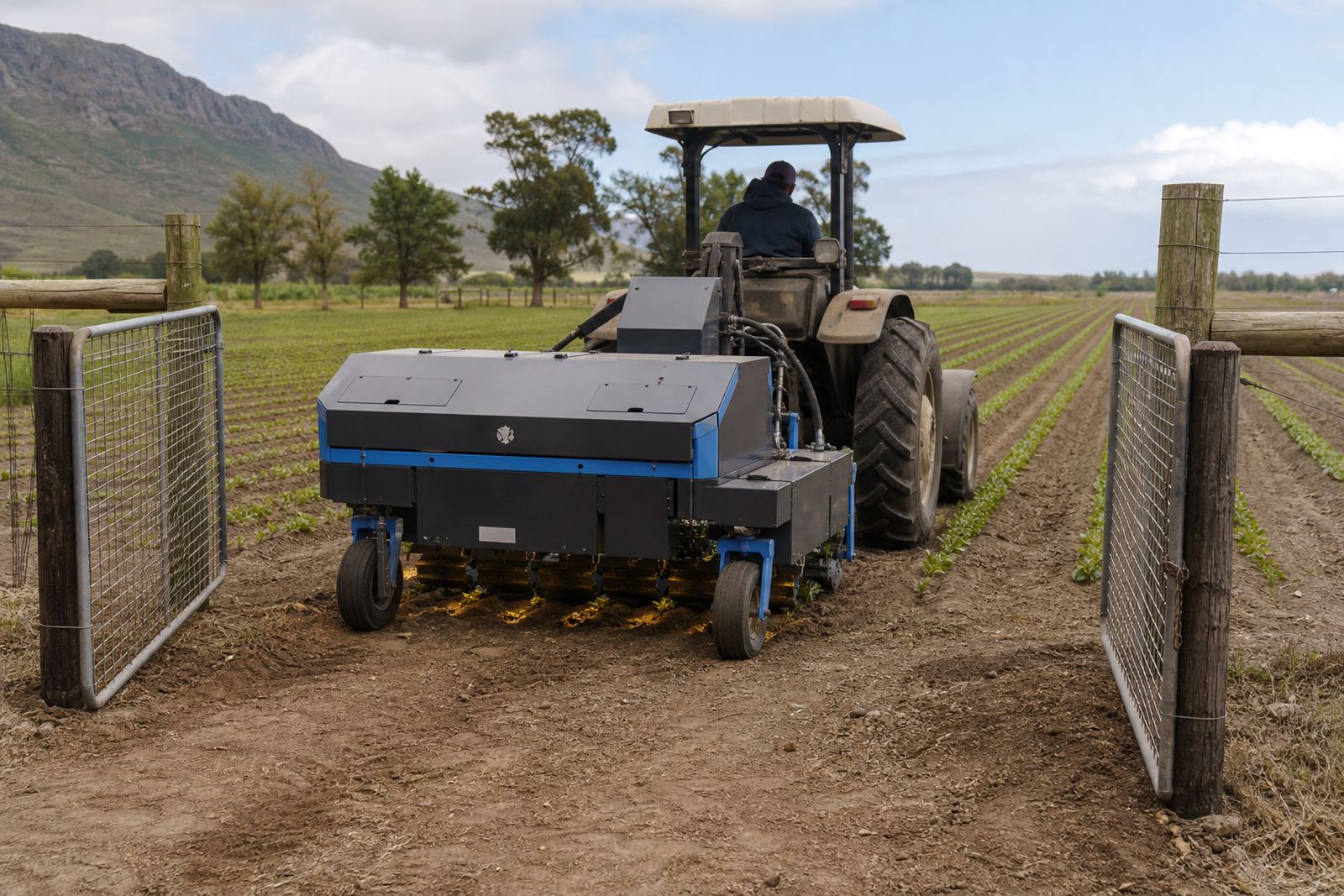
- Keep access points open for the tractor-drawn unit
The more exact the mark, the easier it is to match the pass to the right rows and repeat the work later if needed.
Use weed stage, not wishful timing
Laser weeding works best when the target weeds are small and still vulnerable. A trial strip should therefore be planned around weed stage, not only the crop calendar. Annual weeds in the cotyledon to early true leaf stage are easier to target than mature weeds with thicker stems and stronger growing points.
That timing matters because a strip done too late can say more about weed size than about the method itself. It also helps to know whether the block has just been irrigated, recently cultivated or left untouched for a while. Those conditions affect what the operator sees and how the unit moves through the rows.
- Check the main weed species and their growth stage
- Note whether the block was irrigated or recently worked
- Plan the strip before weeds become hard to manage
- Match the timing to the crop stage and row access
When a grower in Philippi or farther afield wants the strip to inform the season plan, timing carries as much weight as the equipment itself.
Tell the operator what the field is hiding
A trial strip works better when the operator gets the small field facts up front. That includes buried drip lines, soft patches, patchy emergence, slope changes, old wheel marks and any areas where the crop was replanted. These details guide field speed and row approach, and they can change how the strip is run.
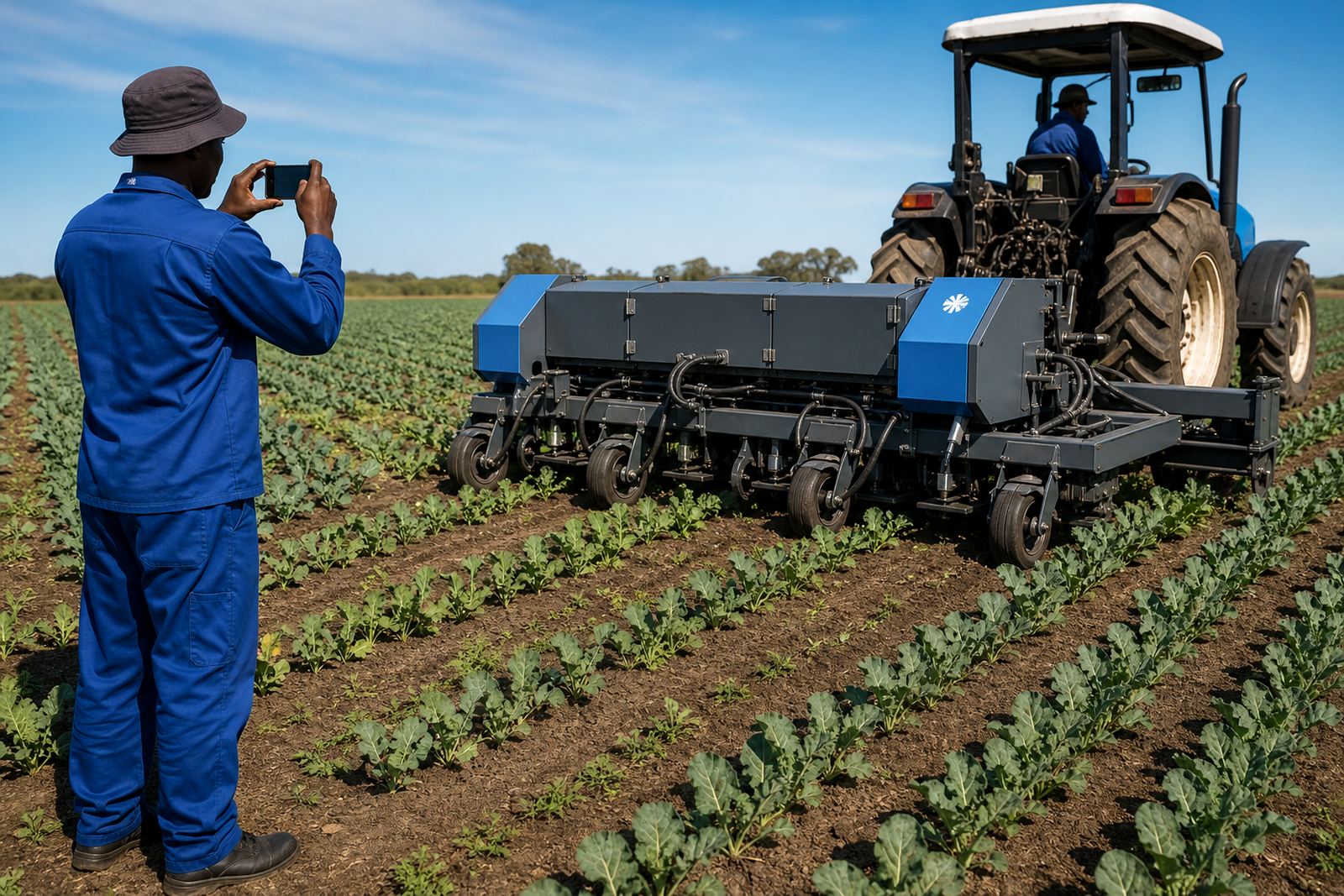
With tractor-drawn laser units, the operator needs room to hold a clean line and keep the camera guidance steady. If the rows are tight, the crop canopy is closing or the weeds sit close to the plant stems, the field notes help the crew decide where to start and where to leave extra margin. No field is identical to the next one, even on the same farm.
- Share notes on replants, skips and weak patches
- Point out soft ground and uneven headlands
- List any sensitive areas near the block edges
- Flag changes in row width or crop height
That information makes the strip more useful, because the pass reflects the field as it is, not as a map might suggest.
Keep a record that can guide the next pass
A trial strip is worth more when the farm keeps a plain record of what happened. Note the block name, date, crop stage, weed stage, weather, soil moisture and which rows were treated. The crew should also log anything unusual, such as blocked access, strong wind across the rows or a section where weeds had grown beyond the best timing.
Post pass reporting is useful here because it gives the grower a factual note on what was treated and what needs checking later. If the block is part of a larger rotation, the strip record can support repeat pass planning, season bookings and multi farm programmes across the Western Cape, Limpopo, Mpumalanga, KwaZulu-Natal and the Free State.
- Keep the block map with the strip notes
- Write down crop stage and weed stage
- Note any missed corners or difficult areas
- Compare the strip with neighbouring untreated rows
Those records help a grower judge whether the same timing suits the next block or if the window needs to shift a little.
A small strip should still fit the full farm plan
A trial strip is not just a test of equipment, it is also a test of farm timing. If the strip sits in the right place, it can guide future field scheduling, travel coordination and the order of blocks across different towns. That matters for growers with ground in places like Ceres, Grabouw, Tzaneen, Bela-Bela, Nelspruit, Howick and Bethlehem, where weather and crop age rarely line up neatly.
At LaserWeeder Hire, the point of a trial strip is to learn how a specific block behaves under laser weeding before the season is mapped out more widely. A well marked strip, set at the right weed stage, gives the grower a better base for the next decision, and it keeps the conversation grounded in the field rather than in guesswork.