Start with the crop blocks, not the whole farm
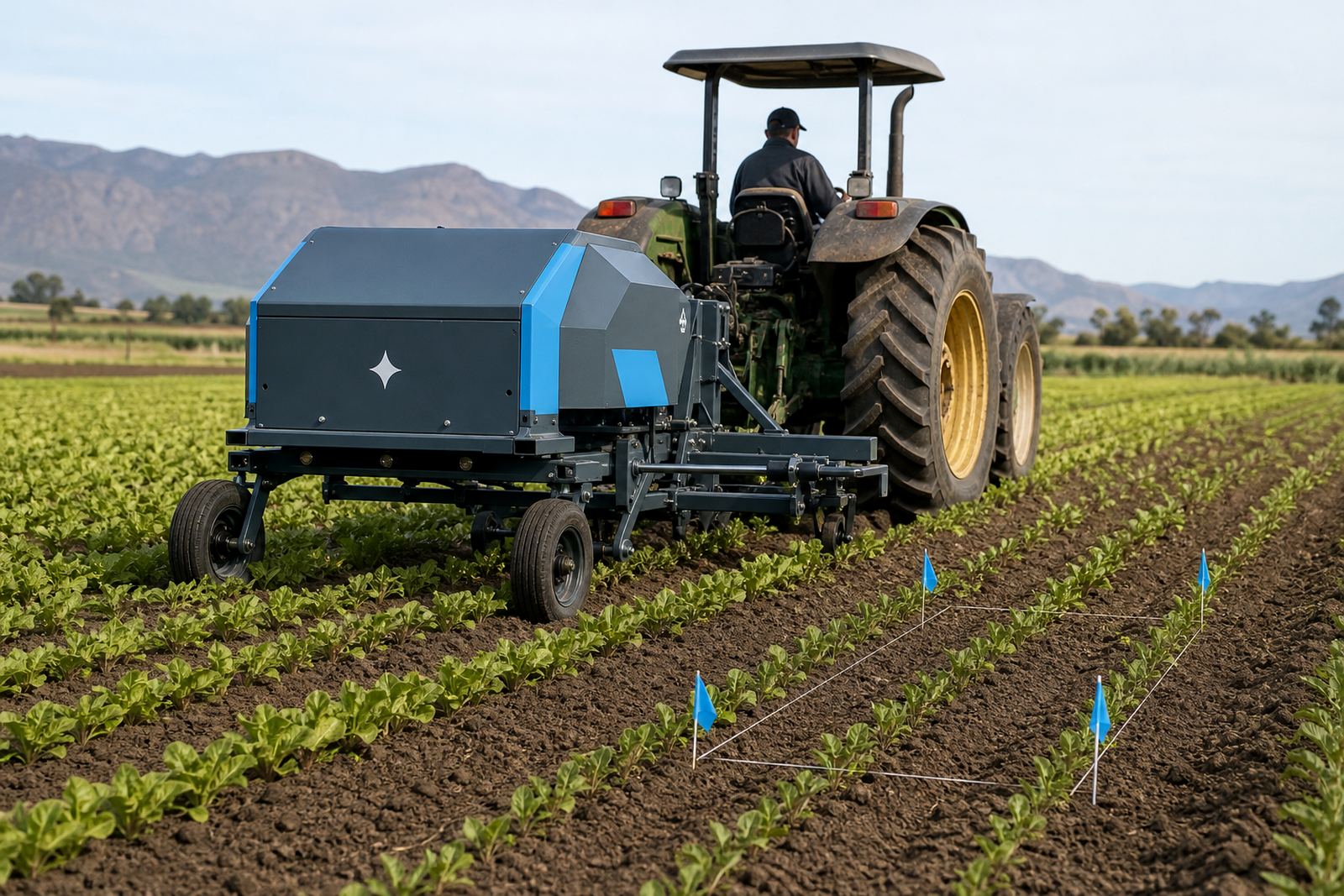
Laser weeding is usually planned block by block. A mixed vegetable farm may have onions in one block, carrots in another and brassicas in a separate planting, and each block can call for its own pass plan. Measure the cropped ground only, not roads, headlands, dams, sheds or fallow corners that will not be treated.
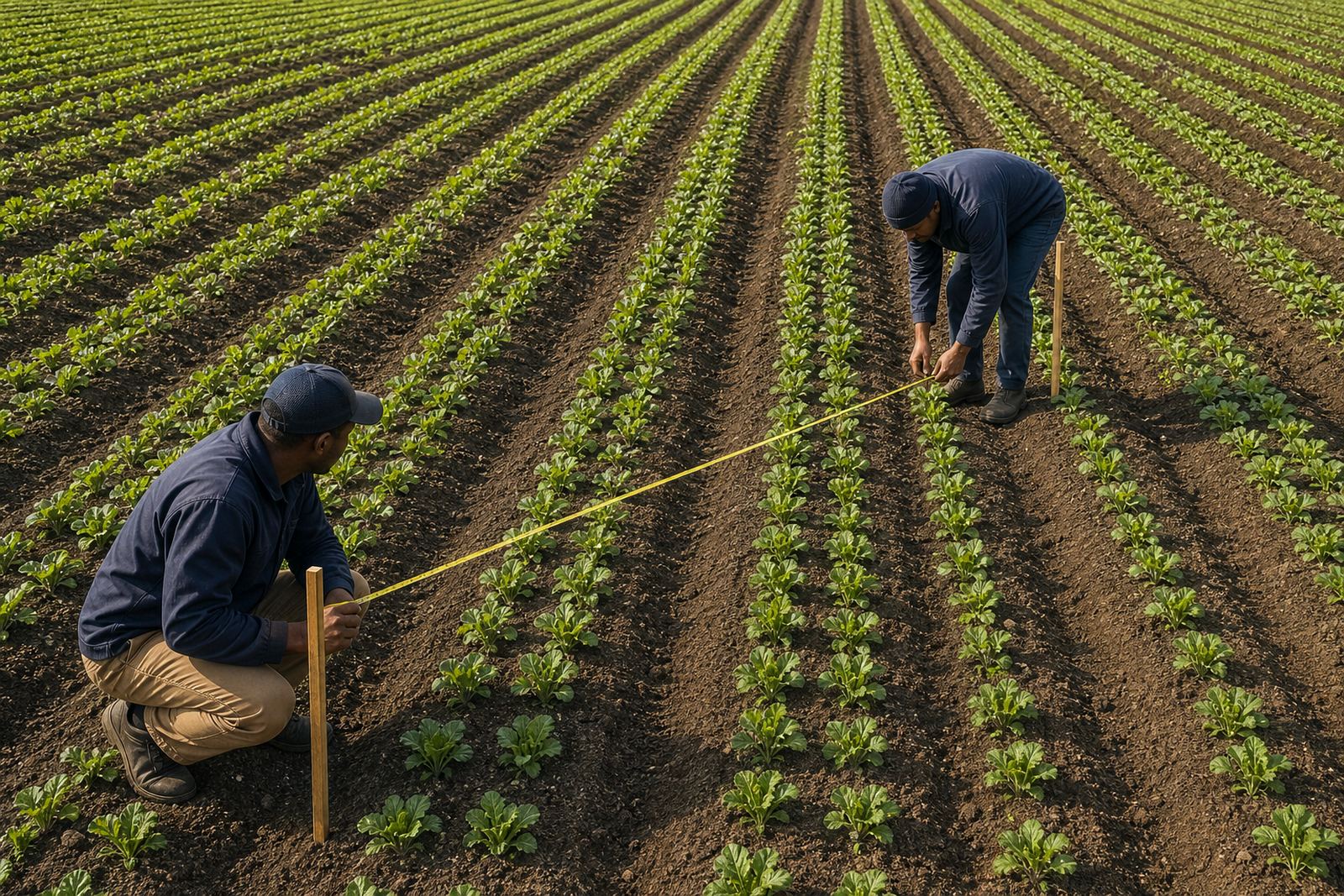
If you already work with mapped blocks, use those figures. If not, walk the edges with a tape, wheel or GPS tool and note the length and width of each cropped section. A block that is almost square is easy enough, but long narrow strips, wedges and awkward corners need a bit more care so the estimate does not drift.
- Record each block separately
- Exclude non cropped areas
- Note the crop in each block
- Mark any odd shapes or broken edges
Measure in metres, then convert to hectares
Area calculations are cleaner when you start with metres. Multiply length by width for a rectangular block, then divide by 10,000 to convert square metres into hectares. For triangular or irregular patches, split the block into smaller shapes and add them together. A quick sketch on paper often helps more than a rushed memory from the bakkie seat.
For example, a block measuring 180 metres by 90 metres is 16,200 square metres, which equals 1.62 hectares. If the block changes width halfway down, measure the sections separately. That extra step matters when the operator plans tractor movement and when the scheduling team looks at field time across several farms.
- Length x width gives square metres
- 10,000 square metres equals 1 hectare
- Split irregular blocks into smaller parts
- Keep one note for each crop block
Add the crop rows and the working space
The planted area is only part of the story. Laser units work between and around crop plants, so row spacing, bed width and headland access affect how the job is planned. Onion, carrot, lettuce and brassica plantings all sit differently in the field, and the working width around the rows can change from one farm to the next.
When you note the field, include the row spacing, the number of rows per bed and whether the block has enough turning space for a tractor-drawn unit. Tight corners, soft patches and short run lengths can change field speed, especially where weed pressure is heavy or the crop stage is delicate. That does not change the crop area, but it does shape the visit plan.
- Row spacing in millimetres or metres
- Bed width and number of rows
- Headland space for turning
- Soft spots, dips or wet corners
Use weed stage and timing as part of the estimate
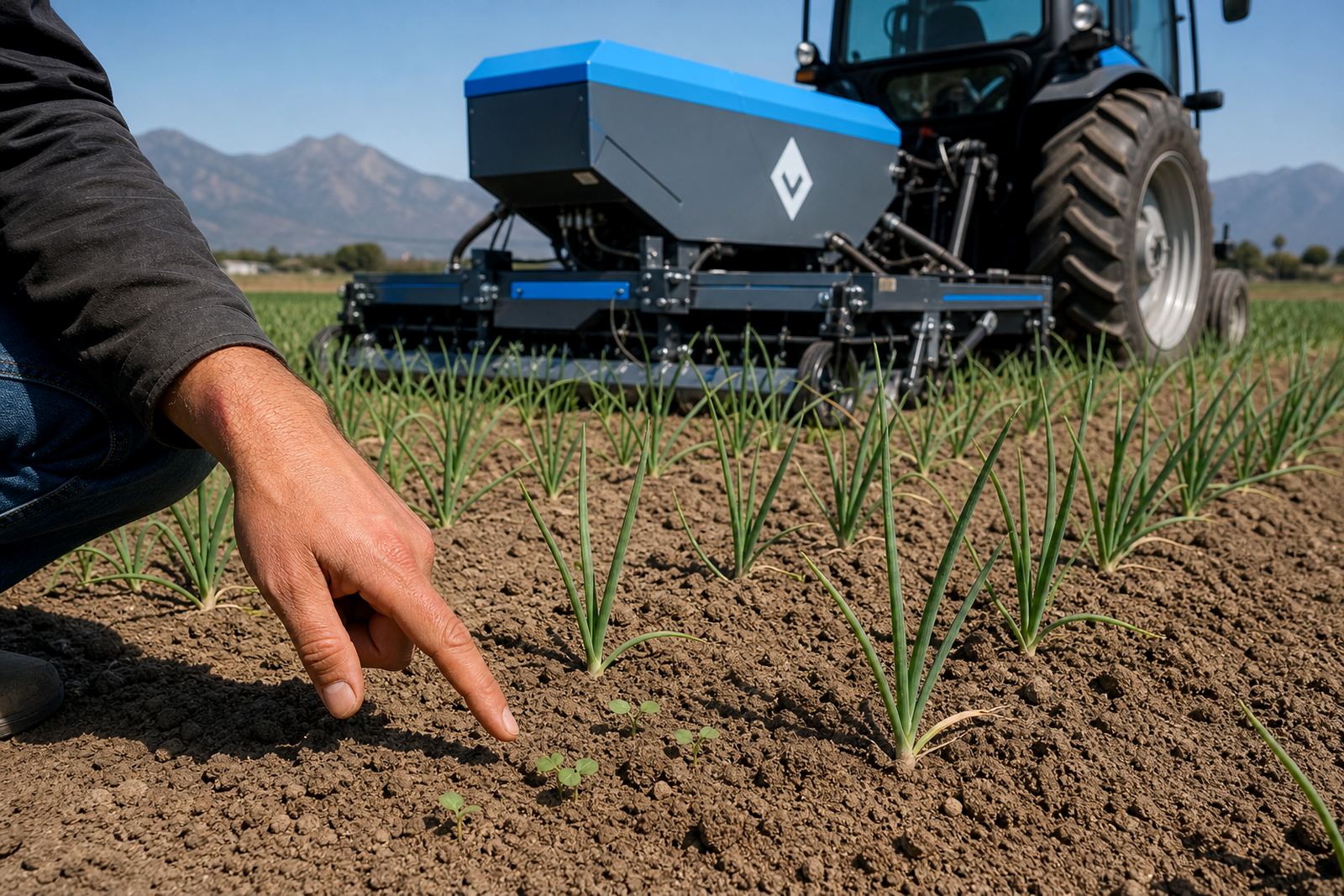
Area alone does not tell the full story. The stage of the weeds and the crop timing affect how the field is handled, because young weeds are easier to target and a cleaner pass plan may fit the block better than a late, crowded one. If a field has patches with different weed stages, note them separately rather than averaging the whole crop.
It also helps to note whether the block is due for first pass, repeat pass or a trial strip run. A first discussion about area should say if the crop is newly emerged, mid growth or already at a later stage where the canopy is closing. That detail helps us read the block properly before field scheduling is set.
- Young weeds and older weeds need different attention
- Separate blocks with different crop stages
- Note first pass, repeat pass or trial strip
- Watch for canopy cover in later plantings
Field notes that help a first quote discussion
When you send your area figures, a few extra notes can save guesswork. Mention the farm location, the crop list, the number of blocks and whether the fields sit close together or across different areas. If a block is on sandy soil, heavier ground or a windy site near the coast, say so, as travel and field order may be planned around local conditions.
For growers in Philippi, Ceres, Grabouw, Tzaneen, Bela-Bela, Nelspruit, Howick and Bethlehem, the same rule holds: clear block data is better than a broad farm total. A 12 hectare farm may not be one 12 hectare job at all. It may be four smaller blocks, each with its own crop stage and field pattern.
- Farm name and nearest town
- Crop type and planting date where known
- Number of blocks and their sizes
- Soil type, access track and waterlogged areas
What to prepare before our contact form
If you are setting up a first quote discussion, prepare a short list of block sizes and crop details. A hand drawn map, a field sketch or a marked aerial view is useful, but plain notes work too if the measurements are clear. Keep the figures in metres where possible, and add hectares only after the conversion.
Our contact form is the place to send the area notes, crop list and any site details that affect access or scheduling. The team in Philippi, Cape Town handles field assessments, crop timing plans, operator supplied work, travel coordination, trial strip runs, repeat pass planning, season bookings, multi farm programmes, arrival site checks and post pass reporting for growers across South Africa.
- Measured block sizes
- Crop type per block
- Headland and turning space
- Any site access notes or field restrictions