Start With The Block That Needs Attention First
When you ask for a crop assessment, begin with the block that is most urgent or the one that will shape the rest of the season. For vegetable farms, that usually means a row crop where weeds are already in the row or starting to close over the crop line. Onions, carrots, lettuce and brassicas are common examples, but the same visit notes help on other planted rows too.
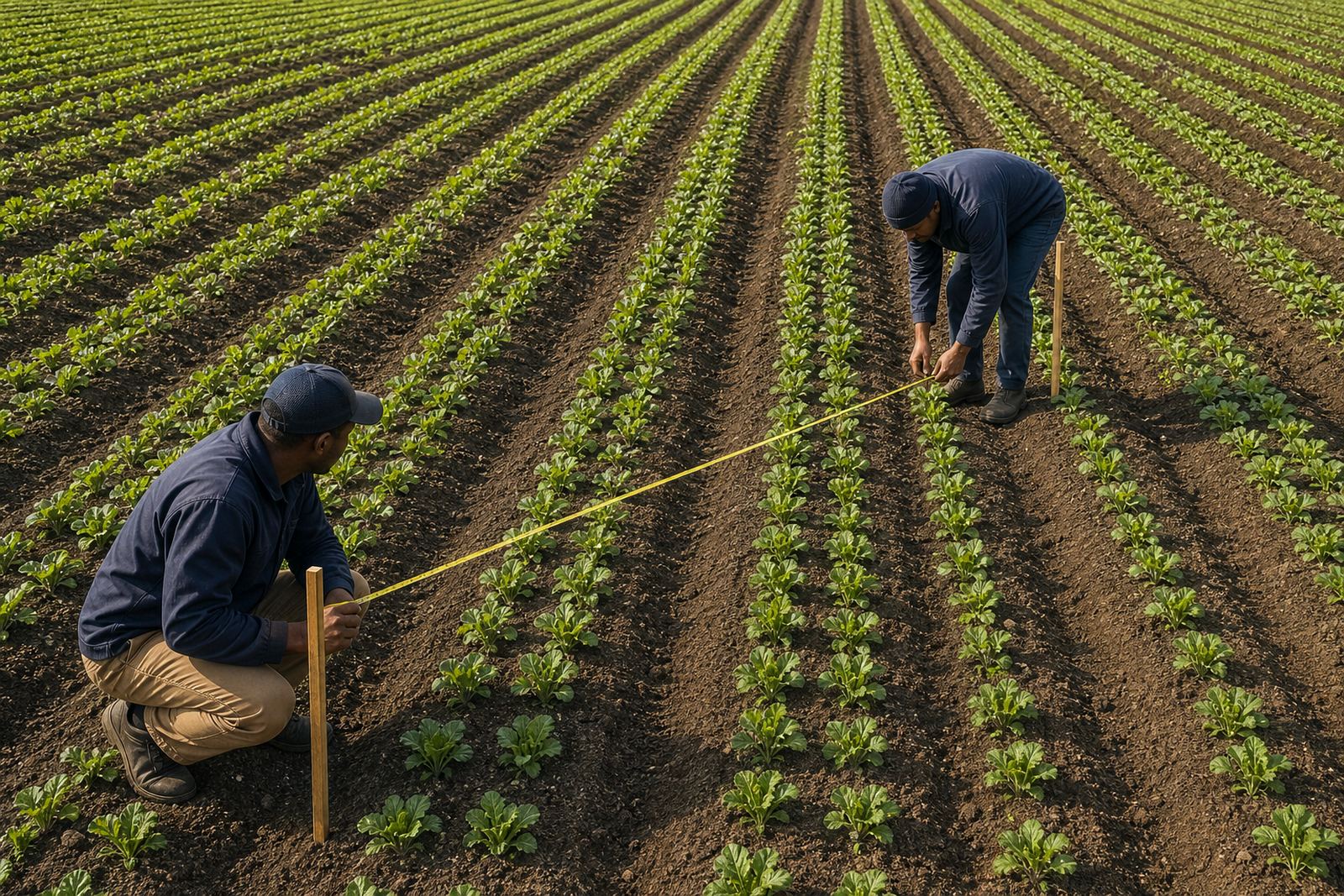
It helps to describe the crop stage, row spacing and whether the block is newly emerged, mid-season or close to canopy closure. Laser weeding works best when weed timing is sensible, because the system targets weed growing points and needs a clear view of the weed. A young weed is easier to manage than one that has already thickened out, so the stage matters.
The Details That Make Planning Easier
A field visit is easier to set up when the basic farm details are ready. This saves time on back and forth and gives the team something solid to work with before arrival. If the crop sits on more than one farm, note that as well, because multi farm programmes need route planning and travel coordination.
- Farm name and the exact block name or block number
- Crop type and planting date, if known
- Row spacing and bed width
- Weed pressure, light or heavy
- Whether the crop has been hoed, sprayed or handweeded already
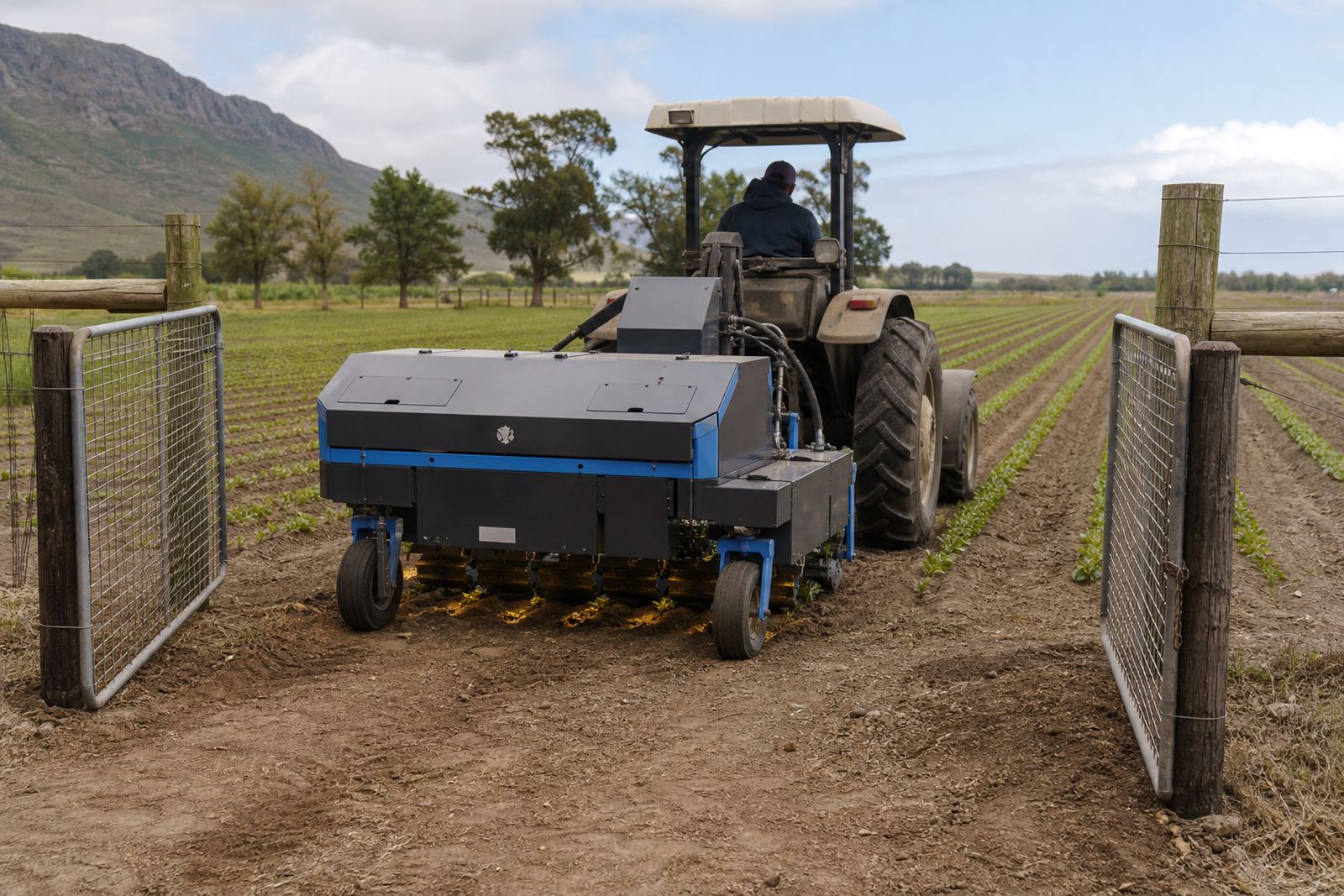
- Access roads, gate instructions and turning space for a tractor-drawn unit
- Any known wet spots, steep patches or soft ground
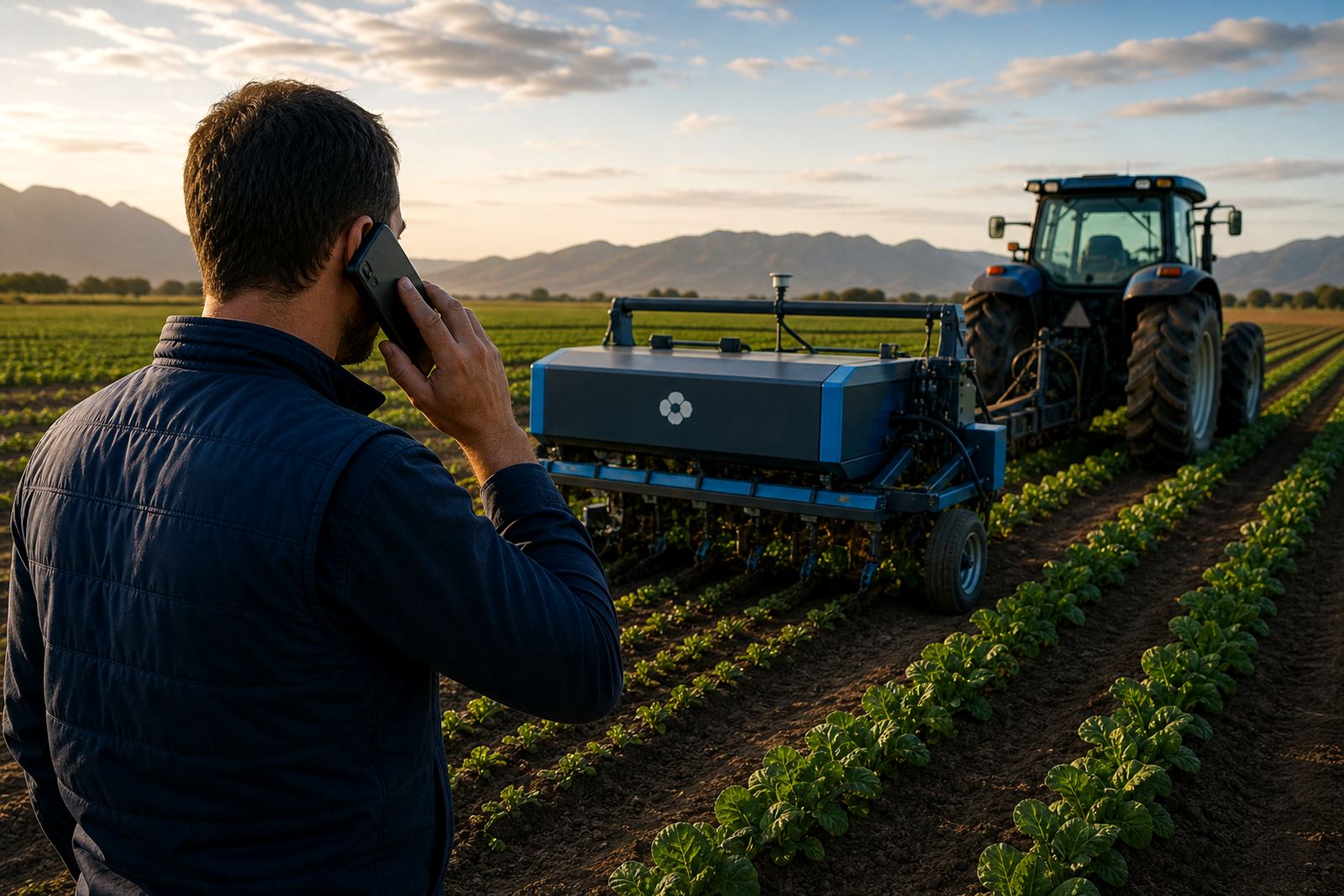
If you have a field map, a marked photo or a rough sketch, that is useful. Even a phone picture of the block entrance can help when the farm layout is awkward or the signage is thin.
What The Team Needs To See On Site
An on-site assessment is not only about the crop line. It is also about how the machine will move, where it can turn and whether the block can be worked without unnecessary disturbance to the soil. Laser weeding is a tractor-drawn process, so access tracks, headlands and turning points matter almost as much as the crop itself.
The visit usually looks at weed size, crop spacing and the amount of leaf cover hiding the row. If weeds are too advanced, the plan may shift to a trial strip run first or to a repeat pass plan after the initial visit. Field speed depends on weed pressure and the amount of sorting the system must do as it moves through the block.
- Headland width for entry and exit
- Any irrigation fittings or exposed lines near the row
- Block shape, especially narrow ends or odd corners
- Soil condition after rain or irrigation
- Visibility in the row for camera-guided weed detection
Timing Your Booking Around Crop Stage
Laser weed control depends heavily on timing. A visit booked too early can be hard to judge if the weeds have not emerged evenly. One booked too late can leave less room for clean targeting, especially where weeds are already stronger than the crop line. That is why crop stage and weed stage need to be mentioned clearly from the start.
If you want a season booking, it helps to map the likely windows for the first pass and any repeat pass planning. Farms in Philippi, Ceres, Grabouw, Tzaneen, Bela-Bela, Nelspruit, Howick and Bethlehem all work to different calendars, so local weather, planting date and crop pace should sit in the notes. The same unit can be moved from one region to another, but the order of the blocks needs thought.
What Happens During The Visit
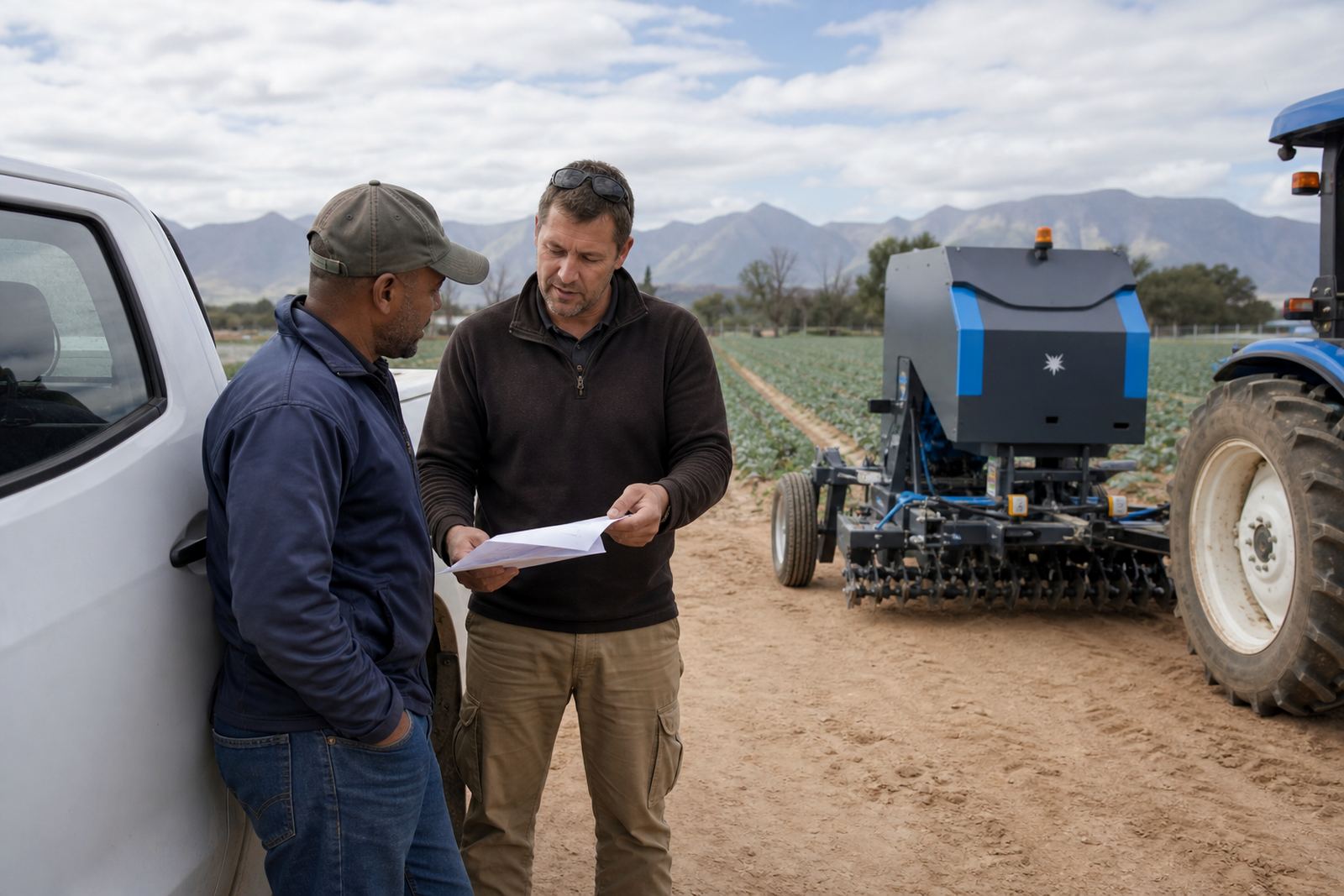
A visit usually begins with an arrival site check, then a walk through the block with the grower or farm team. The operator and field team look at the crop line, weed pressure and access points before deciding whether the block is suitable for laser weeding at that stage. If the crop suits the system, the team may suggest a trial strip run before a wider pass is planned.
After the check, the schedule can be shaped around the actual field conditions. That may include operator supplied service, travel coordination, post pass reporting or a simple one off visit if the block is small. For bigger farms, a multi farm programme can be set out so the route makes sense across the week and the machine is not moving in circles across the province.
A Short Checklist Before You Send The Request
The cleanest booking requests are the ones that answer the field questions up front. You do not need a long report, just enough detail to let the team judge the crop and the route. If some items are not known, that is fine, but the more you can share the better the first site plan will be.
- Crop name and block location
- Approximate planting date
- Current weed stage
- Farm access notes and gate rules
- Need for a field assessment, trial strip run or full service date
- Any preferred dates for the visit
Use our contact form on the contact page and include those notes in the message body. That keeps the request tidy and gives the team something practical to work from before the block is visited.