The block layout and the brief from Wolseley
The site sat on level beds with generous row spacing and headlands wide enough for a tractor-drawn unit to turn without rough handling. The grower wanted a contract pass that could target weeds between plants and along the row shoulders, while keeping the brassica crop untouched and the soil surface undisturbed.
It was a practical trial rather than a broad farm programme, so the brief stayed focused on timing, access and crop stage. The field had enough room for guided movement, but the spacing still demanded careful setup because brassicas do not give much margin once the canopy starts closing.
- Crop type: brassicas on even beds
- Field shape: straight runs with accessible headlands
- Objective: laser weed control without herbicide sprays
- Method: tractor-drawn unit with a trained operator
What the field needed before a laser pass
Laser weeding works best when the crop rows are readable and the weeds are at the right growth stage. Small, upright weeds are easier to target than older plants with thicker stems or folded leaves, so the timing of the pass mattered as much as the machine itself.
We walked the block first and checked row definition, bed uniformity and the amount of volunteer pressure. The accessible headlands helped, but the field still needed clean entry points and steady travel lines to keep the camera-guided system reading the crop properly. In vegetable ground like this, a slight mismatch in stage can shift the field speed and change how long the pass takes.
- Weed stage: early enough for laser targeting at the growing point
- Crop stage: established rows with clear separation from the weed line
- Field access: tractor entry, turns and exits kept open
- Timing note: pass speed adjusted to weed pressure and bed condition
The kit, the operator and the working method
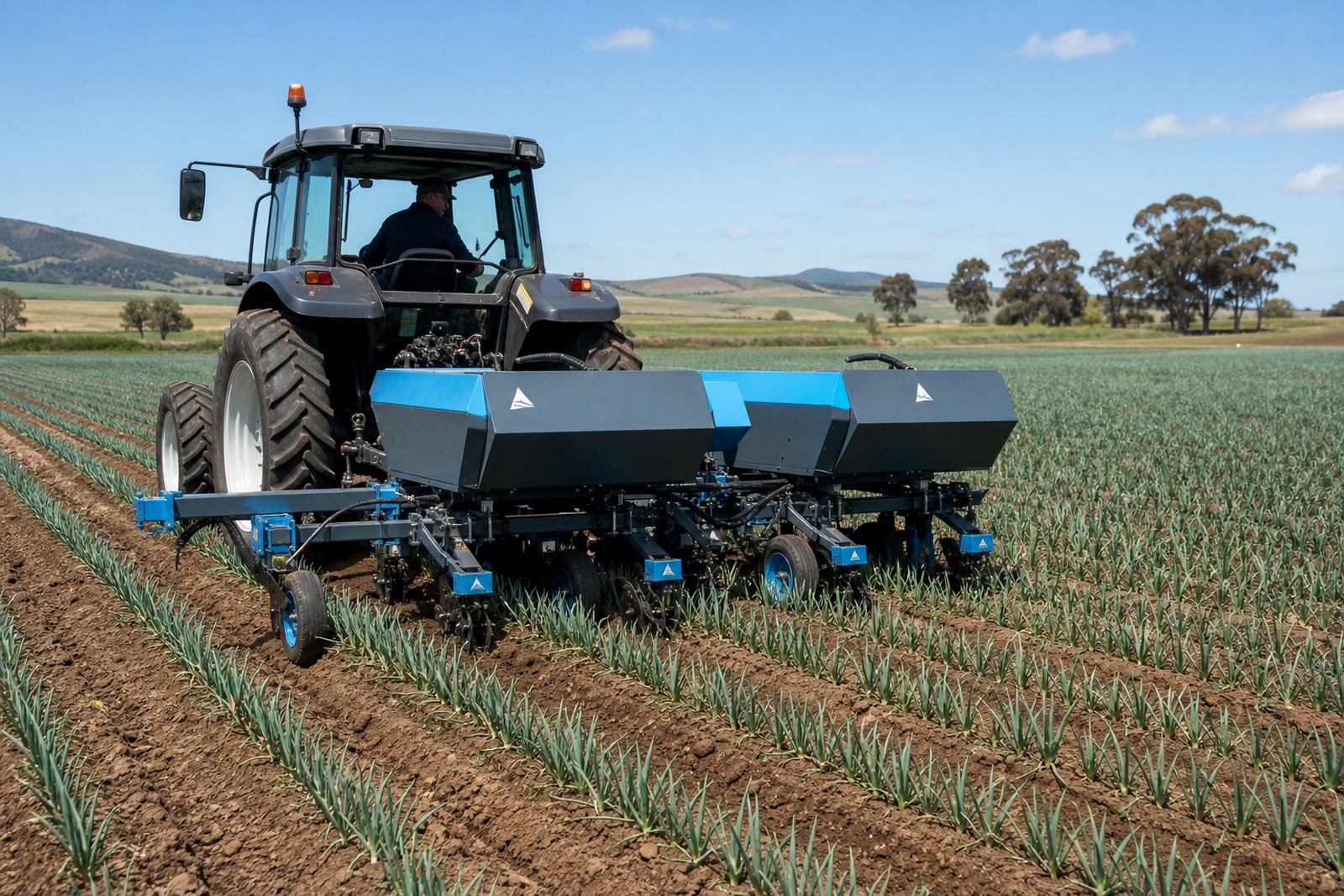
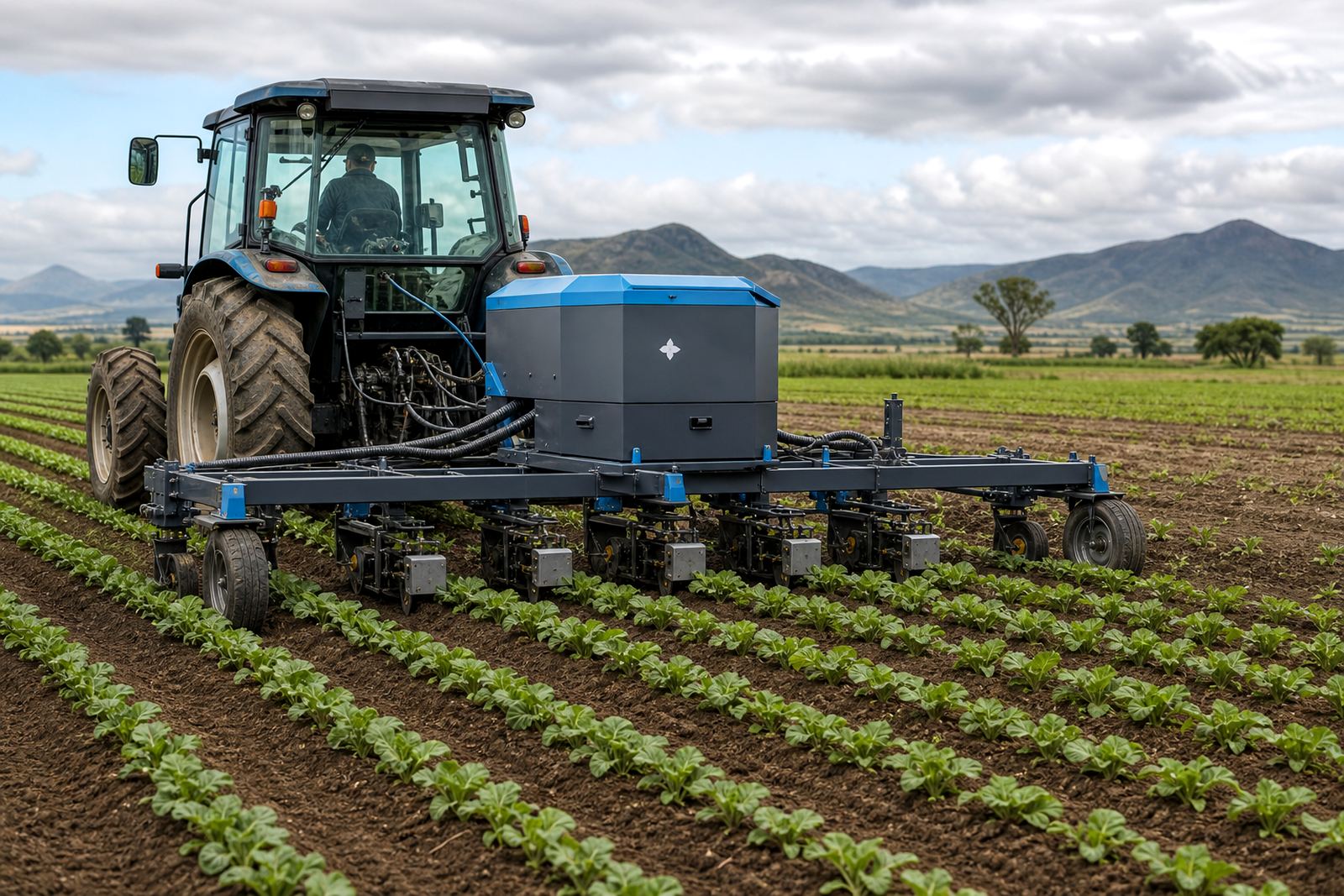
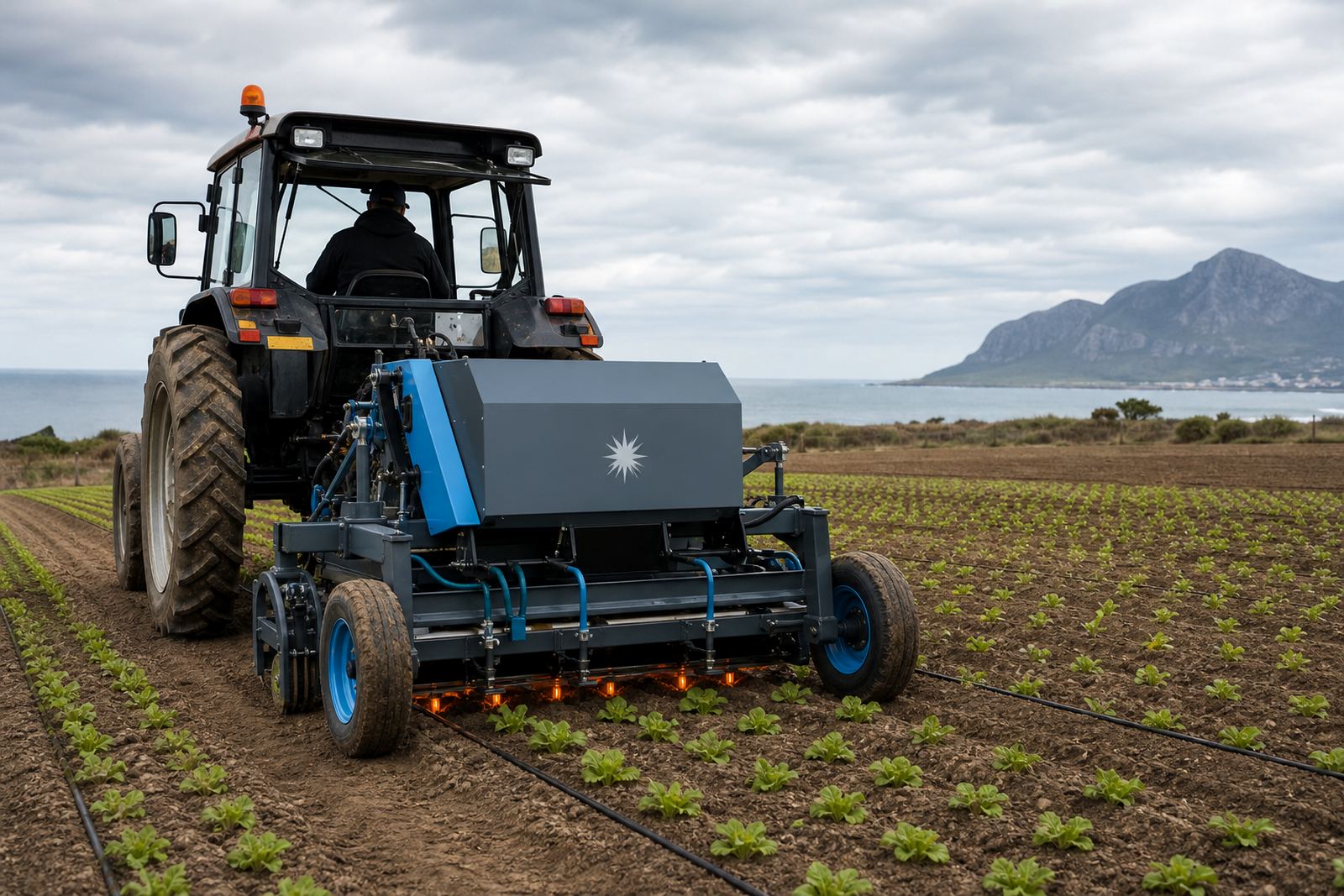
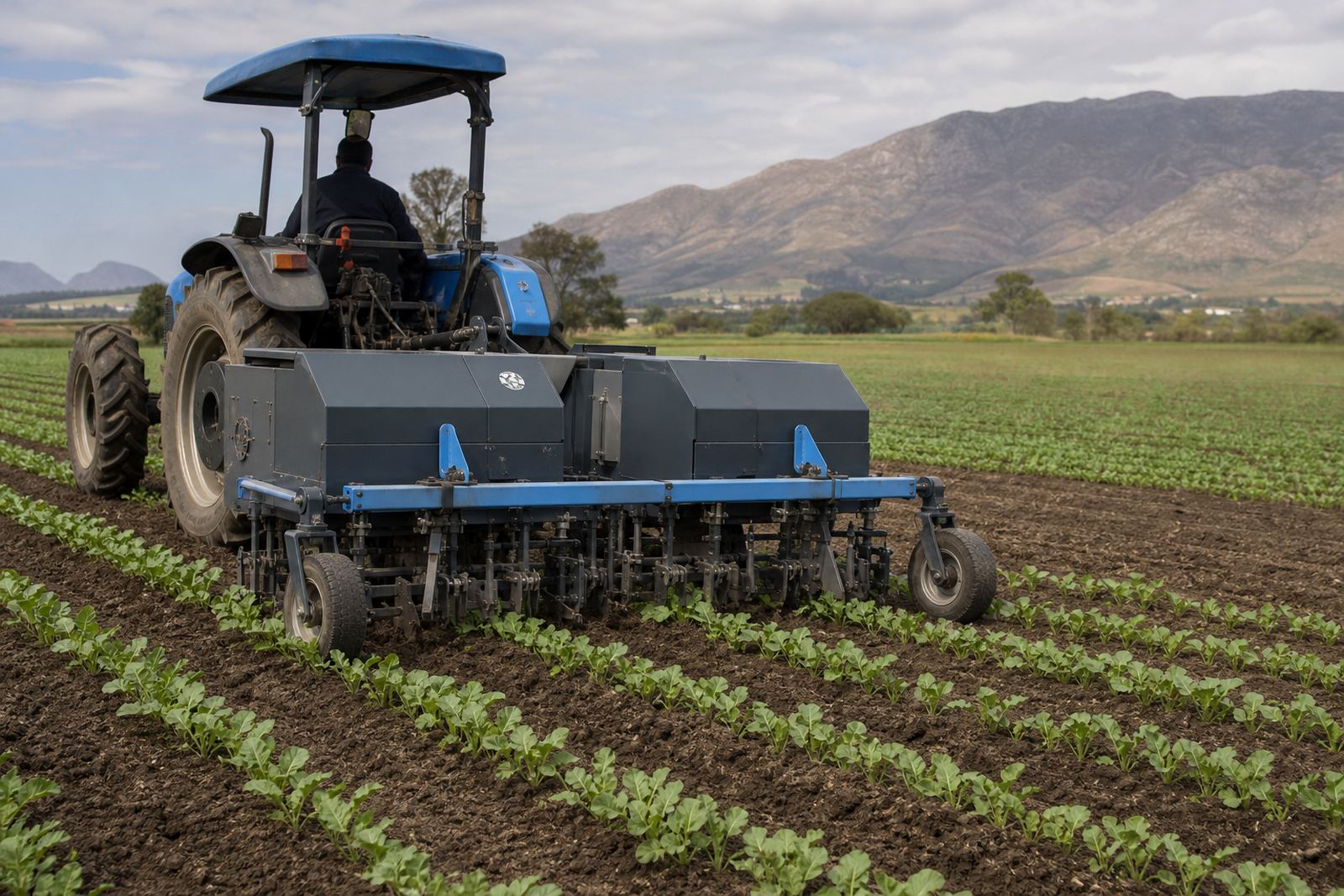
We supplied a tractor-drawn laser weeding unit with a trained operator on the day, plus field scheduling around the crop window. The system used camera guidance to detect weeds in the row zone, then directed laser energy at the growing point rather than disturbing the soil. That made it suitable for a brassica block where the grower wanted a non-chemical pass and did not want cultivation marks across the beds.
The operator watched the travel line, the crop spacing and the weed density together, because each one affects how the unit behaves in the field. We also kept the setup practical for a working vegetable farm, with room for turning, a steady tractor pace and enough time for checks at the start of the block.
- Tractor-drawn laser unit for contract field work
- Camera-guided weed detection between and around crop plants
- Laser targeting on the weed growing point
- No herbicide spray and no soil disturbance from cultivation
How the two-week programme was handled
The job ran as a short programme over two weeks, beginning with the field assessment and ending with post-pass reporting. The first week covered the walk-through, the timing check and the trial strip run. That strip gave the grower a live read on how the crop spacing, weed density and travel speed were lining up before the full block was worked.
In the second week we returned for the booked pass and then reviewed the treated rows with the grower. We also noted where weeds were denser at the headlands, because those areas often need different attention from the straight centre runs. The report stayed grounded in what was seen on the day, not in broad promises about the whole season.
- Week 1: assessment, crop timing plan and trial strip run
- Week 2: scheduled pass and post-pass review
- Field notes: headlands, row definition and weed pressure recorded
- Follow-up: repeat pass planning discussed for later growth stages
What stood out in the treated rows
The main gain was precision. The brassica rows stayed intact, the soil surface was left in place and the pass focused on weeds that were still in an early growth window. Because the block had even beds and clear spacing, the unit could work more confidently than it would in broken ground or a field with loose plant alignment.
The grower could see where the weed pressure sat heaviest and where timing would matter most for any later pass. That kind of note is useful on vegetable farms, especially where a second programme may be needed before the canopy closes further. The block also showed why clean headlands help, since tractor movement is smoother and the operator can keep a steadier line.
- Crop safety: targeted work stayed off the brassica plants
- Soil condition: no cultivation marks from the pass
- Planning value: clearer timing for a repeat visit if needed
- Operational note: headlands made the turns easier to manage
What we would carry into the next brassica block
We would handle a similar brassica job with the same sequence: field assessment first, then a crop timing plan, then a trial strip before the full pass. On a block with clear rows, that order gives the grower a better sense of how the unit will move through the field and how the weed stage is lining up.
For farms in and around Wolseley, the key is to avoid leaving the timing too late. Once weeds harden off, the laser has less room to work at the growing point and the pass becomes slower in heavier patches. A clean access plan, a sharp field walk and a properly scheduled tractor slot all matter just as much as the machine itself.
- Start with the crop stage, not the calendar
- Use the first pass to test row reading and weed density
- Keep headlands open for steadier tractor movement
- Plan for repeat pass work where later flushes appear
Key facts
| Project | Wolseley Brassica Block |
|---|---|
| Town | Wolseley, Western Cape |
| Crop | Brassicas on even beds |
| Method | Contract laser weeding with tractor-drawn unit |
| Programme length | 2 weeks |
| Service bundle | Field assessment, trial strip run, field scheduling, post-pass reporting |