The Estcourt brassica block and the brief on the table
The client was a brassica grower outside Estcourt, working a block where early weed flushes were getting ahead of hand hoeing plans. The field carried tight row spacing and young transplants, so the brief was not about chasing every plant in the soil, it was about keeping the crop workable while protecting stems, roots and the soil surface.
The grower wanted a contract laser weeding trial that could show how a tractor-drawn unit fits into a brassica programme. That meant looking at spacing, row uniformity and the stage of weeds already present. Brassicas can give a narrow window for intervention, especially where moisture and warmth push a flush quickly after planting, so timing sat at the centre of the plan.
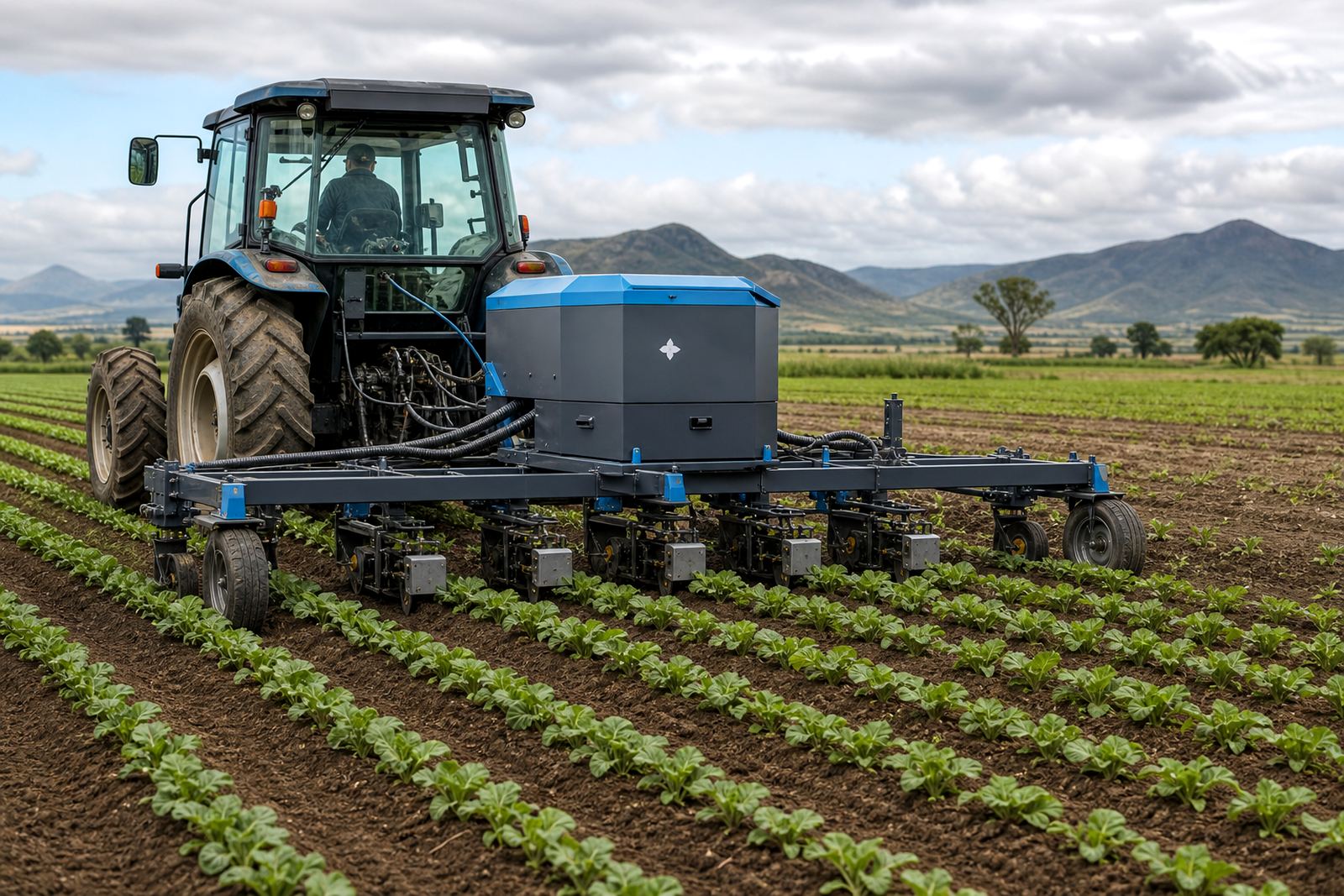
We also had to work within the practical layout of the block. Headlands needed room for a tractor-drawn system, turning space had to be checked, and the crop rows had to suit camera-guided detection. The job was set up as a trial strip rather than a full-field pass, which gave the grower a clear view of what the system could do in that specific block.
- Client type: brassica grower
- Town: Estcourt
- Crop focus: brassicas in narrow rows
- Trial style: planned strip run with field notes
- Main concern: early weed flush control without soil disturbance
What had to be judged before the tractor entered the block
The first part of the work was a field assessment. We looked at row spacing, crop uniformity, weed stage and the places where young brassicas would be most vulnerable. Laser weeding depends on seeing a weed clearly enough for the cameras to identify it, then targeting the growing point with a short burst of energy. If the weed is too small, too buried or too mixed into crop leaves, the pass loses value.
That is why weed stage matters. The best window is often when weeds are small and active, before they have a thick canopy or a strong stem. In the Estcourt block, the aim was to catch the early flush before it turned into a heavier management problem. We also checked moisture and soil condition, because the method is designed to work without disturbing the soil surface, and that suits growers trying to avoid new germination from cultivation.
For this kind of trial, the operator needs enough room to keep speed steady. Field speed is not fixed, it changes with weed pressure, row shape and how much detail the cameras need to process. A cleaner block can move differently from one with dense weeds in patches, so we built the plan around the roughest sections instead of assuming the whole field would behave the same way.
- Crop spacing was checked against the unit's camera view
- Weed stage was read for early, active growth
- Headlands and turning space were measured for tractor movement
- Weed pressure was mapped by patch, not by a single field average
- Soil disturbance had to stay out of the equation
How the trial was run across the first two weeks
We scheduled the work in stages over two weeks. The first week was for assessment, crop timing and strip selection. That included checking where the crop stood after establishment, deciding which rows were ready, and setting out the section that would show the clearest comparison for the grower. The second week carried the actual trial strip run with the tractor-drawn laser unit and trained operator on site.
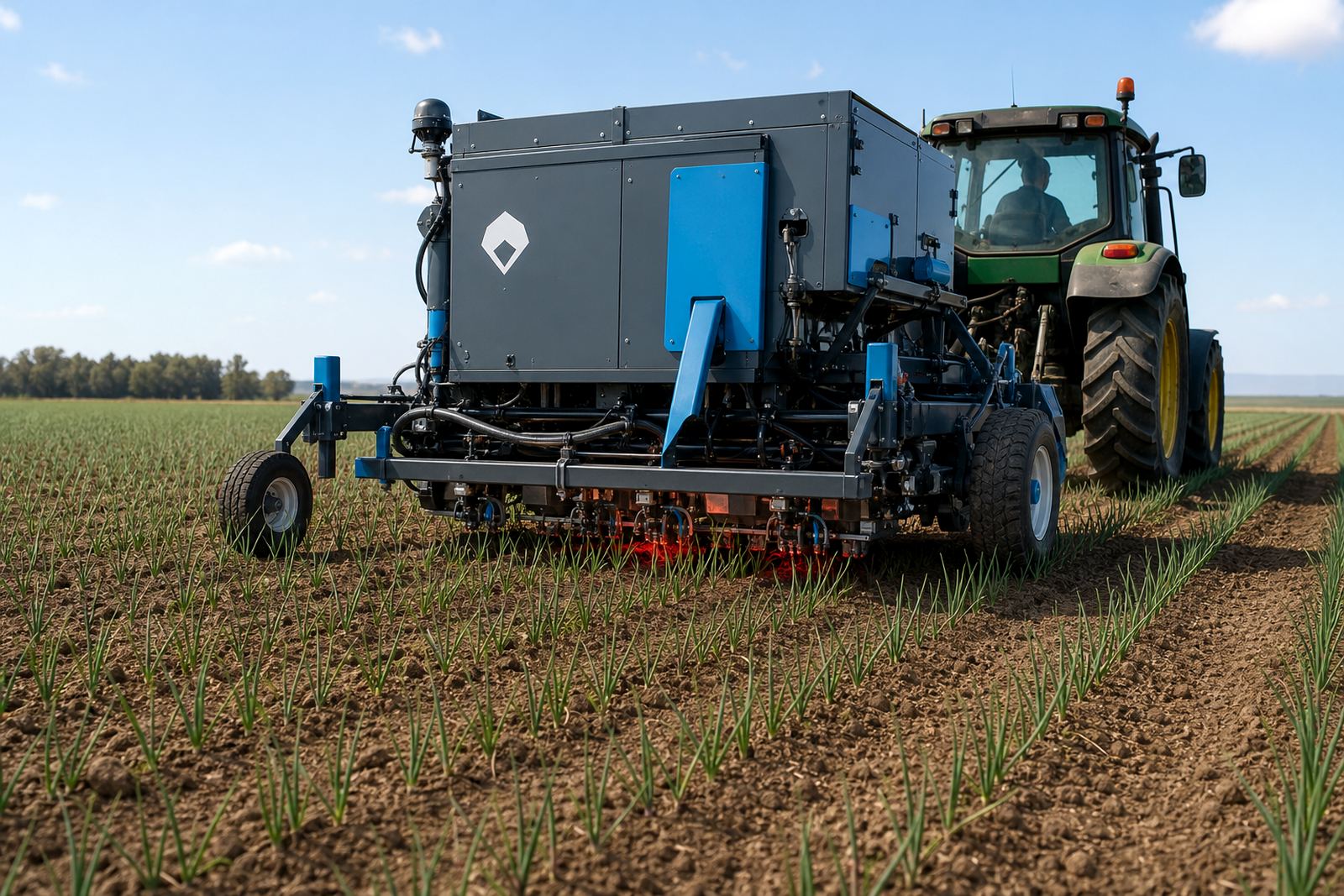
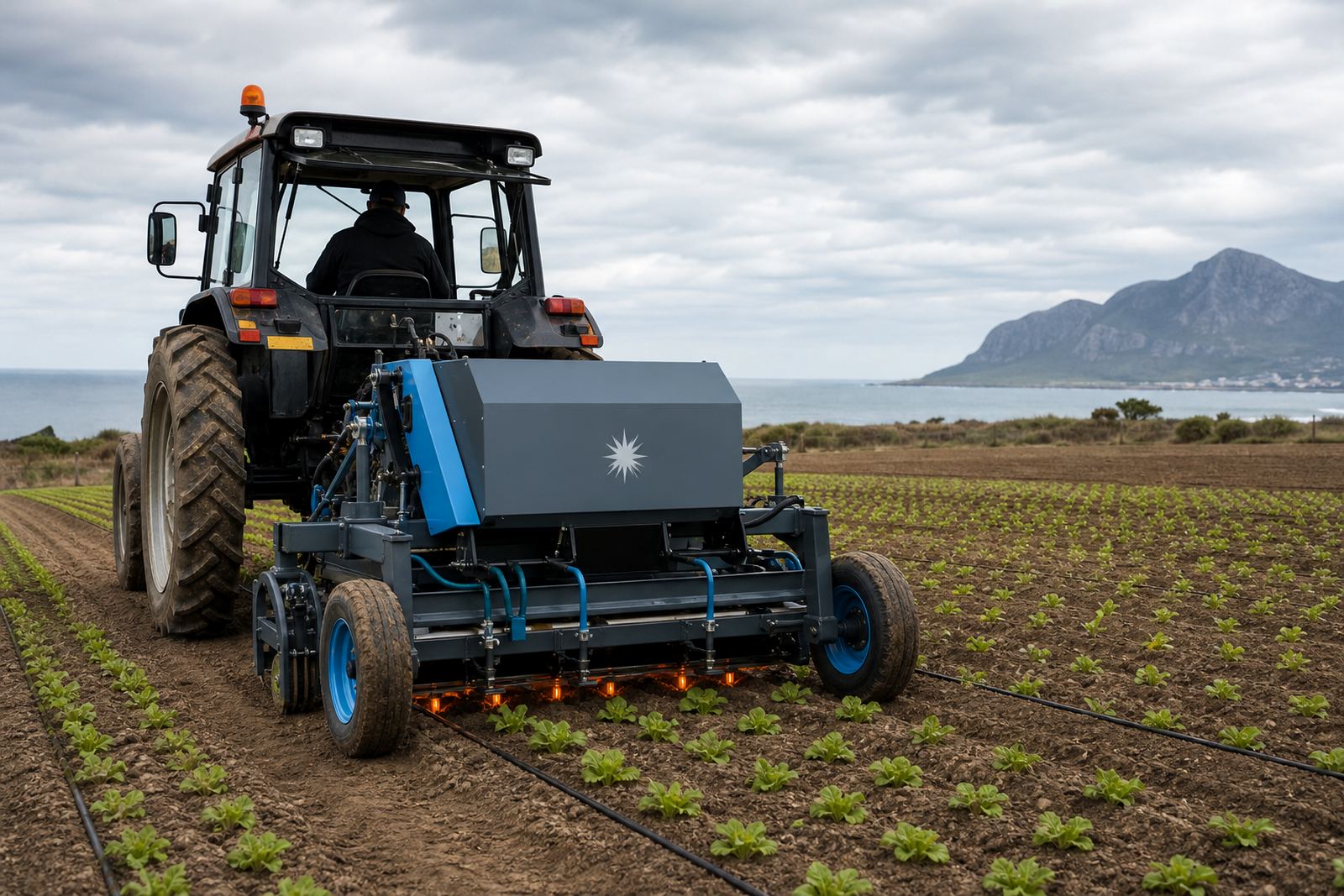
During the pass, the operator worked with the cameras and onboard targeting system to detect weeds between and around the crop plants. The lasers were directed at weed growing points, which is the part of the weed that has to keep developing if the plant is going to recover. For brassicas, the key is to stay accurate around the crop while handling weeds in the open spaces between rows and close to stems where manual work can be slow.
We handled arrival site checks, field coordination and the report notes after the pass. The grower also wanted a repeat-pass discussion, because one trial strip rarely tells the full story on a vegetable block. A field can need more than one visit depending on the next flush, the weather and the stage of crop cover. That planning was included from the start rather than left for later.
- Week 1: field assessment and strip selection
- Week 2: tractor-drawn laser pass on the trial section
- Operator support: supplied with the unit
- Coordination: arrival checks and site direction on the day
- Follow-up: repeat pass planning and post pass notes
What the grower needed to see from the pass
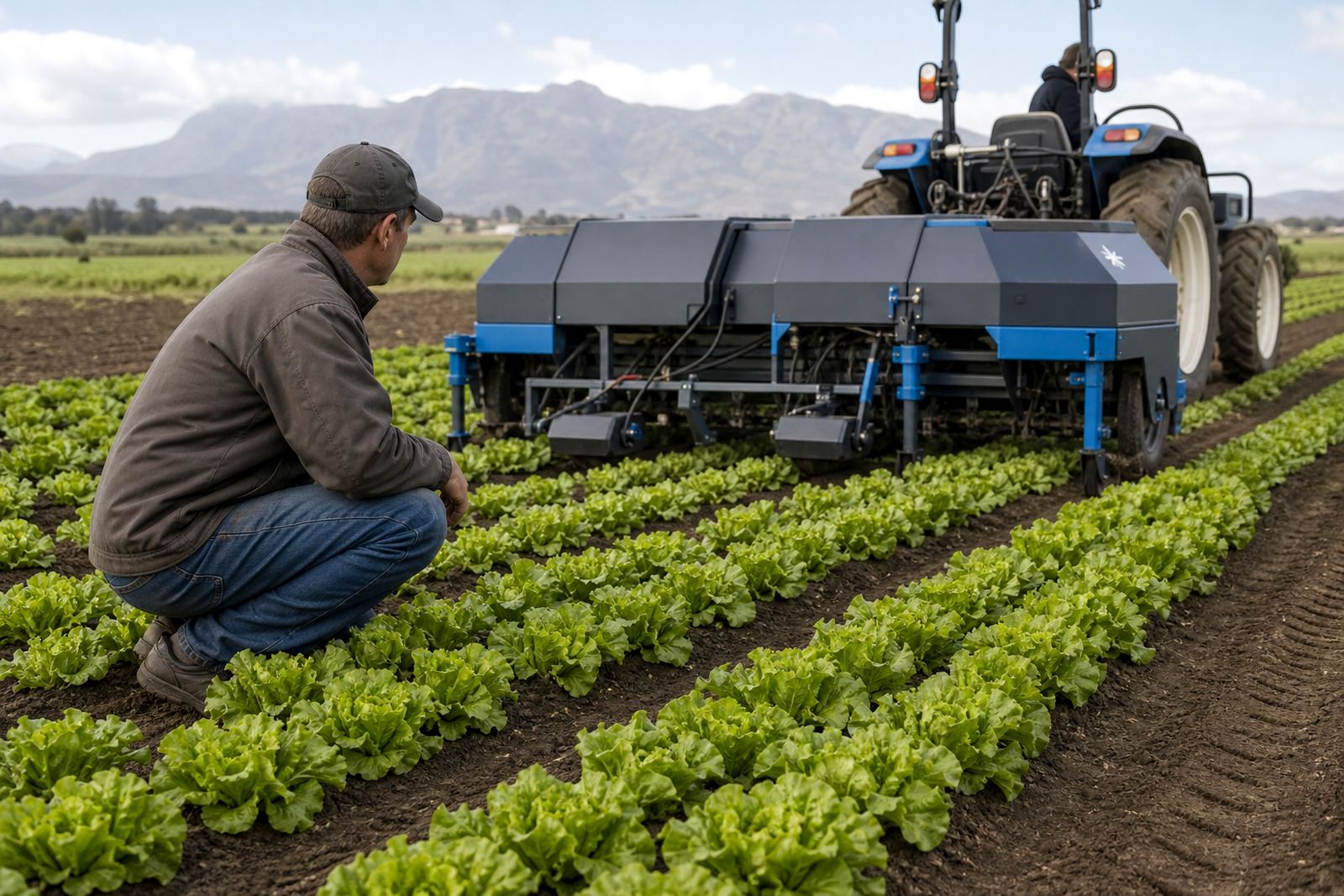
The grower was not looking for a marketing story, only a practical read on whether the method fit brassicas in that district. The report needed to show where the trial was cleanest, where weed pressure asked for a slower pace, and how the crop sat after the unit moved through. No one wanted grand claims. The useful part was the detail.
What stood out was the absence of soil movement. That matters in vegetable work because every cultivation pass can trigger another weed cycle if the soil is turned. The laser method keeps the surface intact, which suits blocks where growers are trying to stay on top of weeds without dragging up new seeds. It also avoids herbicide spray use, which was part of the reason the trial was requested in the first place.
The field notes from the strip run gave the grower a base for future timing. Brassicas can close over the row fairly quickly once they settle, but early weed flushes still need attention before the crop canopy helps much. On this block, the timing and spacing were close enough to make a trial meaningful, and the grower could judge whether to extend the work into a wider programme.
- Herbicide-free weed removal was part of the brief
- No soil disturbance was needed for the pass
- The strip run gave a practical timing reference
- The grower could compare clean rows with heavier patches
- Post pass reporting helped guide the next field decision
What we supplied for the Estcourt trial
For this brassica block we supplied the tractor-drawn laser weeding unit, a trained operator and the field coordination needed to keep the trial moving in the right order. Our team handled the practical side, from crop timing discussions to site checks and travel coordination. That way the grower could focus on the block itself rather than on moving parts.
The service also included grower consultation around the next steps. If a block has a strong early weed flush, then one pass may only form part of the season plan. We looked at repeat pass planning, multi farm booking possibilities and season booking options for later in the crop cycle. That is common in vegetable work, because timing changes from one block to the next and one district to another.
Our base in Philippi, Cape Town supports growers across the Western Cape and other producing areas including Limpopo, Mpumalanga, KwaZulu-Natal and the Free State. For Estcourt work, the important point was not where the unit sits on a map, but whether the field schedule, travel arrangement and crop stage line up properly on the day.
- Tractor-drawn laser weeding unit supplied
- Trained operator included
- Field assessments and crop timing plans
- Travel coordination and arrival site checks
- Repeat pass planning and post pass reporting
What the trial showed and what stays useful next
The trial showed that brassica blocks can be assessed for laser weeding when row spacing, crop stage and weed flush conditions are read carefully. It also showed that the best results in this kind of work come from timing, not from rushing in too early or leaving the weeds to harden off. The value sits in matching the machine to the field condition, not the other way around.
For this Estcourt grower, the useful outcome was a clear field picture for future passes. The block had enough uniformity to make the strip run worthwhile, and the weed pressure was early enough to suit the method. That gave the grower a practical basis for deciding how to handle the next flush and whether to schedule further work across the crop cycle.
If we were handling a similar brassica block again, we would keep the same structure: assess the spacing first, set the strip around the weed stage, and build the schedule around the block rather than the calendar alone. That is the part that keeps the work grounded in the field, where it actually matters.
- Best fit came from early weed stage and usable row spacing
- Timing mattered more than blanket field coverage
- Field notes gave the grower a basis for follow-up planning
- Herbicide-free treatment suited the block objective
- Soil stayed undisturbed through the pass
Key facts
| Project | Estcourt brassica grower trial |
|---|---|
| Location | Estcourt, KwaZulu-Natal |
| Crop type | Brassicas |
| Service type | Contract laser weeding |
| Method | Tractor-drawn camera-guided laser unit |
| Programme length | 2 weeks |