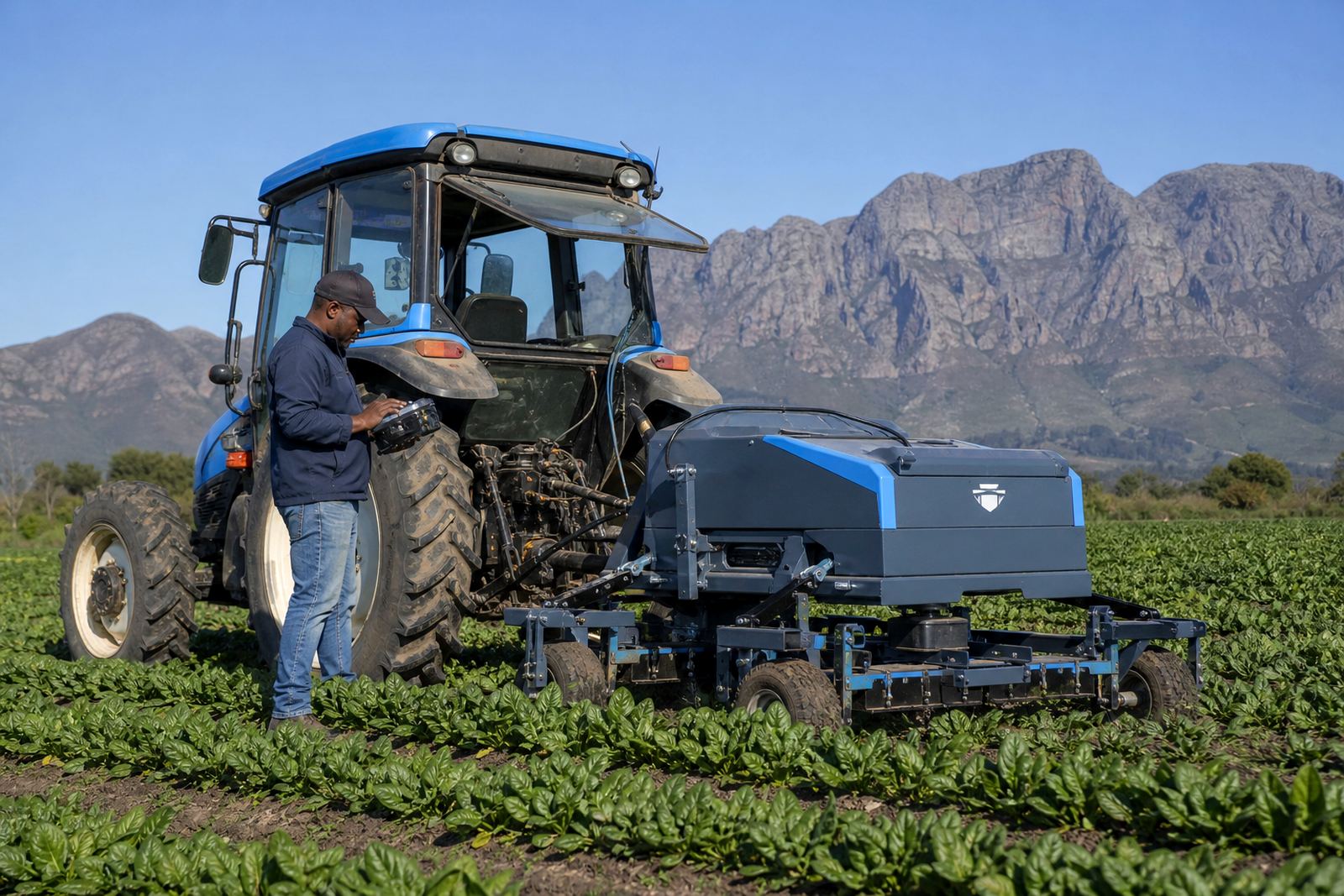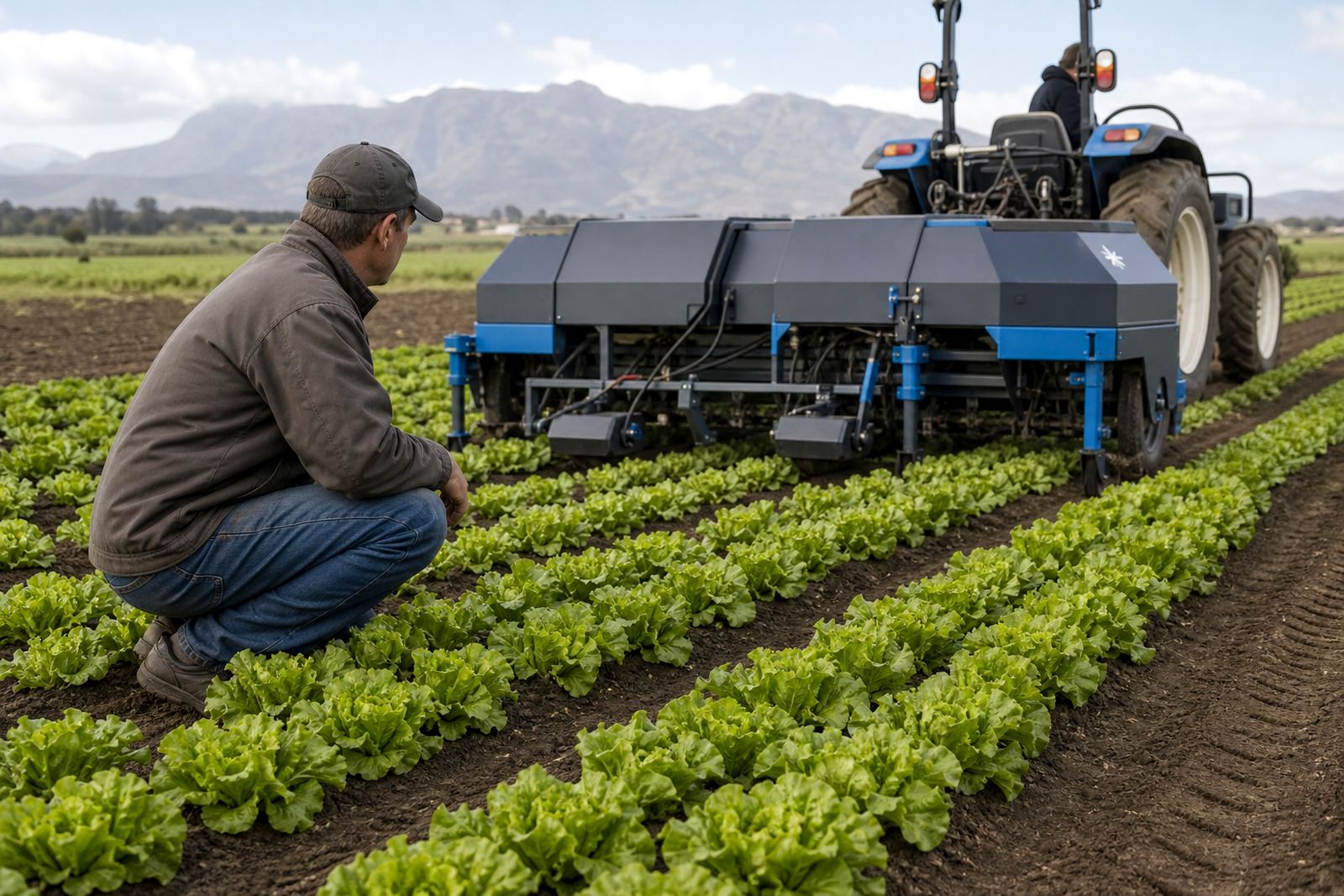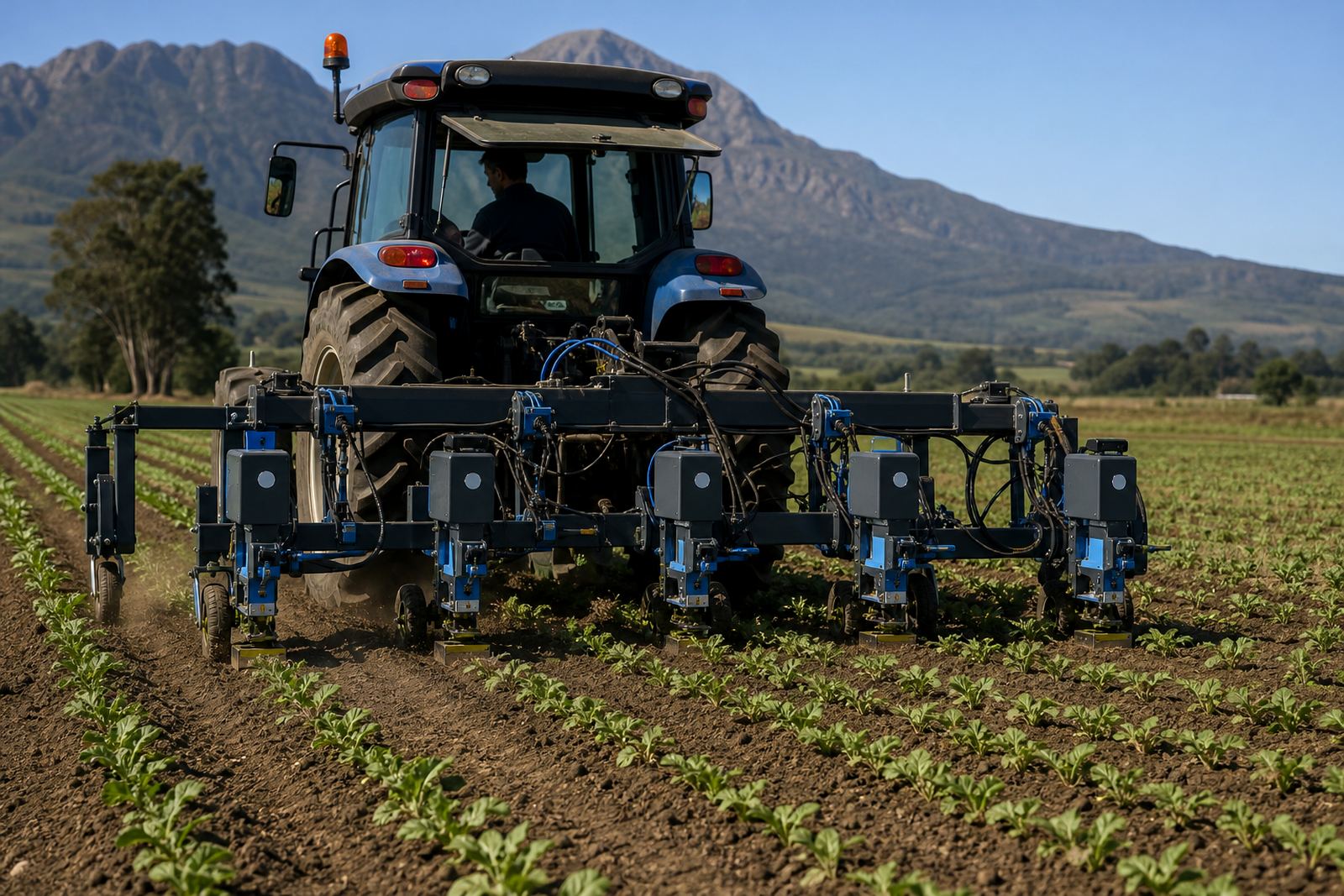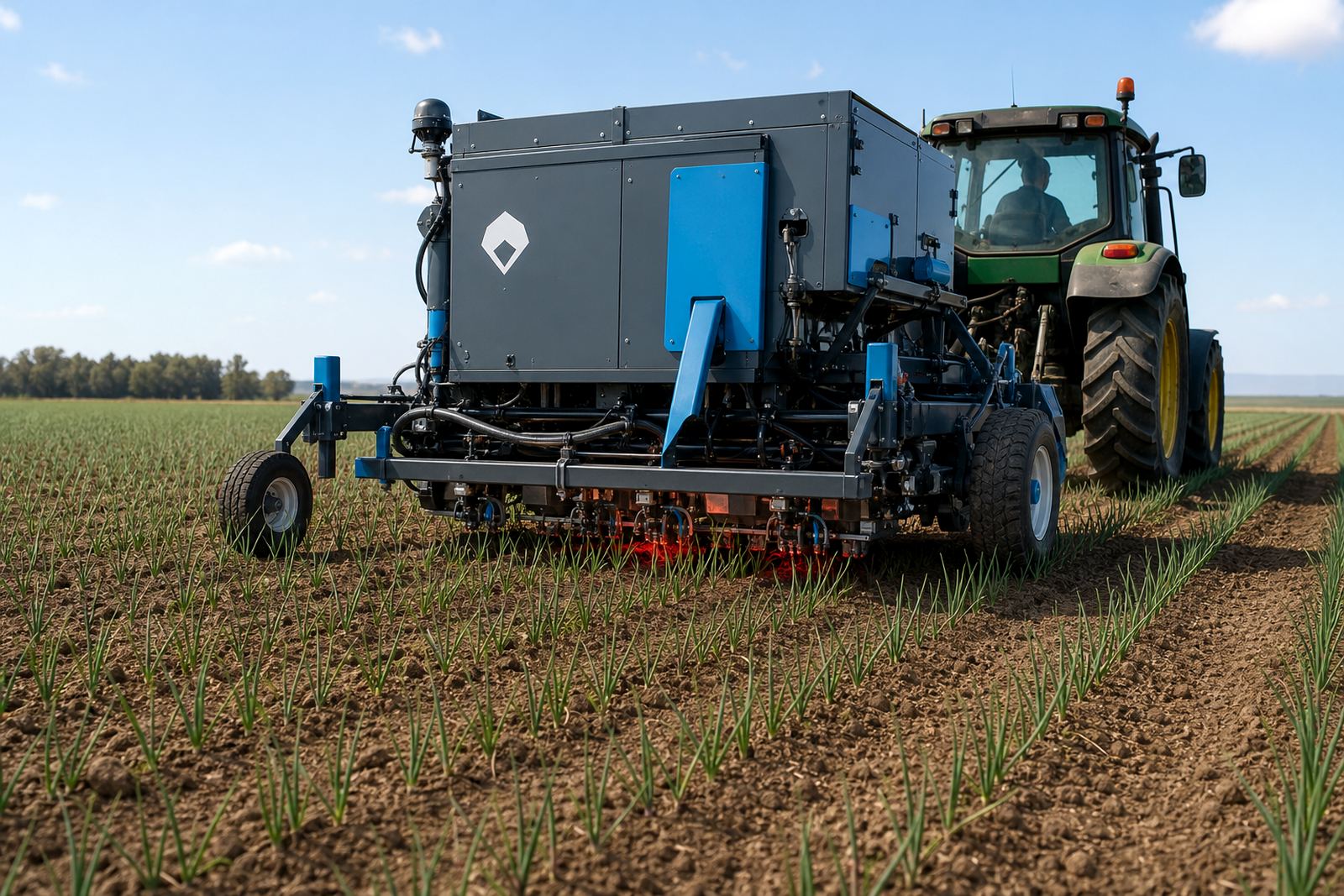
A northern onion block with a tight working window
The grower needed contract laser weeding on onions in Bela-Bela, with the block set far enough from our Philippi, Cape Town base that route planning mattered as much as the field work itself. Onion rows leave little room for error, so the brief asked for weed control between and around plants while keeping the crop stage in mind and avoiding soil movement.
The field sat in a warm inland area where weed growth can move quickly after irrigation or summer rain. That meant the timing had to match weed stage, not just the farm diary. Small weeds are easier to target because the laser can strike the growing point, while larger weeds need more careful pass planning and slower field movement.
What the grower asked us to cover
The client wanted a tractor-drawn laser weeding setup with a trained operator, plus practical scheduling around travel distance and field access. The onion block was not the only stop in the area, so the route had to suit the farm sequence and the crop stage rather than forcing a single isolated visit.
- Field assessment for onion row spacing and weed pressure
- Timing plan for weed stage and crop size
- Operator supplied for the tractor-drawn laser unit
- Travel coordination across the Bela-Bela stop and the wider run
- Trial strip run before broader field treatment
The grower also wanted a record of what was treated and where the next pass might fit. That helped with planning the rest of the season, especially where the weed flush was uneven across the block.
How the pass was set up in the field
Our team started with an arrival site check and a short walk through the onion rows to look at weed size, row uniformity and any places where the crop was under pressure from edge growth. Laser weeding works best when the system can distinguish the crop from the weed and keep the beam on the weed growing point, so row clarity matters.
The unit worked as a tractor-drawn machine with camera-guided weed detection. The operator kept a steady pace that matched the field condition, because speed depends on weed pressure and how much detail the block demands. In heavier patches, slower movement gave better control, while cleaner rows could be worked more freely.
- No herbicide spray was used on the pass
- The treatment left the soil surface undisturbed
- Row crops like onions suit this kind of work when timing is right
- Weed stage shaped the field speed more than the farm size did
The schedule across travel distance
The Bela-Bela visit sat inside a wider schedule that also had to make sense for other vegetable growers in different regions. That meant the work was planned as part of a multi-farm programme, with travel coordination and field time grouped to reduce empty running where possible. For a contract operation, that planning matters just as much as the treatment itself.
Over roughly two weeks, the booking moved through assessment, the first trial strip run, the main pass and post pass reporting. The exact field sequence depended on weather, row condition and the amount of weed pressure showing at the time. Where the crop needed a follow-up pass later in the season, the repeat pass plan was set against the weed flush rather than a fixed date on a calendar.
What the onion rows showed after treatment
The main value of the project was controlled weed removal without spraying the crop. In onion rows, that matters because weeds compete closely with the plants and can build quickly between visits. The laser pass gave the grower a cleaner field profile and a better view of where pressure remained in the block.
The team also used the job to note areas where the weed distribution was uneven, which is common in vegetables where irrigation, soil texture and shade change across a single farm. That kind of detail feeds into later field scheduling and helps shape the next pass or the next crop timing plan.
- Weeds in the row centres were treated without disturbing the bed
- Edge areas were noted for follow-up attention
- The grower received post pass reporting for planning
- The block stayed suitable for ongoing crop management without spray residue concerns
What we would carry into the next onion block
For a similar onion job in Bela-Bela or another inland vegetable area, the strongest lesson was to lock in the schedule around weed stage first, then travel and field order second. That avoids rushing a block that is not ready and keeps the operator working at the pace the crop actually needs.
We would also keep the trial strip run early, because it gives the grower and operator a clear read on row condition before the full pass starts. Where onion rows run across more than one farm or holding, the same approach helps make the travel plan cleaner and keeps the work tied to field readiness instead of guesswork.
Laser weeding is not a cure-all, and it does not suit every growth stage or every field shape. In this project, it fitted the brief because the crop was a row vegetable, the weed stage was still manageable, and the farm wanted a non-chemical pass with no soil disturbance.
Key facts
| Project | Bela-Bela Onions |
|---|---|
| Client type | Vegetable grower |
| Crop | Onions |
| Location | Bela-Bela, Limpopo |
| Method | Tractor-drawn laser weeding with trained operator |
| Timeline | About 2 weeks from assessment to reporting |