The brief on the Somerset West herb block
The block was laid out for close row work, with herbs planted on prepared beds and the spacing kept tight enough that any stray movement would show up fast. The grower wanted a practical trial, not a showroom pass, and the main question was whether the tractor-drawn unit could keep a steady path without disturbing the soil or nudging the crop edge.
Our team treated it as a row clarity check first. Herbs are unforgiving where the line wanders, and once the canopy starts to close, the window for a clean pass gets narrower. We looked at how clearly the rows could be read from the operator position, how the bed surface carried the machine, and how much weed growth sat inside the safe working envelope between plants.
- Prepared beds with clear row definition
- Close crop spacing in a herb planting
- Trial focus on travel stability and steering line
- Handed off as a contract laser weeding test, not a full season programme
What the field had to allow
The site asked for careful timing. Laser weeding works best when weeds are still small and their growing points are easy to target, before they harden or shade the crop line. We checked the weed stage across the trial area and matched the pass to the parts of the block where the weeds were at a workable size. Where the weeds were older, the pass was still useful for learning, but the line had to be slower and more cautious.
The bed finish mattered as much as the plant stage. A settled surface helps the tractor-drawn unit hold its track, while loose soil makes any small drift harder to read. In this kind of herb work, a clean bed edge and even row spacing help the camera-guided system separate crop from weed more confidently. That is the point where the job starts to behave like field work instead of guesswork.
- Weed stage checked before each pass
- Prepared beds helped with travel stability
- Row clarity affected detection and steering confidence
- Timing was matched to weed pressure across the block
How we handled the trial run
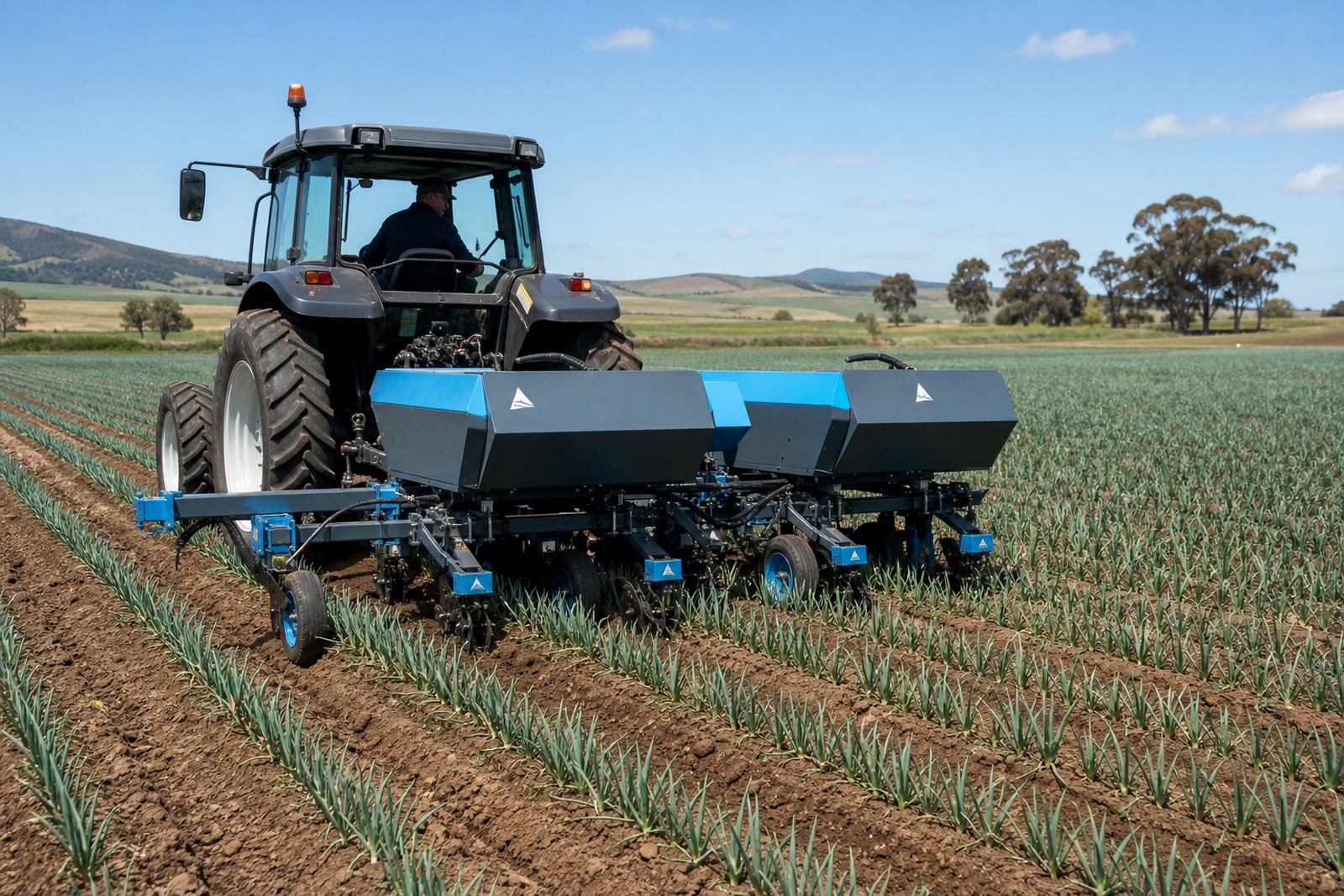
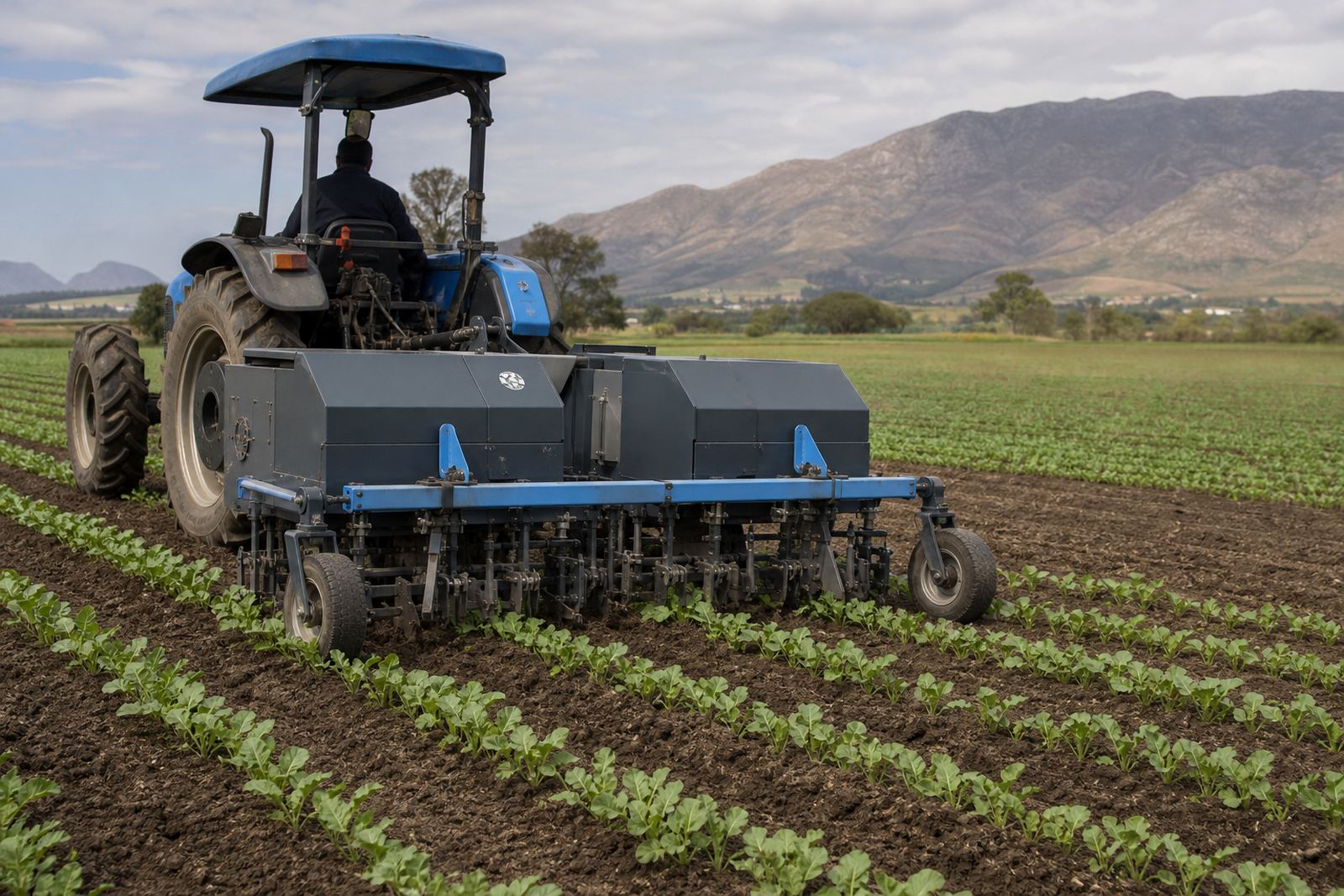
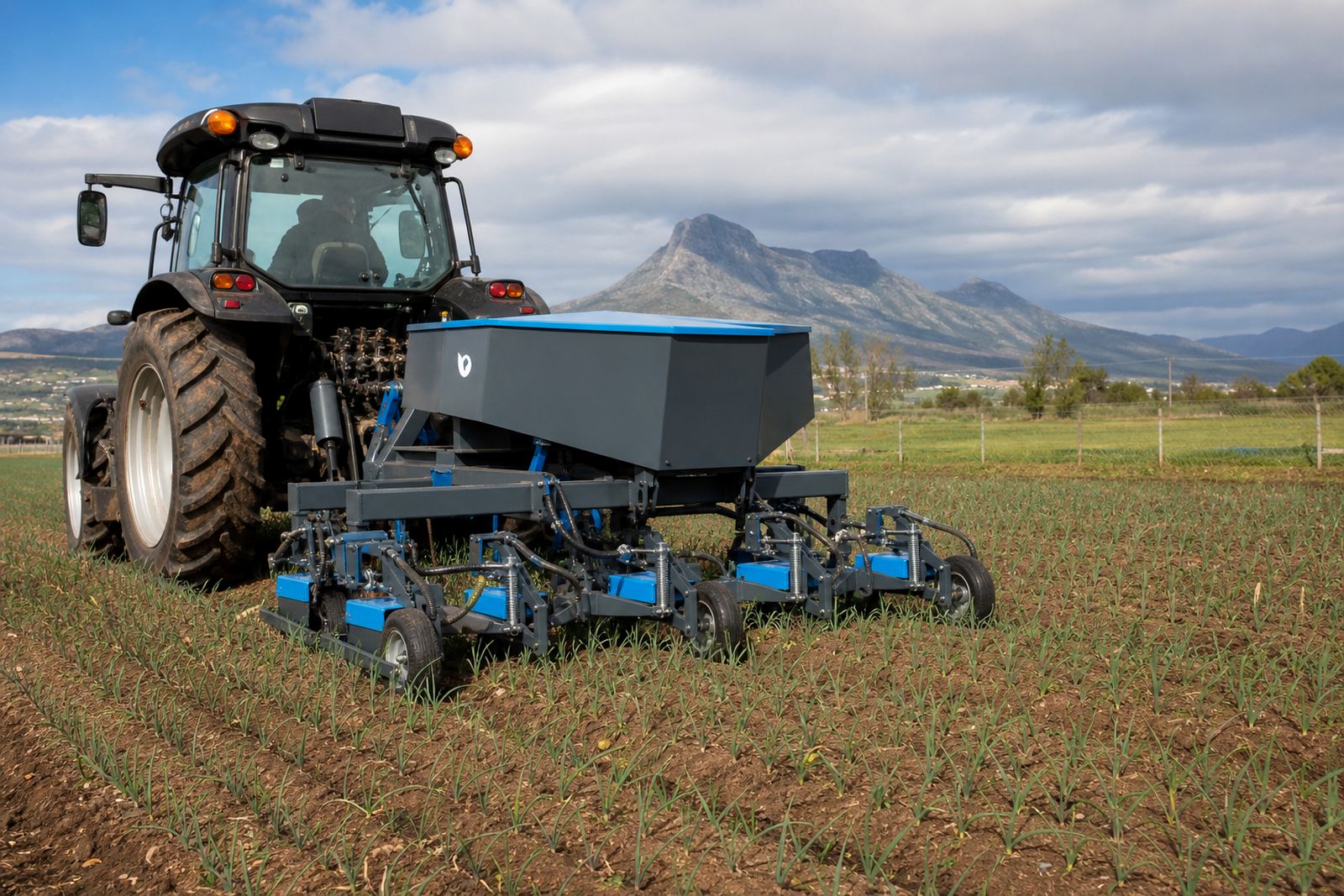
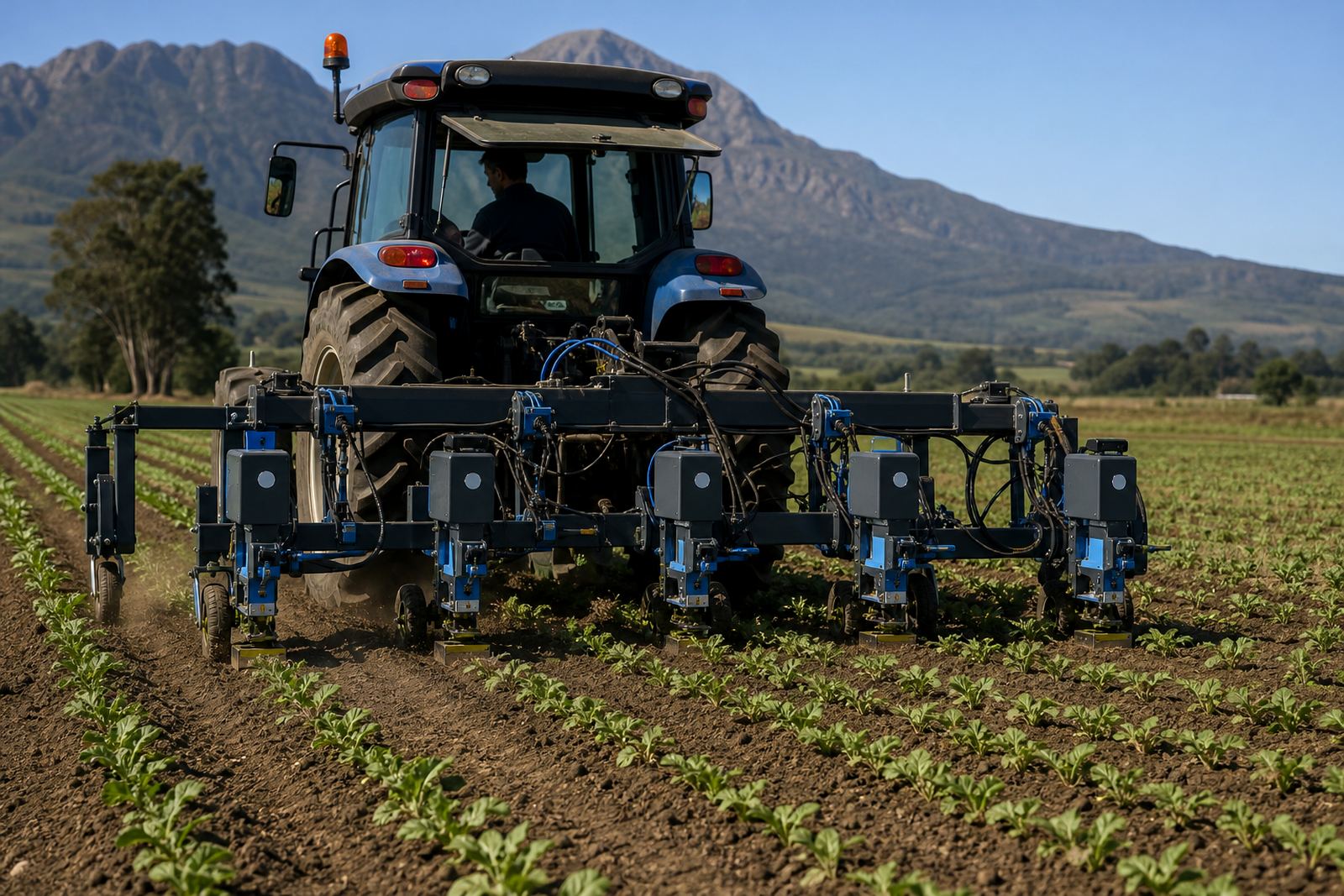
We brought a tractor-drawn laser weeding unit with a trained operator and worked the trial rows in a measured pattern. The system used camera-guided weed detection to read the strip between plants, then directed laser energy at the weed growing points rather than into the soil. That meant the pass stayed herbicide-free and left the bed structure unchanged, which suited a herb block that needed a light touch.
Our service team also managed the practical side around the field. Travel coordination, arrival site checks and a short grower consultation were part of the setup, because a trial like this is not only about the machine. It is about whether the unit can fit the field layout, the row pattern and the access route without adding extra handling on the day.
- Tractor-drawn laser unit with trained operator
- Camera-guided weed detection between crop plants
- Laser targeting at weed growing points
- No herbicide spray and no soil disturbance
Timing notes from the first and second pass
The first pass gave us the cleanest read on the block. It showed where the rows stayed true and where the bed edges needed a slower line to keep the crop safe. The second pass was more about confirming travel stability after the operator had seen the pattern once. That is often where narrow herb rows tell the truth, because even small irregularities show up in the way the unit carries itself down the bed.
We also used the trial to judge field speed against weed pressure. Heavier weed sections asked for more caution, while cleaner stretches allowed steadier movement. The right speed is never fixed across an entire farm, and in mixed herb work it shifts from row to row. A block that looks even from the headland can still change once the tractor is in the middle of it.
- First pass showed row movement and crop edge sensitivity
- Second pass confirmed travel stability on the same prepared beds
- Field speed changed with weed pressure
- Heavier patches needed slower movement for safer targeting
What the grower had to work with after the trial
Our post pass reporting focused on the practical side of the block, not on glossy language. We set out where row clarity was good, where spacing could be tightened in future plantings, and where the bed finish helped the machine track cleanly. The grower also got a clearer sense of which parts of the crop were ready for laser treatment and which parts would be better left until the next cycle of weeds reached the right stage.
For herb production in the Western Cape, that kind of note can matter more than any single pass. Prepared beds, narrow rows and quick weed stage changes all pull in different directions. A laser weeding programme works best when those details are read early and the scheduling follows the crop rather than forcing the crop to suit the schedule.
- Post pass reporting covered row clarity and spacing notes
- Future plantings can use the same observations for field layout
- Repeat pass planning depends on weed stage and crop cover
- Season bookings work better when the block pattern is already known
What this Somerset West trial told us
The trial showed that herbs on prepared beds can suit laser weeding when the rows are readable and the surface is settled enough for steady tractor travel. It also showed that the machine is only one part of the job. The crop spacing, the weed stage, the bed finish and the day-to-day field access all shape the pass. Leave one of those out and the result becomes harder to manage.
For our team, the useful lesson was simple enough. A compact herb block can be handled well when the operator has clear row lines, the grower has a sensible timing window and the field is ready for careful travel. Somerset West gave us that sort of trial ground, with enough variation to show where the method held and where it needed restraint.
- Herb rows with good definition suit the process best
- Prepared beds support smoother travel across the block
- Timing matters as much as the machine itself
- Trial work helps shape later multi farm programmes
Key facts
| Project type | Herb row laser weeding trial |
|---|---|
| Town | Somerset West |
| Crop type | Mixed herbs on prepared beds |
| Working method | Tractor-drawn laser weeding with trained operator |
| Core checks | Row clarity, crop spacing, travel stability |
| Service scope | Trial strip runs, field assessments, post pass reporting |