The Moorreesburg block and the brief from the grower
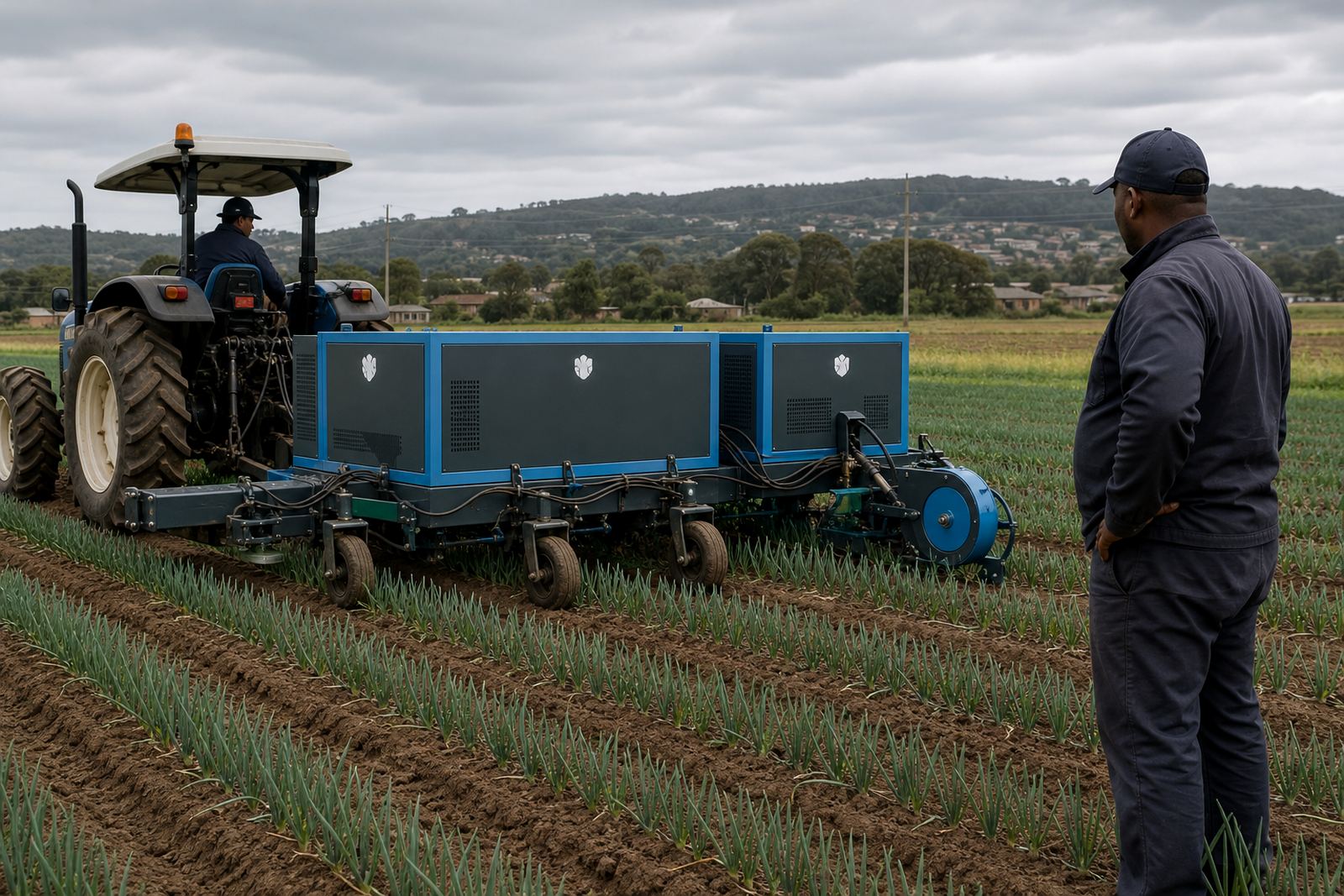
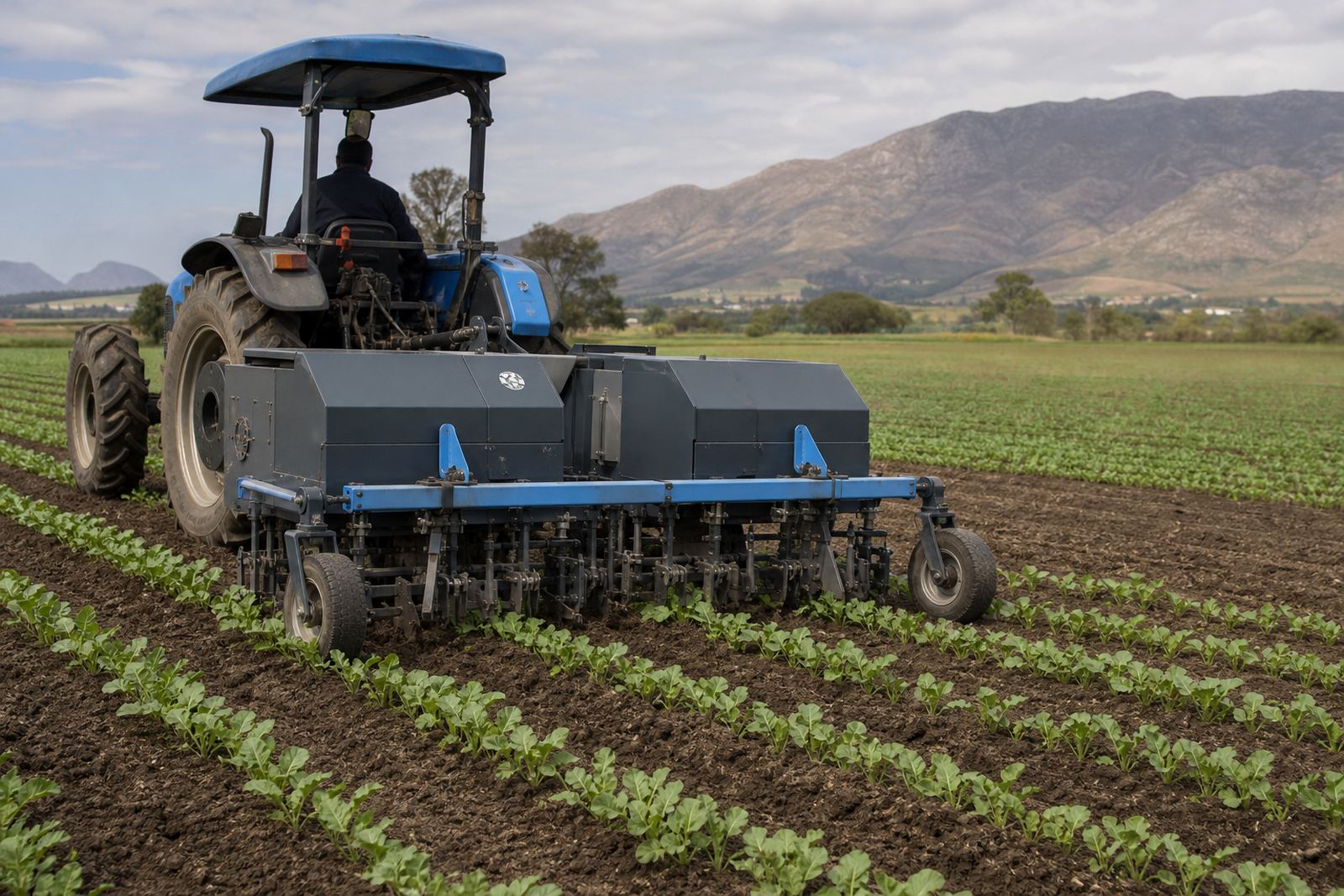
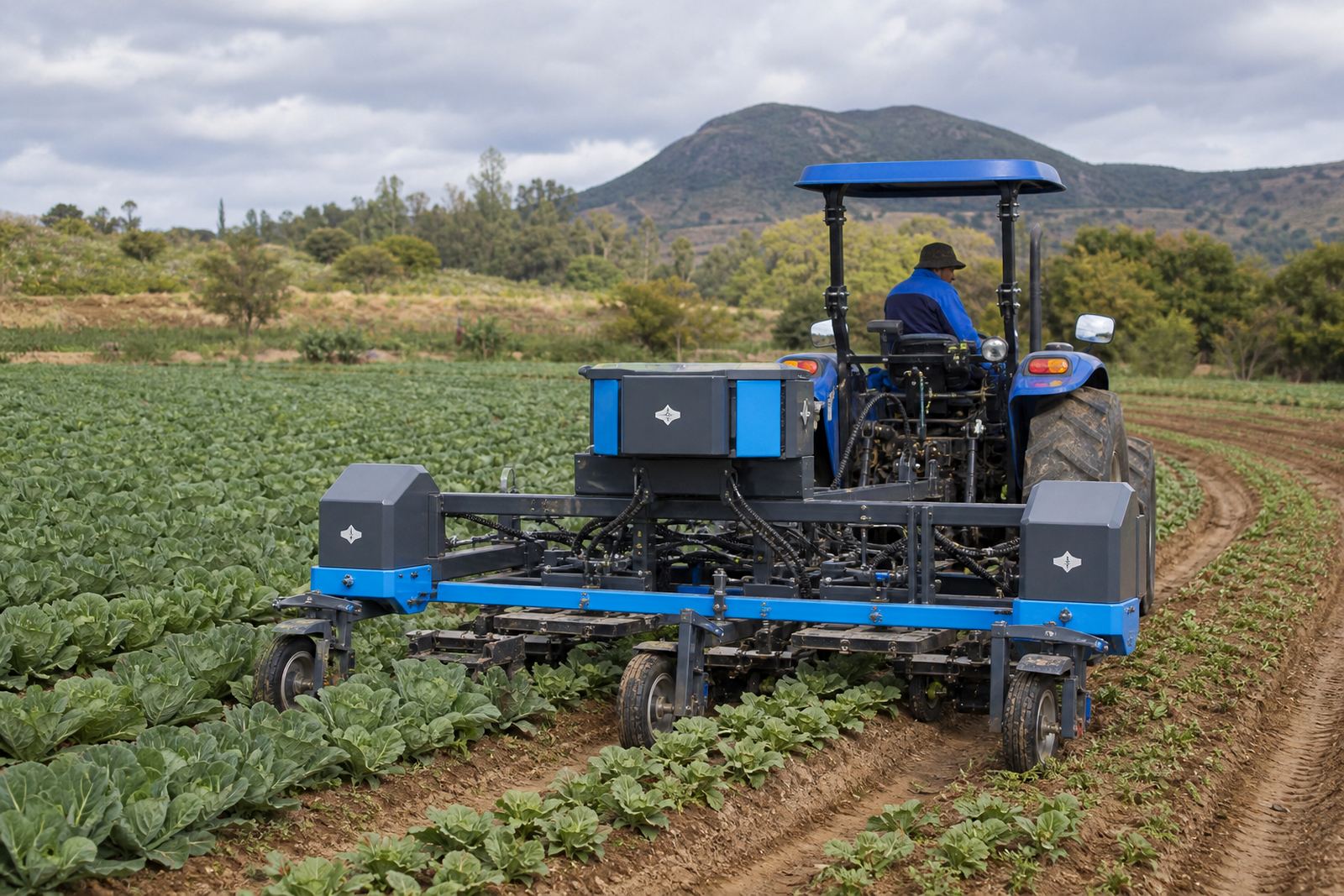
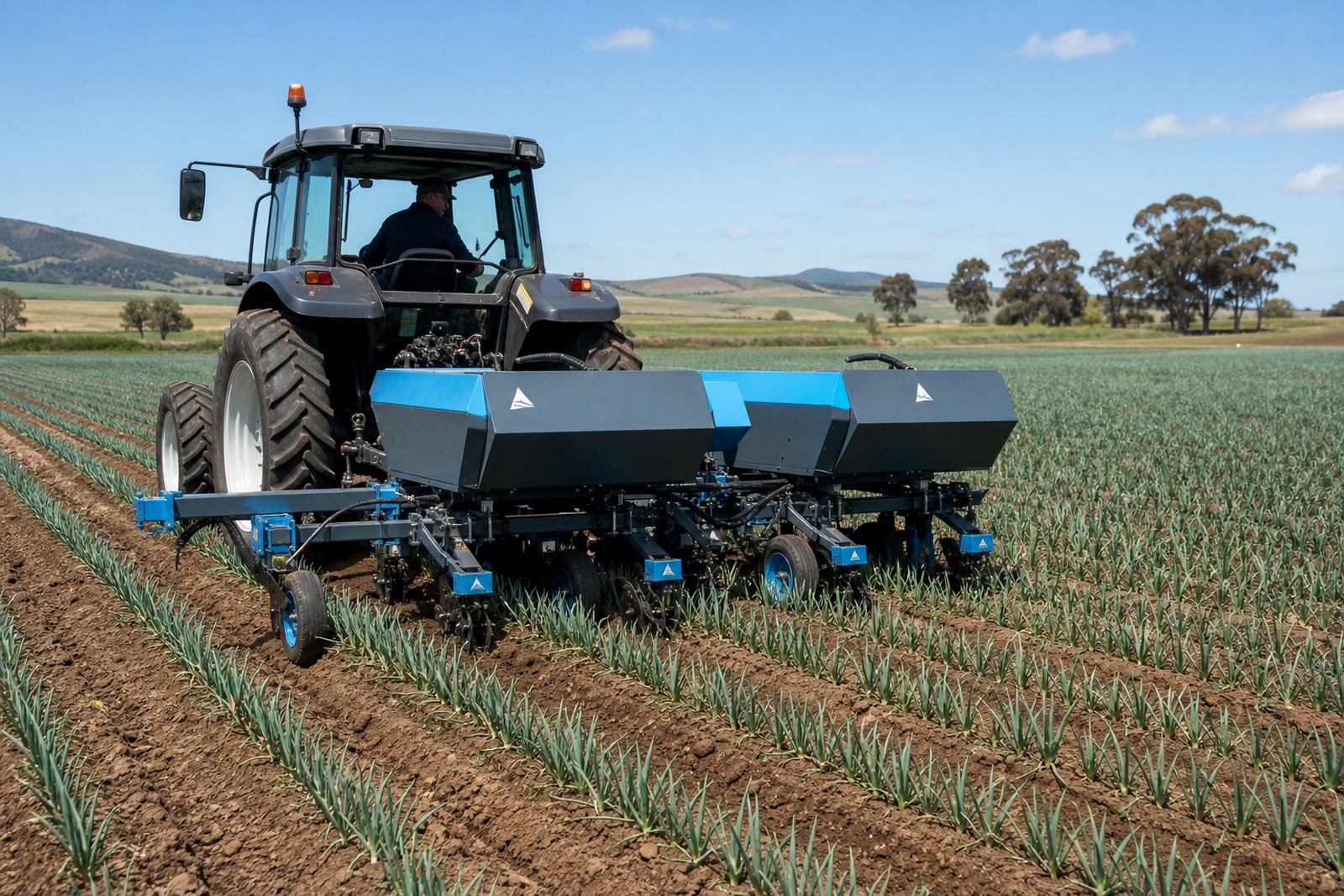
The grower in Moorreesburg wanted a practical pass over a direct-seeded vegetable block that had come through evenly enough for machine work, but not so clean that timing could be left to chance. The rows were straight, the spacing was consistent, and the crop was at a stage where small weeds were present but still manageable by targeted treatment.
The brief was clear. Protect the crop, keep soil movement out of the plan, and use a tractor-drawn laser system rather than any spray-based approach. The field had moderate weed pressure, so the work needed to suit the weed stage rather than force the crop into a rushed pass. That is where laser weeding fits best, especially on row crops where the open spaces between plants give the operator room to work carefully.
- Client type: vegetable grower working a seeded block
- Town: Moorreesburg, Western Cape
- Crop layout: straight rows on a direct-seeded block
- Weed load: moderate, with mixed emergence in row middles
How the field was set up for laser work
Before the unit entered the block, the rows were checked for line quality and plant stage. Laser weeding depends on camera-guided detection and steady travel, so we look for a field where the crop can be read clearly and the weeds are still within a controllable stage. If the weed growth gets too advanced, the operator loses the clean separation needed for accurate targeting.
In this case the block suited a first pass because the crop was established and the weed pressure was visible but not tangled through the plants. The field was dry enough for clean travel and the soil surface was stable. That matters because the method removes weeds with heat at the growing point, then leaves the soil where it is, which is one reason growers use it in sensitive vegetable blocks.
- Camera-guided detection used to separate crop from weed pressure
- Lasers targeted the weed growing points, not the soil
- Tractor-drawn setup kept the work consistent across the rows
- No herbicide spray was included in the pass
What we supplied on the ground
We supplied the tractor-drawn laser weeding unit, a trained operator, and field coordination from the Philippi base. The work also included arrival site checks, a short trial strip run, and a pass plan that matched the block’s row pattern. Our team watched the crop line, checked the weed stage, and set the speed to suit the pressure in that section of the field.
Pieter Mokoena handled scheduling, while Johan Daniels ran the unit in the field. Anele Khoza managed the operations side, and Lerato Letsoalo kept the service notes moving through the booking. Ruan Mkhabela checked the equipment before departure, and Zanele Naidoo handled grower contact on the practical details. The point was not to overload the block with machinery time, but to give the grower a measured pass that fitted the crop.
- Operator supplied with the machine
- Trial strip run before full coverage
- Field scheduling matched the crop stage
- Post pass reporting captured row condition and weed pressure left behind
The two week movement from check to pass
The project ran over two weeks from the first field look to the completed pass and reporting. The first week was used for crop assessment, row reading, and timing work. We looked at where the weeds sat in the row middles, how close they were to the crop line, and whether the block could take a full laser pass without stopping and restarting too often.
In the second week the unit moved through the block in the agreed sequence. Field speed shifted with weed pressure, because denser patches need a slower pass than cleaner runs. That kind of adjustment is part of the work. A field can look uniform from the headland, then change once the machine gets into the middle. The operator stayed on the crop line and kept the treatment narrow enough for the row pattern.
The work was not treated as a one-size pass. The Moorreesburg block needed timing, steady travel, and a careful look at how the young weeds sat against the crop. That is often the difference between a useful laser pass and a hurried one that leaves too much to hand work later.
What changed after the pass
After the laser pass, the block carried a cleaner row picture and less weed pressure in the treated spaces. The grower still had follow-up inspection to do, because no laser weed pass should be read as a finish line for the season. Weed flushes can follow rain or irrigation, and direct-seeded crops keep moving through new stages as the week goes on.
What the grower gained here was a cleaner starting point for the next field decision. The soil stayed intact, the crop rows remained open, and the block no longer carried the same immediate pressure from small weeds in the treated strips. That gave the farm room to plan repeat passes only where needed rather than working the whole block by hand.
- Weed pressure in the treated strips was reduced
- Soil surface remained undisturbed
- Crop rows stayed readable for follow-up work
- Repeat pass planning became more specific to field sections
What we would repeat on a similar vegetable block
On another seeded block like this, we would use the same approach: check the row pattern, confirm the weed stage, run a trial strip, then build the field sequence around the crop condition rather than a fixed clock. That is especially useful on row crops such as onions, carrots, lettuce and brassicas, where timing and plant spacing decide how well the camera system can read the field.
We would also keep the discussion focused on travel, field access, and the likely pass pattern across the block. A clean tractor line helps, but so does a realistic plan for where the machine can work and where a later pass might be better. For Moorreesburg, the straight rows made the job straightforward. The moderate weed pressure made the timing matter even more.
For growers across the Western Cape and further afield in Limpopo, Mpumalanga, KwaZulu-Natal and the Free State, this is the kind of block where laser weeding can fit into a season plan without heavy soil disturbance or herbicide spray. It needs the right crop stage, the right weed stage, and a team that knows when to slow the machine down.
Key facts
| Project | Moorreesburg Seeded Rows |
|---|---|
| Town | Moorreesburg, Western Cape |
| Crop type | Direct-seeded vegetable block |
| Row pattern | Straight rows |
| Weed pressure | Moderate |
| Method | Tractor-drawn laser weeding with trained operator |