What the Howick block needed from the trial
The grower wanted a field test on a leek block in Howick where the row pattern was clear enough for camera-guided detection, but not so clean that the test would miss the hard bits. The brief was to see how a tractor-drawn laser unit handled narrow crop rows, small weeds close to the plants, and the kind of line breaks that show up after irrigation and uneven emergence.
The block was treated as a working trial, not a demonstration strip. That meant careful entry planning, steady travel lines, and enough time in the field to judge whether a repeat pass would make sense later in the cycle. The crop sat in a part of KwaZulu-Natal where humidity can hold moisture in the canopy, so the operator also had to watch leaf movement and surface conditions before setting speed.
- Client type: commercial vegetable grower
- Town: Howick, KwaZulu-Natal
- Crop: leek block for field trial work
- Method: tractor-drawn laser weeding with trained operator
- Main question: line visibility and repeat pass potential
The brief and the limits around the rows
The main brief was straightforward, but the limits were strict. Leeks sit close together and they do not forgive sloppy steering, so the trial had to stay on line while still reaching weeds between plants and around the crop base. The field also had a mixed weed population, which meant some weeds were at a suitable stage for laser targeting while others were already too far along for the best result.
Timing mattered more than speed. Laser weeding works best when the weeds are young enough for the growing point to be exposed and the crop row is readable from the camera system. In this block, the task was to judge whether a follow-up pass could stay practical without disturbing the soil or opening up more flushes through cultivation. No herbicide spray formed part of the plan, and the trial stayed within that approach.
- Row crop spacing was tight enough to test operator control
- Weed stage varied across the block and needed close checking
- Soil disturbance had to stay out of the picture
- Field speed depended on weed pressure and line quality
How the work was set up in the field
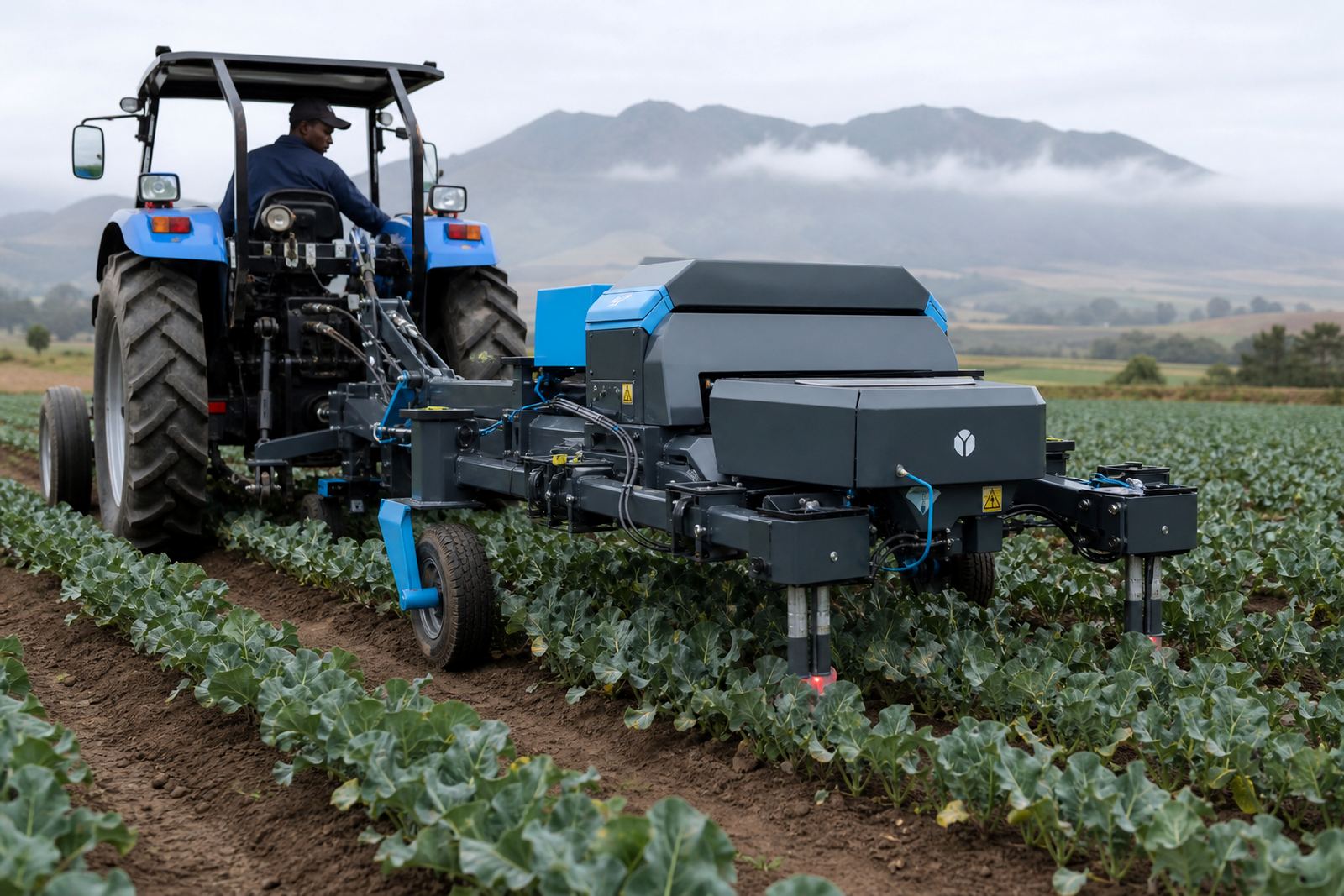
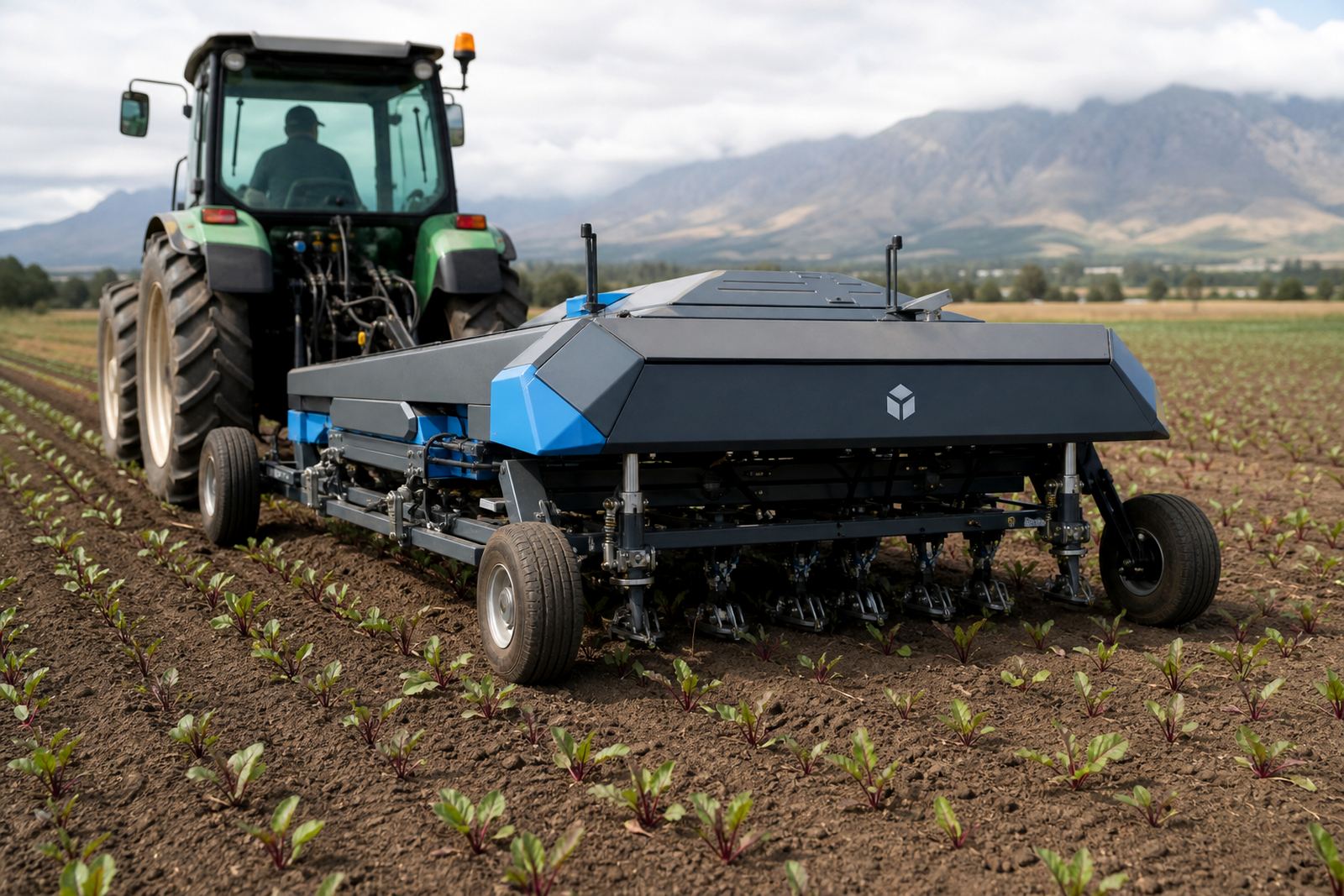
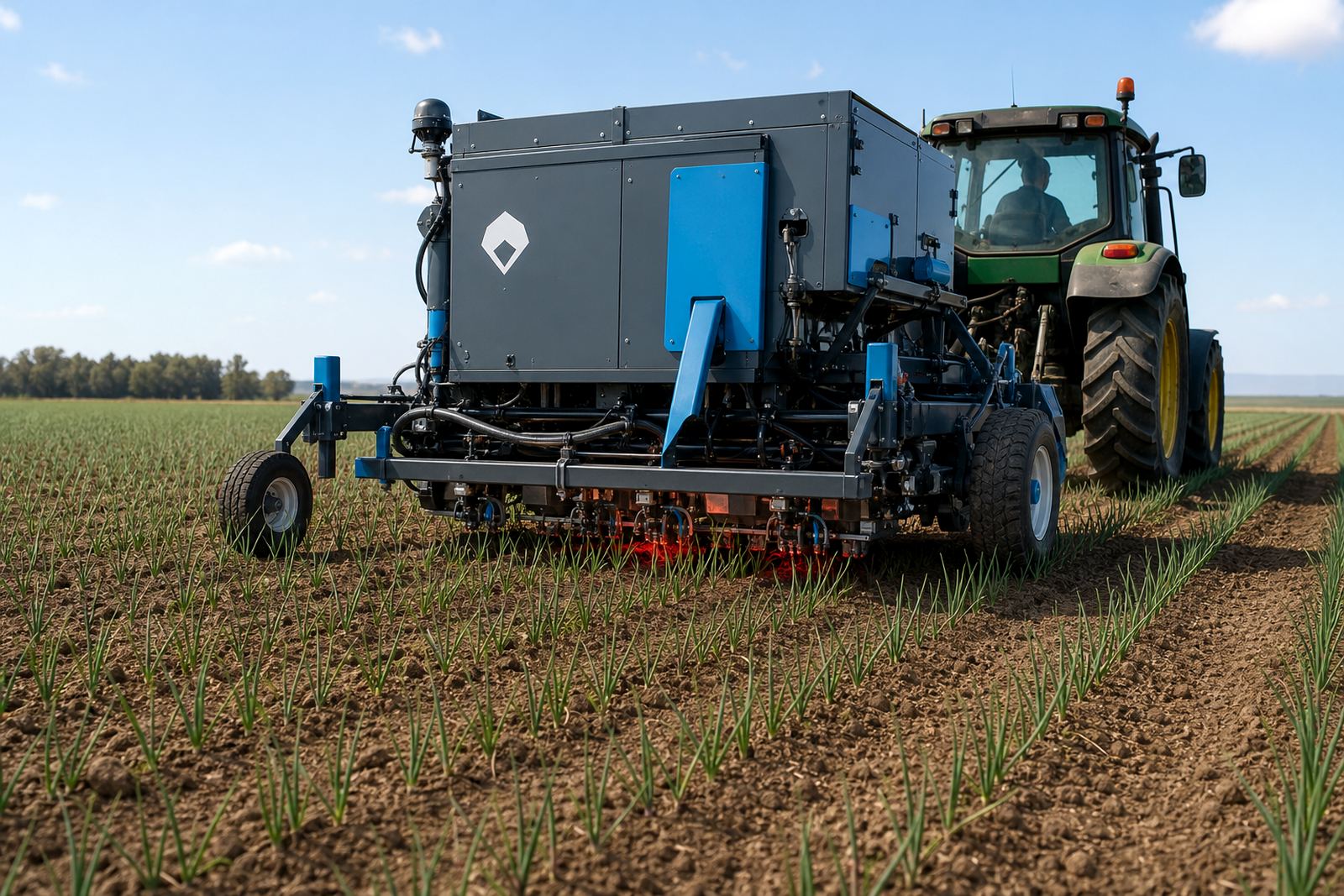
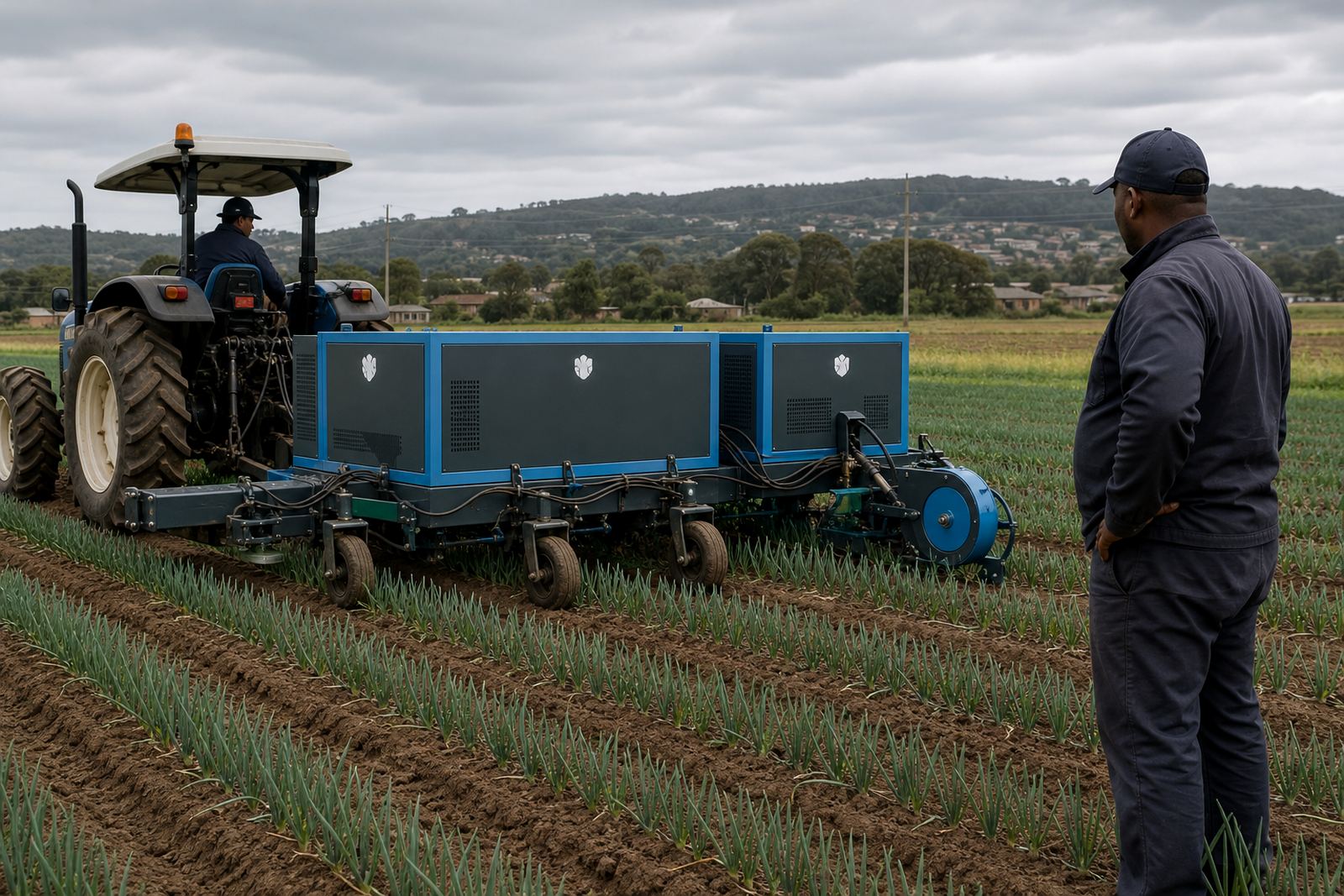
We supplied a tractor-drawn laser weeding unit with a trained operator and field scheduling support from the Philippi base. Before the machine entered the block, the team checked the row pattern, edge turns, headland access and the condition of the crop at the rows. That let us map the travel path and set a working pace that matched the block rather than forcing the block to match the machine.
The run was organised in phases. First came a line check and an arrival site check, then the operator worked the rows with close attention to weed detection and crop avoidance. After that, the team recorded notes on missed weeds, any line drift, and whether the block would benefit from a second pass once later flushes showed. The whole setup was practical and not fancy, which is usually what a leek field asks for.
- Arrival site checks before the machine entered the block
- Operator supplied for the field run
- Crop timing plan built around the leek growth stage
- Trial strip runs used to read the row and weed pressure
- Post pass reporting for follow-up planning
What the laser unit had to read
Laser weed control depends on good camera-guided detection, and the Howick trial put that to the test in a crop with narrow spacing and plenty of visual clutter. The unit had to distinguish leek lines from weeds that sat low in the row and from small plants that had not yet spread much above the soil surface. That kind of work relies on clean row geometry, good operator judgement and enough field visibility to keep the machine tracking properly.
Laser beams target the weed growing point rather than the whole plant, so timing matters. Younger weeds are easier to manage because the growing point is more exposed and the plant has not built up a lot of leaf mass. In the trial block, the team paid attention to weeds between the rows and right alongside crop plants, because those are the places where mechanical tools can be awkward and herbicide-free control is often most useful.
We did not chase numbers for the sake of a report. The field notes focused on line visibility, weed stage, the steadiness of the pass, and whether the crop sat clean enough to justify repeat work later on.
What the trial showed on the ground
The main outcome was that leek rows can be worked with laser weed control when the block is prepared well and the weeds are at a suitable stage. The field gave enough visibility for the camera system to track lines and enough variation to show where repeat passes would help and where they would not add much value. That made the trial useful for planning rather than just ticking a box.
Field speed had to stay tied to weed pressure. Where the row was clean and the crop line was easy to read, the unit moved more confidently. Where weed pressure was heavier or the crop line faded, the operator slowed the work and made careful corrections. That is part of the trade, and it is one reason these runs need a trained hand rather than a casual drive through the field.
- Line visibility was good enough for practical laser tracking
- Repeat pass potential depended on later weed flushes
- Soil stayed undisturbed through the trial
- The herbicide-free approach suited the crop structure
What we would carry into the next leek block
If the same type of block comes up again, we would keep the same order of work. Start with a proper row read, keep the trial strip tight, and use post pass reporting to decide if a second treatment is worth scheduling. That approach suits leek fields because the crop rewards patience and punishes guessing.
We would also keep the scheduling flexible enough to match weather, weed stage and block access. In KwaZulu-Natal, humidity and field moisture can shift the working window, and a laser pass is best when the crop and soil conditions are steady enough for clean guidance. A short delay can be better than forcing the run too early, and that point was clear here.
For growers across South Africa, the lesson from Howick is plain enough: line visibility, weed stage and pass timing matter more than any slogan. When those parts line up, laser weeding can sit neatly into a crop programme without soil disturbance and without herbicide spray.
Project note from the field team
This was a useful leek trial for a town that knows wet mornings, cool shade and fields that do not always dry in a hurry. The block gave us a fair reading on row control, and it confirmed that repeat pass planning needs to be built from the first pass, not added later as an afterthought. Mandla Adonis oversaw the project notes with the team, while operations, scheduling and grower liaison kept the work orderly from first check to final report.
For farms in Howick and other growing areas, a trial like this is best treated as field labour with a microscope on it. Nothing was rushed, nothing was dressed up, and the value sat in the details that showed where the crop could be worked cleanly and where the next visit would need a finer plan.
Key facts
| Project | Howick leek trial |
|---|---|
| Town | Howick, KwaZulu-Natal |
| Crop | Leeks |
| Method | Camera-guided tractor-drawn laser weeding |
| Main focus | Line visibility and repeat pass potential |
| Field support | Operator supplied, scheduling, post pass reporting |