The block shape in Citrusdal changed the whole brief
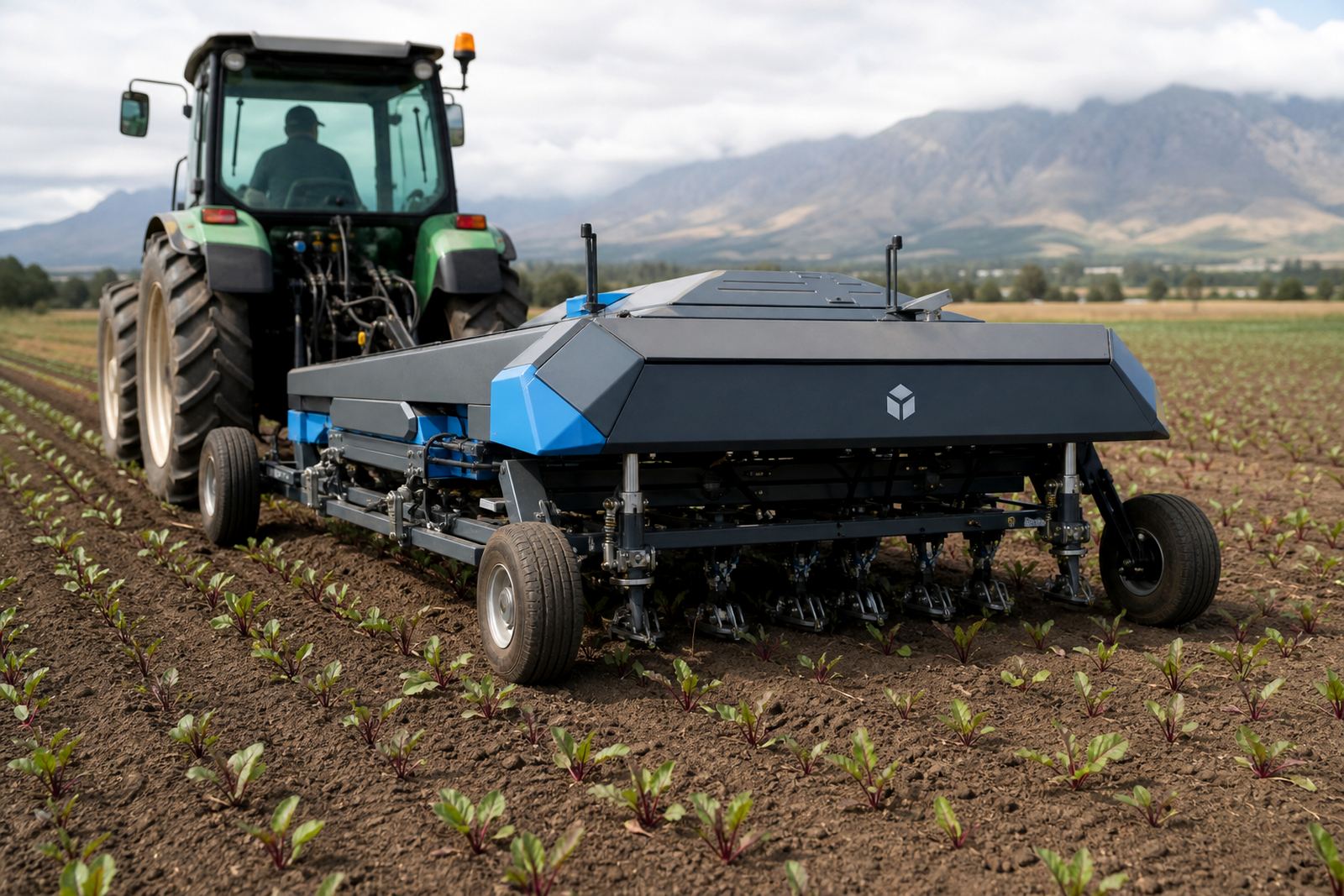
The grower wanted a practical test on a beetroot block laid out in long beds, with enough room for a tractor-drawn unit to move through without leaning on the crop edges. The farm sits in the Citrusdal area, where bed length, irrigation lines and turning space all shape the work, so the brief focused on wheel placement first and then on when each pass should land in the crop cycle.
The beetroot was at a stage where weeds were present between the rows and close to the plants, but the work still had to avoid disturbing the soil surface. That matters on long beds because even a small drift off line can leave a wheel track where water collects or a shoulder where later passes become awkward. We treated the block as a timing test, not only a weed removal job.
- Crop: beetroot on long beds
- Location: Citrusdal, Western Cape
- Method: tractor-drawn laser weeding with operator supervision
- Focus: pass timing and wheel placement
- Constraint: no soil disturbance around the rows
How the pass plan was shaped around weed stage
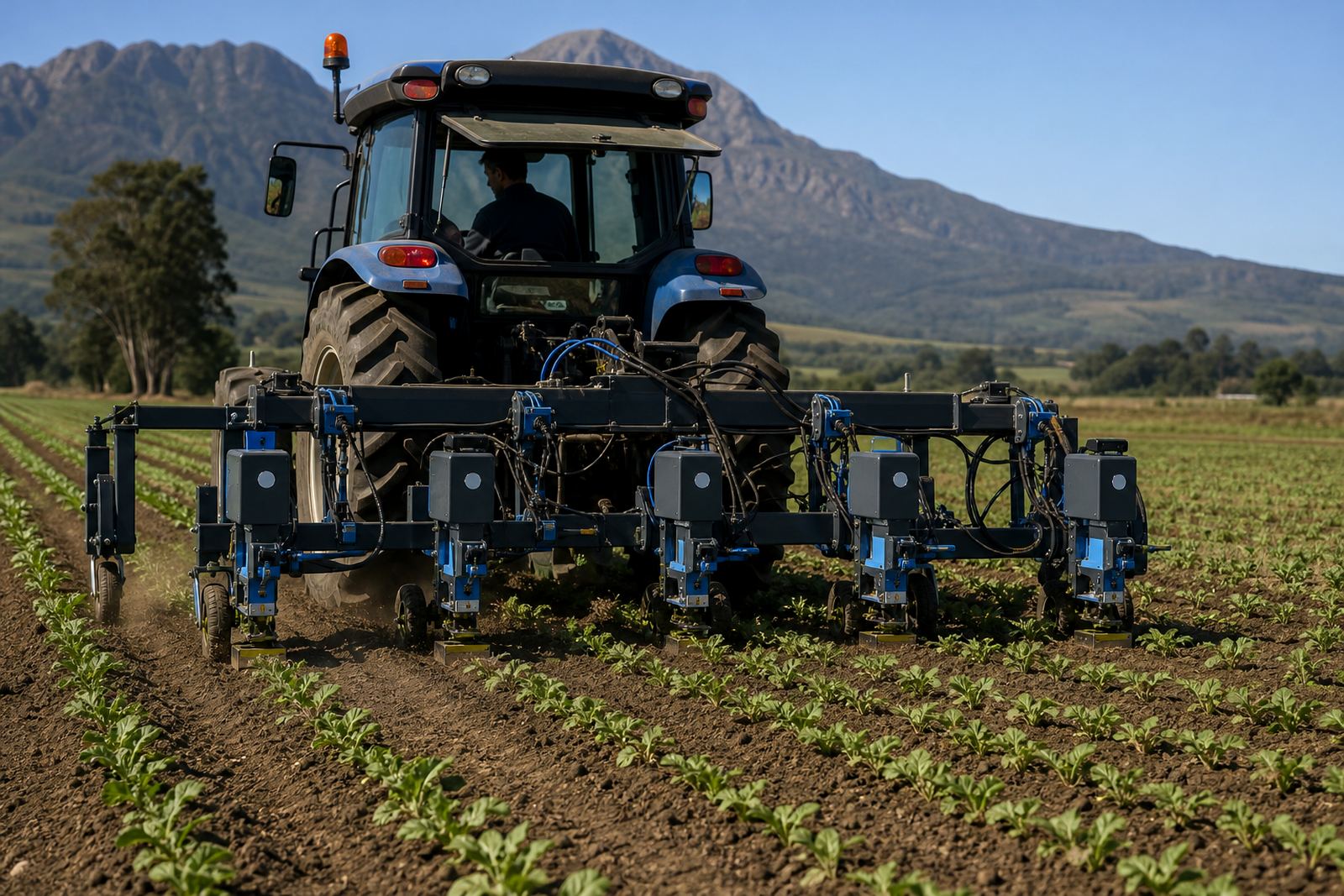
Laser weeding works best when the weeds are at a stage where the growing points are easy to target and the crop canopy has not closed too far over the row. On this block, the weed mix was uneven, so we planned the run to suit the areas where early weeds were still small and the heavier patches could be watched more carefully. The operator worked with camera-guided detection, and the laser targeted the weed growing points instead of disturbing the soil.
That timing question is never abstract on a farm. Too early and the block may need another pass sooner than expected, too late and the weeds get too set for clean treatment in tight row gaps. The beetroot rows also asked for steady travel speed, because the unit has to keep pace with the crop line and the weed pressure at the same time.
- Weed stage was checked before each run
- Pass timing was matched to row condition
- Field speed changed with weed pressure
- No herbicide spray was used
Wheel placement mattered as much as the laser
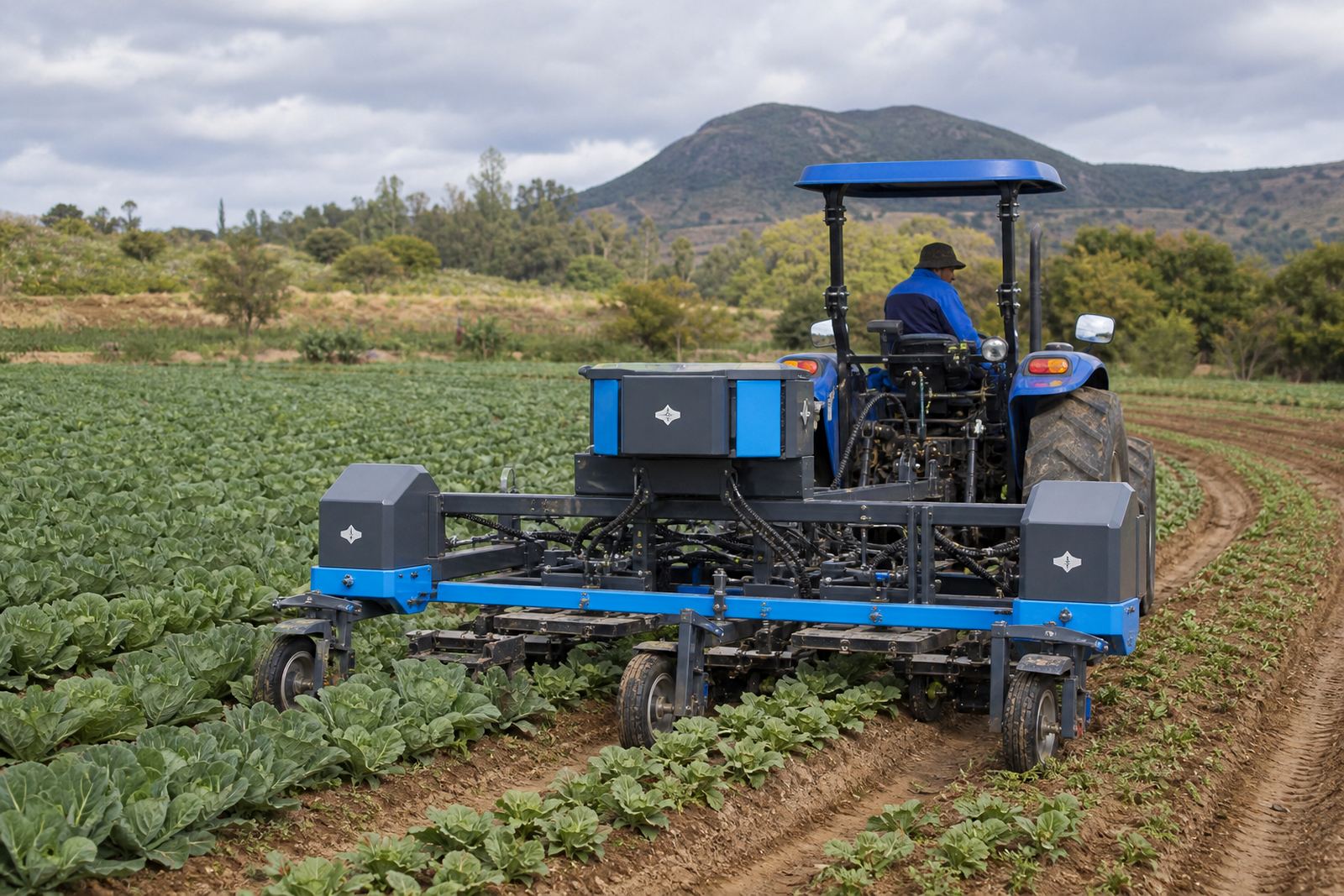
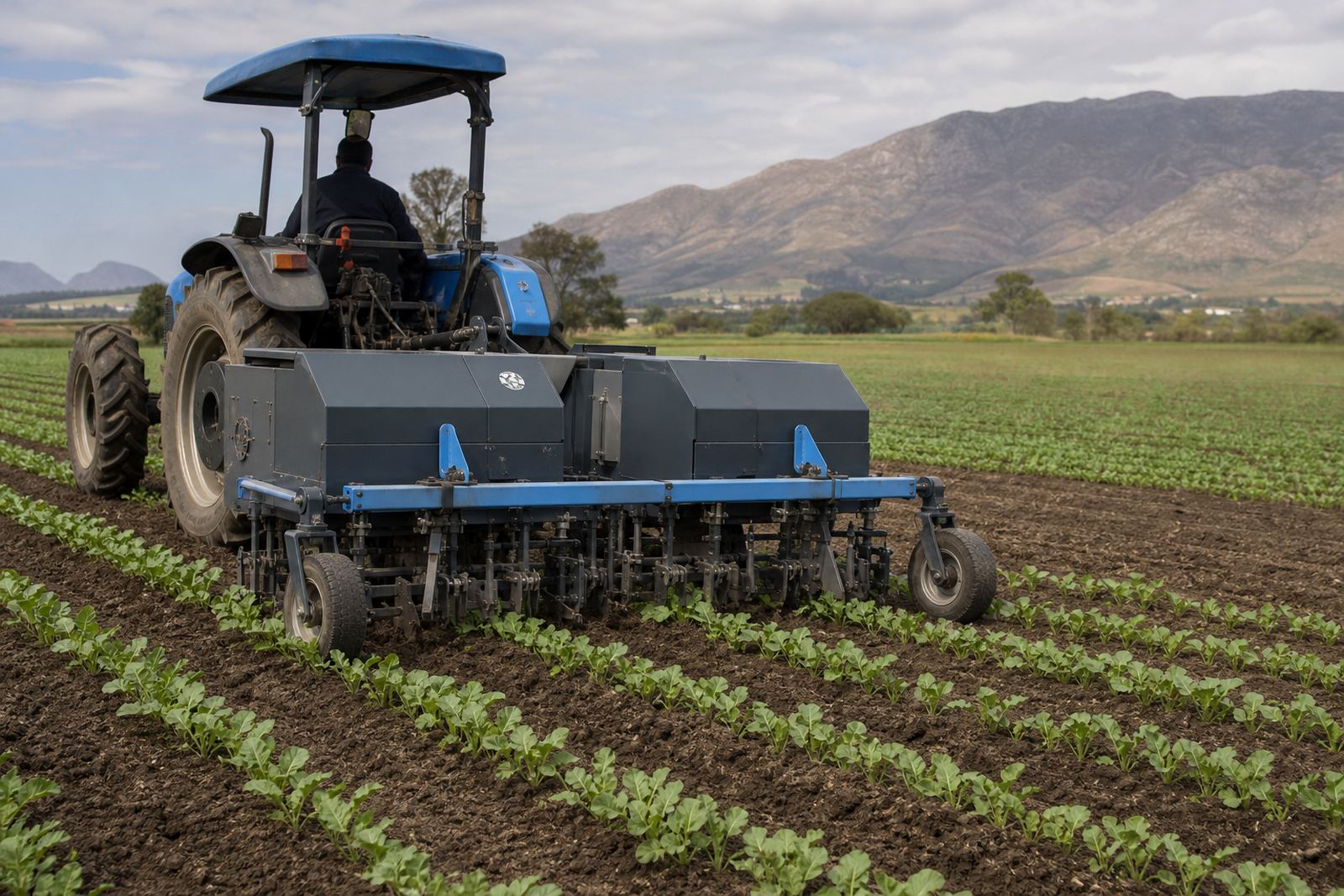
Long beds can make wheel placement a quiet but serious issue. If the tractor runs too wide, the unit leaves the cropped strip under pressure; if it runs too tight, the operator loses clean line control on the outer rows. We set the path so the wheels stayed consistent from end to end, with enough room to keep the machine aligned over the weed bands and away from the beetroot crowns.
The farm wanted a simple answer to a hard field problem: can the same setup stay stable across a long block, with no need to disturb the beds after the run? That is where the trial was useful. The tractor-drawn unit held its line across the beds, and the operator could keep the laser work focused on the weeds between and around the plants rather than on the crop itself.
- Wheel track was kept steady along the block
- Outer row pressure was reduced by line control
- The setup suited long-bed geometry
- Soil surface stayed undisturbed
What we supplied for the beetroot trial
We supplied the operator, the field scheduling, the arrival site checks and the post pass reporting around the trial. The work also included grower consultation before the first run, so the block layout, access points and the crop stage were clear before equipment moved into the field. Because the farm was testing a practical system rather than chasing a theory, the run needed to fit around existing irrigation and harvesting plans.
Travel coordination also formed part of the job, since the block sat in Citrusdal but the grower wanted the result to inform future beetroot work in other areas as well. Once the first pass was complete, we reviewed where the machine tracked cleanly, where the weed pressure was thicker and how the row spacing affected the pace of work.
- Field assessment for beetroot block conditions
- Operator supplied for the full run
- Field scheduling around the crop calendar
- Travel coordination to the site
- Post pass reporting for the grower
Three weeks of field work, checks and repeat planning
The trial ran across three weeks, with the first week used for assessment and pass setup, the second week for the main field run and the third week for follow-up review and repeat pass planning. That sequence gave the grower a clear picture of how the block behaved under the laser unit, and where the next visit would make sense if weed pressure built up again.
The main value of the three-week window was not speed, it was rhythm. Beetroot rows change quickly as the canopy closes, and the timing of a laser pass has to match that movement. On this block, the operator and scheduling team kept the work tied to the crop stage instead of forcing the crop to suit the machine.
- Week 1: field assessment and setup
- Week 2: main pass on the beetroot block
- Week 3: review and repeat pass planning
- Season booking notes prepared for follow-on work
What the grower could use from the trial notes
The trial showed that pass timing and wheel placement are not side issues on a long beetroot block, they shape the whole job. The grower could see where the field speed stayed comfortable, where weed pressure changed the pace and how the tractor line affected the outer rows. The block did not need soil disturbance to get a useful result, and the laser unit kept the work herbicide-free.
For future beetroot work, we would use the same approach on row crops with long, even beds and a similar crop stage, then adjust the schedule around weed flushes and bed length. The same notes would also help on onions, carrots, lettuce and brassicas, where early timing and tidy wheel placement matter just as much as machine output.
- Best fit: row crops with long beds
- Good timing: early weed stage before canopy closes
- Method stays herbicide-free and non-inverting
- Useful for beetroot, onions, carrots, lettuce and brassicas
Key facts
| Project | Citrusdal Beetroot Block |
|---|---|
| Client type | Vegetable grower |
| Town | Citrusdal |
| Crop | Beetroot |
| Method | Tractor-drawn laser weeding |
| Timeline | 3 weeks |