A broccoli block that needed clean rows without spray
The grower in Elgin was working a cool-season broccoli block with pressure building in the spaces between plants and along the shoulders of the beds. The brief called for contract laser weeding that could fit a vegetable programme without adding soil disturbance or a spray pass, and the field team wanted a clear view of what the crop and weeds looked like at the time of service.
We started with a walk of the block and checked the weed stage, crop spacing and bed firmness. That matters with broccoli, because young weeds are far easier to target when they are still small and upright, and the tractor has to stay steady on beds that can shift if the surface is too loose. The goal was not to force a one-size-fits-all run, but to shape the pass around the crop and the field underfoot.
- Crop type: broccoli on prepared rows
- Town: Elgin in the Western Cape
- Weed condition: small mixed weeds between plants
- Field factor: bed firmness checked before the tractor entered
How the site was set up before the tractor rolled in
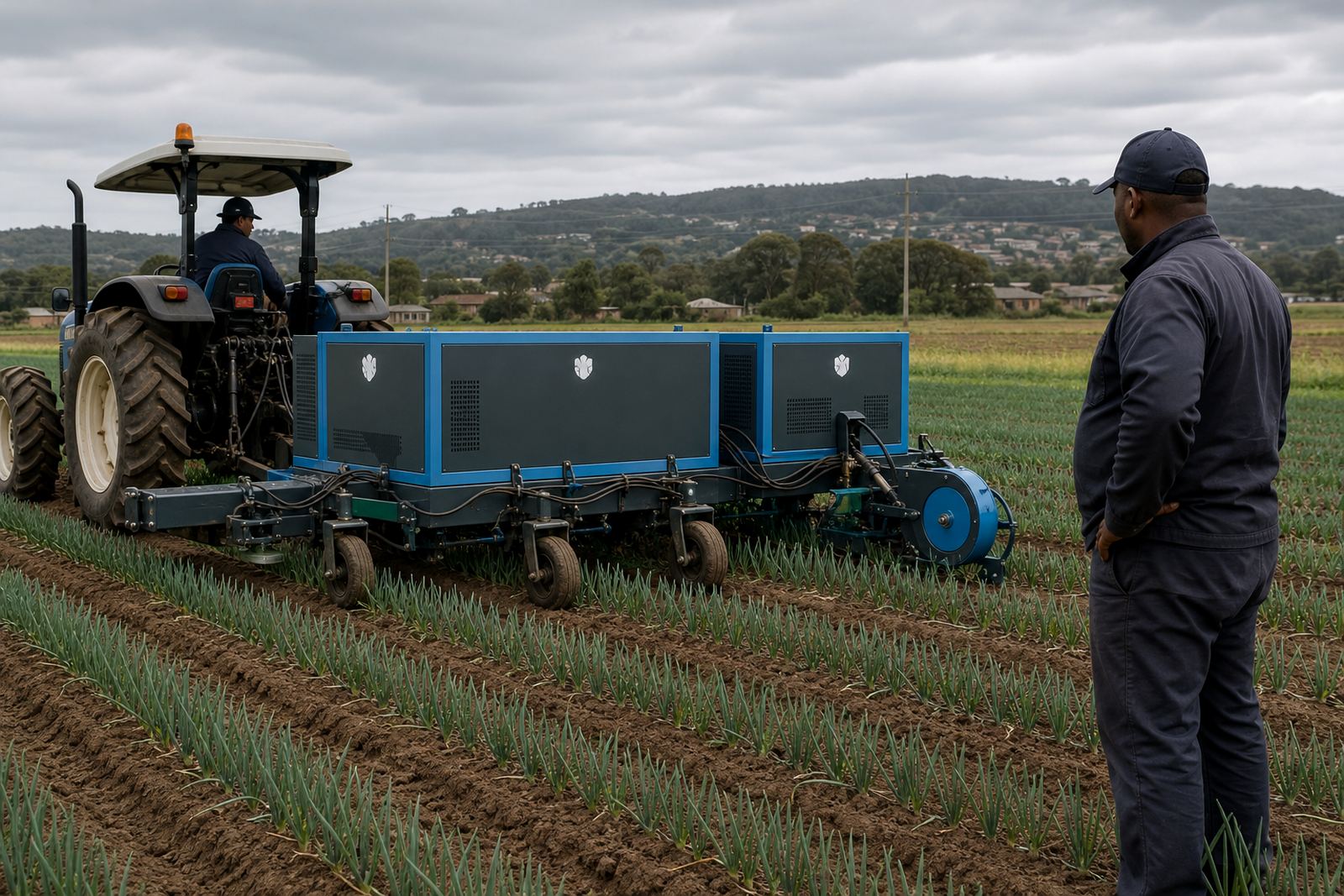
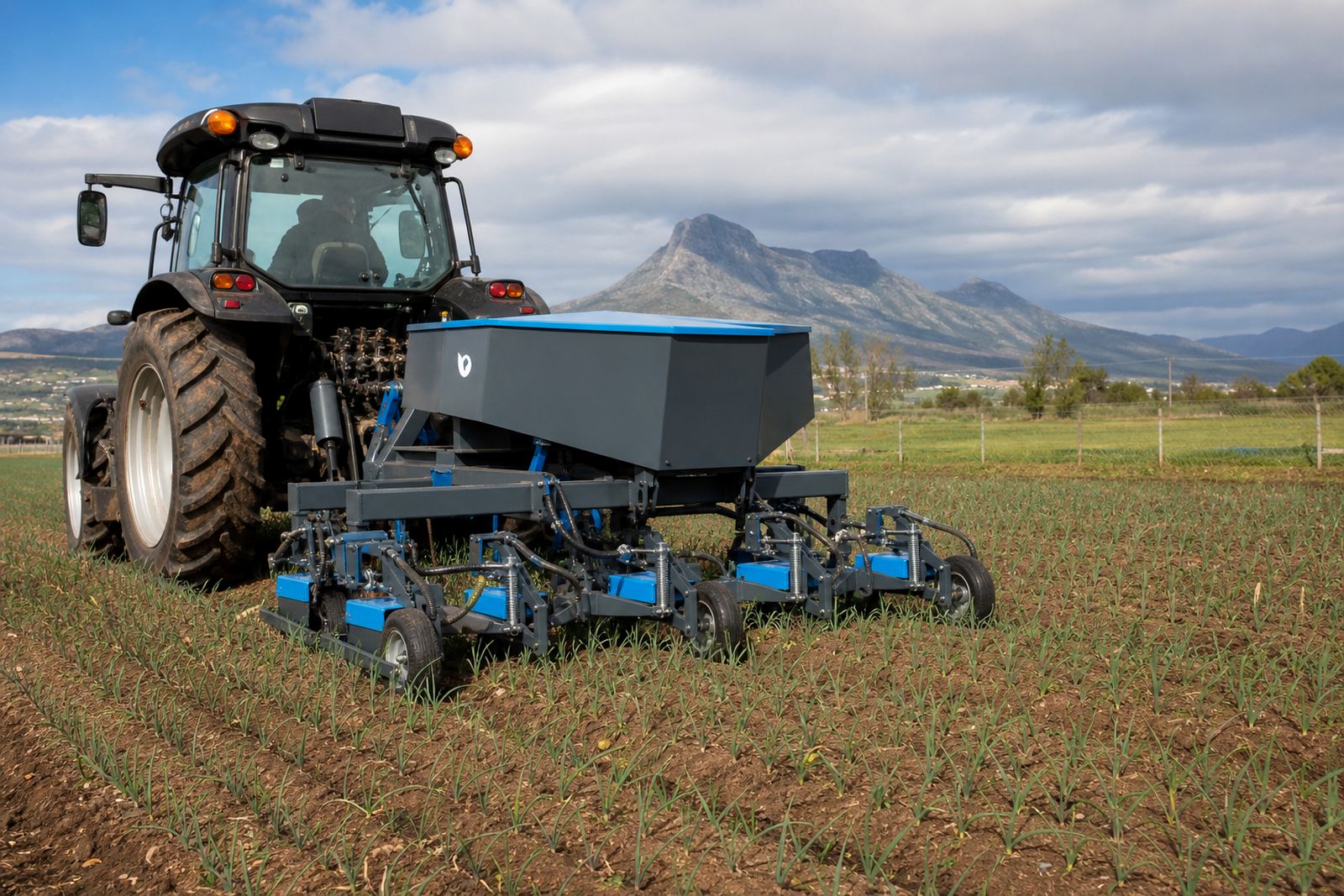
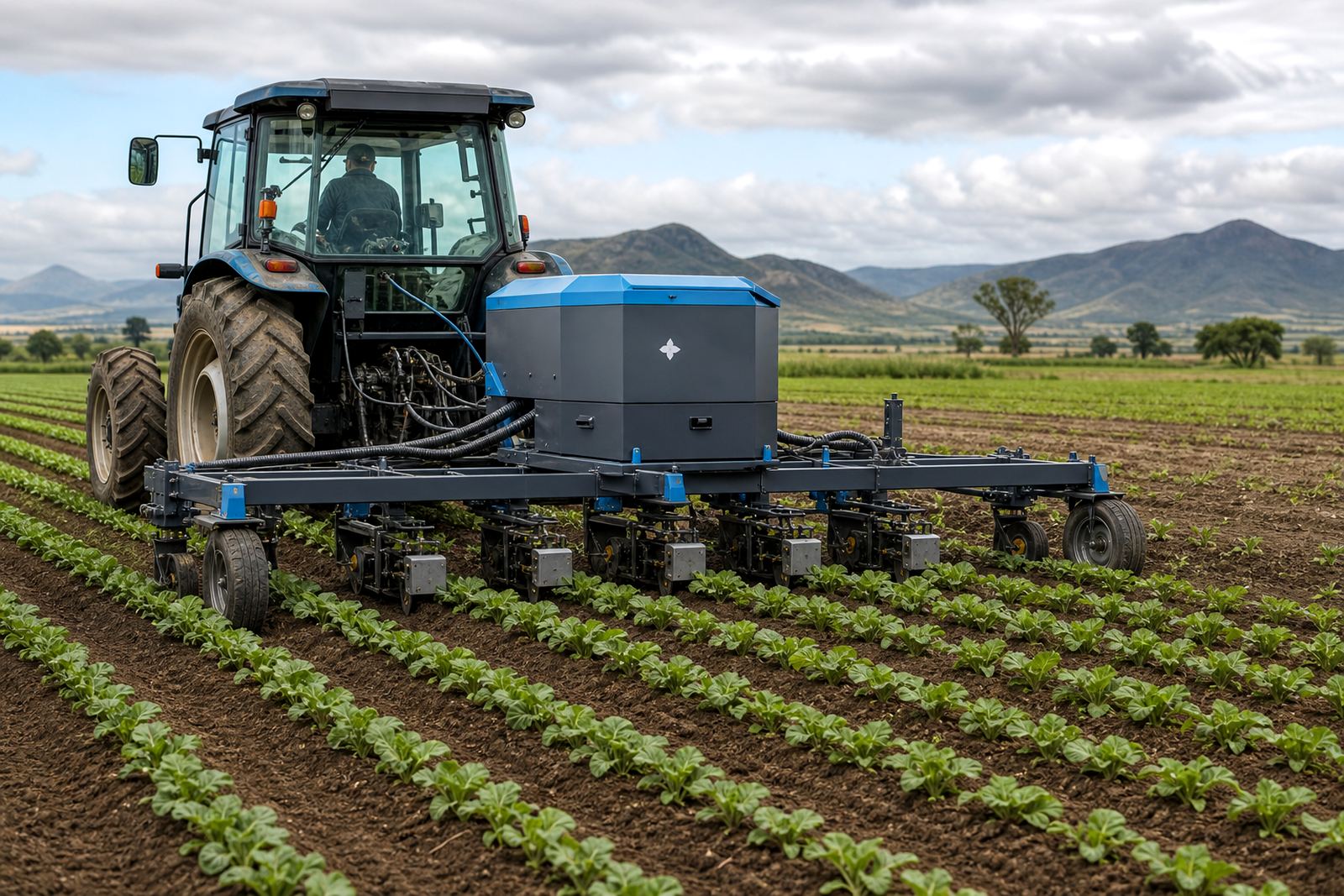
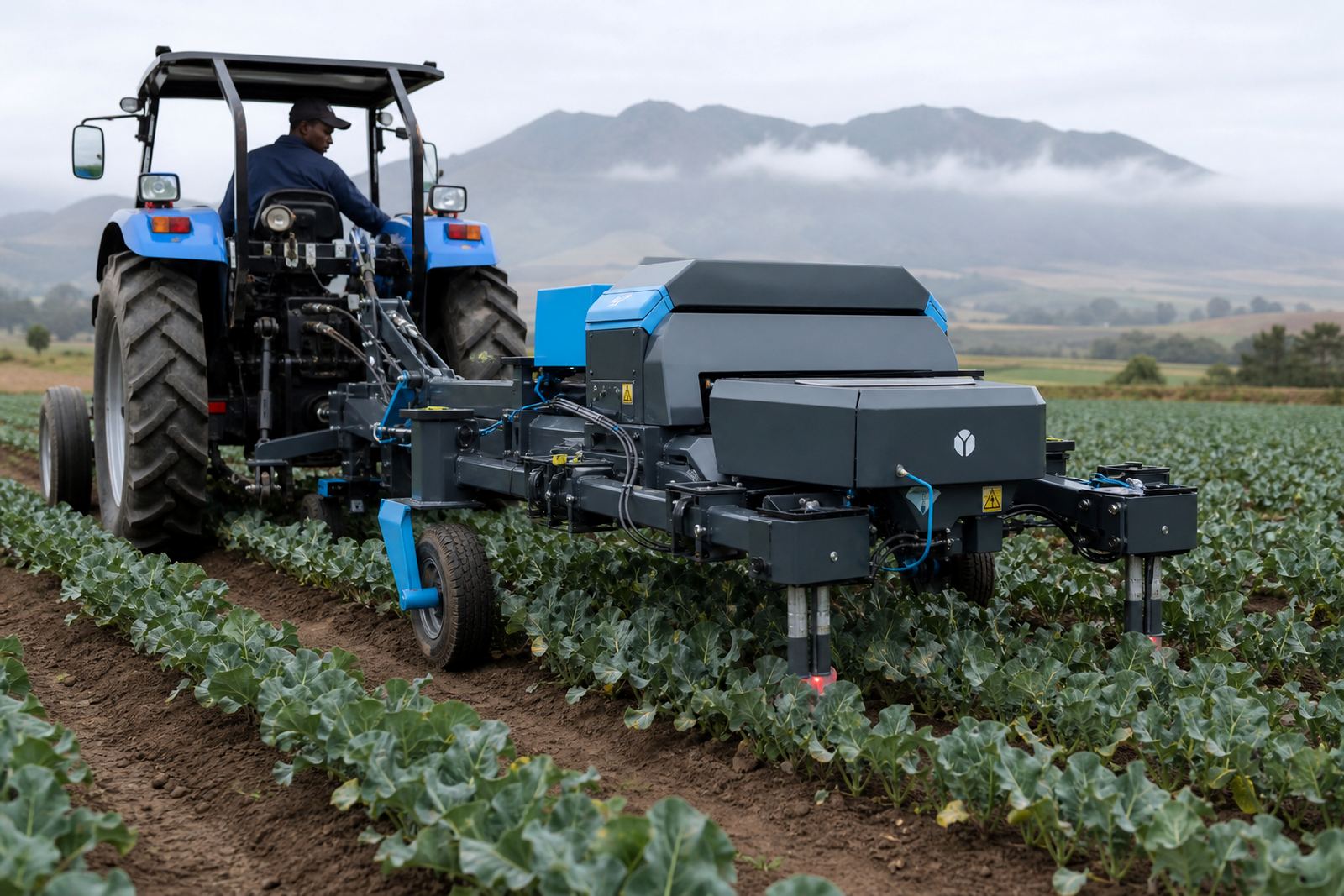
Our first job was to match the field plan to the block layout. Broccoli rows leave little room for hesitation, so the operator needed a clean run line and a clear sense of where the beds started and stopped. We used camera-guided weed detection on the tractor-drawn unit so the system could read the row pattern and direct the lasers at weed growing points rather than leaving the crop exposed to unnecessary contact.
The grower also needed the timing judged against the weed stage. If weeds are already too developed, the laser can still be used, but the field speed and pass pattern need to reflect the pressure in the block. If they are small and fresh, the job is more straightforward. That was part of the planning here, along with the travel set-up for a crop that sits a fair distance from our Philippi, Cape Town base.
- Method: tractor-drawn laser weeding unit
- Detection: camera-guided row sensing
- Target: weed growing points rather than soil spraying
- Surface: no soil disturbance from the weeding method
The timing window and the field speed we worked to
This project ran over a short planning window of two weeks from first field check to completed pass. That included the site visit, the timing discussion with the grower and the booking of the operator and unit for the Elgin rows. In a broccoli block, the timing often matters more than a long service note, because weed stage and crop cover change quickly in cool weather.
Field speed was set by weed pressure and the shape of the beds. Heavier patches call for a slower pace so the camera system has clean reads and the lasers can do their job on target weeds. Where the block was more open, the run stayed steady and efficient. We did not push the tractor just to cover ground, because that tends to work against the purpose of the pass.
The service plan also allowed for later repeat pass planning if the block called for it. Broccoli is often managed in stages, and one run is not always the full answer on a farm. The point is to keep the field usable and the crop rows clean enough for the next round of cultivation or hand work, depending on the grower programme.
What the team supplied on the day
The project used our operator supplied service, so the tractor-drawn laser unit and the person running it arrived as one working set. That matters on vegetable farms, because the equipment and the operator have to work together for the row spacing, crop height and weed mix on that field. The crew also carried out arrival site checks before the pass started, which gave the grower a final look at entry points, bed condition and the line of work.
We also handled travel coordination, field scheduling and post pass reporting around the job. The reporting was practical rather than fancy: what was seen in the block, which areas were tighter to work, and where another pass might be useful if weed emergence continued. Our grower liaison stayed in the loop with the farm team so the plan stayed tied to the crop, not to a generic schedule.
- Operator supplied laser weeding service
- Arrival site checks before the first row
- Field scheduling matched to crop stage
- Post pass reporting for the farm record
What the broccoli rows looked like after the pass
The main value in this Elgin job was the cleaner row profile without herbicide spray. The broccoli plants stayed in place while the weeds between and around them were targeted by the laser system. Because the method does not disturb soil in the same way as mechanical cultivation, the bed surface stayed intact and the row shape remained easy to read for follow-up work.
The grower had asked for a trial strip first, which gave everyone a close look at how the block responded before the rest of the run was completed. That is often the sensible route on a new field or a fresh crop stage. After the strip, the farm team could see how the weed pressure, crop spacing and bed firmness lined up with the system, and then the rest of the block was handled under the same plan.
We did not promise a miracle result, and that is not how these jobs are judged anyway. The useful part is a clean, herbicide-free pass that fits the crop stage and gives the grower another tool in the season. On broccoli, especially in cooler districts like Elgin, a precise run can make the next field step easier to manage.
What we would carry into a similar broccoli block
If we were lining up another broccoli block in Elgin or a similar cool-season district, we would keep the same order of work: check weed stage first, test bed firmness, run a strip before the full pass and keep the field speed tied to the actual pressure in the rows. That approach suited this job because it respected the crop and the ground, rather than forcing the ground to fit the machine.
For a grower working across multiple vegetable blocks, the bigger value is in timing and coordination. We can set up season bookings, multi farm programmes, travel coordination and repeat pass planning for farms in the Western Cape and further afield, including Limpopo, Mpumalanga, KwaZulu-Natal and the Free State. The Elgin broccoli trial showed how a careful laser pass can sit inside that wider programme without adding soil disturbance or herbicide use.
- Best fit: small weeds, firm beds, clear row spacing
- Service mix: trial strips, full passes and repeat planning
- Crop fit: broccoli, onions, carrots, lettuce and brassicas
- Reach: farm scheduling across South Africa
Key facts
| Project | Elgin Broccoli Rows |
|---|---|
| Town | Elgin, Western Cape |
| Crop | Broccoli |
| Method | Tractor-drawn laser weeding |
| Service type | Operator supplied contract work |
| Project length | 2 weeks |